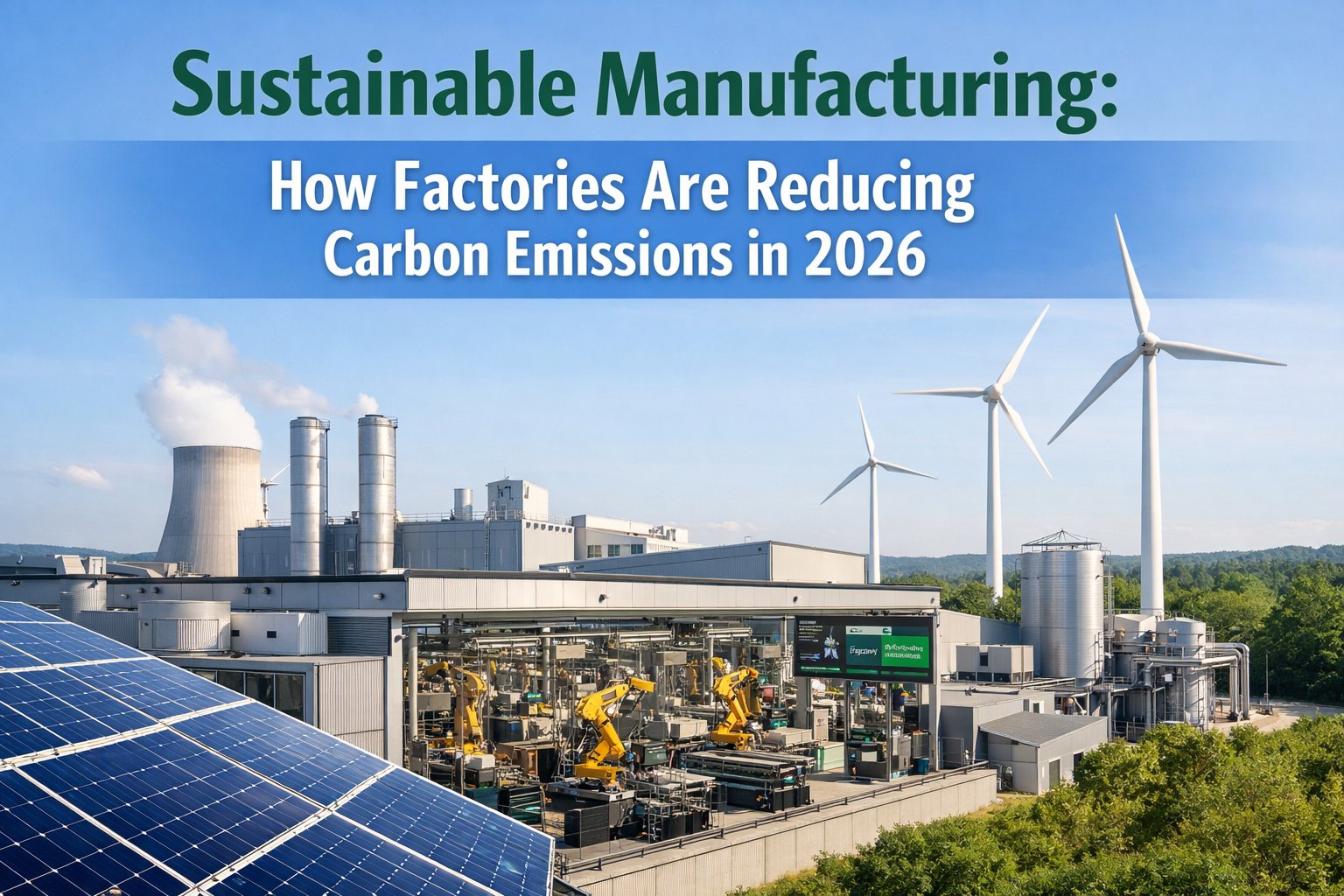
Manufacturing accounts for approximately 30% of global energy consumption and 20% of carbon emissions, positioning industrial leaders at the center of the global energy transition. As regulatory pressure intensifies, customer expectations evolve, and renewable energy costs decline below fossil fuel alternatives, manufacturing executives face both unprecedented challenges and opportunities in transforming how their operations generate, consume, and manage energy resources.
Forward-thinking manufacturers leveraging platforms like iFactoryapp are discovering that energy transition and profitability align rather than conflict. By implementing comprehensive decarbonization strategies combining energy efficiency, renewable procurement, process electrification, and waste heat recovery, these organizations achieve 30-50% reductions in energy costs while dramatically lowering carbon footprints—demonstrating that sustainable energy leadership drives competitive advantage rather than merely satisfying regulatory compliance.
Of global energy consumed by manufacturing sector
Annual industrial energy spend globally
Potential energy cost reduction through transition
Net-zero target year for most major manufacturers
What is Energy Transition in Manufacturing?
Energy transition in manufacturing encompasses the systematic transformation from fossil fuel-dependent operations toward renewable, low-carbon, and highly efficient energy systems. This transition involves multiple interconnected strategies including energy efficiency optimization, renewable energy procurement and generation, process electrification replacing combustion, fuel switching to lower-carbon alternatives, and carbon capture for unavoidable emissions. Successful transition requires coordinated implementation across all dimensions rather than isolated initiatives.
The manufacturing energy transition extends beyond simply changing energy sources to fundamentally reimagining how industrial operations consume and manage energy. Smart manufacturing technologies enable demand response, load shifting, and energy storage integration that maximize renewable utilization. Process innovations eliminate energy-intensive steps or enable lower-temperature operations. Circular economy approaches recover embodied energy in materials through recycling and reuse. These systemic changes multiply the impact of energy source transitions.
Energy Efficiency
Reducing energy consumption through equipment upgrades, process optimization, waste elimination, and operational improvements—often the most cost-effective first step delivering immediate savings while reducing the renewable capacity needed.
Renewable Procurement
Sourcing electricity from wind, solar, and other renewable sources through power purchase agreements, renewable energy certificates, or on-site generation—directly reducing Scope 2 emissions from purchased electricity.
Process Electrification
Converting thermal processes from fossil fuel combustion to electric heating technologies including heat pumps, induction heating, and electric furnaces—enabling renewable electricity to replace direct fuel consumption.
Energy Transition Pathways Comparison
| Pathway | Carbon Reduction | Implementation Cost | Payback Period |
|---|---|---|---|
| Energy Efficiency | 15-30% | Low-Medium | 1-3 years |
| Renewable Procurement | 40-100% (Scope 2) | Low | Immediate-2 years |
| On-Site Solar/Wind | 20-40% | Medium-High | 4-8 years |
| Process Electrification | 50-90% | High | 5-10 years |
| Green Hydrogen | 70-100% | Very High | 8-15 years |
| Carbon Capture | 85-95% | Very High | 10-20 years |
Why Energy Transition Matters Now
Multiple converging forces create unprecedented urgency for manufacturing energy transition. Regulatory frameworks increasingly mandate emissions reductions—carbon pricing mechanisms now cover 23% of global emissions with coverage expanding rapidly. Major customers require supply chain decarbonization for their own Scope 3 commitments. Investors apply ESG criteria affecting capital access and cost. Talented workers increasingly prefer employers demonstrating environmental responsibility. These stakeholder pressures make energy transition a business imperative rather than optional initiative.
Simultaneously, renewable energy economics have fundamentally shifted. Solar and wind costs have declined 90% over the past decade, now delivering electricity cheaper than new fossil fuel plants in most markets. Battery storage costs continue falling 15-20% annually, addressing intermittency concerns. Electric heating technologies achieve competitive economics for increasing process temperature ranges. These cost trends mean energy transition increasingly improves rather than threatens profitability.
Early movers in energy transition capture lasting competitive advantages. Lower and more stable energy costs improve margin resilience against fossil fuel price volatility. Premium brand positioning attracts customers willing to pay for sustainable products. Regulatory compliance capability provides market access as requirements tighten. Technology and organizational learning accumulated through transition creates barriers for slower competitors. Leaders acting now position their organizations for long-term success. Schedule a consultation to explore energy transition strategies for your operations.
Accelerate Your Energy Transition Journey
Discover how iFactoryapp helps manufacturing leaders optimize energy consumption and track decarbonization progress across operations.
Book a Demo Contact SupportBenefits: Aligning Sustainability with Profitability
Manufacturing leaders implementing comprehensive energy transition strategies discover that sustainability and profitability reinforce rather than conflict with each other. By systematically addressing energy efficiency, renewable procurement, and process optimization, these organizations achieve environmental goals while improving financial performance and competitive positioning.
Reducing Energy Costs and Volatility
Energy transition typically reduces total energy costs 20-45% through combined efficiency improvements and renewable sourcing. Efficiency measures deliver immediate savings with typical payback periods of 1-3 years. Renewable power purchase agreements increasingly offer prices below grid electricity with long-term fixed pricing that eliminates fossil fuel price volatility. On-site generation provides additional savings while enhancing energy security and resilience.
Cost stability from renewable energy represents significant competitive advantage in industries where energy comprises substantial cost component. Fossil fuel prices have demonstrated extreme volatility—natural gas prices varied 400% over recent years while oil experienced similar swings. Fixed-price renewable contracts eliminate this uncertainty, enabling more accurate cost forecasting and protecting margins against energy price spikes that devastate competitors relying on volatile fossil fuels.
Strengthening Brand and Market Position
Sustainable manufacturing commands premium positioning with growing customer segments. Consumer research consistently shows willingness to pay 10-25% premiums for products from environmentally responsible manufacturers. B2B customers increasingly require supplier sustainability credentials for their own commitments. Retailers prioritize sustainable products for shelf space and marketing support. These market dynamics translate energy transition investments into revenue enhancement opportunities.
Brand differentiation through sustainability leadership proves particularly valuable in commodity markets where products otherwise compete primarily on price. Environmental credentials create meaningful differentiation supporting premium pricing and customer loyalty. First-mover advantage in sustainable positioning establishes brand associations that competitors struggle to replicate even with subsequent sustainability investments.
Ensuring Regulatory Compliance and Market Access
Regulatory requirements for emissions reduction continue expanding in scope and stringency. Carbon pricing mechanisms—carbon taxes and emissions trading systems—now operate in jurisdictions covering 23% of global emissions with coverage projected to reach 60% by 2030. Carbon border adjustment mechanisms extend requirements to imports, affecting manufacturers globally regardless of local regulations. Early compliance capability ensures continued market access as requirements tighten.
Proactive transition also positions organizations to influence rather than merely react to regulatory development. Industry leaders participating in policy discussions shape requirements that align with their capabilities. Demonstrated voluntary progress often earns recognition and flexibility in compliance approaches. This proactive posture contrasts with reactive competitors scrambling to meet deadlines without adequate preparation.
Key Benefits of Energy Transition:
- Cost Reduction: 20-45% energy cost savings through efficiency and renewables
- Price Stability: Fixed renewable contracts eliminate fossil fuel volatility
- Brand Premium: Sustainability positioning supports 10-25% price premiums
- Market Access: Compliance capability ensures access as regulations tighten
- Investor Appeal: ESG performance improves capital access and cost
- Talent Attraction: Environmental leadership attracts younger workforce
- Risk Mitigation: Reduced exposure to carbon pricing and stranded asset risks
Pathways for Reducing Carbon Dependency
Effective decarbonization requires coordinated implementation across multiple pathways tailored to specific manufacturing contexts. Energy-intensive industries with high-temperature processes face different challenges than assembly operations primarily consuming electricity. Understanding the full portfolio of decarbonization options enables manufacturing leaders to develop comprehensive strategies addressing their specific emissions profiles.
Energy Efficiency: The Foundation
Energy efficiency improvements represent the most cost-effective decarbonization pathway, often delivering savings that fund subsequent transition investments. Manufacturing facilities typically contain 20-30% efficiency improvement potential through equipment upgrades, process optimization, waste heat recovery, and operational improvements. Platforms like iFactoryapp provide the visibility and analytics enabling systematic efficiency identification and tracking.
Priority efficiency opportunities include compressed air system optimization (often 30-50% savings potential), motor and drive upgrades to high-efficiency alternatives, lighting conversion to LED with intelligent controls, HVAC optimization through improved controls and building envelope, and process heating improvements through better insulation and heat recovery. These measures typically achieve payback within 1-3 years while establishing the monitoring foundation for ongoing optimization.
Compressed Air Optimization
Compressed air systems typically waste 30-50% of input energy through leaks, inappropriate use, and inefficient generation. Leak detection, pressure optimization, and system right-sizing deliver rapid payback improvements.
Motor and Drive Upgrades
Motors consume 70% of industrial electricity. High-efficiency motors and variable frequency drives reduce consumption 20-50% with 2-4 year payback periods on appropriately selected applications.
Waste Heat Recovery
Industrial processes reject substantial heat to environment. Heat exchangers, heat pumps, and organic Rankine cycles capture this energy for process heating, space heating, or power generation.
Process Optimization
Production scheduling, batch sizing, and equipment loading optimization reduce energy intensity without capital investment. Real-time monitoring enables continuous optimization as conditions change.
Renewable Energy Procurement
Renewable electricity procurement offers the most accessible pathway for rapid Scope 2 emissions reduction. Options range from simple renewable energy certificate purchases to complex power purchase agreements and on-site generation. Appropriate selection depends on organizational objectives, risk tolerance, administrative capability, and physical site characteristics.
Power purchase agreements (PPAs) with wind or solar developers provide long-term fixed-price electricity often below current grid costs while ensuring additionality—new renewable capacity built specifically for the contract. Virtual PPAs provide similar benefits without physical delivery complexities. On-site solar and wind generation offer additional benefits including resilience, demand charge reduction, and visible sustainability demonstration, though requiring capital investment and suitable site conditions.
Process Electrification
Converting thermal processes from fossil fuel combustion to electric heating enables renewable electricity to displace direct fuel consumption. Electric technologies now address process temperatures spanning ambient to over 1,000°C, though economics and technical maturity vary significantly by temperature range and application. Strategic electrification planning identifies highest-value conversion opportunities.
Heat pumps offer the most attractive electrification economics for processes below 150°C, achieving 300-500% efficiency by upgrading waste heat rather than generating heat from electricity. Industrial heat pumps suitable for manufacturing applications have matured rapidly, now addressing significant portions of industrial heat demand. Higher temperature applications require resistance heating, induction heating, electric arc furnaces, or plasma technologies with varying maturity and economics. Connect with our specialists to discuss electrification strategies.
Innovation Driving Sustainable Manufacturing
Technological innovation continues expanding the scope and improving the economics of manufacturing decarbonization. Emerging technologies address previously intractable emissions sources while improving cost-effectiveness of established approaches. Manufacturing leaders tracking and selectively piloting these innovations position their organizations for accelerated transition as technologies mature.
Green Hydrogen
Hydrogen produced from renewable electricity via electrolysis offers carbon-free fuel for high-temperature processes, chemical feedstock, and energy storage. Costs declining rapidly toward fossil parity by 2030.
Advanced Heat Pumps
Next-generation heat pumps reaching 200°C+ temperatures with improved efficiency address larger portions of industrial heat demand with superior economics compared to direct electric heating.
Battery Storage
Declining battery costs enable load shifting, demand charge management, and renewable firming. Behind-the-meter storage increasingly economic for manufacturing facilities with appropriate load profiles.
Carbon Capture
Carbon capture technologies address unavoidable process emissions from cement, steel, and chemical manufacturing. Costs declining with demonstration projects informing commercial deployment.
Digital Energy Management
AI-powered energy management systems optimize consumption patterns, predict demand, and automate demand response. Platforms like iFactoryapp enable 10-20% additional savings beyond traditional approaches.
Sustainable Materials
Low-carbon steel, green aluminum, and bio-based materials reduce embodied carbon in manufactured products. Growing availability enables Scope 3 emissions reduction through procurement decisions.
Implementation Roadmap: Phased Transition
Successful energy transition requires systematic implementation balancing quick wins with longer-term transformation. A phased approach enables early savings that fund subsequent investments while building organizational capability for increasingly complex initiatives. This roadmap provides framework adaptable to specific organizational contexts and starting points.
Establish comprehensive energy monitoring using platforms like iFactoryapp. Conduct energy audit identifying efficiency opportunities. Implement quick-win efficiency measures with less than 2-year payback. Develop baseline emissions inventory and set reduction targets. Build organizational awareness and capability for transition.
Execute systematic efficiency program addressing major consumption categories. Upgrade to high-efficiency motors, drives, and lighting. Optimize compressed air, HVAC, and process heating systems. Implement waste heat recovery where economically viable. Target 15-25% energy reduction from baseline.
Evaluate renewable electricity options—PPAs, on-site generation, certificates. Execute agreements providing 50-100% renewable electricity. Install on-site solar where site conditions and economics support. Achieve substantial Scope 2 emissions reduction while potentially reducing costs.
Identify thermal processes suitable for electrification. Implement heat pumps for low-temperature applications. Evaluate electric heating for medium-temperature processes. Pilot emerging technologies for high-temperature applications. Begin addressing Scope 1 emissions from direct fuel consumption.
Deploy advanced technologies for remaining emissions sources. Implement green hydrogen for high-temperature processes and feedstock. Evaluate carbon capture for unavoidable process emissions. Achieve net-zero operations through combined measures. Lead industry transformation through knowledge sharing.
Case Studies: Energy Transition Success
Manufacturing leaders across industries have achieved remarkable results through comprehensive energy transition strategies. These case studies demonstrate achievable outcomes and success factors enabling transformation while improving profitability.
Automotive Manufacturer: Carbon Neutral Production
A major automotive manufacturer committed to carbon-neutral production implemented comprehensive energy transition across 25 facilities globally. The program combined aggressive efficiency improvements, 100% renewable electricity procurement, process electrification, and green hydrogen piloting for remaining thermal loads. Integration with iFactoryapp enabled real-time energy monitoring and optimization across the facility network.
Renewable electricity achieved
Energy cost reduction realized
Carbon emissions reduction
Annual energy savings achieved
Food Processing Company: Net-Zero Facility
A food processing company transformed a flagship facility to net-zero emissions demonstrating comprehensive transition feasibility. The initiative combined on-site solar generation, industrial heat pump installation replacing natural gas boilers, biogas generation from organic waste, and battery storage enabling grid-independent operation during peak periods. The project achieved net-zero while reducing energy costs 35%.
Operational emissions achieved
Energy cost reduction
On-site solar capacity installed
Project payback period
Financing Energy Transition Investments
Energy transition investments often deliver attractive returns but may face capital allocation challenges competing against core business investments. Understanding financing options enables manufacturing leaders to accelerate transition without constraining other priorities. Multiple mechanisms can fund transition investments with limited or no capital outlay.
Power Purchase Agreements
PPAs require no capital investment—developers build and own renewable generation, selling electricity to manufacturers at fixed prices often below current rates. Contracts typically span 10-20 years.
Energy-as-a-Service
Third-party providers finance, install, and operate efficiency and generation equipment. Manufacturers pay monthly fees based on energy delivered or saved, avoiding capital outlay while sharing savings.
Green Bonds and Loans
Dedicated green financing instruments often provide favorable terms for sustainability investments. Green bonds and sustainability-linked loans increasingly available from major financial institutions.
Challenges and Solutions
Energy transition implementation encounters obstacles that careful planning and appropriate strategies can address. Understanding common challenges enables manufacturing leaders to anticipate and overcome barriers to successful transformation.
Capital Constraints
Transition investments compete with core business priorities for limited capital. Solution: Leverage third-party financing (PPAs, energy-as-a-service), green financing instruments, and phased implementation starting with quick-payback measures.
Technical Uncertainty
Emerging technologies lack proven track records at industrial scale. Solution: Pilot projects validate technologies before broad deployment, industry consortia share learnings, and phased adoption manages risk.
Grid Limitations
Electrical infrastructure may constrain electrification and renewable integration. Solution: Early utility engagement for infrastructure planning, on-site generation reducing grid dependency, and demand flexibility reducing peak requirements.
Operational Disruption
Equipment changeovers risk production impacts during implementation. Solution: Detailed project planning, implementation during scheduled downtime, and parallel operation capabilities during transitions.
Workforce Capability
New technologies require skills not present in current workforce. Solution: Training programs, strategic hiring, technology partnerships, and phased implementation allowing capability development.
Supply Chain Emissions
Scope 3 emissions from supply chain often exceed operational emissions. Solution: Supplier engagement programs, sustainable procurement policies, and value chain collaboration on decarbonization.
Track Your Energy Transition Progress
iFactoryapp provides comprehensive energy monitoring and analytics helping manufacturing leaders optimize consumption and measure decarbonization achievements.
Book a Demo Contact SupportFrequently Asked Questions
How much does energy transition cost for manufacturing facilities?
Energy transition costs vary dramatically based on starting point, objectives, and chosen pathways. Energy efficiency measures typically require $50-200 per annual MWh saved with 1-3 year payback. Renewable procurement via PPAs often requires no capital investment while potentially reducing costs. On-site solar costs $800-1,200 per kW installed with 4-8 year payback depending on incentives and electricity rates. Process electrification investments vary widely by application. Many organizations find that efficiency savings fund subsequent transition investments, enabling comprehensive transformation with minimal net capital outlay over the transition period.
What should manufacturers prioritize first in energy transition?
Energy efficiency almost always deserves first priority for several reasons. Efficiency measures typically deliver fastest payback, generating savings that fund subsequent investments. Reducing consumption first means less renewable capacity needed to achieve zero-carbon electricity. Efficiency improvements reduce peak demand, easing grid constraints for electrification. Establishing energy monitoring systems for efficiency also provides foundation for ongoing optimization. After capturing efficiency opportunities, renewable electricity procurement typically follows as the most accessible emissions reduction pathway. Process electrification and advanced technologies address remaining emissions in later phases.
How can manufacturers achieve 100% renewable electricity?
Multiple pathways enable 100% renewable electricity achievement. Power purchase agreements with wind or solar developers provide contracted renewable electricity, often at costs below current grid prices. On-site solar and wind generation produces renewable electricity directly, with excess potentially exported for credit. Renewable energy certificates (RECs) document renewable electricity purchases for facilities unable to source physical renewable power. Virtual PPAs provide financial settlement linked to renewable generation without physical delivery. Most manufacturers combine approaches—on-site generation meeting partial demand, PPAs covering additional consumption, and certificates for balance or locations with limited options.
What technologies address high-temperature industrial processes?
High-temperature processes (above 400°C) present the greatest decarbonization challenge with multiple emerging solutions. Green hydrogen produced via renewable-powered electrolysis provides carbon-free fuel capable of extremely high temperatures for applications like steel and glass manufacturing. Electric arc furnaces and plasma heating enable electric alternatives for some high-temperature processes. Concentrated solar thermal can achieve temperatures above 1,000°C for appropriate locations. Carbon capture and storage addresses emissions from processes where alternatives remain immature. Fuel switching to biomass or synthetic fuels offers transitional solutions. Most high-temperature decarbonization requires technology combinations and remains in earlier deployment stages than lower-temperature solutions.
How should manufacturers address Scope 3 supply chain emissions?
Scope 3 emissions from purchased goods, transportation, and product use often exceed Scope 1 and 2 operational emissions for manufacturers. Addressing Scope 3 requires systematic supply chain engagement. Start by mapping emissions across supply chain categories to identify hotspots warranting priority attention. Engage key suppliers on their decarbonization plans and timelines. Establish sustainable procurement criteria incorporating emissions performance. Participate in industry initiatives developing common supplier requirements and reporting frameworks. Consider product design changes reducing use-phase emissions. Set Scope 3 reduction targets aligned with science-based methodologies. Track progress using supplier reporting and lifecycle assessment tools.
How does iFactoryapp support manufacturing energy transition?
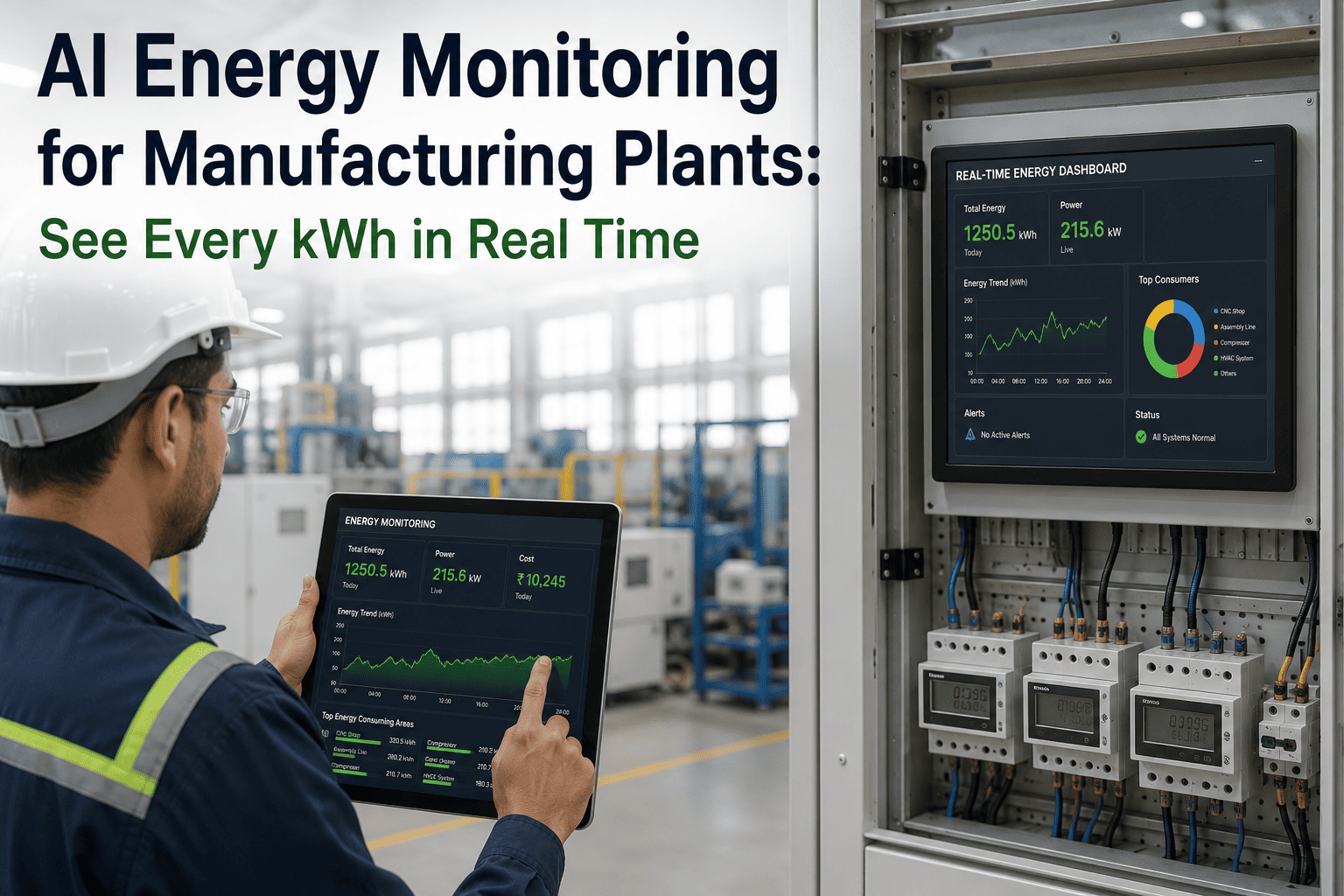
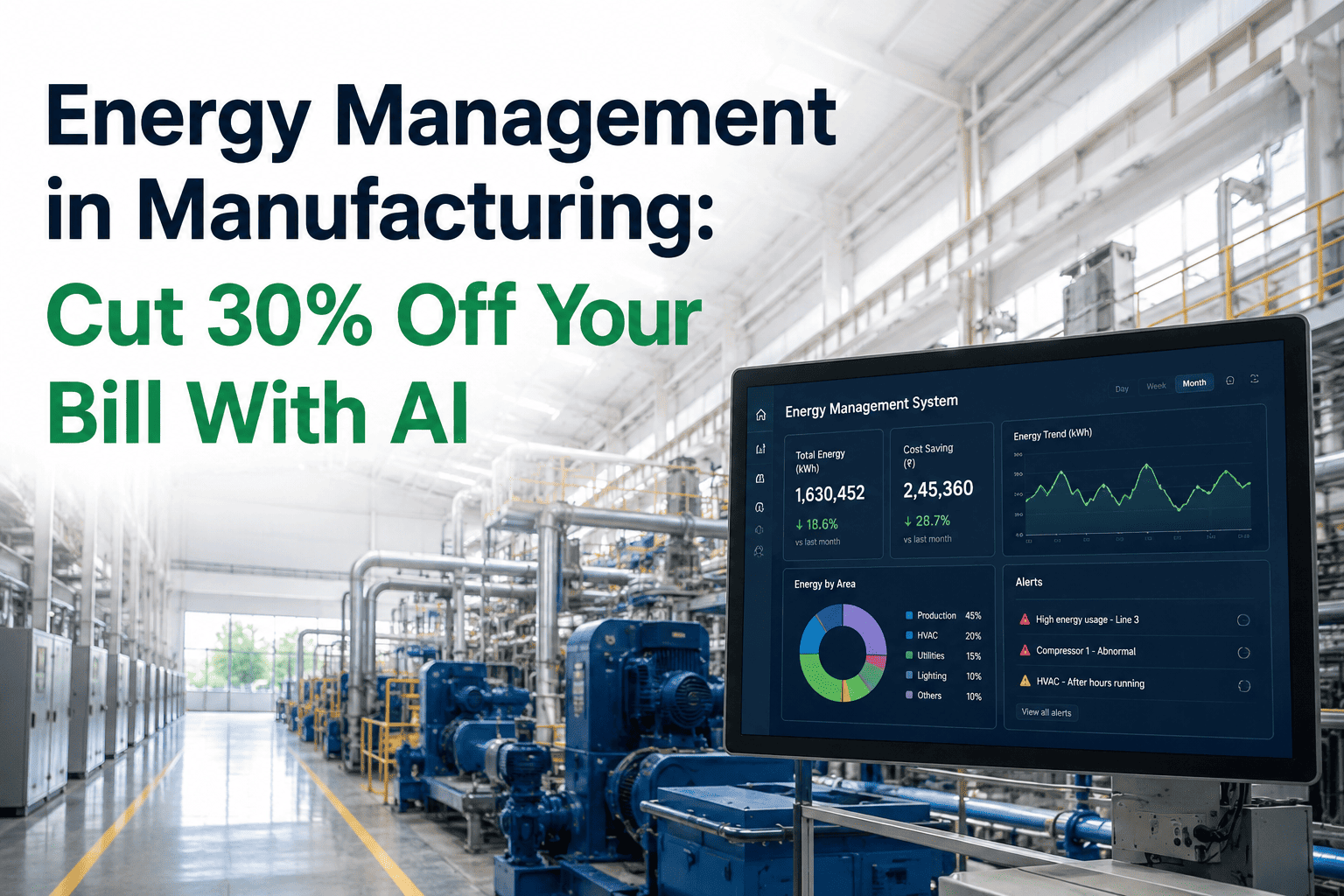
iFactoryapp provides comprehensive capabilities enabling data-driven energy transition. Real-time energy monitoring tracks consumption across equipment and processes, identifying efficiency opportunities and anomalies. Analytics dashboards visualize energy performance trends and benchmark against targets. Automated alerts flag consumption deviations requiring investigation. Integration with utility and renewable generation data enables comprehensive energy management. Emissions tracking and reporting support regulatory compliance and sustainability disclosure. Mobile access enables operational teams to engage with energy performance throughout facilities. Implementation support helps organizations establish monitoring systems and develop transition strategies leveraging platform capabilities.
Conclusion: Leading the Energy Transition
The manufacturing energy transition represents both urgent imperative and extraordinary opportunity. Regulatory requirements, customer expectations, and investor pressures demand action while renewable economics, efficiency technologies, and innovative solutions make transition increasingly profitable. Leaders acting decisively capture competitive advantages through lower costs, stronger brands, ensured market access, and organizational capabilities that slower competitors cannot quickly replicate.
Success requires comprehensive strategy addressing efficiency, renewable procurement, process electrification, and emerging technologies in coordinated phases. Quick-win efficiency measures generate savings funding subsequent investments while building organizational capability for increasingly complex initiatives. This systematic approach enables ambitious transformation without overwhelming resources or accepting excessive risk.
Manufacturing leaders partnering with iFactoryapp gain comprehensive platform capabilities supporting energy transition—real-time monitoring revealing efficiency opportunities, analytics tracking progress against targets, and dashboards providing visibility driving continuous improvement.
Start your free trial with iFactoryapp! Experience how leading manufacturers worldwide leverage our platform to optimize energy consumption, track decarbonization progress, and build sustainable competitive advantage. Our specialists will collaborate with you to assess current energy performance, identify transition opportunities, and implement systems enabling successful energy transformation!