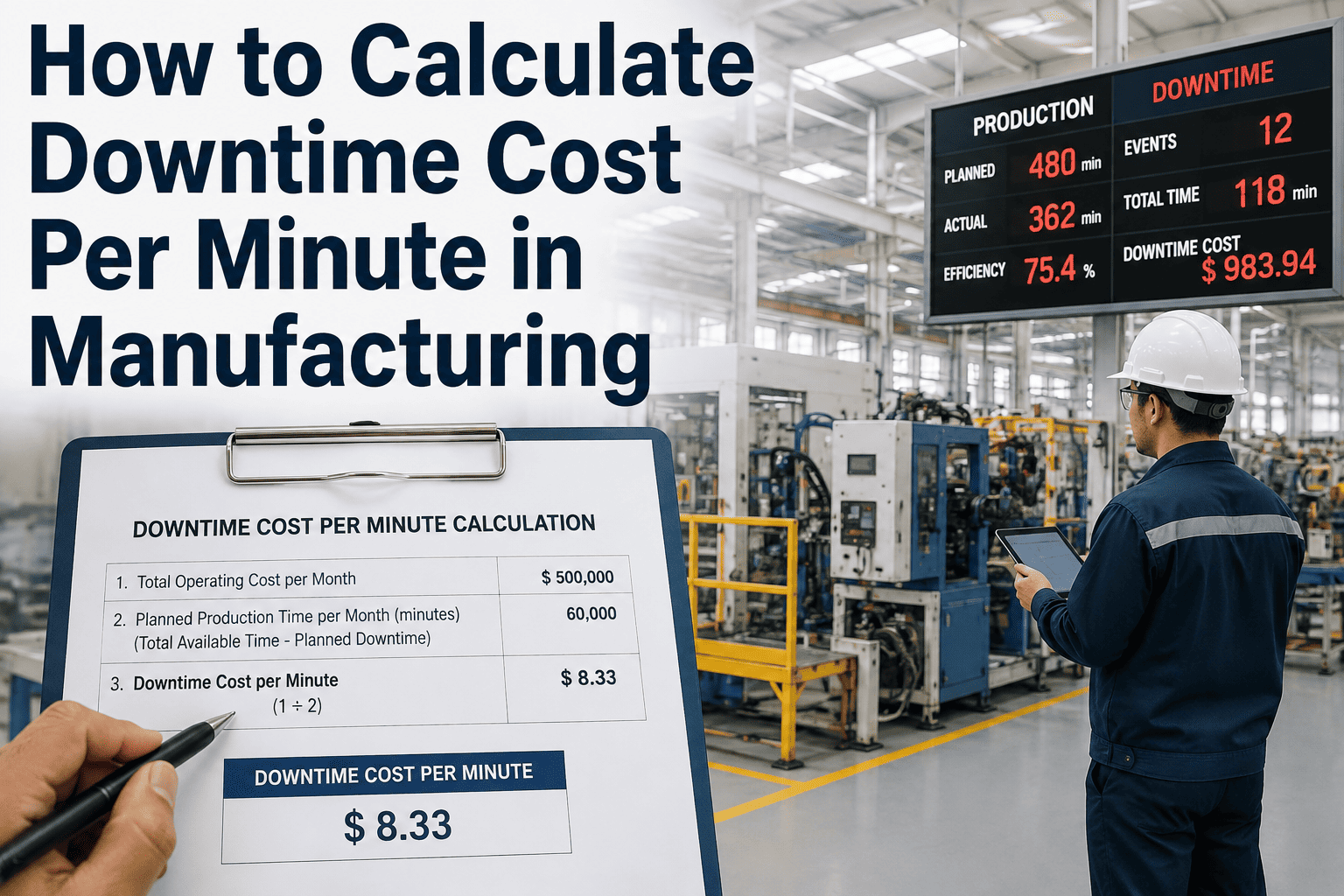
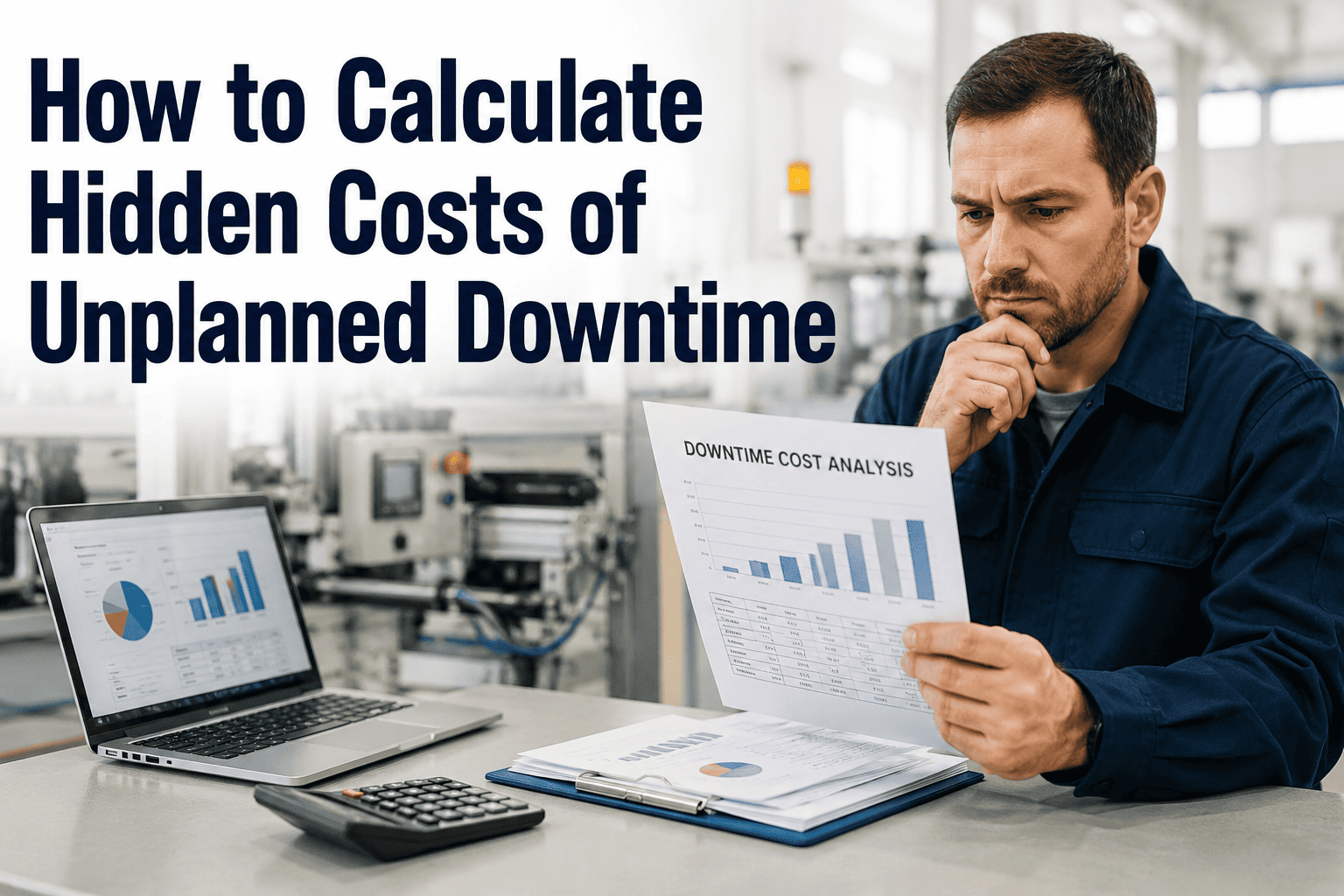
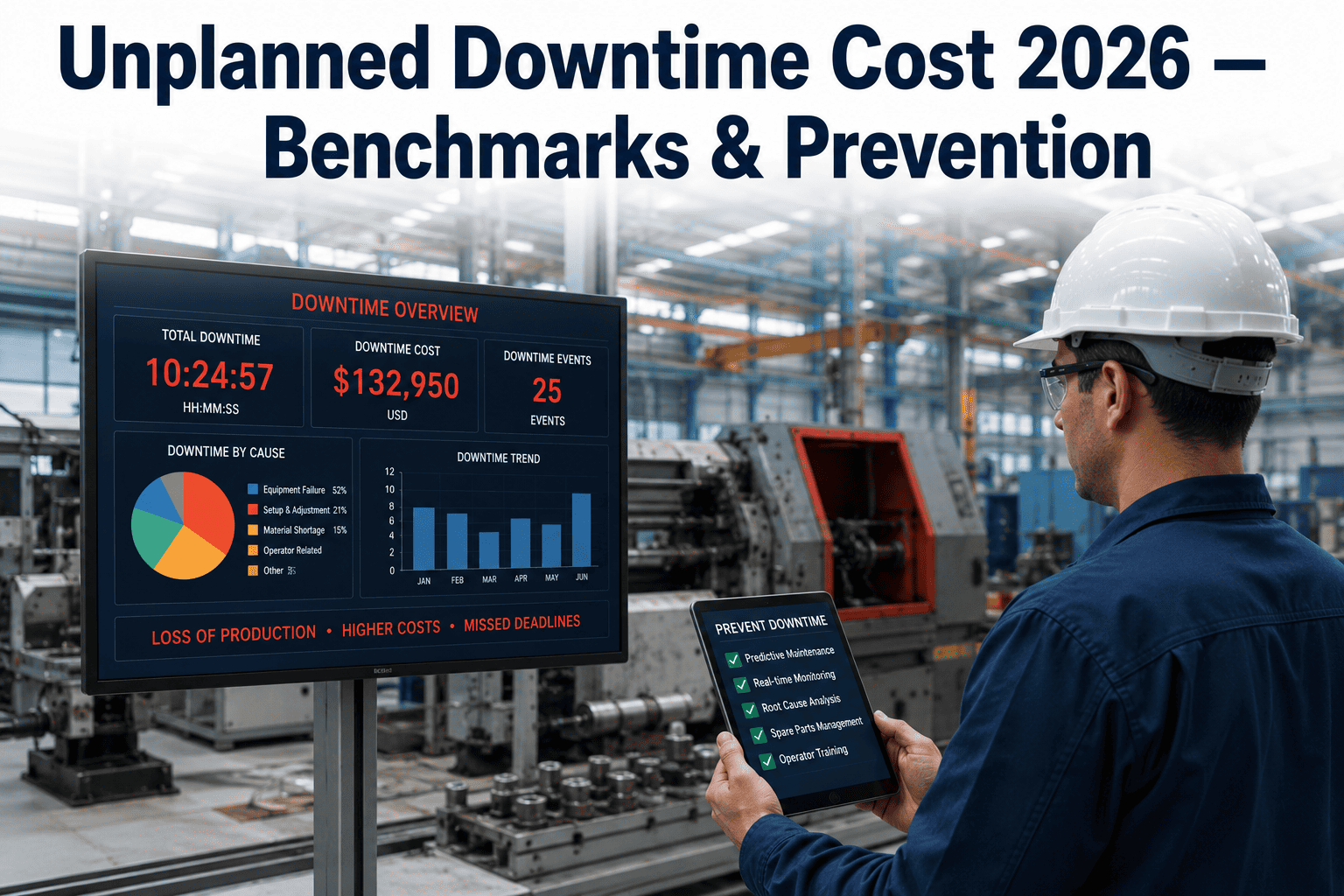
When production lines fall silent unexpectedly, the financial bleeding begins immediately,and it's far worse than most manufacturers realize. Unplanned downtime costs the world's 500 largest companies approximately $1.4 trillion annually, equivalent to 11% of their total revenues. But the numbers on spreadsheets only tell part of the story. Behind every downtime incident lies a cascade of hidden costs that silently drain profitability: idle workers still earning wages, emergency parts ordered at premium prices, overtime labor to catch up, missed delivery penalties and customer relationships quietly eroding with every delayed shipment.
For many manufacturers, downtime is the single largest source of lost production timeyet over 80% of companies cannot accurately calculate their true downtime costs. This visibility gap allows hidden expenses to accumulate unnoticed, making unplanned downtime one of the most underestimated threats to manufacturing profitability. Understanding these hidden costs is the first step toward eliminating them.
The Hidden Cost of Unplanned Downtime in Manufacturing
The True Scale of Manufacturing Downtime
The escalation in downtime costs has outpaced inflation dramatically. In 2019-2020, Fortune Global 500 companies lost $864 billion to downtime. By 2024, that figure reached $1.4 trillion—a 62% increase. The reasons are interconnected: supply chains operating at higher capacity leave less slack to recover lost time, energy prices have risen, labor costs have increased, and the materials wasted when production fails are now more expensive. As one industry researcher noted, "Goods cost more, so the value of those not made during downtime is greater."
What Does Unplanned Downtime Really Cost?
The visible costs of downtimerepair bills, replacement parts, lost production—represent only the tip of the iceberg. Beneath the surface lurk hidden expenses that often exceed direct costs by 2-3x, quietly compounding losses that never appear on maintenance reports but devastate bottom-line profitability.
Downtime Costs by Manufacturing Sector
An idle production line halts entire supply chains. One plant shutdown disrupts deliveries to multiple OEMs within hours.
Refinery downtime costs have doubled, with single facility losses reaching $84 million annually from unplanned events.
Steel mills, mining, and metals processing face catastrophic losses from furnace shutdowns and equipment failures.
Two-thirds of plants experience downtime monthly, with each incident averaging 4 hours of lost production.
The Hidden Costs Most Manufacturers Miss
When calculating downtime costs, most manufacturers focus on direct expenses: repair costs, replacement parts, and lost production value. But hidden costs—the indirect expenses that silently accumulate—often dwarf these visible figures. Understanding these hidden costs reveals why downtime is far more expensive than maintenance reports suggest.
The Iceberg of Downtime Costs
Equipment repairs, replacement components, technician labor
Units not manufactured during shutdown period
Raw materials spoiled or scrapped mid-process
Idle Labor Costs
Employees paid during non-productive hours. Fortune 500 firms lose 3.3 million hours annually to idle time.
Impact: Continues throughout shutdownEmergency Parts Premium
Rush-ordered replacement parts cost 40% more than planned procurement.
Impact: 40% cost premiumOvertime Labor
Workers staying late or coming in weekends to catch up on lost production.
Impact: 1.5-2x labor rateSupply Chain Disruption
Downstream customers affected, cascading delays through production networks.
Impact: Multiplies across partnersContract Penalties
Fines for failure to meet contractual delivery obligations and SLAs.
Impact: Per-day penaltiesReputation Damage
Lost customer trust, missed deadlines tarnish brand, harder to win new business.
Impact: Long-term revenue lossEmployee Morale
Frequent downtime frustrates workers, increasing turnover and reducing productivity.
Impact: Higher turnover costsRestart Costs
Recalibration, quality checks, warm-up cycles, and lost efficiency during restart.
Impact: Extended recovery timeTotal Cost = (Lost Production + Labor + Overhead) × Duration + Lost Revenue + Overtime + Penalties + Reputation Damage
Research from ABB confirms this reality: "The high cost of downtime increasingly constrains industrial businesses in an already uncertain landscape. This encompasses both direct costs like wasted production or spare parts, and indirect costs like reputation and morale." For smaller manufacturers, these hidden costs can be existential—a single extended downtime event may cost months of profit and risk losing major customer contracts.
What Causes Unplanned Downtime?
Understanding the root causes of unplanned downtime reveals where prevention efforts should focus. While manufacturers face diverse challenges, a clear pattern emerges: equipment failure dominates, accounting for 80% of all unplanned downtime events. This concentration creates both a challenge and an opportunity—effective equipment monitoring can address the vast majority of downtime risk.
Primary Causes of Unplanned Downtime
Mechanical breakdowns, bearing failures, motor burnouts, component fatigue, and aging machinery
Operator mistakes, misconfigured machines, skipped procedures, inadequate training
Material variations, quality deviations requiring line stops, changeover problems
Material shortages, delayed deliveries, incorrect specifications
System failures, cyberattacks on OT systems, software malfunctions
The Time Factor: How Long Does Downtime Last?
The duration of downtime incidents significantly impacts total costs. While the average downtime incident lasts 4 hours, the time required to return to full production often extends much longer. Maintenance workers spend 20% of their time just traveling to the right part of a facility, and finding personnel with the right skills remains the hardest challenge during breakdowns.
Downtime Duration & Frequency Statistics
Despite 40% fewer incidents, total costs have increased 62% because recovery takes longer and hourly costs have risen.
Stop Hidden Downtime Costs Before They Start
iFactory's AI-powered CMMS provides real-time equipment monitoring, predictive maintenance alerts, and comprehensive downtime tracking—helping you identify hidden costs and prevent them before they drain your profitability. Our integrated platform delivers visibility into the true cost of every downtime event.
Calculating Your True Downtime Cost
Over 80% of companies cannot accurately calculate their true downtime costs. This visibility gap allows hidden expenses to compound unnoticed. To understand your actual exposure, you need to account for both direct and indirect costs across multiple dimensions.
Downtime Cost Calculation Framework
Direct Costs (Calculate per hour)
Indirect Costs (Often 2-3x direct costs)
Direct costs: $125,000/hr × 27 hrs = $3.375M/month
Indirect costs (2x multiplier): $6.75M/month
Total Annual Impact: $121.5M (over 240% of direct costs alone)
The Ripple Effect: How Downtime Cascades
Modern manufacturing operates on interconnected supply chains where downtime in one facility creates cascading effects throughout the network. A single plant shutdown can disrupt deliveries to multiple OEMs within hours, triggering penalties, lost contracts, and damaged relationships that extend far beyond the original incident.
The Downtime Cascade Effect
Equipment Fails
Production line halts unexpectedly
Hour 0Workers Idle
Staff paid for non-productive time
Hour 0-4Shipments Delayed
Customer deliveries missed
Hour 4-24Supply Chain Impact
Downstream customers affected
Day 1-3Relationship Damage
Trust erodes, contracts at risk
Week 1+Prevention Strategies: Reducing Hidden Downtime Costs
The irony of modern manufacturing is that while downtime costs have escalated, the tools to prevent it have become more effective than ever. Companies implementing comprehensive prevention strategies have reduced downtime incidents from 42 to 25 per month—a 40% improvement. The key is shifting from reactive to predictive approaches.
5 Strategies to Eliminate Hidden Downtime Costs
Implement Predictive Maintenance
AI-powered condition monitoring detects equipment degradation before failure. Sensors analyze vibration, temperature, and current patterns to predict breakdowns 30+ days in advance.
Deploy CMMS for Visibility
Computerized Maintenance Management Systems track every downtime event, calculate true costs including hidden expenses, and identify patterns for prevention.
Train Operators Continuously
Human error causes 23% of downtime. Structured training on procedures, machine operation, and early warning signs reduces operator-caused incidents significantly.
Track OEE in Real-Time
Overall Equipment Effectiveness monitoring identifies availability losses as they occur, enabling immediate response before small issues become major shutdowns.
Audit Hidden Costs Regularly
Conduct downtime audits that capture indirect costs—overtime, penalties, lost orders, reputation impact—to understand true financial exposure and prioritize prevention.
The ROI of Downtime Prevention
Documented Prevention Benefits
Transform Downtime from Cost Center to Competitive Advantage
iFactory's integrated CMMS, MES, and predictive maintenance platform gives manufacturers complete visibility into downtime costs—both visible and hidden. Our AI-powered analytics identify patterns, predict failures, and quantify the true financial impact of every production interruption, enabling data-driven decisions that protect your profitability.
Frequently Asked Questions
How much does unplanned downtime cost manufacturers per hour?
Unplanned downtime costs vary significantly by industry: Automotive plants lose $2.3 million per hour ($600 per second), Oil & Gas refineries lose $500,000+ per hour, Heavy industry (steel, mining) loses $187,500 per hour, and general manufacturing averages $260,000 per hour according to Aberdeen Research. The average large plant loses $129 million annually to downtime—up 65% from 2019. These figures represent only direct costs; when hidden costs (overtime, penalties, lost customers) are included, true costs are typically 2-3x higher.
What are the hidden costs of manufacturing downtime?
Hidden downtime costs include: paying idle employees during shutdowns (Fortune 500 firms lose 3.3 million worker-hours annually), emergency replacement parts at 40% premium prices, overtime labor to catch up on production (1.5-2x normal rates), penalties for missed contractual delivery obligations, lost customer trust leading to cancelled future orders, supply chain disruption costs cascading to partners, reputational damage affecting new business acquisition, restart costs including recalibration and waste, and decreased employee morale increasing turnover. These hidden costs typically exceed visible direct costs by 2-3x.
What causes unplanned downtime in manufacturing?
The primary causes of unplanned downtime are: Equipment failure (42% of incidents)—mechanical breakdowns, bearing failures, motor burnouts; Human error (23%)—operator mistakes, misconfigured machines, skipped safety procedures; Process issues (15%)—material variations, quality deviations; Supply chain disruptions (12%)—material shortages, delayed deliveries; and Cyber/IT issues (8%)—system failures, software malfunctions. Equipment failure accounts for 80% of all unplanned downtime overall, with base component failures (bearings, seals, motors) being the primary culprits—making predictive maintenance the most effective prevention strategy.
How much downtime do manufacturers experience annually?
The average manufacturing plant experiences 800 hours of equipment downtime annually—over 15 hours per week. Major manufacturers average 25 downtime incidents per month (down from 42 in 2019) and 27 lost production hours monthly (down from 39 in 2019). Over 82% of companies have experienced unplanned downtime in the past three years, with each incident lasting an average of 4 hours. Two-thirds of companies deal with unplanned downtime at least once per month. While incident frequency has decreased 40% since 2019, total costs have increased 62% because hourly costs have risen and recovery takes longer.
How can manufacturers reduce unplanned downtime costs?
Manufacturers can reduce downtime costs through: Predictive maintenance using AI-powered condition monitoring (reduces breakdowns by 70-75%), CMMS implementation for proactive scheduling and cost tracking, regular equipment inspections identifying wear before failure, employee training programs addressing the 23% of downtime from human error, real-time OEE tracking to catch issues early, and regular downtime audits to understand true costs. Companies implementing these strategies have reduced incidents from 42 to 25 per month. Nearly half of surveyed firms now have dedicated predictive maintenance teams—double the proportion from 2019. Most achieve positive ROI within 12 months.
What is the total global cost of manufacturing downtime?
According to Siemens' 2024 True Cost of Downtime report, the world's 500 largest companies lose approximately $1.4 trillion annually due to unplanned downtime—equivalent to 11% of their total revenues. This represents a 62% increase from $864 billion (8% of revenues) in 2019-2020. Fortune Global 500 manufacturers collectively lose 3.3 million production hours annually. Industrial manufacturers spend an estimated $50 billion annually on unplanned downtime. The costs have escalated faster than inflation due to complex supply chains, higher energy prices, increased labor costs, and more expensive materials—meaning goods not produced during downtime have greater value.
Every Minute of Downtime Has a Hidden Price Tag
The $1.4 trillion lost annually to unplanned downtime represents more than a manufacturing inconvenience—it's a strategic threat to profitability, customer relationships, and competitive positioning. What makes downtime particularly dangerous is not the visible costs that appear on repair invoices, but the hidden costs that silently accumulate: idle workers, premium-priced emergency parts, overtime labor, contract penalties, and the gradual erosion of customer trust.
The manufacturers gaining competitive advantage understand this reality and invest accordingly. With 95% of predictive maintenance adopters reporting positive ROI and 27% achieving payback in under a year, the path forward is clear. The question is not whether you can afford to invest in downtime prevention—it's whether you can afford the hidden costs of not doing so.