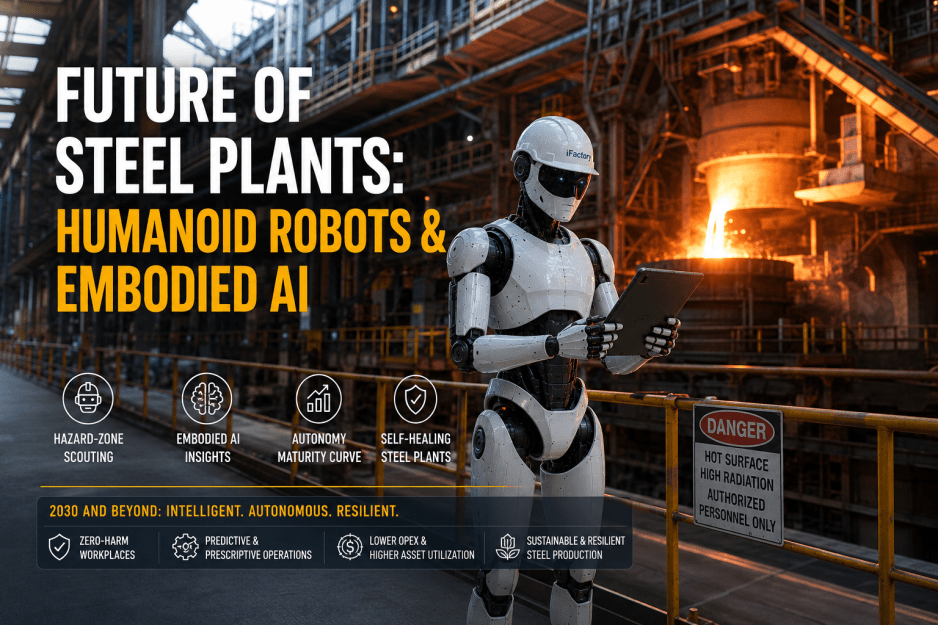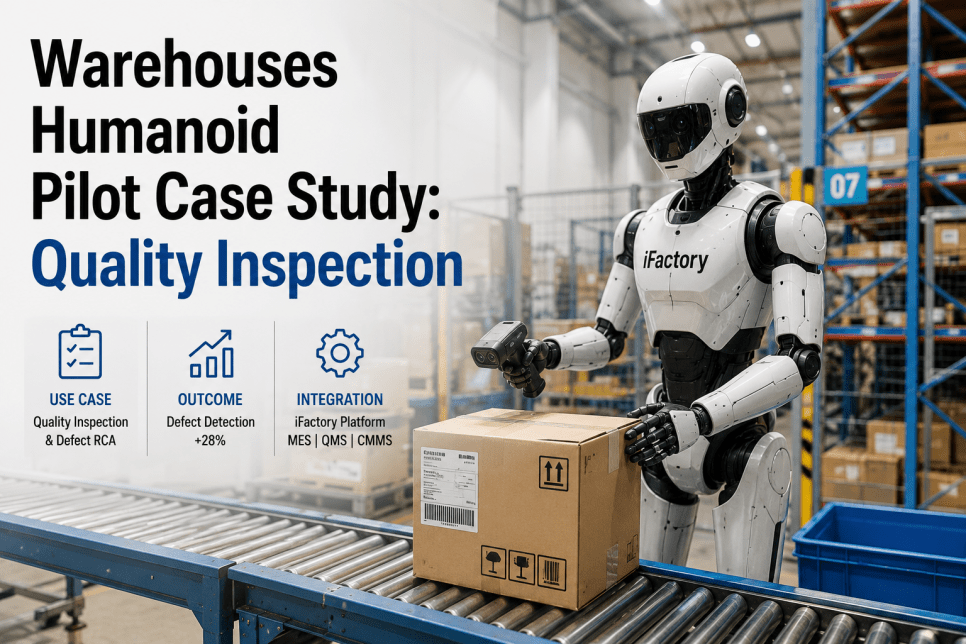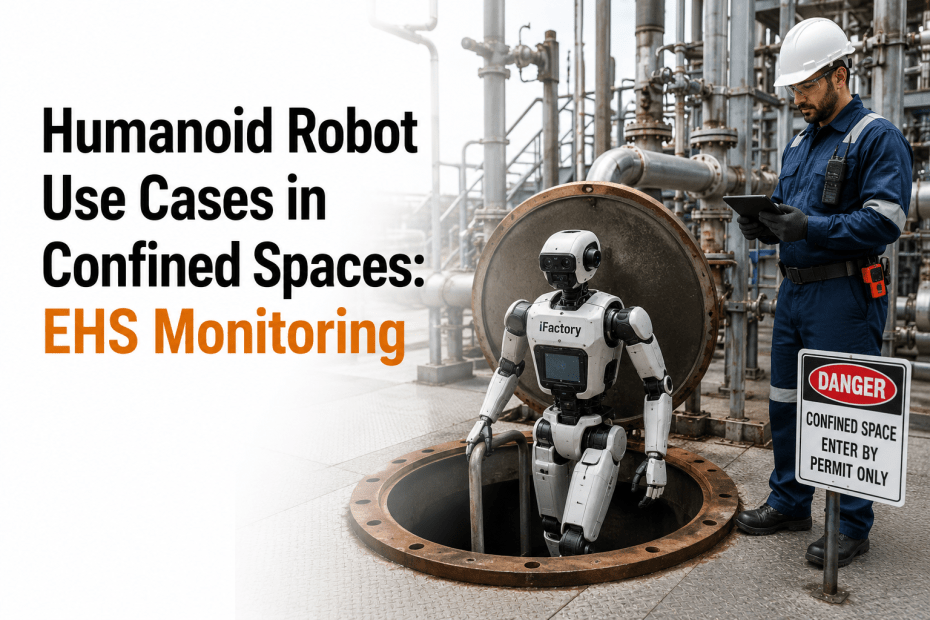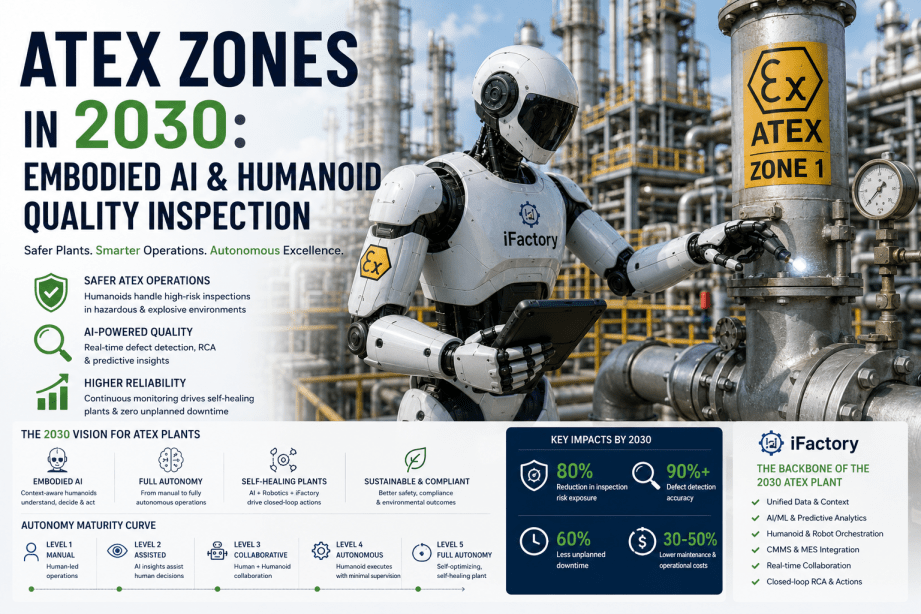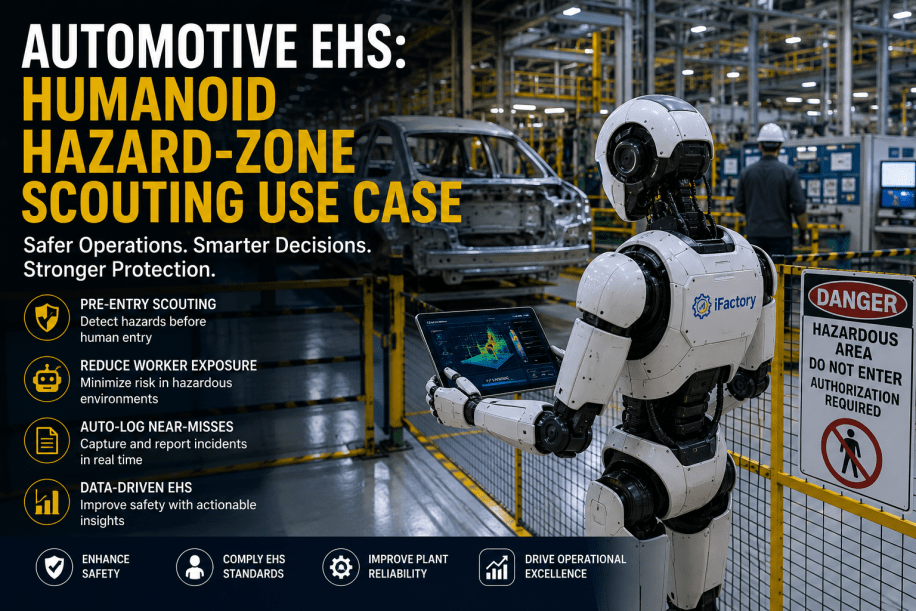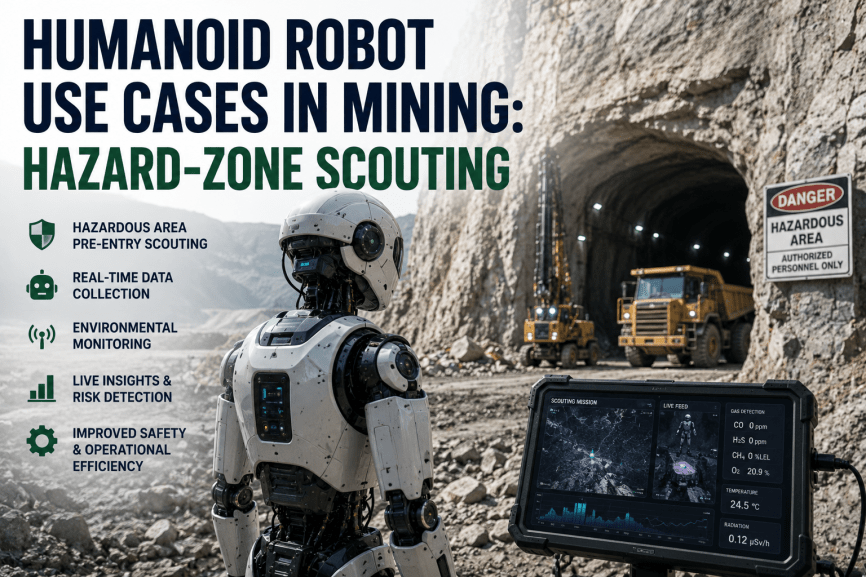
Mining and resource extraction operations confront a fundamental safety paradox: the most dangerous zones — underground stopes, highwall faces, conveyor transfer points, crusher chambers, and tailings impoundments — are also the areas that require the most frequent human inspection for structural integrity, gas monitoring, equipment status, and operational readiness. Each year, the mining industry records thousands of safety incidents in North America alone, with ground fall, equipment interaction, and atmospheric exposure accounting for the majority of serious injuries at active mine sites. Humanoid robots equipped with embodied AI, multi-spectral sensing, and autonomous navigation are emerging as the practical solution to this paradox — deploying human-form machines into the hazard zones that no person should enter without robotic reconnaissance. A single highwall fall that is prevented by a humanoid pre-entry scouting mission at a surface mine represents $200,000–$500,000 in avoided injury costs, regulatory fines, and production interruption. At an underground hard-rock mine where a humanoid robot conducts daily gas monitoring and ground condition assessment in a stope that would otherwise require a two-person inspection crew, the annual safety and productivity benefit typically exceeds $300,000. iFactory AI's industrial intelligence platform extends into this domain by integrating humanoid robot telemetry, inspection data, gas sensor readings, and thermal imaging into the same CMMS, MES, and predictive maintenance architecture that governs all other mining equipment — creating a unified operational picture that connects robotic hazard assessment directly to maintenance planning, production scheduling, and regulatory compliance reporting.
Why Humanoid Robots for Mining Hazard-Zone Scouting
Mining hazard-zone scouting has historically relied on a combination of remote sensors, drone overflights, and manned inspection crews — each with significant operational limitations. Fixed sensor networks provide continuous monitoring at specific points but cannot traverse the mine to investigate developing conditions. Drones offer aerial perspective but lack the manipulation capability, ground-level sensing, and underground navigation that hazard assessment requires. Manned inspection crews deliver complete assessment but place personnel directly in the risk zone for every inspection cycle. Humanoid robots resolve all three limitations simultaneously: they walk, climb, and manipulate like a human inspector; they carry multi-spectral sensor payloads that exceed human sensing capability; and they operate autonomously in GPS-denied underground environments where drones cannot function.
The embodied AI architecture that powers modern industrial humanoid robots enables these machines to navigate loose rubble, step over debris, open gates, manipulate inspection hatches, and position sensors at precisely the angles required for comprehensive hazard assessment — capabilities that wheeled or tracked robots cannot replicate in the irregular terrain of active mining operations. iFactory AI's platform provides the integration layer that connects humanoid robot inspection data — gas concentration readings, thermal anomalies, structural crack measurements, ground vibration data — directly into the mine's CMMS for maintenance work order generation, MES for production scheduling adjustments, and compliance reporting systems for regulatory documentation. Book a Demo to review humanoid robot integration configurations for your specific mining operation.
Humanoid Robot Mining Applications: Hazard Scouting, Inspection, and Safety Monitoring
The application of humanoid robots in mining and resource extraction spans three primary operational domains: pre-entry hazard scouting for zones requiring personnel access, autonomous structural and equipment inspection of active mining infrastructure, and continuous environmental safety monitoring in underground and surface operations. Each application domain leverages the humanoid form factor's unique combination of mobility, manipulation, and sensing capability while integrating with iFactory AI's industrial intelligence platform for data processing, alert generation, and workflow automation. The following workflow illustrates the operational sequence of a humanoid robot hazard-scouting mission from deployment to closed-loop corrective action.
Mission Planning and Autonomous Deployment
The humanoid robot receives a scouting mission assignment from the iFactory AI platform — triggered by a scheduled inspection cycle, a sensor anomaly alert from fixed mine monitoring systems, or a pre-entry requirement before personnel access to a stope or highwall zone. The robot navigates autonomously from its charging station to the target hazard zone using onboard LiDAR, inertial navigation, and pre-mapped mine topology, traversing uneven terrain, rail crossings, and incline passages without operator intervention.
Multi-Spectral Hazard Assessment and Data Collection
Upon arrival at the target zone, the robot executes a pre-programmed inspection sequence combining gas concentration measurement across multiple sensor points, thermal imaging of ground and wall surfaces, LiDAR scanning for ground deformation and crack detection, acoustic monitoring for rock stress signatures, and visual documentation of ground support conditions, standing water, and equipment status. The robot manipulates inspection hatches, positions sensors at multiple heights and angles, and collects samples where required — performing the complete inspection that would otherwise require a two-person crew 60–90 minutes to complete, in 20–30 minutes without any personnel entering the hazard zone.
Real-Time Data Transmission and Anomaly Detection
Inspection data streams in real time to the iFactory AI platform, where machine learning models compare current readings against historical baselines and established threshold parameters. Gas concentrations exceeding permissible exposure limits, thermal anomalies indicating potential spontaneous combustion or equipment overheating, crack propagation measurements exceeding structural tolerance, and ground deformation rates indicating slope instability are flagged within seconds and prioritized by risk level. The platform generates time-stamped, geo-referenced inspection records that satisfy MSHA and regulatory documentation requirements without manual data entry.
Automated Workflow Triggering and Corrective Action
When the humanoid robot's inspection data reveals a condition requiring corrective action — an elevated methane reading at a longwall face, a developing crack in the highwall, a conveyor belt hot-bearing thermal signature — the iFactory platform automatically creates a CMMS work order with the robot's inspection data, sensor readings, and location coordinates attached. The platform notifies the appropriate maintenance or operations team member, updates the mine production schedule in the MES if the condition affects planned production zones, and records the inspection and corrective action in the compliance documentation system. The complete cycle from robot deployment to corrective work order generation occurs in under 60 minutes, compared to 4–12 hours with manual inspection and reporting processes.
iFactory AI Integration Architecture for Humanoid Robot Mining Operations
The operational value of humanoid robot mining applications depends on the integration depth between the robot's sensor and navigation systems and the mine's existing operational technology infrastructure — CMMS, MES, SCADA, gas monitoring systems, ground control databases, and regulatory compliance platforms. iFactory AI's platform serves as the integration backbone that connects humanoid robot telemetry, inspection data, and environmental monitoring into a unified intelligence layer purpose-built for mining operations. The platform connects to existing mine control systems, ventilation monitoring networks, gas detection infrastructure, and equipment health monitoring systems without requiring replacement of installed technology. Book a Demo to see iFactory's humanoid robot integration architecture configured for your specific mining environment.
| Integration Layer | Mine Data Source | Humanoid Robot Analytics Capability | iFactory Module | Measured Impact |
|---|---|---|---|---|
| Hazard Zone Scouting | Robot LiDAR, multi-spectral cameras, gas sensors, thermal imager, acoustic sensors | Autonomous pre-entry inspection, multi-point gas monitoring, structural crack detection, ground deformation scanning | Robotics AI Module with autonomous navigation, inspection sequence execution, and anomaly detection engine | 85–92% personnel hazard exposure reduction; 60–75% faster inspection cycles |
| Structural Health Monitoring | Robot-mounted ground-penetrating radar, crack propagation sensors, ground vibration monitors, LiDAR change detection | Highwall and stope structural integrity assessment, ground support condition evaluation, deformation rate trending | Inspection Management Module with structural health scoring and trend prediction | 40–60% earlier detection of structural instability vs. visual inspection alone |
| Atmospheric and Gas Monitoring | Robot gas chromatograph, multi-gas detector array, air velocity sensors, ventilation control system interface | Mobile gas concentration mapping across inaccessible zones, ventilation effectiveness assessment, early fire detection | Safety and Compliance Module with real-time gas monitoring, threshold alerting, and regulatory documentation | 3–5x increase in gas monitoring coverage area; real-time alerts vs. shift-interval sampling |
| Equipment Condition Inspection | Robot thermal camera, vibration sensors, acoustic microphones, visual inspection cameras | Autonomous conveyor system inspection, crusher and mill condition assessment, pump and ventilation fan health check | Predictive Maintenance Module with mining-equipment-specific failure mode models | 30–50% reduction in unplanned conveyor and crusher downtime through earlier defect detection |
| CMMS Integration | Maintenance work orders, PM schedules, equipment history, spare parts inventory, shift reports | Automatic work order generation from robot inspection findings, condition-based PM scheduling, equipment health scoring | Enterprise Asset Management Module with robotic inspection workflow automation | 45–60% reduction in inspection-to-work-order cycle time; automated compliance documentation |
| MES and Production Integration | Production schedules, shift plans, equipment availability, ore quality data, haulage dispatch systems | Hazard zone status integration into production planning, condition-based zone release for personnel access | Manufacturing Execution System Module with mining-specific scheduling and hazard integration | 12–18% improvement in production schedule adherence through faster hazard zone clearance |
Humanoid Robot Mining Applications by Mine Type and Operational Setting
Different mining environments — underground hard-rock, underground longwall coal, open-pit surface mines, and solution mining operations — present distinct hazard profiles that require tailored humanoid robot inspection configurations and sensor payloads. iFactory AI's platform adapts its analytics and integration architecture to each mine type while maintaining a common data model and workflow automation engine. The following sections detail the specific humanoid robot application approach for each primary mining environment.
Underground Hard-Rock Mines — Stope Scouting and Ground Condition Assessment
Underground hard-rock mines — including gold, copper, nickel, zinc, and silver operations — present the most demanding humanoid robot deployment environment: GPS-denied navigation through decline and ramp systems, uneven and rubble-strewn stope floors, vertical winze access, and confined spaces with limited communication bandwidth. The primary hazard-scouting application is pre-entry stope inspection before blasting and mucking cycles, where the humanoid robot enters the stope after the ventilation period to measure gas concentrations, scan the back and walls for loose ground, assess ground support condition, and verify that the stope is safe for personnel entry. iFactory AI's platform receives the robot's inspection data and automatically updates the stope status in the mine production schedule — releasing the stope for production or flagging it for ground support remediation before personnel entry. Underground hard-rock mines deploying humanoid robot stope scouting document a 90% reduction in personnel exposure to post-blast stope hazards and a 50–70% reduction in stope inspection cycle time, directly improving available production hours.
Open-Pit Surface Mines — Highwall and Bench Face Scouting
Open-pit surface mines face persistent hazard-zone scouting requirements at highwall crests, bench faces, pit wall ramps, and dump-point edges — areas where ground instability, rockfall potential, and equipment proximity create significant personnel risk during manual inspection. Humanoid robots deployed in open-pit environments navigate bench access roads, traverse pit wall ramps, and position inspection sensors at the highwall crest to capture LiDAR scans, thermal images, and visual documentation of slope conditions, crack propagation, drainage performance, and ground support integrity. The robot's ability to access bench elevations and crest positions that would require rope access or aerial lift equipment for manned inspection dramatically expands the scope and frequency of highwall condition monitoring. The iFactory platform integrates robot inspection data with slope stability radar and prism monitoring systems to provide a comprehensive highwall health assessment that combines wide-area radar coverage with robot-collected close-range structural data — delivering 60–80% greater confidence in slope stability decisions compared to radar or visual inspection alone.
Underground Coal Mines — Longwall and Goaf Area Gas Monitoring
Underground coal mines present unique hazard-scouting requirements driven by methane liberation, spontaneous combustion risk, and goaf (mined-out area) gas management. Humanoid robots deployed in coal mining operations conduct autonomous gas monitoring missions into longwall tailgate entries, bleeders, and goaf edges where methane accumulation and spontaneous combustion potential require continuous assessment but personnel access carries explosion risk. The robot carries multi-gas detectors calibrated for methane, carbon monoxide, hydrogen, and oxygen deficiency, along with thermal imaging for hot-spot detection, and navigates autonomously into areas where the atmospheric condition is unknown. iFactory AI's platform correlates robot-collected gas data with fixed mine monitoring system readings and ventilation model outputs to provide real-time goaf gas management intelligence — enabling ventilation engineers to make informed adjustments based on the most current spatial gas distribution data rather than relying on fixed-point sensor readings alone. Coal mines integrating humanoid robot goaf gas monitoring document a 3–5x increase in gas monitoring spatial resolution and a measurable reduction in spontaneous combustion events through earlier hot-spot detection.
Expert Review: Humanoid Robot Hazard Scouting in Mining Operations
I have spent 26 years in mining operations across underground hard-rock, open-pit, and longwall coal environments — in engineering, operations management, and safety leadership roles. I have evaluated every generation of mining automation from LHD tele-remote operation to autonomous haulage systems to drone-based pit surveying. Humanoid robots for hazard-zone scouting represent the most significant advancement in mine safety since the introduction of mechanical roof bolting in the 1950s, and here is why: every hazard zone in a mine is fundamentally different every time you enter it. Gas concentrations shift with ventilation changes. Ground conditions evolve with blasting and stress redistribution. Equipment positions change with production cycles. Fixed sensors and drone surveys provide snapshots, but they cannot provide the comprehensive, ground-level, multi-sensory assessment that a human inspector delivers — and that is precisely what a humanoid robot replicates without placing a person in harm's way. We deployed a humanoid robot scouting system integrated with iFactory AI's CMMS and production scheduling platform at our underground gold mine 10 months ago. The most transformative outcome was not just the 90% reduction in personnel exposure to post-blast stope hazards, which was expected, but the discovery that our manual inspection frequency was inadequate to detect the rate of ground condition change in our most active mining areas. The robot's ability to conduct stope inspections between every blasting cycle, rather than once per shift, revealed developing ground instability patterns that our previous inspection schedule had been missing consistently. For mining operations leaders evaluating humanoid robot technology: the safety case is irrefutable, the technology readiness level is deployment-grade today, and the integration architecture that connects robot data to your existing operational systems is the critical success factor that determines whether humanoid robots become a pilot project or a core operational capability.
— Chief Operating Officer, North American Underground and Surface Mining Operations — 26 Years Industry Experience — iFactory AI Reference Customer 2026Conclusion
Humanoid robots equipped with embodied AI, multi-spectral sensing, and autonomous navigation are transforming mining hazard-zone scouting from a personnel-dependent, frequency-limited inspection activity into a continuous, data-rich, zero-risk operational capability. The documented outcomes at mining operations deploying humanoid robot scouting integrated with iFactory AI's industrial intelligence platform — 85–92% reduction in personnel hazard exposure, 60–75% faster inspection cycles, 40–60% earlier structural instability detection, and 45–60% reduction in inspection-to-corrective-action cycle time — represent the convergence of three technology trends: the maturation of humanoid robotic hardware to industrial reliability standards, the advancement of embodied AI for autonomous navigation in unstructured environments, and the development of integration platforms capable of connecting robot telemetry directly to mine operations systems.
iFactory AI's platform provides the integration layer that transforms humanoid robots from isolated inspection tools into connected operational assets — streaming real-time inspection data into CMMS, MES, and compliance systems, automating work order generation from hazard detection events, and providing the unified operational intelligence that enables mine leadership to make faster, safer, and more data-informed decisions about hazard zone access, production scheduling, and risk management. Book a Demo to see how iFactory AI integrates humanoid robot hazard scouting into your specific mining operation.
Frequently Asked Questions
Humanoid robots are deployed across all primary mining hazard zone categories: underground stope and face areas after blasting cycles, highwall crests and bench faces in open-pit operations, longwall tailgate and goaf entries in coal mining, conveyor transfer points and crusher chambers, tailings impoundment access points, ventilation shaft and raise stations, and explosive storage and handling areas. The humanoid form factor's combination of walking mobility, manipulation capability, and multi-spectral sensing enables access to zones that wheeled robots cannot reach and drones cannot inspect from the required ground-level perspective. Book a Demo to review humanoid robot hazard scouting configurations for your specific mine type and hazard profile.
iFactory AI receives humanoid robot telemetry and inspection data through standard industrial communication protocols — OPC-UA, MQTT, REST API — and processes the data through purpose-built analytics modules for gas monitoring, structural health assessment, thermal anomaly detection, and equipment condition evaluation. When the platform detects a condition requiring corrective action, it automatically creates a CMMS work order with the robot's sensor data, inspection timestamps, and GPS or mine-grid coordinates attached. The platform simultaneously updates the MES production schedule if the condition affects planned production zones — for example, flagging a stope as restricted entry until ground support remediation is completed. This closed-loop integration eliminates the manual data transfer and work order creation steps that typically consume 4–12 hours between hazard detection and corrective action initiation.
Industrial humanoid robots deployed in mining applications carry mission-configurable sensor payloads including multi-gas detectors (methane, carbon monoxide, hydrogen sulfide, oxygen, sulfur dioxide), thermal imaging cameras for hot-spot detection and equipment overheating assessment, LiDAR scanners for structural deformation and crack measurement, high-resolution visual cameras for documentation and defect identification, acoustic sensors for rock stress monitoring and equipment bearing analysis, ground-penetrating radar for subsurface condition assessment, and air velocity sensors for ventilation effectiveness measurement. The robot's manipulation capability enables positioning these sensors at multiple heights and angles — for example, raising a gas detector to the back of a stope or placing a thermal camera behind a conveyor drive pulley — that fixed sensors or remotely operated vehicles cannot achieve. Sensor payload configurations are tailored to each mine's hazard profile during the iFactory AI deployment process.
Yes. Industrial humanoid robots designed for mining applications use multi-modal navigation combining LiDAR SLAM (simultaneous localization and mapping), inertial measurement units, visual odometry, and pre-mapped mine topology to navigate autonomously in GPS-denied underground environments. The robot builds and updates its navigation map as it traverses the mine, enabling operation in areas where conditions change between visits — for example, navigating around newly parked equipment, rubble from recent blasting, or ventilation curtain reconfigurations. The iFactory AI platform provides the mission planning interface where operators define inspection routes and hazard zone boundaries, and receives real-time robot position telemetry integrated with the mine's survey grid for geo-referenced inspection data recording. Underground navigation reliability in active mining environments has reached 99%+ mission completion rates at reference deployment sites.
The standard iFactory AI deployment for humanoid robot mine scouting integration is 8–12 weeks, covering robot-to-platform connectivity, inspection sequence configuration, CMMS and MES workflow integration, analytics model calibration, and operator training. Most mining operations document positive ROI within 6–9 months, driven primarily by personnel hazard exposure reduction, inspection efficiency improvement, and avoided incident costs. The direct annual benefit at a typical mid-size underground mine deploying a single humanoid robot for stope and development-end scouting ranges from $300,000–$600,000 in labor efficiency, incident avoidance, and production schedule improvement. The longer-term value — including reduced ground-fall risk, extended infrastructure life through earlier defect detection, and comprehensive compliance documentation — compounds over 12–24 months as the historical inspection database enables predictive hazard trend analysis. The platform deploys alongside existing mine control systems without requiring replacement of installed gas monitoring, ventilation, or communication infrastructure.