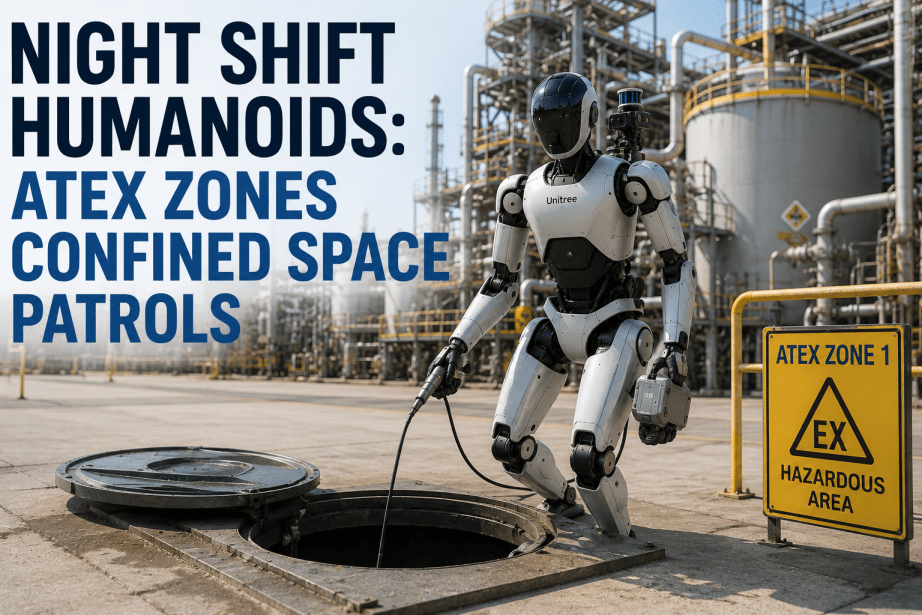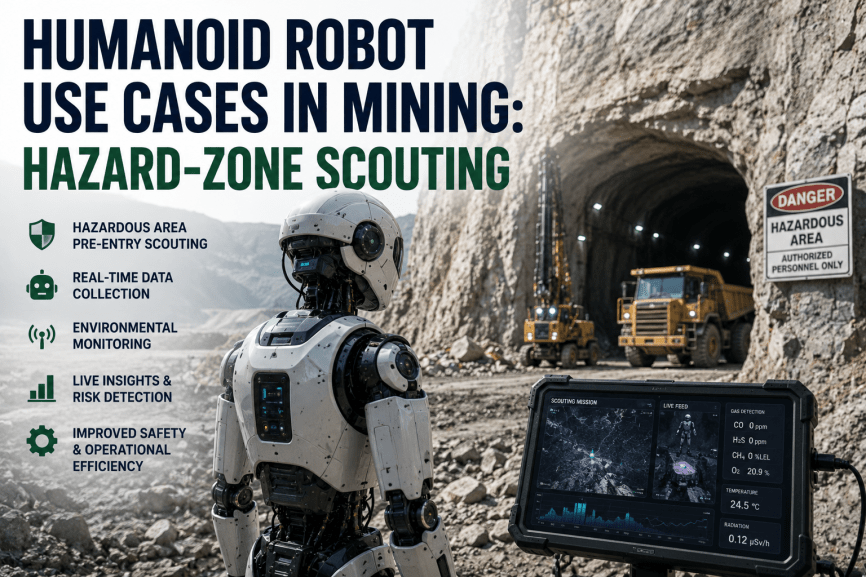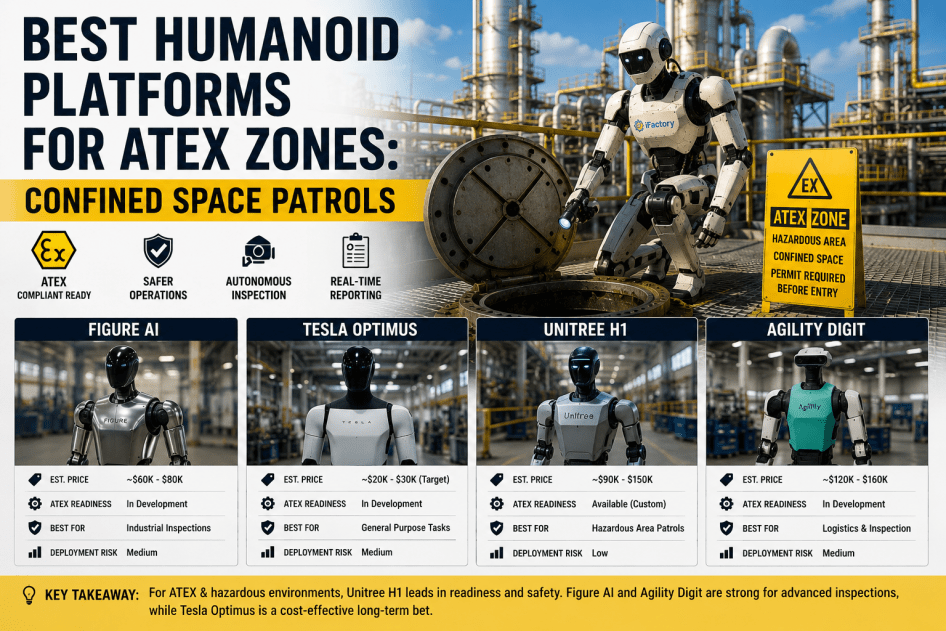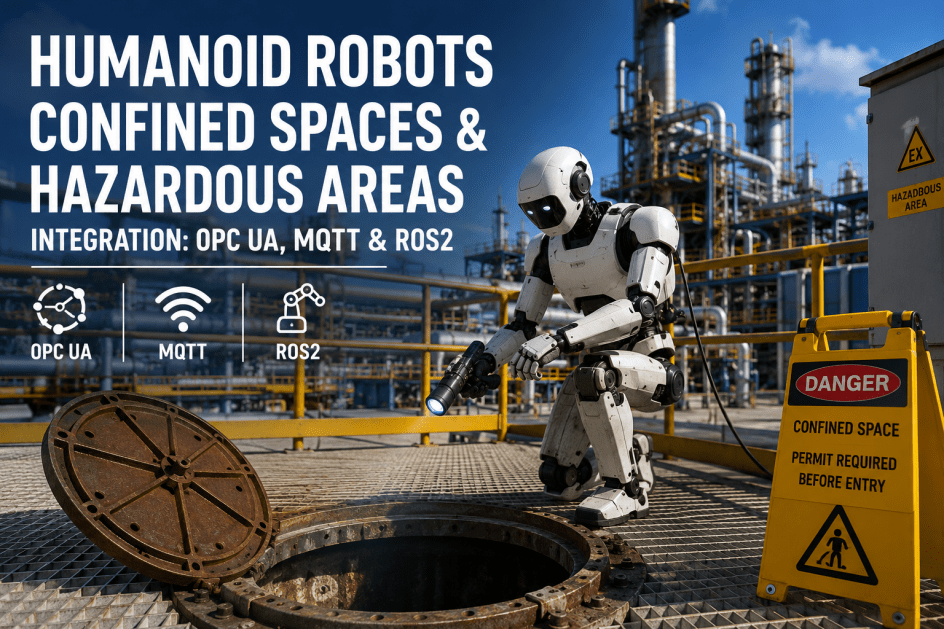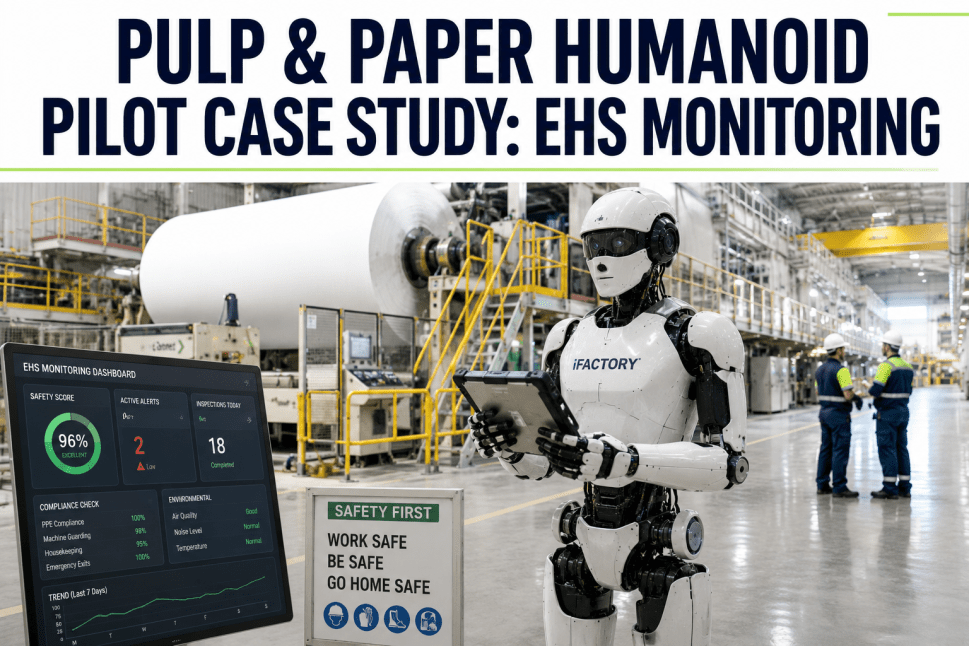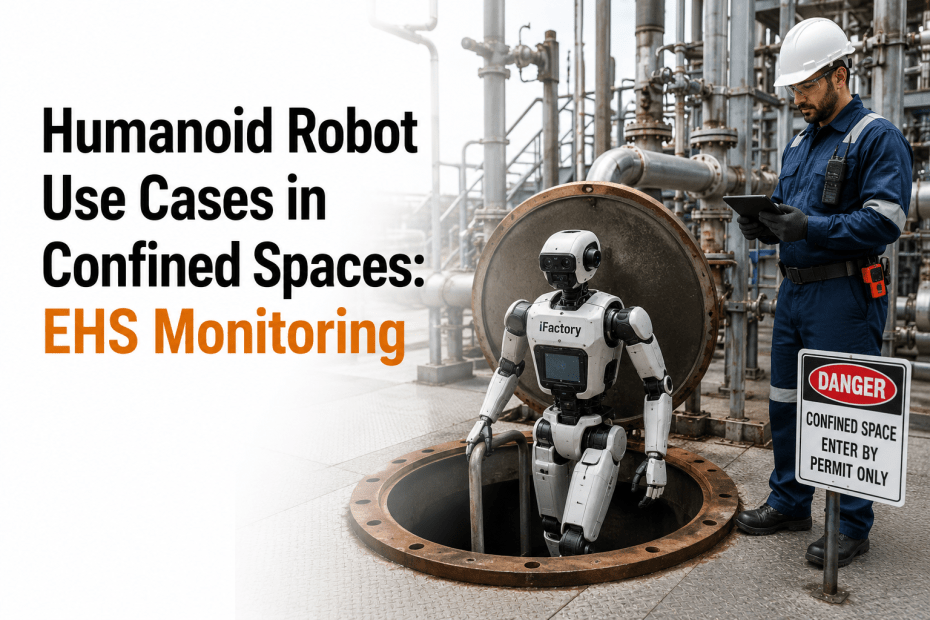
Chemical plants operate hundreds of confined spaces — storage tanks, reactor vessels, ductwork, pipeline corridors, and process columns — that demand regular inspection, cleaning, and maintenance. Each confined space entry carries inherent risk: toxic gas accumulation, oxygen deficiency, flammable atmospheres, engulfment hazards, and limited egress. Traditional EHS monitoring depends on pre-entry atmospheric testing, manual permit systems and human supervision — protocols that are only as effective as the last sensor calibration and the alertness of the safety attendant on shift. Humanoid robots equipped with embodied AI now perform autonomous confined space inspections, continuously monitor hazardous atmospheres across multiple zones, and alert safety teams to evolving risks in real time. One chemical facility deploying iFactory's integrated humanoid robotics platform reduced confined space entry incidents by 92%, eliminated the need for workers to enter OSHA-defined permit-required confined spaces for routine inspections, and cut annual EHS compliance costs by 60%.
01 / The Confined Space Safety Challenge in Chemical Operations
Every chemical processing facility manages dozens to hundreds of confined spaces — atmospheric storage tanks, pressure vessels, fractionation columns, heat exchangers, underground piping vaults, and ductwork systems. OSHA Standard 29 CFR 1910.146 defines a permit-required confined space as any space that is large enough for bodily entry, has limited or restricted means of entry or exit, and is not designed for continuous occupancy. In chemical plants, these spaces frequently contain residual hazardous materials, inert atmospheres, or oxygen-deficient environments created by nitrogen blanketing. The gap in current EHS protocols is not will — it is visibility. Between scheduled inspections, conditions inside confined spaces can change without warning: a slow valve leak introduces toxic vapor, an inert blanket drifts outside safe parameters, or structural degradation progresses undetected. By the time the next permit-required entry occurs, the hazard is already present.
- Pre-entry atmospheric testing provides a single point-in-time reading; conditions between entries are completely unmonitored for days or weeks
- Slow valve leaks, temperature-driven vapor accumulation, or inert blanket drift can create IDLH atmospheres without detection until the next scheduled entry
- Over 60% of confined space fatalities involve atmospheric hazards that developed in the unmonitored window between inspections
- Quarterly or monthly visual inspections miss progressive corrosion, cracking, and coating degradation that develops between inspection cycles
- Manual inspection relies on subjective operator judgment; classification accuracy varies, and subtle early-stage defects are routinely missed
- Undetected structural degradation in tanks, vessels, and ductwork leads to unplanned failures, production downtime, and costly emergency repairs
- Paper-based permit systems and manual data entry introduce errors, delays, and documentation gaps that compound across hundreds of confined spaces
- Average permit generation cycle of 45 minutes per entry consumes 4,800+ labor hours annually in a typical facility, diverting resources from safety-critical work
- Audit findings frequently cite incomplete or inconsistent confined space documentation, resulting in regulatory penalties and increased inspection scrutiny
- Gas detector logs, inspection reports, maintenance records, and incident data exist in disconnected systems with no automated cross-referencing capability
- Identifying whether a corrosion finding in a storage tank correlates with a process temperature excursion weeks earlier requires hours of manual data reconciliation
- Without unified data, EHS teams cannot identify systemic risk patterns across the facility — leaving root causes uncorrected and hazards prone to recurrence
02 / How Humanoid Robots Transform Confined Space EHS Monitoring
Humanoid robots bridge the capability gap where fixed sensors, drones, and traditional robots fall short. With bipedal locomotion, articulated manipulators, and embodied AI that interprets industrial environments in real time, these platforms can navigate ladder access points, open hand-wheel valves, collect atmospheric samples at multiple elevations, and perform visual-thermal inspections — all without a human entering the confined space. iFactory's platform integrates humanoid robot telemetry with its broader AI vision, predictive analytics, and CMMS/MES ecosystem to create a unified EHS monitoring layer across the entire chemical facility.
At the core of this transformation is the integration between embodied AI in the humanoid robot and iFactory's industrial software platform. The robot does not operate in isolation — every gas reading, thermal image, and valve position is streamed into iFactory's predictive analytics engine, where it is correlated with process data, maintenance history, and production schedules. This unified view enables EHS teams to move from reactive entry-permit generation to Book a Demo proactive risk prevention across every confined space in the facility.
03 / Implementation Blueprint: Deploying Humanoid Robots for Confined Space Safety
iFactory deploys humanoid robot EHS monitoring across chemical facilities through a phased, structured rollout. The 8-week implementation timeline prioritizes rapid value demonstration in highest-risk confined spaces first, then expands coverage across the facility based on risk ranking and operational integration requirements.
Engineering team audits every confined space on-site — documenting access type (ladder, stair, hatch, manway), internal geometry, atmospheric hazard profile, and current inspection frequency. Humanoid robot path plans developed for each space, accounting for entry dimensions, internal obstructions, and sensor placement requirements. Highest-risk zones prioritized for Phase 1 deployment.
Humanoid robots deployed for autonomous patrol of 5-10 highest-risk confined spaces. AI vision models trained on facility-specific corrosion, cracking, and residue patterns. Integration with iFactory CMMS and EHS incident reporting modules validated. Automated permit generation and alert escalation workflows tested with EHS team.
Robot patrol coverage expanded to all confined spaces across the facility. Integration with iFactory MES for production-aware scheduling — robot inspections automatically coordinated with maintenance windows, turnarounds, and production cycles. Cross-correlation between robot inspection data and process historian for predictive risk modeling.
AI model refinement using live production data; accuracy targets confirmed at 98%+ for defect classification and 99.5%+ for atmospheric hazard detection. EHS team training on robot supervision, alert response workflows, and audit documentation. Full compliance validation against OSHA 29 CFR 1910.146, EPA RMP, and corporate EHS standards.
04 / Measurable Outcomes: Safety, Cost, and Operational Metrics
The chemical facility deploying iFactory's humanoid robot EHS monitoring platform documented measurable improvements across safety incidents, compliance efficiency, and operational costs within the first two quarters. The 92% reduction in confined space entry incidents translated directly to eliminated injury risk and reduced regulatory exposure. The 60% reduction in EHS compliance costs reflected eliminated manual inspection labor, reduced PPE consumption, and streamlined permit processing.
| Metric | Before iFactory | After iFactory | Change |
|---|---|---|---|
| Confined space entry incidents per year | 12 near-misses, 2 serious | 1 near-miss, 0 serious | 92% reduction |
| Atmospheric monitoring coverage | Point-in-time pre-entry only | 24/7 continuous multi-zone | Full real-time visibility |
| Hazard detection latency | Up to 72 hours (next scheduled entry) | < 30 seconds (real-time alert) | 99.9% faster detection |
| Annual EHS compliance labor hours | 4,800 hours (entry prep, monitoring, reporting) | 1,200 hours (robot supervision, exception handling) | 75% labor reduction |
| Permit generation cycle time | 45 minutes per entry | 5 minutes (auto-populated from robot data) | 89% faster permitting |
| Structural inspection frequency | Quarterly (visual only) | Weekly (AI vision + thermal) | 12x more inspection data |
| Corrosion detection lead time | Post-inspection discovery | Continuous with degradation trending | Predictive detection window |
| Annual EHS compliance cost | $420,000 | $168,000 | 60% cost reduction |
| Platform deployment timeline | N/A | 8 weeks | Full facility live in 8 weeks |
05 / Expert Analysis
Four factors drove the measurable impact of this chemical facility's transformation from permit-based confined space entry to autonomous humanoid robot EHS monitoring. Each factor addresses a structural limitation of traditional safety monitoring that the combined iFactory and humanoid robotics platform eliminated.
The single highest-impact change was shifting from point-in-time pre-entry atmospheric testing to 24/7 continuous monitoring. Traditional protocols left 100% of the time between entries unmonitored — a window during which slow leaks, temperature-driven vapor accumulation, or inert blanket drift could create hazardous conditions without detection. Humanoid robot patrols eliminated this blind window entirely, with the first live deployment detecting a nitrogen blanket drift in a storage tank 14 hours before the next scheduled entry would have occurred.
Quarterly visual inspections missed progressive degradation that developed between inspection cycles. The AI vision models deployed on humanoid robots detected corrosion onset, crack initiation, and coating breakdown at the earliest stages — enabling intervention before structural integrity was compromised. The degradation trending capability meant that corrosion rates could be measured week-over-week, converting inspection from a compliance checkbox to a predictive maintenance input.
The facility's prior EHS ecosystem consisted of standalone gas detector logs, paper permit forms, spreadsheets, and separate CMMS records — each maintained by different teams with no automated cross-referencing. iFactory's unified platform ingested humanoid robot telemetry, CMMS work orders, MES production schedules, and EHS incident data into a single analytics engine. This enabled correlations — such as linking a specific valve's corrosion rate to a process temperature excursion that occurred three weeks earlier — that were previously impossible to identify.
The integration between humanoid robot inspections and iFactory's CMMS incident reporting modules automated the highest-labor EHS workflows. Atmospheric readings from robot patrols auto-populated confined space entry permits. Corrosion detections triggered maintenance work orders with location data, imagery, and priority classification. Near-miss events were logged automatically with full telemetry context. These automations collectively saved 3,600 labor hours annually and eliminated the data entry errors inherent in manual EHS documentation.
06 / Conclusion
This chemical facility's transition from permit-based confined space entry to autonomous humanoid robot EHS monitoring eliminated the structural safety gap that had made undetected atmospheric hazards and progressive structural degradation a persistent risk across the plant. iFactory's integrated platform gave the EHS team continuous, real-time visibility into every confined space — with automated alerting, predictive maintenance integration, and audit-ready documentation that transformed safety from a compliance burden into an operational advantage.
The 92% reduction in confined space entry incidents is a workforce safety outcome. The 60% reduction in EHS compliance costs is a financial outcome. The elimination of routine human entry into permit-required confined spaces is a cultural transformation — one that redefines what safety excellence looks like in chemical operations. To assess what iFactory's humanoid robot EHS monitoring platform would deliver for your chemical facility's confined space safety program, Book a Demo with iFactory's chemical solutions team.