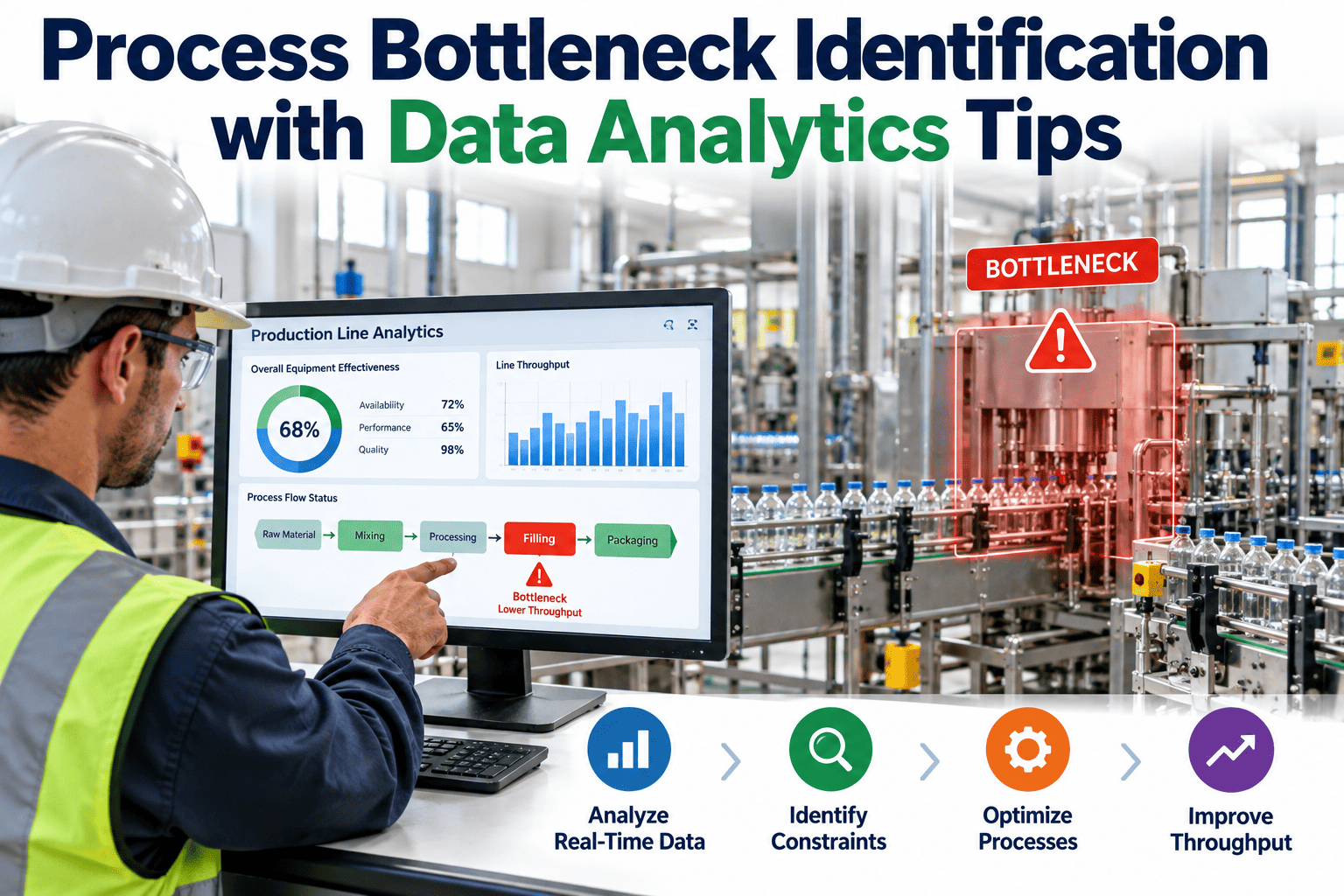
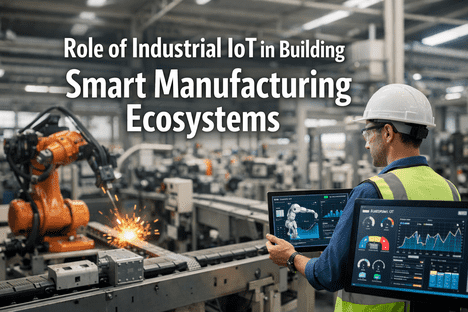
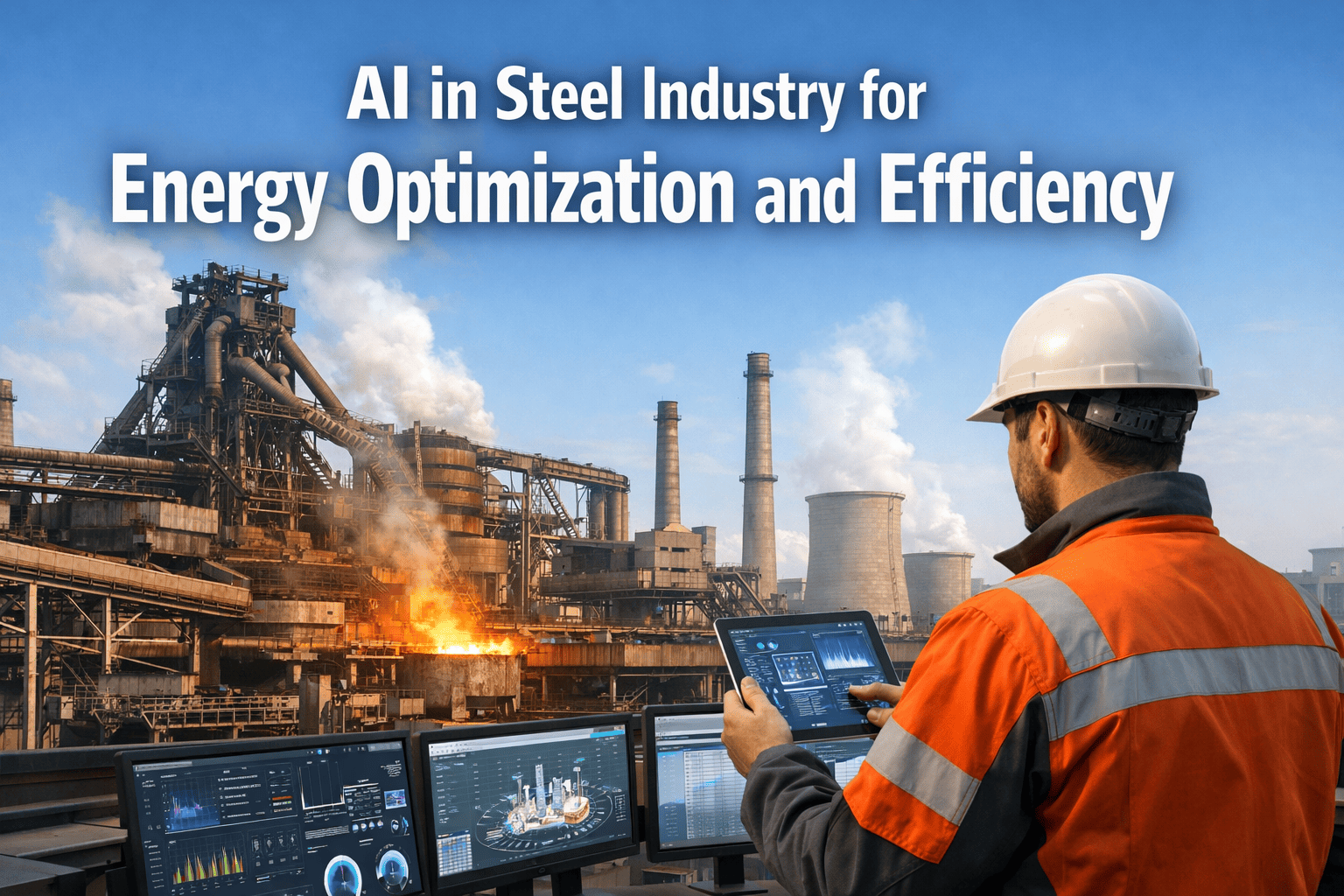
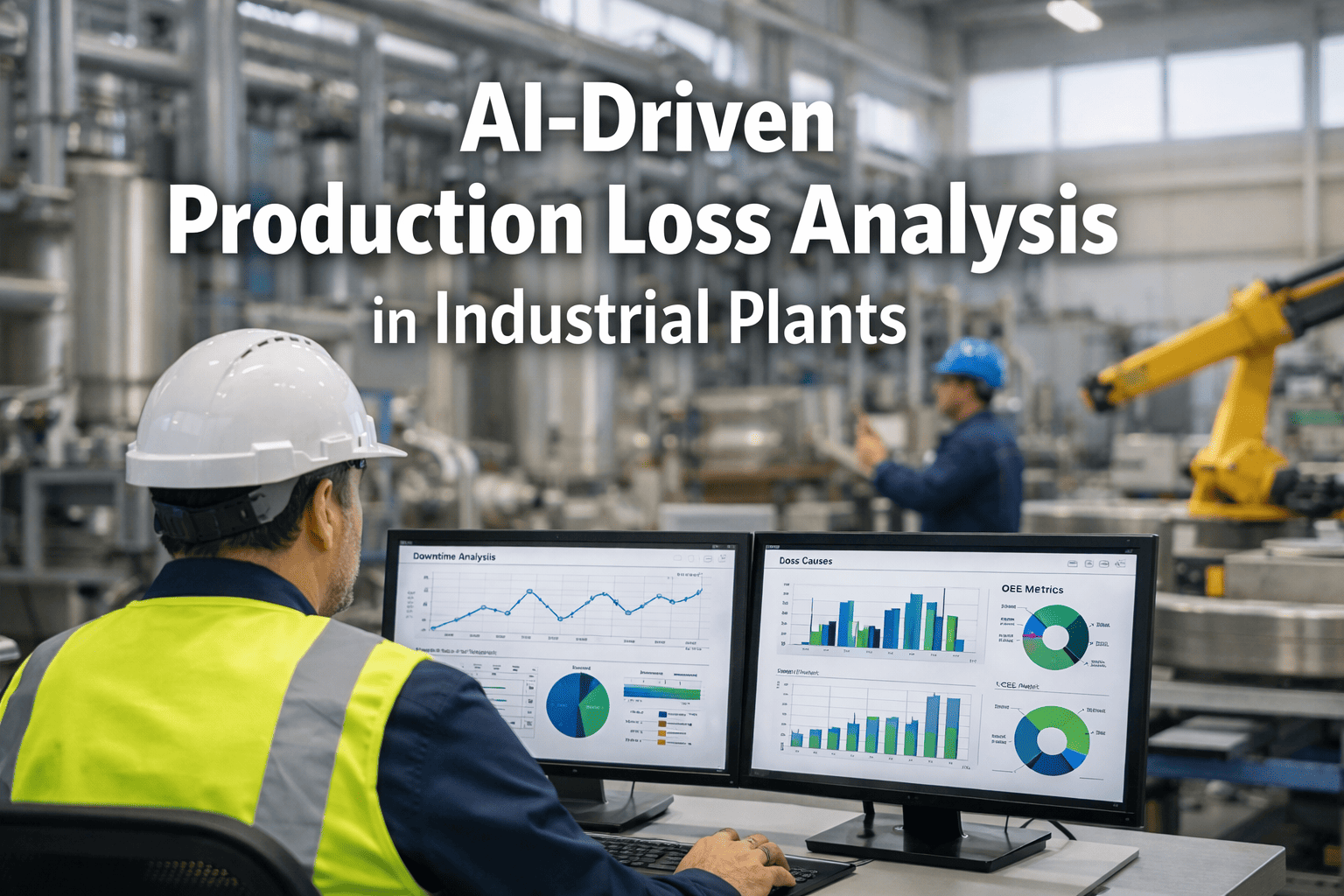
The average factory operates at just 60% of its theoretical capacity — not because of broken machines, but because of invisible inefficiencies hiding in plain sight. Suboptimal temperature ramps that add twelve minutes per batch. Speed settings that drift 8% below peak because no one recalibrated after the last product changeover. Quality deviations that trigger rework loops costing more than the raw materials themselves. These are not equipment problems. They are process problems — and they compound silently across every shift, every line and every quarter. AI-powered process optimization finds these hidden losses in real time, adjusts parameters faster than any operator can, and compounds improvements across thousands of variables simultaneously. The result: manufacturers are lifting OEE by 10 to 20 points, cutting waste by 30%, and unlocking millions in throughput from existing equipment — without buying a single new machine.
AI-Powered Efficiency
Industrial Process Optimization Using AI and Advanced Analytics
Analyze every variable, optimize every parameter, and extract maximum throughput from your existing production lines — in real time, shift after shift.
$509B
AI process optimization market projected by 2035 at 36% CAGR
78%
Of AI-enabled factories report measurable waste reduction
25%
Average increase in operational efficiency with AI optimization
88%
Of organizations now use AI in at least one business function
Sources: Precedence Research · McKinsey State of AI 2025 · Tech-Stack Research · TVS Next Analytics
The Hidden Capacity You Already Own
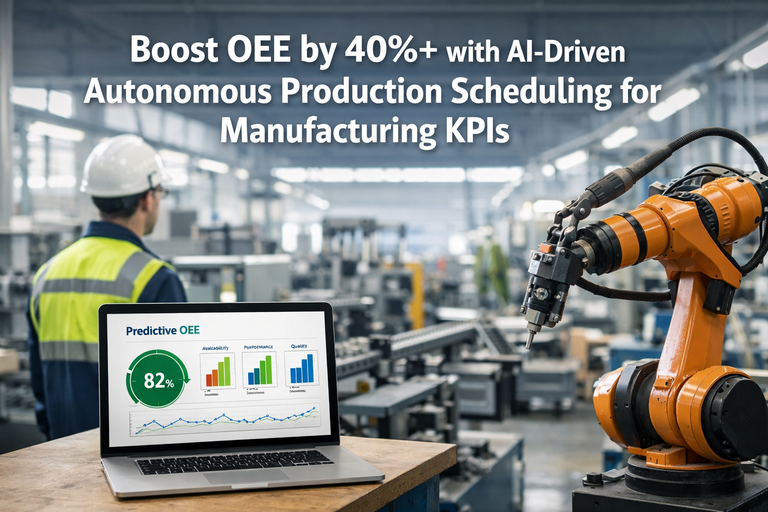
Most manufacturers think they need new equipment to increase output. The data tells a different story. World-class OEE sits at 85% — yet the average factory runs between 60% and 65%. That gap represents enormous untapped capacity hiding inside your existing lines. AI process optimization targets the three pillars of OEE simultaneously — availability, performance, and quality — finding gains that traditional methods miss because the interactions between hundreds of variables are too complex for human analysis or static rules.
Availability
Is the line running?
Common Losses
Unplanned breakdowns
Changeover & setup time
Material shortages & waiting
What AI Does
Predicts failures 48–96 hours ahead, simulates optimal changeover sequences via digital twin, and auto-schedules maintenance during planned windows.
Performance
Is it running at full speed?
Common Losses
Speed reductions & micro-stops
Cycle time drift after changeovers
Suboptimal parameter settings
What AI Does
Continuously adjusts speed, pressure, temperature, and feed rates to maintain peak throughput within quality limits — reacting to variable changes in milliseconds.
Quality
Is every unit good?
Common Losses
Defects, rework, and scrap
Off-spec batches from input variation
Start-up rejects & yield loss
What AI Does
Monitors product quality inline, correlates deviations to root causes across the four Ms (Man, Machine, Material, Method), and adjusts parameters before scrap is created.
Six Process Optimization Levers AI Pulls Simultaneously
Traditional process improvement tackles one variable at a time — run a DOE, adjust a setpoint, wait for results. AI operates differently. It manages hundreds of interacting variables in real time, finding optimal operating windows that no human team or static model can discover. Here are the six levers AI pulls — all at once, across every production cycle.
01
Real-Time Parameter Optimization
AI continuously adjusts temperature, pressure, speed, flow rate, and timing parameters based on real-time sensor feedback — not static recipes. When raw material properties shift or ambient conditions change, the system adapts instantly, keeping every cycle at peak efficiency.
Typical result: 10–15% throughput increase from the same equipment
02
Predictive Quality Control
Instead of inspecting products after they are made, AI predicts quality outcomes during production by correlating process variables with historical quality data. Deviations trigger automatic corrections before defective units are produced — eliminating scrap at the source rather than catching it downstream.
Typical result: 40% reduction in quality-related waste
03
Intelligent Scheduling & Sequencing
AI optimizes production schedules by factoring in machine status, workforce availability, material supply, energy costs, and demand forecasts in real time. It sequences similar products to minimize changeover time and schedules energy-intensive operations during off-peak periods.
Typical result: 20–30% reduction in changeover time
04
Energy Consumption Optimization
AI maps energy consumption to production output at the machine level, identifies waste patterns invisible to manual analysis — furnace excess oxygen, compressor surge cycling, chilled-water overprovisioning — and continuously trims consumption to the minimum required for on-spec production.
Typical result: 12% average energy savings across operations
05
Yield Maximization & Waste Reduction
AI analyzes the full chain from raw material input to finished product output, identifying where yield drops occur and why. By optimizing material utilization, reducing overfill and overweight conditions, and minimizing start-up and transition waste, AI extracts maximum value from every kilogram of input material.
Typical result: 25% improvement in first-pass yield
06
Digital Twin Simulation
Before making physical changes, AI simulates the impact using a digital twin of your production environment. Test new recipes, evaluate equipment modifications, model capacity expansions, and validate process changes — all in a virtual replica that runs thousands of scenarios in seconds instead of weeks of physical trials.
Typical result: 50% reduction in time-to-validate process changes
Want to identify which optimization levers deliver the fastest ROI for your operations? Book a free process assessment.
Before vs. After: What AI Process Optimization Changes
The shift from traditional process management to AI-powered optimization is not incremental — it is structural. Every layer of how decisions are made, how fast they execute, and how well they compound changes fundamentally.
Decision Speed
Hours to days (manual analysis)
Milliseconds (real-time adjustment)
Variables Managed
5–10 per process step
Hundreds simultaneously
Quality Detection
Post-production inspection
Inline prediction before defects form
Energy Management
Monthly utility reviews
Continuous per-machine optimization
Process Changes
Weeks of physical trials
Digital twin simulation in seconds
Improvement Curve
Periodic (quarterly reviews)
Continuous (compounds every cycle)
Measurable Results from AI Process Optimization
AI process optimization is not a science experiment — it is delivering documented, auditable results in real factories right now. Here is what the data shows across hundreds of implementations worldwide.
10–20 pt
OEE Improvement
AI lifts OEE by optimizing availability, performance, and quality simultaneously — gains that compound across every production line
25–40%
Lower Maintenance Costs
Condition-based interventions replace calendar-based schedules, eliminating unnecessary maintenance and emergency premiums
30%
Waste & Cost Reduction
Autonomous AI solutions optimize output and eliminate scrap, rework, and material overuse across the full production chain
12%
Energy Savings
AI-driven energy management systems reduce consumption without impacting throughput — savings visible within weeks
150–250%
Supply Chain ROI
Advanced AI models prevent stockouts, optimize inventory, and drive data-informed supply chain decisions end to end
35–55%
Downtime Reduction
Predictive analytics convert unplanned stops into scheduled interventions, protecting throughput and delivery commitments
Sources: McKinsey · Deloitte · Tech-Stack · TVS Next · Precedence Research · BaseTwoAI
Industry Applications: Where AI Optimization Delivers the Biggest Wins
AI process optimization adapts to any production environment — but certain industries see outsized returns because of the complexity of their processes, the cost of their raw materials, or the consequences of quality failures.
Chemicals & Petrochemicals
Nonlinear relationships between hundreds of process variables make optimization impossible without AI. Manufacturers report double-digit yield increases and energy savings within a single operating cycle — AI fine-tunes combustion, manages reaction kinetics, and optimizes distillation in real time.
Automotive Manufacturing
Just-in-time production demands zero tolerance for downtime. AI optimizes welding parameters, paint booth conditions, stamping press settings, and assembly line sequencing — keeping cycle times tight and quality consistent across multi-model flexible lines.
Food & Beverage
Batch variability from natural ingredients, strict hygiene requirements, and frequent changeovers create constant efficiency drains. AI adjusts mixing times, oven temperatures, and packaging speeds based on real-time ingredient properties — improving yield while maintaining HACCP compliance.
Semiconductor & Electronics
Every percentage point of OEE improvement on lithography and etching equipment translates to millions in additional output. AI manages chamber matching, defect classification, and process drift correction across hundreds of tools simultaneously.
Steel, Cement & Heavy Industry
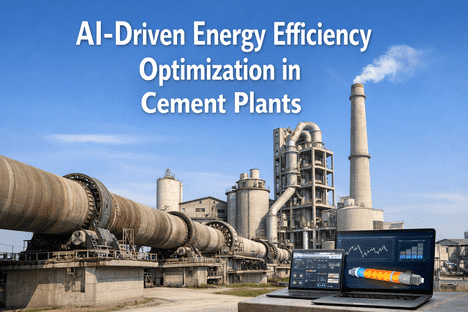
Energy-intensive processes with narrow operating windows. AI optimizes furnace temperature profiles, kiln rotation speeds, and cooling rates to minimize energy consumption per ton while hitting quality specs consistently.
Pharmaceuticals
Strict regulatory requirements demand traceable, validated processes. AI delivers Continued Process Verification (CPV) with real-time statistical monitoring, ensuring every batch meets specifications while reducing quality testing time by up to 50%.
The Market Is Accelerating — Rapidly
The global AI for process optimization market reached $23.5 billion in 2025 and is projected to hit $509 billion by 2035 — a 36% CAGR. Meanwhile, AI in manufacturing is growing at 35.3% CAGR, expected to reach $155 billion by 2030. By 2026, over 40% of manufacturers will adopt AI-powered scheduling systems. The question is no longer whether to optimize with AI — it is how fast you can deploy it before your competitors do.
$155B
AI in manufacturing market by 2030
40%+
Of manufacturers adopting AI scheduling by 2026
How iFactory Deploys AI Process Optimization
iFactory does not require you to rip out your existing systems. Our AI optimization layer connects to your MES, SCADA, PLC, and CMMS infrastructure — ingesting the data you already collect and transforming it into real-time optimization intelligence.
Week 1–2
Connect & Collect
Integrate with your existing MES, SCADA, and sensor infrastructure via OPC-UA, REST API, or MQTT. Begin streaming process data — temperatures, pressures, speeds, quality metrics — into iFactory's analytics engine. Zero disruption to running operations.
Week 3–4
Baseline & Model
AI learns your process baselines across all operating conditions — products, shifts, raw material batches, ambient environments. ML models map the relationships between process variables and output quality, identifying optimization opportunities invisible to manual analysis.
Week 5–6
Optimize & Alert
Activate real-time process recommendations and predictive alerts. AI suggests parameter adjustments to operators via dashboard or auto-adjusts through closed-loop control. Predictive quality models flag potential deviations before they produce scrap.
Quantify OEE improvement, waste reduction, energy savings, and throughput gains against your pre-deployment baseline. Present board-ready ROI analysis. Expand to additional lines and process areas based on demonstrated results.
Ready to unlock hidden capacity from your existing lines? Schedule your free process optimization assessment.
Frequently Asked Questions
What is AI-based industrial process optimization?
AI-based process optimization uses machine learning algorithms to analyze real-time production data — temperatures, pressures, speeds, quality measurements — and continuously adjust process parameters to maximize throughput, minimize waste, and maintain consistent quality. Unlike static recipe-based control, AI adapts to changing conditions in real time, managing hundreds of interacting variables simultaneously.
Book a demo to see it in action.
How much can AI process optimization improve OEE?
Documented results show OEE improvements of 10 to 20 percentage points by simultaneously optimizing availability, performance, and quality. A semiconductor manufacturer achieved a 14-point OEE improvement with AI, translating to millions in additional annual output. The gains compound over time as AI models learn your specific equipment and process characteristics.
Does AI process optimization work with our existing equipment?
Yes. AI optimization layers on top of your current MES, SCADA, PLC, and sensor infrastructure — it does not require new production equipment. If your equipment already generates digital data (which virtually all modern industrial equipment does), AI can analyze it and find optimization opportunities. iFactory connects via standard protocols including OPC-UA, REST API, and MQTT.
What ROI can we expect from AI process optimization?
Manufacturers typically see 25–40% lower maintenance costs, 30% waste reduction, 12% energy savings, and 10–15% throughput increases from the same equipment. Supply chain optimization with AI delivers 150–250% ROI. Most implementations reach measurable gains within weeks, with full ROI achieved within 6 to 12 months.
Schedule a demo to model your specific savings.
How long does deployment take and will it disrupt production?
iFactory deploys in 8 weeks with zero disruption to running operations. The system connects to your existing data infrastructure passively during weeks 1–4 (learning your baselines), then activates optimization recommendations in weeks 5–6, and validates ROI in weeks 7–8. No production stops, no equipment modifications, and no PLC reprogramming required for initial deployment.
Stop Leaving Capacity on the Table
Your Lines Are Already Producing the Data. Let AI Turn It Into Performance.
iFactory connects to your MES, SCADA, and sensor infrastructure to deliver real-time process optimization, predictive quality control, and energy management — extracting maximum throughput from equipment you already own.
8 Weeks
From data connection to measurable ROI
Zero
Production disruption during deployment
10–20 pt
OEE improvement from existing equipment
35.3%
Annual growth rate of AI in manufacturing market