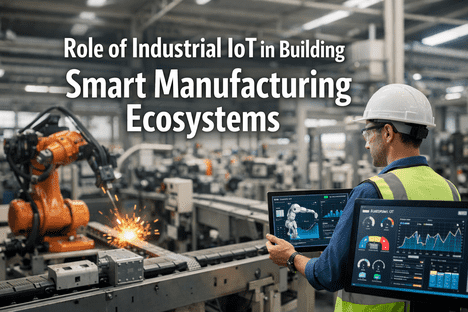
Most factories have automation. Some have sensors. Very few have a system where machines, data, and decisions operate as one connected intelligence. That gap between “automated” and “intelligent” is where Industry 4.0 lives—and it represents a $260 billion market in 2025, growing at 23.5% CAGR toward $747 billion by 2030. The question isn’t whether your factory needs an Industry 4.0 platform. It’s how fast you can build one before your competitors do. Book a free consultation to see where your plant stands.
The Connected Factory Platform That Turns Data Into Decisions
One platform connecting your machines, your maintenance, your production, and your people—with real-time intelligence at every layer.
The Industry 4.0 Opportunity Is Massive—and Accelerating
Why Most “Digital” Factories Aren’t Actually Smart
Technology alone doesn’t create intelligence. Disconnected systems do the opposite.
Every system shares data. Every decision is informed. Every action is connected.
Five Pillars of a True Industry 4.0 Platform
What separates a connected factory from a collection of disconnected tools.
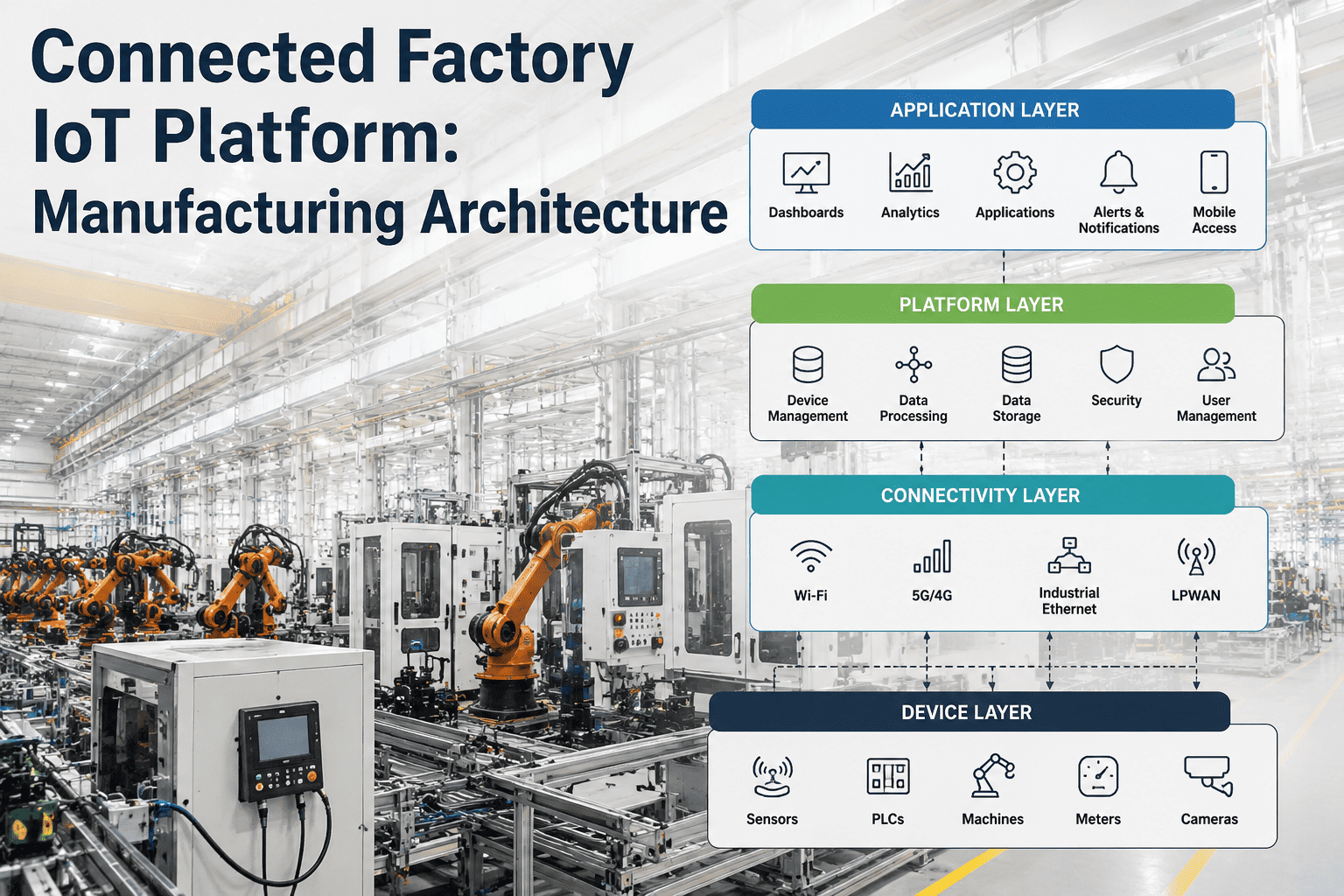
Machine Connectivity
IoT sensors and edge gateways connect every critical asset—regardless of age or manufacturer. Vibration, temperature, pressure, speed, and energy data streams in real time from the shop floor to the cloud.
Unified Data Platform
Production, maintenance, quality, and asset data converge into a single source of truth. No more spreadsheets, no more silos. Every department operates from the same real-time information.
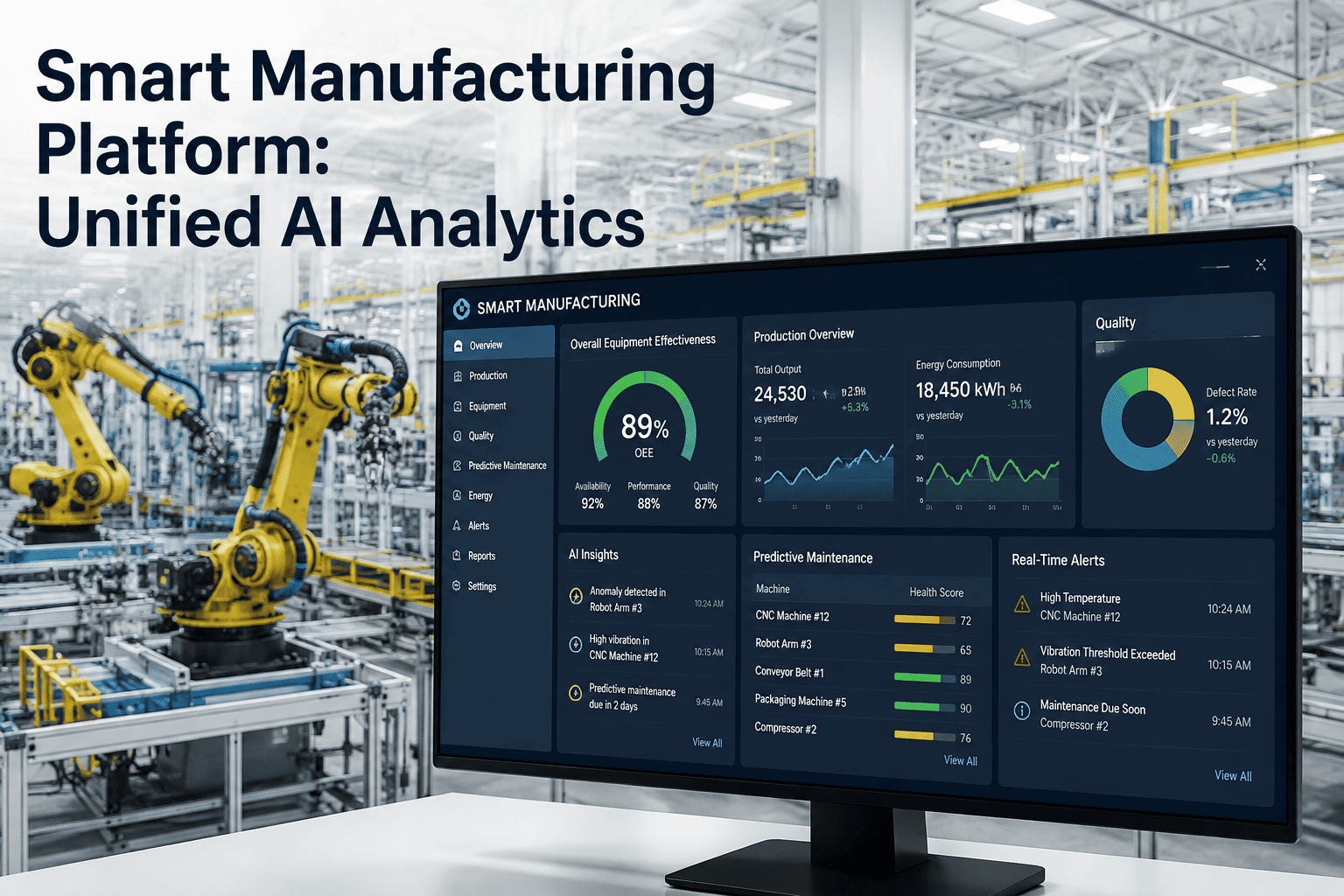
Real-Time Analytics
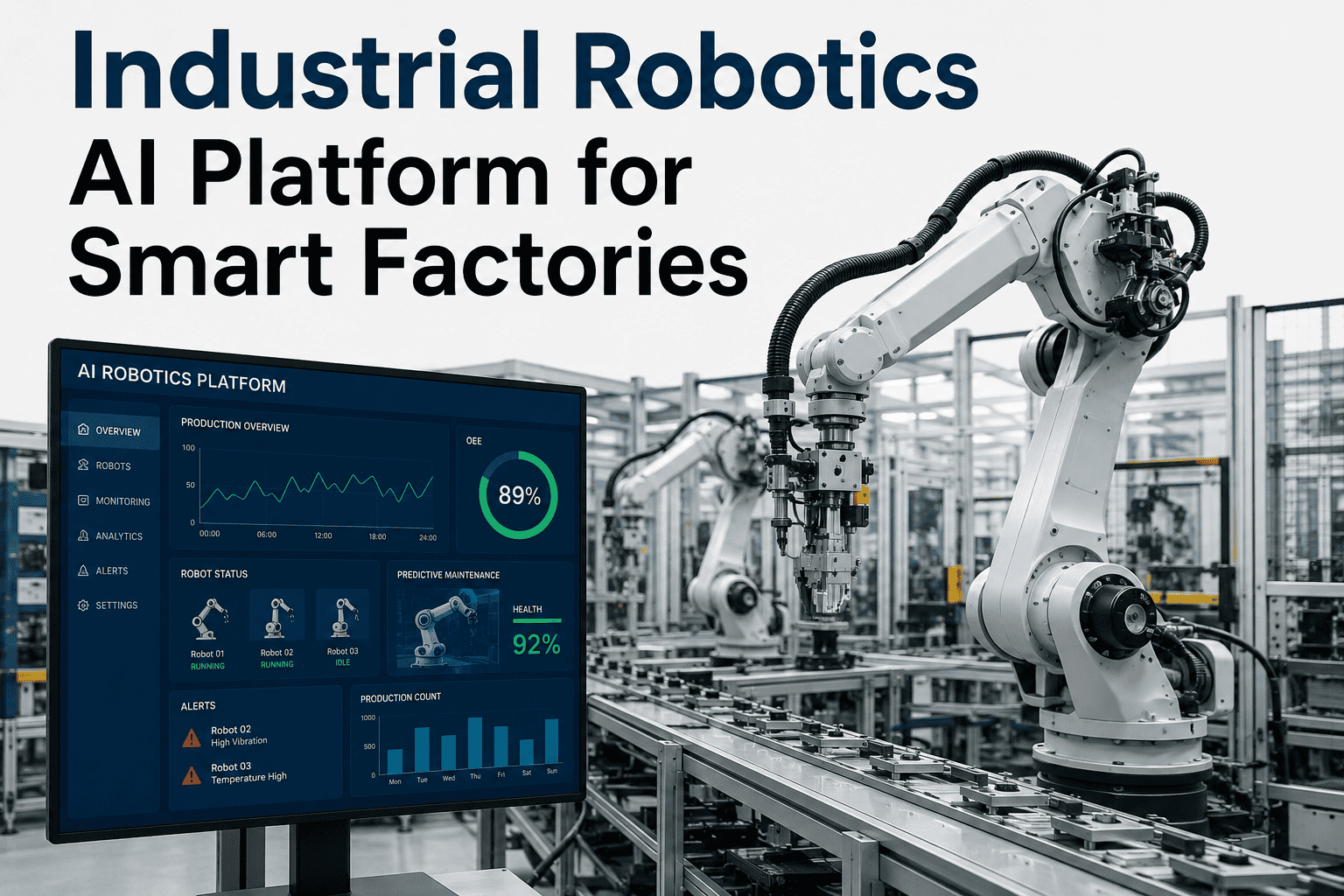
Live dashboards display OEE, downtime, throughput, and quality metrics as they happen. No more waiting for yesterday’s report. Decisions are driven by what’s happening right now.
Predictive Intelligence
AI and machine learning analyze sensor data against historical patterns to predict equipment failures 48–72 hours before they happen. Maintenance shifts from reactive firefighting to planned precision.
Scalable Architecture
Start with one line. Expand to the entire plant. Scale across multiple sites. Cloud-native architecture means no infrastructure limitations, no version conflicts, and no ceiling on growth. Your platform grows as your operation grows.
The Measurable Impact of Industry 4.0
Real numbers from manufacturers who made the transition.
Productivity Gains
Connected systems with intelligent software deliver dramatic improvements in throughput and output per labor hour.
Unplanned Downtime
Predictive maintenance powered by IIoT sensor data catches failures before they happen, cutting emergency stops dramatically.
Manufacturing Costs
Optimized scheduling, reduced waste, and energy management compound to lower the cost of every unit produced.
Energy Consumption
AI-optimized energy management identifies waste patterns invisible to human observation, reducing utility costs significantly.
ROI typically materializes within 18–24 months. Average returns of 15–30% within two years are reported across IIoT implementations.
Ready to Build Your Connected Factory?
Our team will assess your current systems, identify the highest-ROI starting point, and map a phased implementation plan—tailored to your plant, your budget, and your goals.
What Industry 4.0 Looks Like on the Shop Floor
Not theory. Not buzzwords. Actual operational scenarios where connected platforms deliver results.
Predictive Maintenance
Compressor fails at 2 AM. Emergency call-out. 6 hours of unplanned downtime. $50K+ in lost production and repair costs.
Vibration anomaly detected Tuesday. Work order auto-generated. Bearing replaced during scheduled maintenance Thursday. Zero unplanned downtime.
Real-Time OEE Tracking
OEE calculated manually at end of shift from paper logs. Results available next day. By then, the bottleneck has already cost 8 hours of production.
Live OEE dashboard shows performance dip at 10:15 AM on Line 3. Supervisor investigates immediately. Root cause fixed within 20 minutes. See OEE benchmarks
Connected Quality Control
Defect discovered at end-of-line inspection. 400 units already produced with the same flaw. Entire batch scrapped or reworked.
In-process sensor detects parameter drift at unit 12. Alert triggers immediately. Process corrected. 388 units saved from defect.
Industry 4.0 Across Sectors
Automotive leads adoption, but every capital-intensive industry benefits from connected intelligence.
Automotive
Leading adoption at 24% market share. Just-in-time demands require millisecond-level visibility across every station.
Pharmaceuticals
GMP compliance and batch traceability make digital platforms a regulatory necessity, not just an efficiency play.
Food and Beverage
Temperature monitoring, sanitation tracking, and supply chain visibility across perishable product lines.
Steel, Cement, and Process
Continuous operations with extreme energy costs. Predictive maintenance and energy optimization deliver the fastest ROI.
Aerospace and Defense
Growing at 16.8% CAGR. Complex assemblies and stringent quality requirements demand end-to-end traceability.
Frequently Asked Questions
Straight answers for manufacturing leaders evaluating Industry 4.0 platforms.
What exactly is an Industry 4.0 platform?
An Industry 4.0 platform is the software backbone that connects your machines, sensors, production systems, and business applications into a unified digital ecosystem. It collects real-time data from IoT sensors on your equipment, integrates with your MES, CMMS, and ERP systems, and uses AI-driven analytics to turn that data into actionable intelligence. Rather than a single tool, it’s the integration layer that makes all your existing tools work together. Compare MES, CMMS, and EAM systems
Do we need to replace our existing machines and software?
No. Industry 4.0 platforms are designed to layer on top of existing infrastructure. Retrofit IoT sensors connect to legacy equipment regardless of age or manufacturer. API-based integrations connect to existing ERP, CMMS, and MES systems. You don’t need to rip and replace—you need to connect and unify.
How long does implementation take?
A focused pilot on a single production line with IoT sensors and cloud-based monitoring can go live in 4–8 weeks. Plant-wide deployment with full MES, CMMS, and analytics integration typically takes 3–6 months. Multi-site rollouts with digital twins and advanced AI scale over 12+ months. The key is to start small, prove ROI, and expand.
What does it cost?
A single-line pilot with IoT sensors and cloud monitoring typically starts at $15K–$75K. Plant-wide deployment with integrated analytics ranges from $200K–$1M+ depending on complexity. The ROI—through reduced downtime, improved OEE, lower energy costs, and fewer quality escapes—typically materializes within 18–24 months, with average returns of 15–30%.
Is Industry 4.0 only for large enterprises?
Not anymore. Cloud-based platforms have eliminated the need for expensive on-premise infrastructure. Modular architectures let you start with just the capabilities you need—maintenance monitoring, production tracking, or quality control—and add more as you grow. SMEs are the fastest-growing segment of Industry 4.0 adoption, driven by accessible, subscription-based platforms that deliver enterprise-grade capabilities without enterprise-grade budgets.
One Platform. Machines + Data + Intelligence. Fully Connected.
iFactory brings production monitoring, predictive maintenance, asset management, and real-time analytics into a single platform—giving you the connected factory that Industry 4.0 promises, without the complexity.