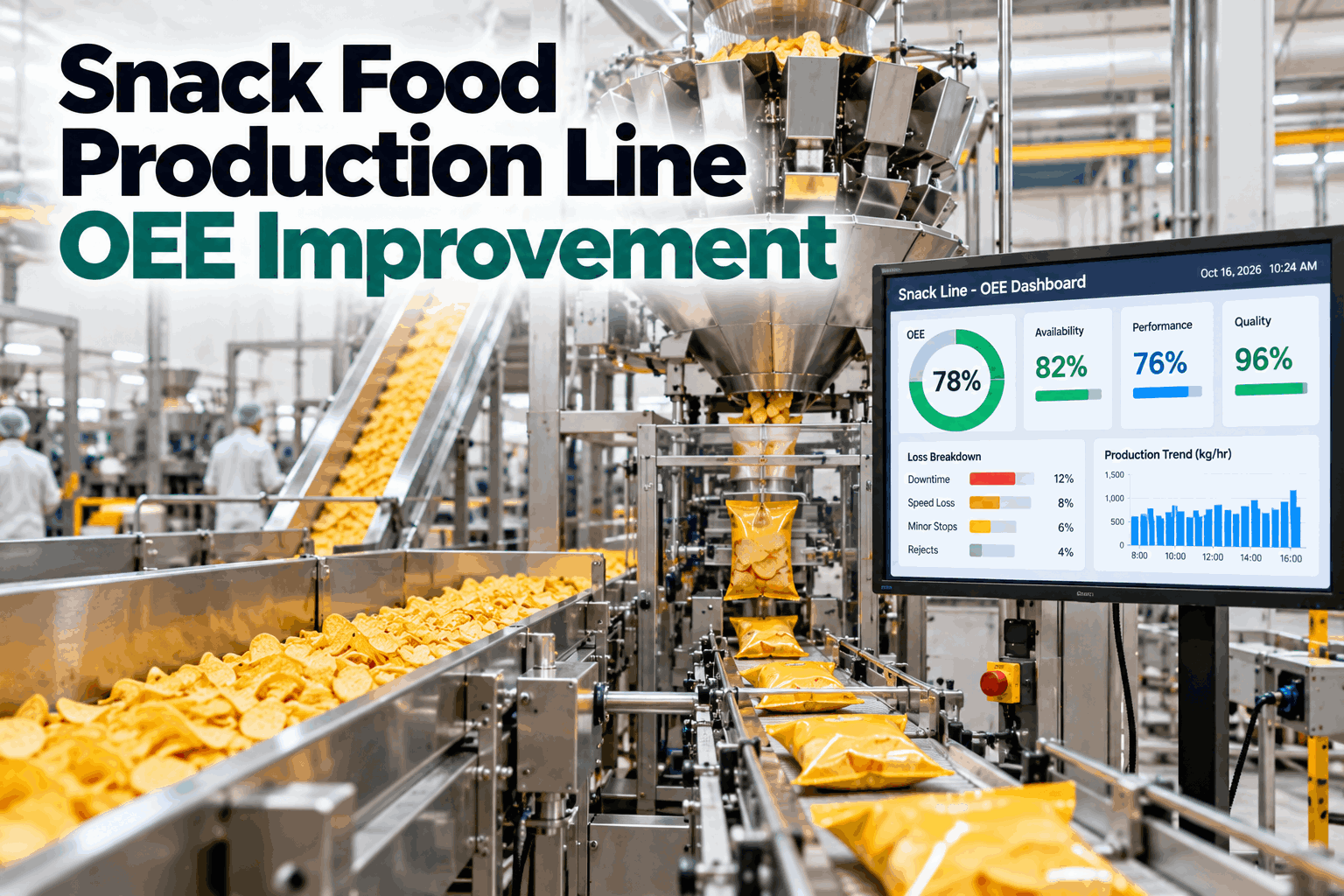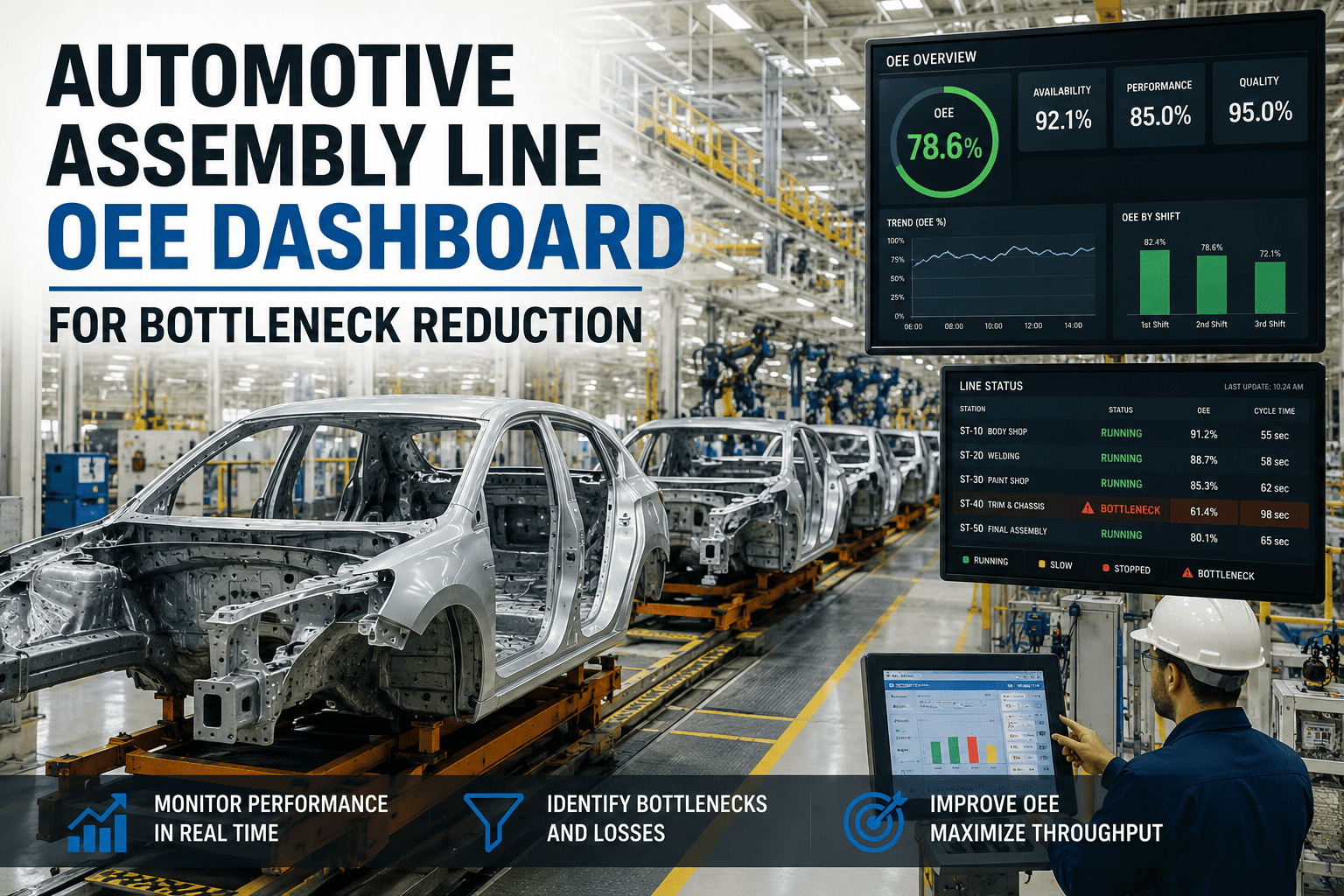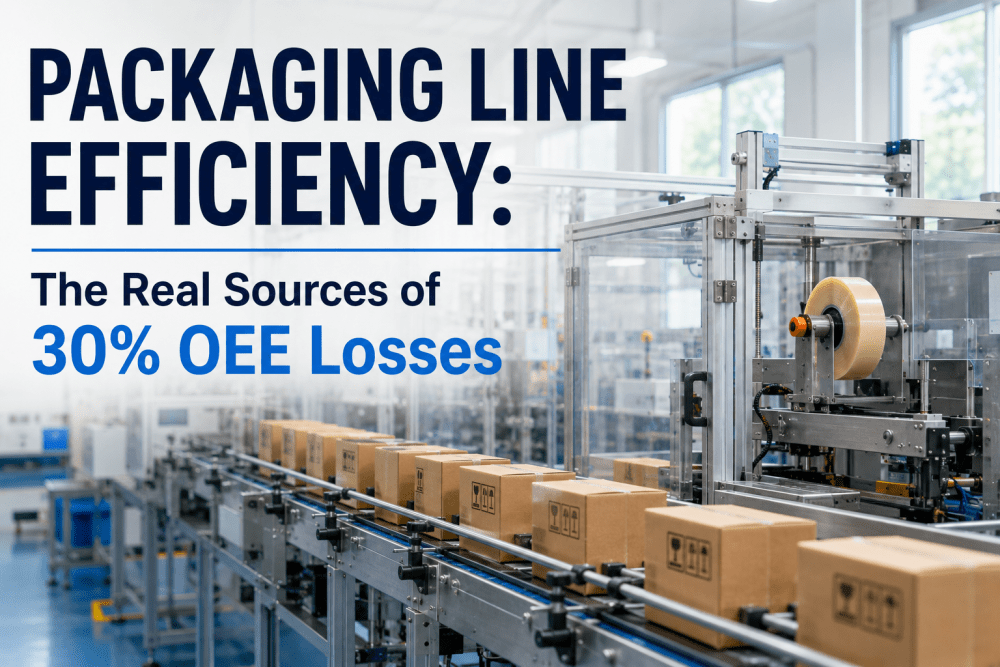
Is your FMCG plant hitting 65% OEE and calling it "good enough"? The gap between average and world-class performance in food, beverage, and consumer goods manufacturing is wider than most plant managers realize—and it's costing millions annually in lost output, excess waste, and unplanned downtime. This data-driven guide reveals exactly where industry benchmarks stand today, so you can pinpoint your biggest improvement opportunities. Book a free plant assessment to benchmark your lines against industry leaders.
FMCG Production Benchmarks: OEE, Waste & Manufacturing Efficiency Explained
Data-Backed Standards for Food, Beverage & Consumer Goods Manufacturing
What Are FMCG Production Benchmarks?
Standards that separate top-performing plants from the rest of the pack.
FMCG production benchmarks are industry-standard performance metrics that allow plant managers and operations teams to compare their manufacturing output against peers and best-in-class performers. They cover everything from equipment effectiveness and line speed to material waste, downtime frequency, and quality yield.
These benchmarks matter because FMCG manufacturing operates on razor-thin margins where even small efficiency gains translate into significant profit improvements. A 5-point OEE improvement on a high-volume packaging line can recover hundreds of thousands of dollars in annual output.
The most critical benchmarks tracked across food, beverage, and consumer goods plants include OEE (Overall Equipment Effectiveness), scrap and waste rates, planned vs. unplanned downtime ratios, changeover times, and first-pass yield. Together, they provide a complete picture of manufacturing health.
Average OEE Benchmarks in FMCG Manufacturing
Where does your plant stand compared to the industry?
Waste & Scrap Rate Benchmarks for Food & Consumer Goods
Every percentage point of waste reduction drops straight to your bottom line.
Raw material variability and sanitary cleaning cycles are the primary waste drivers. Batch changeovers in dairy and bakery lines often exceed 3% material loss.
Fill-level accuracy and container rejection are the biggest contributors. High-speed lines generate most waste during startup and changeover phases.
Packaging material waste dominates in this sector. Label misalignment, carton damage, and overwrap failures account for up to 60% of total scrap.
Downtime Benchmarks: Planned vs. Unplanned Losses
Understanding where your production hours actually go.
World-class plants use SMED techniques to achieve changeovers under 10 minutes and optimized CIP cycles to cut cleaning time by 30%.
Unplanned downtime in FMCG plants can exceed 5–10% of total scheduled operating hours, translating to millions in lost revenue annually for large facilities.
Is Your Plant Leaving Money on the Table?
A 10-point OEE improvement on a single high-speed packaging line can recover over $500,000 in annual output. Find out where you stand.
How FMCG Benchmarks Differ from Other Industries
Context matters—FMCG faces unique challenges that shift the performance curve.
Why the Gap Exists
FMCG plants face structural OEE challenges that automotive lines don't encounter. Mandatory sanitary cleaning consumes 15–20% of available time in food manufacturing. Variable raw material quality creates unpredictable micro-stops. Frequent SKU changeovers on shared lines add further availability losses. This means a 75% OEE in food manufacturing often represents stronger operational execution than an 80% OEE in automotive.
How to Measure Your Plant Against Industry Benchmarks
Establish Your Baseline
Measure OEE line-by-line and shift-by-shift for a minimum of 3 months. Automated data collection eliminates operator bias and captures micro-stops that manual logs miss entirely.
Break Down the Losses
Categorize every loss event: availability (downtime), performance (speed losses), and quality (scrap). Pareto analysis reveals the "vital few" issues causing 80% of your losses.
Compare Against Peers
Benchmark against similar product types and line configurations—not generic industry averages. A dairy filling line has fundamentally different constraints than a dry goods packaging line.
Set Realistic Targets
Aim for +5 OEE points per year. Focus improvement sprints on your single biggest loss category first. Quick wins build momentum; sustained gains require system-level changes.
Tools That Help Track OEE and Waste in Real Time
Manual spreadsheets can't keep pace with high-speed FMCG production lines.
Real-Time OEE Dashboards
Live visibility into availability, performance, and quality metrics at machine, line, and plant level. Operators see current status; managers see trends and shift comparisons.
AI-Powered Anomaly Detection
Machine learning algorithms identify developing equipment issues before they cause unplanned stops. Predictive alerts reduce breakdown frequency by 25–30%.
Digital Downtime Tracking
Automated classification of every stop event with root cause tagging. Eliminates the guesswork and operator bias that plague manual downtime logs.
Waste Monitoring Systems
Sensor-based material tracking captures scrap at every process stage. Correlates waste spikes with specific equipment, products, and operating conditions.
Want to see these tools in action for your plant? Schedule a live demo tailored to your FMCG operations.
Strategies to Improve OEE and Reduce Waste in FMCG Plants
Proven approaches ranked by impact and implementation speed.
SMED Changeover Reduction
Apply Single-Minute Exchange of Die methodology to cut changeover times by 40–60%. Convert internal setup tasks to external ones. Target: under 10 minutes per changeover.
Predictive Maintenance
Deploy IoT sensors on critical bearings, motors, and seals. Vibration and temperature monitoring cuts unplanned downtime by 25–30% within 12–18 months of implementation.
Micro-Stop Elimination
Address the chronic small stops (under 5 minutes) that account for up to 25% of lost production time. Automated tracking identifies repeat patterns invisible to manual logging.
Operator Training & Engagement
Well-trained operators are the first line of defense. Plants investing 80+ hours annually in operator development consistently outperform peers by 10–15 OEE points.
The ROI of Closing the Benchmark Gap
What real FMCG manufacturers gain by moving from average to world-class.
A 15-point OEE improvement on existing equipment delivers the equivalent of adding a new production line—without capital expenditure.
Real-time waste monitoring and process correlation reduce material scrap rates from 5% to under 2% within the first year of digital tracking.
Digital transformation initiatives in manufacturing deliver an average 300% return over three years through combined efficiency and waste gains.
SMED implementation combined with digital work instructions cuts average changeover times from 45 minutes to under 15 minutes.
After implementing real-time OEE tracking across our packaging lines, we identified that micro-stops were costing us 12% of productive time—something our manual logs never captured. Within 6 months, we improved OEE from 62% to 74%.
FMCG Benchmark Cheat Sheet
Pin this to your plant manager's office wall.
Frequently Asked Questions
Common questions about FMCG production benchmarks and OEE.
What is a good OEE score for an FMCG plant?
Most FMCG plants average 60–70% OEE. A score of 75–80% indicates strong performance with active continuous improvement. Scores above 85% are considered world-class and are achieved by only the top 6% of manufacturing operations globally.
Why is FMCG OEE typically lower than automotive?
FMCG manufacturing faces unique constraints including mandatory sanitary cleaning (15–20% of available time), variable raw material quality, frequent SKU changeovers, and strict food safety regulations—all of which reduce availability compared to continuous automotive production.
How do I calculate OEE for a packaging line?
OEE = Availability × Performance × Quality. Availability = Run Time ÷ Planned Production Time. Performance = (Ideal Cycle Time × Total Count) ÷ Run Time. Quality = Good Count ÷ Total Count. Multiply all three percentages together for your OEE score.
What's the fastest way to improve OEE?
Start by tracking downtime accurately—automated systems capture micro-stops that manual logs miss. Then apply Pareto analysis to focus on your top 3 loss categories. Most plants see 5–10 point OEE gains within 3–6 months of implementing proper digital tracking.
What scrap rate should my plant target?
Average FMCG scrap rates range from 2–5% depending on product type. World-class plants target below 1%. A 5% scrap rate at a mid-sized facility costs over $50,000 monthly. Even a 1-point reduction delivers significant savings at scale.
Can digital tools really make a measurable difference?
Yes. Plants implementing real-time OEE monitoring consistently report 10–15 point improvements within the first year. Predictive maintenance reduces unplanned downtime by 25–30%. The average ROI on digital manufacturing transformation is 300% over three years.
Audit Your FMCG Line Performance Against Industry Benchmarks Today
See exactly where your plant stands, identify your biggest improvement opportunities, and get a clear roadmap to world-class performance with iFactory's digital manufacturing platform.