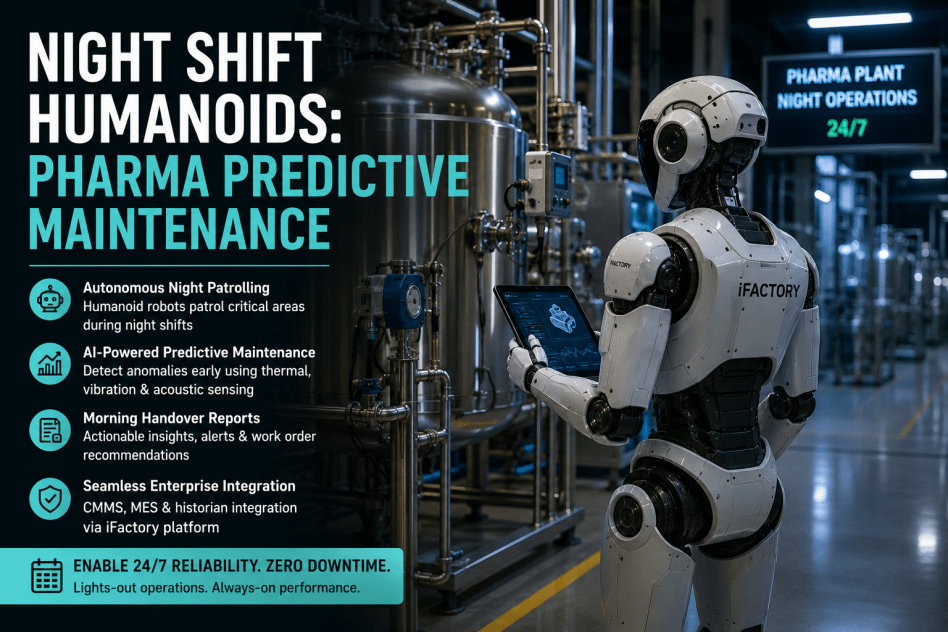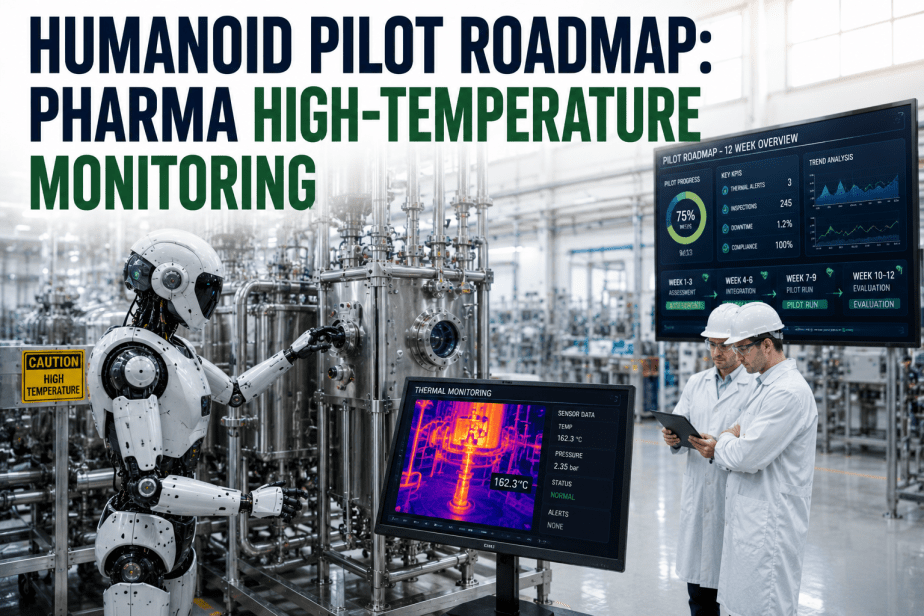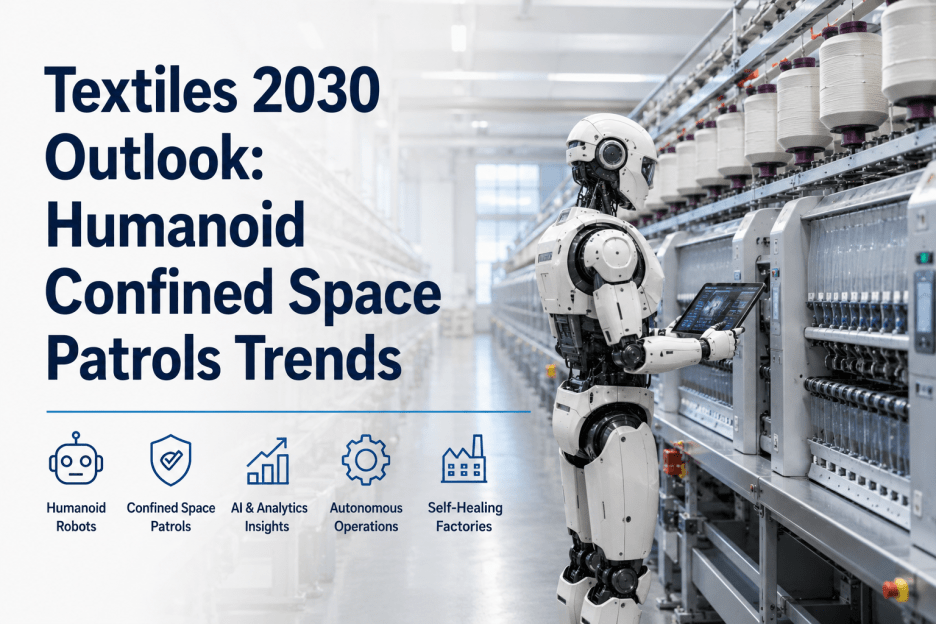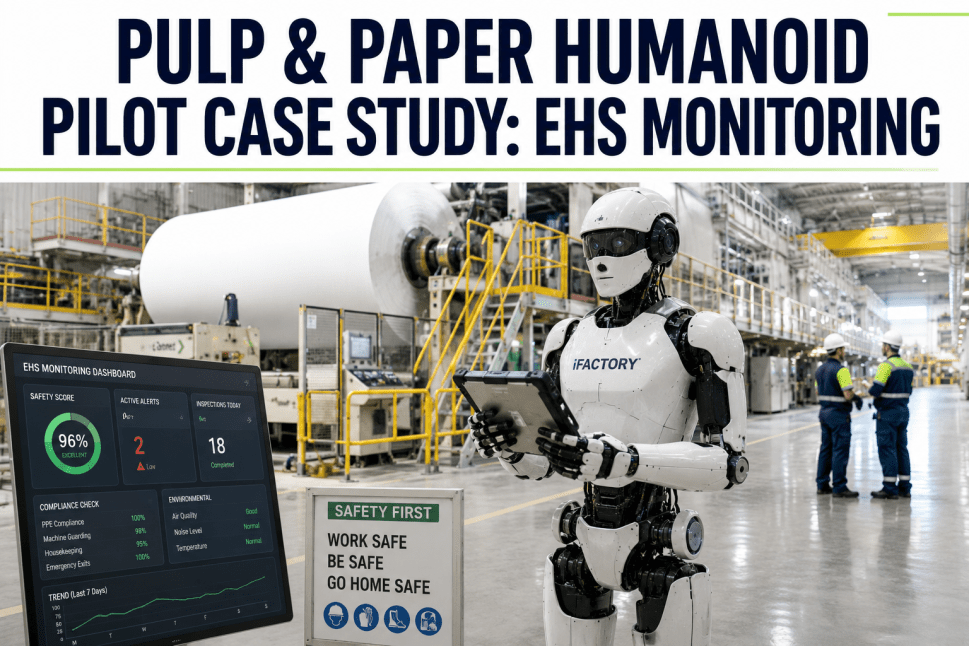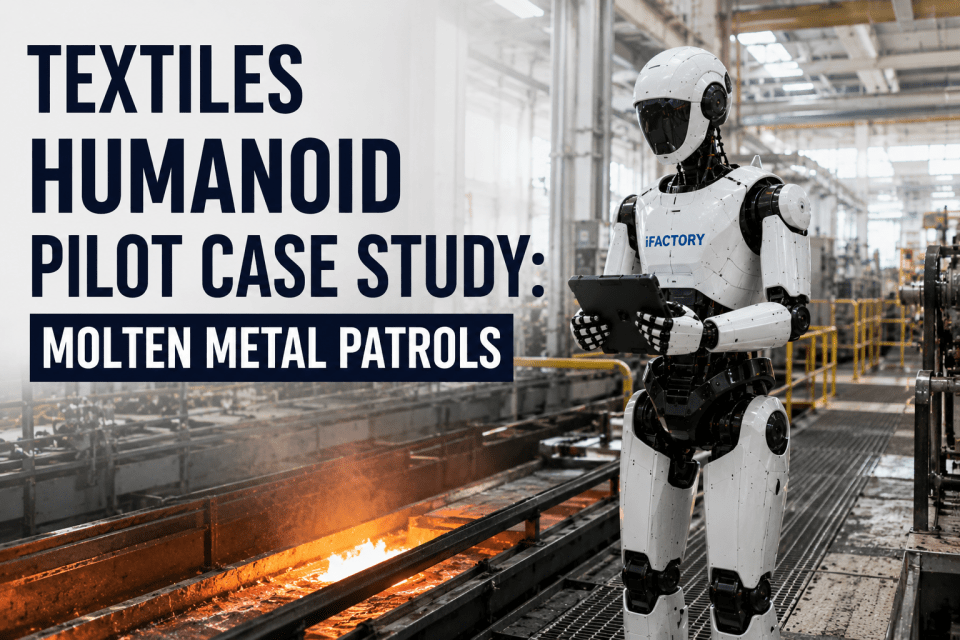
Textile manufacturing facilities operate some of the most thermally demanding industrial environments outside of primary metals production. High-temperature dyeing and finishing processes, synthetic fiber melt-spinning lines operating at 260 to 320 degrees Celsius, industrial boiler systems that supply steam across multi-building campuses, and thermal oil heating systems that maintain precise temperature profiles across finishing ranges create a distributed network of molten and high-temperature zones that require continuous monitoring. In early 2025, a large textile manufacturing operation in the southeastern United States producing technical fabrics for automotive interior applications launched a structured pilot program deploying humanoid robots for molten metal and high-temperature zone patrols across its 475,000-square-foot campus. The pilot, conducted in collaboration with iFactory and a leading humanoid robotics platform provider, targeted 14 high-temperature patrol zones including polymer melt-spinning extrusion stations, thermal oil heater rooms, boiler fuel delivery systems, and finishing range heating sections. Over a nine-month evaluation period, the textile manufacturer documented a 52 percent reduction in unplanned high-temperature safety incidents, a 63 percent reduction in confined-space entry requirements for routine thermal zone inspection, and a projected 14-month payback period for scaling the program across all remaining high-temperature zones at the facility.
The High-Temperature Monitoring Challenge in Technical Textiles Manufacturing
Technical textiles manufacturing for automotive, aerospace, and industrial applications requires thermal processes that operate at or near the thresholds of conventional sensor and human tolerance. The melt-spinning process for synthetic fibers such as polyester, nylon, and polypropylene involves extruding polymer through spinnerets at temperatures between 260 and 320 degrees Celsius, with molten polymer held in heated transfer lines and spin beam assemblies that require continuous thermal monitoring to prevent polymer degradation, gel formation, and filament breakage. The finishing department operates thermal oil heating systems that circulate heat transfer fluid at 300 to 350 degrees Celsius through calendar rolls, tenter frame ovens, and drying ranges, with thermal oil leaks representing both production interruption risk and fire safety hazards. The boiler house supplies superheated steam at 180 to 250 degrees Celsius across the facility's manufacturing, HVAC, and process heating systems, with boiler tube failures, fuel delivery system leaks, and combustion control anomalies creating conditions that require immediate detection and intervention. The textile manufacturer's pre-pilot assessment found that 38 percent of routine inspection time in high-temperature zones was consumed by safety permit procedures, personal protective equipment donning and doffing, and confined-space entry protocols rather than actual inspection activity — a structural inefficiency that humanoid robotic patrols could directly address by eliminating human entry requirements for routine thermal monitoring. Book a Demo to review the thermal zone assessment methodology used in this pilot.
Humanoid Patrol Route Design and Thermal Zone Classification
The pilot deployed three humanoid robots with thermal imaging payloads, multi-gas detection sensors, acoustic monitoring capability, and visual inspection cameras across two shifts covering 16 hours of production per day. Each robot followed a structured patrol route that covered an average of 42 inspection points across 14 thermal zones, with each patrol cycle completing in 68 to 92 minutes depending on zone configuration and inspection depth requirements. The patrol routes were designed around the textile facility's existing infrastructure layout — catwalks above melt-spinning lines, confined access pathways to thermal oil heater rooms, stair access to boiler house mezzanines, and narrow corridors between finishing range sections — leveraging the humanoid form factor's ability to navigate human-designed spaces without infrastructure modification. Thermal inspection data was captured at each programmed point and streamed to iFactory's analytics platform in real time, where temperature trends, gas concentration readings, and visual condition records were correlated against historical baselines and automated alert thresholds.
Melt-Spinning Extrusion Zones
Four patrol zones covering polymer melt-spinning extrusion lines producing polyester and nylon filaments for automotive interior fabrics. Robots inspect spin beam temperatures, polymer transfer line thermal profiles, spinneret face conditions, and quench air temperature uniformity using thermal imaging and contact temperature measurement. Patrol data feeds into iFactory's predictive models that correlate thermal profile drift with polymer degradation risk and filament breakage probability.
Thermal Oil Heater Rooms
Three patrol zones encompassing thermal oil heating systems that supply heat transfer fluid at 300 to 350 degrees Celsius to calendar rolls and tenter frame ovens in the finishing department. Robots inspect heater tube surfaces, expansion tank levels, pump seal conditions, and pipeline junction integrity using thermal imaging and ultrasonic thickness measurement. The confined-space classification of these rooms required full lockout-tagout and breathing apparatus for human entry, conditions that robotic patrol entirely eliminated for routine inspection.
Boiler House and Steam Distribution
Four patrol zones across the main boiler house and steam distribution network supplying superheated steam at 180 to 250 degrees Celsius to manufacturing, finishing, and HVAC systems. Robots perform thermal imaging of boiler tubes, burner blocks, and steam header connections while monitoring combustion gas concentrations and steam pressure trends. Acoustic sensors detect steam leak signatures that visual inspection cannot identify, enabling predictive maintenance on steam traps and pipeline sections before failure events occur.
Finishing Range Heating Sections
Three patrol zones across the finishing department covering calendar roll heating zones, tenter frame oven sections, and drying range thermal profiling. Robots inspect roll surface temperature uniformity, oven zone temperature distribution, and exhaust system thermal conditions using traversing thermal imaging passes. Temperature profile data is correlated with finished fabric quality metrics in iFactory's analytics platform to identify heating section adjustments that improve thermal uniformity and reduce fabric quality variation across production runs.
Connecting Humanoid Patrol Data to Textile Plant Asset Management and Safety Systems
The textile manufacturer's existing maintenance and safety management infrastructure included a CMMS platform for work order management, a SCADA system for boiler and thermal oil system monitoring, and a document-based safety inspection program that relied on paper checklists and manual data entry. The humanoid patrol platform was integrated with iFactory AI's middleware layer, which connected patrol outputs to each of these existing systems without requiring software replacement or parallel operation. Thermal images captured by the humanoid robots during each patrol cycle were automatically tagged with zone location, asset identifier, temperature reading, and time stamp, then written to iFactory's asset health database where trend analysis algorithms compared current readings against historical baselines and generated predictive alerts when temperature acceleration patterns indicated developing failure modes. Book a Demo to learn more about the integration architecture and system connector configuration for your specific textile plant environment.
| Thermal Zone | Humanoid Patrol Function | Inspection Frequency | AI Analytics Output | iFactory Module |
|---|---|---|---|---|
| Melt-Spinning Extrusion | Thermal imaging of spin beam, polymer transfer lines, spinneret face | Twice per shift (every 4 hours) | Polymer degradation risk score; filament breakage probability by position | Predictive Maintenance + OEE Analytics |
| Thermal Oil Heaters | Tube surface thermography; pump seal inspection; ultrasonic pipe thickness | Once per shift | Heater tube remaining life; leak probability score by section | Predictive Maintenance + EHS Management |
| Boiler House | Boiler tube and burner thermal scan; combustion gas measurement; steam leak acoustic detection | Once per shift | Boiler tube failure forecast; steam trap efficiency trend; burner combustion quality index | Predictive Maintenance + Work Order Management |
| Finishing Ranges | Calendar roll thermal uniformity scan; oven zone temperature profiling | Once per shift | Thermal uniformity score; fabric quality correlation by heating zone | OEE Analytics + AI Vision |
| Fuel Delivery Systems | Fuel line thermal survey; tank level verification; leak detection sensor inspection | Daily | Fuel consumption trend; leak risk score; delivery schedule optimization | Predictive Maintenance + Inventory Management |
- Inspection requires confined-space entry permit, PPE donning, and breathing apparatus for thermal oil and boiler zones
- Thermal inspection data recorded on paper checklists; entered into CMMS one to three days after collection
- Inspection frequency limited by crew availability, safety permit windows, and shift scheduling constraints
- Temperature readings captured as single-point measurements at accessible locations only
- No trend analysis — each inspection cycle is an independent data point with no historical comparison
- Safety incidents detected when alarms trigger or personnel observe visible signs of failure escalation
- Inspection cost dominated by safety compliance overhead rather than actual diagnostic activity
- Humanoid robots execute all confined-space, elevated, and high-temperature patrols — human entry eliminated for routine inspection
- Patrol data streams to iFactory platform in real time; maintenance actions and safety alerts generated within minutes
- Robotic patrols operate 16 hours per day across two shifts without crew availability or permit constraints
- Full thermal field capture at each inspection point with spatial temperature mapping across entire zone
- AI-driven trend analysis compares every patrol cycle against historical baselines; predictive alerts at acceleration thresholds
- AI detects developing thermal anomalies three to six weeks before alarm thresholds are crossed or visible degradation appears
- Inspection cost shifted from safety compliance overhead to diagnostic data acquisition and predictive analytics
Measured Results: Nine-Month Pilot Evaluation at the Textiles Facility
The nine-month pilot evaluation produced quantitative outcomes across safety, reliability, and operational efficiency dimensions that the textile manufacturer's engineering and safety teams documented at each monthly review milestone. Safety incident reduction was the highest-priority metric given the facility's historical experience with high-temperature zone injuries, and the 52 percent reduction in unplanned safety incidents across the 14 patrol zones exceeded the pilot's target of 35 percent reduction within the evaluation period. The 63 percent reduction in confined-space entry requirements for routine thermal zone inspection was achieved within the first four months as the humanoid patrol program replaced scheduled human entry for all routine inspection activities in thermal oil heater rooms and boiler house mezzanine areas. Production reliability improvements were tracked through unplanned thermal system downtime events — polymer extrusion line stoppages due to undetected temperature drift, boiler outages from tube failure, and finishing range downtime from thermal oil system issues — with the pilot period recording a 46 percent reduction in unplanned high-temperature system downtime across the monitored zones.
iFactory AI Platform Capabilities Deployed in the Textiles Pilot
The iFactory AI platform provided the integration and analytics layer that converted humanoid patrol data into actionable maintenance intelligence and safety alerts for the textile manufacturer. The platform's modular architecture enabled the facility to deploy only the capabilities relevant to its thermal monitoring requirements while maintaining the integration pathway to expand into additional production monitoring and asset management functions during the scaling phase.
Predictive Maintenance
AI failure prediction for polymer extrusion thermal systems, thermal oil heaters, boiler tubes, and finishing range heating sections. Condition-based alert generation with automated work order creation from humanoid patrol thermal findings and trend analysis.
Work Order Management
Automated work order generation from humanoid patrol thermal findings with priority scoring, thermal image evidence attachment, and resource assignment. Integration with the existing CMMS platform without requiring system replacement.
AI Vision Camera
Computer vision processing of humanoid patrol thermal imagery for automated anomaly detection. AI classification of polymer degradation patterns, boiler tube hotspot development, thermal oil leak signatures, and finishing range temperature uniformity conditions.
EHS Management
Continuous documentation of thermal zone conditions for OSHA regulatory compliance. Automated safety alert generation from humanoid patrol findings with confined-space entry tracking and thermal exposure incident reporting integrated with the facility's safety management system.
OEE Analytics
High-temperature system availability, performance, and reliability analytics integrating humanoid patrol thermal data, SCADA sensor feeds, and maintenance history. Real-time dashboards for extrusion line OEE, boiler efficiency, and finishing range thermal performance.
Digital Twin AI
Live digital replica of the textile facility's high-temperature thermal infrastructure integrating humanoid patrol data, operational sensor streams, and maintenance records. Enables scenario modeling for thermal system reliability, maintenance strategy optimization, and thermal zone reconfiguration planning.
Expert Perspective: What the Textiles Industry Can Learn from This Pilot
I have spent twenty-two years in textile manufacturing engineering and maintenance across four facilities in the southeastern United States. The thermal monitoring problem we have always faced is not that we do not know what to inspect. It is that the cost and risk of inspecting those zones properly with human personnel means we inspect them less frequently than we should, and we accept a level of unknown condition risk that would be unacceptable in any other dimension of our operation. The thermal oil heater rooms at our facility are classified as confined spaces requiring full lockout-tagout, supplied air breathing apparatus, and a two-person entry team every time someone goes in for a routine inspection. That process takes forty-five minutes of setup for ten minutes of inspection. The humanoid robot eliminated that entire overhead in the first week. It walks into the heater room, performs a full thermal scan of every tube, every pump seal, every pipeline junction, and it is back at its charging station uploading the data before a human entry team would have completed their permit paperwork. The predictive analytics piece is what made the difference for our maintenance planning — the platform detected a developing hot spot on a thermal oil heater tube six weeks before it would have reached a failure threshold, and we scheduled that tube replacement during a planned shutdown rather than responding to a leak event at two in the morning on a Saturday. Any textile manufacturing plant operating high-temperature processes should be evaluating this technology. The safety and reliability outcomes from our pilot speak for themselves.
Key Engineering Takeaways from the Pilot
The single largest value driver in this pilot was not the thermal data collection. It was the elimination of confined-space entry overhead that consumed 38 percent of our inspection budget.
Predictive maintenance on thermal systems cannot work with sporadic inspection data. The humanoid patrols provided the consistent, structured thermal data density that made our AI models actually predictive rather than reactive.
The humanoid form factor was essential for our facility. A wheeled robot would not have access to the mezzanine levels, catwalks, and confined passageways that make up 60 percent of our high-temperature zone footprint.
Our maintenance technicians initially viewed the robot with skepticism. Six months in, they are the strongest advocates because they no longer spend their shifts in 45-degree Celsius thermal oil rooms wearing breathing apparatus.
The Textiles Industry Has a Clear Path to Autonomous Thermal Zone Monitoring
The nine-month humanoid robot molten metal and high-temperature patrol pilot at this technical textiles manufacturing facility demonstrates that the technology, integration architecture, and economic case for autonomous thermal monitoring are ready for textile industry deployment in 2026. The 52 percent reduction in high-temperature safety incidents, 63 percent reduction in confined-space entry requirements, and 14-month projected payback period represent outcomes that are directly transferable to any textile manufacturing facility operating melt-spinning extrusion lines, thermal oil heating systems, industrial boiler plants, or high-temperature finishing ranges. The humanoid form factor proved essential for navigating the catwalks, stairways, confined rooms, and elevated platforms that characterize textile facility high-temperature zones — infrastructure that wheeled or tracked platforms cannot access without modification. iFactory AI's platform provided the integration layer that connected humanoid patrol thermal data to the facility's existing CMMS, SCADA, and safety management systems while delivering the predictive analytics that converted temperature trend data into actionable maintenance intelligence. The pilot partner is now executing a full-scale deployment across all remaining high-temperature zones at the facility, and actively sharing operational data with three additional textile manufacturing operations in the same corporate group. Book a Demo to review the full pilot case study data and deployment architecture for your specific textile manufacturing thermal monitoring requirements.
Deploy Autonomous High-Temperature Zone Patrols Across Your Textile Manufacturing Facility
iFactory AI integrates humanoid robot patrol data, thermal sensor networks, and predictive analytics into a unified platform that converts high-temperature zone inspection findings into maintenance actions and safety alerts automatically — enabling autonomous thermal monitoring for melt-spinning extrusion lines, thermal oil heating systems, boiler houses, and finishing range heating sections across your textile manufacturing operation.
Humanoid Molten Metal Patrols in Textile Manufacturing — Frequently Asked Questions
Textile manufacturing facilities typically have several high-temperature zones that benefit from autonomous robotic patrol monitoring. Synthetic fiber melt-spinning extrusion lines operate at 260 to 320 degrees Celsius for polymer melting and filament formation. Thermal oil heating systems that supply heat transfer fluid to calendar rolls, tenter frame ovens, and drying ranges operate at 300 to 350 degrees Celsius. Industrial boiler plants produce superheated steam at 180 to 250 degrees Celsius for process heating and HVAC systems. Finishing range heating sections maintain precise temperature profiles across drying and heat-setting zones. Each of these thermal systems requires regular inspection for temperature drift, leak detection, and component degradation assessment — inspection tasks that humanoid robots can perform without requiring human entry into confined or hazardous thermal zones.
The pilot deployed three humanoid robots operating across two production shifts (16 hours per day) with a combined patrol coverage area of 14 thermal zones spanning the facility's 475,000-square-foot campus. Each robot followed a structured patrol route covering an average of 42 inspection points per patrol cycle, with each full cycle completing in 68 to 92 minutes. The robots shared charging and data upload stations positioned at central locations in the facility, enabling continuous patrol operations across the two-shift schedule without battery range limitations affecting zone coverage. The patrol route design prioritized thermal zones with the highest safety risk, confined-space classification, and production criticality, with expansion plans to cover an additional 6 zones in the full-scale deployment phase.
Each humanoid robot in the pilot was equipped with a multi-sensor payload package including a high-resolution thermal imaging camera (640 x 480 resolution with temperature range from -20 to 1,200 degrees Celsius) for surface temperature mapping of thermal equipment; a multi-gas detection sensor measuring oxygen, carbon monoxide, hydrogen sulfide, methane, and volatile organic compound concentrations in confined thermal zones; a visual inspection camera for documenting equipment condition, gauge readings, and leak evidence; an ultrasonic thickness measurement sensor for pipeline wall thickness surveys on thermal oil and steam distribution lines; and an acoustic emission sensor for detecting steam leak signatures and bearing degradation in thermal system rotating equipment. All sensor data was time-stamped and geo-located to each patrol inspection point for automated integration with iFactory's asset health database and trend analysis engine.
Total cost of ownership for a humanoid patrol deployment at a mid-size textile manufacturing facility with 12 to 18 thermal zones typically ranges from $180,000 to $350,000 in annualized costs including robot hardware lease or depreciation, payload sensors, platform integration, and iFactory AI software subscription. The pilot facility documented a 14-month projected payback period driven by three primary savings categories: avoided safety incident costs (42 percent of savings), inspection labor and confined-space entry overhead elimination (33 percent of savings), and unplanned downtime reduction from predictive thermal failure detection (25 percent of savings). Textile facilities with higher baseline thermal incident rates, more confined-space classified zones, or greater unplanned downtime exposure typically achieve faster payback through greater avoided-cost impact per patrol cycle.
iFactory AI's platform is robot-agnostic and supports data ingestion from any robotic inspection platform that produces structured thermal, visual, gas, and acoustic inspection output through standard file formats or API integration. The platform has been integrated with humanoid platforms, quadruped platforms, and custom robotic inspection configurations across industrial deployment references. The integration architecture maps robotic inspection data to the iFactory AI asset hierarchy, predictive model input schema, and work order generation workflow regardless of the specific robotic platform deployed. This enables textile manufacturing facilities to select the optimal robot configuration for each patrol environment — humanoid for multi-level and confined-space thermal zones, or alternative form factors for open-floor inspection areas — without being locked into a single hardware vendor.