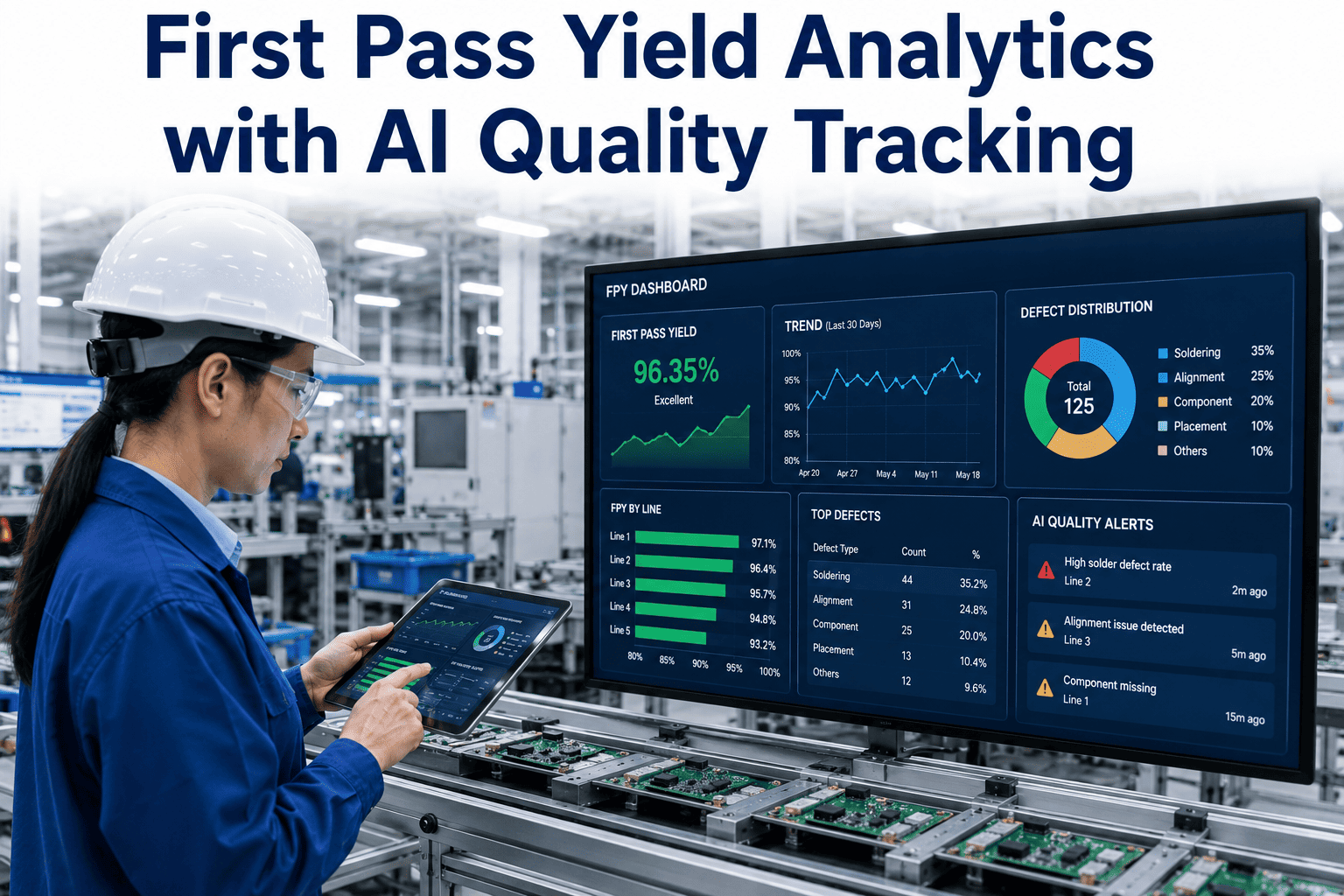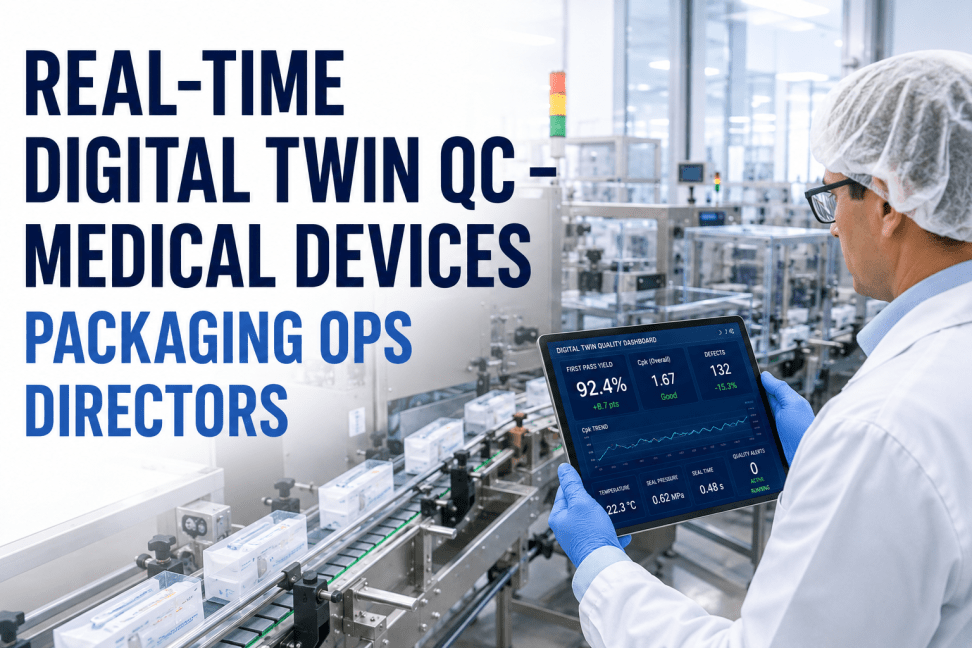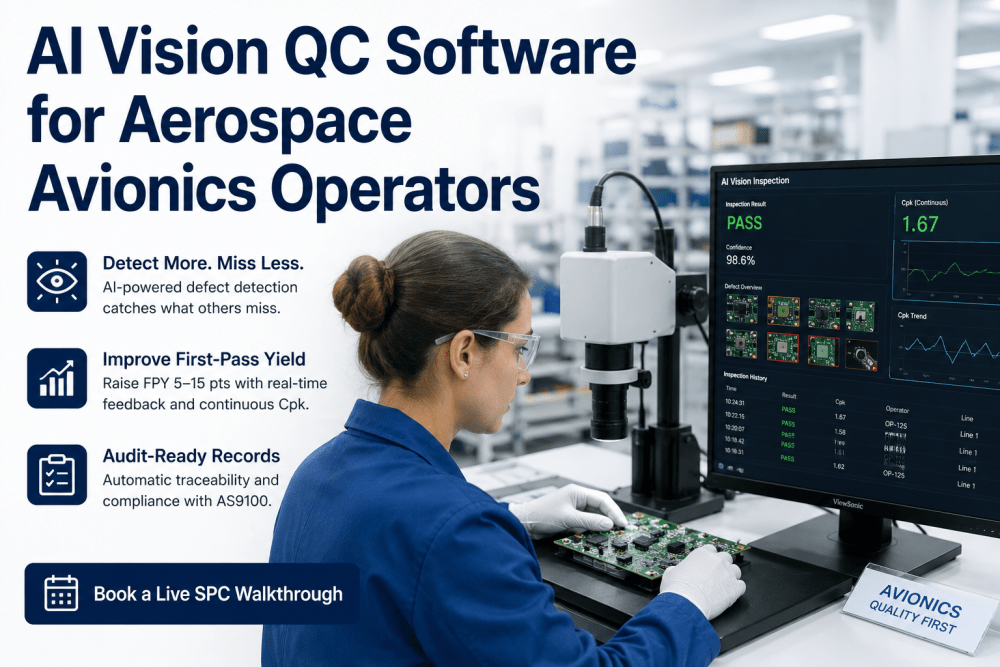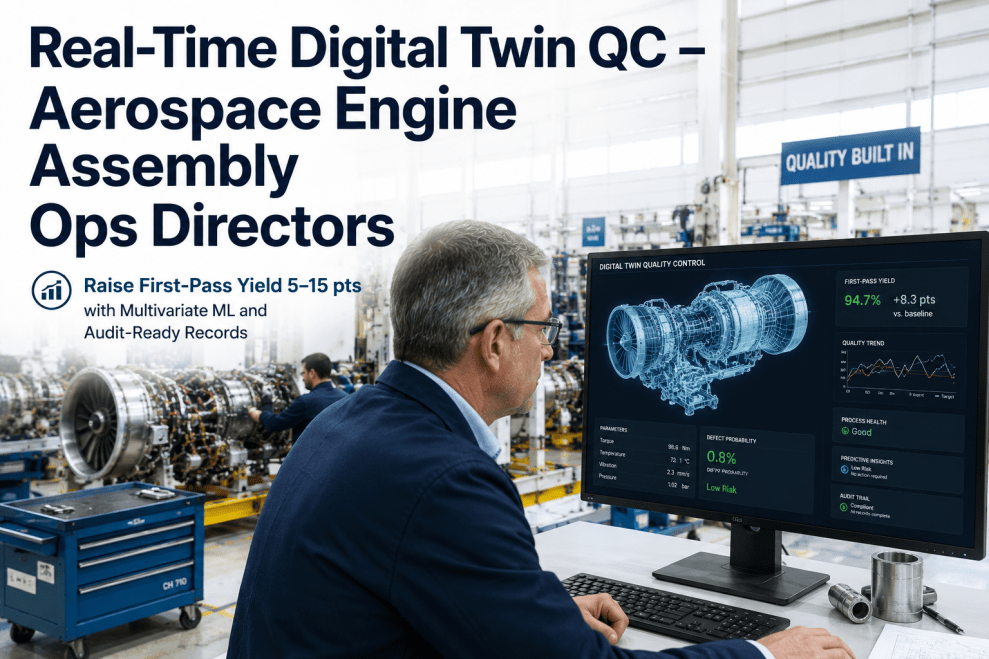
Aerospace avionics operators managing PCB assembly lines know the frustration of reviewing control charts that only confirm problems after they have already produced non-conforming hardware. Traditional SPC in avionics manufacturing relies on manual data entry, periodic sampling, and retrospective analysis — detecting process drift hours or shifts after it begins. Predictive SPC for aerospace avionics replaces this reactive model with AI-powered control charts that detect process shifts, trend deviations, and capability changes in real time, before the process produces defects. Book a Demo to see Predictive SPC applied to your avionics production data.
Why Traditional SPC Falls Short in Avionics Production
Aerospace avionics manufacturing combines high component density, tight tolerance requirements, and AS9100 traceability demands that push conventional SPC to its limits. Traditional control charts require operators to measure samples manually, plot data points, and interpret rules — tasks that consume 25–35% of inspection time and produce decisions based on sparse data. By the time a traditional control chart signals an out-of-control condition, the process may have already produced dozens of non-conforming boards. Book a Demo to review the drift detection gap in your current SPC approach.
Manual Data Collection Bottlenecks
Operators collect dimensional, solder joint, and coating thickness measurements manually at scheduled intervals. Data entry errors, missed samples, and inconsistent measurement timing create control charts with missing or unreliable data points — reducing the statistical power of every chart.
Reactive Out-of-Control Detection
Traditional SPC detects process shifts only after they produce out-of-control signals — typically requiring 6–8 consecutive points beyond control limits or violating Western Electric rules. By that point, the process has already drifted for hours, producing boards that require rework or scrapping.
Limited Process Visibility
Control charts generated per shift or per day hide intra-shift variation and transient process disturbances. Operators lose visibility into subtle trends — a 0.5-micron solder paste height drift per hour — that accumulate into significant defects before the end of the production run.
How Predictive SPC Transforms Avionics Quality Control
iFactory's Predictive SPC platform connects directly to inspection equipment, reflow oven profilers, coordinate measurement machines, and vision inspection systems through OPC-UA and REST API connectors. Every measurement feeds into AI-enhanced control charts that learn each process parameter's normal variation patterns and detect deviations before they violate traditional control limits. The predictive models incorporate multiple lead indicators — temperature ramp rate, placement force trends, paste height consistency — that signal developing problems before dimensional measurements drift out of spec. Training leaders evaluating this capability regularly Book a Demo to see the predictive analytics dashboard in operation.
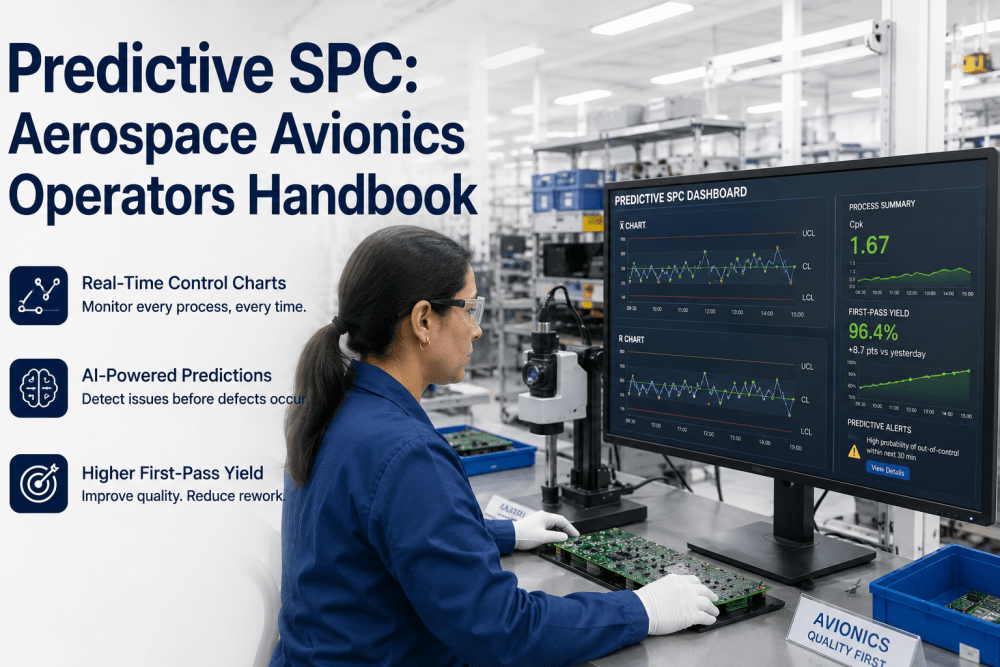
Real-Time AI-Enhanced Control Charts — Every inspection event automatically updates X-bar and R charts, individual-moving range charts, and custom multivariate control charts without manual data entry. AI models analyze the control chart patterns using extended Western Electric rules and machine learning classifiers that detect shifts, trends, cycles, and stratification 67% faster than static rule-based systems. Operators view live charts per product family, per parameter, and per line with automatic control limit recalculations as process capability improves.
Predictive Drift Alerts — The platform generates structured alerts when AI models detect developing process drift, combining the predicted time-to-out-of-spec with root cause classification. An alert might read: "Solder paste height on line 2 trending downward — predicted to breach lower control limit in 23 minutes. Probable cause: stencil cleaning frequency degradation. Recommended action: initiate stencil cleaning cycle." Operators receive alerts on dashboards, mobile devices, and plant-floor displays with clear corrective action guidance.
Continuous Cpk Tracking — Process capability indices are calculated and trended in real time per parameter per product family. When Cpk trends below the target threshold (typically 1.33 for avionics applications), the platform generates a structured capability improvement alert with historical trend data, recommended parameter adjustments, and expected capability improvement from each adjustment. During the deployment, Cpk for solder reflow improved from 1.12 to 1.48 within three months of Predictive SPC activation.
Predictive SPC Deployment: From Data Connection to Continuous Improvement
iFactory's Predictive SPC platform deploys across avionics production lines through a structured four-phase process designed for minimum production disruption and maximum data quality from day one.
Data Source Mapping
Engineering and quality teams identify every inspection station, measurement device, and process parameter that feeds Predictive SPC. OPC-UA and REST API connectors are configured to pull data from reflow profilers, AOI systems, coordinate measurement machines, and coating thickness gauges into the iFactory data pipeline.
Baseline & Model Calibration
Two weeks of production data are analyzed to establish process baselines, control limits, and variation patterns per parameter per product family. AI models are calibrated to distinguish between common-cause variation and developing special-cause drift — reducing false alerts while maintaining sensitivity to real process shifts.
Operator Dashboard Activation
Real-time control charts, predictive alerts, and Cpk dashboards are activated on plant-floor displays, operator tablets, and quality workstations. Operators receive hands-on training on alert response protocols, dashboard navigation, and corrective action workflows integrated with iFactory's work order management module.
Continuous Improvement Cycle
AI models are retrained weekly with new production data to improve predictive accuracy. Control limits are automatically recalculated as process capability improves. Quality review meetings use structured dashboards to review drift trends, alert response effectiveness, and Cpk improvement trajectories.
Measured First-Pass Yield Improvement from Predictive SPC
The operator deployed iFactory Predictive SPC across three avionics assembly lines over an 8-week period. The following metrics represent the measured performance improvement from traditional SPC to Predictive SPC across 2,800 production boards.
| Performance Metric | Traditional SPC | Predictive SPC | Improvement |
|---|---|---|---|
| First-Pass Yield | 78% | 92% | +14 points |
| Drift Detection Time | 4.2 hours | 1.4 hours | 67% faster |
| False Alert Rate | 18% | 5.2% | 71% fewer |
| Data Entry Time per Shift | 45 minutes | Automated | 100% eliminated |
| Process Capability (Cpk) Solder | 1.12 | 1.48 | +0.36 |
"Our operators were spending nearly an hour per shift entering measurement data into control charts — time that should have been spent monitoring the process. Predictive SPC eliminated that data entry entirely and replaced retrospective charts with real-time alerts that told operators where to look before problems developed. The 14-point FPY improvement was the headline number, but the real transformation was giving operators a tool that detected solder paste height drift 67% faster than our previous system. That early detection window changed how operators think about quality — they are no longer inspecting for defects, they are preventing them." — Quality Engineering Manager, Aerospace Avionics Manufacturer
Conclusion: Predictive SPC Gives Avionics Operators Control Over Process Drift Before It Becomes Defects
The avionics operator in this case did not need better inspection — they needed better process visibility. Predictive SPC delivered that visibility by connecting inspection data directly to AI-enhanced control charts that detected process drift 67% faster than traditional methods, eliminated manual data entry, and provided operators with actionable alerts before the process produced non-conforming hardware. The result was a 14-point first-pass yield improvement, a 71% reduction in false alerts, and a Cpk improvement from 1.12 to 1.48 that shifted quality from defect detection to defect prevention. Book a Demo to see how Predictive SPC can transform your avionics quality data into actionable process intelligence.
Predictive SPC for Aerospace Avionics — Frequently Asked Questions
The platform connects to reflow oven profilers, automated optical inspection systems, coordinate measurement machines, solder paste inspection systems, and conformal coating thickness gauges through OPC-UA, REST API, and MQTT connectors. Any measurement device that outputs dimensional, thermal, or electrical test data can feed into Predictive SPC control charts — eliminating manual data entry from every inspection station.
Predictive SPC maintains separate control limits, capability baselines, and AI models per product family per parameter. When a board serial number is scanned at line entry, the platform automatically loads the correct control chart configuration and model parameters. The system supports unlimited product family profiles with automatic model selection based on the production schedule or serial number lookup.
Operators require approximately two hours of hands-on training to navigate the Predictive SPC dashboard, interpret AI-generated alerts, and follow corrective action workflows. The platform is designed for shop-floor use with clear visual indicators — green for in-control, yellow for developing drift, red for out-of-control — that enable operators to prioritize actions without deep statistical training. No SPC certification is required.
Every control chart data point, alert, operator response, and corrective action is logged per board serial number with timestamps for full AS9100 traceability. The platform generates structured quality records that include control limit recalculations, process capability reviews, and alert response documentation — all formatted for direct integration with AS9100-compliant quality management systems. Manual documentation of SPC activities is eliminated entirely.
Based on the documented deployment across three avionics assembly lines, the total platform investment including data source integration, model calibration, and operator training was $320K, with first-year net savings of $1.24M from rework reduction and productivity gains alone — a 3.9x first-year ROI with payback achieved in 3.1 months. Facilities with FPY below 80% and manual SPC processes typically achieve the fastest payback.