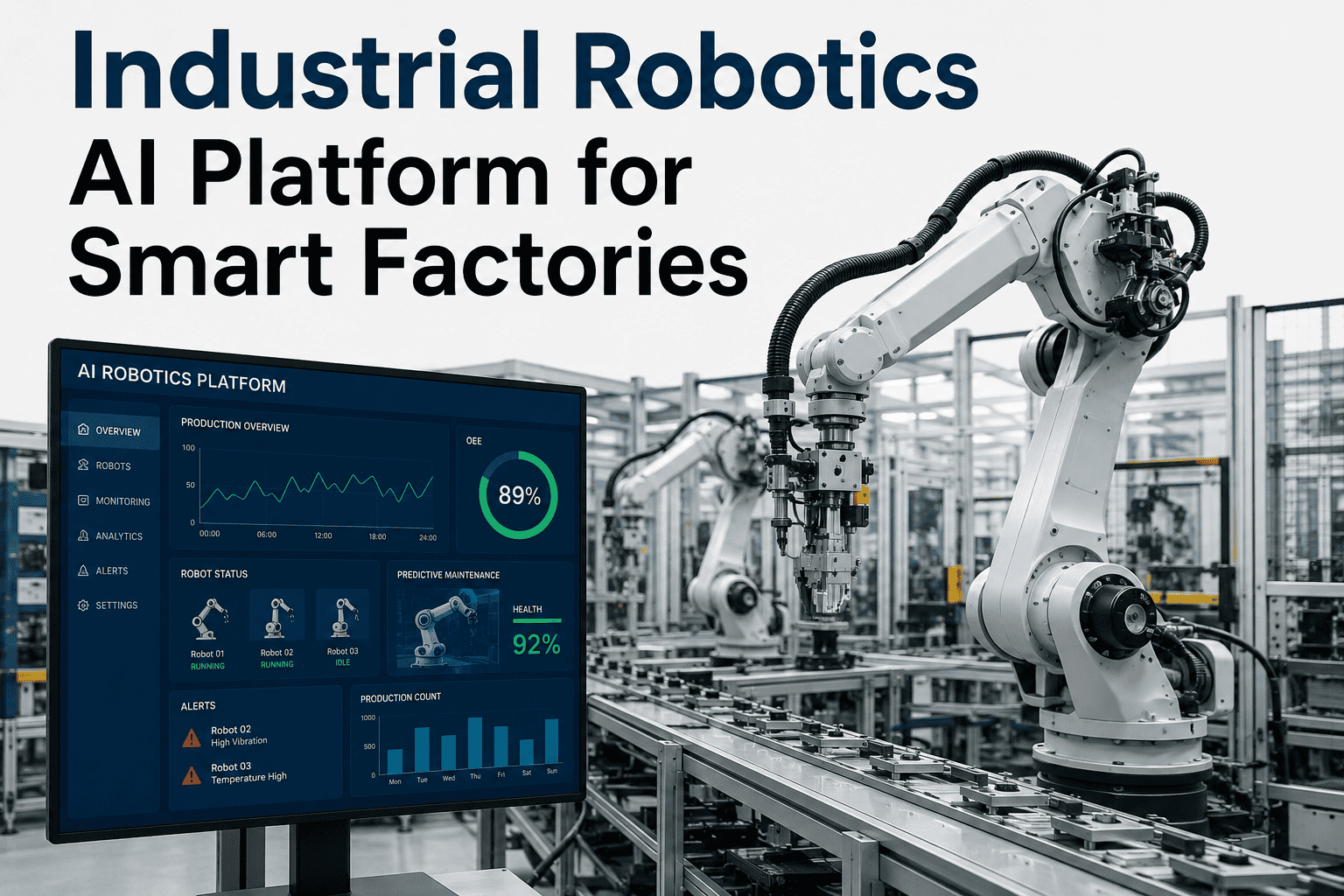
Steel plants push robots to their absolute limits — 1,500°C ambient heat near blast furnaces, metallic dust that destroys standard electronics, and vibrations that shake welding joints loose within weeks. Traditional proprietary robot controllers were never designed for this. ROS 2, built on industrial-grade DDS middleware used in military and aerospace systems, gives steel manufacturers a unified software layer to coordinate robot arms, PLCs, digital twins, and enterprise systems in real time — without vendor lock-in. Book a free consultation to explore ROS 2 integration for your steel plant.
ROS 2 Integration for Industrial Robot Arms in Steel Plants
Real-Time Coordination, Digital Twins, and Predictive Automation for the Harshest Manufacturing Environment on Earth
Why ROS 2 for Steel Plant Robotics?
The steel industry demands what no proprietary robot controller can deliver alone.
Vendor-Agnostic Robot Coordination
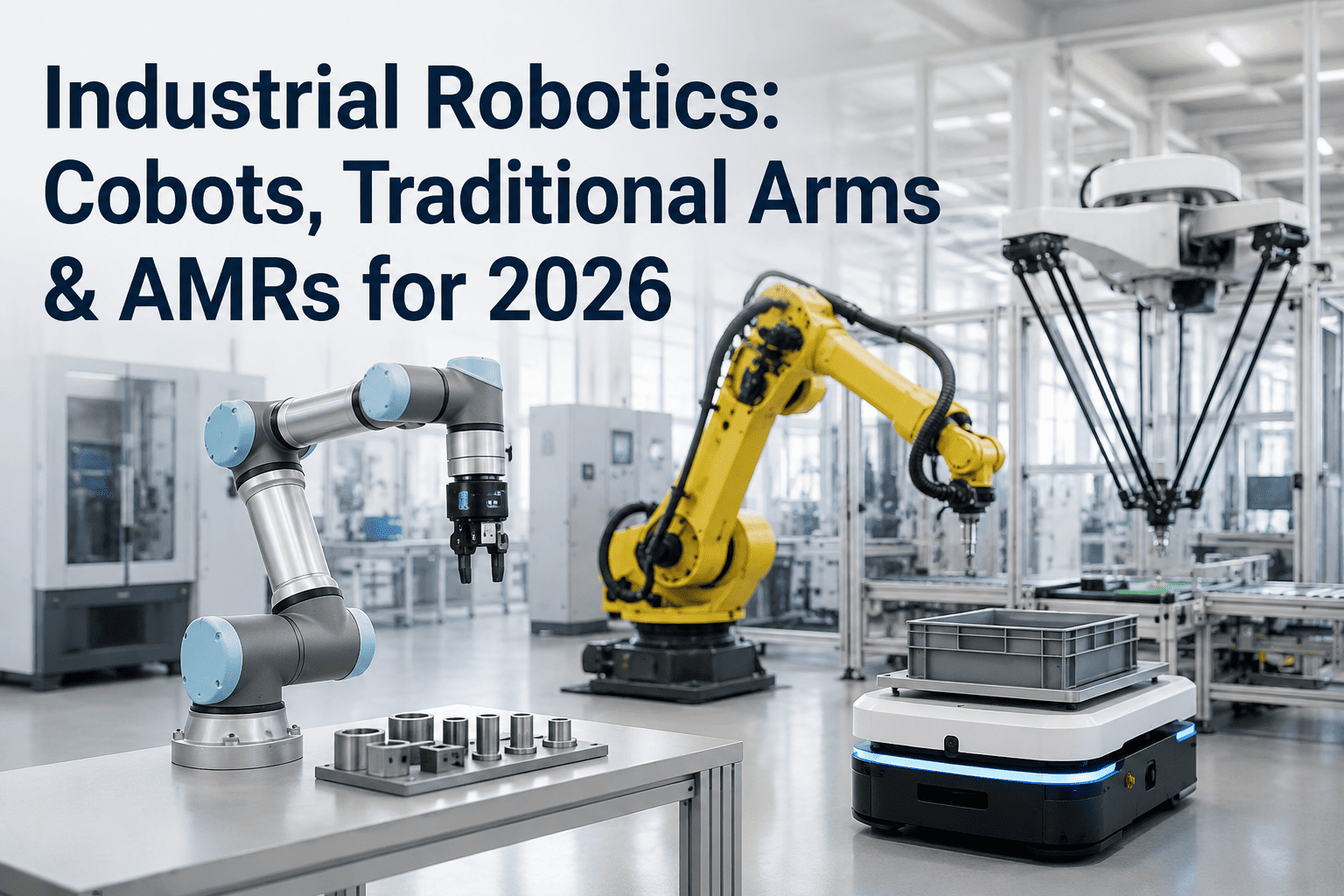
Steel plants typically run robot arms from ABB, FANUC, KUKA, and Yaskawa — often on the same floor. ROS 2 provides a single software framework that commands all of them through standardized interfaces, eliminating the need for separate proprietary programming environments for each vendor.
Real-Time Deterministic Communication
ROS 2 replaced custom protocols with DDS (Data Distribution Service) — the same industrial-grade middleware used in military grid systems and aerospace. DDS enables real-time, reliable publish-subscribe messaging between robot nodes, PLCs, and sensor networks without data loss.
Built for Harsh Environments
Steel plants generate extreme heat, electromagnetic interference, and metallic particulate. ROS 2's distributed architecture allows edge nodes to process data locally near hazardous zones while maintaining coordination with central systems — reducing dependency on plant-wide networking.
Open Source, Enterprise Backed
ROS 2 is not a research project. It is actively developed and deployed by Amazon, Intel, Microsoft, Bosch, BMW, Toyota, and the Steel Founders' Society of America. The Apache 2.0 license protects your intellectual property while giving full access to the codebase.
ROS 2 Architecture for Steel Plant Automation
How the layers connect — from the furnace floor to the enterprise dashboard.
Steel Plant Robot Applications Powered by ROS 2
Where ROS 2 transforms robot arms from isolated tools into intelligent, coordinated systems.
Ladle and Tundish Manipulation
ROS 2 coordinates multi-axis robot arms for positioning ladles and tundishes near blast furnaces where temperatures exceed 1,500°C. MoveIt 2 handles real-time path planning around dynamic obstacles while thermal sensors feed back to safety nodes.
Structural Steel Welding
AI-guided welding robots adjust laser power, speed, and focal position in real time based on sensor feedback. ROS 2 nodes process weld seam tracking data, trigger quality inspection, and log every parameter for full traceability across each joint.
Surface Inspection at Rolling Mills
Robot-mounted 3D vision systems inspect steel surfaces for cracks, scale defects, and dimensional deviations at line speed. ROS 2 fuses vision data with rolling process parameters to correlate defects with upstream process drift in real time.
Coil and Slab Handling
Heavy-payload robot arms and AMRs work in concert to move steel coils and slabs between stations. Nav2 navigation handles dynamic routing while ros2_control manages precise load positioning — preventing damage to finished product surfaces.
Refractory Lining Repair
Robot arms equipped with spray nozzles perform automated refractory lining repairs inside furnaces during controlled shutdowns. ROS 2 enables precise path execution in confined, GPS-denied environments using SLAM-based localization.
Hazardous Material Sampling
Teleoperated and semi-autonomous robot arms collect molten metal samples, gas readings, and temperature measurements — removing workers from the most dangerous zones in the entire steel production process.
Your Robots Are Smart. Make Them Smarter Together.
iFactory integrates ROS 2 robot data with predictive maintenance, SCADA, and digital twin workflows — giving your steel plant a unified automation brain.
ROS 2 + PLC Integration: Best of Both Worlds
The golden rule: never trust an operating system with human safety. PLCs own the safety layer. ROS 2 owns the intelligence layer. Together, they create an automation architecture that is both fail-safe and adaptive.
Digital Twin Integration with ROS 2 in Steelmaking
Simulate before you execute. Predict before you fail. Optimize before you lose.
Simulation & Commissioning
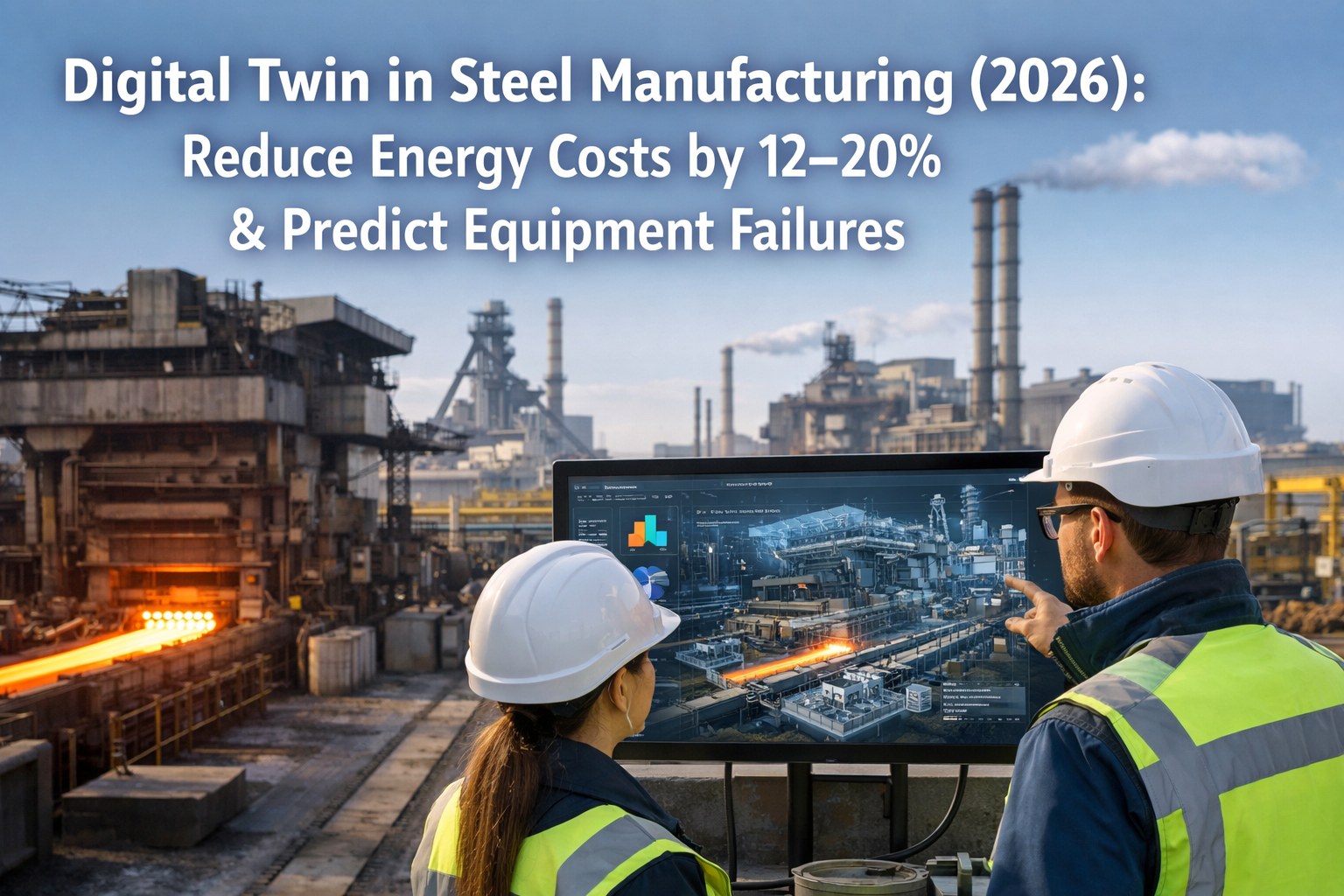
Build a complete virtual replica of your steel plant robotics using Gazebo and ROS 2. Test robot programs, collision avoidance, and multi-arm coordination in simulation before deploying a single line of code to the physical floor.
Real-Time Mirroring
Once deployed, the digital twin stays synchronized with physical robots through DDS topics. Every joint position, sensor reading, and process parameter streams into the virtual model — creating a live dashboard of your entire robotic fleet.
Predictive Analytics
ML models running against twin data detect early signs of bearing wear, servo degradation, and trajectory drift. Research on rolling mills in Italian steelworks demonstrated that digital twin-based predictive maintenance reduces unplanned downtime by correlating simulated and real sensor data.
What-If Optimization
Run production scenarios — new product dimensions, different steel grades, altered throughput — in the digital twin before changing anything physical. This eliminates costly trial-and-error on the actual line and reduces changeover time dramatically.
ROS 2 Predictive Maintenance for Robot Arms
From reactive breakdown repair to intelligent, data-driven maintenance scheduling.
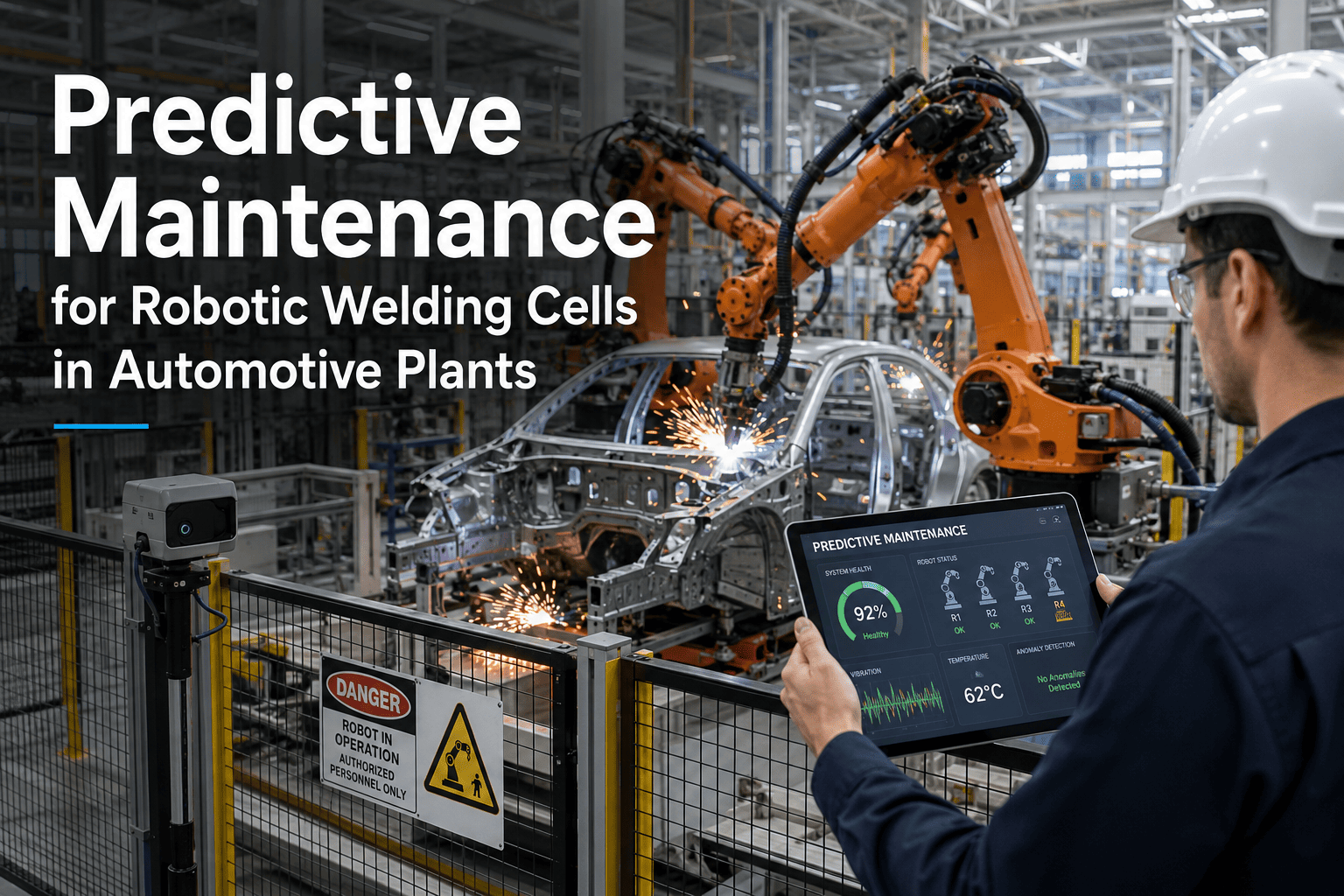
Accelerometer data from robot joints published as ROS 2 topics. Spectral analysis identifies bearing degradation signatures weeks before failure.
Servo motor current patterns that deviate from digital twin baselines. Rising torque on specific joints indicates gear wear, lubrication loss, or payload imbalance.
Comparison of commanded vs. actual joint positions over time. Gradual drift indicates encoder degradation, mechanical backlash, or thermal deformation of the arm structure.
Temperature sensors on motors and gearboxes publish to the ROS 2 network. Trending thermal data against ambient conditions and duty cycles identifies cooling system failures early.
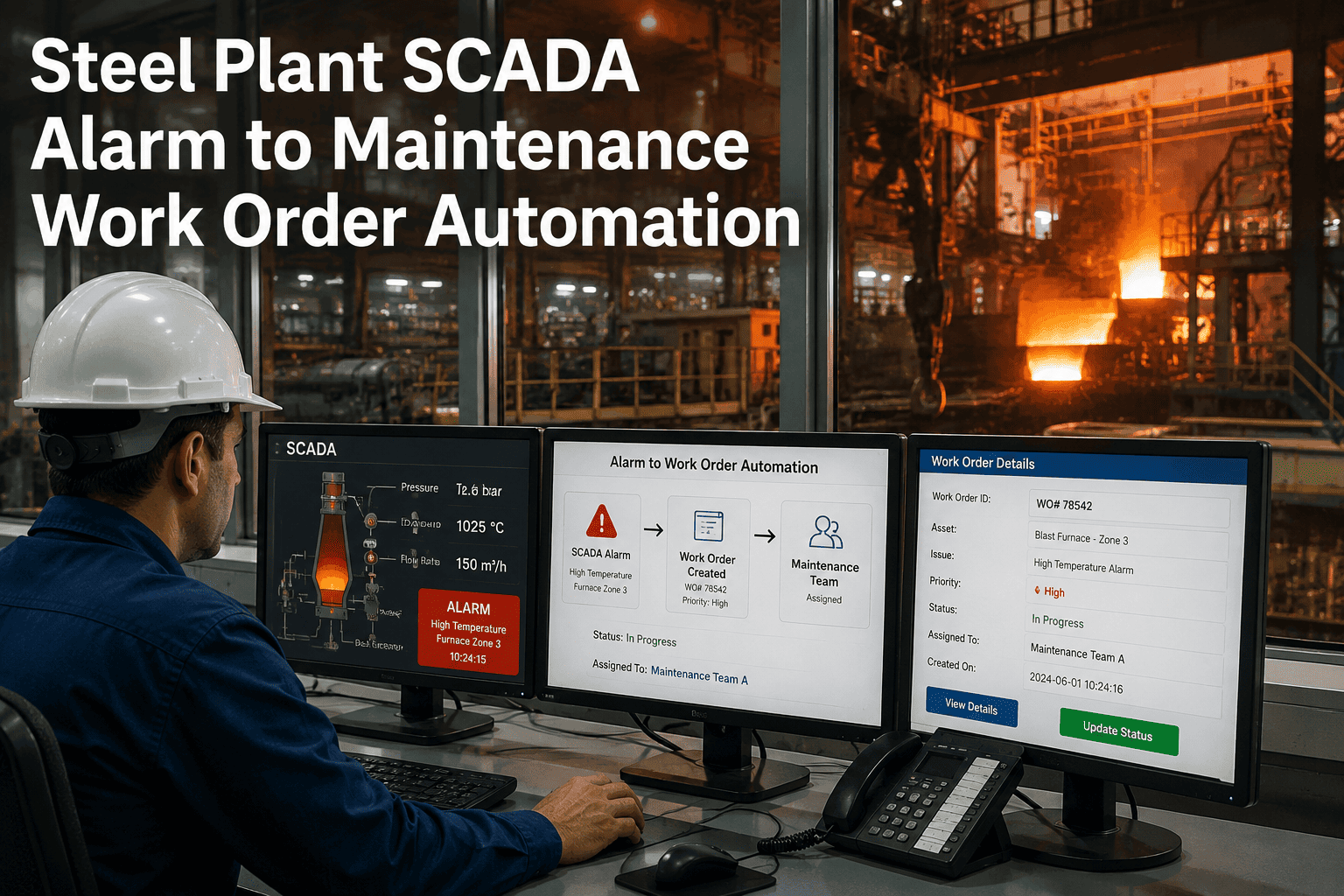
iFactory CMMS ingests all ROS 2 predictive maintenance data — automatically generating work orders, scheduling parts procurement, and tracking robot health scores across your entire fleet.
Connecting ROS 2 to SCADA, MES, and ERP
Robot data stops being siloed. It becomes enterprise intelligence.
SCADA Integration
ROS 2 nodes bridge to SCADA via OPC-UA, publishing robot status, alarm states, and process data to existing supervisory systems. Operators see robot performance alongside furnace, rolling mill, and utility data on unified dashboards.
MES Integration
Every robot action — cycle times, inspection results, material handling events — feeds into the Manufacturing Execution System. Production schedulers see real-time robot availability and automatically adjust sequencing when maintenance windows are needed.
ERP and Supply Chain
Robot consumable usage (welding wire, grinding discs, gripper pads) flows into ERP for automated procurement. Maintenance cost data from iFactory CMMS feeds into financial planning — no manual data re-entry at any stage.
Cloud and Edge Computing
Latency-sensitive robot control stays on edge hardware. Analytics, fleet comparison, and cross-plant benchmarking run in the cloud. ROS 2's distributed architecture naturally supports this hybrid topology without custom bridging.
How Top Steel Companies Are Adopting Automation
The world's largest steelmakers are investing heavily in robotics, AI, and digital twins.
"Smart Steel" strategy deploys digital twin technology to optimize blast furnace operations in real time, with robot-assisted quality inspection across production lines.
Operates one of the world's most connected smart steel mills, with AI furnace control systems, robotic quality inspections in high-speed rolling mills, and real-time performance dashboards.
AI-powered scheduling algorithms, 5G-connected robotic systems, and extensive automation across slab handling, surface inspection, and predictive maintenance workflows.
Vijayanagar plant uses digital twin technology to optimize production in real time, with predictive analytics for raw material usage and AI-driven maintenance scheduling.
Implementation Challenges and How to Solve Them
Legacy Infrastructure
Most steel plants run PLCs and SCADA systems installed decades ago with proprietary protocols.
ROS 2 bridges to legacy systems via OPC-UA, Modbus TCP, and EtherCAT. No rip-and-replace required — the integration layer wraps existing infrastructure.
Extreme Environment
Heat, dust, vibration, and EMI destroy standard computing hardware and networking equipment.
ROS 2 runs on ruggedized industrial edge PCs with IP67-rated enclosures. Distributed architecture keeps compute near the robot while offloading analytics to protected zones.
Workforce Skills Gap
Steel plant engineers know PLCs and ladder logic — not Python, ROS, or Linux.
ROS-Industrial Consortium provides structured training programs. iFactory's platform abstracts ROS 2 complexity behind visual dashboards that maintenance teams already understand.
Cybersecurity
Connecting robots to networks and cloud systems opens new attack surfaces in critical infrastructure.
ROS 2's DDS middleware supports SROS2 security extensions — authentication, access control, and encrypted communication between every node in the system.
Frequently Asked Questions
Is ROS 2 production-ready for steel plant environments?
Yes. ROS 2 is backed by Amazon, Intel, Bosch, BMW, and the Steel Founders' Society of America. Its DDS middleware is the same standard used in military and aerospace systems. Combined with ruggedized edge hardware, it operates reliably in extreme industrial conditions.
Can ROS 2 work with our existing PLCs?
Absolutely. ROS 2 is designed to complement PLCs, not replace them. Integration happens through OPC-UA, Modbus, or EtherCAT bridges. PLCs retain safety-critical control while ROS 2 adds intelligence, coordination, and analytics on top.
Which robot brands work with ROS 2?
All major industrial robot manufacturers have ROS 2 drivers — ABB, FANUC, KUKA, Universal Robots, and Yaskawa. This allows multi-vendor robot fleets to be coordinated through a single software framework instead of separate proprietary systems.
How does ROS 2 enable predictive maintenance for robots?
ROS 2 publishes continuous streams of joint torque, vibration, temperature, and trajectory data. ML models running against this data — and validated against digital twin baselines — detect degradation patterns weeks before failure occurs, enabling planned interventions.
What is the role of iFactory in ROS 2 integration?
iFactory CMMS ingests ROS 2 robot health data and automatically converts predictive signals into maintenance work orders, parts requisitions, and scheduling. It bridges the gap between robotics engineering and plant maintenance operations.
Is ROS 1 still supported?
No. ROS 1 Noetic reached end-of-life in May 2025. All new development and industrial deployments should target ROS 2. iFactory supports migration planning for plants still running ROS 1 systems.
Unify Your Steel Plant Robotics with ROS 2 and iFactory
See how iFactory connects ROS 2 robot arms, PLCs, digital twins, and predictive maintenance into one intelligent automation platform purpose-built for steel manufacturing.