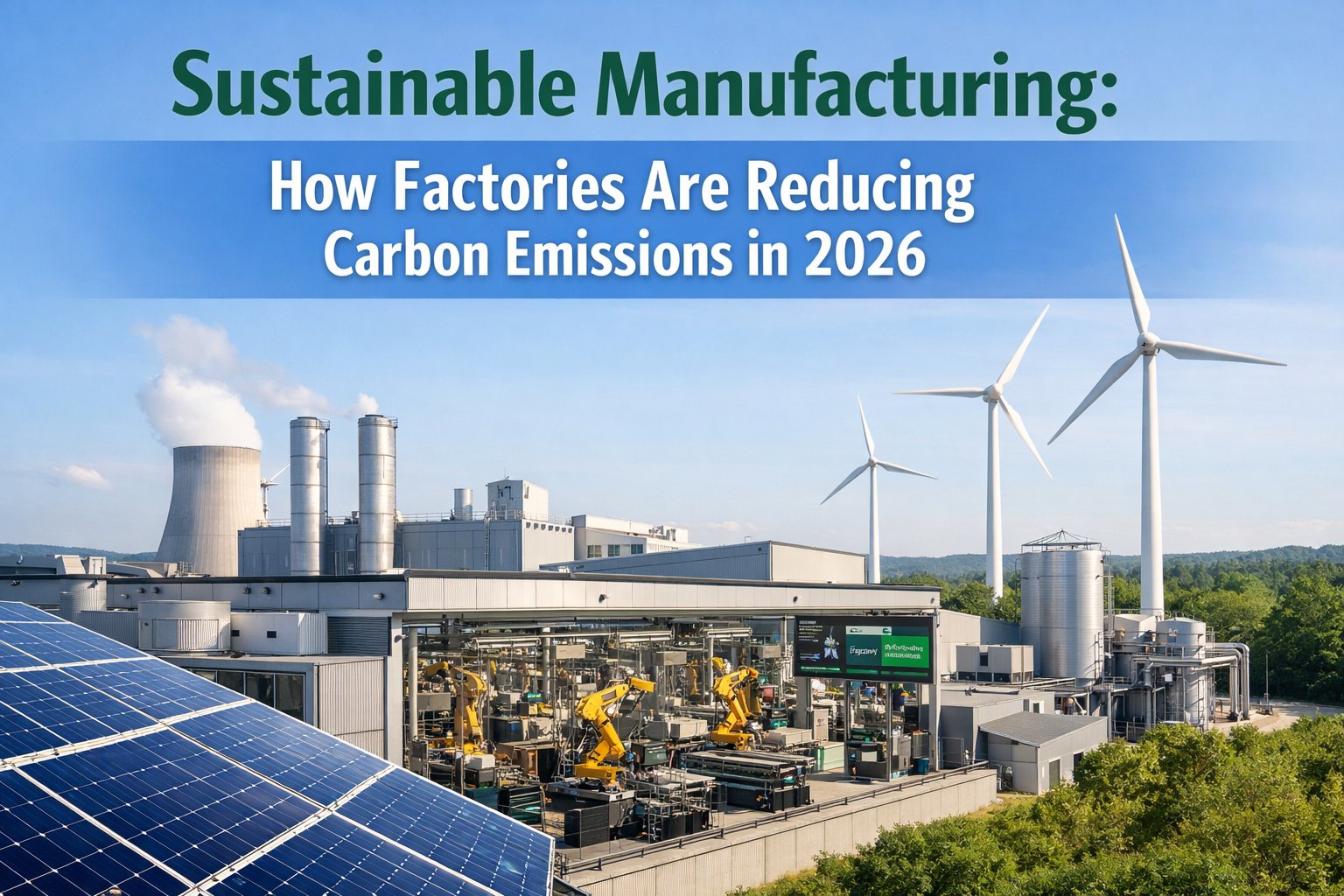
Siemens cut CO₂ emissions 60% since 2019 — exceeding their 2025 target a year early. Schneider Electric helped customers avoid 679 million tonnes of CO₂. Manufacturing generates 12% of U.S. greenhouse gas emissions, but the factories leading in 2026 are proving that sustainability and profitability reinforce each other. With EU carbon border taxes now requiring actual payments, here is how smart manufacturers are turning green mandates into competitive advantages.
The Carbon Reduction Stack
Successful sustainable factories don't rely on a single solution — they layer multiple approaches. Here's how the reduction stack works, from foundation to optimization:
Circular Economy
Recycled materials, waste-to-energy, closed-loop systems
Process Electrification
Replace gas-fired systems with electric alternatives
Renewable Integration
On-site solar, wind, battery storage systems
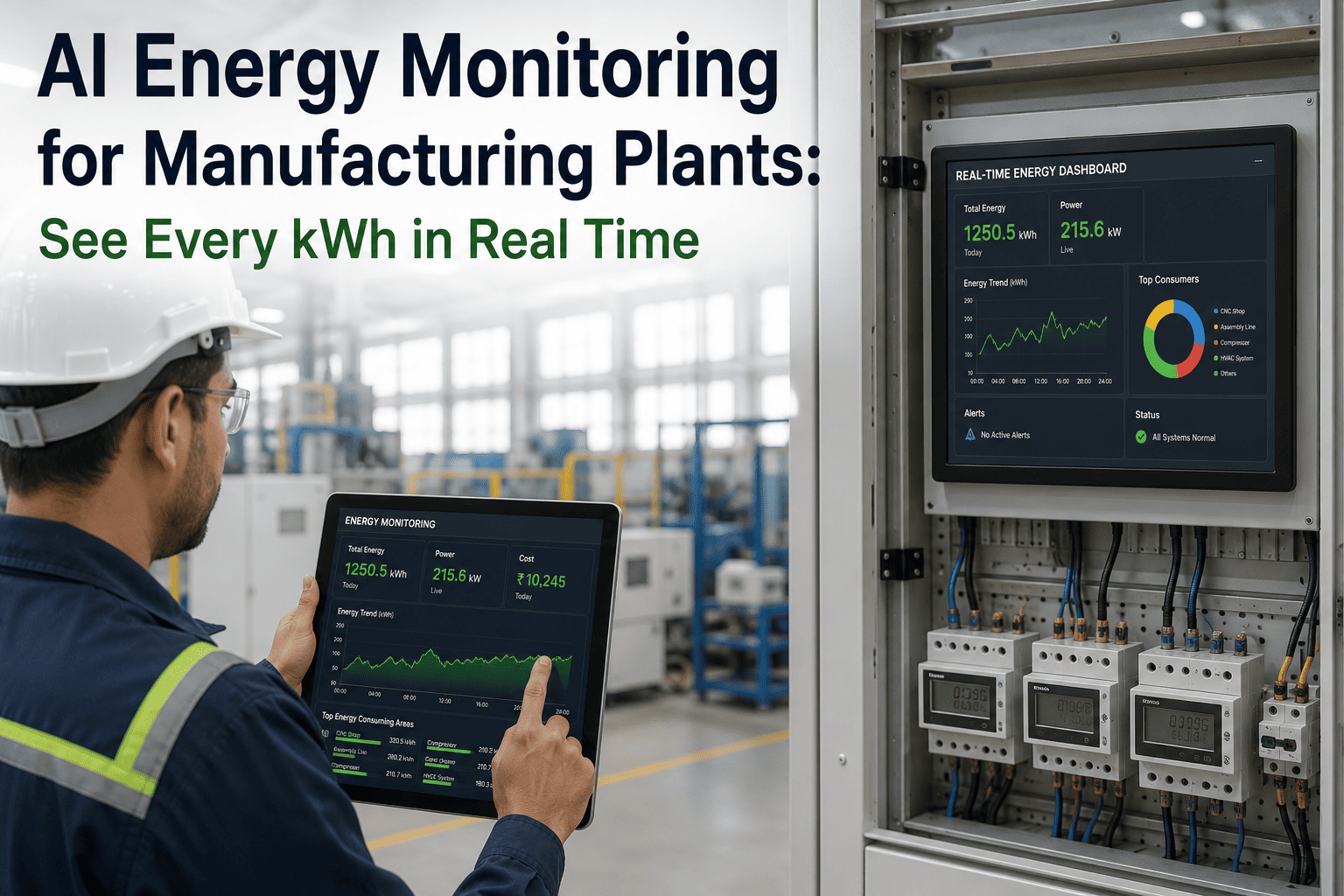
AI Energy Monitoring
Real-time tracking, predictive optimization, waste detection
Every layer depends on accurate data. See how iFactory provides the monitoring foundation for carbon reduction.
Who's Leading — And By How Much
The 2026 Regulatory Pressure
EU Carbon Border Adjustment (CBAM)
As of January 2026, importers must purchase certificates for embedded carbon in steel, aluminum, cement, fertilizers, and hydrogen. Generic industry averages trigger punitive default tariffs.
Digital Product Passports
EU requires detailed sourcing, materials, emissions, and end-of-life data for multiple product categories. Full supply chain transparency becomes mandatory.
EU ETS Tightening
Free carbon allowances phasing out. Carbon prices rising. The cost of emissions is becoming a direct line item on manufacturing P&L statements.
Need facility-specific emissions tracking for CBAM compliance? Talk to our specialists about building your data foundation.
Sustainability Requires Visibility
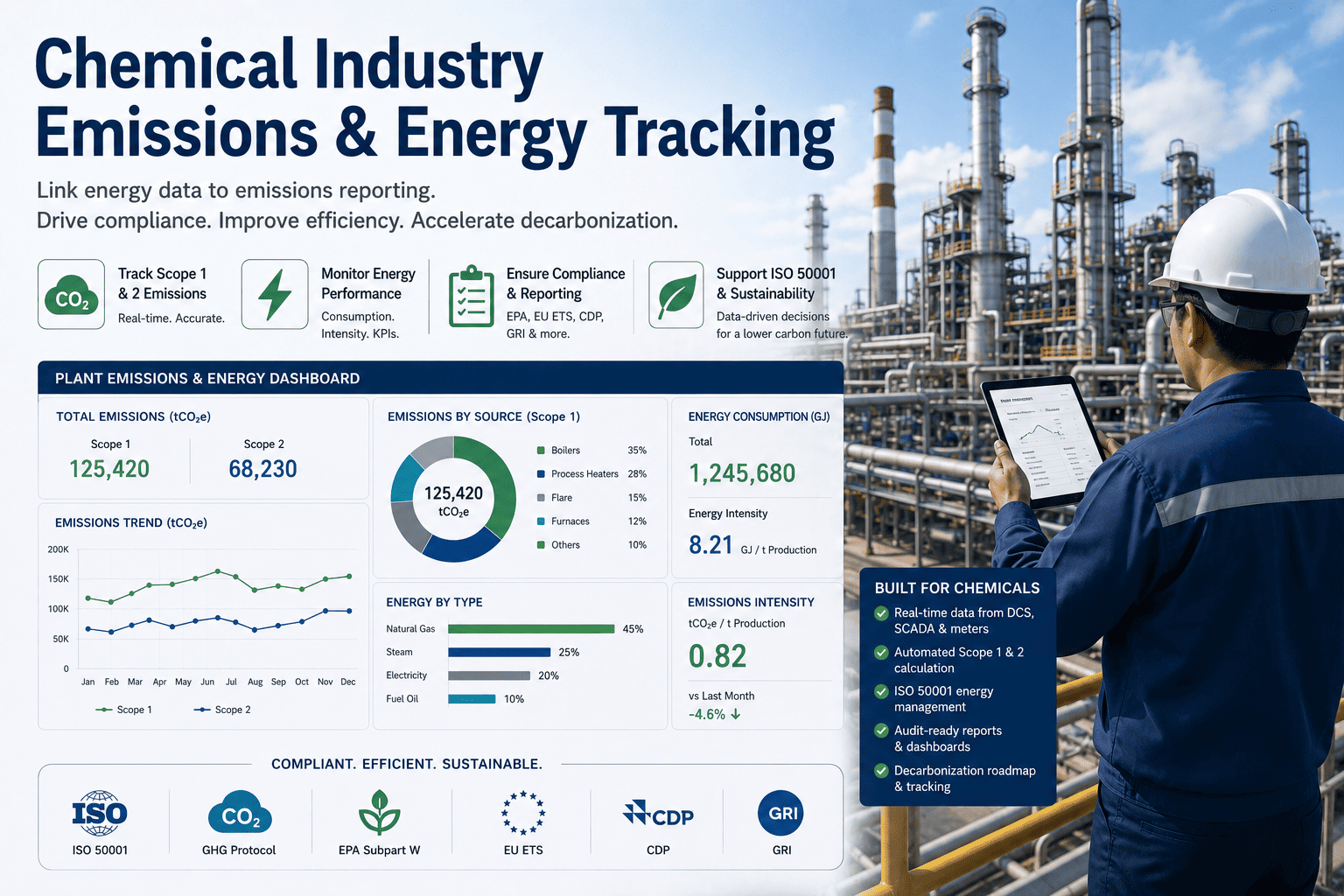
iFactory's AI-powered CMMS tracks equipment efficiency, energy consumption patterns, and maintenance health — the data foundation every carbon reduction strategy requires.
The Carbon Reduction Meter
Different strategies deliver different results. Here's what the research shows for typical manufacturing facilities:
Expert Perspective
"When energy efficiency lowers bills, when digital cuts waste and downtime, when circularity slashes input volatility, then adoption becomes automatic — even among customers who don't 'care' about sustainability at all. The old sustainability was about doing less harm. The new sustainability is about building better businesses."
Ready to build your sustainability data foundation? Schedule your iFactory demo today.
Your First 90 Days
Measure
- Deploy equipment sensors
- Integrate CMMS for data capture
- Establish energy baselines
Identify
- AI analyzes consumption patterns
- Flag inefficient equipment
- Map reduction opportunities
Act
- Implement quick wins first
- Optimize maintenance schedules
- Plan larger investments
Start Measuring Today
iFactory provides the equipment monitoring, energy tracking, and maintenance optimization that forms the foundation of any carbon reduction strategy.
Conclusion
Sustainable manufacturing has crossed from aspiration to requirement. EU CBAM demands facility-specific carbon data starting 2026 — generic industry averages trigger punitive tariffs. The leaders proving it's possible (Siemens at 60% reduction, ABB at 78%, Schneider avoiding 679M tonnes) show that green and profitable aren't opposites. The question isn't whether to act — it's whether you have the data visibility to act intelligently.
Schedule your iFactory demo or speak with our sustainability specialists to build your carbon tracking foundation.