Humanoid robots are no longer a futuristic concept reserved for automotive assembly lines — they are being deployed inside blast furnace bays, hot rolling mills, and coil storage yards right now, in 2026. Steel plants operating with legacy safety inspection workflows, paper-based order logs, and manual traceability processes are accumulating compliance exposure, production errors, and workforce safety incidents that an embodied AI platform can systematically eliminate. The facilities gaining the most from humanoid integration are the ones where autonomous robots extend human reach into hazardous zones, close the loop on digital order verification, and feed real-time traceability data directly into CMMS and MES platforms — without disrupting the production flow that keeps the mill profitable.
Is Your Facility Keeping Up?
Why Humanoid Robots Are Entering Steel Plant Operations in 2026
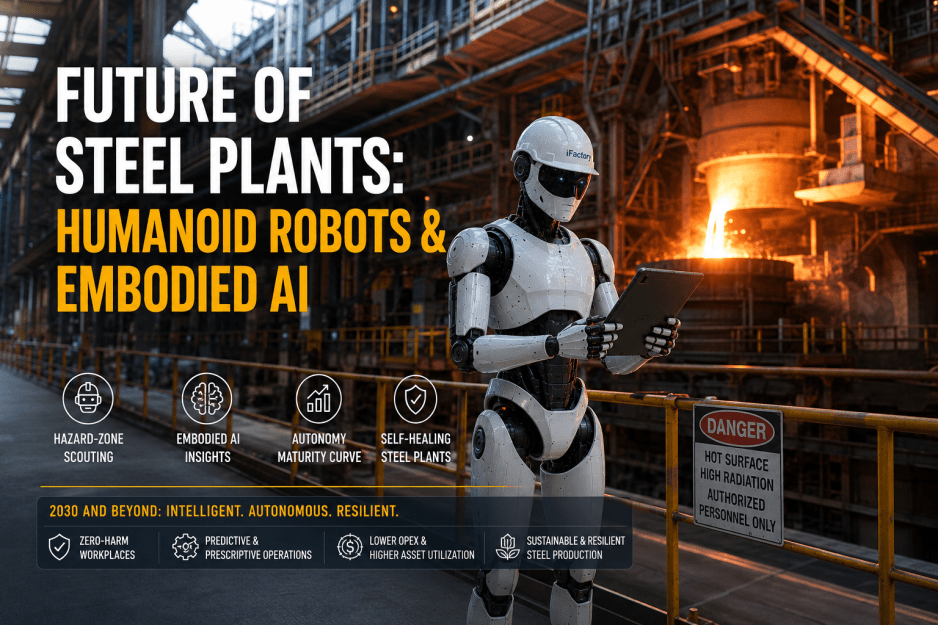
Steel manufacturing environments rank among the most physically demanding and hazardous industrial settings in the world. Blast furnace tapping floors, hot strip mill underbellies, and ladle transfer aisles regularly expose workers to radiant heat exceeding 600°C, airborne particulates, and molten metal splash zones that no static sensor array or traditional robot can fully monitor. Humanoid robots — built with bipedal mobility, dexterous manipulation, and onboard AI vision — are uniquely capable of navigating these environments using the same infrastructure designed for human workers: staircases, ladders, narrow walkways, and manual valve handles.
The 2026 deployment picture has accelerated sharply. Industry analysts tracking embodied AI adoption in heavy manufacturing report that steel and metals facilities are the second-fastest adopters behind automotive, driven by three converging pressures: tightening OSHA and EPA compliance requirements, persistent skilled labor shortages in inspection and order-tracking roles, and the economic case for connecting robot-generated data directly to existing MES and CMMS platforms. Plants running iFactory AI's integration layer report that humanoid robot data does not sit in a separate dashboard — it flows directly into work order creation, traceability records, and predictive maintenance queues, making every robot inspection decision-ready from the moment it is completed.
Where Humanoid Robots Deploy Inside a Steel Plant: Zone-by-Zone Breakdown
Unlike fixed industrial robots constrained to a single cell, humanoid platforms navigate the full plant footprint — entering the environments that generate the highest safety risk and the most traceability gaps. The zone mapping below identifies where humanoid robots deliver the highest combined return across safety, order accuracy, and compliance documentation. Steel plant teams ready to map their own facility can book a demo for a site-specific deployment assessment.
| Plant Zone | Primary Risk | Robot Task | Data Output | iFactory Integration | Risk Level |
|---|---|---|---|---|---|
| Blast Furnace Tapping Floor | Molten metal splash, radiant heat, toxic gases | Thermal anomaly scan, refractory inspection | Thermal image, wear measurement, gas level | CMMS work order, EHS incident log | Critical |
| Hot Rolling Mill | Pinch points, scale buildup, roll wear | Roll gap verification, scale monitoring, order scan | Dimensional data, QR traceability, defect flag | MES order update, quality module alert | Critical |
| Ladle Transfer Aisle | Ladle lining erosion, overhead crane proximity | Ladle wall thickness scan, heat number log | Lining wear data, heat number match, timestamp | CMMS predictive maintenance, traceability record | Critical |
| Coil Storage & Shipping Yard | Mis-identification, load sequencing errors | Coil ID scan, order verification, weight check | Barcode/QR match, order confirmation, shipping log | MES shipment release, ERP order closure | High |
| Continuous Caster Floor | Breakout risk, mold wear, strand alignment | Mold copper measurement, strand geometry check | Mold wear profile, breakout prediction score | CMMS scheduled maintenance, MES quality flag | Critical |
| Finished Goods Warehouse | Inventory discrepancy, certificate mismatch | Bundle audit, certificate-to-product match | Inventory delta, cert verification log | Inventory module, document management | Moderate |
Order Traceability in Steel Manufacturing: How Humanoid Robots Close the Gap
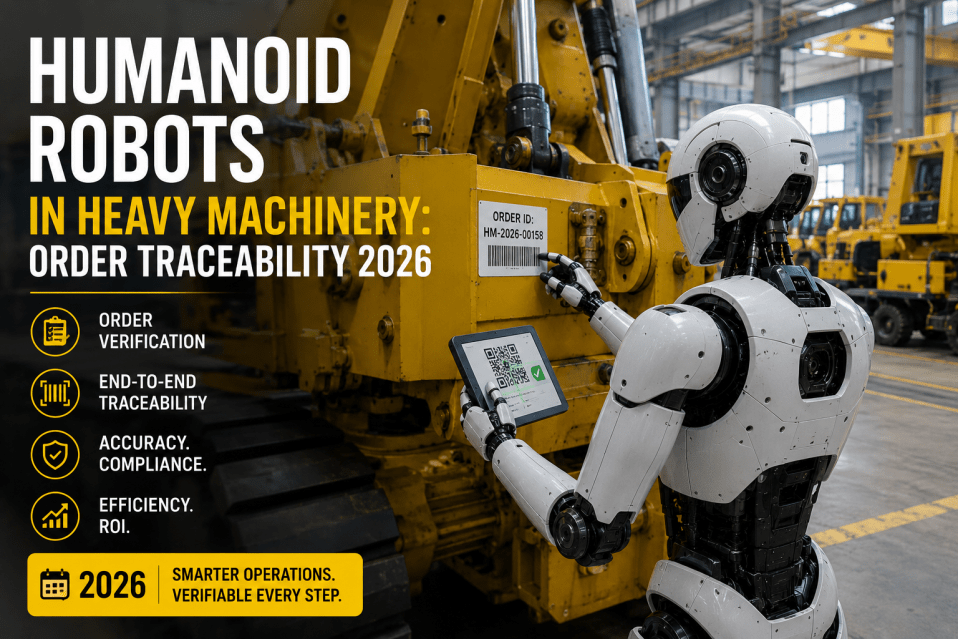
Order traceability in steel plants has historically been one of the most error-prone operational processes in manufacturing. Heat numbers get misread, coil tags get damaged by scale and heat, manual scanning is skipped during high-pressure production windows, and the resulting traceability gaps surface weeks later as customer quality complaints, regulatory non-conformances, or internal rework charges. Humanoid robots equipped with multi-spectral vision and AI classification models resolve this systematically — not by adding another manual verification step, but by making verification autonomous, continuous, and digitally logged without operator intervention.
At material intake, the humanoid robot scans incoming slabs, billets, or hot metal ladles, capturing heat numbers, supplier mill certificates, and dimensional specs. Data is cross-referenced against the open purchase order in iFactory's MES module before material is accepted into the production queue — flagging discrepancies before they enter the production stream.
As material moves through the rolling mill or continuous caster, the robot performs in-process order checks — confirming that the correct heat is assigned to the correct production order, that dimensional tolerances match the customer specification, and that process parameters logged by SCADA align with the order's metallurgical requirements. Deviations generate immediate alerts in the MES quality module.
At the finishing end, the robot applies or verifies QR-coded traceability tags on coils, bundles, or plates, then matches each tag to the mill test certificate generated by the quality system. Any mismatch between physical product identity and the certificate data triggers a hold in iFactory's inventory module, preventing shipment until the discrepancy is resolved and documented.
Before shipment dispatch, the robot conducts a yard audit pass — scanning every outbound item against the shipping order, confirming load sequence, verifying that the correct customer-specific markings are present, and logging the pre-shipment confirmation with timestamp, robot ID, and operator acknowledgement. This closes the traceability chain from raw material intake to customer delivery.
Every traceability event — scans, matches, deviations, holds, releases — is archived in iFactory's smart document management module with full chain-of-custody metadata. Audit-ready traceability reports can be generated in seconds for customer audits, ISO certification reviews, or regulatory submissions, eliminating the multi-day manual assembly that consumes quality team bandwidth in conventional steel plants.
Legacy Steel Plant Operations vs. Humanoid Robot Integration: The Performance Gap
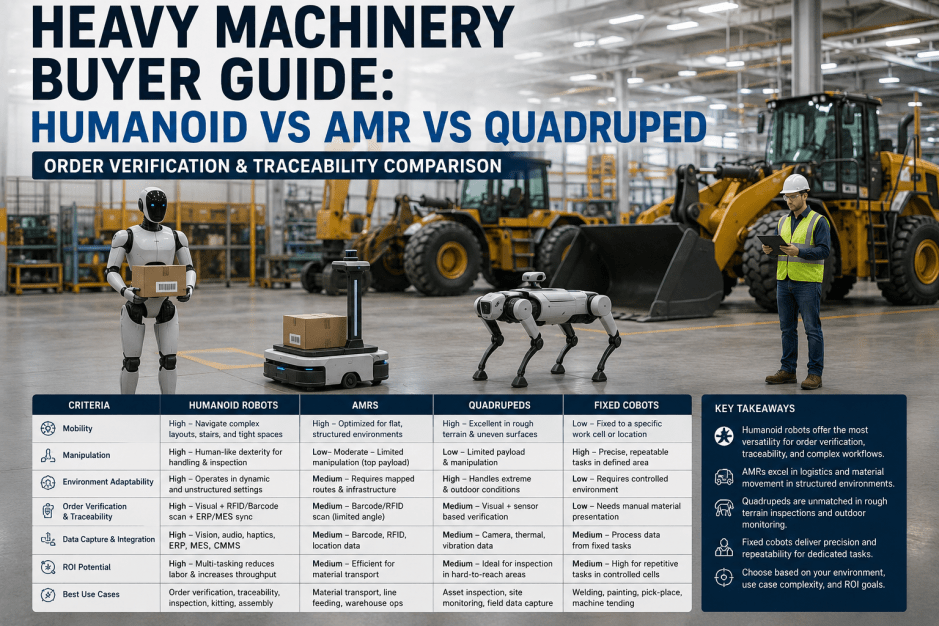
The operational difference between a steel plant running conventional inspection and order management workflows versus one integrated with humanoid robotics is not a matter of degree — it is a structural shift in how safety events, traceability failures, and compliance gaps accumulate over time. The comparison below maps the specific friction points where legacy methods generate hidden costs and where humanoid robot integration, connected through iFactory's platform, systematically eliminates them. Teams ready to run a side-by-side analysis on their own operation can book a demo with iFactory's industrial robotics team.
The iFactory AI Integration Layer: Connecting Humanoid Robots to Plant Operations
A humanoid robot operating without production system integration is an expensive data collector generating no operational value beyond the screen it streams to. iFactory transforms humanoid robot outputs into production decisions — connecting every scan, inspection event, and anomaly flag to the quality, maintenance, and compliance systems that run your steel plant. The integration stack below shows exactly which data flows where and why each connection matters.
Expert Review: What 2025–2026 Research Says About Humanoid Robots in Heavy Industry
The research literature on humanoid robot deployment in heavy manufacturing has moved from feasibility studies to documented operational results in 2025–2026. Published data from early industrial deployments highlights three consistent findings: hazardous zone inspection coverage increases substantially when human physical risk constraints are removed from the deployment equation, traceability error rates decline sharply when scanning is automated and AI-validated rather than manual, and the economic case for humanoid integration strengthens significantly when robot-generated data is connected to existing CMMS and MES platforms rather than isolated in proprietary dashboards.
Conclusion: Humanoid Robots Are Now a Steel Plant Operational Decision, Not a Research Question
The deployment of humanoid robots inside steel plants has moved past the pilot-project phase in 2026. The technology is proven across bipedal navigation in industrial environments, AI-driven order verification, and real-time traceability data generation. The remaining question for U.S. steel plant operators is not whether humanoid robots work — it is whether the integration layer connecting robot outputs to CMMS, MES, EHS, and compliance systems is in place to capture the full operational and financial value of every inspection, scan, and anomaly the robot detects.
iFactory AI provides that integration layer. From automatic work order generation in CMMS when a robot detects ladle wall erosion, to real-time order holds in MES when a traceability mismatch is flagged at the rolling mill, to audit-ready compliance documentation generated in seconds from the document management module — iFactory turns humanoid robot deployments into measurable operational improvements across safety, quality, and production efficiency. Steel plants ready to move from evaluation to deployment can book a demo to see a site-specific integration roadmap built around their existing infrastructure.
FAQ: Humanoid Robots in Steel Plant Management
How do humanoid robots integrate with existing CMMS and MES platforms in a steel plant?
Can humanoid robots operate in the high-heat environments of blast furnaces and hot rolling mills?
What traceability standards can humanoid robot data support in steel manufacturing?
What is the realistic ROI timeline for humanoid robot deployment in a steel plant?
How many robots are needed to cover a full steel plant, and how does fleet management work?
Deploy Humanoid Robots That Actually Connect to Your Steel Plant Operations.
iFactory AI gives steel plant operators a unified platform to run humanoid robot fleets, CMMS work order automation, MES order verification, and real-time traceability documentation — purpose-built for U.S. steel manufacturing environments.
.png)