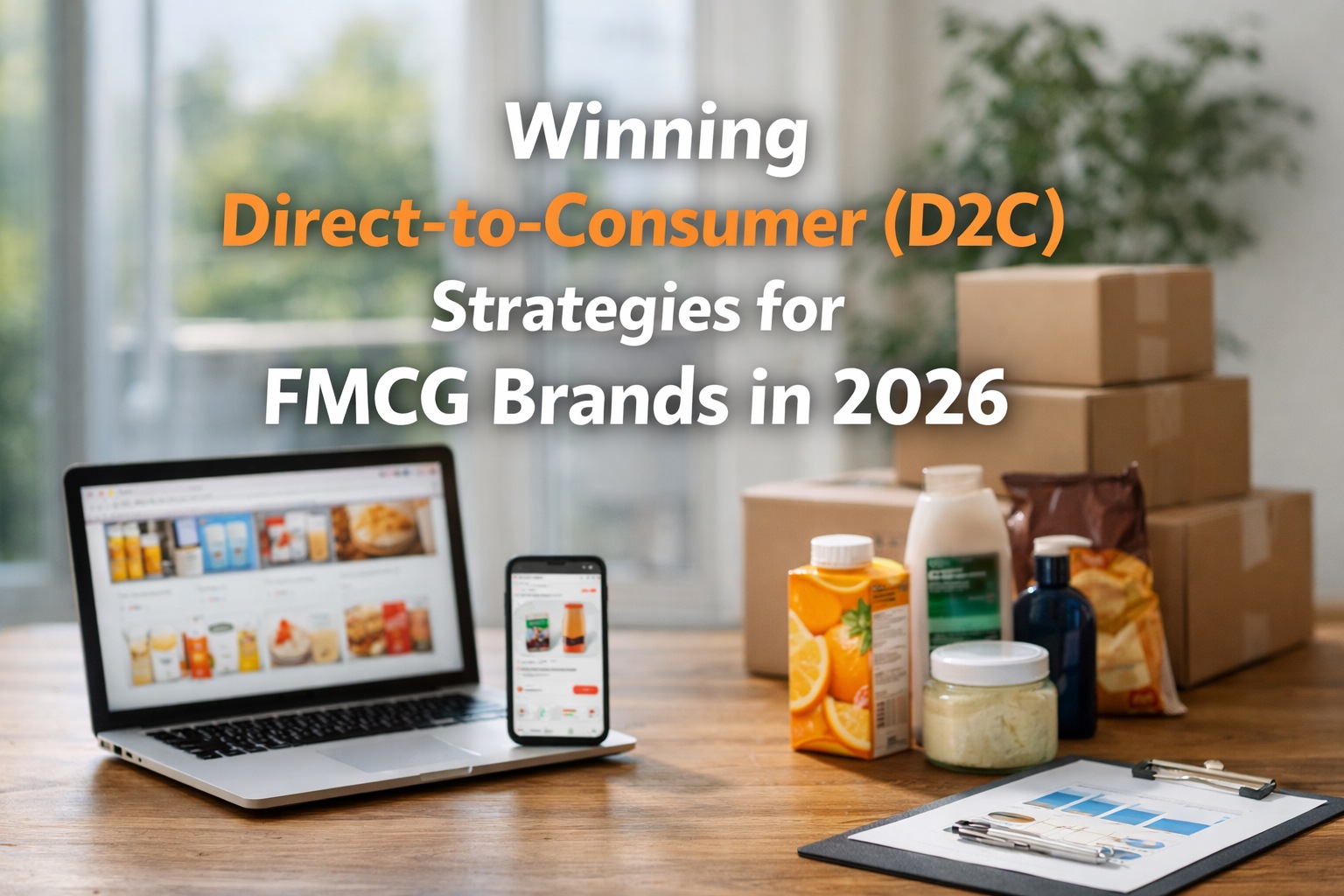
Your FMCG brand spends months perfecting a product, negotiating shelf space, running trade promotions — and then a retailer puts a private-label version right next to it at 30% less. In 2026, 57% of consumers have switched to own-label alternatives because they're more affordable. The brands fighting back aren't spending more on trade margins. They're building direct relationships with their customers — and keeping the data, the margins, and the loyalty for themselves. Welcome to the D2C era of FMCG.
Direct-to-Consumer Strategy for FMCG
The D2C Revolution
From retail dependency to direct customer relationships
That gap between retail margins and D2C margins is where the real opportunity lives. FMCG brands going direct are achieving 2.3x better unit economics, owning their customer data, and building loyalty loops that retailers can never match. The brands that act first will dominate. The rest will keep watching private labels eat their shelf space.
The Market Explosion Nobody Can Ignore
The numbers tell a story every FMCG brand leader needs to hear. D2C isn't a niche channel anymore — it's the fastest-growing segment in consumer commerce, and FMCG brands stand to gain the most from cutting out the middleman.
U.S. D2C ecommerce hit $240B in 2025 — with 58% of supply chain leaders expecting majority D2C sales by 2026
According to eMarketer and Global Insight Services, the global D2C market is projected to reach $880 billion by 2034. For FMCG brands operating on razor-thin retail margins while battling private-label competition, D2C isn't a luxury — it's the difference between owning your customer relationship and renting it.
Wondering how D2C fits into your FMCG operations? Talk to our team — we help brands build the operational backbone that makes D2C fulfillment fast, reliable, and profitable.
Why FMCG Brands Can't Ignore D2C Anymore
The FMCG distribution model hasn't fundamentally changed in decades: manufacture, distribute to retail, hope for shelf placement, repeat. But three forces are breaking that model apart in 2026. Customer acquisition costs through paid digital channels have surged 222% over eight years. Third-party cookies are effectively dead — Safari, Firefox, and now Chrome have all moved on. And consumers increasingly prefer buying directly from brands they trust, with 55% saying they feel more connected when shopping on a brand's own website.
Brands Exploring D2C Channels
74%
Supply Leaders Expecting Majority D2C
58%
Consumers Switched to Private Label
57%
Brand Experiences Feel Impersonal
52%
D2C isn't about replacing your retail distribution. It's about adding a high-margin, data-rich channel that gives you control over the customer experience, pricing, and most critically — the relationship.
5 D2C Strategies Driving FMCG Growth in 2026
Forget the hype cycle. These are the strategies delivering measurable results for real FMCG brands in 2026 — backed by data from eMarketer, KPMG, and Adobe Analytics.
01
AI-Powered Personalization at Scale
Generic product recommendations are dead. In 2026, AI personalization isn't optional — it's the baseline expectation. Shoppers who interact with AI-driven experiences convert at 4x the rate of those who don't, and personalized campaigns generate conversion rates 2.5x higher than generic approaches. For FMCG brands, this means dynamically adjusting product recommendations based on purchase history, regional taste preferences, dietary needs, and even weather patterns.
23%
Personalization Boost
02
Subscription & Replenishment Models
FMCG products are inherently replenishable — shampoo, snacks, coffee, cleaning supplies. Subscription models turn that natural purchase cycle into predictable recurring revenue while dramatically reducing customer acquisition costs. Food and beverage brands already enjoy one of the lowest CACs in ecommerce (around $53) precisely because subscription and repeat purchase behavior reduce the need for constant reacquisition.
03
First-Party Data Ownership
With third-party cookies gone, the brands that own their customer data win. Every D2C purchase gives you what no retailer ever will — email addresses, purchase histories, taste preferences, feedback, and behavioral signals. Brands leveraging first-party data see a 2.9x revenue increase and 1.5x improvement in cost savings. In 2026, 74% of brands have already shifted to first-party data strategies.
2.9x
revenue increase reported by brands leveraging first-party data strategies
04
Social Commerce Integration
U.S. social commerce hit $87 billion in 2025 and will surpass $100 billion in 2026. TikTok Shop alone grew 108% in 2025. For FMCG brands, social platforms aren't just awareness channels — they're conversion engines where discovery and purchase happen in the same moment. Nearly 50% of D2C brands report that social commerce now drives at least 25% of their revenue.
$100B+
Social Commerce 2026
05
Omnichannel D2C + Retail Orchestration
The winning FMCG brands in 2026 don't choose between D2C and retail — they orchestrate both. 58% of North American supply chain leaders expect most sales to be D2C by 2026. But 52% of consumers say their experience with consumer brands still feels impersonal. The opportunity is connecting every touchpoint — your website, app, social, email, and retail presence — into one unified customer view.
60%
of consumers become repeat buyers after a personalized omnichannel experience
Ready to Build Your D2C Engine?
ifactory helps FMCG brands streamline the operational backbone of D2C — from production scheduling aligned with direct orders, to quality tracking that protects your brand, to maintenance systems that keep fulfillment lines running at peak.
The D2C Economics: Why Margins Change Everything
The real power of D2C isn't just selling direct — it's the fundamental shift in unit economics. Here's how the numbers compare when an FMCG brand sells a $10 product through retail versus D2C.
Traditional Retail
Retail price $10.00, minus retailer margin (40%) $4.00, trade promotion $1.00, distribution $0.80, and COGS $2.50. Brand keeps just $1.70 per unit.
17% margin per unit
D2C Channel
D2C price $10.00, minus platform/fulfillment (15%) $1.50, digital marketing $1.20, shipping $0.80, and COGS $2.50. Brand keeps $4.00 per unit.
40% margin per unit
Margin Improvement
That's a 2.3x improvement in margin per unit — plus you own the customer data, control the brand experience, and can cross-sell without competing for shelf space.
2.3x better unit economics
For repeat-purchase FMCG categories, the economics only improve as acquisition costs amortize over subscription cycles. A customer who subscribes for 12 months at $25/month delivers $300 in revenue with near-zero reacquisition cost after the first purchase.
The Gen Z Factor: Your Next Core Customer
Gen Z isn't just another demographic — they're the first AI-native shopping generation, and they're rewriting the rules of brand engagement. Understanding how they discover, evaluate, and purchase is essential for any FMCG D2C strategy.
28%
of Gen Z regularly purchases D2C — more than double the general population's 13%
KPMG 2025
61%
of Gen Z adults have used an AI-powered tool to help with a purchase in the past year
PayPal 2025
80%+
of consumers trust generative AI search results as much as or more than traditional search
Attest 2025
1,200%
surge in AI-driven traffic to brand sites reported by Adobe Analytics in 2025
Adobe Analytics
For FMCG brands, this means your D2C site needs to be AI-ready — structured data, rich product descriptions, and authentic reviews that surface in AI-generated search responses. The brands that optimize for AI discovery today will own the customer relationships of tomorrow.
Common D2C Pitfalls (And How to Avoid Them)
90% of D2C startups fail by year five. The most common reasons are avoidable — if you know what to watch for. Here are the pitfalls that sink FMCG brands and the strategies to avoid them.
01
Over-Reliance on Paid Ads
Burning cash on paid acquisition without building retention systems is the number one killer. Meta CPMs hit an all-time high of $10.88 in 2025. Customer acquisition costs through paid digital channels have surged 222% over eight years.
Fix
Invest in email, SMS, and loyalty programs. Owned channels deliver higher margins and lower dependency on volatile ad platforms.
02
Ignoring Fulfillment Experience
The global cart abandonment rate sits at 70.22% in 2026. Consumers expect Amazon-level speed and reliability. One bad delivery can destroy a relationship you spent $68+ to build.
Fix
Invest in fulfillment infrastructure. Real-time order tracking, fast shipping, and frictionless returns are non-negotiable for repeat business.
03
Treating D2C as a Separate Business
D2C should amplify your retail presence, not compete with it. Brands that siloed their D2C from retail created channel conflicts, inventory problems, and confused customers.
Fix
Orchestrate channels. Use D2C for exclusive products and data collection. Use retail for volume and awareness. Let each channel strengthen the other.
04
Generic Customer Experience
52% of consumers say their experience with consumer brands feels impersonal. If your D2C store feels like every other ecommerce site, you've lost the primary advantage of owning the channel.
Fix
Invest in AI personalization from day one. Customized recommendations, dynamic content, and loyalty-driven pricing create experiences that justify buying direct.
Your D2C Launch Roadmap
Transitioning an FMCG brand to D2C doesn't happen overnight. Here's a phased approach that balances speed with sustainability — the same framework the fastest-growing D2C brands follow.
Month 1-3
Foundation
Launch D2C storefront with core SKU selection (start narrow, not full catalog). Implement first-party data collection: email capture, preference quiz, account creation. Set up subscription/replenishment option for top 3-5 products. Establish fulfillment and returns infrastructure.
Month 4-6
Growth
Deploy AI-powered personalization engine and recommendation system. Launch social commerce on TikTok Shop and Instagram. Build email/SMS lifecycle marketing automation sequences. Introduce loyalty program with tiered rewards.
Month 7-12
Scale
Expand product catalog based on D2C purchase data and customer feedback. Integrate D2C data with retail planning — test new products online before shelf launch. Deploy cross-channel attribution and unified customer identity. Optimize unit economics: target LTV:CAC ratio above 3:1.
Year 2+
Dominate
Build continuous improvement loops where customer data feeds back into product development, production scheduling, and retail strategy. Create a brand ecosystem where every touchpoint — online, social, retail, subscription — reinforces the others and deepens the customer relationship.
Frequently Asked Questions
Is D2C viable for low-price FMCG products?
Yes, but the model works differently than for premium goods. The key is bundling and subscription — selling a single $3 shampoo bottle direct doesn't make economic sense, but a monthly replenishment bundle of 3-5 products at $25-40 changes the math entirely. Food and beverage brands already enjoy some of the lowest customer acquisition costs in ecommerce ($53 average) because repeat purchase behavior naturally reduces the cost of reacquisition over time.
How do I avoid channel conflict between D2C and my retail partners?
Offer D2C-exclusive products, bundles, or sizes that don't compete with retail shelf SKUs. Use your D2C channel for new product testing, limited editions, and subscription services. Position D2C as a way to gather customer intelligence that improves your retail strategy — data on which flavors, sizes, or bundles customers prefer can directly inform retail assortment decisions.
What's a good LTV:CAC ratio to target?
For FMCG D2C, aim for at least 3:1 — meaning your customer lifetime value is three times your acquisition cost. Luxury goods brands achieve 5.2:1, but FMCG's lower average order values mean you need strong retention to make the economics work. Subscription models dramatically improve this ratio by extending customer lifespan and reducing reacquisition spend.
How important is social commerce for FMCG brands?
Increasingly critical. U.S. social commerce is expected to surpass $100 billion in 2026, with TikTok Shop growing 108% in 2025 alone. For FMCG brands, social platforms compress the entire funnel — discovery, consideration, and purchase — into a single scroll. Brands that invest in shoppable content, creator partnerships, and live shopping events are seeing social drive 25%+ of their D2C revenue.
What role does manufacturing operations play in D2C success?
A critical one that most D2C strategy articles ignore. D2C creates demand volatility that traditional production planning isn't built for — flash sales, subscription spikes, viral product moments. Your production lines need to respond faster, quality control must be airtight (every defect now has your brand name directly on it), and equipment uptime becomes a customer experience metric. Platforms like ifactory help FMCG brands align maintenance and production systems with D2C demand signals.
How long does it take to see results from a D2C launch?
A focused launch with core SKUs can start generating revenue within 1-3 months. Meaningful profitability typically comes at month 6-9 as subscription revenue accumulates and acquisition costs amortize. Full-scale D2C operations with omnichannel integration is a 12-18 month build. The key is starting with a narrow product set, proving unit economics, and scaling from data — not guesswork.
What is the market size for D2C ecommerce?
U.S. D2C ecommerce reached $240 billion in 2025 according to eMarketer. The global D2C market is projected to reach $880 billion by 2034 according to Global Insight Services. Social commerce alone is expected to surpass $100 billion in the U.S. in 2026. With 58% of supply chain leaders expecting majority D2C sales, the channel is rapidly becoming the primary growth engine for consumer brands.
The Bottom Line
The FMCG brands that will dominate in 2026 and beyond aren't choosing between traditional retail and D2C. They're building intelligent, data-driven operations that use direct customer relationships to inform every decision — from product development to production scheduling to shelf placement. The question isn't whether to go D2C. It's how fast you can build the operational capability to do it profitably.
The Operational Backbone Behind Every Successful D2C Brand
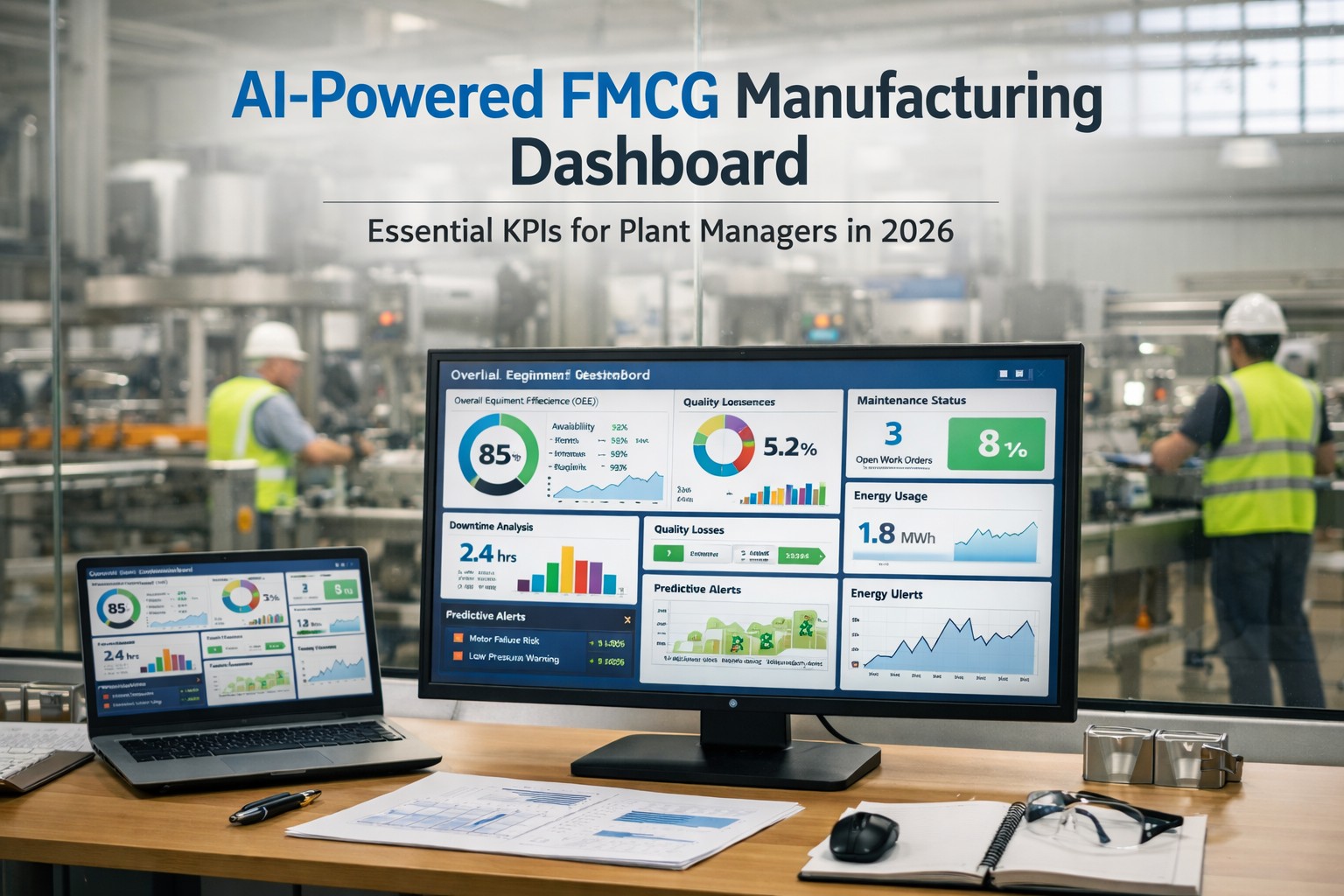
D2C success depends on flawless execution — production lines that respond to direct orders, quality systems that protect your brand reputation, and equipment that doesn't fail when demand spikes. ifactory gives FMCG brands the maintenance intelligence and operational visibility to run D2C fulfillment at the speed customers expect.