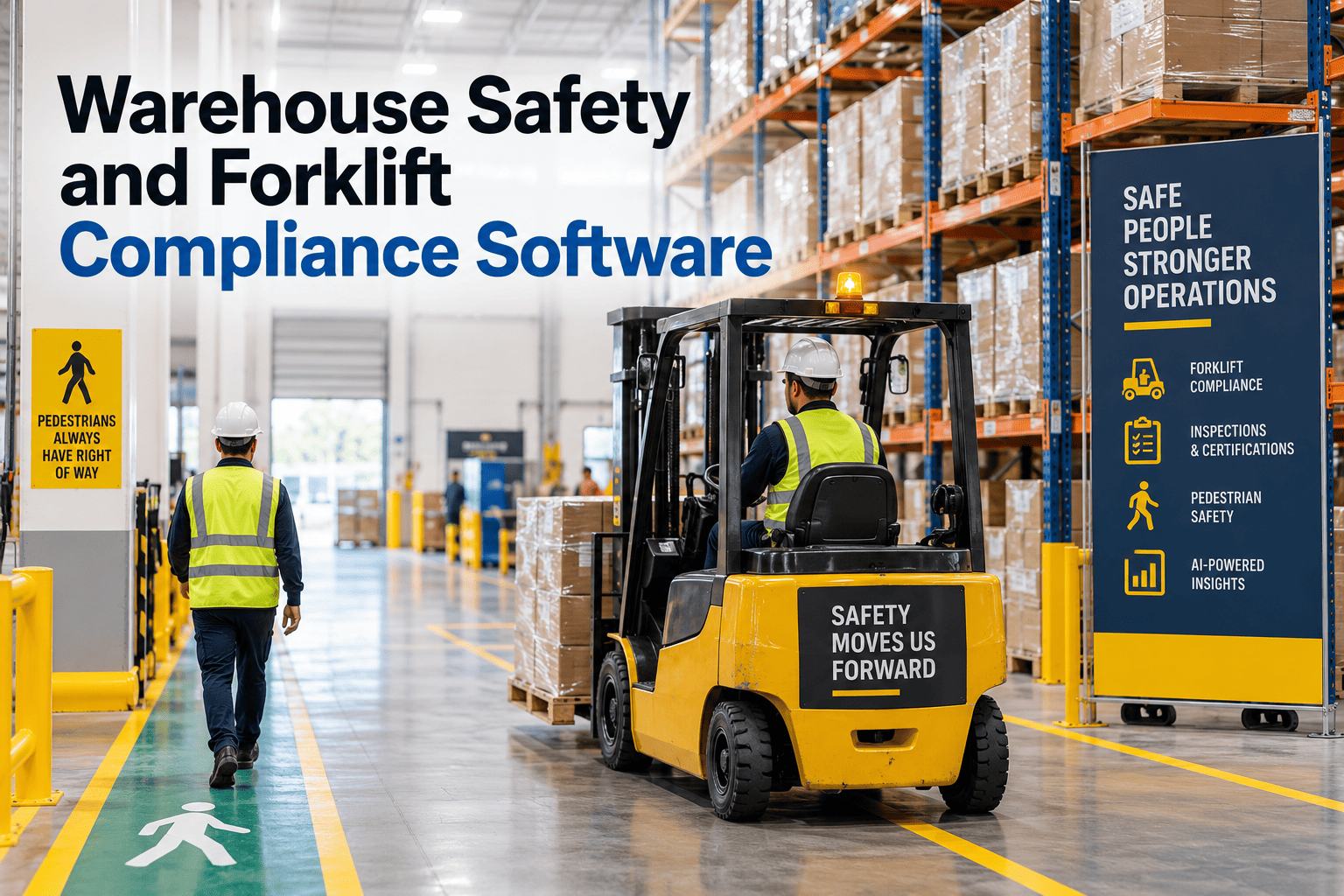
In a warehouse, the most dangerous thing on the floor isn't stored on a rack — it's driving down the aisle. Forklifts and other powered industrial trucks move constantly through spaces shared with people on foot, and the result is one of the most persistent hazards in logistics: the struck-by incident. A pedestrian steps out of a blind aisle, a truck reverses without a clear line of sight, a load blocks the operator's view, and in a fraction of a second a routine shift becomes a serious injury. Compliance is the foundation — OSHA requires every operator to be trained, evaluated, and certified, and every truck inspected before use — but paper certifications and clipboard inspection logs don't stop the incident that happens between a certified operator and a person who didn't see them coming. That's where AI changes the picture: pedestrian-detection at the truck and in the zone, layered on top of the certification and inspection tracking that keeps you compliant in the first place. iFactory AI Forklift & Pedestrian Safety brings all three together.
iFactory AI Forklift & Pedestrian Safety
Stop the Struck-By Incident Before It Happens
AI pedestrian detection, powered industrial truck certification tracking, and pre-use inspections in one system — so the forklift stays compliant and the aisle stays safe.
The Struck-By Hazard, Broken Down
Forklift-pedestrian incidents rarely come from carelessness alone. They come from geometry — blind corners, obstructed loads, and the simple fact that a fast, heavy machine shares space with people. These are the moments where they happen.
Blind Corners
Aisles and intersections where neither the operator nor the pedestrian can see the other until it's too late.
AI: zone alerts at the intersection
Obstructed Loads
A raised or oversized load blocks the operator's forward view, hiding anyone directly ahead.
AI: forward pedestrian detection
Reversing
Backing up is where line of sight is worst and where many struck-by incidents originate.
AI: rear detection and operator alert
Mixed Zones
Areas where trucks and people share the floor with no physical separation between them.
AI: pedestrian-in-zone warning
Pedestrian Walkways
Crossings and marked paths that trucks intersect, where a moment's inattention is enough.
AI: crossing alerts both ways
Three Layers That Work Together
Warehouse safety isn't one control — it's three, and they reinforce each other. Certification keeps only qualified operators on the truck. Inspection keeps only safe trucks on the floor. AI detection catches the incident the first two can't prevent.
Certify
Track every operator's PIT certification and three-year re-evaluation, with alerts before any credential lapses.
Inspect
Digital pre-use inspection checklists per truck, logged daily, with defects flagged and trucks locked out until fixed.
Detect
AI vision spots pedestrians near trucks and in shared zones, alerting the operator in real time.
Analyze
Near-miss and alert data reveal the aisles, shifts, and intersections where risk actually concentrates.
How AI Pedestrian Detection Works
The detection layer watches the space around the truck and the high-risk zones on the floor, recognizes a person, and warns before contact — turning a blind moment into an early alert.
01
See
Cameras on the truck and at fixed zones watch the areas where line of sight fails.
02
Recognize
AI vision distinguishes a person from racking, product, and other trucks in real time.
03
Alert
The operator gets an immediate warning when a pedestrian enters the danger zone.
04
Log
Every detection and near-miss is recorded with location and time, no paperwork needed.
05
Improve
Patterns point to the specific fixes — a mirror, a barrier, a rerouted path — that cut risk most.
What Layered Safety Delivers
Bringing compliance and AI detection together means fewer incidents, cleaner audits, and a warehouse floor where the highest-frequency hazard finally gets watched in real time.
Fewer
Struck-by incidents
alerts before contact, not after
100%
Certifications current
alerts before every re-eval lapses
Daily
Inspections logged
defective trucks locked out fast
Targeted
Fixes
data shows where risk concentrates
Want to see where the struck-by risk lives in your facility? Book a demo — we'll show detection and tracking together.
Frequently Asked Questions
Does the AI detection work on our existing forklifts?
Yes. The pedestrian-detection layer uses cameras mounted on the trucks and at fixed high-risk zones, so it works with the fleet you already run — no need to replace forklifts. It's designed to add detection to existing powered industrial trucks and to the intersections and blind corners where struck-by incidents concentrate.
How does it help with OSHA forklift compliance?
It tracks the two things OSHA requires: operator certification with the required re-evaluation, and pre-use inspection of every truck. Certifications are tracked per operator with alerts before they lapse, and daily inspections are logged digitally with defects flagged. If an operator's credential is expired or a truck failed inspection, you know before it's in use, and the record is there for any audit.
Does it just record incidents, or actually prevent them?
Both. The value is prevention: when a pedestrian enters the danger zone, the operator gets an immediate alert in the moment it matters, before contact. It also logs every detection and near-miss, so beyond preventing the incident in front of you, the data shows you where to make the structural fixes that reduce risk over time.
What do the near-miss analytics tell us?
They show where risk actually is — which aisles, intersections, shifts, and times generate the most pedestrian-in-zone alerts. Instead of guessing where to add a mirror, a barrier, or a rerouted walkway, you invest in the specific spots the data flags, which is where the incidents would otherwise happen.
Can we pilot it in one part of the facility?
Yes. Most sites start with their highest-traffic zone or busiest intersection, add detection and the compliance tracking there, and see the alert and near-miss data before expanding. Book a demo and we'll scope the first zone around your floor.
Watch the aisle, not just the paperwork.
See AI Forklift & Pedestrian Safety on Your Floor
Pick your busiest zone. We'll show AI pedestrian detection, PIT certification tracking, and digital inspections working together — with the near-miss data that tells you where to fix risk for good.