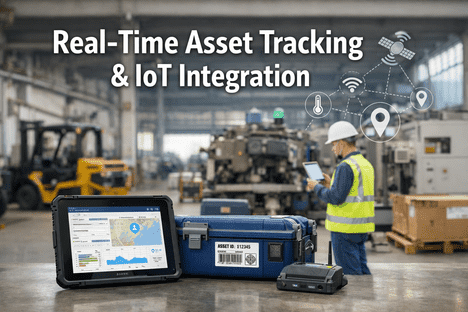
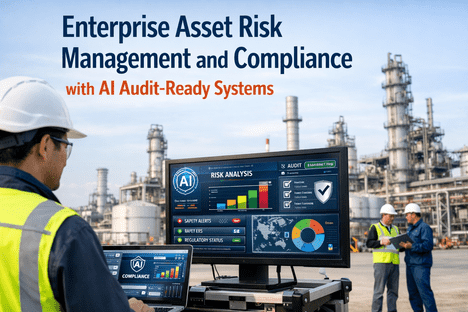
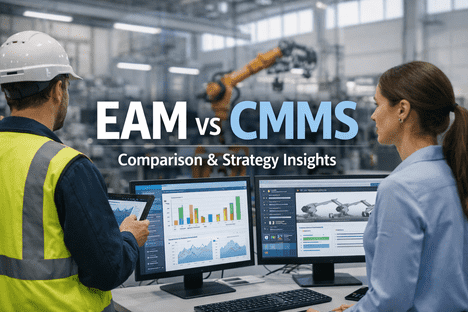
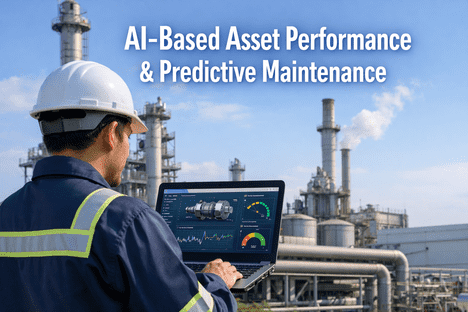
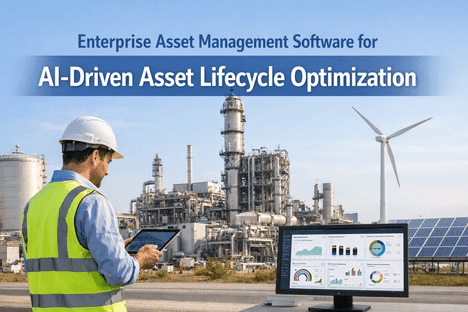
A food processing plant in Ohio had 2,340 trackable assets spread across four buildings and three production shifts. Their asset register lived in a spreadsheet last updated nine months ago. When a critical homogeniser failed during a weekend run, the backup unit could not be located for 47 minutes — it had been moved to Building C for cleaning three days earlier, but nobody updated the log. That 47 minutes cost $92,000 in spoiled product and delayed shipments. Across the hall, a $65,000 portable chiller sat idle for 11 weeks because the team that needed it did not know it existed — another department had requisitioned it and forgotten to return it. These are not technology problems. They are visibility problems — and they vanish the moment every asset gets a digital identity connected to an intelligent tracking platform that knows where everything is, what condition it is in, and whether it is being used.
iFactory Connected Intelligence
Enterprise Asset Tracking System with Real-Time Visibility and IoT Integration
How IoT-enabled tracking platforms are eliminating asset blind spots, reducing search time to zero, and turning passive equipment registries into live operational intelligence
21B+
Connected IoT devices globally in 2025
$260K
Average cost per hour of manufacturing downtime
12-18%
Excess spare parts inventory from poor visibility
39B
Projected connected devices by 2030
The Hidden Cost of Not Knowing Where Your Assets Are
Most plant managers assume they know their asset landscape. The reality is that without real-time tracking, every facility operates with significant blind spots that compound into measurable financial losses — losses that rarely appear on any single line item but accumulate relentlessly across shifts, buildings, and quarters.
Average Search Time Per Incident
Maintenance technicians spend 25-45 minutes per shift searching for tools, portable equipment, and spare parts that have been moved without documentation. Multiply by three shifts, 250 working days — thousands of productive hours vanish annually.
Ghost and Zombie Assets
Ghost assets appear on the register but no longer physically exist. Zombie assets exist on the floor but are not in any system. Together, they distort depreciation schedules, inflate insurance premiums, and make capacity planning unreliable.
Underutilised Capital Equipment
Without utilisation tracking, expensive equipment sits idle while procurement approves duplicate purchases. Plants with real-time visibility consistently discover that 35-40% of portable and shared equipment is underutilised — representing trapped capital that could be redeployed.
The IoT Connectivity Stack for Industrial Asset Tracking
Not all IoT tracking technologies serve the same purpose. The right solution depends on what you need to know — location only, location plus condition, or full operational intelligence — and the physical environment your assets operate in. Here is how the major connectivity technologies compare for industrial settings.
| Technology |
Range |
Accuracy |
Power |
Best For |
| BLE Beacons |
10-30m |
1-3m |
Years on coin cell |
Indoor tool and portable equipment tracking |
| UWB |
50-100m |
10-30cm |
Moderate |
High-precision indoor positioning for AGVs and forklifts |
| LoRaWAN |
2-15km |
Zone-level |
Years on battery |
Outdoor yards, remote sites, campus-wide tracking |
| RFID (Passive) |
1-12m |
Gate/zone |
No battery |
Inventory counts, checkpoint scanning, tool cribs |
| Cellular IoT |
Global |
Cell-level |
Rechargeable |
Fleet tracking, inter-site transfers, mobile assets |
| Private 5G |
Campus |
Sub-meter |
Powered |
Dense sensor networks, real-time video, digital twins |
Not sure which connectivity technology fits your plant? Book a free IoT readiness assessment.
From Location to Intelligence — Five Levels of Asset Visibility
Knowing where an asset is represents only the first level of value. The real returns come when location data combines with condition monitoring, utilisation analytics, and predictive intelligence to create a complete operational picture that drives decisions automatically.
Autonomous Optimisation
AI auto-reallocates underutilised assets, triggers predictive work orders, optimises spare parts inventory, and adjusts maintenance schedules based on real-time condition and demand signals. Human oversight is strategic, not operational.
Predictive Intelligence
Machine learning models correlate location, condition, and usage data to predict failures 14-21 days in advance with 94%+ accuracy. Remaining Useful Life algorithms continuously update replacement timing based on actual operating conditions.
Condition Awareness
Sensors report vibration, temperature, pressure, and current alongside location. You know not just where an asset is but whether it is healthy, degrading, or approaching a threshold that requires intervention.
Utilisation Tracking
Beyond location, sensors track operating hours, idle time, and usage patterns. You discover which assets are overworked, which are sitting idle, and where capital is trapped in equipment nobody is using.
Location Visibility
Real-time GPS or indoor positioning shows exactly where every tagged asset sits right now. Search time drops to zero. Ghost and zombie assets are eliminated. Transfer logs update automatically.
What Changes When Every Asset Is Connected
IoT-enabled asset tracking is not about putting dots on a map. It is about creating a live digital nervous system that connects every piece of equipment to a central intelligence layer — transforming static registries into dynamic operational tools that drive better decisions in real time.
For Maintenance Teams
Zero search time — every tool and spare part has a live location
Condition alerts routed to the nearest available technician automatically
Work order history linked to asset location for full context on arrival
For Operations Leaders
Real-time utilisation dashboards reveal idle capital and overworked equipment
Automated compliance logs for safety-critical equipment movements
Data-driven decisions on lease-vs-buy, redistribute-vs-purchase
For Finance and Procurement
Accurate asset registers eliminate ghost and zombie asset distortions
15-30% reduction in spare parts inventory from demand-based restocking
Insurance and depreciation aligned to actual asset status, not stale records
The ROI of Real-Time Asset Visibility
The financial case for IoT asset tracking is built on cost avoidance, productivity recovery, and capital optimisation. These metrics are drawn from manufacturers who have deployed connected tracking platforms across industrial environments.
Industrial vibration sensor cost — down from $200-500. The barrier to comprehensive instrumentation has collapsed.
Spare parts inventory savings from IoT-driven demand visibility and automated restocking triggers.
Unplanned downtime eliminated through continuous condition monitoring and predictive alerting.
Asset lifespan gains from condition-based interventions replacing arbitrary calendar schedules.
Want to calculate your specific asset tracking ROI? Get a customised savings analysis from our engineers.
Frequently Asked Questions
How many assets should we track to see meaningful ROI?
Most deployments start with 50-200 critical and high-value assets — the equipment where downtime costs are highest, search times are longest, or utilisation is least understood. ROI typically becomes measurable within 8-12 weeks. You can scale to thousands of assets incrementally as the platform proves value.
Will IoT tracking work in harsh industrial environments?
Yes. Industrial-grade IoT sensors are rated IP67/IP68 for dust and water resistance, operate across -40 to +85 degrees Celsius, and withstand vibration, shock, and chemical exposure. BLE and LoRaWAN tags run for years on battery power without maintenance, even in challenging environments like foundries, cold storage, and outdoor yards.
Does IoT asset tracking require dedicated network infrastructure?
It depends on scale and accuracy needs. BLE tracking uses low-cost gateways that plug into existing ethernet or WiFi. LoRaWAN covers entire campuses with a handful of gateways. Only ultra-precision UWB and private 5G deployments require dedicated infrastructure. Most plants start with BLE or LoRaWAN at minimal infrastructure cost and upgrade selectively.
How does IoT tracking integrate with our existing ERP and CMMS?
IoT asset tracking platforms connect via standard protocols including REST APIs, MQTT, and OPC-UA. Location and condition data flows directly into your existing asset registers, work order systems, and inventory management. Most integrations are completed within 2-4 weeks without disrupting current operations.
What about cybersecurity for connected industrial assets?
Industrial IoT security is critical — ransomware targeting OT environments increased 64% in 2025. Enterprise-grade tracking platforms use end-to-end encryption, network segmentation between IT and OT, role-based access controls, and continuous vulnerability monitoring. The EU Cyber Resilience Act now requires security-by-design for connected products, and compliant platforms build these protections in from the ground up.
See Everything. Know Everything.
Every Asset. Every Location. Every Condition. One Platform.
iFactory's IoT-enabled asset tracking platform gives your plant a live digital nervous system — real-time location, continuous condition monitoring, utilisation analytics, and predictive intelligence for every asset that matters.
8-12wk
Time to measurable ROI