AI Vision Quality Inspection: Achieving Zero-Defect Greenfield Production
By James C on March 5, 2026
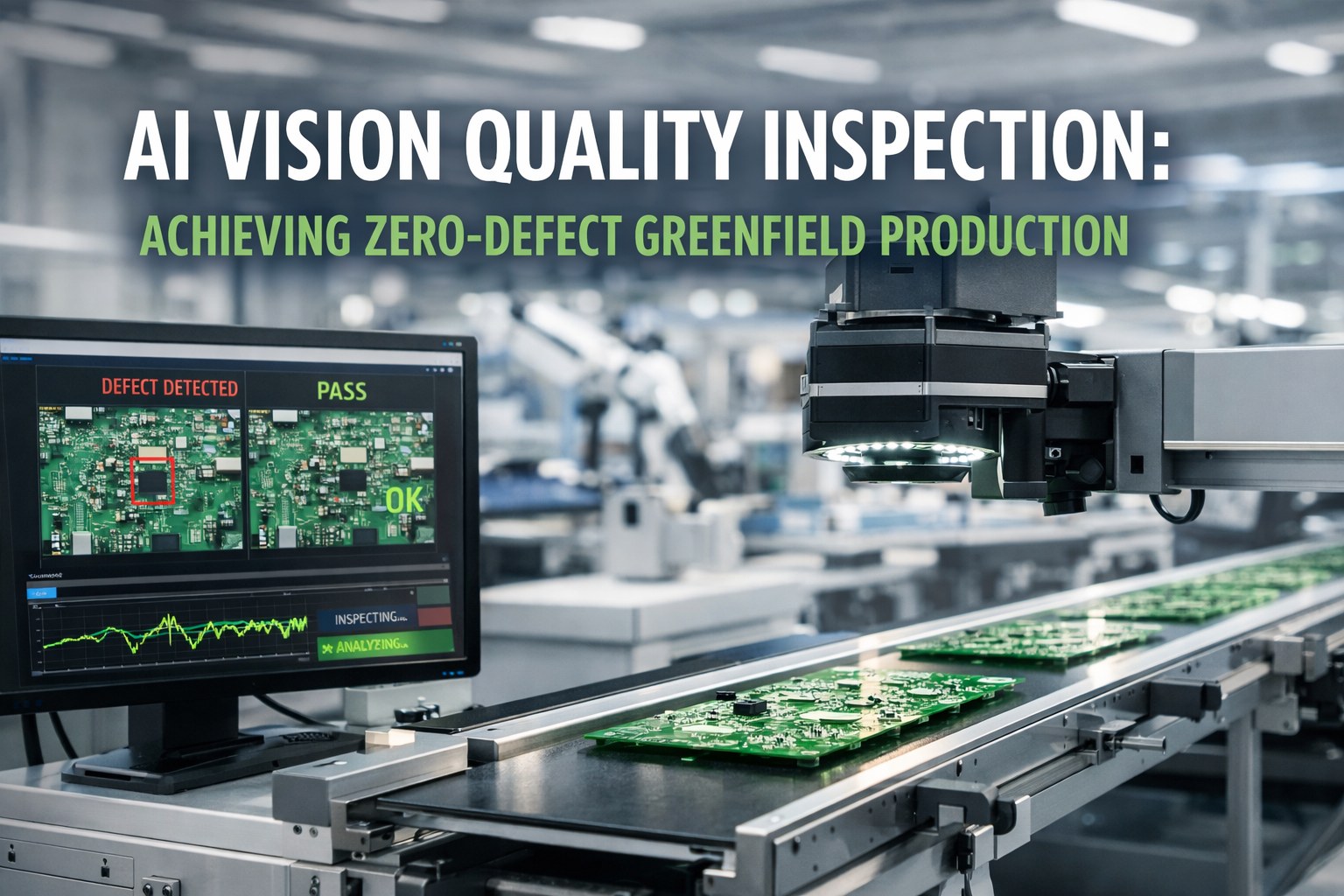
Manual inspection catches roughly 80% of defects on a good day. AI vision systems catch 99.9% — every unit, every shift, without blinking. For greenfield factories, the choice between launching with human-only quality gates and launching with inline AI vision is the difference between chasing defects for years and shipping zero-defect products from day one. Here's how to architect AI-powered visual inspection into your production lines before the first machine is bolted down.
AI VISION QUALITY INSPECTION
$32BAI Vision Inspection Market Size (2025)
22.5%Market CAGR Through 2034
99.9%AI Defect Detection Accuracy
50%Reduction in Defect Escape Rates
CLASSIFY
DETECT
CAPTURE
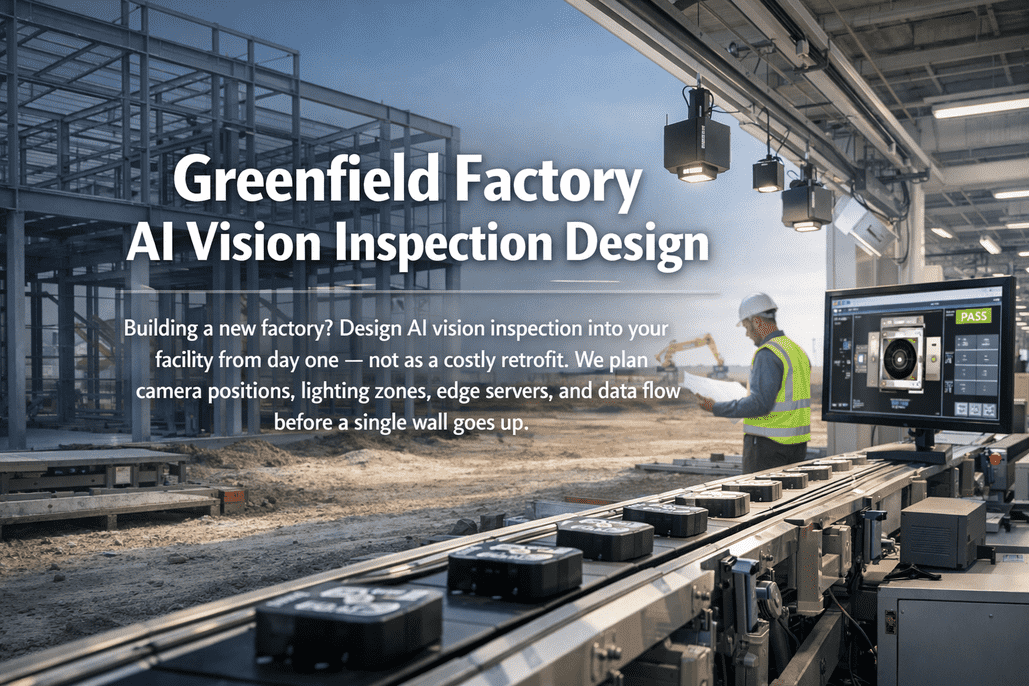
Why greenfield factories have a vision advantage: Brownfield plants retrofit cameras around existing equipment, fight lighting inconsistencies, and struggle with legacy PLC integration. Greenfield gives you the chance to specify camera positions, lighting rigs, and compute hardware in your equipment procurement contracts — so every inspection station is purpose-built for AI from the start. No retrofits. No compromises. No excuses.
How AI Vision Inspection Actually Works on a Production Line
The Inline AI Vision Inspection Pipeline
Image Capture
High-res cameras (2D, 3D, multispectral) capture every unit at line speed — up to 12,000 parts per minute
AI Inference
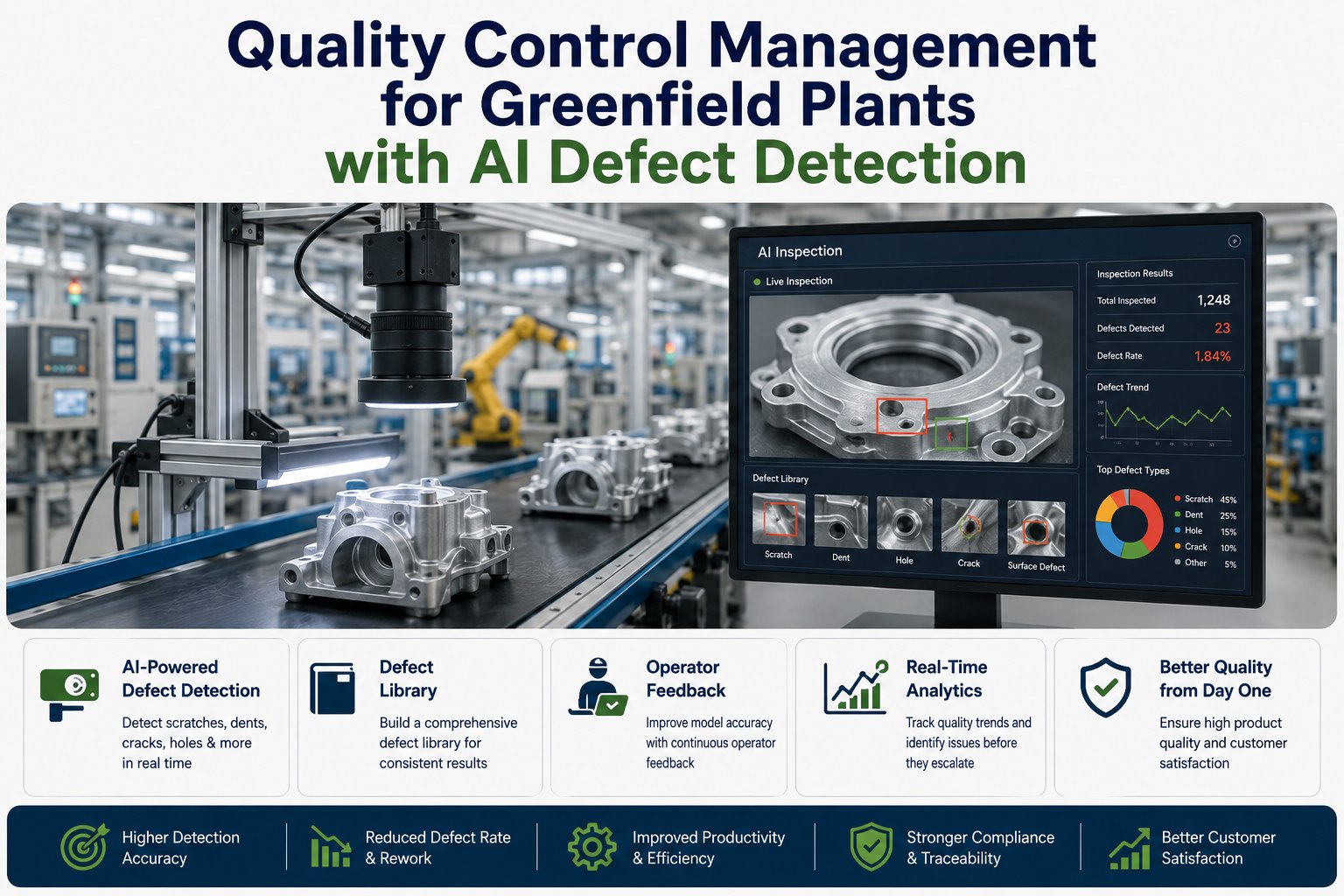
Deep learning models (CNNs) analyze each image in milliseconds — detecting scratches, cracks, misalignments, and anomalies
Classify & Act
Defects are classified by type and severity — triggering auto-reject, operator alerts, or process adjustments in real-time
Feedback Loop
Inspection data feeds MES dashboards and predictive models — the system gets smarter with every unit it inspects
The core technology behind AI vision inspection is deep learning — specifically convolutional neural networks (CNNs) trained on defect image datasets. Unlike traditional rule-based machine vision that checks for pre-programmed patterns, deep learning models learn what defects look like from examples and continuously improve as they see more data. This means they can detect subtle, variable defects — hairline cracks, micro-scratches, color inconsistencies — that traditional AOI (Automated Optical Inspection) systems and human inspectors consistently miss. Modern systems process high-resolution images in under 50 milliseconds per frame, keeping pace with the fastest production lines.
Human vs. Traditional AOI vs. AI Vision: The Performance Gap
Greenfield Advantage: Specify camera mounting brackets, lighting enclosures, and edge compute rack space in your facility design blueprints. When equipment arrives, your vision stations are ready — no retrofitting, no cable rerouting, no production delays.
What AI Vision Detects: Defect Types Across Industries
Surface Defects
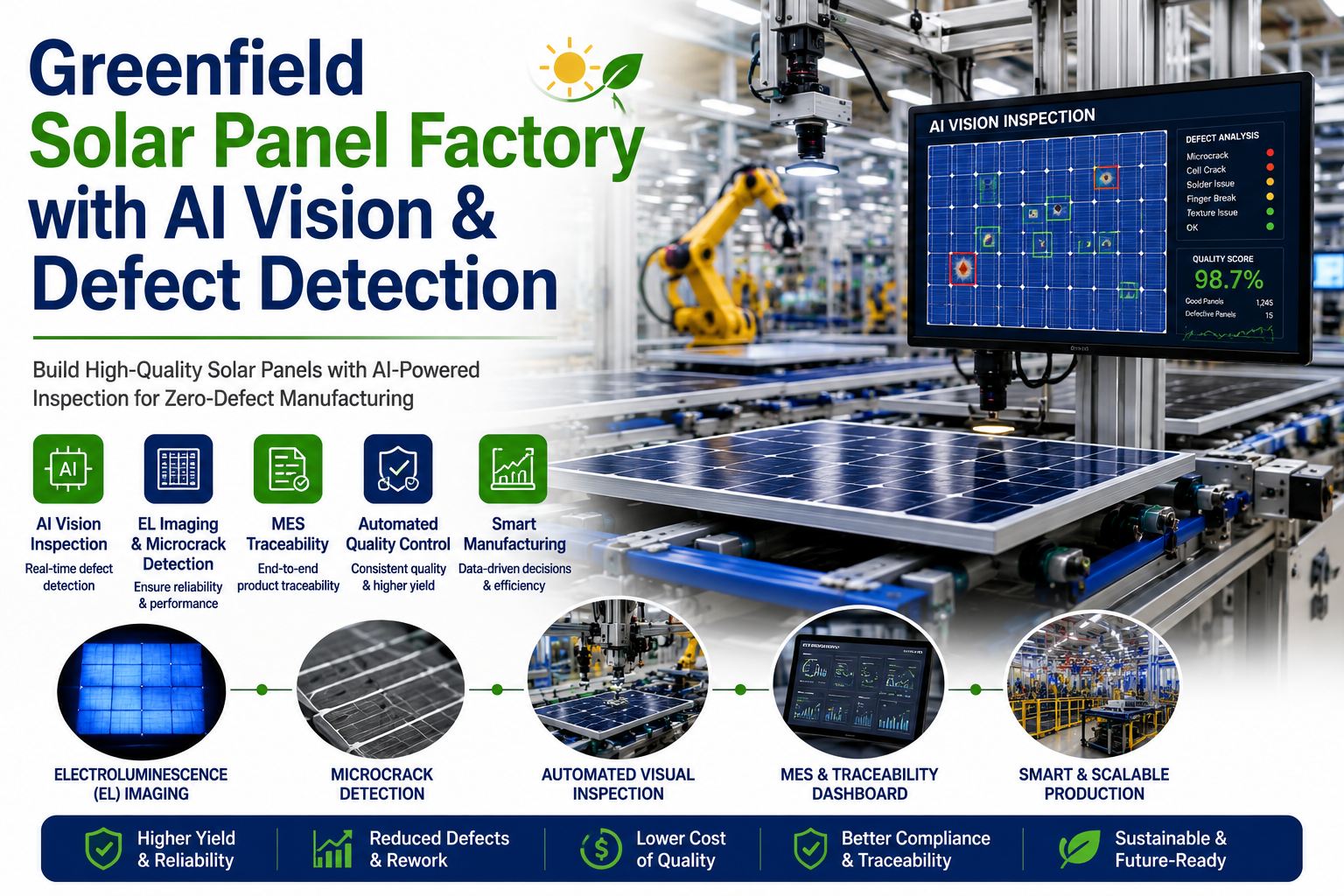
Scratches, dents, and micro-cracks
Paint inconsistencies and coating flaws
Corrosion spots and discoloration
Texture anomalies and surface roughness
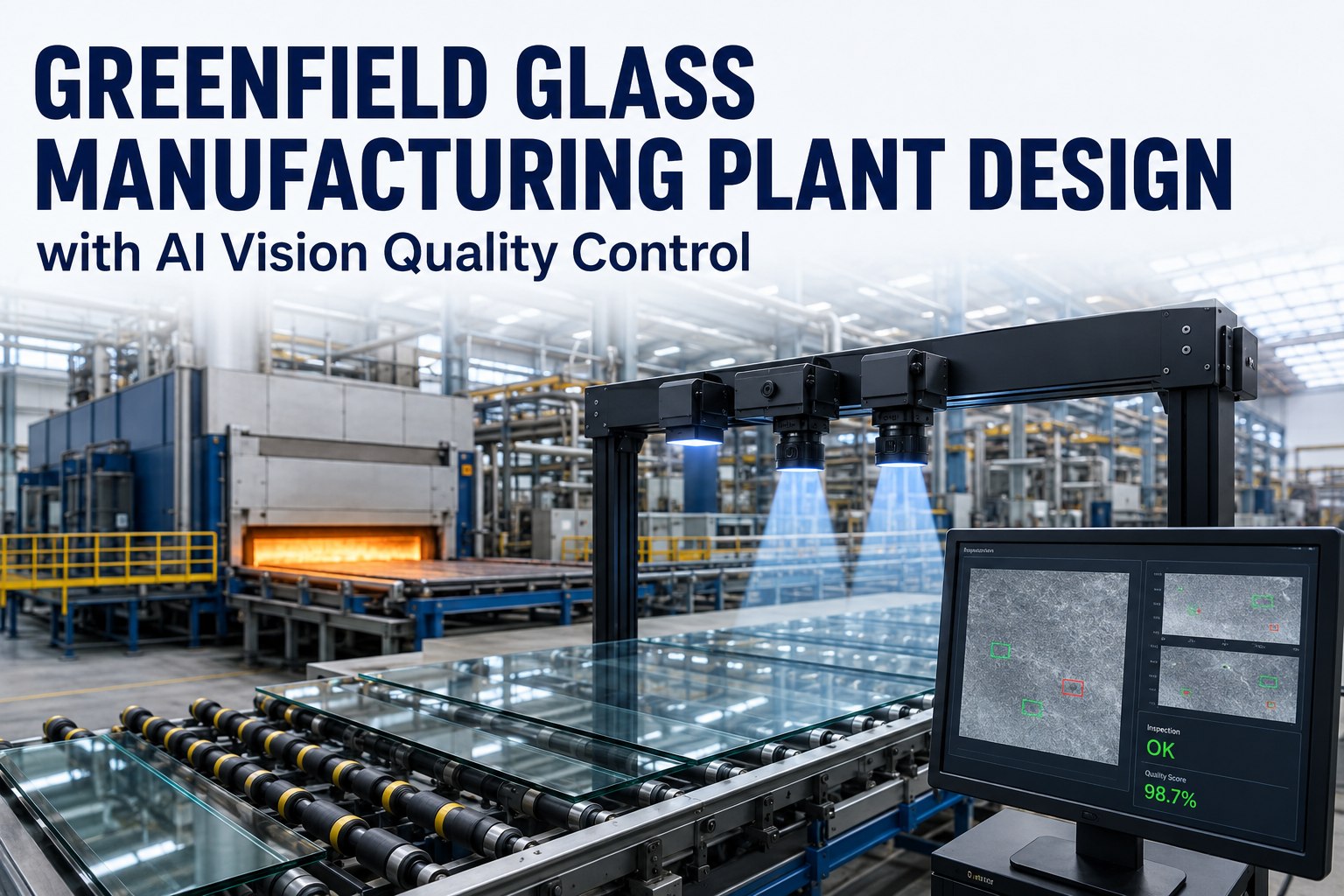
Automotive, Metals, Glass, Ceramics
Dimensional Defects
Out-of-tolerance dimensions
Warping, bending, or deformation
Gap and fit measurement failures
Thread and bore verification
Precision Manufacturing, Aerospace
Assembly Defects
Missing or misplaced components
Wrong orientation or alignment
Solder joint and weld seam flaws
Label and barcode verification
Electronics, PCB, FMCG, Packaging
Ready to Build Zero-Defect Into Your Greenfield?
iFactory integrates AI vision inspection data directly into your MES — connecting defect detection to production scheduling, OEE tracking, and predictive maintenance in one unified platform.
Deploying AI Vision in a Greenfield Factory: The 4-Phase Approach
01
During Engineering Design
Vision Station Specification & Camera Placement
Define inspection points on every production line during the engineering design phase — not after equipment installation. For each station, specify camera type (area scan, line scan, 3D), resolution requirements, field of view, lighting geometry, and mounting positions. Include these specifications in your OEM equipment procurement contracts so machines arrive with vision-ready mounting points and trigger interfaces.
Key Specifications
Camera types and resolution per inspection point (2D/3D/multispectral)
Lighting design: diffuse, structured, backlit, or coaxial per defect type
While the physical plant is under construction, begin training your AI models. Collect defect image datasets from pilot runs, supplier samples, or synthetic data generation. Use digital twin environments to simulate camera feeds and validate model accuracy before a single production unit rolls off the line. Modern platforms can build accurate detection models with as few as 50–100 labeled defect images using transfer learning.
Training Milestones
Defect taxonomy defined: every defect type named, categorized, and severity-rated
Training dataset assembled: real defect images + synthetic augmentation
Model accuracy validated: 99%+ detection, near-zero false positives
Integration tested: MES receives classification data in correct format
03
At Commissioning
Inline Deployment & Calibration
When equipment is installed, mount cameras and lighting at pre-specified positions, connect edge compute hardware, and run calibration sequences with actual production samples. Validate that trigger timing, image quality, and model inference latency meet requirements under real production conditions. Start in "shadow mode" — the AI inspects every unit but doesn't reject anything — so you can compare AI decisions against manual inspection results and fine-tune thresholds.
04
Post Go-Live
Continuous Learning & Quality Intelligence
Once in production, the AI vision system continuously improves. Every inspected unit adds to the training dataset. New defect types are flagged for human review, labeled, and fed back into the model. Over weeks, the system learns patterns that humans never spot — correlating defect spikes with machine parameters, shift changes, or material batches. This is where AI vision transforms from a quality gate into a quality intelligence engine.
The ROI of AI Vision in Greenfield Manufacturing
20%
of total sales is the average cost of poor quality in manufacturing — AI vision slashes this by catching defects at the source
35%
reduction in rework costs reported by automotive suppliers after deploying AI-powered inspection systems
99%
first-pass yield achieved by electronics manufacturers using AI vision on complex PCB assemblies
30x
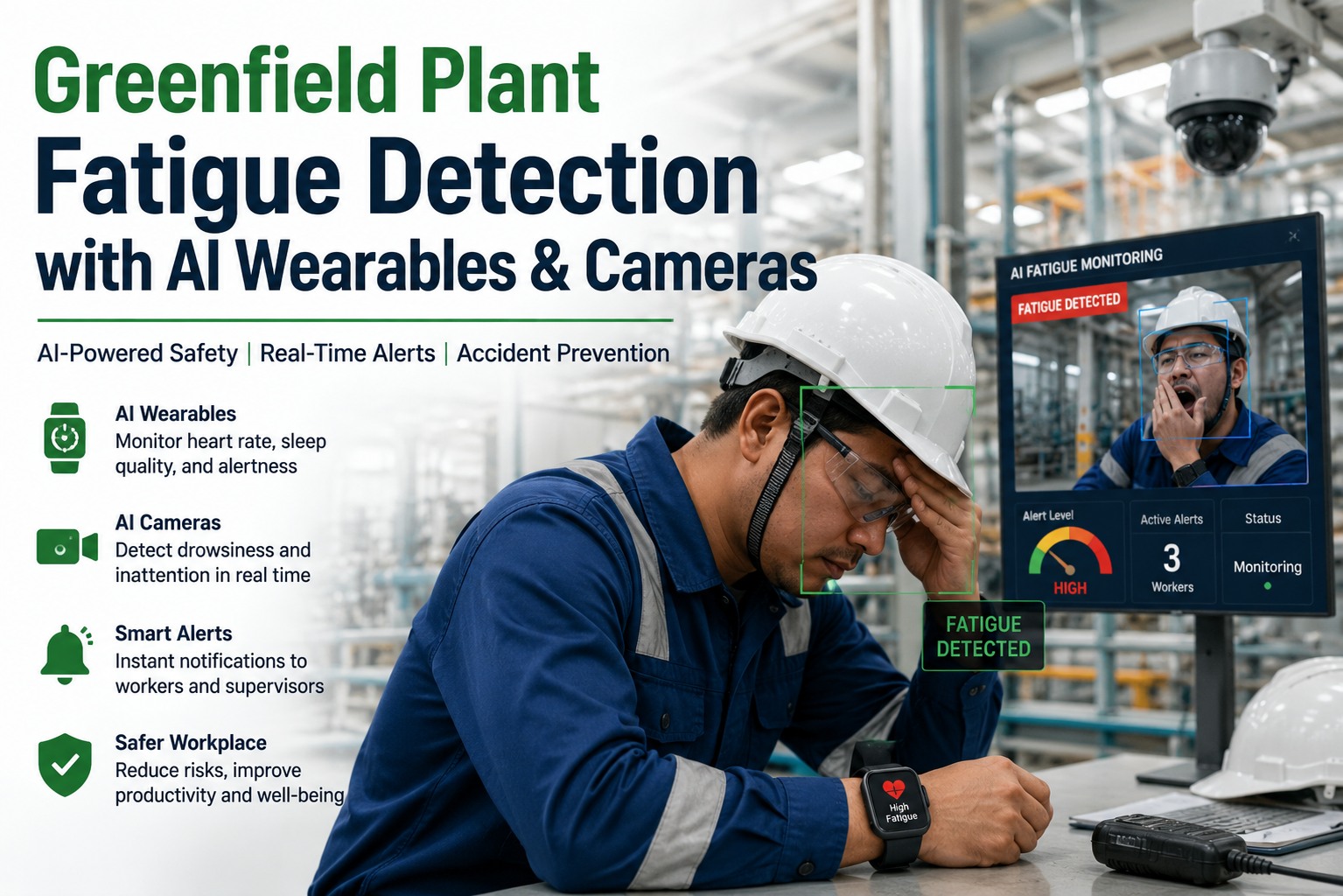
faster inspection than human operators — AI processes thousands of parts per minute without fatigue
The hidden ROI most teams miss: AI vision doesn't just catch defects — it generates structured quality data that feeds your MES, CMMS, and predictive maintenance models. When defect rates spike on Line 3 during the night shift, you don't just know something's wrong — you know exactly which machine parameter drifted, which material batch triggered it, and what maintenance action prevents it from happening again. That's the difference between reactive quality control and predictive quality intelligence.
Where to Place AI Vision: Critical Inspection Points
Incoming Material
Verify raw material quality, surface condition, and dimensional compliance before it enters production
In-Process (Per Station)
Inspect after each critical operation — machining, welding, coating, assembly — to catch defects before they compound downstream
Pre-Assembly Verification
Confirm all components are present, correctly oriented, and defect-free before assembly operations begin
End-of-Line (Final QC)
Full product inspection — surface, dimensional, label, packaging — before shipping. The last gate before the customer
Common AI Vision Deployment Mistakes (And How to Avoid Them)
Mistake
Choosing cameras before defining what defects you need to detect — resulting in wrong resolution, wrong field of view, or wrong lighting.
Solution
Start with a defect taxonomy. Define every defect type, size range, and visual characteristic first — then select camera and lighting to match.
Mistake
Running AI inference in the cloud for inline inspection — introducing network latency that can't keep pace with line speed.
Solution
Deploy edge GPU compute at each vision station for sub-50ms inference. Send results to cloud MES for analytics and long-term trend analysis.
Mistake
Training models on perfect lab images that don't represent real production conditions — dirt, vibration, lighting variation.
Solution
Augment training data with noise, rotation, blur, and lighting shifts. Validate models against real production samples during commissioning.
Mistake
Treating vision inspection as standalone — inspection data sits in its own silo, disconnected from MES, CMMS, and process control.
Solution
Feed every inspection result into your MES via MQTT or API. Correlate defect data with machine parameters, material batches, and shift performance.
Frequently Asked Questions
AI vision systems consistently achieve 99%+ detection accuracy, compared to roughly 80% for experienced human inspectors. The difference grows wider on high-speed lines and during long shifts — human accuracy degrades with fatigue, while AI maintains consistent performance 24/7. Deep learning models also detect micro-defects invisible to the naked eye, such as hairline cracks and sub-millimeter surface anomalies.
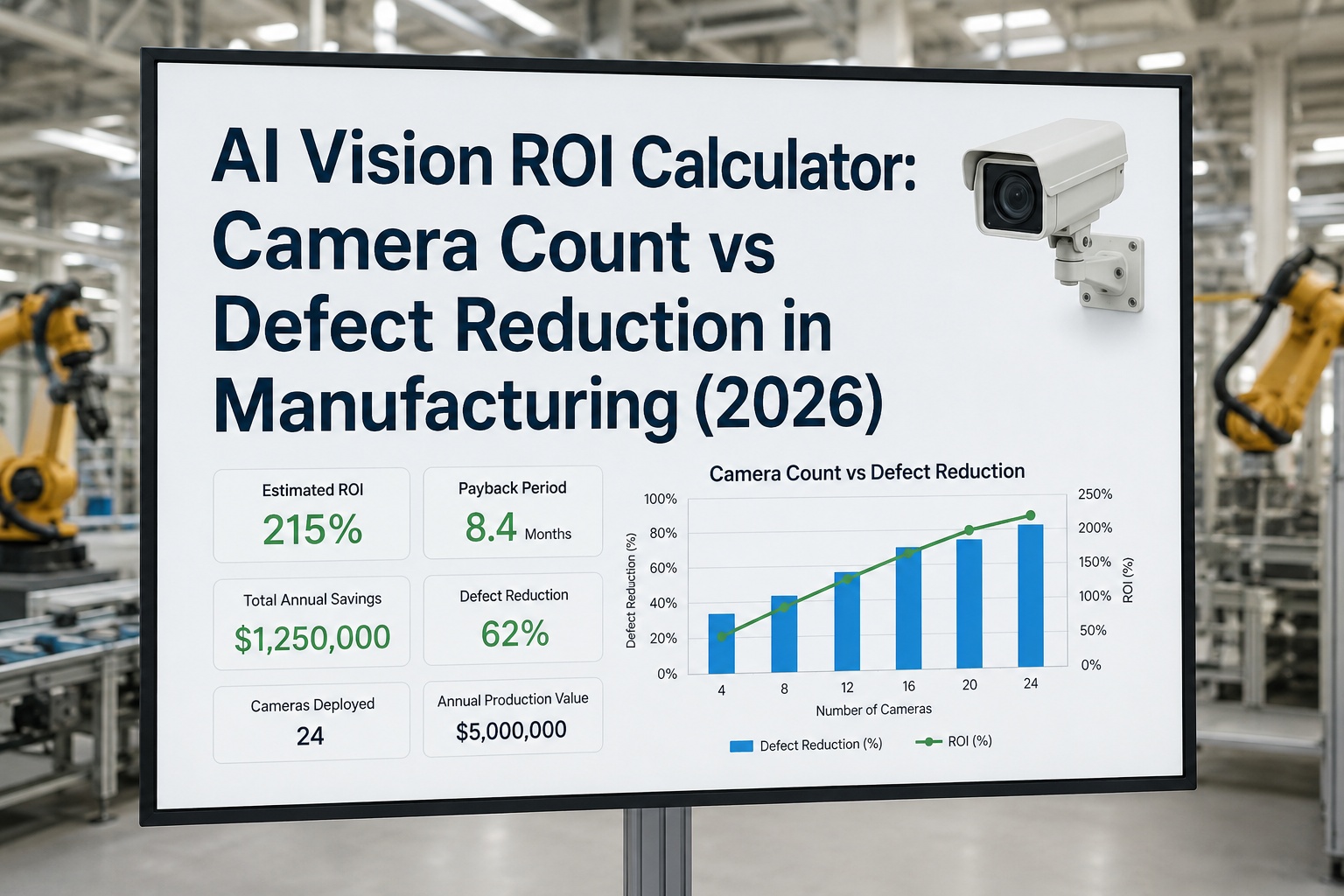
Costs depend on the number of inspection stations, camera types, and compute requirements. A single inline vision station (camera, lighting, edge GPU, software) typically ranges from $15K–$80K. A full greenfield deployment across multiple lines can range from $100K to $500K+. Cloud-native platforms like iFactory reduce ongoing costs through subscription-based analytics and centralized model management. The ROI typically pays back within 6–12 months through reduced scrap, rework, and warranty costs.
Yes — and it should. Modern AI vision platforms communicate via MQTT, OPC UA, and REST APIs, making integration with MES, SCADA, and ERP straightforward. iFactory's platform is designed for exactly this: vision inspection results flow directly into production dashboards, quality KPIs, and maintenance triggers. When the vision system flags a defect spike, your MES can automatically adjust scheduling, and your CMMS can generate a maintenance work order — all without manual intervention.
With transfer learning and modern training platforms, a production-ready model can be trained in 2–4 weeks with as few as 50–100 labeled defect images per defect type. Synthetic data augmentation can accelerate this further. During greenfield construction, training runs in parallel with plant buildout — so your models are validated before the first production unit rolls off the line.
iFactory's cloud-native MES platform integrates AI vision inspection data alongside production scheduling, OEE analytics, and CMMS maintenance workflows. Vision inspection results feed directly into quality dashboards with defect classification, trend analysis, and root-cause correlation. When combined with iFactory's predictive maintenance module, defect patterns are automatically linked to equipment health data — enabling proactive quality management rather than reactive firefighting.
Launch Your Greenfield With Zero-Defect AI Vision
iFactory connects AI vision inspection to your MES, SCADA, and maintenance systems — giving greenfield executives real-time quality intelligence from commissioning day one.
Building a greenfield factory with zero-defect ambitions? Book your free iFactory demo and see how AI vision inspection integrates with MES, SCADA, and predictive maintenance — configured during construction, operational from day one.