Steel & Heavy Industry Greenfield Plant: AI Safety & Maintenance | iFactory
By Riley Quinn on April 13, 2026
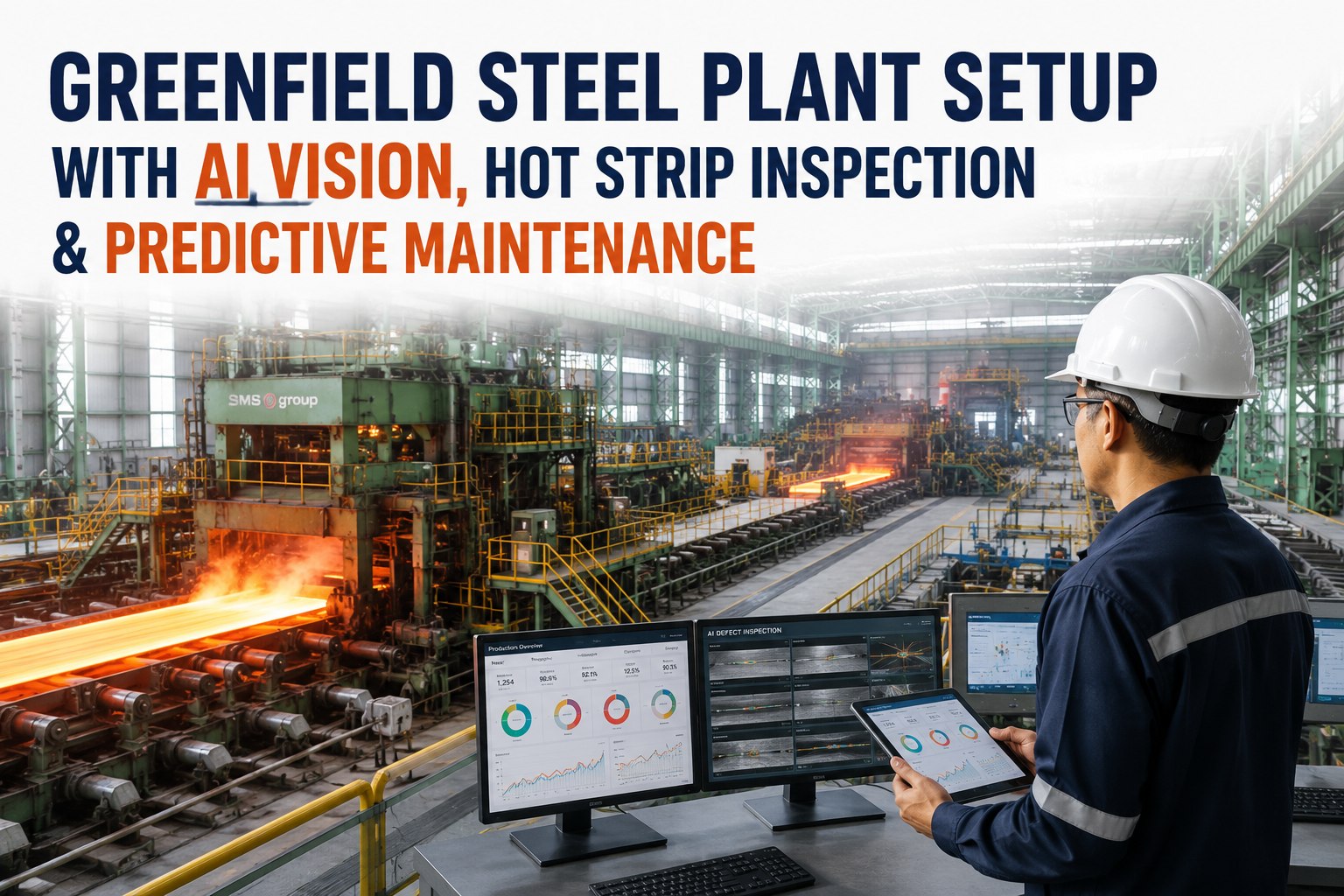
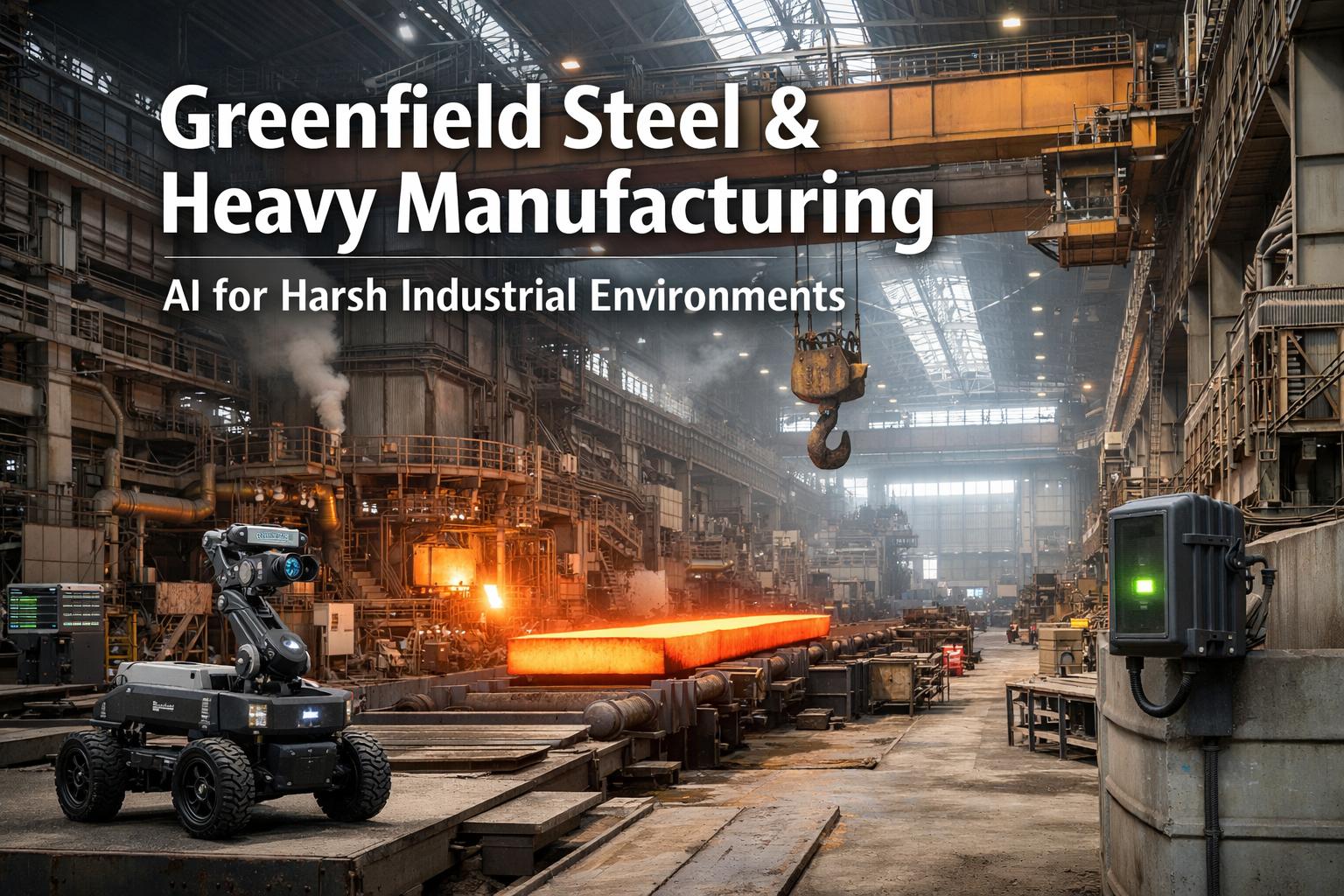
Steel plants operate at the edge of physics—1,600°C molten metal, toxic dust clouds, relentless vibration, and equipment under constant thermal stress. When a blast furnace fails unexpectedly, you're not looking at a maintenance ticket. You're looking at a $4 million incident, safety investigations, and months of recovery. The smartest greenfield builders in 2026 aren't just designing plants—they're designing AI-powered safety and maintenance systems from day one, validating every sensor placement and failure scenario in digital twins before the first foundation is poured.
The Extreme Environment Challenge
Steel plants are the most hostile industrial environments on earth. Your systems must be designed to survive.
1,600°C
Molten Metal Temperature
24/7
Continuous Operation
67
Global Steel Fatalities 2024
$85K
Cost Per Hour Downtime
Don't Let Your Greenfield Become a $4M Mistake
Get expert AI safety architecture designed before you pour the first foundation. Our steel plant specialists have helped commission 50+ heavy industry facilities worldwide.
Traditional maintenance approaches fail in steel plants. Calendar-based preventive maintenance either intervenes too early (wasting money) or too late (after failure begins). The convergence of temperatures exceeding 1,500°C, combustible gas pipelines spanning kilometers, and equipment operating continuously for years creates a risk profile that reactive approaches cannot manage. AI-driven predictive maintenance and safety monitoring designed into your greenfield plant from day one isn't a luxury—it's the difference between controlled operations and catastrophic loss.
Every Hour Without AI Safety Architecture Costs You $85,000
Steel plant failures don't wait. One unplanned shutdown triggers $45K-$85K/hour losses, safety investigations, and months of recovery. iFactory's digital twin platform catches the errors that cause 70% of commissioning delays—before construction begins.
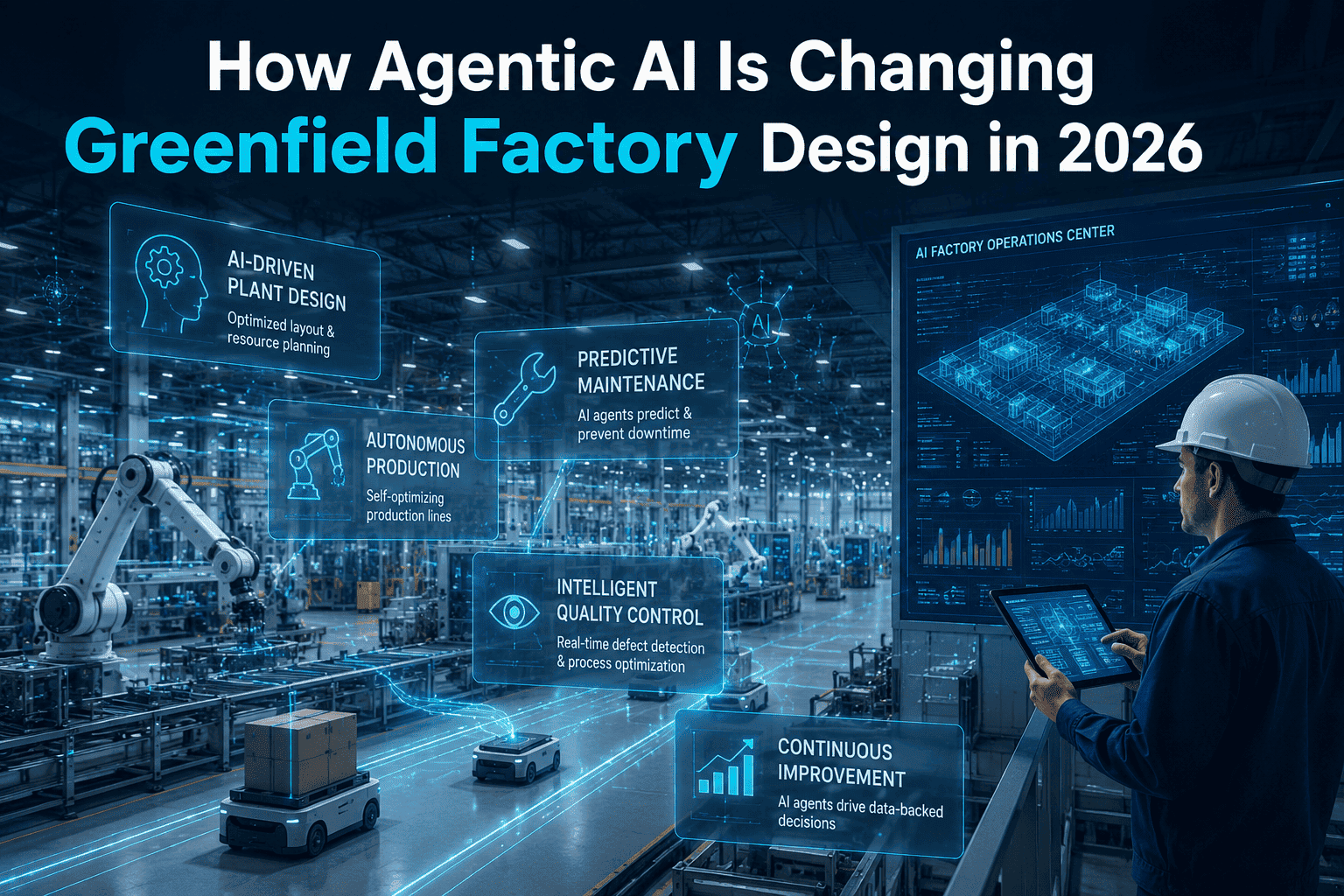
Leading steel producers like ArcelorMittal, Tata Steel, and POSCO have been running AI maintenance programs at scale for years. The architecture that works combines multi-sensor fusion, edge AI processing, digital twin simulation, and CMMS integration into one connected system. For greenfield plants, this architecture must be designed from day one—not retrofitted after commissioning failures.
1
Sensor Network Layer
Vibration, thermal, pressure, acoustic, and gas sensors deployed across furnaces, rolling mills, casters, and material handling systems
Vibration AnalysisThermal ImagingGas Detection
2
Edge AI Processing
Machine learning models process sensor data in under 10 milliseconds without cloud round trips—critical for intermittent connectivity areas
85% bandwidth reduction
3
Digital Twin Simulation
Physics-based models simulate degradation trajectories, predict remaining useful life, and test maintenance decisions before execution
Steel plant safety management involves a concentration of fatal hazard categories unmatched in almost any other industrial environment. Every greenfield design must address these risks with integrated AI monitoring from the start.
Critical Risk
Molten Metal Exposure
1,600°C+
Temperatures above 1,500°C during melting, tapping, or casting. Splashes, spills, and slag cause fatal burns instantly when exposed to moisture or contaminants.
AI Solution
Automated metal handling systems, thermal monitoring with instant alerts, strict process controls validated in digital twin
Critical Risk
Toxic Gas Exposure
CO, H₂S, SO₂
CO from blast furnaces, H₂S near coke ovens, SO₂ from combustion. Invisible killers in confined spaces and poorly ventilated areas.
AI Solution
Continuous gas monitoring networks with real-time detection, peer-to-peer alarm sharing, IIoT-connected wearables
Explosion Hazards
CO explosions in EAF operations, coke oven battery blasts, hydrogen buildup
Confined Spaces
Tanks, vessels, furnaces with oxygen-depleted atmospheres
Heavy Equipment
300-ton cranes, rolling mills at 40 ft/sec
Predictive Maintenance ROI for Steel Plants
The financial case for AI-driven maintenance in steel plants is overwhelming. One hour of unplanned downtime in a melt shop costs $45,000-$85,000 in lost production alone—before repair costs, safety investigations, or environmental response. Plants implementing comprehensive predictive maintenance programs report ROI within 6-14 months.
"The steel plants that are winning on maintenance in 2026 are not the ones with the most sensors—they are the ones that have connected their sensor data to their maintenance workflows. Data without action is just cost. A CMMS that receives IIoT alerts, SCADA alarms, and digital twin forecasts and converts them automatically into work orders is what separates the top quartile from everyone else."
— Head of Asset Management, Integrated Steel Producer, Western Europe
260+
AI algorithms deployed by leading Asian steel producers
90%
PLC code validated before commissioning with digital twins
$73B
Digital twin market projected by 2027
Greenfield Design Checklist: AI Safety & Maintenance
Before breaking ground on your steel or heavy industry facility, validate these AI-integrated systems. Click each item to track your planning progress.
Predictive Maintenance Infrastructure
Safety Monitoring Systems
Integration & Compliance
Conclusion
The greenfield steel plant of 2026 isn't just automated—it's intelligently designed for survival in extreme environments. With AI-driven predictive maintenance validated in digital twins before commissioning, multi-sensor safety monitoring networks, and integrated CMMS workflows that convert predictions into actions, you eliminate the categories of failure that create catastrophic loss. The window to catch up without major capital disadvantage is now. Plants that design AI safety and maintenance systems from day one will operate with 32% less unplanned downtime, 40% faster maintenance planning, and zero-surprise commissioning. The choice isn't whether to invest in AI-first design—it's whether you can afford not to.
Your Competitors Are Already Building AI-First Steel Plants
ArcelorMittal, Tata Steel, and POSCO have deployed 260+ AI maintenance algorithms. The window to catch up without major capital disadvantage closes in 2026. Don't get left behind—start your greenfield AI safety design today.
What makes steel plant maintenance different from other manufacturing environments?
Steel plants operate at the extreme edge of industrial conditions—temperatures exceeding 1,600°C, toxic gas exposure, continuous 24/7 operation, and equipment under constant thermal and mechanical stress. Equipment failures don't create inconvenience—they create catastrophic safety events, environmental incidents, and multi-million-dollar production losses. Traditional calendar-based maintenance fails because it can't account for the variable degradation rates caused by these extreme conditions. AI-driven predictive maintenance using multi-sensor fusion (vibration, thermal, acoustic, electrical data) achieves false-positive rates below 8% compared to 35-40% for single-sensor systems, enabling maintenance teams to act on genuine failure signals rather than alarm noise.
How does AI predict equipment failures in extreme temperature environments?
AI systems combine multiple data streams—vibration signatures, thermal imaging, motor current analysis, and acoustic emissions—into composite health scores that track equipment degradation over time. Edge AI nodes installed directly in the plant process this data in under 10 milliseconds without requiring cloud connectivity, which is critical in furnace and rolling mill areas with intermittent network availability. Digital twin models trained on years of steel plant failure data simulate equipment behavior and predict remaining useful life with 4-12 weeks advance warning. For blast furnaces, twins model refractory wear progression and predict relining timing within ±2 weeks; for casters, twins simulate segment misalignment effects before they produce defects.
What safety monitoring systems should be designed into a greenfield steel plant?
Five critical systems must be integrated from day one: continuous gas detection networks for CO, H₂S, SO₂, and combustible gas (LEL) with peer-to-peer alarm sharing; digital permit workflows for hot work, LOTO, and confined space entry with automated atmospheric testing verification; connected worker wearables that monitor vital signs, detect heat stress, and provide real-time alerts; computer vision systems for zone monitoring near overhead cranes and material handling equipment; and integrated CMMS platforms that convert safety findings into tracked work orders with full audit trails for OSHA and ISO 45001 compliance.
What is the ROI timeline for AI predictive maintenance in steel plants?
Most steel plants achieve 60-70% of projected savings within the first quarter post-implementation and full payback within 6-14 months. A typical 1.5-million-ton integrated operation saves $4.2M annually in avoided unplanned furnace and caster shutdowns, $1.85M through reduced outage duration via pre-scoped maintenance, $1.1M in extended refractory and consumable life through optimized timing, and $380K in eliminated confined space entry contractor costs. Insurance premium reductions of $290K or more are also common for plants with documented robotic inspection programs. The key is connecting sensor data to maintenance workflows—data without action is just cost.
Why should AI maintenance systems be designed into greenfield plants rather than retrofitted later?
Retrofitting AI systems into existing steel plants requires navigating legacy infrastructure, incompatible data formats, and operational constraints that dramatically increase cost and complexity. Greenfield design allows sensor placement optimized for failure mode detection, edge computing infrastructure integrated into plant networking, digital twin models validated before commissioning, and CMMS workflows designed around predictive triggers rather than calendar schedules. Plants designed AI-first from day one avoid the 70% of commissioning delays that come from software errors discovered too late. Virtual commissioning in digital twins tests every sensor placement, control logic sequence, and safety interlock before physical construction begins—eliminating surprises on go-live day.