Greenfield Pharma Plant Design: GMP Compliance & AI Maintenance
By Riley Quinn on April 6, 2026
One GMP compliance failure during commissioning can set your pharmaceutical plant back 6-18 months and cost tens of millions. A single undocumented deviation in an IQ protocol. A missed calibration record during OQ. A data integrity gap that an FDA inspector flags during your first audit. In an industry where building a biotech drug plant costs roughly $2 billion and takes 8-10 years before full operations, getting the technology integration and compliance architecture wrong isn't just expensive — it's career-ending. The pharma plants being built right now with AI-driven maintenance, digital twin validation and GMP-compliant CMMS designed into the architecture from day one won't just pass their first inspection. They'll reach stable production months ahead of competitors still drowning in paper-based qualification protocols.
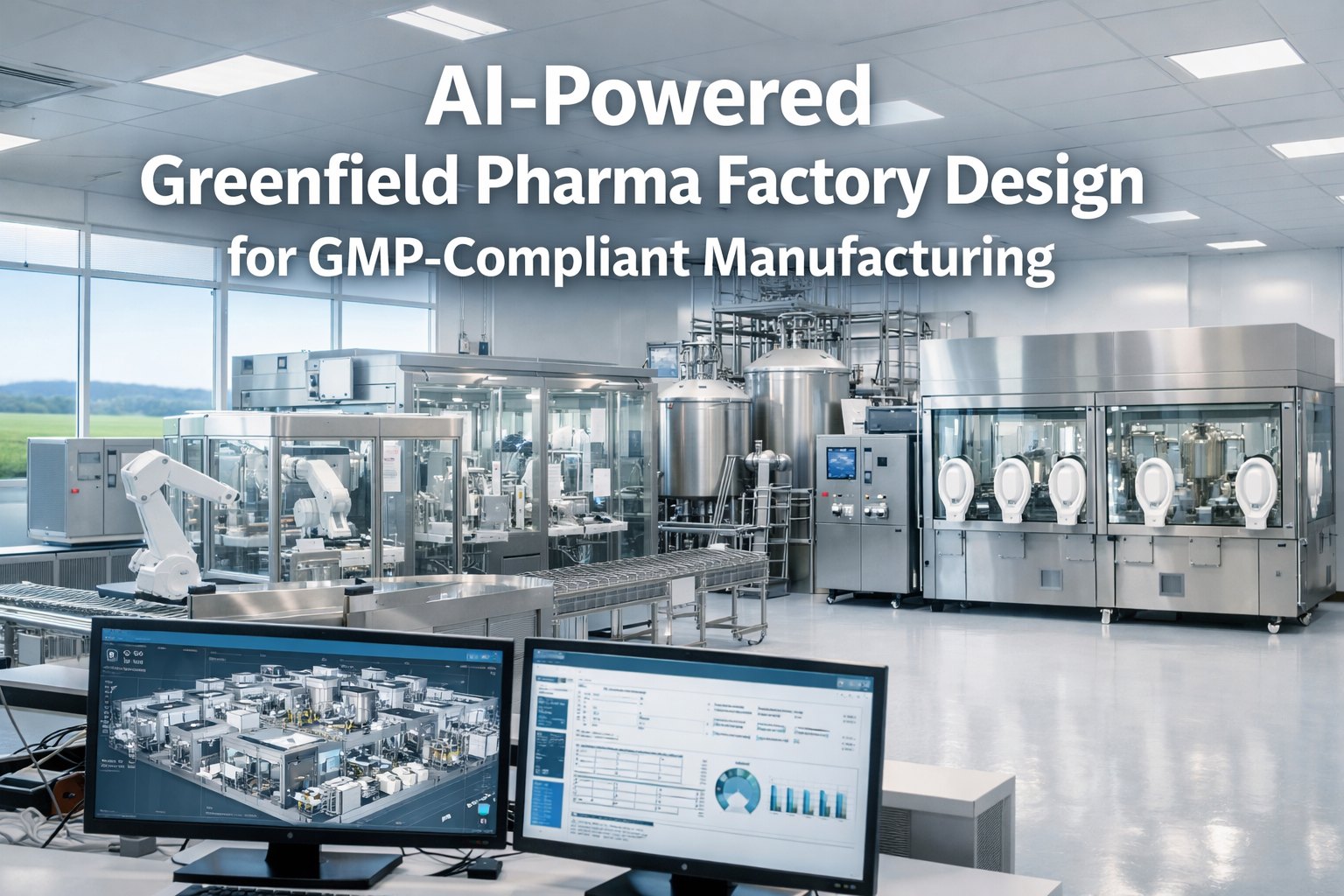
Greenfield Pharma Plant Design 2026
GMP Compliance, AI Maintenance & Technology Integration
iFactory maps every system dependency, tests GMP interoperability via digital twin, and delivers commissioning without a single compliance failure — proven across 14 integrated systems.
Sources: FDA · API Innovation Center · Think Global Health / CFR · IntuitionLabs 2025
The GMP Compliance Challenge Every Greenfield Team Faces
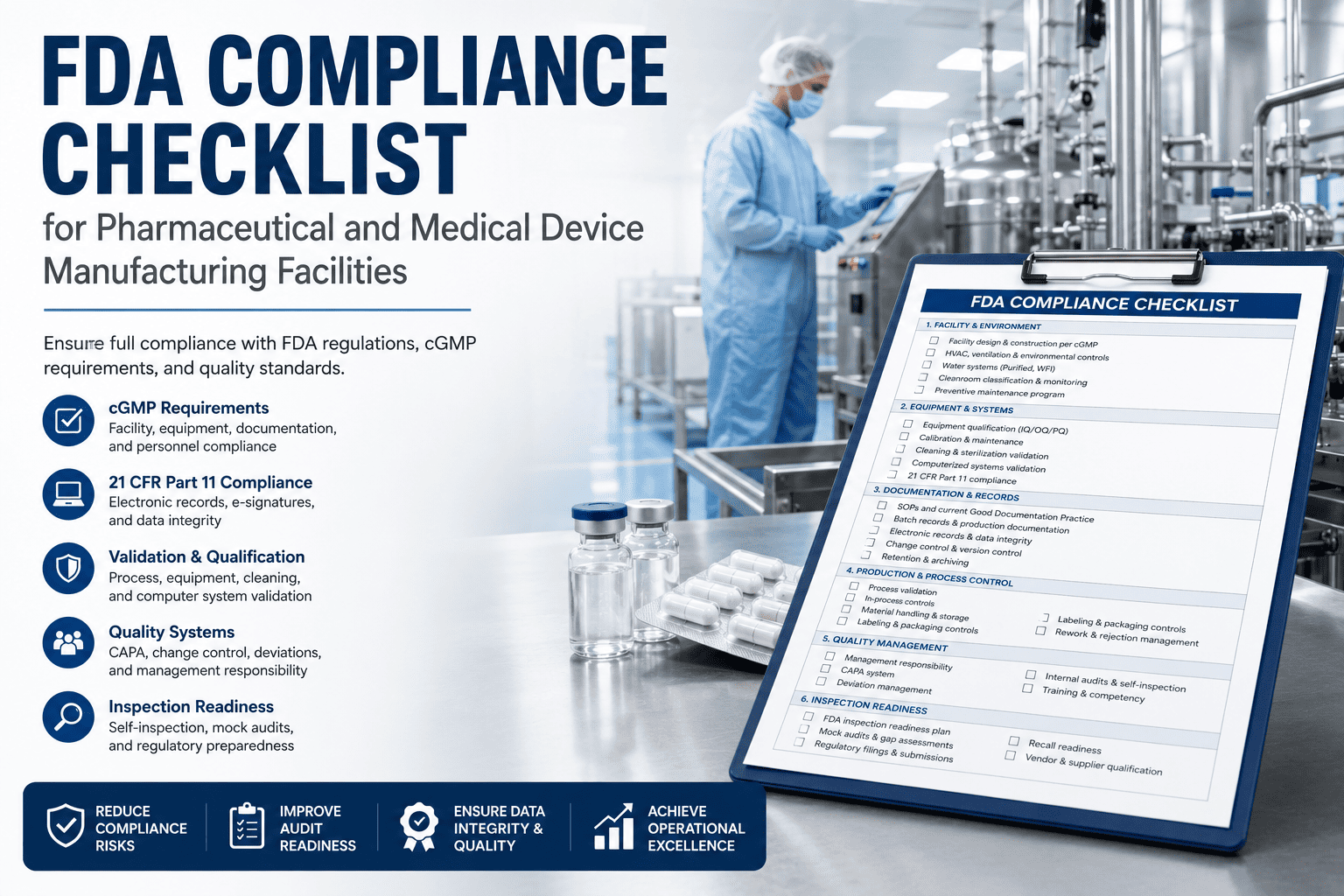
Building a pharmaceutical plant isn't like building any other factory. Every piece of equipment must pass Installation Qualification (IQ), Operational Qualification (OQ), and Performance Qualification (PQ) before a single commercial batch can be produced. Every deviation must be documented. Every data point must meet 21 CFR Part 11 integrity standards. And every system must interoperate — not just technically, but in a way that an FDA inspector can verify through documented evidence.
The Pharma Validation Pipeline — Where Most Plants Get Stuck
DQ
Design Qualification
Verify that facility, equipment, and system designs meet GMP requirements and user specifications before procurement begins
Common failure: Design specs written without consulting maintenance, IT, or quality teams — leading to rework during IQ
IQ
Installation Qualification
Documented verification that equipment is delivered, installed, and configured per manufacturer specs and design documents
Common failure: Missing serial numbers, undocumented calibrations, wiring connections not matching P&IDs
OQ
Operational Qualification
Testing equipment under normal and extreme conditions to confirm it operates as intended across all specified parameters
Common failure: Interlock tests fail because SCADA-CMMS-ERP systems were never tested together before commissioning
How iFactory Eliminates Compliance Risk From the Blueprint Stage
The difference between a pharma plant that passes its first FDA inspection and one that spends 18 months resolving deviations comes down to one thing: whether technology integration was designed into the architecture or bolted on after construction. Here's what day-one GMP readiness looks like in practice.
01
Digital Twin Validation Before Equipment Arrives
Every system dependency mapped virtually — HVAC, water systems, process equipment, CMMS, ERP, SCADA, environmental monitoring — tested for GMP interoperability before a single piece of equipment is installed.
System integration conflicts identified and resolved during design — not during commissioning under schedule pressure
IQ/OQ protocols pre-written and linked to digital twin test results — documentation ready before installation begins
A CMMS that meets 21 CFR Part 11 data integrity requirements — electronic signatures, audit trails, access controls, and tamper-evident records — configured and validated during construction, not after production starts.
Asset hierarchies, PM schedules, spare parts inventories, and SOPs pre-loaded — maintenance team starts equipped from first shift
Deviation tracking, CAPA workflows, and change control built into the CMMS — not managed in spreadsheets alongside it
Predictive maintenance that understands GMP context — not just detecting equipment anomalies, but flagging deviations that could impact product quality, cleanroom integrity, or environmental monitoring compliance.
Vibration, thermal, and pressure sensors embedded during construction — AI models begin learning baselines from first startup
HVAC drift, water system anomalies, and autoclave performance variations caught days before they trigger a GMP deviation
14 Systems. Zero Integration Failures. One Platform.
iFactory has commissioned 14 integrated systems in a single pharma project with zero compliance failures. From digital twin validation to 21 CFR Part 11 CMMS to AI predictive maintenance — every system designed, tested, and deployed as one GMP-compliant architecture.
More than half of pharmaceuticals distributed in the U.S. are manufactured overseas, with only 11% of API manufacturers U.S.-based. A May 2025 executive order set domestic pharma manufacturing as a national priority. The FDA's PreCheck pilot program, launched February 2026, streamlines facility assessments before product applications are submitted — specifically designed to reduce barriers for domestic manufacturing. For greenfield teams, this creates both urgency and opportunity: plants designed with GMP-first architecture will move through regulatory review faster than those retrofitting compliance after construction.
— FDA PreCheck Program · API Innovation Center · i-Pharm Consulting GxP Insights, 2026
$480B+
Pledged by 14+ pharma companies for U.S. domestic manufacturing
35%
Advanced manufacturing investment credit (up from 25%)
$846/sf
Average life sciences fit-out cost across 6 major U.S. markets
Annex 22
New EU GMP Annex on AI in pharmaceutical manufacturing (2025-2026)
iFactory gives pharmaceutical manufacturers a single platform for 21 CFR Part 11 CMMS, AI predictive maintenance, environmental monitoring, and digital twin validation — designed into your greenfield plant during construction. Your first FDA inspection is a formality, not a crisis.
What is IQ, OQ, PQ in pharmaceutical plant commissioning?
IQ (Installation Qualification) verifies equipment is delivered and installed per design specs. OQ (Operational Qualification) tests equipment under normal and extreme conditions to confirm it operates as intended. PQ (Performance Qualification) proves equipment consistently meets critical quality attributes under real production conditions. All three are FDA-mandated for every piece of GMP equipment. A failure at any stage requires investigation, documentation, and often re-testing — delays that can add months to commissioning timelines. The integrated approach recommended by ISPE Baseline Guide 5 leverages commissioning data for qualification, reducing duplicate testing.
How much does it cost to build a greenfield pharmaceutical plant?
Pharmaceutical greenfield plants range from $500M to $6.5B depending on type and scale. API facilities, biologics plants, and fill-finish operations each have different cost profiles. Life sciences fit-out costs average $846 per square foot across major U.S. markets. A biotech drug plant can cost roughly $2B and take 8-10 years before full operations. Major recent investments include Eli Lilly's $6.5B Houston plant, Merck's $3B Virginia facility, and Novartis's $23B commitment across 10 U.S. sites. The advanced manufacturing investment credit recently increased to 35%.
What is 21 CFR Part 11 and why does it matter for pharma CMMS?
21 CFR Part 11 is the FDA regulation governing electronic records and electronic signatures. It requires audit trails, access controls, tamper-evident records, and validated systems for any electronic documentation used in GMP manufacturing. A CMMS that doesn't meet Part 11 requirements creates a compliance gap that FDA inspectors will identify. iFactory's CMMS is configured for Part 11 compliance during construction — electronic signatures, complete audit trails, and role-based access controls are active from day one of commissioning.
What is the FDA PreCheck program and how does it help greenfield pharma plants?
The FDA PreCheck pilot program launched in February 2026 and is designed to streamline facility assessments before product applications are submitted. It reduces regulatory barriers for domestic manufacturing facilities by allowing pre-application engagement with the FDA on facility design, manufacturing processes, and quality systems. For greenfield teams, this means plants designed with GMP-first architecture can move through regulatory review faster. The program was developed in response to a May 2025 executive order promoting domestic pharmaceutical manufacturing.
Can iFactory support both API and finished dosage pharmaceutical plants?
Yes. iFactory's platform supports the full range of pharmaceutical manufacturing — API synthesis, biologics, sterile injectables, solid oral dosage, and fill-finish operations. The CMMS, predictive maintenance, and environmental monitoring capabilities are configurable for different GMP classification levels, cleanroom requirements, and validation protocols. For greenfield projects, iFactory integrates during the design phase to map system dependencies, pre-configure qualification documentation, and ensure all 14+ integrated systems pass commissioning without compliance failures.