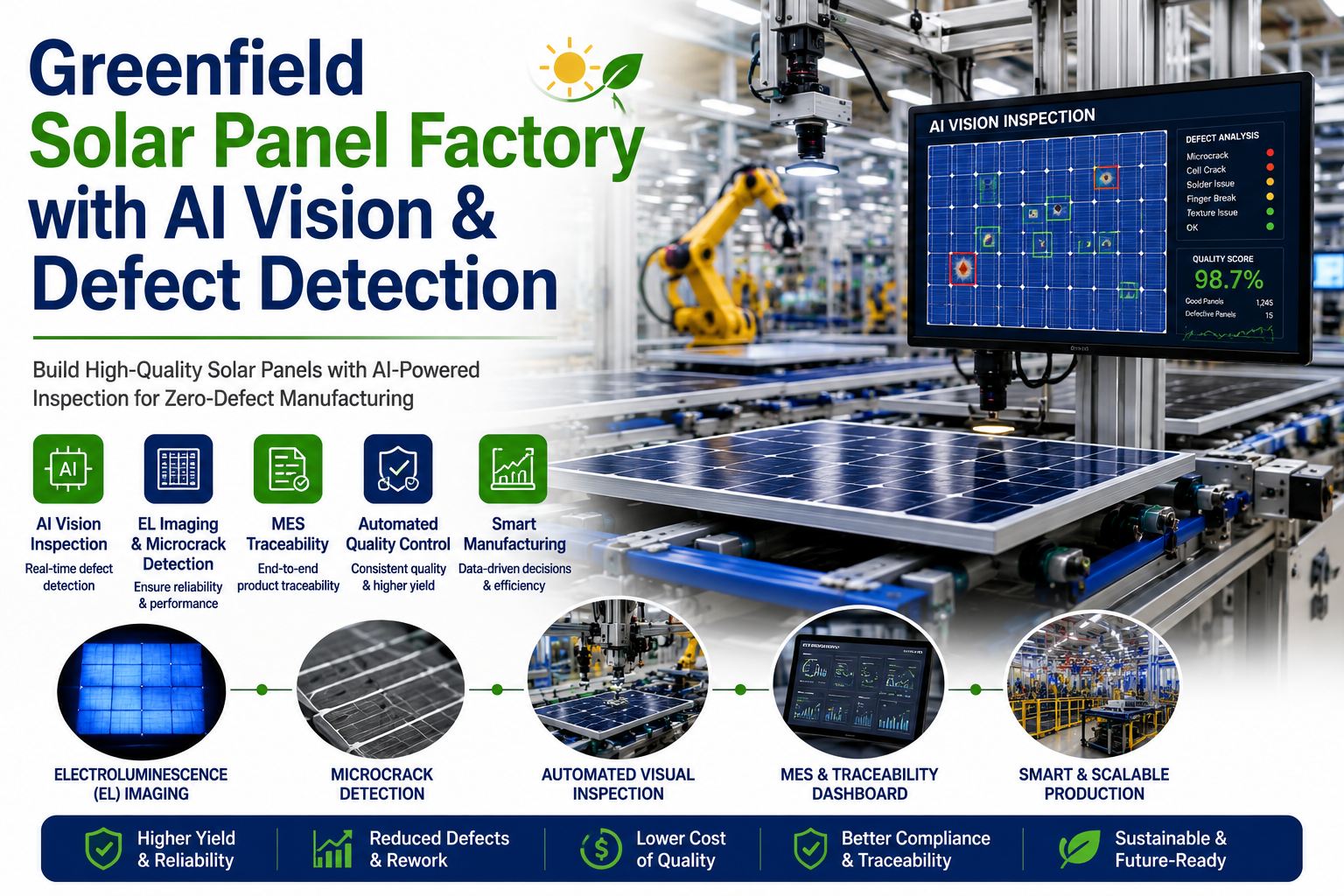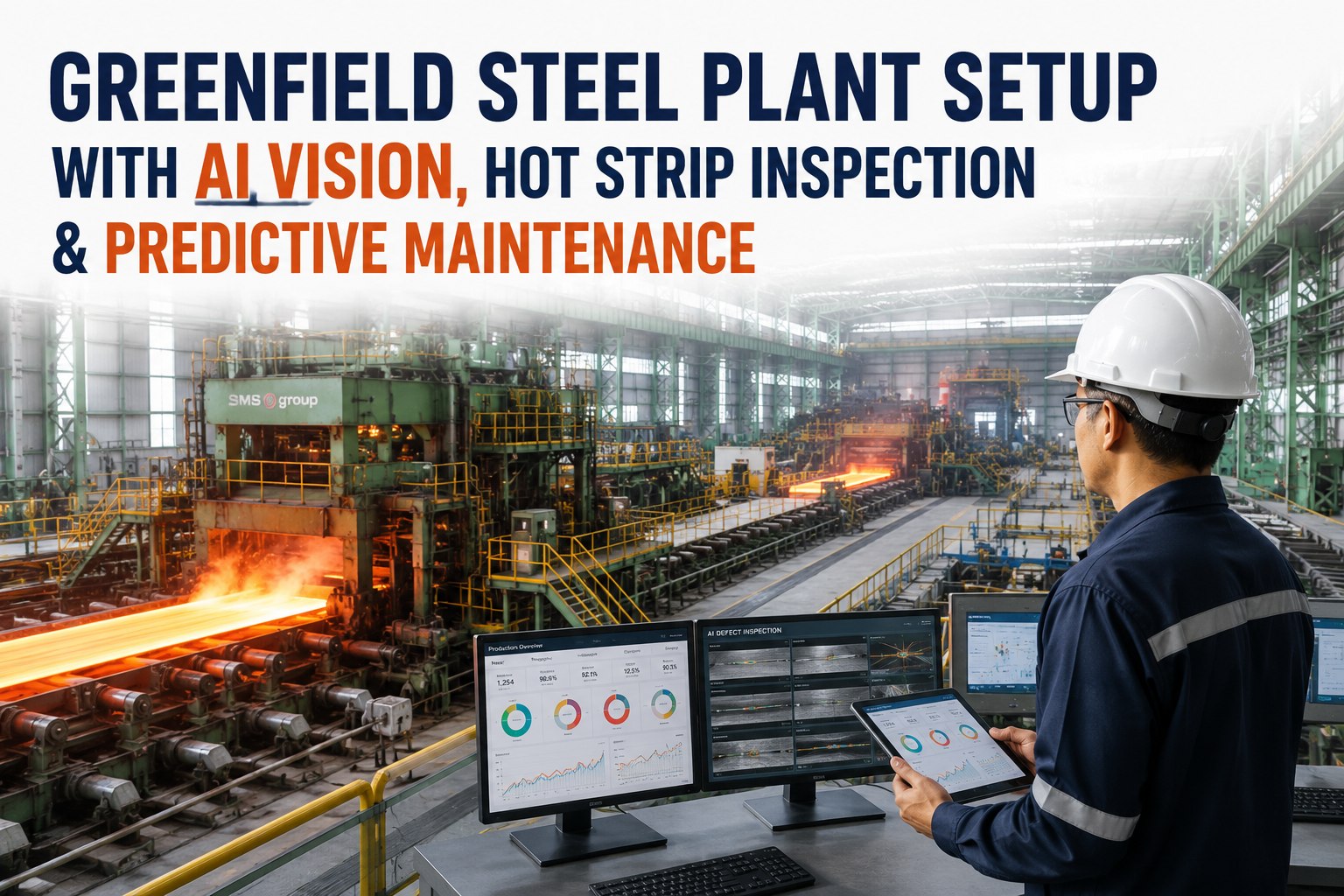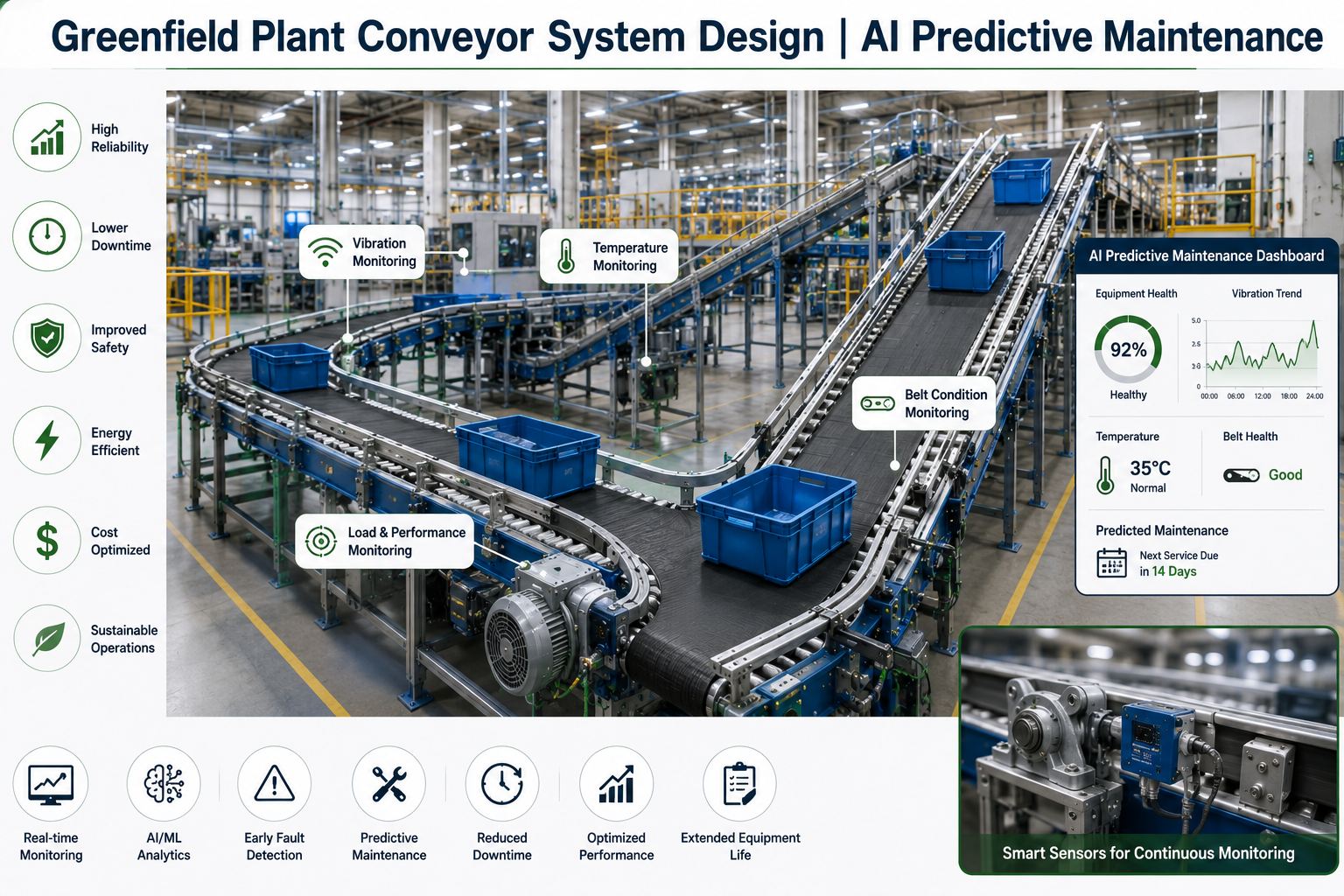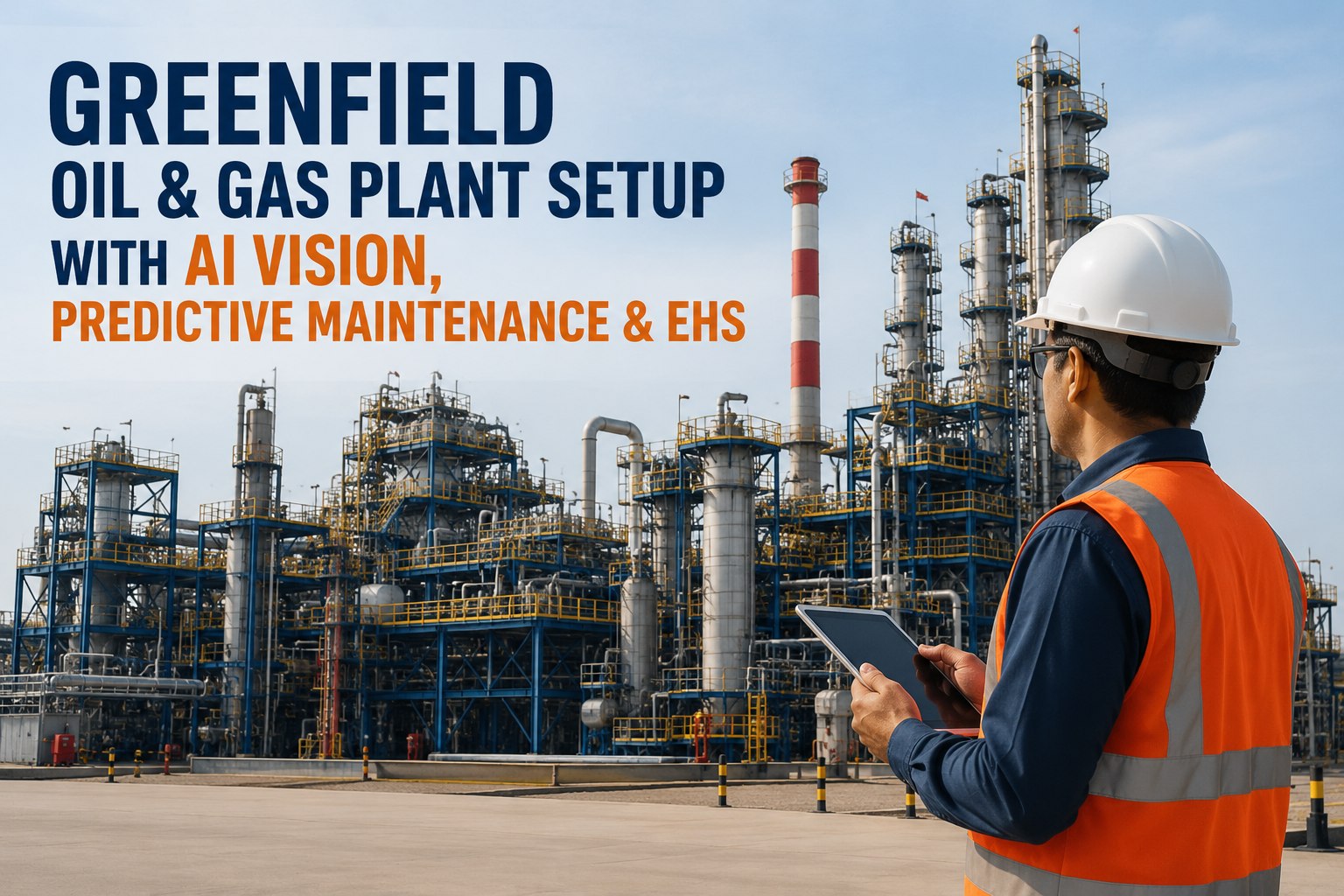
A greenfield oil and gas plant is one of the few places you can build the digital nervous system at the same time as the steel. Most operators inherit decades of disconnected systems and bolt analytics on years later. Starting fresh, you can instrument every pump, vessel, and pipeline from commissioning — so AI vision, predictive maintenance, asset integrity, and EHS all run on one platform from the first day of operation. In an industry where a single unplanned shutdown can cost millions and a missed leak can become a regulatory event, that head start is worth real money. Here is how to set it up.
Planning a greenfield oil and gas build? Book a 30-minute digital-plant consultation to design AI vision, predictive maintenance, and EHS into the project from day one.
Four Pillars on One Digital Foundation
AI Vision
Eyes on every asset
Predictive Maintenance
Failures forecast in advance
Asset Integrity
Corrosion caught early
EHS & Emissions
Safety and compliance built in
One unified data platform — SCADA, DCS, and historian data connected at the edge — putting every asset, inspection, and signal in one place from commissioning, with OT data inside your security perimeter.
Why Build Oil & Gas Digital From Day One
Oil and gas assets fail expensively and dangerously. Reactive maintenance and periodic inspection leave gaps that corrosion, vibration, and fugitive emissions exploit between cycles — and the bill arrives as lost production, environmental cleanup, and regulatory penalties. A greenfield project closes those gaps before they open, instrumenting assets while they are being installed instead of cutting into a live, hazardous plant later. That is the case for building digital from day one rather than retrofitting. If you want it scoped against your asset base, you can map it with an oil and gas specialist.
daily cost of an unplanned refinery or production shutdown
annual pipeline-failure cost to operators, with corrosion the leading cause
EPA charge on excess methane emissions from 2026
Inside the Four Pillars
Each pillar solves a different failure mode, but they share one data layer. Here is what each delivers in a greenfield setup.
AI Vision Inspection
Cameras, drones, and crawlers that see what crews cannot safely reach, surveying a whole platform in a fraction of the time.
- Corrosion, weld, and coating-defect detection
- Gas-cloud and flare-stack leak monitoring
- PPE and safety-zone compliance checks
Predictive Maintenance
Condition-based reliability for every rotating and static asset, replacing calendar schedules with data-driven intervention windows.
- Vibration, thermal, and oil analysis on pumps, compressors, and turbines
- Seven to twenty-one day advance failure warning
- Automatic work orders into the CMMS
Asset Integrity & Corrosion
AI corrosion models that protect every mile of pipe and every vessel, shifting integrity management from reactive to predictive.
- Wall-thickness and remaining-useful-life tracking
- ILI, cathodic-protection, and coupon data fused
- Risk-based inspection per API 1160 and ASME B31.8S
EHS & Emissions
Safety and compliance built into operations rather than bolted on, with continuous monitoring and auditable records.
- Methane and VOC monitoring via OGI cameras and CEMS
- Permit-to-work and incident management
- Auditable reporting for OSHA PSM, EPA RMP, and PHMSA
Want these pillars scoped for your facility? Book a digital-plant design workshop and we will map each one to your upstream, midstream, or downstream assets.
The Greenfield Digital Setup Roadmap
Building the four pillars cleanly is a sequence run in parallel with construction, so monitoring is live the day production starts.
Build the asset register and criticality
Catalog every rotating, static, and instrumentation asset, ranked by consequence of failure to focus the build.
Instrument from commissioning
Design vibration, thermal, gas, and corrosion sensors plus camera and drone coverage into the project, not after it.
Connect one data platform
Ingest SCADA, DCS, and historian data via OPC-UA, Modbus, or MQTT at the edge, keeping OT data inside your perimeter.
Configure PdM models and AI vision
Train condition models on critical equipment and deploy corrosion, leak, and PPE detection across the camera network.
Stand up EHS and integrity workflows
Wire gas and leak alerts, permit-to-work, incident management, risk-based inspection, and emissions reporting.
Integrate dashboards and go live
Unify dashboards, auto-route work orders to the CMMS, and have it all running before first production.
Ready to sequence this against your build? Book an implementation session and leave with a phased digital plan for your project team.
One Platform for Vision, Reliability, and Safety
iFactory unifies AI vision, predictive maintenance, pipeline integrity, and EHS on one platform — fusing vibration, thermal, and process data, predicting failures days ahead, and turning every signal into a tracked work order, with OT data inside your perimeter.
Expert Perspective
In oil and gas, the expensive failures are the ones that develop quietly between inspections — a corrosion cell under insulation, a bearing degrading on a remote compressor, a small but persistent methane leak. Calendar-based programs miss most of them, and by the time a quarterly patrol or annual pig run catches the problem, you are looking at an emergency shutdown or a reportable release. The whole point of going digital at a greenfield site is to never have that blind window. You instrument once, while the plant is being built, and the asset tells you it is in trouble long before it fails.
— Oil & Gas Reliability Practice, iFactory Engineering Team
unplanned downtime reduction with AI predictive maintenance
of anomalies missed by calendar-based inspection between cycles
advance warning before rotating-equipment failure
The Bottom Line
The economics of a digital oil and gas plant are simple: one avoided shutdown or one prevented release pays for the instrumentation many times over. A greenfield project is the rare chance to capture that value from the very first barrel — building AI vision, predictive maintenance, asset integrity, and EHS on a single data foundation laid during construction. Instrument once, connect everything to one platform, and your new plant starts life seeing problems coming instead of cleaning up after them.
Set Up Your Greenfield Plant Digital From Day One
From asset registers and edge integration to corrosion models and emissions reporting, iFactory helps greenfield oil and gas teams stand up vision, reliability, and safety on one platform — live with the plant, not retrofitted years later.
Frequently Asked Questions
What does it mean to build an oil and gas plant digital from day one?
It means designing sensors, cameras, and data connections into the project during construction rather than retrofitting them onto a running plant. Every asset is instrumented and connected to one platform from commissioning, so AI vision, predictive maintenance, asset integrity, and EHS are live the moment production starts, with no costly cut-ins to a hazardous live facility later.
Which assets benefit most from predictive maintenance in oil and gas?
Rotating equipment gains the most — pumps, compressors, and turbines, where vibration and thermal signatures reveal degradation days ahead. Safety-critical assets such as fire-water pumps, flare systems, and emergency shutdown valves also benefit, because they run infrequently but must work perfectly when called, and standby degradation is easy to miss with manual checks.
How does AI vision detect corrosion and leaks?
Fixed cameras, drones, and crawlers capture imagery that machine-learning models analyze for corrosion, weld and coating defects, and structural anomalies, while optical gas-imaging cameras spot vapor releases. Because the monitoring is continuous rather than periodic, it catches the dynamic progression that point-in-time pig runs and patrols miss between cycles.
What EHS and emissions requirements does the platform support?
It supports continuous methane and VOC monitoring for emissions programs, plus permit-to-work, incident management, and auditable records aligned to OSHA PSM, EPA RMP, and PHMSA integrity requirements. With methane charges and reporting tightening, automating this from day one turns compliance from a manual burden into a by-product of normal operations.
How does iFactory support a greenfield oil and gas setup?
iFactory helps define the asset register, instrument assets during construction, and connect SCADA, DCS, and historian data at the edge, then runs AI vision, predictive maintenance, integrity, and EHS on one platform with OT data kept inside your perimeter. You can book a greenfield consultation to plan it for your facility.