EV manufacturers are caught in a paradox: the vehicles designed to reduce global dependence on fossil fuels have created a new, equally fragile dependence — on a handful of critical minerals mined in politically volatile corners of the world. Lithium from Chile and Argentina. Cobalt from the Democratic Republic of Congo. Graphite and rare earths almost entirely from China. See how iFactory AI transforms EV supply chain visibility — book a demo.
Why Critical Minerals Are the Achilles Heel of EV Manufacturing
Every EV battery contains a cocktail of materials that are extraordinarily difficult to source, refine, and deliver reliably. The International Energy Agency's Global Critical Minerals Outlook 2025 warns that rising geopolitical tensions risk disrupting the delicate supply-demand balance for minerals essential to EV production. This is not a future risk — cobalt export suspensions, graphite export controls, and lithium price crashes of 75% between 2022 and 2023 have already demonstrated how fast the ground can shift.
For EV manufacturers, this concentration is not just a procurement headache — it is a production risk embedded directly into the factory floor. When a supplier in Katanga misses a cobalt shipment, the assembly line in Michigan stops. When China tightens graphite export quotas, battery cell production in Germany slows. Traditional supply chain management — built on spreadsheets, quarterly reviews, and reactive firefighting — cannot handle this level of systemic volatility.
The Battery Material Stack: What's at Risk and Where
Where Traditional Supply Chain Management Breaks Down
Most EV manufacturers today manage critical mineral supply chains with tools built for a simpler era — purchase orders, delivery windows, and safety stock buffers. These approaches assume supply disruptions are exceptions. For critical minerals, disruption is the norm. Here are the four failure modes that appear repeatedly across EV supply chain operations:
An EV manufacturer may know that a cell supplier in South Korea is on-time today. But they have no visibility into whether that supplier's lithium hydroxide refiner in China is operating at full capacity. When the refiner slows, the cell supplier's output drops 3 weeks later — and the OEM discovers it at the production planning meeting.
By the time commodity price movements appear in procurement reports, the market has already moved. Cobalt spot prices can swing 20% in 6 weeks. Manufacturers locked into quarterly pricing reviews are consistently buying at the worst possible time or holding excess inventory at peak cost.
Multiple Tier-1 suppliers may appear to offer redundancy, but if they all source their active cathode material from the same refinery in Hunan, the manufacturer has a single point of failure they cannot see. This is how one export restriction can trigger simultaneous supply failure across all alternative suppliers.
When a disruption is finally detected, the production planning system has no mechanism to automatically model the downstream impact: which vehicle lines are affected, which battery chemistries can substitute, which customer orders are at risk. The answer requires days of manual analysis — days the factory floor cannot wait.
How AI Supply Chain Systems Solve the Critical Mineral Problem
AI-powered supply chain platforms approach the critical mineral challenge differently. Rather than tracking what has already happened, they model what is about to happen — and give production teams enough lead time to respond before the factory feels the impact. iFactory's platform brings this intelligence directly into the production environment.
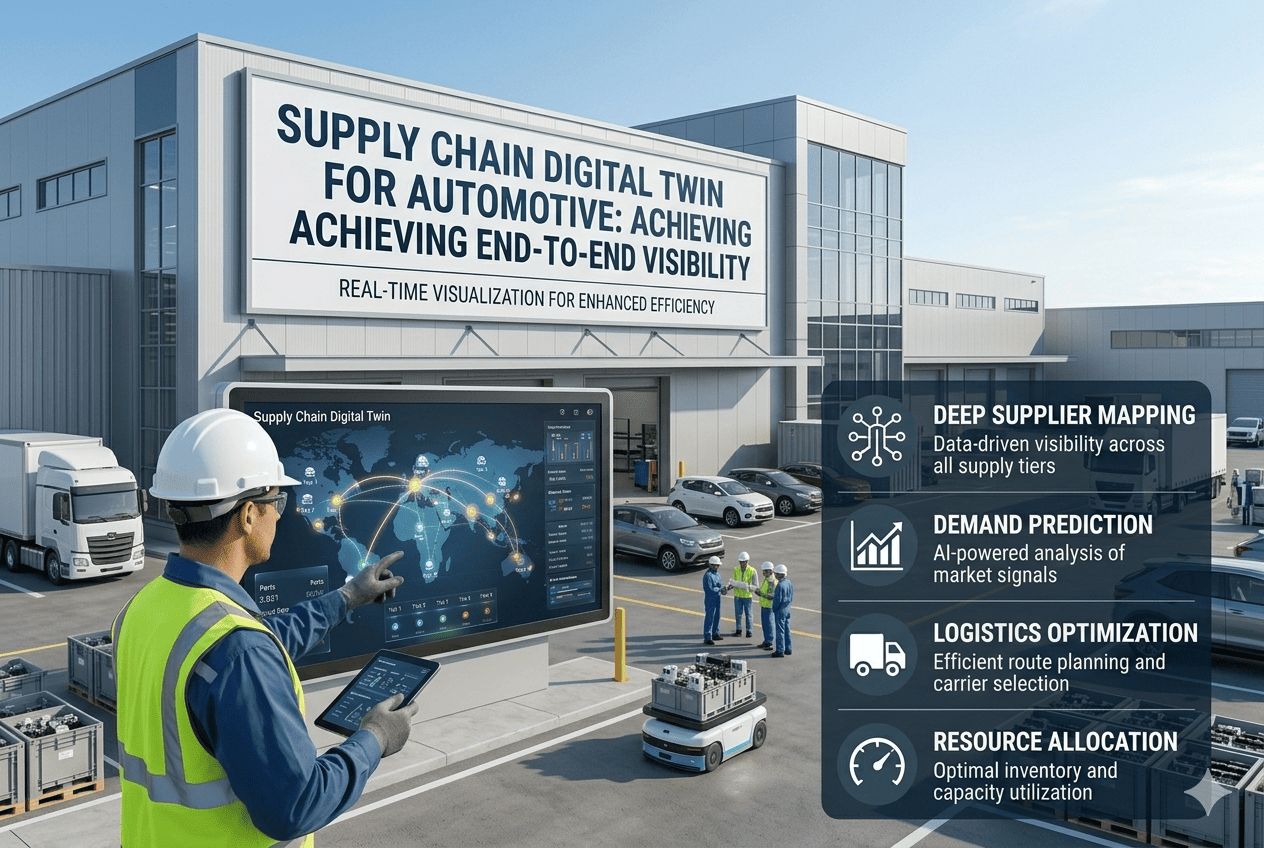
Map supply relationships beyond Tier-1 to identify where your battery materials actually originate. AI builds a dynamic network graph that exposes hidden single-source concentrations at the refinery, mining, or transport layer — the exact points where disruptions start.
Machine learning models monitor geopolitical events, export control announcements, commodity price indices, shipping data, and weather patterns simultaneously. When signals converge on a disruption risk, the system alerts procurement and production planning weeks before delivery windows are affected.
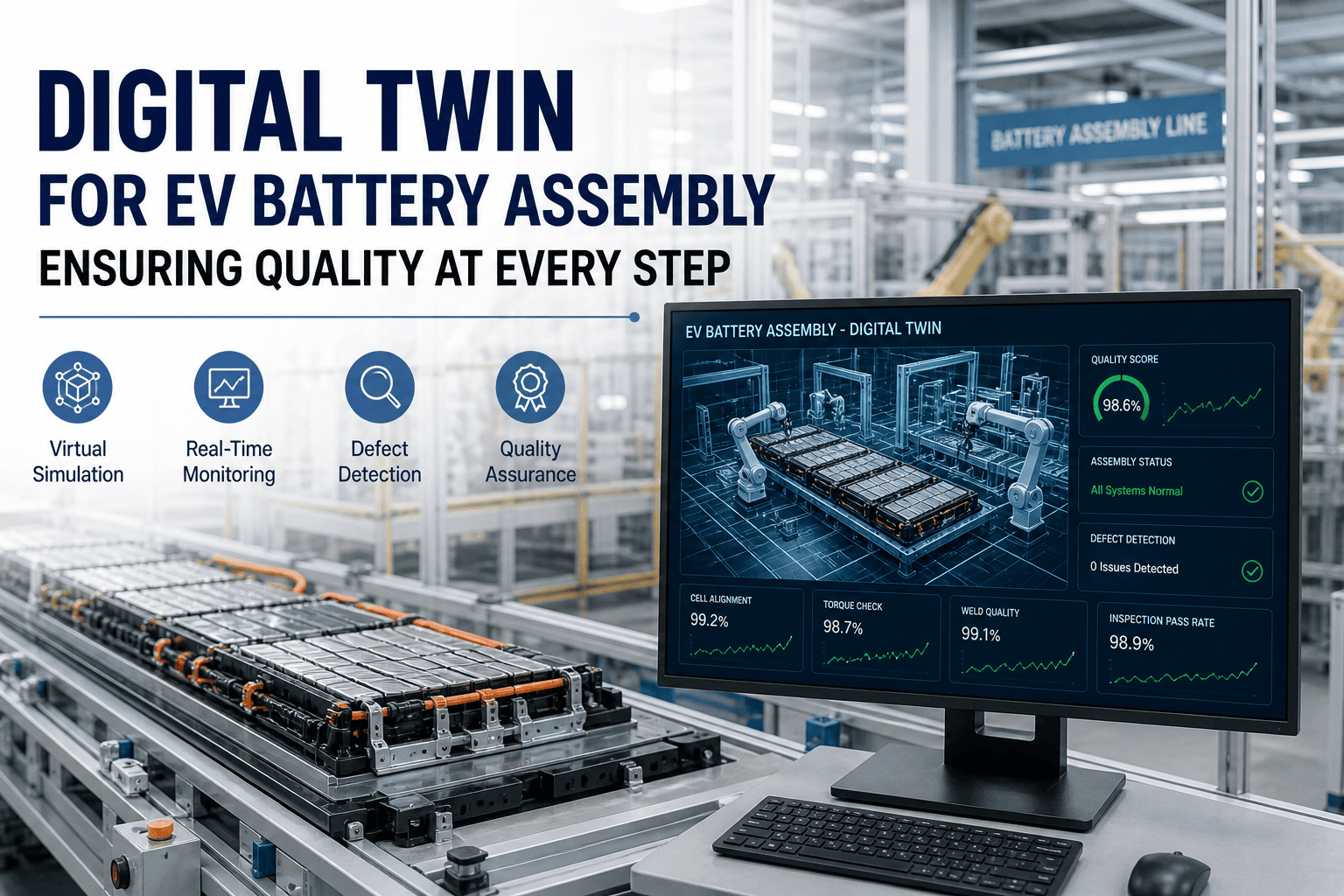
Connect supply chain risk signals directly to production line digital twins. When AI detects a potential cobalt shortage 6 weeks out, the simulation immediately models the impact on battery pack output, affected vehicle lines, and customer delivery schedules — giving manufacturing teams actionable data, not just alerts.
When a critical mineral is at risk, AI evaluates whether alternative battery chemistries (LFP vs NMC, for example) can substitute for affected vehicle variants without compromising performance specifications or triggering recertification requirements — turning a potential line shutdown into a managed chemistry transition.
Real-World Impact: What AI Supply Chain Visibility Delivers
The AI Supply Chain Workflow for Critical Minerals
AI ingests commodity prices, export control databases, geopolitical risk indices, shipping AIS data, and weather events — continuously, not quarterly.
Each supplier receives a dynamic risk score based on their mineral exposure, geographic concentration, financial health, and recent delivery performance.
Risk events are automatically modeled against the production digital twin. Manufacturing teams see exactly which lines, shifts, and customer orders are exposed — before the supply disruption reaches the dock.
Alternative suppliers, chemistry substitutions, inventory repositioning, and production rescheduling options are ranked by cost and feasibility — enabling procurement and production to decide in hours, not days.