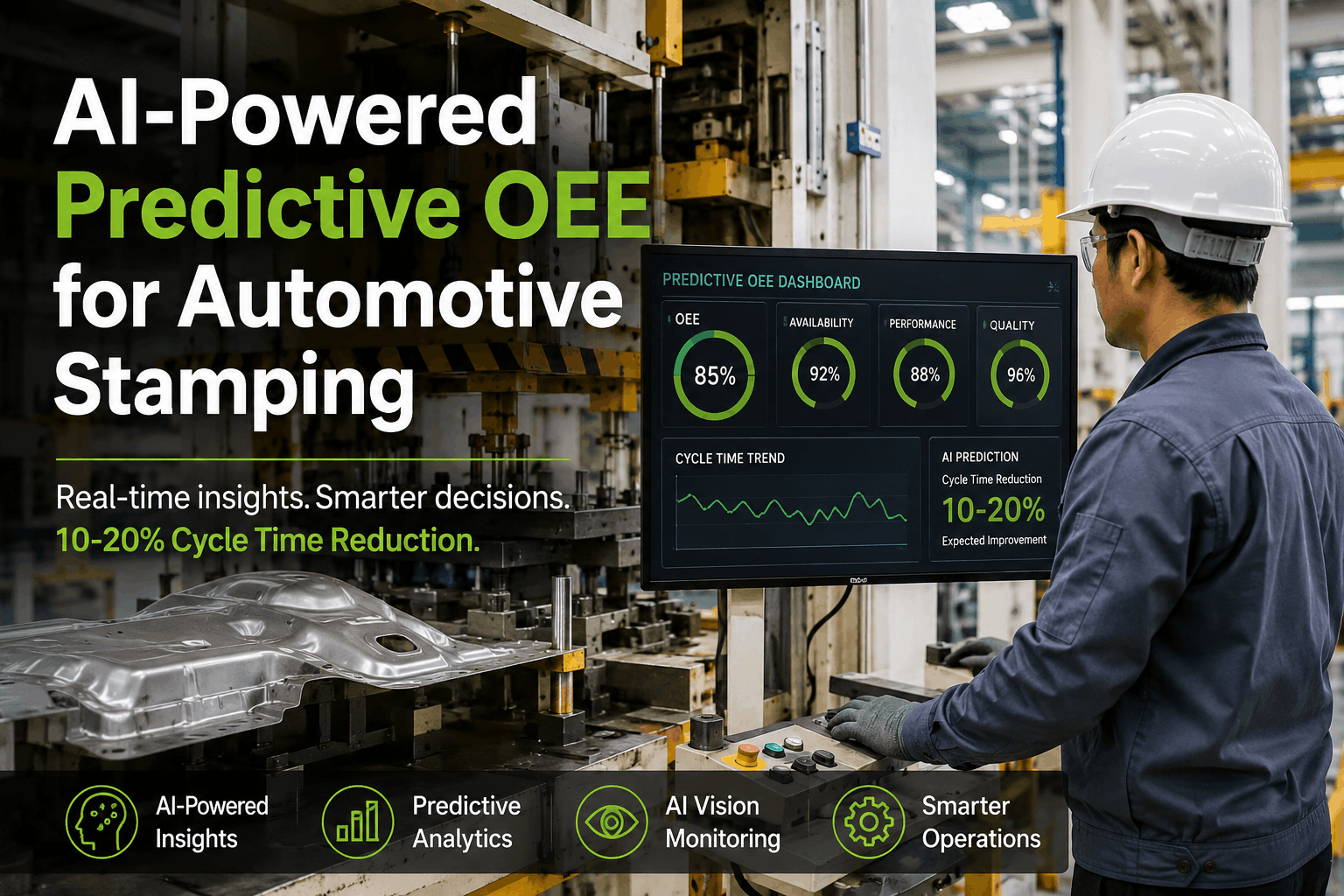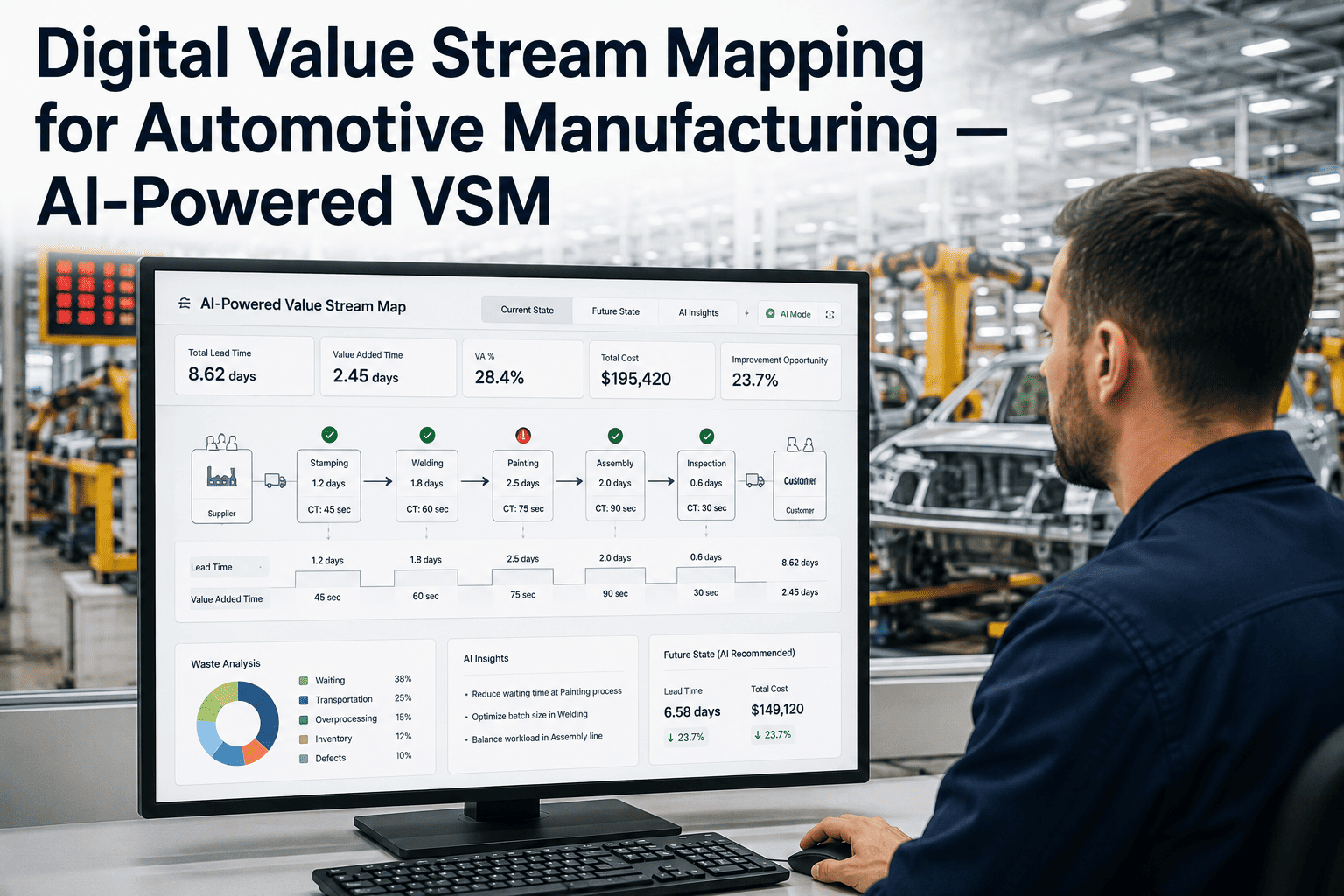
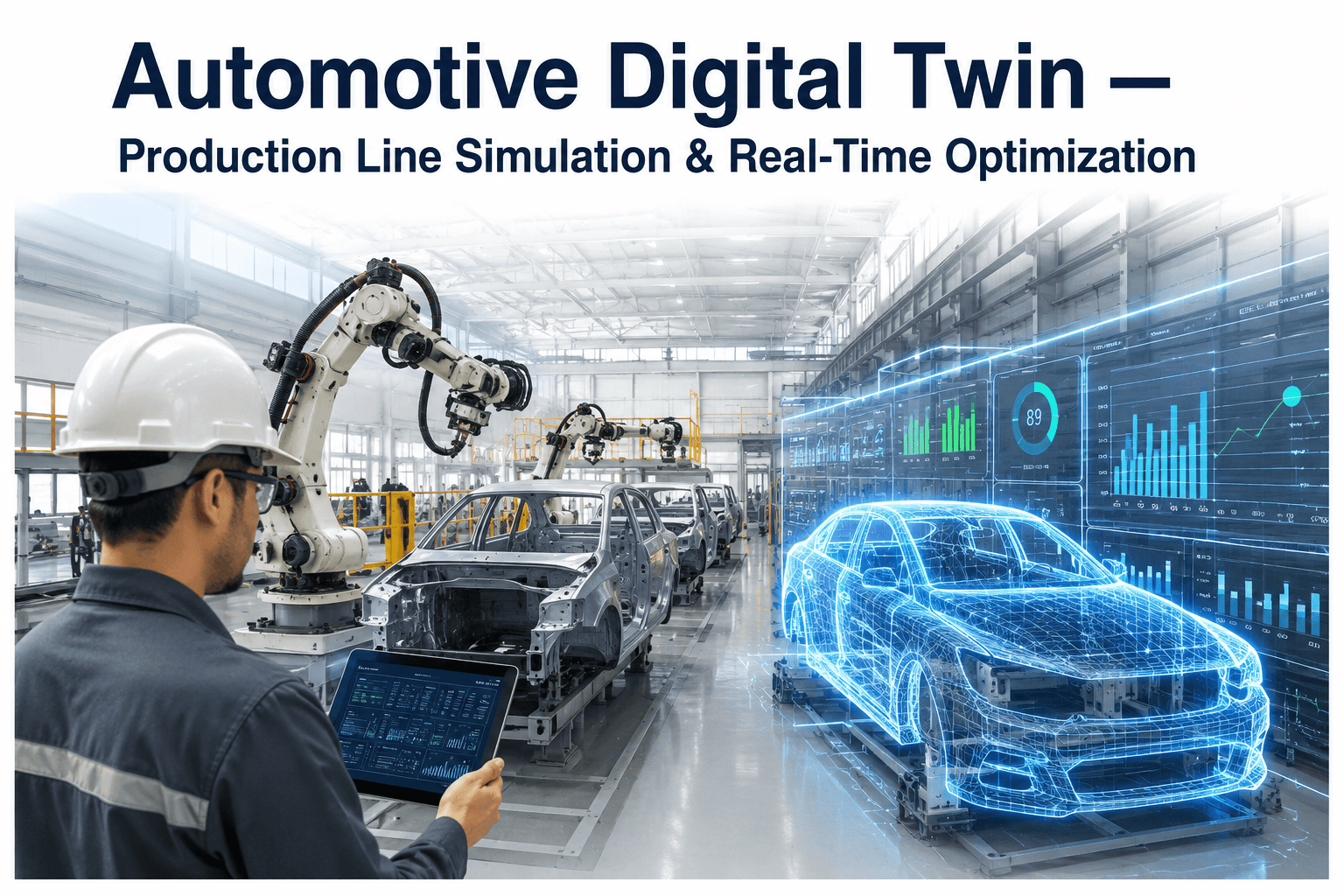
In the fast-paced world of automotive manufacturing, the ability to visualize and optimize production flows is no longer a luxury but a necessity. Traditional paper-based value stream mapping (VSM) often falls short, providing static snapshots that quickly become outdated. Today, plant managers are turning to digital, AI-powered VSM solutions that dynamically update lead times, work-in-progress (WIP) levels, and process cycle efficiencies across the entire value chain. This shift from manual to digital enables real-time decision-making, waste elimination, and continuous improvement. By integrating data from IoT sensors, ERP systems, and production logs, a digital twin of your production line emerges, offering unprecedented visibility. For automotive manufacturers striving for lean operations, adopting an AI-driven VSM approach is a strategic imperative that directly impacts bottom-line performance. Book a demo to see how digital VSM can revolutionize your shop floor.
Real-Time Visibility Across Your Entire Production Line
Eliminate guesswork and manual data collection. Our AI-powered VSM platform continuously captures and analyzes production data, giving you a living map of your value stream. Identify bottlenecks, monitor cycle times, and track WIP levels with precision.
From Static Snapshot to Living System
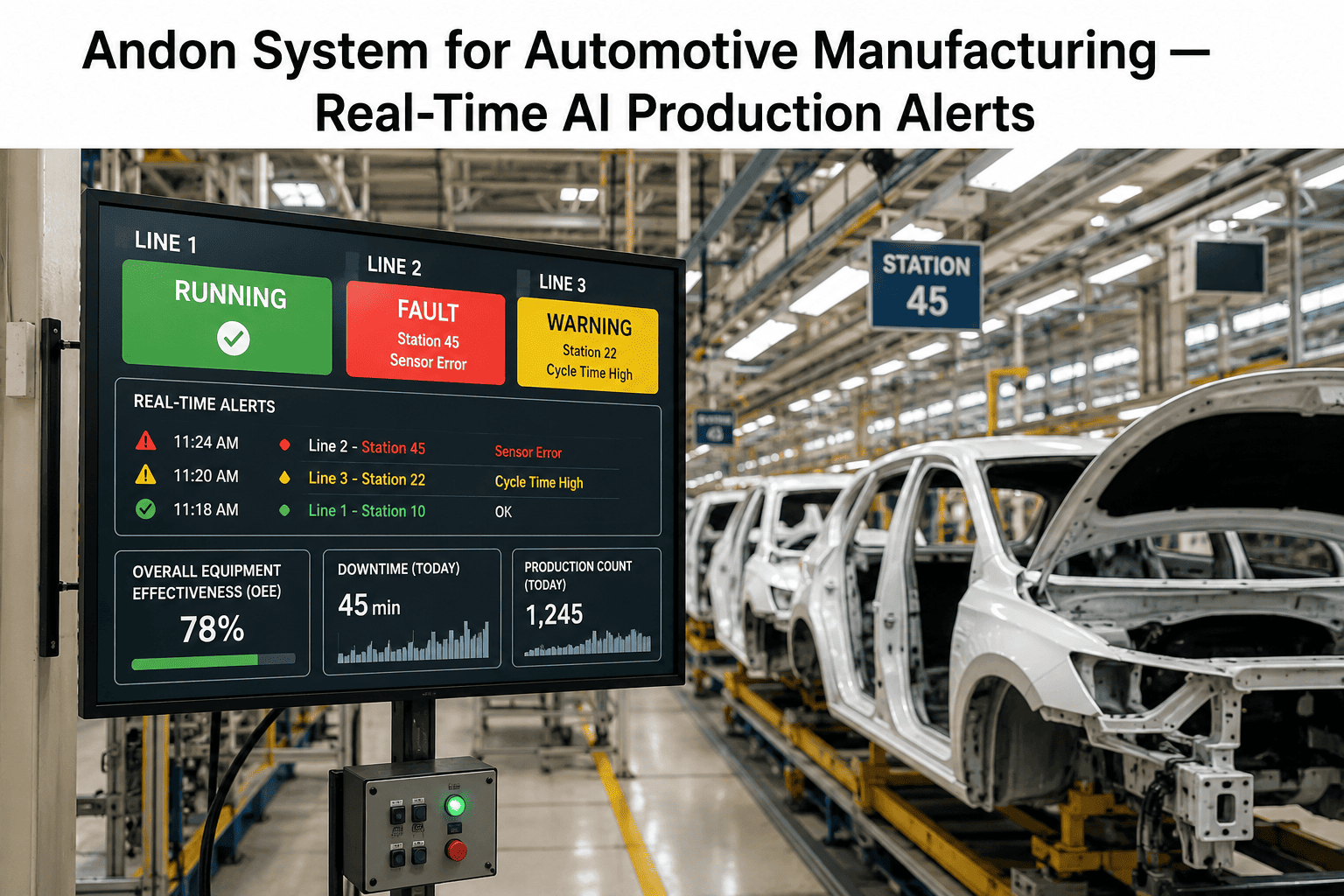
Traditional VSM is often a one-time exercise. By the time the map is drawn, the data is already stale. Digital VSM changes this by connecting directly to your production systems. Sensors on the assembly line feed real-time cycle times, machine status, and material flow data into the map. This living system updates automatically, reflecting changes instantly. Plant managers can see the impact of a machine breakdown, a rush order, or a process change in seconds. This dynamic view is critical for automotive lines where every second of downtime costs thousands. The ability to simulate "what-if" scenarios becomes a powerful tool for continuous improvement. Instead of waiting for the next kaizen event, you can test changes virtually and implement the best ones immediately. This agility is the cornerstone of modern lean manufacturing.
Live Data Feed
Cycle Time: 45s
WIP: 120 units
OEE: 87%
AI-Driven Bottleneck Detection
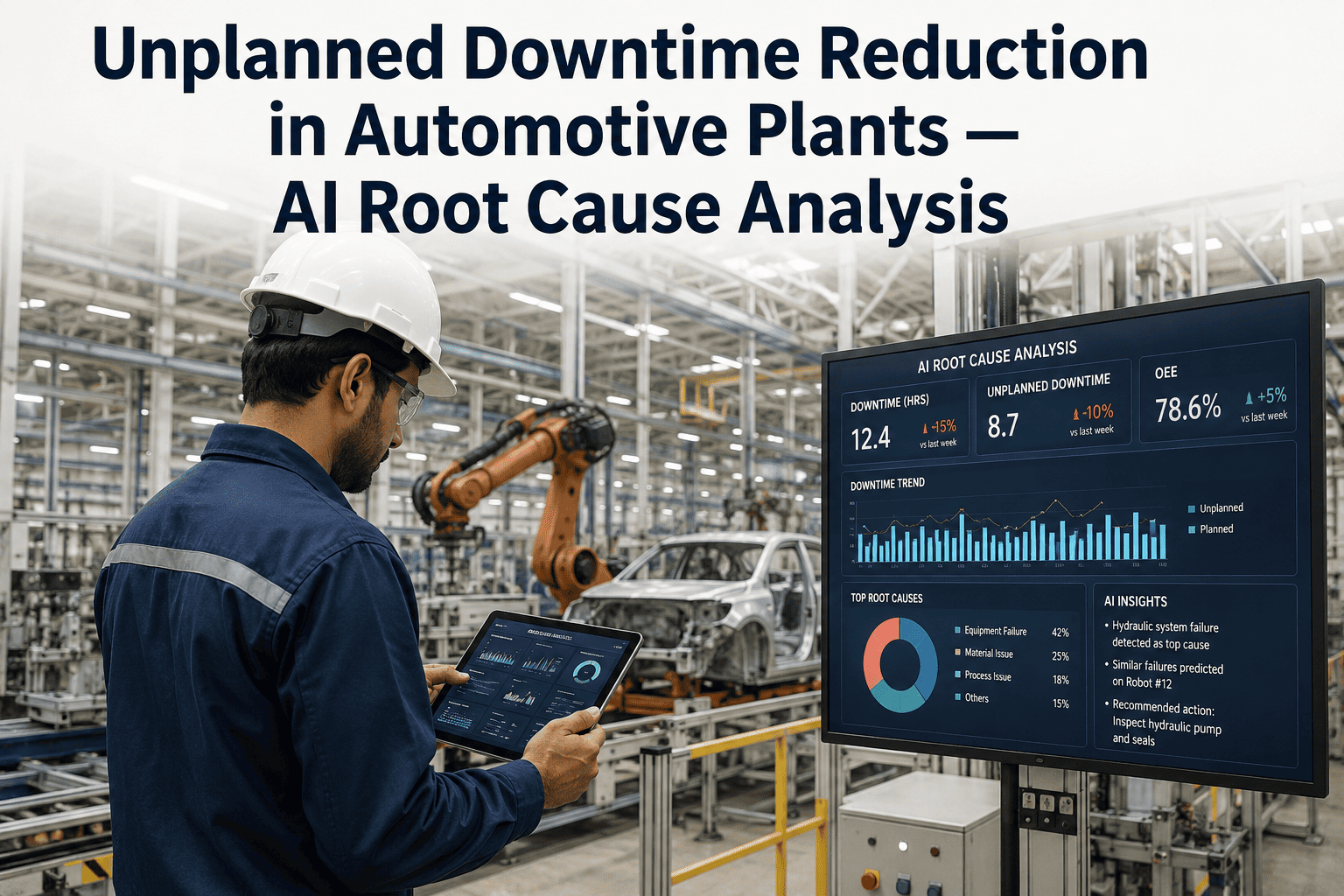
One of the most powerful features of AI-powered VSM is its ability to automatically identify bottlenecks. The system analyzes historical and real-time data to pinpoint the exact station or process that is constraining flow. It doesn't just show where the bottleneck is; it provides insights into why it's happening. Is it a machine issue, a staffing problem, or a material shortage? The AI correlates data from multiple sources to give you a root cause analysis. For example, if a welding station consistently has a longer cycle time than others, the system will flag it and suggest potential causes based on similar patterns in the past. This reduces the time spent on manual analysis and allows the team to focus on solutions. With this intelligence, plant managers can prioritize improvement projects that will have the greatest impact on overall throughput.
Bottleneck Alert
Station 7: Welding
Cycle Time: 62s (Target: 45s)
Root Cause: Tool Wear
Your Journey to Digital VSM
Connect Data Sources
Integrate with your existing ERP, MES, and IoT platforms. Our system supports over 200 standard protocols.
Automated Map Generation
The AI builds your initial value stream map using historical data. No manual drawing required.
Real-Time Monitoring
Watch your map come alive as data streams in. Set thresholds for alerts on key metrics.
Continuous Improvement
Use simulation and analytics to test improvements. Implement changes with confidence.
Key Metrics Tracked by Digital VSM
Lead Time
Total time from raw material receipt to finished good shipment. Our system breaks it down by process step, highlighting where value is added and where waste occurs.
WIP Levels
Work-in-progress inventory at each stage. Real-time tracking helps you maintain optimal levels, reducing carrying costs and preventing overproduction.
Process Cycle Efficiency
Ratio of value-added time to total lead time. A higher PCE means less waste. Digital VSM helps you identify opportunities to increase PCE.
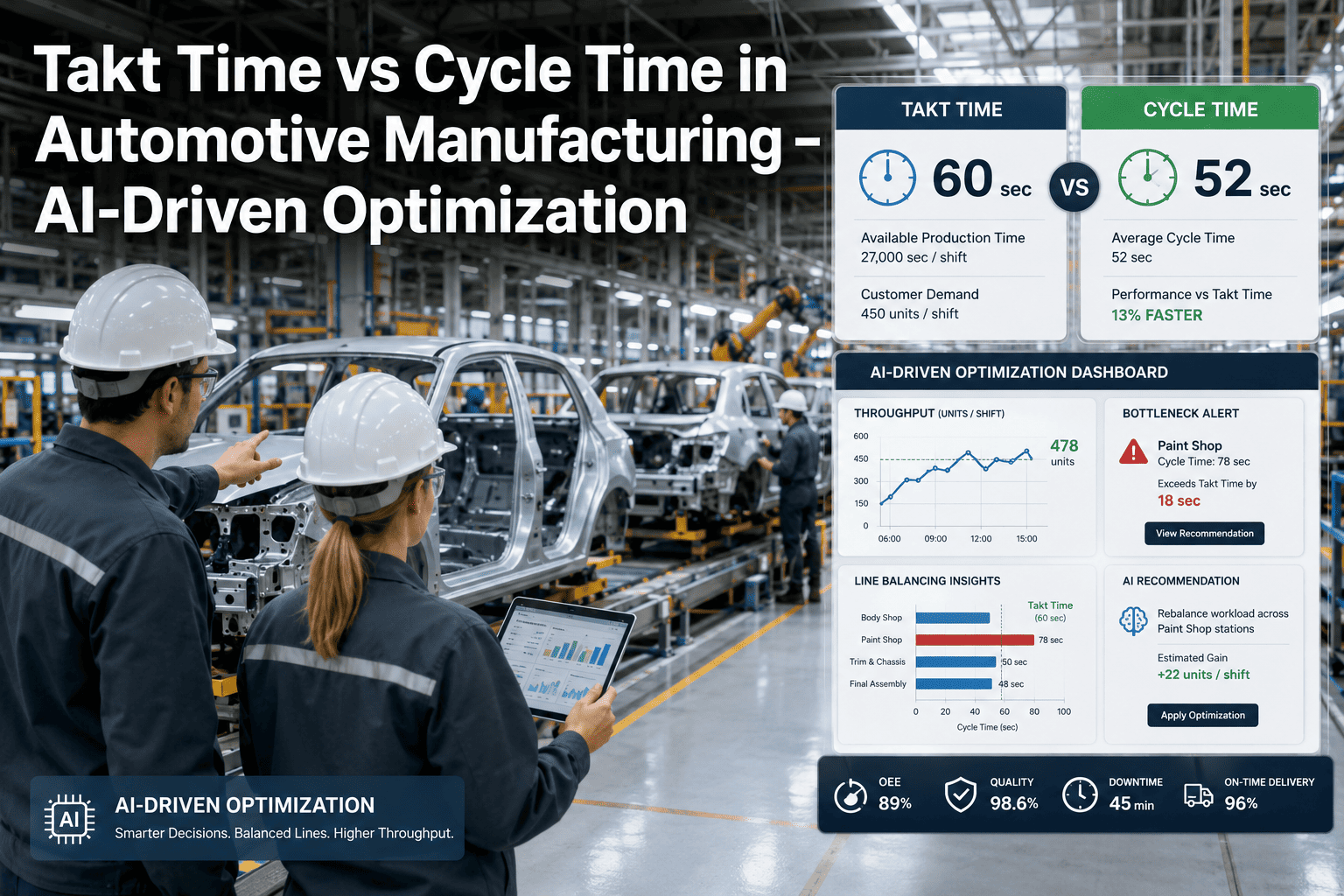
Takt Time
The pace of production needed to meet customer demand. The system compares actual cycle times to takt time, flagging any deviations.
Material Flow
Visual representation of how materials move through the plant. Identifies unnecessary movement, waiting, and transportation waste.
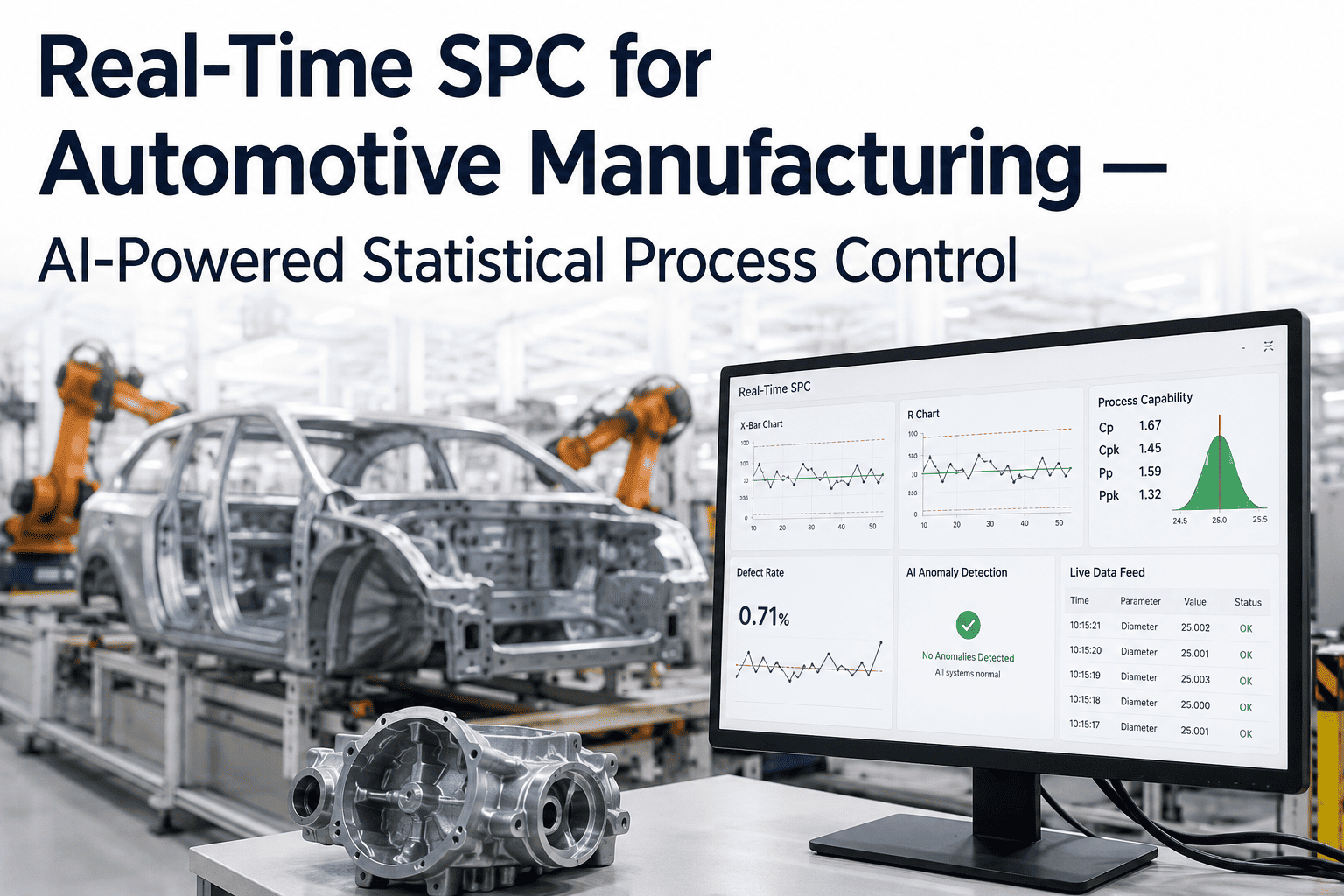
Quality Metrics
First-pass yield, scrap rates, and rework percentages integrated into the value stream map, providing a holistic view of performance.
Ready to Transform Your Production Line?
See how AI-powered digital VSM can give you a competitive edge. Our team will walk you through a personalized demo tailored to your automotive manufacturing environment.
Frequently Asked Questions
How does digital VSM differ from traditional paper-based VSM?
Traditional VSM is a manual, static exercise that captures a snapshot in time. It requires significant effort to draw and update, often becoming obsolete quickly. Digital VSM, on the other hand, is a dynamic, automated system that connects directly to your production data sources. It updates in real time, providing a living map that reflects current conditions. This allows for immediate identification of bottlenecks, waste, and opportunities for improvement. Digital VSM also enables simulation and "what-if" analysis, which is not feasible with paper maps. For automotive manufacturers with complex, high-volume lines, digital VSM is essential for maintaining lean operations and responding quickly to changes. Book a demo to see the difference firsthand.
What data sources does the AI VSM platform integrate with?
Our platform is designed to integrate seamlessly with a wide range of industrial data sources. This includes ERP systems like SAP and Oracle, MES platforms, SCADA systems, PLCs, and IoT sensors. We support standard communication protocols such as OPC UA, MQTT, and Modbus. Additionally, we can ingest data from CSV files or APIs if needed. The integration process is typically straightforward, with our team providing guidance and support. Once connected, the system automatically pulls relevant data such as cycle times, machine states, production counts, and quality metrics. This comprehensive data integration ensures that your digital value stream map is accurate, up-to-date, and truly reflective of your production reality. Contact support for details on specific integrations.
Can digital VSM help reduce lead time in automotive manufacturing?
Absolutely. Digital VSM is one of the most effective tools for lead time reduction. By providing real-time visibility into every step of the production process, it helps identify delays, bottlenecks, and non-value-added activities. The AI analyzes the data to pinpoint exactly where time is being wasted. For example, it might reveal that parts are waiting too long between two stations, or that a specific machine has a high changeover time. With this insight, plant managers can implement targeted improvements. Many of our automotive clients have achieved lead time reductions of 30% or more within the first few months of implementation. The key is the continuous, data-driven nature of digital VSM, which allows for ongoing optimization rather than one-time fixes. Book a demo to learn more.
How does the system handle multiple production lines or plants?
The platform is built to scale across multiple lines, plants, and even global operations. You can create separate value stream maps for each line and aggregate them into a plant-level view. For multi-site manufacturers, a dashboard provides a high-level comparison of key metrics across locations. The AI can also identify best practices from one line and suggest their application to others. This holistic view enables standardization and continuous improvement across the entire organization. Data from each site is securely transmitted and stored, with role-based access controls to ensure that the right people have the right information. Whether you have one line or a hundred, the system is designed to handle the complexity of automotive manufacturing. Contact support for a consultation on multi-site deployment.
What kind of ROI can we expect from implementing digital VSM?
The return on investment for digital VSM is typically substantial and realized quickly. Our clients commonly see a payback period of less than six months. The primary drivers of ROI include lead time reduction, which lowers inventory carrying costs and improves cash flow; WIP optimization, which reduces waste and frees up floor space; and increased throughput, which directly boosts revenue. Additionally, the reduction in manual data collection and reporting saves labor hours. The AI-powered analytics also help prevent costly downtime by predicting issues before they occur. On average, our automotive clients report a 20-30% improvement in overall equipment effectiveness (OEE) and a 15-25% reduction in operational costs. The exact ROI depends on your current state and the scope of implementation, but the benefits are consistently significant. Book a demo to calculate your potential ROI.
Take the Next Step Toward Lean Excellence
Your journey to a smarter, more efficient production line starts here. With AI-powered digital VSM, you can achieve unprecedented visibility and control. Don't let outdated methods hold you back.
.png)