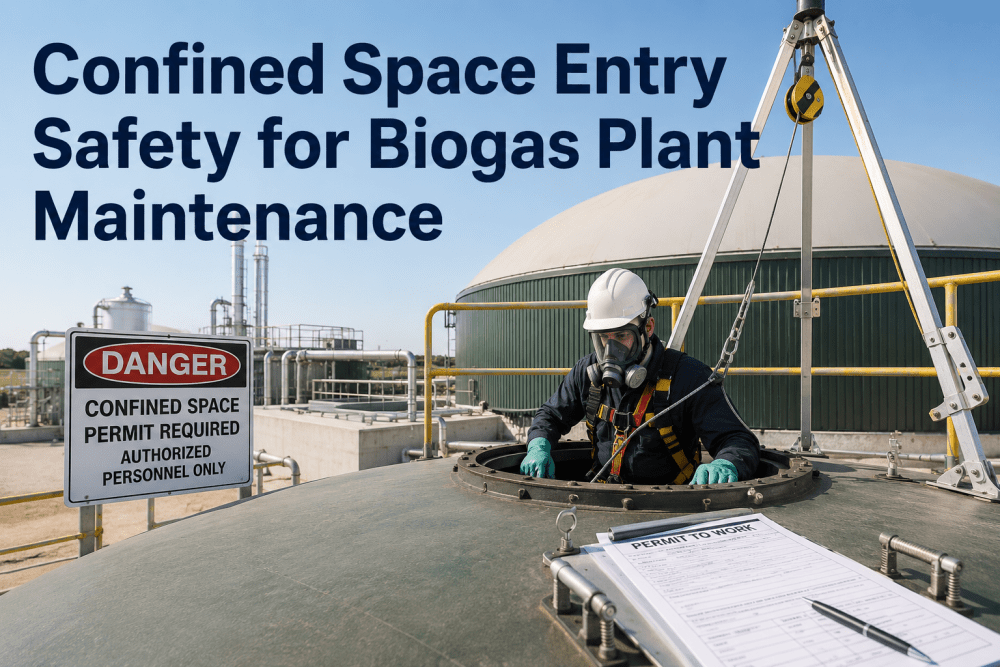
Confined space entry in biogas operations presents one of the most lethal combinations of hazards in industrial maintenance: oxygen-deficient atmospheres, toxic hydrogen sulfide exposure, explosive methane accumulation, and engulfment risks in digestate and sludge. This guide delivers actionable insight into how modern digital safety platforms are transforming confined space entry management from paper-based compliance into a real-time, evidence-based safety stewardship model. book a demo
Are Your Confined Space Entry Procedures OSHA-Ready?
Unify atmospheric monitoring, digital permit-to-work, gas testing documentation, and rescue planning into one intelligent platform designed for high-consequence biogas confined space operations.
Why Confined Space Entry Safety Is Critical for Biogas Operations
The core challenge in biogas confined space management is the sheer diversity of atmospheric and physical hazards that can coexist in a single entry point. A digester dome may contain methane at explosive levels, hydrogen sulfide at immediately dangerous to life and health (IDLH) concentrations, and oxygen deficiency — all while presenting engulfment risk from residual digestate. Traditional paper-based permit systems cannot keep pace with the dynamic nature of these hazards. Conditions change between pre-entry testing and actual entry, yet most facilities rely on a single gas reading taken hours before work begins. For safety leadership teams looking to close this gap, book a demo is typically the first step toward program modernization.
Atmospheric Testing Digitization
Core Focus: Continuous Monitoring. Replace single-point pre-entry gas tests with real-time multi-gas monitoring that streams O2, LEL, H2S, and CO readings directly to the permit system and the safety supervisor's dashboard.
Digital Permit-to-Work Automation
Core Focus: Documented Compliance. Automate the entire permit lifecycle — authorization, gas test verification, time extensions, and close-out — with tamper-proof digital signatures and audit-ready timestamps.
AI Entry Verification
Core Focus: Elimination of Bypass. Use computer vision and geofencing to verify that confined space attendants are present, atmospheric monitors are active, and rescue equipment is staged before any entry is authorized.
Rescue Readiness Automation
Core Focus: Emergency Preparedness. Digitize rescue plans, equipment inspection logs, and drill records. Automatically verify that retrieval systems, tripods, and SCBA are within inspection dates before each entry.
"We had a robust paper-based confined space program — or so we thought. During a surprise OSHA audit, we discovered our gas testing logs were incomplete for 30% of entries and our permit extensions were not properly documented. Deploying iFactory's digital permit-to-work platform digitized our entire workflow: gas monitors stream directly into the permit, attendants verify entry via mobile app, and rescue equipment inspections are auto-tracked. "
Core Confined Space Hazards in Biogas Facilities
Not all confined space hazards are created equal. In a biogas plant, the combination of biological decomposition, pressurized gas systems, and organic slurry creates a hazard profile distinct from general industrial confined spaces. Understanding the specific risks by location and source is the foundation of any effective entry program. Safety directors who book a demo consistently report that digitizing their hazard assessment data is the first step to identifying previously unrecognized risk patterns across their facility portfolio.
| Hazard Category | Primary Source | Health & Safety Risk | Detection Method | Risk Priority |
|---|---|---|---|---|
| Oxygen Deficiency | CO2 displacement from biogas | Asphyxiation within seconds below 19.5% | Electrochemical O2 sensor | Critical |
| Methane (Explosive) | Biogas leakage in confined volume | Explosion risk at 5-15% LEL | NDIR / catalytic bead LEL | Critical |
| Hydrogen Sulfide | Bacterial decomposition of organics | IDLH at 100 ppm; fatal above 500 ppm | Electrochemical H2S sensor | Critical |
| Engulfment | Digestate, sludge, liquid organic waste | Suffocation by immersion in solids/liquids | Visual inspection / level monitoring | High |
| Carbon Monoxide | CHP engine exhaust infiltration | Toxic at 35 ppm; fatal at 800 ppm | Electrochemical CO sensor | High |
How iFactory Digitizes Confined Space Entry Safety
While many "EHS software" or "CMMS" systems claim to support confined space programs, they are fundamentally passive databases that still require manual data entry. iFactory is an active safety optimization engine. We don't just store your permits; we use live IoT gas monitor feeds to automatically block entry if atmospheric conditions change. We don't just host your rescue plans; we use computer vision to verify that rescue equipment is physically at the entry point before the permit is issued. Most importantly, we provide 360-degree entry visibility — the ability for a safety manager to see every active confined space entry across multiple biogas plants on a single screen, with real-time gas readings, attendant status, and elapsed entry time. This is the level of intelligence that EHS leaders see when they book a demo of the platform.
Deploying a Digitized Confined Space Entry Program
Moving from paper permits and clipboard checklists to a fully digitized confined space program requires a structured progression that builds data integrity and workforce trust. iFactory's implementation team follows a proven 4-phase roadmap aligned with your facility's specific confined space inventory and risk profile. If you are unsure where your program stands, book a demo to benchmark your current program against industry best practices.
Inventory and Hazard Assessment Digitization
Create a comprehensive digital registry of all confined spaces — digesters, gas holders, effluent tanks, pumping stations, and CHP enclosures — with mapped atmospheric hazards, physical risks, and required PPE for each unique space.
Connected Gas Monitoring Deployment
Integrate multi-gas monitors with the iFactory platform via Bluetooth or cellular gateway. Configure automated pre-entry testing workflows and real-time continuous monitoring alerts that trigger permit blocks if thresholds are exceeded. book a demo
Digital Permit and Rescue Readiness Activation
Deploy mobile-first permit-to-work with digital signatures, gas test auto-population, attendant verification, and rescue equipment inspection checklists. Enable AI vision to confirm rescue tripod and SCBA placement before entry authorization.
Building a Future-Ready Confined Space Safety Program
The transition from paper-based confined space compliance to continuous, digitized safety stewardship is no longer optional — it is an operational and regulatory necessity for every biogas facility operating under OSHA's confined space standard. book a demo to see how digitized confined space entry can transform their facility's safety program from reactive compliance into proactive hazard prevention.
Biogas Confined Space Entry — Common Questions Answered
What gas thresholds automatically block confined space entry in the platform?
The platform is configurable, but default OSHA-aligned thresholds are: oxygen below 19.5% or above 23.5%, LEL above 10% of the lower explosive limit, H2S above 10 ppm, and CO above 35 ppm. If any sensor exceeds these limits during pre-entry testing or continuous monitoring, the digital permit is automatically locked and entry is blocked until conditions are corrected and retested.
How does the platform handle confined space re-classification?
OSHA allows permit-required confined spaces to be reclassified as non-permit spaces if the only hazard is atmospheric and continuous forced-air ventilation eliminates the risk. iFactory's platform supports this workflow by documenting the ventilation setup, continuous monitoring data, and supervisor authorization — creating a defensible audit trail for every re-classification decision. book a demo
Can the system integrate with existing gas detectors from different manufacturers?
Yes. iFactory's platform supports integration with leading gas detection brands including BW Technologies, MSA Safety, Drager, and RKI Instruments via Bluetooth, cellular gateway, or manual docking station upload. The middleware normalizes data from all manufacturers into a unified permit and monitoring dashboard.
How does AI vision verify rescue equipment staging?
iFactory's computer vision models are trained to recognize confined space rescue equipment — tripods, retrieval winches, full-body harnesses, SCBA units, and atmospheric monitors — in real-time camera feeds. Before a permit is authorized, the system verifies that all required rescue equipment is physically present at the entry point and within inspection date, eliminating the most common cause of OSHA confined space violations.
What happens if gas conditions change while a worker is inside a confined space?
The platform's continuous monitoring mode streams real-time gas readings from the entrant's or attendant's monitor. If any reading exceeds alarm thresholds, the system triggers an immediate audio-visual alert to the attendant, dispatches an automated notification to the safety manager's mobile device, and time-stamps the event in the permit record for post-incident analysis and rescue coordination.
Modernize Your Confined Space Entry Program Today
Deploy a unified safety platform that integrates connected gas monitoring, digital permit-to-work, AI entry verification, and rescue readiness automation — built specifically for biogas confined space operations.