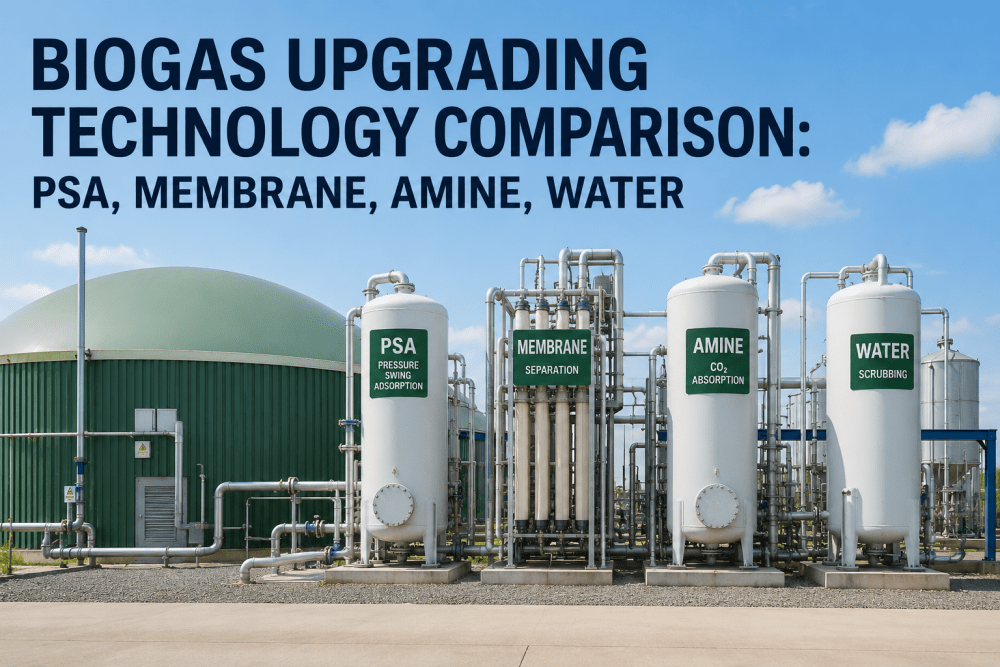
Every biogas plant operator faces the same pivotal decision: which upgrading technology will deliver the highest methane recovery at the lowest lifetime cost for their specific feedstock, scale, and grid specifications. PSA, membrane, amine scrubbing, and water scrubbing each offer distinct trade-offs between capital expenditure, energy consumption, methane slip, and operational complexity — yet most facility assessments rely on vendor brochures rather than site-specific data. To see how iFactory's AI-driven Upgrading Analytics platform optimizes technology selection and ongoing performance, Book a Demo with our biogas engineering team today.
Maximize Methane Recovery with Data-Driven Technology Decisions
iFactory's AI-driven platform delivers continuous upgrading performance monitoring, technology benchmarking, and lifecycle cost analytics — purpose-built for biogas plant operators selecting between PSA, membrane, amine, and water scrubbing systems.
Biogas Upgrading Technology Landscape — Four Core Approaches
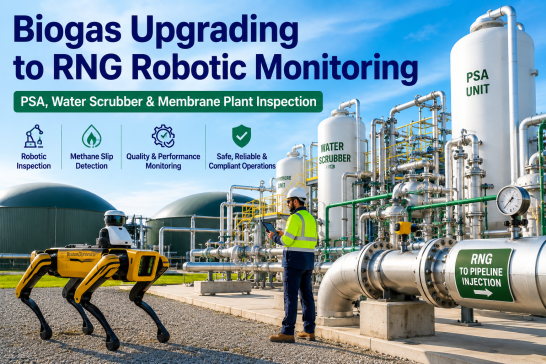
Biogas upgrading is the process of removing CO2, H2S, and trace contaminants to produce pipeline-quality renewable natural gas (RNG). The four commercially proven technologies — PSA, membrane, amine scrubbing, and water scrubbing — each achieve this separation through fundamentally different mechanisms. The right choice depends on biogas flow rate, methane concentration, contaminant profile, desired product purity, and local utility specifications. Maintenance and operations teams exploring upgrading options often begin by scheduling a session to book a demo to assess how their current or planned upgrading configuration compares against industry benchmarks.
Pressure Swing Adsorption (PSA)
Uses adsorbent media (zeolites, activated carbon) to selectively capture CO2 at elevated pressure. Delivers 96–98% methane recovery at 96–99% purity. Mature technology with proven reliability across small to medium biogas flows.
Membrane Separation
Utilizes selective polymer membranes that allow CO2 to permeate faster than methane. Compact footprint, low energy demand (0.2–0.4 kWh/Nm³), and excellent turndown capability. Multi-stage configurations achieve 97%+ recovery.
Amine Scrubbing
Chemical absorption using amine solutions (MEA, MDEA) to bind CO2 molecules. Delivers the highest methane purity (99%+) and recovery (99%+), with exceptional tolerance to contaminants. Preferred for pipeline-direct injection applications.
Water Scrubbing
Physical absorption using water as the separation medium. CO2 and H2S dissolve preferentially in water under pressure. Simple operation with no chemical consumption, though water usage and potential biological fouling require active management.
PSA vs. Membrane vs. Amine vs. Water Scrubbing — Head-to-Head Comparison
Selecting the optimal upgrading technology requires evaluating performance across multiple dimensions simultaneously — methane recovery, energy efficiency, capital cost, operational complexity, and contaminant tolerance. The table below provides a standardized comparison across the four commercially proven technologies, based on aggregated operational data from operating biogas upgrading facilities.
| Parameter | PSA | Membrane | Amine Scrubbing | Water Scrubbing |
|---|---|---|---|---|
| CH4 Recovery Rate | 96–98% | 94–97% (single); 99%+ (multi) | 99%+ | 96–98% |
| Product Purity | 96–99% CH4 | 94–98% CH4 | 99%+ CH4 | 96–98% CH4 |
| Energy Consumption | 0.3–0.5 kWh/Nm³ | 0.2–0.4 kWh/Nm³ | 0.5–0.7 kWh/Nm³ | 0.4–0.6 kWh/Nm³ |
| Relative CapEx | Medium | Low–Medium | High | Medium |
| Relative OpEx | Medium | Low | High | Medium |
| Contaminant Tolerance | Moderate (H2S sensitive) | Moderate (VOC sensitive) | High | High (H2S co-removal) |
| Turndown Capability | Limited (50–100%) | Excellent (20–100%) | Moderate (40–100%) | Moderate (40–100%) |
| Typical Scale | 100–2,000 Nm³/hr | 50–5,000 Nm³/hr | 500–10,000 Nm³/hr | 200–5,000 Nm³/hr |
| Maintenance Intensity | Medium | Low | High | Medium |
| Footprint | Medium | Compact | Large | Large |
Selecting the Right Upgrading Technology for Your Biogas Plant
Technology selection is not a one-size-fits-all decision — it depends on a facility's specific biogas composition, flow rate variability, grid injection requirements, and financial constraints. The framework below organizes the decision process into three tiers based on plant scale and product specification requirements. Operations teams building these selection models often book a demo to align iFactory's performance data with their site-specific evaluation criteria.
Low-Flow Digester Gas Injection
For: 50–500 Nm³/hr biogas
- Membrane or small PSA recommended
- Lowest CapEx for limited throughput
- Compact footprint for brownfield installations
- Simple automation for unattended operation
- Target: 96%+ methane purity
Grid Injection or Vehicle Fuel
For: 500–2,500 Nm³/hr biogas
- PSA or multi-stage membrane optimal
- Balanced CapEx/OpEx profile
- Established technology with strong track record
- Moderate methane slip (2–4%) acceptable with gas utilization
- Target: 97%+ methane purity
High-Purity Pipeline or Bio-LNG
For: 2,500–10,000 Nm³/hr biogas
- Amine scrubbing or hybrid membrane-amine
- Highest methane recovery (99%+)
- Lower methane slip for strict emissions compliance
- Tolerant to variable feed gas contaminants
- Target: 99%+ methane purity
How iFactory AI Optimizes Biogas Upgrading Operations
Selecting the right technology is only the first step. Maintenance leads deploying these analytics typically find it valuable to book a demo to see how platform onboarding integrates with their existing upgrading system controls.
Cost and Performance Benchmarking Across Upgrading Technologies
Integrated biogas facilities using AI-driven upgrading analytics report significant improvements across all core performance KPIs. By moving from reactive to condition-based upgrading management, sites achieve higher methane recovery, lower energy consumption, and extended equipment life. The results below reflect 12-month post-implementation outcomes across iFactory-supported upgrading installations.
"We installed a membrane upgrading system based on vendor specifications that looked good on paper — but actual methane recovery was running 4% below projections in the first six months. iFactory's analytics identified that our feed gas temperature variability was causing membrane compaction, reducing selectivity. By implementing their recommended temperature control algorithm, we recovered the lost methane, reduced energy consumption by 15%, and extended our projected membrane life from 5 to over 7 years. The platform turned our upgrading system from a black box into a transparent, continuously optimizing asset."
Making the Right Upgrading Decision — With Data, Not Guesswork
iFactory's AI-driven upgrading analytics platform provides the real-time performance monitoring, technology benchmarking, and predictive maintenance capabilities that turn upgrading operations from a fixed-cost center into a continuously improving revenue driver. To see how iFactory can optimize your upgrading technology selection and ongoing performance, Book a Demo with our biogas engineering team.
Biogas Upgrading Technology — Frequently Asked Questions
Which biogas upgrading technology delivers the highest methane purity?
Amine scrubbing consistently delivers the highest methane purity at 99%+ CH4, making it the preferred choice for pipeline-direct injection and bio-LNG applications where strict gas quality specifications must be met. Membrane and PSA systems typically deliver 96–99% purity depending on configuration and operating conditions. Water scrubbing generally achieves 96–98% purity.
What are the main factors driving methane slip in upgrading systems?
Methane slip — the loss of methane to the off-gas stream — is driven primarily by the technology's separation mechanism and operating conditions. In membrane systems, slip increases with membrane age, temperature excursions, and pressure fluctuations. PSA systems experience slip during depressurization cycles. Amine systems have the lowest slip due to the high selectivity of chemical absorption. iFactory's analytics detect slip events in real-time and recommend corrective actions.
How does biogas composition affect upgrading technology selection?
Biogas composition varies significantly with feedstock type — landfill gas typically contains higher N2 and O2, while agricultural digester gas has higher H2S. Membrane systems are sensitive to VOC contamination, PSA adsorbents can be poisoned by H2S, and amine systems handle contaminants well but require thermal energy for solvent regeneration. iFactory's feed gas characterization module analyzes your specific composition to recommend the most compatible technology.
Can iFactory integrate with existing upgrading system control platforms?
Yes. iFactory integrates with all major upgrading system controllers via OPC-UA, Modbus TCP, and direct sensor connections. The platform ingests existing process data — pressure, temperature, flow, gas composition — and supplements it with AI-driven analytics without requiring replacement of your current control infrastructure or upgrading system vendor hardware.
What is the expected ROI for deploying AI-driven upgrading optimization?
Most facilities achieve full ROI within 6–10 months. The three primary drivers are: (1) increased methane recovery (typically 2–4% gain directly increases RNG revenue), (2) reduced energy consumption (15–20% reduction in electricity and thermal energy costs), and (3) extended membrane or adsorbent life (30–40% longer service intervals). Combined, these benefits typically deliver $80,000–$200,000 in annual value for a mid-size upgrading plant.
Optimize Your Biogas Upgrading Performance with AI-Driven Analytics
iFactory delivers continuous upgrading system monitoring, methane recovery optimization, energy efficiency analytics, and predictive maintenance — purpose-built for PSA, membrane, amine, and water scrubbing operations.