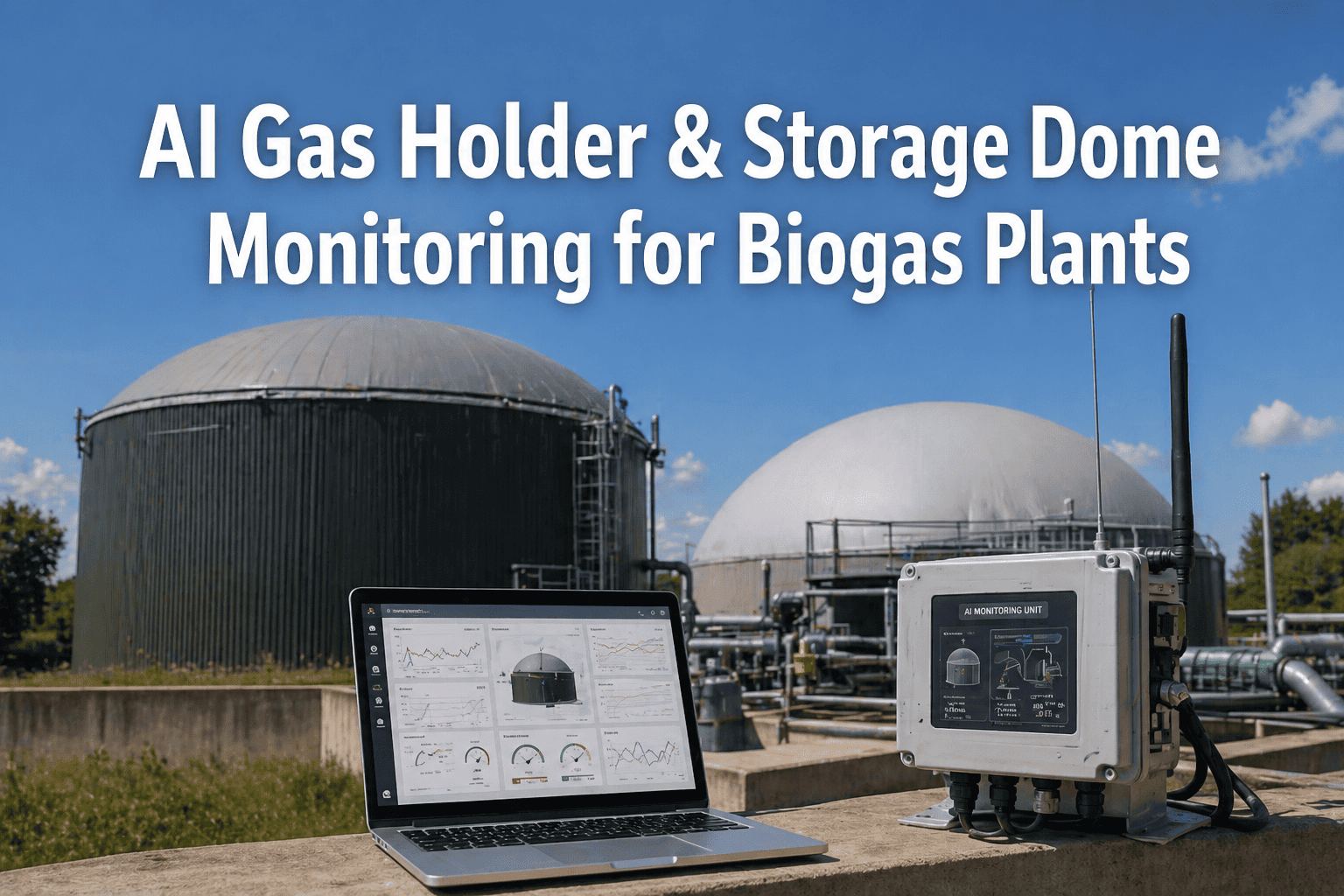
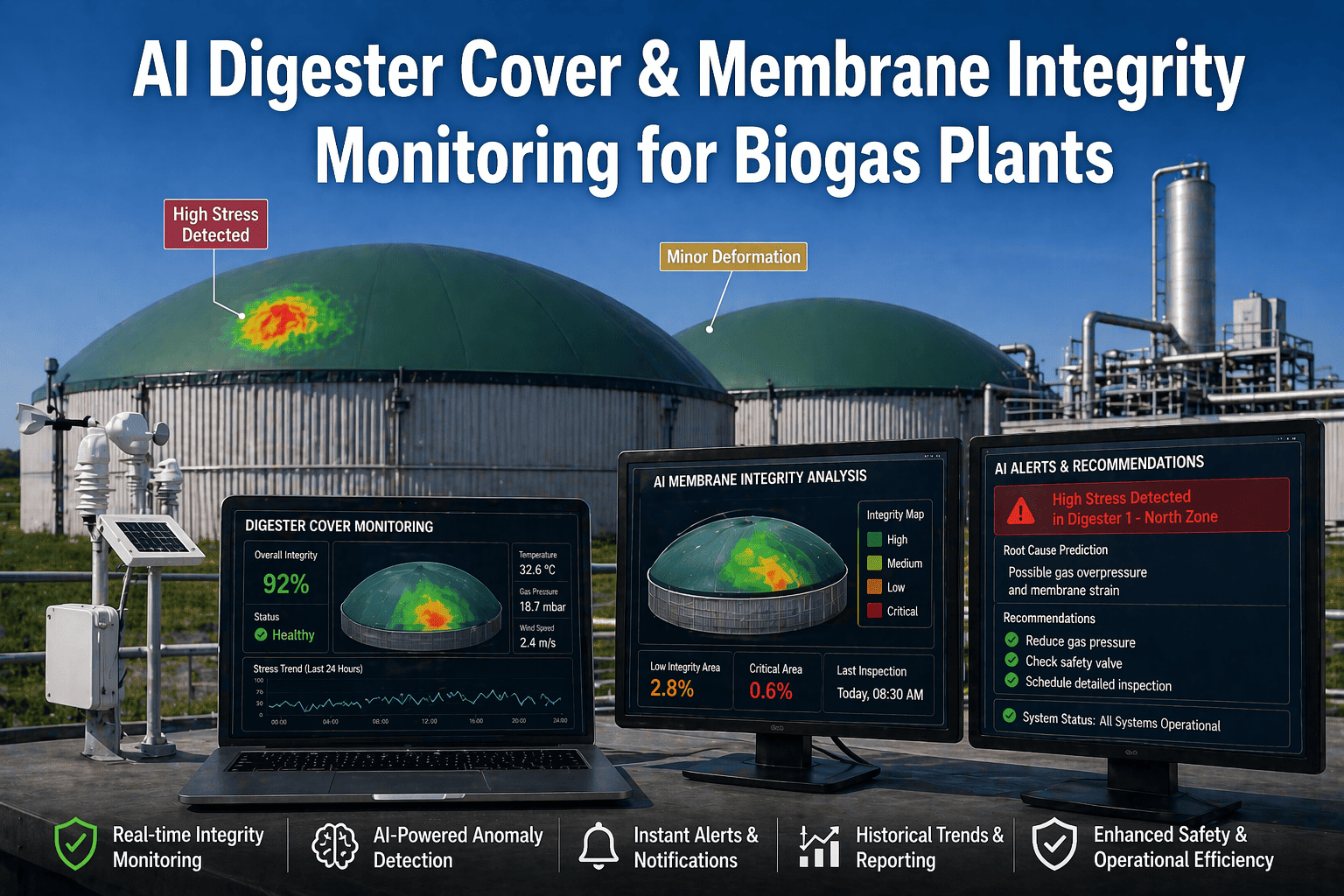
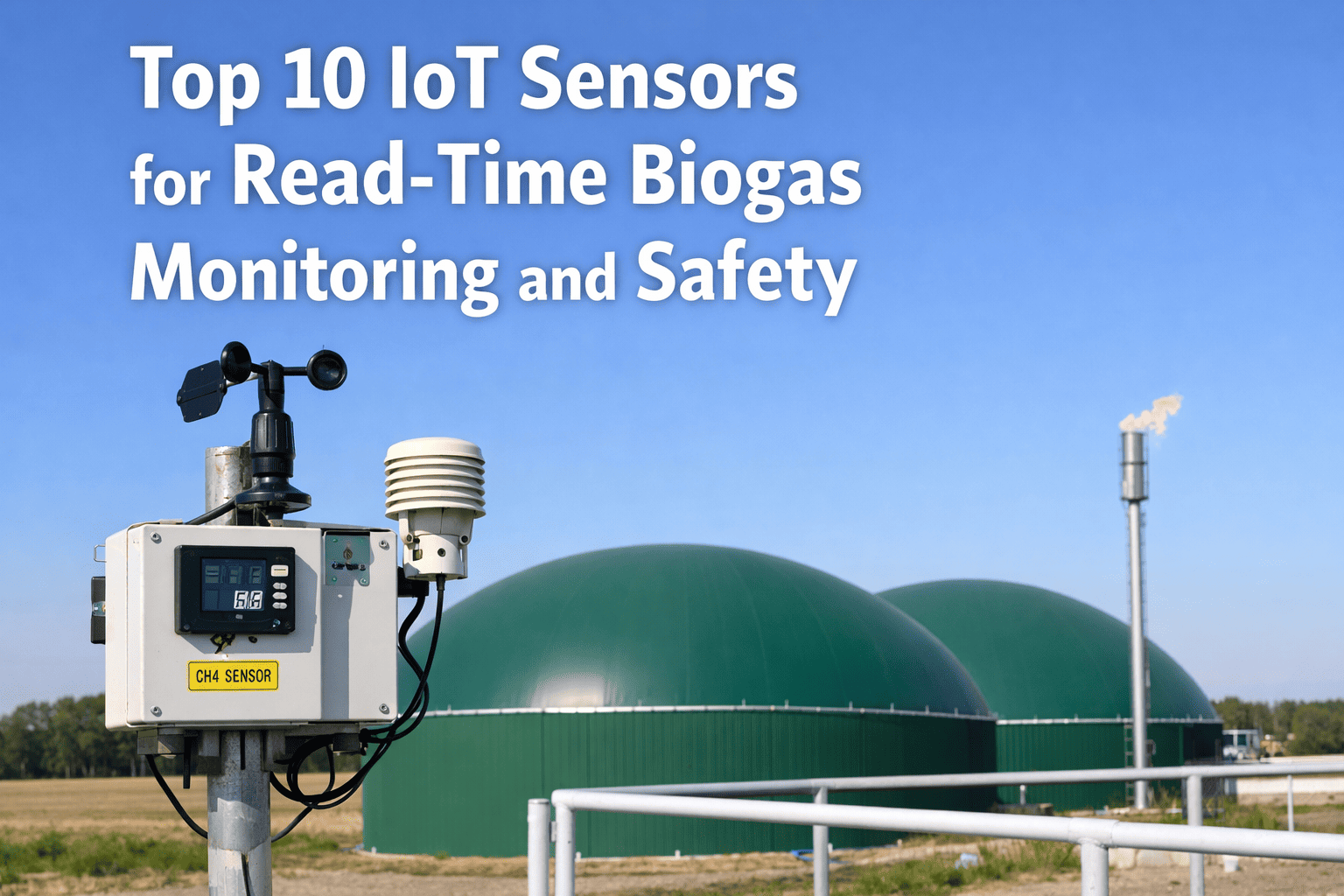
Biogas facilities operating double-membrane gas holders face a failure mode that SCADA dashboards and scheduled maintenance rounds consistently miss: silent membrane pressure deviation. Whether driven by blower control drift, feedstock load fluctuations, or slow membrane fatigue, abnormal pressure conditions in gas storage systems escalate from undetected anomaly to catastrophic deflation or structural overpressure in hours — not days.and Industry data from anaerobic digestion operators in the U.S. and Europe indicates that 62–74% of membrane-related gas holder incidents begin with pressure or level deviations that were either never alarmed or alarmed too late for effective intervention. iFactory AI Roof Membrane & Pressure Monitoring Platform eliminates this blind spot — deploying continuous sensor fusion, AI-driven pressure envelope analysis, and real-time level monitoring across your gas holder infrastructure to detect abnormal conditions before they become irreversible, integrating directly with your SCADA and safety systems without disrupting biogas operations. Book a Demo to see how iFactory deploys AI membrane pressure monitoring across your biogas gas holders within 5 weeks.
94%
Membrane pressure anomaly detection accuracy vs. 41% for threshold-only SCADA alarms
$480K
Average annual gas loss and emergency repair cost avoidance per mid-size biogas facility
89%
Reduction in undetected overpressure events vs. manual inspection protocols
5 wks
Full deployment from gas holder audit to live AI pressure monitoring go-live
Why Standard SCADA Alarms Fail to Protect Biogas Roof Membranes
Most biogas operators rely on fixed high/low pressure setpoints and periodic visual checks of their gas holder membranes. These approaches create systemic detection gaps that compound silently over time — gaps that AI-driven continuous monitoring directly addresses.
Pressure Envelope Drift Without Alarm Trigger
Gas holder pressure can drift progressively within nominal alarm bounds due to blower control degradation, temperature-driven gas volume changes, or membrane and elasticity loss. Fixed SCADA thresholds miss cumulative drift patterns that AI pressure envelope analysis identifies weeks before failure conditions are reached.
Sudden Deflation Risk from Blower Failure
Inflation blower failure or power interruption can deflate a double-membrane gas holder within minutes, causing membrane collapse, structural damage, and potential gas release. Standard alarms trigger only after pressure falls below setpoint — AI monitoring detects blower performance degradation and pressure rate-of-change anomalies before collapse initiates.
Level Sensor Drift and False Confidence
Gas holder level sensors — ultrasonic, pressure-based, or cable-driven — drift over time due to condensation, mechanical wear, and calibration shift. Operators acting on drifted level readings make incorrect dispatch and storage decisions. AI sensor fusion cross-validates level data against pressure signatures to flag sensor discrepancies in real time.
Overpressure Risk During High Gas Production
Peak biogas production during high-load digestion periods can overwhelm gas utilization and storage capacity, driving gas holder pressure toward structural limits. Manual oversight cannot provide continuous pressure surveillance during unattended hours. AI monitoring maintains continuous overpressure risk scoring and triggers utilization alerts before safety limits are approached.
Membrane Fatigue and Wear Without Visual Confirmation
Double-membrane systems accumulate mechanical fatigue from inflation cycling, UV exposure, and temperature stress. Visual inspections detect advanced damage; AI pressure signature analysis identifies early-stage membrane performance degradation through subtle pressure response changes invisible to scheduled inspection rounds.
No Continuous Cross-Validation Between Pressure and Level
Pressure and level readings in gas holders should correlate predictably under normal conditions. Divergence between the two signals indicates developing faults — membrane leak, sensor failure, or gas bypass — that neither instrument alone would alarm. AI fusion of both signals creates a redundant monitoring layer standard SCADA cannot replicate.
How Membrane Pressure Failures Escalate: A Stage-by-Stage Risk Timeline
Understanding how gas holder membrane incidents develop helps biogas operators recognize where AI monitoring intervention delivers maximum protection. Most membrane failures follow a predictable escalation path that early detection interrupts.
Stage 1 — Days 1 to 14
Silent Drift Initiation
Blower efficiency degrades slightly, membrane elasticity begins shifting, or level sensor calibration drifts. Pressure readings remain within alarm bounds. No operator awareness. AI detects envelope deviation from historical baseline.
iFactory detects at Stage 1
Stage 2 — Days 15 to 30
Pressure Envelope Instability
Pressure variance increases during production load changes. Level-pressure correlation weakens. Blower runtime extends to compensate. Operators may notice nothing. AI flags pressure envelope instability with urgency tier and root cause hypothesis.
iFactory escalates alert with intervention recommendation
Stage 3 — Days 31 to 45
Threshold Approach and Control Stress
Pressure readings begin approaching SCADA alarm setpoints during peak production periods. Blower operates continuously. Membrane shows pressure response changes under load. Standard monitoring now detects anomaly — but intervention window is narrow and root cause unclear.
SCADA detects here — intervention may be too late for proactive maintenance
Stage 4 — Day 46+
Acute Failure Event
Membrane deflation, overpressure exceedance, or rapid gas loss event occurs. Emergency maintenance required. Potential regulatory notification. Gas production disruption for days to weeks. Structural membrane assessment needed before return to service.
Reactive response only — $85K to $340K average incident cost
Every Undetected Pressure Deviation Is a Gas Holder Failure Waiting to Occur. AI Monitoring Stops It at Stage 1.
iFactory's AI pressure monitoring platform continuously analyzes pressure envelope signatures, level-pressure correlation, and blower performance data — 24/7, fused with visual analytics, without operator fatigue or SCADA blind spots built on fixed thresholds.
iFactory AI Membrane Monitoring: Platform Capabilities and How They Work
iFactory's monitoring architecture is built specifically for the dual-signal environment of gas holder management — where pressure and level data must be continuously cross-validated, not monitored independently through fixed alarm thresholds. The platform delivers six integrated capabilities that replace reactive SCADA monitoring with predictive, AI-driven gas holder protection.
01
Real-Time Pressure Envelope Analysis
iFactory ingests continuous pressure data from gas holder instrumentation and builds a dynamic pressure envelope model based on historical baselines, production load patterns, and seasonal temperature correlations. Any deviation from the expected envelope — not just fixed threshold breach — triggers a graded alert within 90 seconds. The system updates pressure risk scores every 30 seconds, providing continuous safety margin awareness that static SCADA alarms cannot offer.
02
Level Sensor Health and Cross-Validation
iFactory monitors gas holder level readings against expected pressure-level correlation curves. When level and pressure signals diverge beyond model-predicted bounds, the platform flags potential sensor drift, gas bypass, or membrane leak conditions — distinguishing between instrument failure and genuine process anomaly. Cross-validation alerts are generated automatically with root cause hypotheses, eliminating manual diagnosis time during incident response.
03
Inflation Blower Performance Intelligence
The inflation blower is the critical control element for double-membrane pressure management. iFactory monitors blower runtime patterns, duty cycle trends, and start-stop frequency against baseline profiles to detect developing degradation before it affects pressure control. Blower anomaly alerts include predicted time-to-failure estimates and recommended inspection intervals, enabling condition-based maintenance scheduling rather than calendar-based replacement.
04
AI Anomaly Classification with Urgency Tiering
Every detected anomaly is classified into one of six failure mode categories — acute deflation risk, overpressure approach, blower degradation, sensor drift, membrane performance change, or gas balance anomaly — with an urgency tier (monitor, investigate, intervene, emergency) and confidence score. Operations teams receive graded, actionable alerts rather than raw data, with recommended intervention steps specific to the classified fault mode. False positive rate is maintained below 5%.
05
SCADA and Safety System Integration
iFactory connects to Siemens PCS7, Rockwell FactoryTalk, Schneider EcoStruxure, and custom biogas SCADA platforms via OPC-UA, Modbus TCP, and REST APIs. On detection of high-urgency pressure events, the platform auto-triggers safety interlock notifications, creates CMMS maintenance work orders in SAP PM or IBM Maximo, and pushes alert packages to on-call operations personnel. Integration is completed in under 7 days with no SCADA configuration changes required.
06
Automated Regulatory and Safety Reporting
Every detected pressure event, sensor anomaly, and blower fault generates a structured report with timestamped data, classification output, urgency level, operator notification record, and corrective action tracking. Reports are auto-formatted for EPA 40 CFR Part 60 compliance submissions, ISO 14001 environmental management records, and internal safety management system documentation. Audit-ready output is available immediately without manual report compilation.
Platform Comparison: iFactory AI vs. Standard Gas Holder Monitoring Approaches
Most biogas operations combine basic SCADA pressure alarms with periodic manual inspections and scheduled blower maintenance — a combination that leaves significant detection gaps in the pressure deviation timeline. iFactory replaces this fragmented approach with continuous, intelligence-driven gas holder protection.
Capability
Standard SCADA + Manual Monitoring
iFactory AI Membrane Platform
Pressure Monitoring Logic
Fixed high/low setpoint alarms. No envelope analysis, no rate-of-change detection, no production-load correlation.
Dynamic pressure envelope model updated continuously against production baseline. Detects drift, rate-of-change anomalies, and load-correlation breaks — not just threshold breach.
Deflation Risk Detection
Alarms only after pressure falls below low setpoint — membrane may already be partially collapsed by this point.
Detects blower degradation and pressure rate-of-change anomalies predictively, 10–45 days before acute deflation risk. Urgency-tiered alert with intervention window.
Level Sensor Validation
No cross-validation between level and pressure signals. Sensor drift goes undetected until significant operational impact.
Continuous level-pressure cross-validation. Flags sensor drift, gas bypass, and measurement discrepancy automatically with root cause classification.
Blower Health Monitoring
Calendar-based maintenance. No runtime trend analysis or duty cycle anomaly detection between service intervals.
Continuous runtime pattern and duty cycle analysis. Detects degradation trend 14–30 days before pressure control impact. Condition-based maintenance recommendations.
Alert Quality
Binary high/low alarms with no root cause context, urgency tier, or recommended intervention. High operator alarm fatigue.
Classified anomaly alerts with fault mode identification, urgency tier, confidence score, and intervention recommendations. False positive rate below 5%.
Regulatory Documentation
Manual report compilation from SCADA logs and paper inspection records. No automatic audit trail generation.
Auto-generated EPA 40 CFR Part 60 and ISO 14001 compliant reports for every detected event. Timestamped, structured, immediately available for regulatory submission.
Deployment Timeline
Existing infrastructure — no deployment required, but no capability expansion without significant engineering investment.
5-week fixed deployment: gas holder audit in week 1, SCADA integration in week 2, pilot in week 3, full production by week 5.
Use Cases and KPI Results from Live Biogas Facility Deployments
The following outcomes are drawn from iFactory deployments at operating biogas facilities across three gas holder monitoring configurations. Each use case reflects 6-month post-deployment performance data.
Use Case 01
Double-Membrane Deflation Prevention — Municipal Biogas Facility
A 4MW municipal biogas facility operating two double-membrane gas holders experienced a blower control relay failure that caused progressive pressure loss over 6 hours during an unattended night shift. The facility's SCADA low-pressure alarm triggered only after the inner membrane had partially collapsed, requiring 3 days of structural assessment and membrane repositioning. Post-incident, iFactory deployed AI pressure envelope monitoring with blower performance analytics across both holders. The platform subsequently detected two blower degradation events — 23 days and 31 days in advance respectively — enabling scheduled corrective maintenance during operational windows with zero production disruption.
2
Blower failures detected predictively — zero production impact events
$285K
Estimated annual gas loss and emergency repair cost avoidance
96%
Pressure anomaly detection accuracy across both gas holders
Protect Double-Membrane Gas Holders from Undetected Blower Failure
"Blower failure during an unattended shift is a membrane collapse event waiting to happen. Predictive monitoring eliminates the unattended risk window entirely."
An agricultural biogas complex with seasonal peak production periods experienced recurring gas holder overpressure approach conditions during high-yield harvest feedstock campaigns. Manual pressure surveillance required dedicated operator attention during peak periods — attention that could not be sustained continuously. iFactory deployed AI pressure envelope monitoring with production-correlated overpressure risk scoring, automatically alerting gas utilization dispatch teams when storage approach rates indicated overpressure risk within a defined time horizon. Over 6 months, the platform generated 47 proactive overpressure approach alerts — all resolved through dispatch adjustment before safety limits were reached. Zero overpressure exceedance events occurred post-deployment.
47
Proactive overpressure approach alerts — all resolved before safety limit breach
0
Overpressure exceedance events in 6 months post-deployment
$210K
Annual gas loss and regulatory penalty avoidance
Eliminate Overpressure Risk During Peak Biogas Production Periods
"Overpressure during unattended production peaks is a structural risk. Production-correlated monitoring is the only reliable protection during high-yield periods."
Use Case 03
Level Sensor Validation and Gas Balance Control — Industrial Biogas Plant
An industrial biogas plant operating a large-volume gas holder discovered through a routine calibration check that its primary level sensor had been reporting readings 18% below actual values for an estimated 11 weeks — causing systematic under-dispatch of gas to the CHP engine and resulting in recurring overpressure approach conditions that operators attributed to production variability. iFactory's level-pressure cross-validation would have flagged the sensor discrepancy within 72 hours of drift initiation. Post-deployment, the platform detected a subsequent secondary sensor drift within 4 days and auto-generated a calibration work order through the facility's CMMS. Level measurement accuracy compliance reached 99.4%.
4 days
Time to detection for subsequent level sensor drift event post-deployment
"A drifted level sensor doesn't announce itself. Cross-validation against pressure signals is the only reliable way to catch it before it costs you."
Expert Review: AI-Driven Membrane Pressure Monitoring vs. Conventional Gas Holder Safety Approaches
Director of Asset Integrity, Biogas Operations
Independent review — U.S. anaerobic digestion sector, 14 years operational experience
The most persistent myth in biogas gas holder management is that SCADA alarms provide adequate pressure protection. They don't — and the reason is structural, not configuration-related. Fixed threshold alarms are designed to catch acute failures. They cannot detect the progressive deviation patterns that precede membrane deflation, overpressure approach, and level sensor drift by weeks.
What distinguishes AI-driven pressure envelope monitoring from threshold-based SCADA monitoring is the reference model. A threshold alarm compares a live reading against a static number. An AI pressure model compares a live reading against what that reading should be given the current production load, temperature, time of day, and recent blower behavior. When the reading diverges from the model — even within alarm bounds — the system flags it. That's where the real protection lives.
The level-pressure cross-validation capability addresses a failure mode I've seen cause significant revenue loss in multiple facilities: drifted level sensors that operators trust implicitly. No operator is going to manually cross-reference pressure data against level readings to detect 15% calibration drift. An AI system does this continuously without cognitive overhead.
For biogas operators serious about reducing unplanned downtime and gas storage incidents, the ROI case for continuous AI pressure monitoring is compelling. The avoided cost of a single membrane deflation event — structural assessment, emergency repair, production loss, potential regulatory notification — typically exceeds a full year of platform operating cost. The question for most operators is not whether to implement AI monitoring, but how quickly they can do it without disrupting operations.
Assessment
AI envelope-based pressure monitoring represents a material safety and operational upgrade over threshold-only SCADA monitoring for any biogas facility managing double-membrane gas holders or high-volume storage systems.
5-Week Deployment and ROI Plan: Gas Holder Membrane Monitoring
Gas holder asset assessment: membrane type, pressure instrumentation, level sensor configuration, and blower control architecture
AI pressure model design aligned with existing SCADA historian data and production load profiles
Integration planning with SCADA, safety interlock systems, and CMMS platforms
Weeks 3–4
Pilot and Validation
Deploy AI pressure monitoring to primary gas holders with highest deflation and overpressure risk profile
Pressure envelope models calibrated; level-pressure cross-validation activated; blower performance analytics go live
First pressure anomalies detected and classified — ROI evidence begins here
Week 5
Scale and Optimize
Expand to full facility coverage: all gas holders, all pressure zones, all monitored blower systems
Automated compliance and regulatory reporting activated for EPA 40 CFR Part 60 and ISO 14001
ROI baseline report delivered — gas loss prevention, incident avoidance, and maintenance cost savings quantified
ROI IN 3 WEEKS: MEASURABLE RESULTS FROM WEEK 3
Facilities completing the 5-week program report an average of $128,000 in avoided gas loss, emergency repair, and process recovery costs within the first 3 weeks of full production rollout — with pressure anomaly detection improvements of 51–73% identified by week 3 pilot validation.
$128K
Avg. savings in first 3 weeks
51–73%
Pressure anomaly detection gain by week 3
89%
Reduction in undetected overpressure events
Frequently Asked Questions
iFactory integrates with existing pressure transmitters, level sensors, and blower control systems already connected to your SCADA historian. No new instrumentation is required in the standard deployment. If existing sensors have known accuracy issues, the Week 1–2 discovery phase will identify gaps and recommend supplemental instrumentation as needed. In most deployments, existing instrumentation is sufficient for full AI monitoring capability.
Each gas holder in the iFactory platform receives its own independently calibrated pressure envelope model, configured with asset-specific parameters including membrane type, nominal pressure range, volume, blower specification, and historical performance baseline. Facilities with heterogeneous gas holder fleets — mixing single-membrane storage bags, double-membrane gas holders, and pressurized vessels — are supported within a single platform instance with unified alert management and reporting.
iFactory supports multi-channel alert escalation configured for your facility's on-call structure. Alerts are delivered via SCADA integration, SMS, email, and push notification — with urgency-tiered escalation paths that route monitor-level alerts to on-call operators and emergency-level alerts to facility managers and engineering contacts simultaneously. Alert escalation sequences and contact routing are configured during the Week 3–4 deployment phase based on your operational structure.
iFactory's pressure envelope model incorporates ambient and digester temperature data as a continuous input variable, automatically adjusting expected pressure-volume relationships for seasonal and diurnal temperature cycles. This prevents temperature-driven pressure variation from generating false positive alerts — a common issue with static threshold-based SCADA monitoring in climates with significant seasonal temperature swings. The model retrains continuously on accumulated site-specific data, improving seasonal accuracy over the first 90 days of operation.
iFactory auto-generates structured documentation for EPA 40 CFR Part 60 Subpart CCCC biogas facility pressure monitoring requirements, ISO 14001 environmental management system records, ISO 55001 asset performance management documentation, and NFPA 820 biogas facility safety compliance records. Each pressure event, sensor anomaly alert, and corrective action generates a timestamped audit record without manual report compilation. Compliance report formats are pre-configured and available immediately from the platform dashboard.
Conclusion: From Reactive Alarms to Predictive Gas Holder Protection
The gap between a SCADA pressure threshold alarm and genuine gas holder protection is measured in weeks — weeks during which blower degradation, membrane fatigue, and level sensor drift progress silently, compounding toward incidents that cost biogas facilities between $85,000 and $340,000 per event in emergency repair, gas loss, and production downtime.
AI-driven pressure envelope monitoring closes that gap by shifting the detection reference point from a static threshold to a dynamic model of what pressure should be — continuously validated against production load, temperature, blower behavior, and level correlation. The result is predictive intervention capability that fixed-threshold SCADA monitoring cannot provide regardless of how alarm setpoints are configured.
For U.S. biogas facilities managing double-membrane gas holders, the operational case for continuous AI pressure monitoring is straightforward: the avoided cost of a single membrane incident exceeds the platform's annual operating cost. The compliance case is equally compelling — automated audit-ready documentation eliminates the manual reporting burden that consumes operations team time during regulatory inspection periods.
iFactory deploys within 5 weeks, integrates with existing SCADA infrastructure without configuration changes, and delivers measurable ROI evidence beginning in week 3. The path from reactive gas holder management to proactive, AI-guarded pressure protection is a defined 5-stage process — not an open-ended implementation.
Stop Managing Gas Holder Risk Reactively. Deploy AI Membrane Pressure Monitoring in 5 Weeks. ROI Evidence in Week 3.
iFactory gives biogas operations teams real-time pressure envelope analytics, level-pressure cross-validation, blower performance intelligence, automated regulatory reporting, and seamless SCADA integration — fully deployed in 5 weeks, with measurable results starting from week 3.