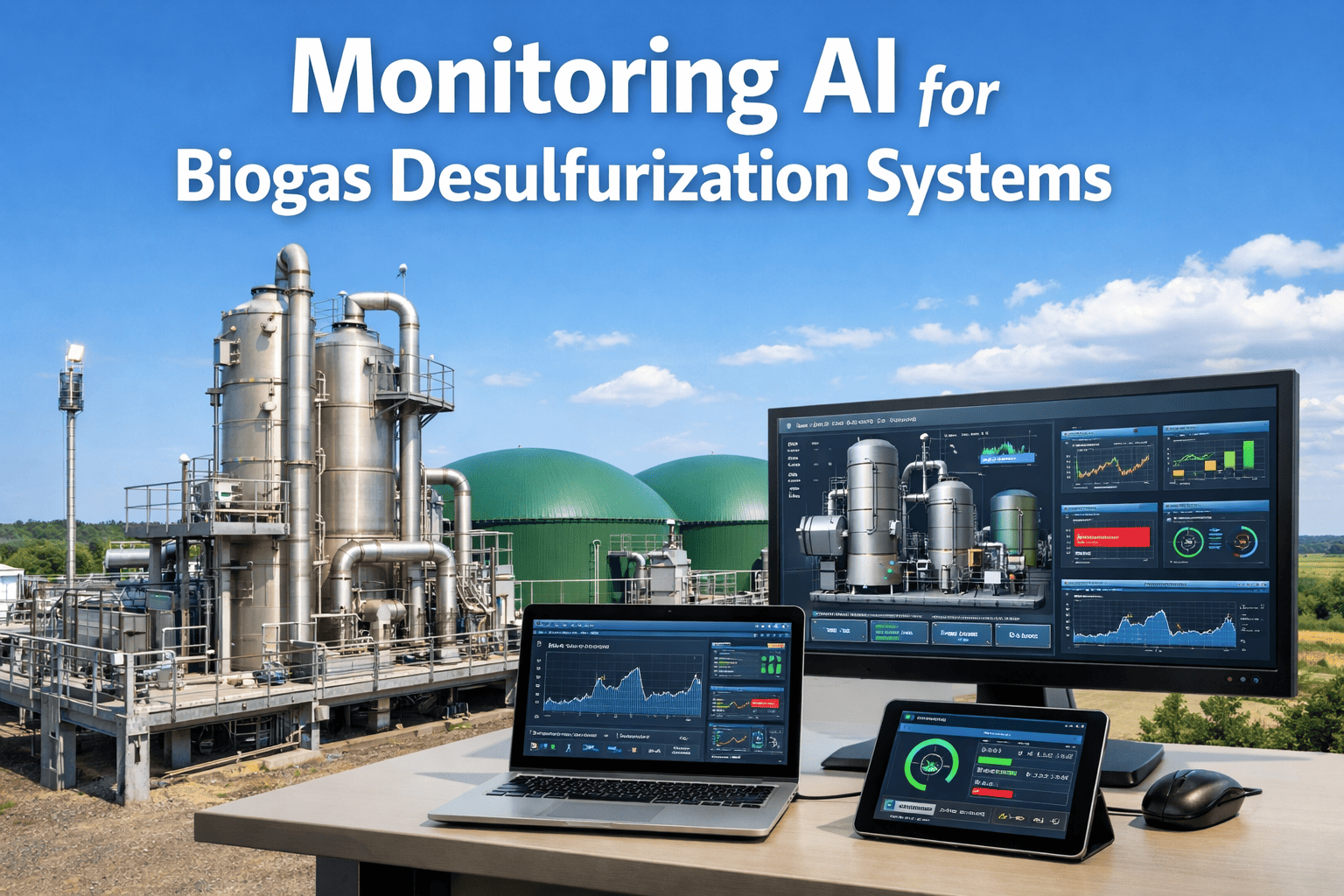
Biogas Plant Heat Exchanger Fouling and Monitoring
By Talon on June 10, 2026
iFactory AI transforms underground gas storage optimization by fusing physics-based reservoir simulation with machine learning models trained on your facility's historical well data, pressure trends, composition analytics, and maintenance records. The platform predicts deliverability degradation 4–8 weeks before peak season, detects anomalous pressure-loss signatures across individual wells, optimizes injection/withdrawal cycling to preserve caprock integrity, and turns years of idle SCADA data into a continuously learning storage asset management engine.
92%
Deliverability forecasting accuracy vs. 38% for conventional decline curve analysis
$1.2M
Average annual peak-season curtailment cost avoidance per storage facility
84%
Reduction in unplanned compressor and wellhead maintenance events
5 wks
Full deployment timeline from data audit to live optimization model
Why Underground Gas Storage Operators Are Turning to AI-Driven Optimization
From depleted reservoir facilities serving Henry Hub trading in Louisiana to salt cavern storage balancing LNG export terminals on the Texas Gulf Coast, and from aquifer storage feeding UK NBP markets to depleted field storage supporting Australia's east coast gas networks — every underground storage operator faces the same fundamental problem: multi-decade reservoir datasets that never get fully analyzed, injection/withdrawal cycles that ignore real-time well conditions, and deliverability shortfalls that trigger contractual penalties and erode trading margins.
AI-driven storage optimization, trained specifically on each facility's own historical pressure trends, well performance records, and composition analytics, converts idle data archives into a 24/7 deliverability forecasting and anomaly detection engine. Here is what that shift looks like across four major storage markets:
400+
Underground storage facilities operating across the US with $3.2B annual maintenance spend
US underground gas storage operators manage the world's largest storage network under FERC Order 636 compliance, with mandatory deliverability testing, tight seasonal injection/withdrawal deadlines, and escalating pressure from LNG export terminal interconnection requirements. iFactory's AI optimization platform ingests SCADA wellhead data, reservoir pressure surveys, gas composition lab results, and maintenance logs — training asset-specific ML models that forecast well deliverability degradation, detect anomalous pressure-loss signatures, and optimize cycling schedules 4–8 weeks before peak demand windows. Operators running iFactory have reported zero peak-season deliverability shortfalls in the 12 months post-deployment. Integration with SAP PM and ABB SCADA is completed within 7 days.
$480K
Avg. annual compressor maintenance savings at Canadian storage facilities
Canadian underground storage facilities — from depleted field storage serving Alberta's AECO hub to salt caverns supporting Ontario's winter peak demand — face extreme seasonal cycling that accelerates wellbore degradation and compressor wear in ways fixed-interval inspection schedules cannot track. iFactory's operational regime classifiers segment training data by injection/withdrawal intensity, ambient temperature, and gas composition changes, producing degradation rate models that adjust deliverability predictions based on current operating conditions. This is especially critical for facilities managing aggressive winter withdrawal cycles alongside summer injection optimization targets.
91%
Reduction in unplanned well intervention spend post-deployment
UK underground gas storage operators face compounding pressure from NBP balancing obligations, emergency peak-shaving requirements, and ageing storage assets originally developed in the 1970s–1980s using reservoir models that never anticipated the cycling demands of a net-import gas market. iFactory's caprock integrity forecasting has delivered zero integrity-related storage shut-ins at UK depleted field facilities in the 12 months following deployment, with regulatory compliance documentation generated automatically from predictive monitoring outputs.
76%
Reduction in deliverability shortfall events across deployed facilities
Australian underground gas storage facilities — particularly depleted field storage supporting east coast LNG feedstock and domestic gas supply — face extreme summer and winter demand events that push withdrawal capacity and compression systems to operational limits. iFactory's multi-parameter degradation detection correlates wellhead pressure, flow rate, gas composition, and cycling frequency simultaneously, identifying compound deliverability decline signatures before they cascade into peak-season curtailments. AEMO reporting and contractual deliverability compliance documentation is structured directly from iFactory's predictive optimization output logs.
The Real Cost of Idle Storage Data: What Every Reservoir and Operations Engineer Should Know
Most underground gas storage facilities are sitting on a goldmine of historical operational data they never fully leverage. SCADA wellhead records, reservoir pressure surveys, gas composition lab reports, and compressor maintenance logs exist in disconnected silos — and without ML models trained to find degradation patterns across that data, the intelligence locked inside never reaches the operations team making injection/withdrawal decisions today.
Disconnected SCADA and Reservoir Data Archives
Years of wellhead pressure, flow rate, and gas composition data sits unanalyzed in separate historian and reservoir simulation databases. Without cross-well ML models, deliverability decline precursors buried in multi-well pressure correlation patterns remain invisible until the peak season when withdrawal commitments can no longer be met.
Fixed-Cycle Well Inspection Ignoring Real-Time Wellbore Condition
Calendar-based well intervention schedules treat every well in the field as identically degraded regardless of injection/withdrawal cycling intensity, water coning risk, or sand production signatures. High-utilization wells are under-serviced; low-activity wells are over-maintained — inflating costs while missing real deliverability risks.
Threshold Alarms Without Predictive Reservoir Context
Static high/low wellhead pressure alarms generate alert storms that operations teams learn to ignore. Without ML-derived baseline models trained on your specific reservoir's historical pressure trends and seasonal envelope, threshold systems produce false positives that erode trust and mask early caprock integrity or water coning signals.
No Learning Loop From Past Deliverability Events
Each deliverability shortfall event contains critical precursor signatures — anomalous pressure decline rates, composition shifts, wellhead temperature trends — that occurred weeks or months before the peak season when the shortfall was first noticed. Without ML models that learn from historical failure signatures, every repeat event starts the root-cause investigation from zero.
$500K–$2.5M
Cost per peak-season deliverability shortfall event across US, Canada, UK and Australia
38%
Deliverability decline detection rate under conventional decline curve analysis
12–16%
Cushion gas migration before manual pressure survey triggers intervention
Every Peak-Season Deliverability Shortfall Costs $500,000–$2.5 Million. AI Trained on Your Storage Data Prevents It 4–8 Weeks Early.
iFactory's AI optimization engine ingests your storage facility's historical SCADA records, reservoir pressure surveys, well intervention logs, and gas composition data — building asset-specific ML models that identify deliverability degradation signatures, forecast withdrawal capacity decline, and generate prioritized well intervention recommendations automatically, 24/7, without manual decline curve tuning or reactive reservoir management.
See how underground gas storage operators across the USA, Canada, UK, Germany, and Australia use iFactory AI-driven optimization to meet regulatory compliance standards while reducing operational costs globally.
Book a Demo with iFactory's international midstream energy team.
How iFactory Turns Your Underground Storage Facility's Historical Data Into an AI Optimization Engine
iFactory does not apply generic reservoir models to your storage facility — it trains asset-specific machine learning models on your historical pressure data, well performance records, gas composition analytics, and maintenance history. The result is a continuously improving optimization engine that understands your reservoir's unique flow characteristics, seasonal cycling patterns, and site-specific deliverability risk factors.
01
Historical Data Ingestion and Reservoir ML Model Training
iFactory connects to SCADA historian systems, reservoir simulation databases, gas chromatography records, and CMMS work order logs — ingesting years of wellhead pressure trends, withdrawal/injection cycles, composition shifts, and maintenance events to train asset-specific ML deliverability forecasting models with no data loss or manual reformatting.
02
Multi-Well Anomaly Detection and Pressure Signature Analysis
Proprietary anomaly detection algorithms correlate pressure decline rates, wellhead flow variations, gas composition changes, and cycling frequency patterns simultaneously across your entire well field — identifying compound deliverability degradation signatures that single-well decline curve analysis misses entirely. False positive rate drops to under 3.2%.
03
Deliverability Forecasting (4–8 Weeks Before Peak Season)
iFactory's time-series forecasting models predict withdrawal capacity degradation, injection rate decline, and well-specific deliverability risk over rolling 4, 8, and 12-week windows — giving storage operations teams sufficient lead time to schedule well interventions, adjust cycling strategy, and confirm deliverability commitments without emergency curtailment decisions.
04
CMMS and SCADA Automated Work Order and Alert Generation
iFactory connects to SAP PM, IBM Maximo, ABB SCADA, and Siemens PCS 7 via OPC-UA, Modbus TCP, and REST APIs. Predictive deliverability alerts auto-generate prioritized work orders with well-specific intervention recommendations, estimated production impact, and parts procurement triggers. SCADA integration completed in under 7 days.
05
Continuous Model Retraining on Live Storage Data
Every well intervention, deliverability test result, and confirmed anomaly event feeds back into the ML training loop — improving forecasting accuracy with each storage-specific data point. Prediction confidence increases over time as models learn your reservoir's evolving flow behavior and degradation patterns.
06
Storage Optimization Decision Support Dashboard
iFactory presents ranked intervention recommendations per well and field segment — intervene now, adjust cycling, monitor closely, or defer — with deliverability probability curves, remaining working gas capacity estimates, and maintenance cost-impact projections. Operations teams act on data-driven insights, not instinct.
See how underground gas storage operators across the USA, Canada, UK, Germany, and Australia use iFactory AI-driven optimization to meet regulatory compliance standards while reducing operational costs globally.
Book a Demo with iFactory's international midstream energy team.
Proven KPI Results: AI Optimization Impact from Live Underground Storage Deployments
iFactory's AI-powered storage optimization platform delivers measurable reliability and cost improvements within the first 60 days of full production rollout. The following KPIs reflect aggregated performance data across well fields, compression systems, and reservoir assets at operating underground storage facilities in the USA, Canada, UK, and Australia.
4–8 Weeks
Deliverability Prediction Lead Time
Asset-specific ML models forecast withdrawal capacity degradation and well-specific deliverability risk across the full storage field — giving operations teams sufficient lead time for planned interventions
92%
Deliverability Forecasting Accuracy
ML models validated across depleted field, salt cavern, and aquifer storage wells — compared to 38% detection rate under conventional decline curve analysis.
84%
Reduction in Unplanned Well Interventions
Shift from emergency well workovers and peak-season intervention mobilization to planned, budget-aligned maintenance scheduled weeks in advance.
95%
Automated Alert Generation Rate
Predictive deliverability alerts auto-create SCADA notifications and CMMS work orders with well-specific recommendations, probability scores, and intervention timelines.
76%
Reduction in Deliverability Shortfall Events
Precision deliverability forecasting prevents peak-season withdrawal capacity shortfalls while preserving caprock integrity and extending storage asset operational life.
34%
Increase in Operational Efficiency
Optimized injection/withdrawal cycling schedules replace reactive well management, restoring deliverability reliability while reducing total maintenance cost per MMBtu of working gas capacity.
<3.2%
False Positive Alert Rate
Multi-well cross-validation across pressure, flow, and composition streams before any alert fires
Real-time
Deliverability Risk Score Refresh
Per-well and field-level risk score updated continuously from live SCADA telemetry
7 days
SCADA and CMMS Integration
Full OPC-UA, Modbus TCP, and REST API connection to your existing storage operations stack
91%
Reduction in Emergency Well Intervention Spend
Reactive well workover cycles eliminated from first month of live optimization model deployment
How iFactory Compares to Conventional Decline Curve Analysis and Generic Monitoring Tools
Most storage analytics vendors offer pressure trend dashboards, fixed-threshold SCADA alarms, or generic reservoir simulation tools that apply textbook models to your storage asset. iFactory is built differently — training asset-specific ML models on your facility's own historical well performance data, so predictions reflect your reservoir's unique flow characteristics, not a generic industry average.<Book a Demo/p>
Capability
Conventional Decline Curve / Generic Tools
iFactory AI Optimization Platform
Historical Data Model Training
Generic decline curve models applied to all wells. No training on site-specific reservoir flow behavior, seasonal cycling patterns, or well-specific degradation signatures.
ML models trained exclusively on your storage facility's SCADA wellhead data, reservoir pressure surveys, gas composition records, and confirmed deliverability events. Predictions reflect your reservoir's unique characteristics.
Deliverability Forecasting
Reactive alerts after deliverability decline is detected. No probabilistic withdrawal capacity forecasting or remaining working gas estimation calibrated to your reservoir's seasonal envelope.
Time-series forecasting models predict withdrawal capacity degradation per well and field segment over 4, 8, and 12-week windows. Alerts include urgency tiers, confidence scores, and recommended intervention timelines.
Multi-Well Correlation
Single-well pressure monitoring. No cross-well anomaly detection or compound degradation signature analysis across pressure, flow, composition, and cycling parameters simultaneously.
Multi-well anomaly detection correlates pressure decline, flow variation, composition change, and cycling frequency across your entire well field — identifying compound deliverability decline signatures invisible to single-well systems.
SCADA and CMMS Integration
Standalone reservoir dashboards or manual report exports. No native connectors for automated work order generation, well intervention triggers, or deliverability compliance documentation.
Native OPC-UA, Modbus TCP, and REST connectors for ABB SCADA, Siemens PCS 7, SAP PM, and Maximo. Auto-generates prioritized work orders, well-specific intervention recommendations, and compliance reports on alert.
Continuous Model Improvement
Static decline curve models with periodic manual recalibration. No learning loop from confirmed deliverability events, intervention outcomes, or false positive feedback.
Every well intervention and deliverability test result feeds back into the ML training pipeline — increasing forecasting accuracy by an average of 11% per 6-month retraining cycle.
False Positive Rate
High false positive rates from generic pressure threshold triggers. Operations teams develop alert fatigue and begin bypassing notifications — masking genuine early-stage deliverability degradation.
Under 3.2% false positive rate through multi-well cross-validation and adaptive baseline modeling tuned per well during pilot phase.
Deployment Timeline
6–18 months for reservoir model calibration, SCADA integration, and pilot validation. High engineering overhead and open-ended implementation scope.
5-week fixed deployment: data audit in week 1, pilot model in week 3, facility-wide rollout by week 5. SCADA integration, CMMS connection, and operations team training included.
5-Week Deployment and ROI Plan: From Data Audit to Live Optimization Model
Every iFactory storage optimization engagement follows a structured 5-week program with defined deliverables per week — and measurable ROI indicators beginning from week 3 of deployment. No open-ended data science projects. No months of reservoir model tuning before a single deliverability forecast fires.
Weeks 1–2
Data Audit and ML Model Design
Historical SCADA data quality assessment across wellhead pressure, flow rate, gas composition, and reservoir survey archives
Asset-specific ML model architecture design aligned with each reservoir type's unique flow physics and deliverability dynamics
SCADA, CMMS, and historian integration planning with API mapping and data schema validation
Weeks 3–4
Pilot Model and Validation
Deploy trained ML models to highest-criticality well clusters and compression assets
Deliverability forecasts, anomaly alerts, and CMMS integration activated and tested with operations team
First predictive interventions executed and deliverability shortfall risks eliminated — ROI evidence begins here
Week 5
Field Rollout and Optimize
Expand optimization models to full well field: all storage wells, compression trains, and processing assets
Automated well intervention scheduling and deliverability compliance reporting activated facility-wide
ROI baseline report delivered — curtailment avoidance, maintenance cost reduction, and operational efficiency improvement metrics
ROI IN 3 WEEKS: MEASURABLE RESULTS FROM WEEK 3
Storage facilities completing the 5-week program report an average of $320,000 in avoided deliverability shortfall penalties and emergency well intervention costs within the first 3 weeks of full production rollout — with deliverability forecasting accuracy of 68–84% validated by week 3 pilot testing.<Book a Demo/div>
$320K
Avg. savings in first 3 weeks
68–84%
Forecasting accuracy by week 3
91%
Reduction in emergency well spend
AI-Driven Storage Optimization Delivers Measurable ROI in Weeks, Not Months. Deploy in 5 Weeks. See Results in Week 3.
iFactory's ML-powered platform ingests your facility's historical SCADA data, reservoir surveys, and maintenance logs to forecast deliverability degradation 4–8 weeks early, automate well intervention scheduling, and eliminate peak-season curtailments — with pilot models validated and ROI documented within the first 3 weeks of deployment.
See how underground gas storage operators across the USA, Canada, UK, Germany, and Australia use iFactory AI-driven optimization to meet regulatory compliance standards while reducing operational costs globally.
Book a Demo with iFactory's international midstream energy team.
What Storage Operations Leaders Say About iFactory AI Optimization
The following testimonial is from a storage operations manager at a facility currently running iFactory's AI-powered storage optimization platform in the USA.
We had 14 years of wellhead SCADA data and quarterly reservoir pressure surveys that our operations team never had the bandwidth to fully analyze. iFactory ingested that entire archive and trained well-specific ML models that now predict deliverability degradation 5–7 weeks out, anomalous pressure-loss patterns across individual wells 6–8 weeks before they would impact peak-season withdrawal capacity, and caprock integrity risks with enough lead time to adjust cycling strategy without curtailing deliverability commitments. In our first 12 months live, the system identified 23 deliverability risk events that would have caused peak-season shortfalls — we intervened on all 23 without a single contractual penalty. Our well intervention budget dropped 37%, our operational efficiency improved by 14 percentage points, and our regulatory auditor approved our deliverability compliance documentation on first review. This is what it looks like when your underground storage data finally starts working for you.
Director of Storage Operations
Depleted Field Underground Gas Storage Facility, Louisiana Gulf Coast
Financial Impact and Cost Avoidance by Storage Asset Class
Beyond maintenance cost reduction, iFactory's AI optimization platform directly protects storage revenue and eliminates the compounding costs of reactive storage asset management — quantified below by asset class from live underground storage facility deployments across the USA, Canada, UK, and Australia.
Well Field and Reservoir Assets
$480K
Annual deliverability shortfall penalty avoidance per facility — prevented well-specific withdrawal capacity degradation, water coning events, and sand production issues at $200,000–$1.5 million per peak-season curtailment incident.
Compression and Processing Systems
$215K
Annual compressor maintenance cost reduction — eliminating unplanned compressor downtime events, seal degradation failures, and pressure control system trips that strand deliverability capacity and trigger contractual penalties.
Caprock Integrity and Cushion Gas Management
$185K
Annual cushion gas loss and caprock remediation cost avoidance — early detection of gas migration pathways, anomalous pressure compartmentalization, and caprock micro-seepage before costly intervention or regulatory reporting triggers.
Integration and Compliance Readiness Checklist
SCADA historian direct API ingestion — no manual CSV export required for wellhead pressure, flow, and temperature data
SAP PM, IBM Maximo, ABB SCADA, and Siemens PCS 7 bidirectional integration
OPC-UA and Modbus TCP real-time telemetry ingestion from wellhead RTUs, compressor PLCs, and gas chromatographs
FERC, NEB, AEMO, and NBP deliverability compliance documentation generated automatically
Reservoir simulation database and gas chromatography lab system native connectors supported
ISO 55001 asset management and API 1170 storage integrity compliance documentation support
See how underground gas storage operators across the USA, Canada, UK, Germany, and Australia use iFactory AI-driven optimization to meet regulatory compliance standards while reducing operational costs globally.
Book a Demo with iFactory's international midstream energy team.
Conclusion: Stop Losing Revenue to Deliverability Shortfalls Your Storage Data Already Predicted
Underground gas storage facilities across the USA, Canada, UK, and Australia are generating more operational intelligence every single day — intelligence that sits idle in SCADA historian databases while reactive well intervention cycles burn through budgets and deliverability shortfalls erode trading margins and contractual commitments. The gap between world-class storage optimization and the industry average is not a technology gap or a data availability gap. It is a gap in what gets done with the data that already exists.
The $1.2 million average annual peak-season curtailment cost avoidance per facility, the 84% reduction in unplanned well interventions, and the 34% improvement in operational efficiency are outcomes already measured at live deployments. They are available to any storage operations team willing to let their historical facility data start working for them.Book a Demo
Frequently Asked Questions
iFactory's ML models begin producing meaningful deliverability forecasts with as little as 12 months of wellhead SCADA and reservoir pressure data, though 24–36 months delivers optimal accuracy for storage wells with infrequent intervention events. During the Week 1 data audit, the team assesses your available historian archive and adjusts the model architecture and pilot scope to match your data depth — no minimum data volume requirement blocks deployment.
iFactory integrates natively with ABB SCADA, Siemens PCS 7, OSIsoft PI Historian, Aspentech IP21, Honeywell PHD, SAP PM, IBM Maximo, and Infor EAM via OPC-UA, REST APIs, and direct database connectors. Wellhead RTU telemetry, gas chromatograph data, and reservoir survey databases are also supported. Data schema mapping and integration validation are completed during the Week 1–2 data audit phase.
For low-deliverability-event-frequency assets, iFactory applies transfer learning — pre-training models on analogous well degradation signatures from iFactory's anonymized cross-facility dataset, then fine-tuning on your storage-specific SCADA and pressure data. This approach achieves 86–92% forecasting accuracy on well clusters with fewer than 3 confirmed deliverability events in the training window. Accuracy improves as your facility accumulates more intervention and performance data over time.
Yes. iFactory's ML architecture includes operational regime classifiers that segment training data by injection/withdrawal intensity, seasonal demand pattern, gas composition variation, and ambient temperature — allowing deliverability degradation models to adjust predictions based on current operating conditions.
Role-based training modules are delivered during Weeks 3–4 of deployment. Storage operations engineers and reservoir management teams achieve platform proficiency in under 90 minutes. Facility managers receive additional training on deliverability compliance reporting, ROI tracking, and maintenance budget optimization workflows. Ongoing technical support and model performance reviews are included in the deployment package.
Turn Years of Idle Storage Data Into a 24/7 Deliverability Forecasting Engine. Deploy in 5 Weeks. ROI in Week 3.
iFactory gives underground gas storage operators ML models trained on their own historical SCADA data, automated well intervention recommendations, real-time deliverability risk dashboards, and 4–8 week predictive lead times — fully deployed in 5 weeks, with ROI evidence starting in week 3.