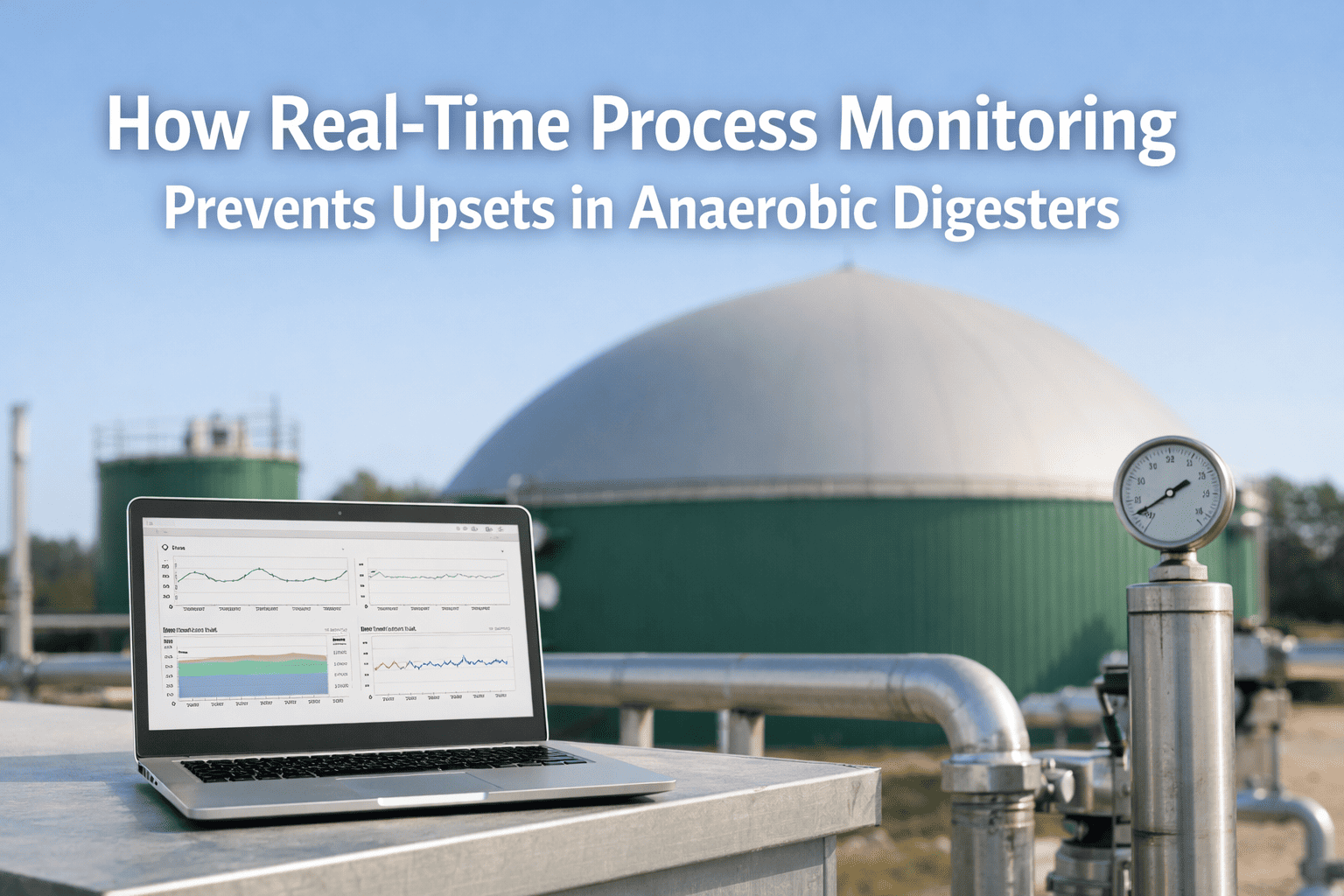
How Real-Time Process Monitoring Prevents Upsets in Anaerobic Digesters
By oxmaint on March 9, 2026
An anaerobic digester running smoothly is easy to overlook—until the day it isn't. One missed pH swing, one undetected spike in volatile fatty acids, and what was a steady methane-producing asset becomes a costly liability. Process upsets in anaerobic digesters don't happen without warning. The warning signs are always there—buried in the data. The difference between a minor correction and a full shutdown is whether you see those signals in real time or discover them days later in a lab report. This guide breaks down the parameters, the technology, the maintenance strategy behind continuous digester monitoring that actually prevents failures. Book a demo with our team to see how Oxmaint turns sensor data into automated maintenance actions before your digester goes offline.
What Causes Process Upsets in Anaerobic Digesters
Anaerobic digestion relies on a fragile chain of microbial activity. Four groups of microorganisms—hydrolytic bacteria, acidogens, acetogens, and methanogens—must work in sequence. Methanogens, the final link in the chain, are the slowest growers and the most sensitive to environmental shifts. When anything disrupts this chain, organic acids accumulate faster than methanogens can process them, and the digester "sours."
Biological Triggers
Organic Overloading — Feeding too much substrate overwhelms methanogenic capacity, causing VFA accumulation and pH crash
Nutrient Deficiency — Lack of trace elements like cobalt, nickel, and iron starves methanogens, even with ample organic feed
Ammonia Inhibition — High-nitrogen feedstocks release ammonia that directly suppresses methanogenic archaea at elevated concentrations
Operational Triggers
Temperature Fluctuations — Even 2-3 degree C shifts destabilize mesophilic systems; thermophilic digesters are even more sensitive
Hydraulic Shock — Sudden flow increases reduce retention time and wash out slow-growing methanogens
Toxicant Ingress — Industrial cleaners, antibiotics, or heavy metals in feedstock poison microbial communities without warning
The Core Problem
By the time a weekly lab sample reveals an upset, the digester may have been souring for days. Recovery from a severe acidification event typically takes 2 to 6 weeks—weeks of lost biogas revenue, emergency chemical dosing, and potential regulatory exposure.Get Support for Oxmaint free and start building automated early-warning alerts into your digester operations today.
VFA to Alkalinity Ratio: The Early Warning Indicator for Digester Stability
If you only track one metric for digester health, it should be the volatile acid to alkalinity ratio (VA/Alk). This single number captures the balance between acid production and the system's capacity to buffer it. It responds to developing problems days before pH begins to drop—making it the most actionable early warning indicator available.
Understanding the VA/Alk Ratio Scale
Stable
Below 0.1
Acceptable
0.1 - 0.34
Caution
0.34 - 0.5
Upset Active
Above 0.5
A VA/Alk ratio below 0.34 indicates a healthy digester with sufficient buffering capacity
Once the ratio crosses 0.34, pH instability begins and operator intervention is needed
Above 0.5, the digester is actively souring—pH drops will follow and recovery becomes difficult
The critical advantage of tracking VA/Alk over pH alone is timing. pH is buffered by the system's alkalinity reserves, meaning it stays relatively stable even as acids build up. By the time pH finally begins dropping, the buffering capacity is nearly exhausted and the upset is well advanced. Continuous VA/Alk monitoring gives operators a window of days—not hours—to adjust feed rates, add buffer chemicals, or reduce loading.
Want to monitor VFA, pH, and alkalinity from a single live dashboard? Create your free Oxmaint account and start configuring real-time digester alerts in minutes—no credit card, no setup fees.
Optimal pH, Temperature, and Gas Composition Ranges for Anaerobic Digesters
Each monitoring parameter has an optimal operating window. Drifting outside these windows doesn't immediately crash the process—but it starts the clock on a developing upset. Real-time monitoring catches these drifts when corrective action is still simple and inexpensive.
pH Level
6.5
7.4
Methanogens thrive between pH 6.5 and 7.4, with peak activity at 7.0-7.2. Below 6.5, methanogenic activity drops sharply and acid-producing bacteria dominate.
Monitor every 1-5 minutes. A sustained 0.2 drop signals developing acidification.
Temperature
35 C
37 C
Mesophilic digesters operate at 35-37 degrees C. Thermophilic systems run hotter at 50-57 degrees C but require tighter control with less than 1 degree variance.
Monitor every 30 seconds. A 2-3 degree C drop slows methanogenesis significantly.
Biogas CH4 Content
55%
70%
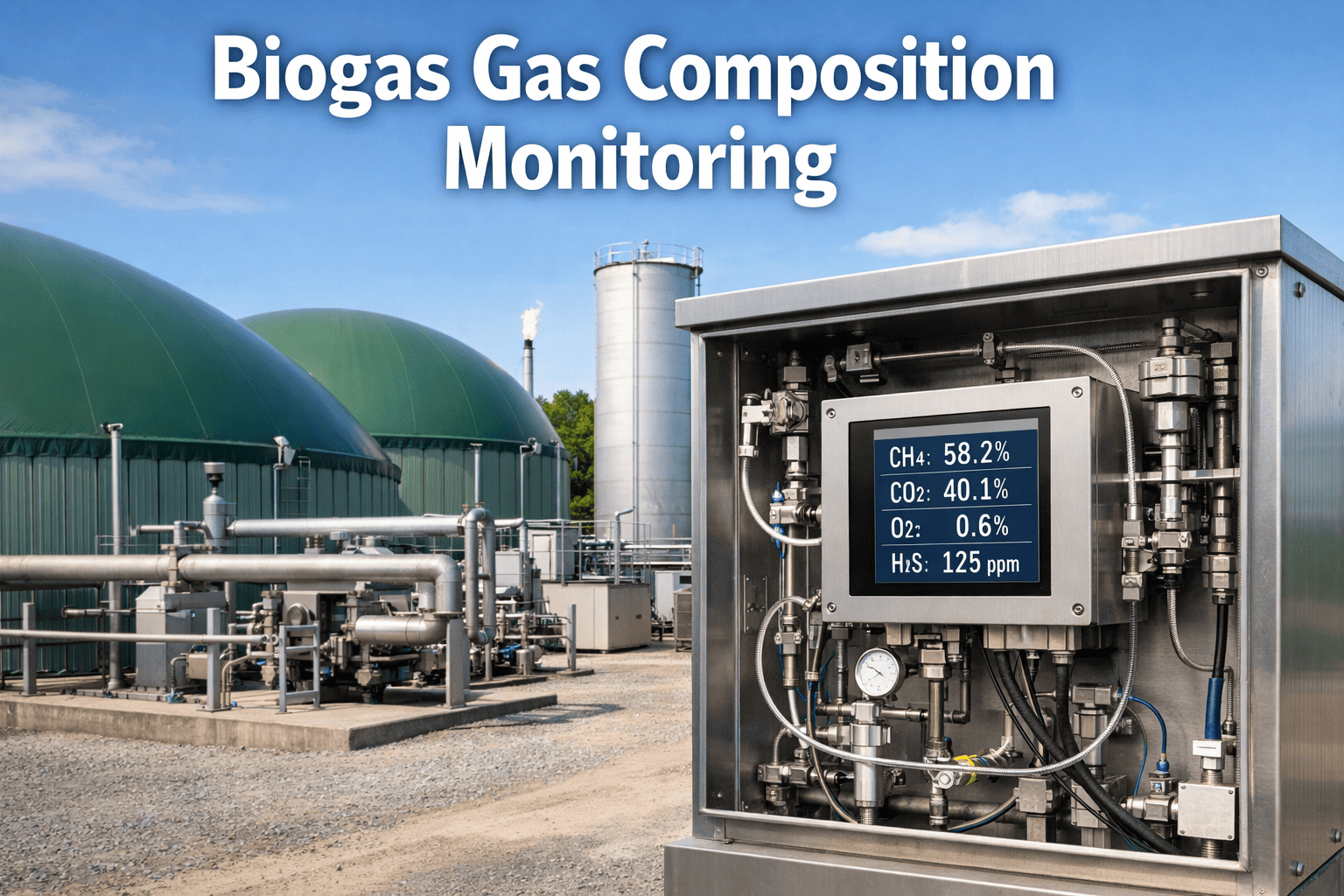
Healthy digesters produce biogas with 55-70% methane. A rising CO2 fraction or increasing H2S signals metabolic stress in methanogenic populations.
Monitor continuously. A 5% methane drop over 24 hours requires immediate investigation.
VFA Concentration
200
1800 mg/L
Total VFA should stay below 1500-1800 mg/L for most digesters. Propionate accumulation is particularly persistent and difficult to reverse once established.
Track ratio of individual VFAs. Rising propionate is the strongest predictor of imminent failure.
How IoT Sensors Detect Digester Failures Before They Happen
The shift from periodic lab testing to IoT-enabled continuous monitoring is what turns digester management from reactive firefighting into predictive maintenance. Modern sensor networks capture thousands of data points per day, building a dynamic picture of digester health that reveals trends invisible to weekly sampling.
From Raw Data to Predictive Action
1
In-Situ Sensors
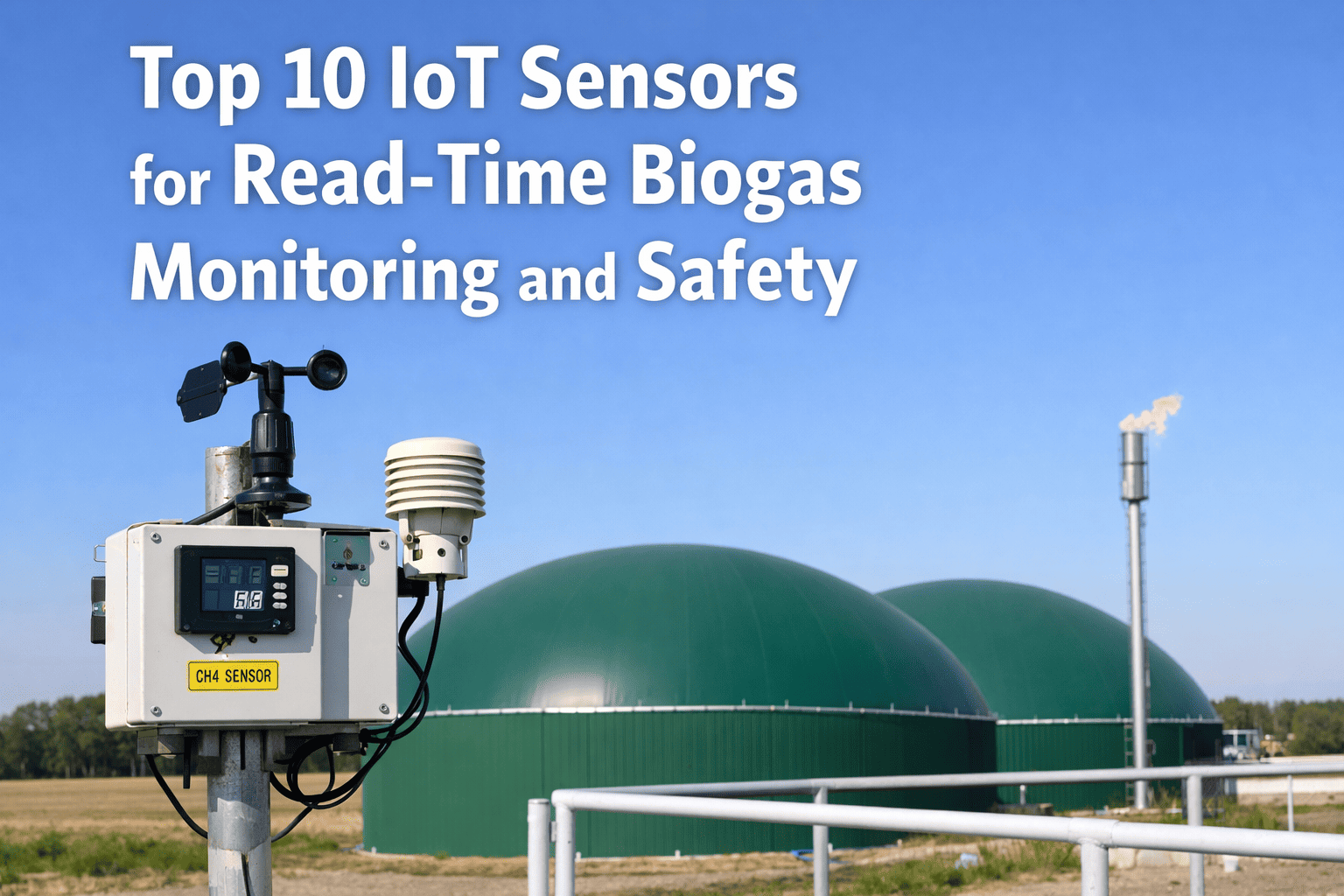
pH, temperature, ORP, and pressure probes installed directly in the digester vessel capture continuous readings at sub-minute intervals
2
Gas Analyzers
Inline infrared analyzers and electrochemical cells track CH4, CO2, H2S, and H2 composition in real time as biogas exits the digester
3
Edge Processing
Local controllers aggregate data, run threshold checks, and transmit structured readings to the CMMS platform via Modbus, OPC-UA, or MQTT protocols
4
CMMS Integration
Oxmaint receives sensor feeds, compares against configured thresholds, and automatically creates work orders, alerts technicians, and logs events for compliance. Create your free Oxmaint account to connect your digester sensors and start receiving automated alerts.
15 min
Typical anomaly detection time with continuous monitoring—compared to 7-14 days using manual lab sampling
87%
Of digester failures show detectable early warning signs in sensor data well before performance visibly degrades
Connect Your Digester Sensors to Smart Maintenance
Oxmaint bridges the gap between sensor data and maintenance action. Every parameter threshold you set triggers the right workflow—work orders, technician alerts, chemical dosing reminders—automatically, 24/7, without a single manual step.
How Much Does Anaerobic Digester Downtime Really Cost
The true cost of a digester upset extends far beyond the immediate drop in biogas output. Recovery, chemical treatment, potential regulatory fines, and the cascading impact on downstream processes compound into figures that dwarf the cost of proactive monitoring.
Anatomy of a Digester Upset: Cost Breakdown
Lost Biogas Revenue
2-6 weeks of reduced or zero methane output during souring and recovery. For a mid-size facility, this alone can exceed $30,000-$80,000.
Emergency Chemical Dosing
Sodium bicarbonate, lime, or trace element additions to restore alkalinity and buffer the system. Costs scale with digester volume and severity.
Staff Overtime & Expertise
Around-the-clock monitoring during recovery, plus potential external consultant fees for severe upset diagnosis and remediation.
Regulatory & Compliance Risk
Effluent quality breaches during upset events can trigger permit violations, fines, and increased regulatory scrutiny on future operations.
Downstream Process Disruption
Co-generation systems, digestate processing, and waste acceptance schedules are all impacted when the digester goes offline unexpectedly.
Find out exactly how much your facility loses per digester upset. Schedule a 30-minute demo and our team will walk through a cost-savings model based on your digester type, feedstock, and current monitoring setup.
Building a Preventive Monitoring Strategy: Step by Step
Implementing real-time digester monitoring doesn't require replacing everything at once. The most successful deployments follow a phased approach that delivers quick wins while building toward comprehensive predictive capability.
Phase 1
Audit Current State & Define Baselines
Document existing sensors, sampling schedules, and historical upset events. Establish baseline ranges for pH, temperature, VFA, and gas composition specific to your digester type and feedstock. This baseline becomes the reference for all future alerts.
Week 1-2
Phase 2
Deploy Priority Sensors & Connect to CMMS
Install continuous pH, temperature, and gas flow monitoring first—these deliver the fastest ROI. Connect sensor outputs to Oxmaint via standard industrial protocols. Configure threshold-based alerts that automatically generate work orders when parameters drift outside safe ranges.
Week 3-5
Phase 3
Add Advanced Monitoring & Train Operators
Layer in VFA analyzers, ORP probes, and gas chromatography for deeper insight. Train operators on dashboard interpretation and response protocols. Establish clear escalation paths: which alerts need immediate action versus which allow scheduled response.
Week 6-8
Phase 4
Refine, Predict & Expand
Use accumulated data to refine alert thresholds and reduce false positives. Implement trend-based predictive alerts that catch slow-developing issues. Expand monitoring to additional digesters and integrate with procurement workflows for automated chemical ordering. Get Support for a free Oxmaint account and start configuring your first digester monitoring workflow in under 10 minutes.
Week 9+
Stop Reacting to Digester Failures. Start Preventing Them.
Your weekly lab sample cannot catch a VFA spike at midnight or a temperature drop during a holiday weekend. Oxmaint connects your sensors to intelligent maintenance workflows—so every data anomaly triggers the right corrective action, automatically, before your digester loses a single hour of biogas production.
What is the best early warning indicator for anaerobic digester upsets?
The volatile acid to alkalinity ratio (VA/Alk) is widely considered the most reliable early warning indicator. It should remain below 0.34 for stable operation. Unlike pH, which is buffered and responds late, the VA/Alk ratio reflects acid accumulation while there is still time to intervene. Schedule a free 30-minute demo to see how Oxmaint tracks VA/Alk ratios in real time and triggers automated alerts the moment thresholds are breached.
How long does it take to recover from a severe digester process upset?
Recovery from a full acidification event typically requires 2 to 6 weeks depending on severity, digester size, and the corrective measures applied. During this period, methane output drops significantly or stops entirely. This is why prevention through continuous monitoring is far more cost-effective than recovery—one prevented upset can pay for an entire monitoring system. Get Support for Oxmaint today and set up real-time alerts that protect your biogas output around the clock.
Can real-time monitoring retrofit onto existing older digesters?
Yes. Modern sensor packages can be installed on existing digesters without major structural modifications. Starting with basic pH, temperature, and gas flow sensors delivers immediate value. More advanced parameters like online VFA and ORP can be phased in over time as the monitoring baseline matures. Oxmaint supports standard industrial protocols including Modbus, OPC-UA, and MQTT.
What is the ideal pH range for anaerobic digesters?
The optimal pH range for most anaerobic digesters is between 6.8 and 7.4, with the largest diversity of active methanogenic bacteria functioning at 7.0-7.2. Some methane-forming organisms can still function down to pH 6.1, but performance degrades significantly below 6.5. A sustained pH drop of even 0.2 units from baseline should trigger an investigation into feed composition and VFA levels.
How does a CMMS platform like Oxmaint integrate with digester monitoring sensors?
Oxmaint connects to sensor hardware via standard industrial communication protocols. When a parameter exceeds its configured threshold, the platform automatically creates a maintenance work order, assigns it to the appropriate technician, sends mobile alerts, and logs the event with full timestamps for compliance reporting. Book a personalized demo to see the complete sensor-to-work-order automation workflow running live.