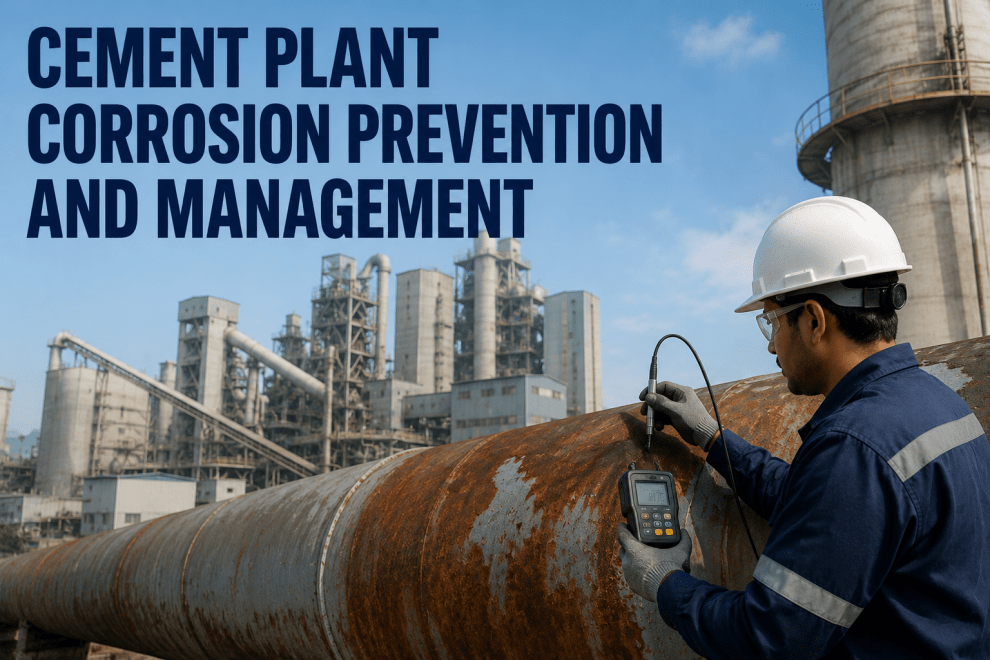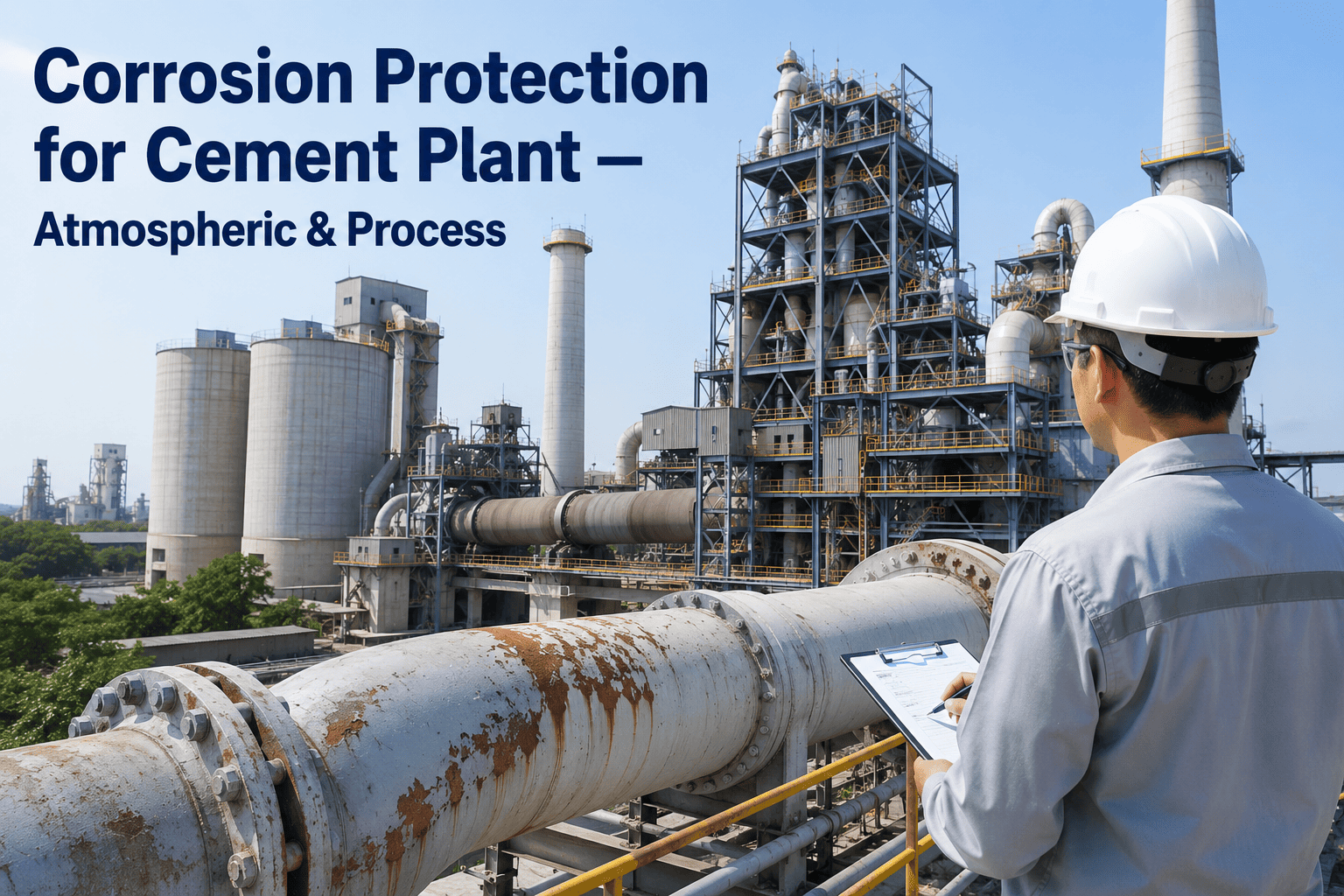
Corrosion in cement plants represents one of the most insidious and costly threats to operational reliability, safety, and asset longevity. From the towering preheater towers to the labyrinth of underground piping, every metallic surface is exposed to a uniquely aggressive cocktail of high temperatures, abrasive dust, moisture, and acidic gases. Atmospheric corrosion attacks exposed structures and equipment through humidity and airborne chlorides, while process corrosion accelerates degradation inside vessels, ducts, and piping handling raw materials, clinker, and exhaust gases. Left unmanaged, corrosion can lead to catastrophic structural failures, unscheduled downtime, and millions in lost production. This comprehensive guide delivers a technical, data-driven framework for selecting protective coating systems, specifying corrosion-resistant materials, and implementing continuous monitoring strategies tailored specifically to cement plant environments. For a personalized assessment of your plant's corrosion risks and a tailored protection roadmap, book a demo with our corrosion engineering team.
Comprehensive Corrosion Protection for Cement Plants
Protect your assets from atmospheric and process corrosion with advanced coatings, material selection, and real-time monitoring.
Atmospheric Corrosion
Caused by humidity, rain, chlorides, and industrial fumes. Affects structural steel, tanks, conveyors, and exposed piping. Coatings with high UV resistance and low permeability are essential.
Process Corrosion
Accelerated by high temperatures, acidic gases (SO2, CO2, NOx), and abrasive particles. Occurs inside preheaters, kilns, clinker coolers, baghouses, and ductwork. Requires specialized linings and alloys.
Galvanic & Crevice Corrosion
Common at joints, flanges, and dissimilar metal contacts in piping and structural connections. Proper insulation, sealants, and cathodic protection are critical mitigation strategies.
Corrosion Mechanisms in Cement Plant Environments
The cement manufacturing process creates multiple corrosion microclimates. In the raw mill area, high humidity and alkaline dust promote general corrosion on carbon steel. The preheater tower experiences cyclic thermal stress and condensation of acidic gases, leading to under-deposit corrosion and stress corrosion cracking. The kiln shell is subject to extreme heat and refractory chemical attack. Clinker coolers suffer abrasion and thermal fatigue. Baghouses and ESPs face acidic dew point corrosion from SO2 and water vapor. Each zone demands a distinct protection strategy based on temperature, chemical exposure, and mechanical wear. Understanding these mechanisms is the first step toward effective asset integrity management.
Corrosion Protection Implementation Timeline
Corrosion Risk Assessment
Inspect all assets; classify corrosion severity by zone (C1-C5 per ISO 12944). Identify critical areas with high risk of failure.
Material & Coating Selection
Choose corrosion-resistant alloys (e.g., 316L, duplex stainless) for process equipment. Select coating systems based on temperature, chemical resistance, and abrasion requirements.
Surface Preparation & Application
Ensure proper blasting to Sa2.5 or Sa3 standard. Apply coatings in controlled environments; use multi-layer systems with primers, intermediate, and topcoats.
Monitoring & Maintenance
Deploy corrosion monitoring probes, ultrasonic thickness measurements, and visual inspections. Schedule recoating based on coating life and degradation rates.
Recommended Coating Systems for Cement Plant Zones
| Zone | Temperature | Coating System | DFT (microns) | Expected Life (years) |
|---|---|---|---|---|
| Raw mill & storage | Ambient | Epoxy zinc-rich primer + polyurethane topcoat | 250-300 | 10-15 |
| Preheater tower | Up to 400°C | Zinc silicate + silicone acrylic topcoat | 200-250 | 8-12 |
| Kiln shell | Up to 350°C | Thermal spray aluminum (TSA) + sealer | 150-200 | 15-20 |
| Clinker cooler | Up to 200°C | Epoxy novolac + ceramic-filled topcoat | 300-400 | 10-15 |
| Baghouses & ducts | Up to 250°C | Silicone epoxy + fluoropolymer topcoat | 200-250 | 8-12 |
| Piping (process) | Up to 100°C | Epoxy phenolic + polyurethane topcoat | 250-300 | 12-18 |
Protect Your Cement Plant Today
Get a customized corrosion protection plan for your facility. Our experts will assess risks, recommend coatings, and set up monitoring systems.
Corrosion-Resistant Alloys
Use 304L, 316L, or duplex stainless steels for process vessels, piping, and heat exchangers. Alloys with molybdenum (Mo) content above 2.5% resist pitting and crevice corrosion in chloride-rich environments.
Protective Linings
Rubber, ceramic tile, and polymer linings protect chutes, hoppers, and cyclones from abrasion and chemical attack. Choose linings based on temperature, impact, and chemical exposure.
Cathodic Protection
Impressed current or sacrificial anode systems protect buried piping, tank bottoms, and submerged structures. Regular potential surveys ensure adequate protection levels.
Corrosion Monitoring Maturity Model
Frequently Asked Questions
What is the most cost-effective coating system for atmospheric corrosion in cement plants?
For atmospheric corrosion in cement plants, a high-build epoxy zinc-rich primer combined with a polyurethane topcoat offers the best balance of cost and performance. This system provides excellent adhesion, barrier protection, and UV resistance. The zinc-rich primer acts as a sacrificial anode, protecting the steel even if the coating is scratched. The polyurethane topcoat resists chemical fumes and weathering. Typical dry film thickness (DFT) ranges from 250 to 300 microns. For detailed specifications and application guidance, contact our support team for a tailored recommendation.
How often should corrosion monitoring be performed on cement plant structures?
Corrosion monitoring frequency depends on the severity of the environment and the criticality of the asset. For high-risk areas like preheater towers and kiln shells, continuous online monitoring using corrosion probes and ultrasonic sensors is recommended. For less critical structures, quarterly visual inspections and annual ultrasonic thickness measurements are sufficient. Implementing a risk-based inspection (RBI) program helps optimize monitoring intervals. To set up a comprehensive monitoring program, book a demo with our asset integrity experts.
What materials are best for piping in high-temperature process areas?
For high-temperature process piping in cement plants (above 200°C), stainless steel grades 304H, 316H, or 321 are commonly used due to their creep resistance and oxidation resistance. For temperatures above 500°C, alloy 800H or Inconel 625 may be necessary. These materials resist scaling and maintain mechanical strength at elevated temperatures. However, they are susceptible to stress corrosion cracking in the presence of chlorides, so proper insulation and moisture control are critical. For a detailed material selection guide, contact our support team for expert advice.
How can I detect corrosion under insulation (CUI) in cement plant piping?
Corrosion under insulation (CUI) is a major issue in cement plants due to cyclic thermal and moisture conditions. Detection methods include: (1) visual inspection after removing insulation at suspect locations, (2) ultrasonic thickness measurements through insulation using specialized probes, (3) radiography or digital X-ray, (4) pulsed eddy current (PEC) for scanning large areas without insulation removal. A combination of these methods provides the most reliable detection. Implementing a CUI management program with regular inspection intervals is essential. For a customized CUI detection plan, book a demo with our NDT specialists.
What are the key steps in a corrosion risk assessment for a cement plant?
A corrosion risk assessment involves five key steps: (1) Asset inventory and criticality ranking based on safety, production, and cost impact. (2) Corrosion severity classification per ISO 12944 (C1 to C5) for each zone. (3) Identification of corrosion mechanisms (e.g., atmospheric, process, CUI, galvanic). (4) Risk evaluation using a matrix of likelihood vs. consequence. (5) Development of a mitigation plan with coatings, material upgrades, monitoring, and inspection schedules. This assessment forms the foundation of an effective asset integrity management system. To get a professional risk assessment for your plant, contact our support team.
Start Your Corrosion Protection Journey
Partner with iFactory to implement a world-class corrosion management program. Protect your assets, reduce downtime, and extend equipment life.