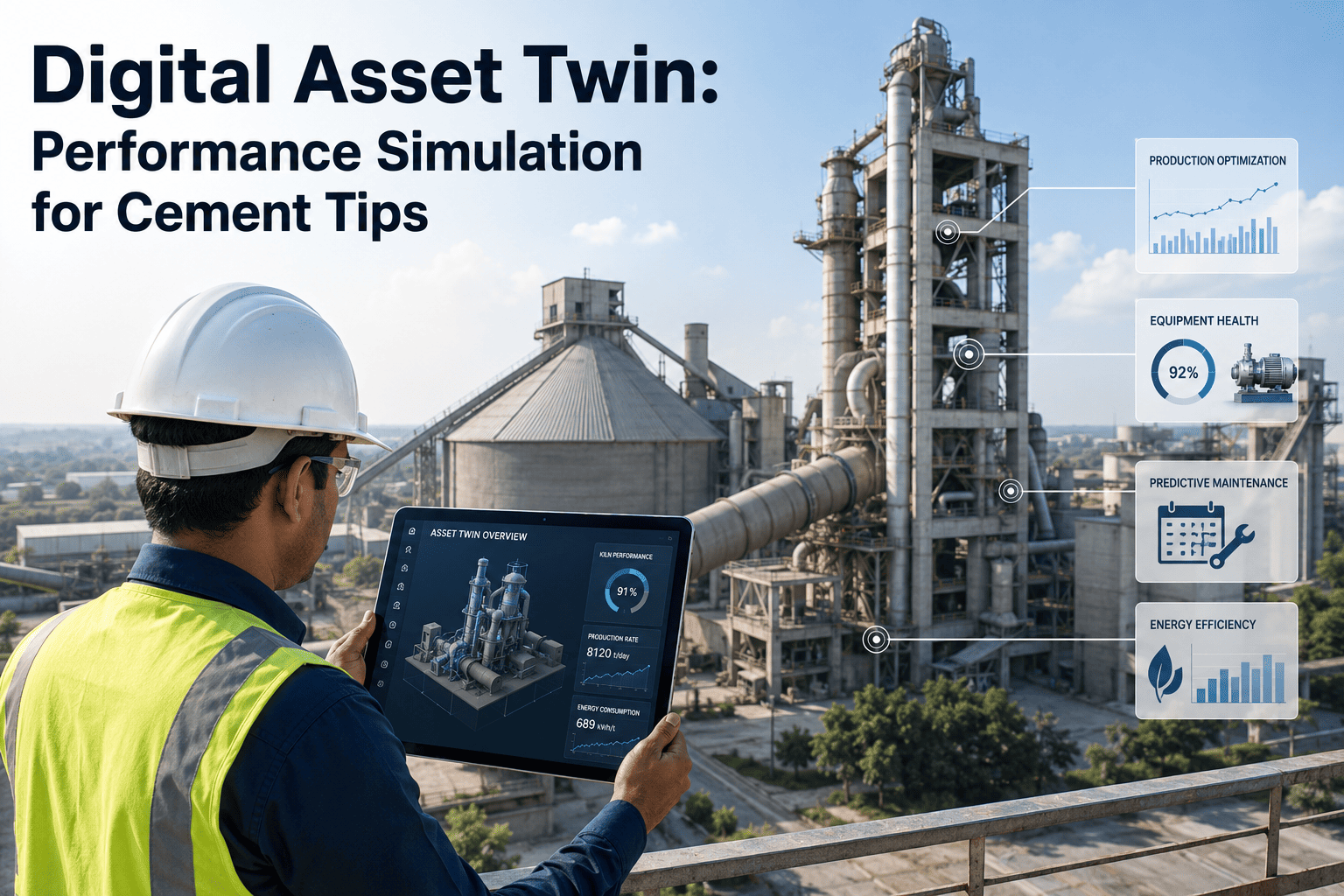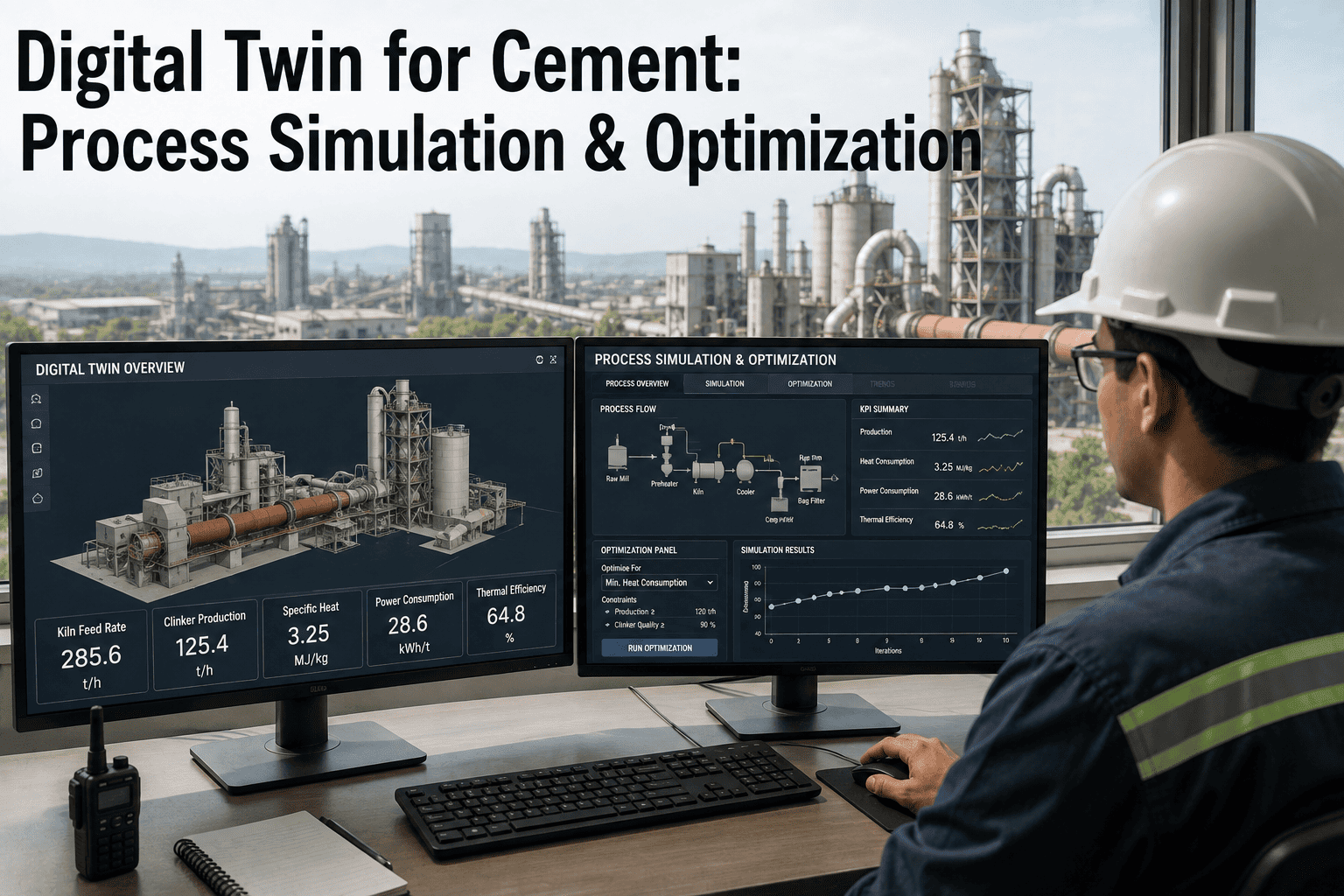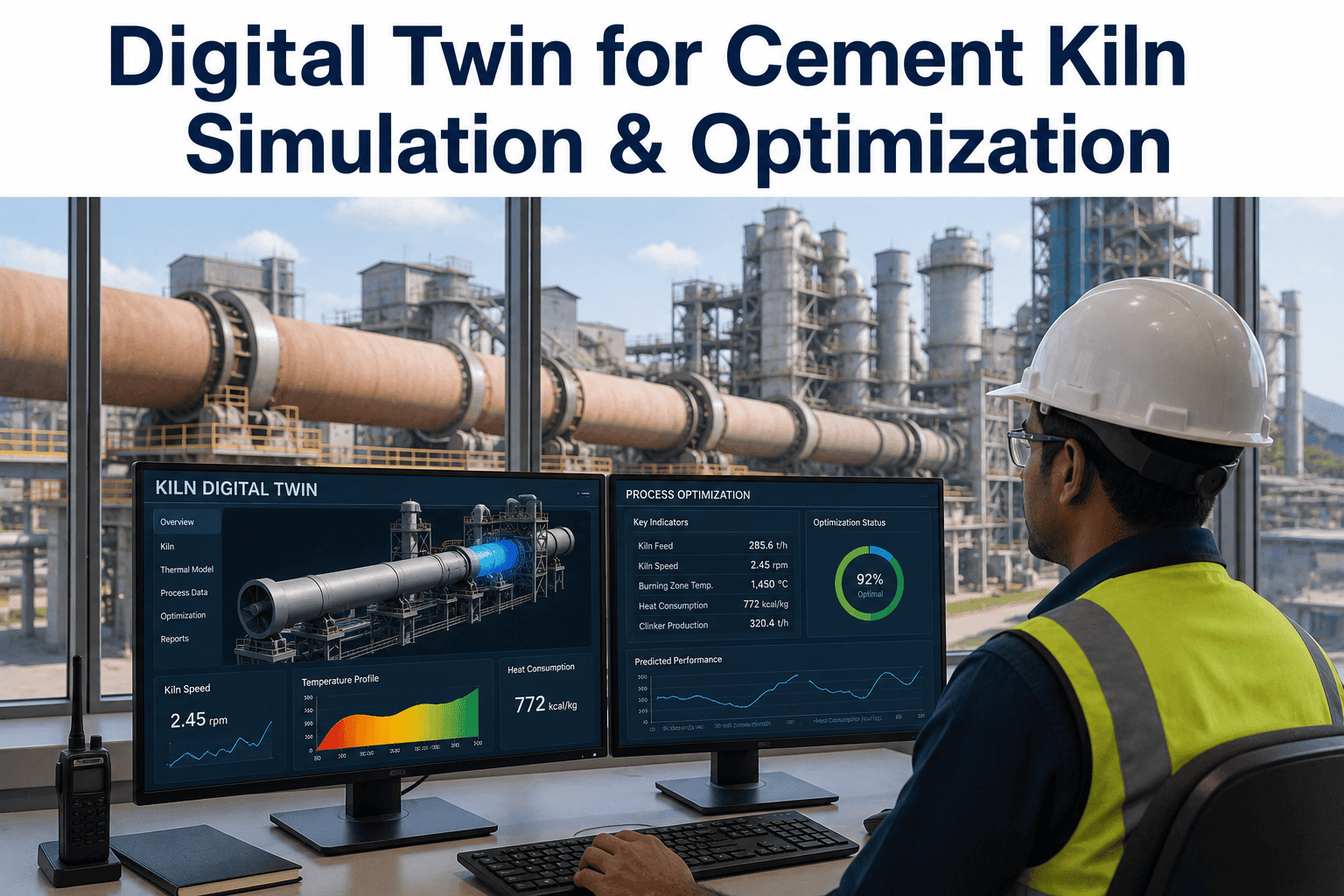
A cement kiln digital twin is not a dashboard, and it is not a static 3D drawing sitting next to the DCS screen. It is a live, continuously updated model of the actual kiln, fed by real sensor data, that a process engineer can question and stress-test without ever touching the physical asset. Plant teams increasingly reach for this kind of model because a single wrong intervention on a running kiln, a fuel change or an rpm adjustment made on instinct, can cost hours of off-spec clinker before anyone notices, and lost production time on a kiln of any real size adds up quickly once fuel, labor, and missed shipment penalties are all counted together. A digital twin lets that same intervention be tested first in simulation, where the cost of being wrong is nothing. If your plant is still deciding where a twin would even start paying for itself, a quick call usually settles it faster than another round of internal debate.
Test the Change Before the Kiln Feels It
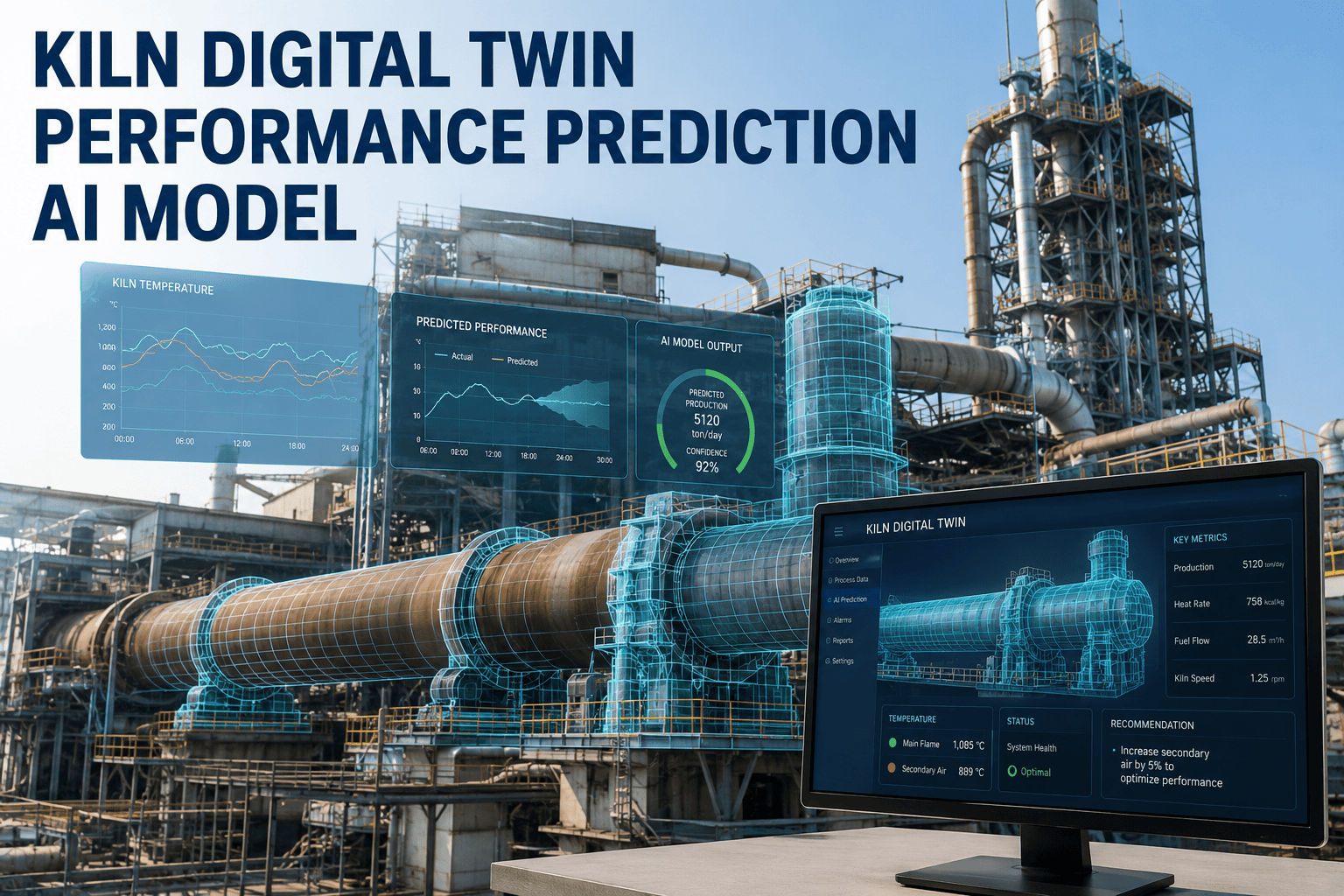
iFactory's Kiln Digital Twin mirrors your rotary kiln, preheater, and cooler in one continuously synced model, so operators can simulate a fuel switch, an rpm change, or a shutdown sequence before it ever reaches the live process.
Digital Twin vs Simulation: A Distinction Worth Getting Right
The two terms get used interchangeably, and that confusion causes plants to either overspend on a model they did not need or underinvest in one that could have prevented a shutdown. A simulation is run with hypothetical inputs to answer a one-off question. A digital twin stays wired to the live kiln, updating continuously as real conditions change, which is what lets it flag a developing problem instead of only answering a question someone remembered to ask. A useful way to tell them apart in practice is to ask whether the model would notice a problem on its own overnight with nobody logging in to run it, or whether it only produces an answer when someone opens it and types in a scenario. If the answer only comes when prompted, it is a simulation tool. If it can raise its own alert at three in the morning based on a real sensor drift, it has crossed into digital twin territory.
The Three Layers Behind a Working Kiln Twin
A kiln twin that actually holds up in production is built in layers, not as one monolithic model. Each layer depends on the one below it, and skipping straight to the optimization layer without solid data underneath is the most common reason early twin projects stall. Plants that try to build the decision layer before the data integration layer is stable usually end up with recommendations nobody trusts, because the model is only as reliable as the sensor feeds and historian tags it was trained against, and unresolved data gaps quietly become confident-looking wrong answers.
Adoption Is Moving Faster Than Most Plants Realise
Digital twin technology in cement manufacturing has moved well past the pilot-project stage at leading producers, and the financial case behind that shift is now well documented across multiple independent industry sources. Major producers have already deployed plant-scale digital twins that combine enterprise software with performance-prediction algorithms and 3D modelling, and the market segment covering cement kiln twins specifically is now growing fast enough that vendors treat it as a distinct product category rather than a bespoke engineering project.
Where a Kiln Twin Actually Gets Used Day to Day
The same underlying model supports several distinct use cases across a plant, and most operators start with one before expanding to the rest as confidence in the model builds. Kiln and cement mill are the two most common starting points, since they carry the highest downtime cost per hour and already tend to have the richest sensor coverage of any equipment on site, which shortens the time needed to reach a trustworthy baseline.
| Application | What Gets Simulated | Primary Beneficiary |
|---|---|---|
| Process Optimization | Fuel mix, kiln speed, and feed rate combinations against target clinker chemistry | Process engineers |
| Predictive Maintenance | Refractory wear, girth gear and support roller failure probability | Maintenance planners |
| Energy Management | Thermal efficiency impact of alternative fuel substitution rates | Plant managers |
| Shutdown Planning | Task sequencing and resource conflicts ahead of a planned outage | Reliability teams |
Start With One Kiln, Not the Whole Plant
Attempting a plant-wide twin on day one is the most common reason these projects stall. Proving value on one kiln first, then expanding to the mill and cooler once the model has earned operator trust, is consistently the faster path to a plant-wide rollout. Our team can show you what a single-kiln pilot model looks like using your own historian data.
What Early Adopters Are Reporting
Results vary by plant and by how mature the underlying sensor and historian data already was before the twin went live, but the direction of the reported outcomes across producers has been remarkably consistent. Plants further along in Industry 4.0 maturity, generally a small minority of global cement operations today, consistently report both lower maintenance cost and higher kiln utilisation than plants still relying on fixed inspection intervals, which is the gap a digital twin is specifically built to close.
Frequently Asked Questions
Give Your Kiln a Model That Learns as Fast as It Runs
iFactory's Kiln Digital Twin turns historian data you already have into a continuously updated model that catches drift, tests decisions, and plans shutdowns before the live kiln ever feels the change.