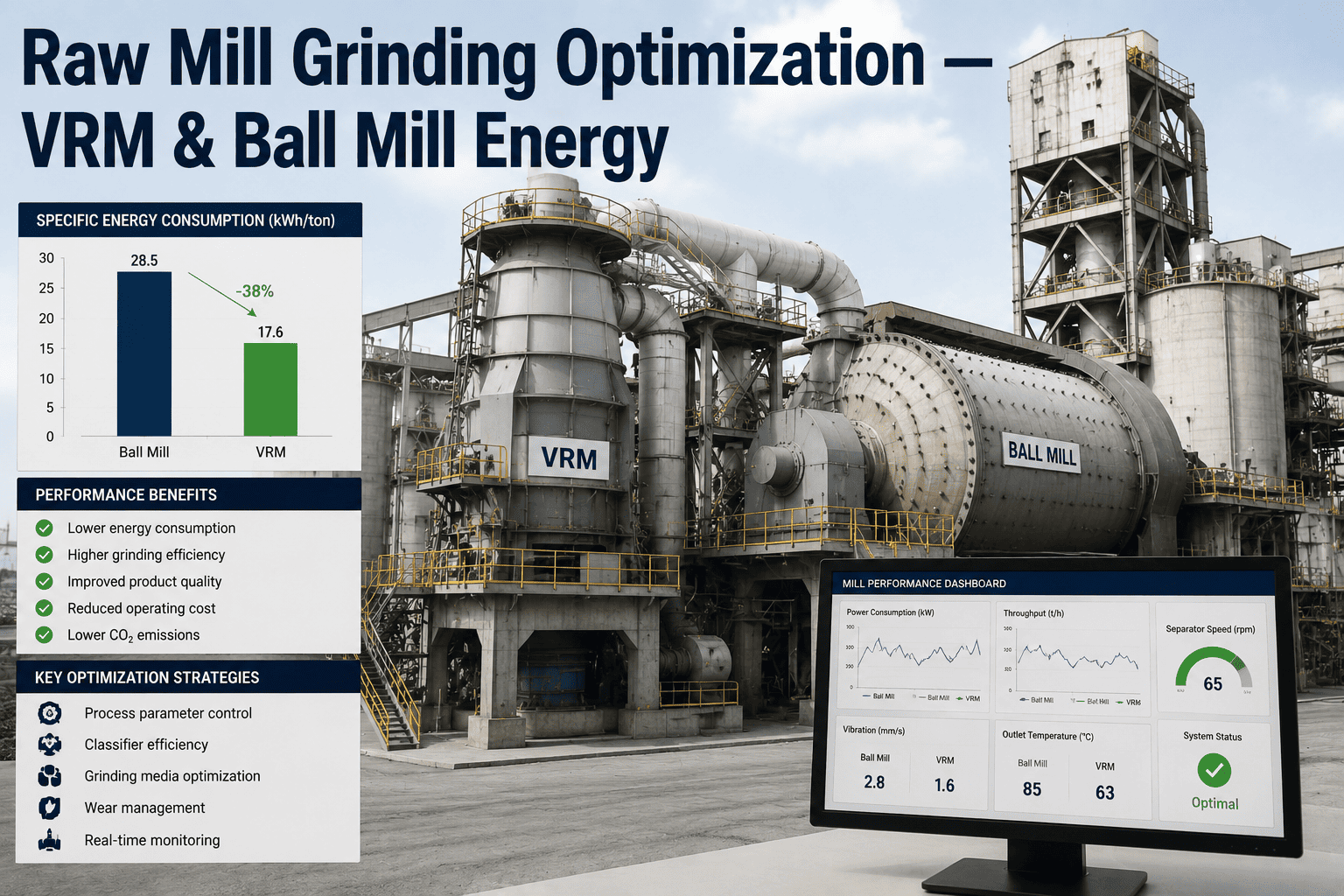
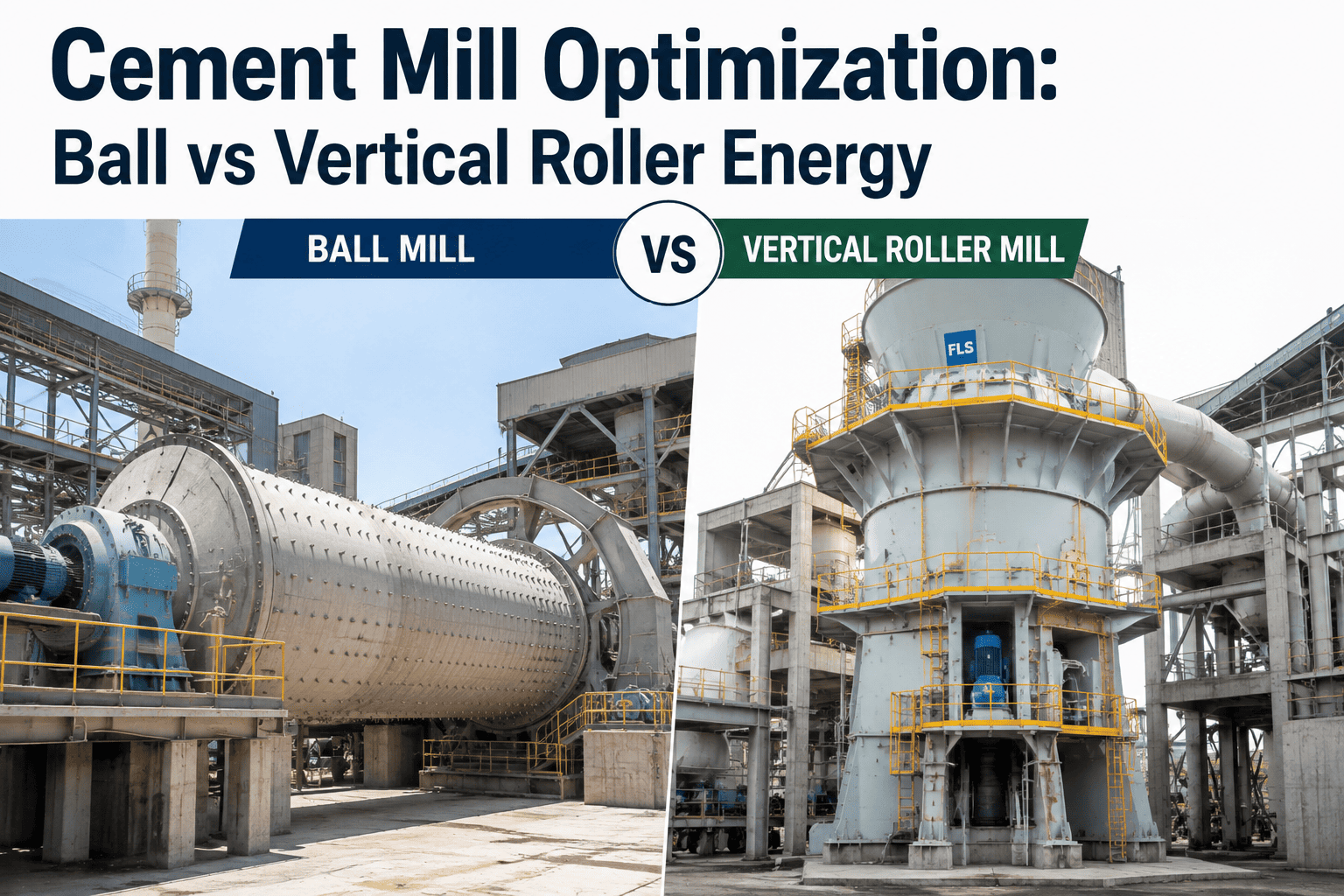
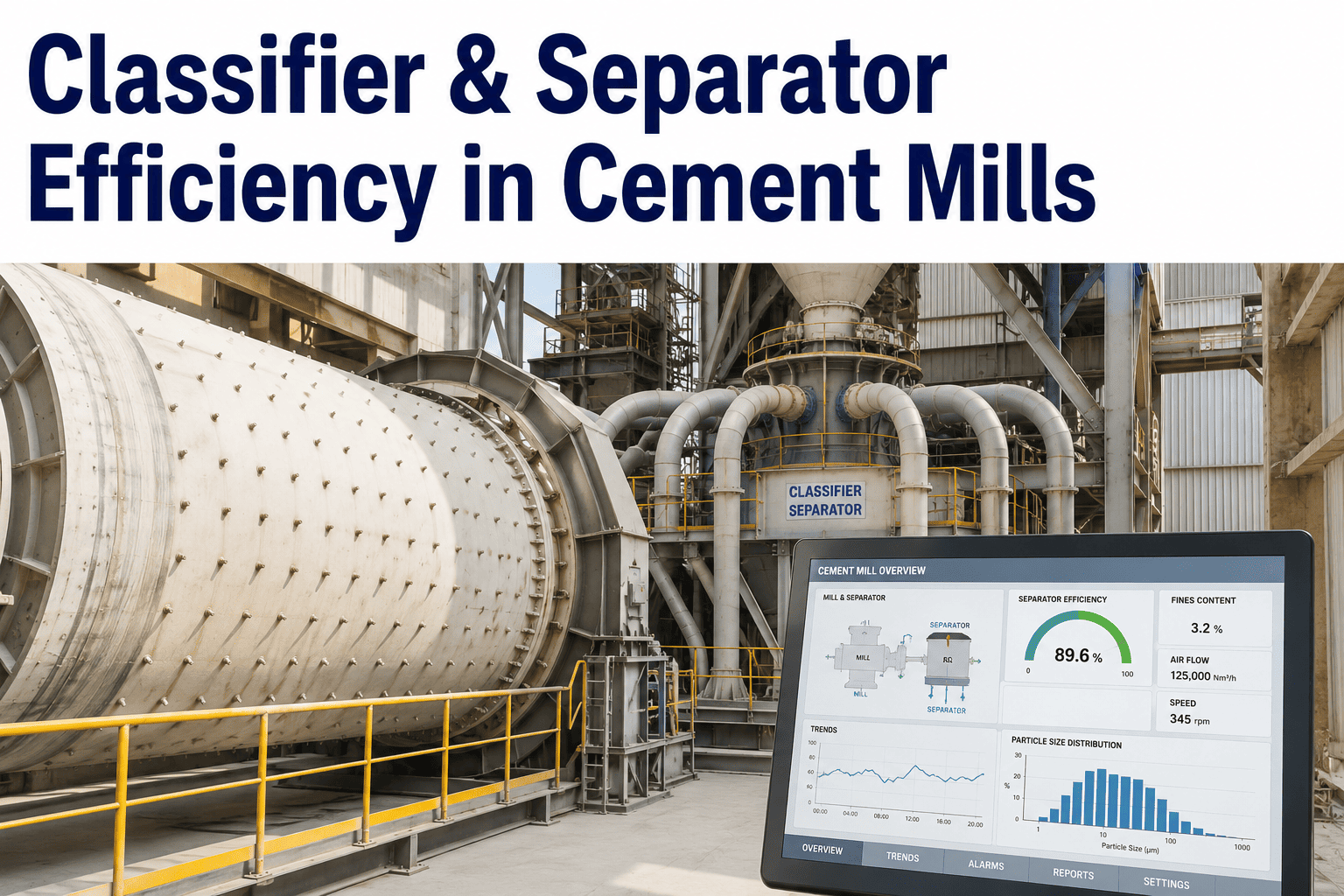
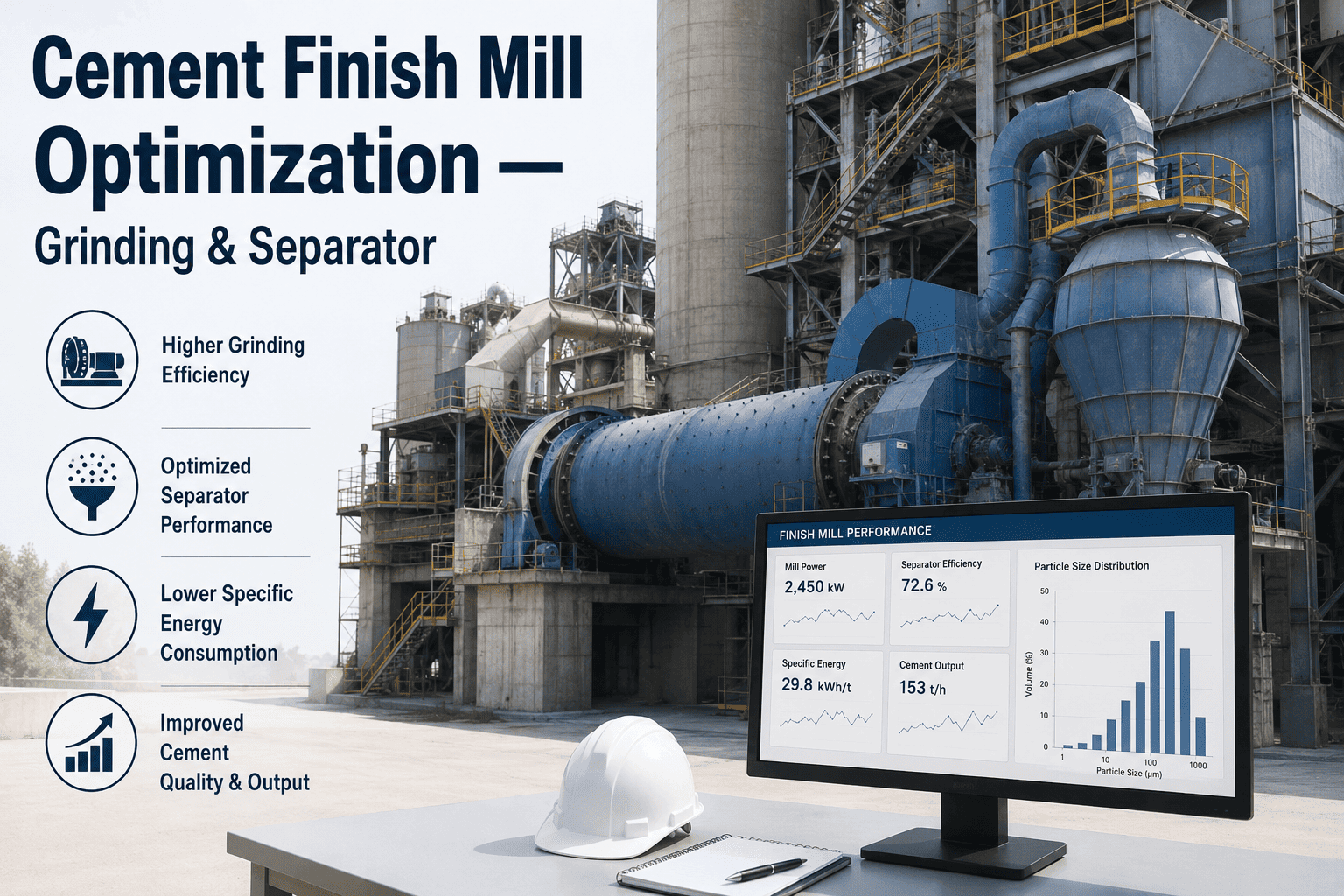
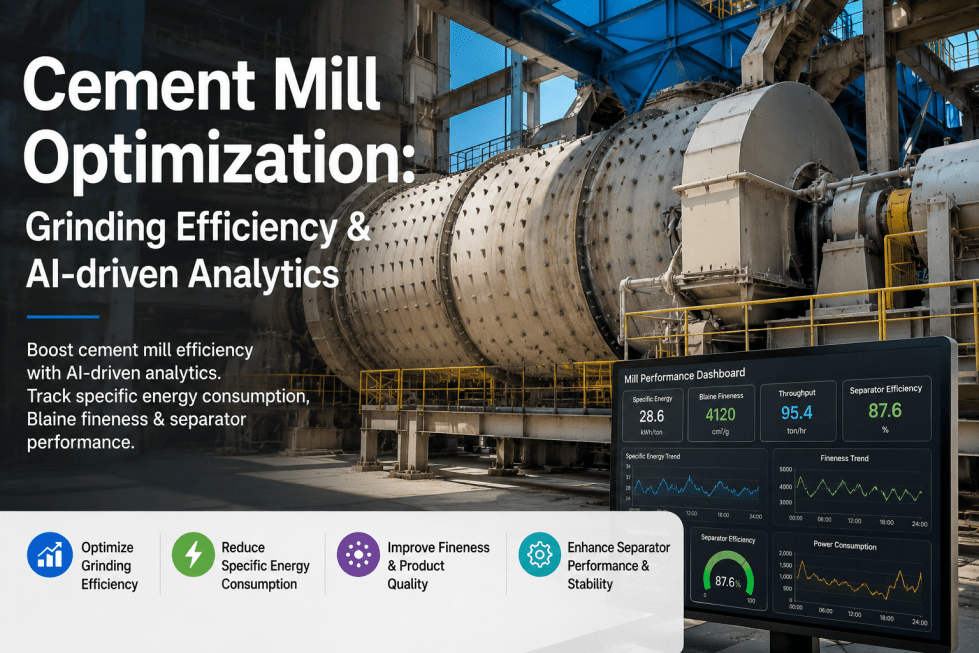
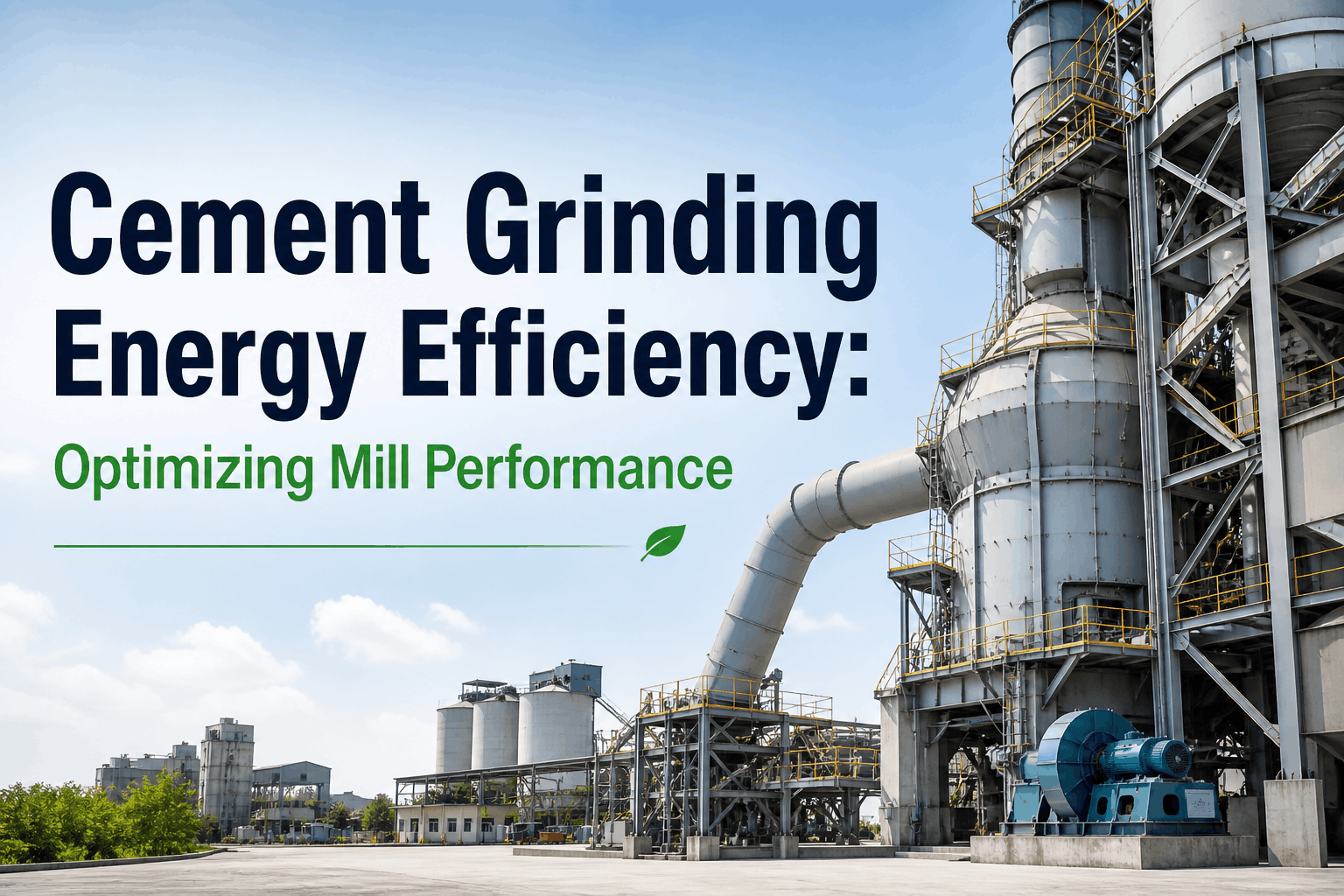
Two plants grinding the same limestone to the same fineness can post grinding energy figures 40% apart, and the mill type is usually only part of the story. Vertical roller mills typically use 15–25 kWh per ton for raw material grinding against 25–35 kWh per ton for ball mills, but studies comparing real operating units to international best-available technology have found even VRM installations running 80% above the top performer in the same category. The mill design sets the ceiling; separator tuning, classifier speed, and grinding bed control decide how close a plant actually gets to it. Book a demo to see where your raw mill sits against both benchmarks.
Cement · Grinding Optimization
Raw Mill Grinding Optimization — Closing the Gap Between Design and Actual
VRM and ball mill technology set the theoretical energy floor for raw grinding. Separator efficiency, classifier speed, and grinding bed stability decide whether a plant actually operates anywhere near it.
Typical raw material grinding energy by mill type
Technology Comparison
Why VRMs Typically Run 30–50% Lower Energy Than Ball Mills
The efficiency gap comes down to grinding mechanism, not just equipment age. Bed compression grinding and integrated classification change the energy profile fundamentally.
Characteristic
Ball Mill
Vertical Roller Mill
Grinding mechanism
Impact and attrition via tumbling steel balls
Bed compression between table and rollers
Drying capability
Requires separate drying equipment
Integrated drying up to 15–20% feed moisture
Footprint
Larger civil structure requirement
Compact, reduced building cost
Feed size tolerance
Handles coarser feed directly
Often needs secondary crushing first
Optimization Levers
Five Levers That Close the Gap on Either Mill Type
Whether a plant runs ball mills or VRMs, the same categories of adjustment typically deliver most of the achievable savings.
01
Separator Efficiency Tuning
Third-generation high-efficiency separators reach markedly sharper classification than first-generation static units, cutting recirculating load and specific energy directly.
02
Grinding Media and Ball Charge Design
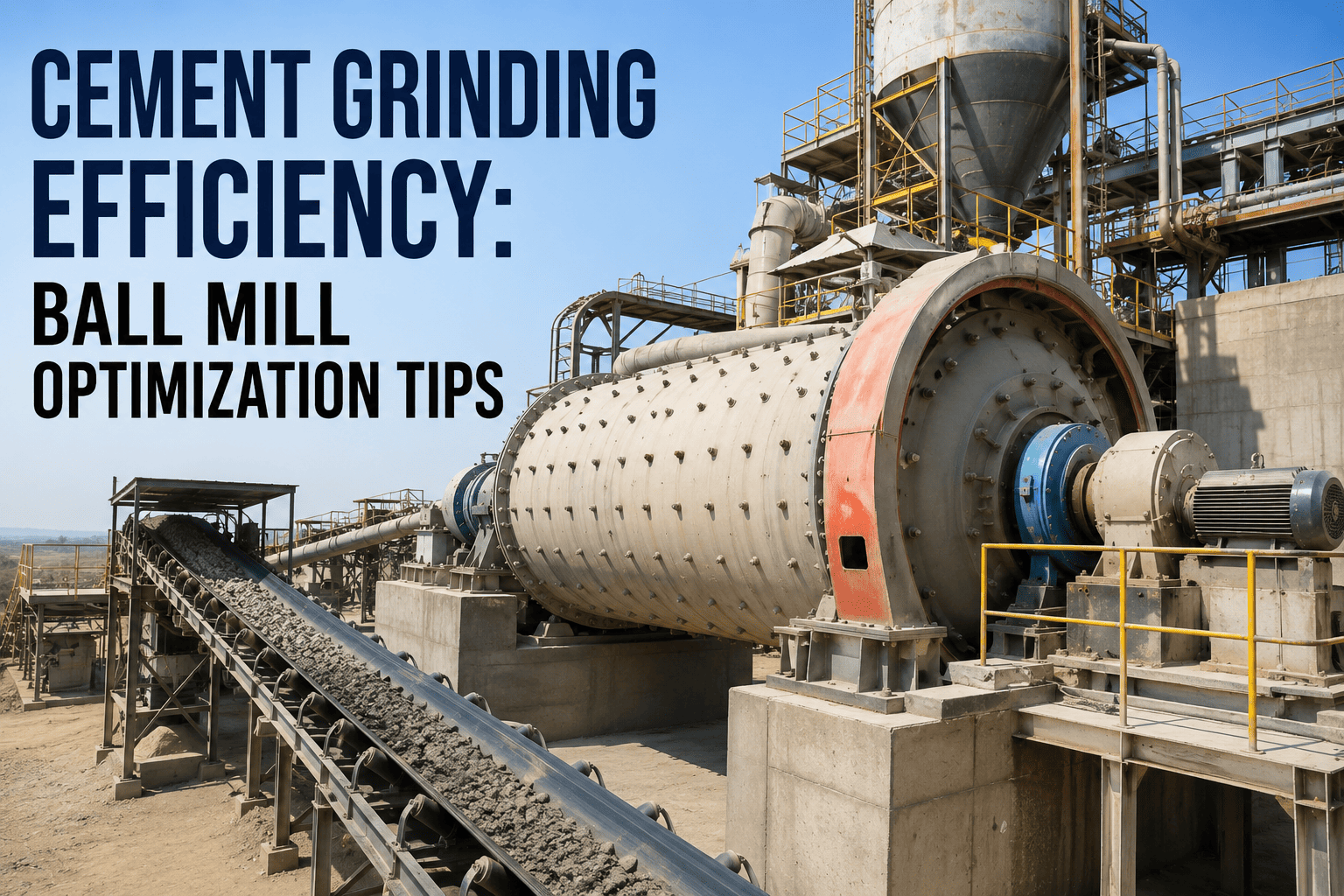
For ball mills, matching ball size distribution and charge volume to feed hardness prevents both under-grinding and wasted energy from an oversized charge.
03
Classifier Rotor Speed Control
Raising classifier speed sharpens product fineness but increases specific power draw, so the setpoint has to be matched to the actual product spec rather than left at a conservative default.
04
Grinding Bed Stability on VRMs
An unstable grinding bed forces vibration-driven trips and derating, so table pressure and feed rate control are as important to VRM energy performance as the roller design itself.
05
Mill Ventilation and Air Flow
Air speed through the mill that runs too low encourages over-grinding and coating; too high drags under-ground particles out prematurely, so ventilation needs continuous, not periodic, correction.
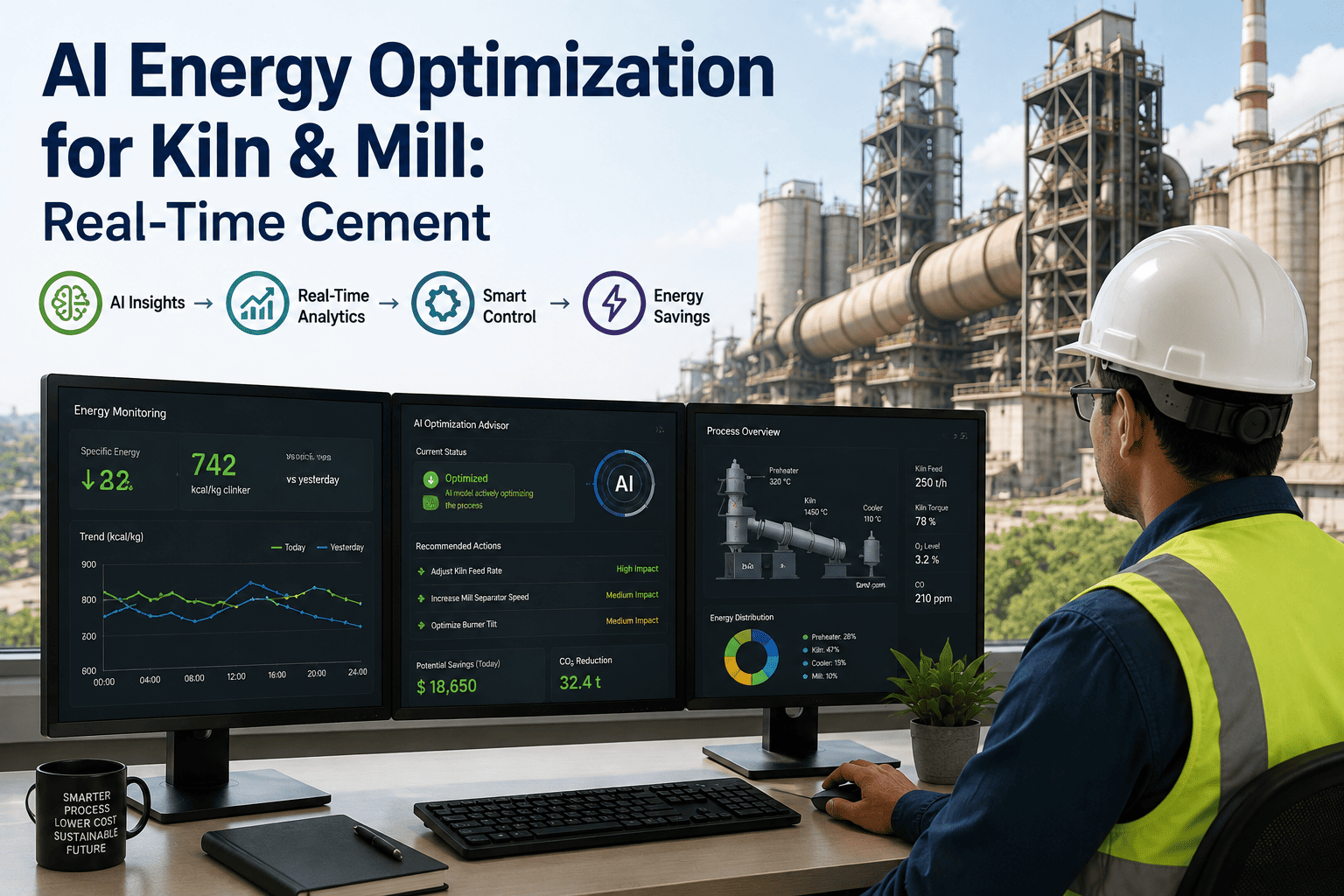
iFactory Tracks Grinding SEC Continuously, Not Once a Quarter.
Separator performance, classifier speed, and bed stability are monitored together in real time, so a drift in kWh per ton gets flagged the same shift it happens instead of showing up in next month's energy report.
Separator Generations
Not All Separators Are Built to the Same Efficiency Standard
Separator generation is one of the fastest-checked, highest-leverage items in a grinding energy audit, since the efficiency gap between generations is large and well documented.
First-Generation Static
40–50% efficiency
Second-Generation Mechanical
50–65% efficiency
Third-Generation High-Efficiency
65–75% efficiency
From the Field
What a Separator Upgrade Did to Raw Mill Energy
Our raw mill was a VRM, so we assumed the energy question was already answered by the equipment choice. A benchmarking exercise against international best-available technology showed we were still running well above the top performers in our mill category, almost entirely traced to an aging separator that was recirculating far more material than it should have been. Replacing it was a smaller project than the mill itself, and the energy improvement showed up immediately in the following month's SEC report.
— Process Manager, Dry-Process Cement Plant
Frequently Asked Questions
Raw Mill Grinding Optimization — Common Questions
Is it worth replacing a ball mill with a VRM purely for energy savings?
A full mill replacement is a major capital decision that should weigh energy savings against feed size handling, moisture tolerance, and total installed cost, not evaluated on energy alone. In many cases, tuning separator efficiency, ball charge, and ventilation on an existing ball mill captures a meaningful share of the achievable savings at a fraction of the capital cost of a full VRM conversion.
Book a demo to model both paths against your plant's numbers.
How much does separator generation actually affect energy consumption?
Upgrading from a first or second-generation separator to a modern high-efficiency unit can meaningfully cut recirculating load and reduce specific energy consumption by several kWh per ton, since sharper classification means less material is reground unnecessarily. This is typically one of the highest-return, lowest-capital levers available in a grinding optimization program.
What causes a VRM to consume more energy than its design specification?
Unstable grinding bed depth, incorrect roller pressure settings, and poor classifier speed matching to product fineness are the most common causes of a VRM underperforming its design SEC. Studies comparing real VRM units to top-performing international benchmarks have found some units consuming significantly more energy than the best-in-class reference despite using the same core technology.
Does grinding to a finer product always cost proportionally more energy?
No, the relationship is not linear. Energy consumption increases exponentially as target fineness rises, meaning a modest increase in required fineness can demand a disproportionately larger increase in specific energy, which is why over-specifying fineness beyond what the product actually requires is a common and costly inefficiency.
How often should raw mill grinding performance be reviewed?
Grinding circuits drift gradually through liner wear, media degradation, and classifier fouling, so a full performance review is typically warranted every six to twelve months, with continuous SEC monitoring in between to catch sudden deviations.
Contact support for guidance on setting up a review cadence for your mill configuration.
Find Out How Close Your Raw Mill Runs to Its True Energy Floor.
Separator efficiency, classifier speed, and grinding bed stability, benchmarked against your mill type's best-available technology and tracked continuously afterward.