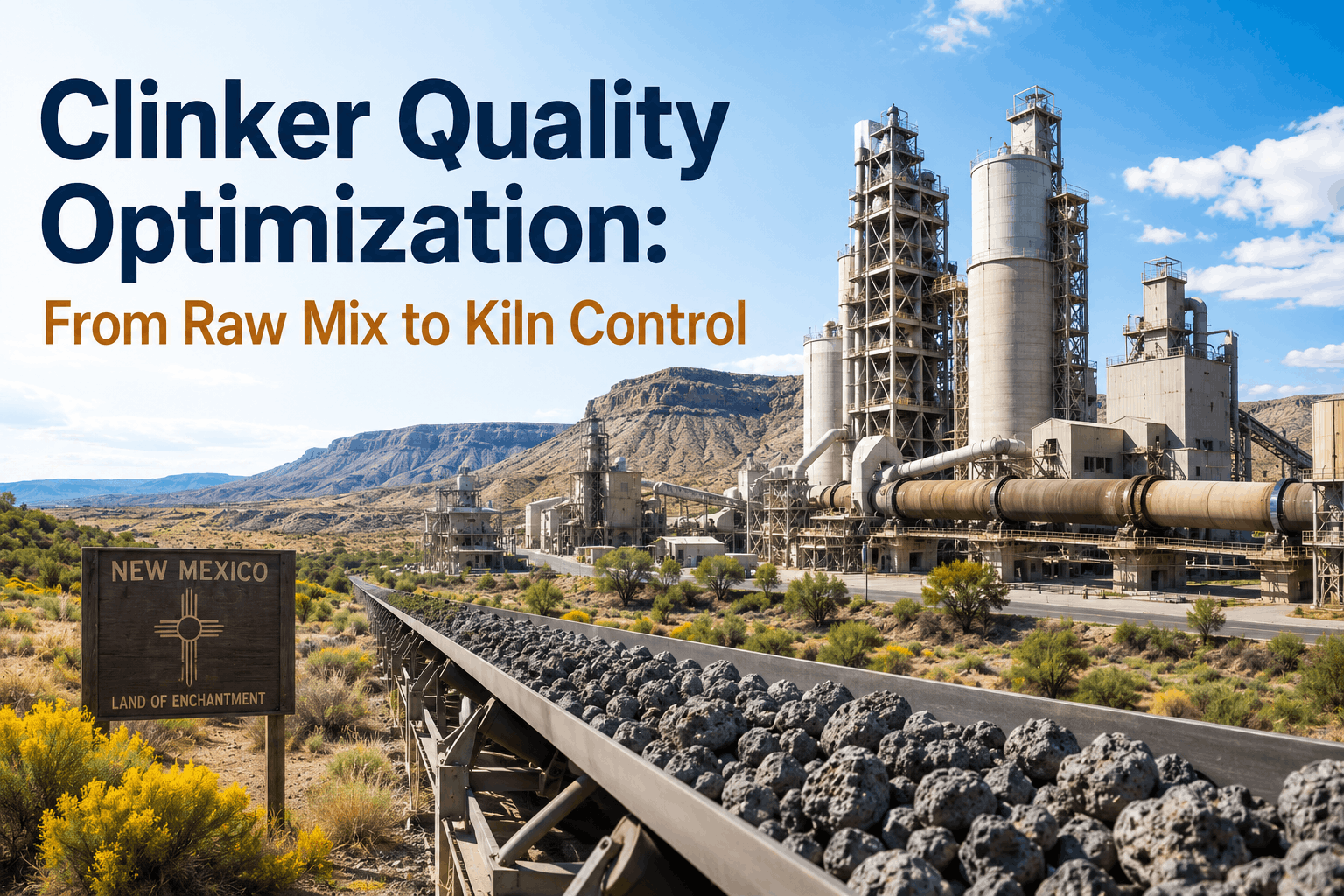
Every tonne of clinker a kiln burns is shaped long before it ever reaches the burning zone — it is decided at the raw mill, in the exact ratio of limestone, clay, and iron correction material blended into the raw meal. Get that ratio wrong and the kiln pays for it every single hour: a raw mix running even a few points too high on lime saturation can push burning zone temperature up and drag specific fuel consumption higher for the life of that blend, while a mix running too low on silica modulus can flood the kiln with liquid phase and trigger coating and ring formation. None of this requires new equipment to fix. Book a demo to see how tighter raw mix control translates into your specific fuel numbers.
Cement Energy Optimization
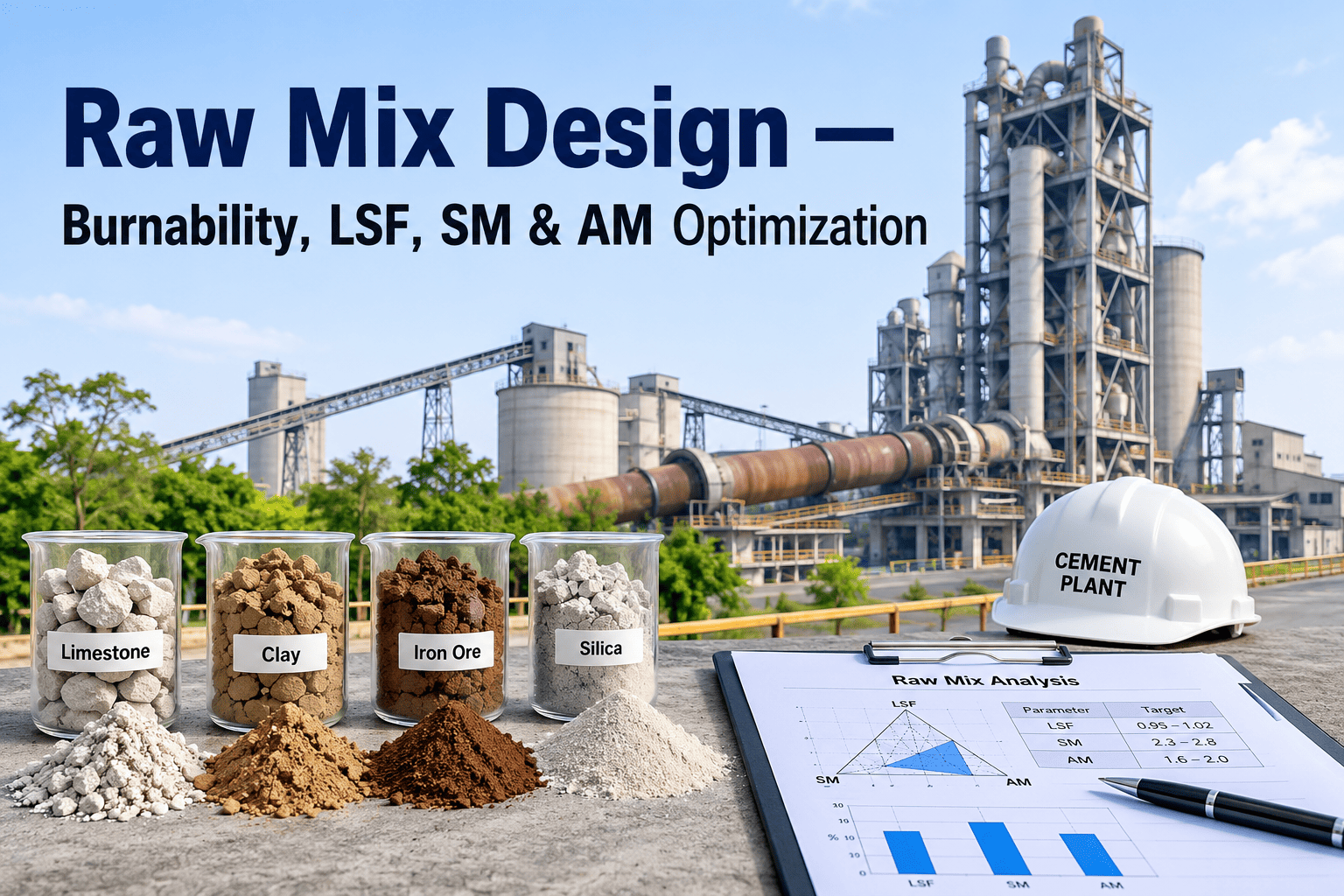
Raw Mix Design — Burnability, LSF, SM & AM Optimization
The three ratios that decide how much fuel your kiln burns before a single flame is ever lit
5-10
kcal/kg clinker saved with tighter mix control
92-98
Typical target LSF range for clinker
2.3-2.7
Typical target silica modulus range
The Three Ratios That Govern Burnability
Raw mix design comes down to controlling three chemical ratios, each pulled from the same four oxides — lime, silica, alumina, and iron. Get all three inside their target band at once and the kiln burns predictably, with consistent free lime and stable fuel consumption shift after shift.
LSF
Lime Saturation Factor
CaO ÷ (2.8 SiO2 + 1.65 Al2O3 + 0.65 Fe2O3)
Measures how much lime is combined relative to the theoretical maximum. Too high and the mix becomes hard to burn with rising free lime; too low and clinker strength and soundness suffer.
SM
Silica Modulus
SiO2 ÷ (Al2O3 + Fe2O3)
Controls the balance between solid and liquid phase in the kiln. A high silica modulus slows clinkerization and drives up fuel use; a low silica modulus floods the kiln with excess melt.
AM
Alumina Modulus
Al2O3 ÷ Fe2O3
Sets the ratio of aluminate to ferrite phases and determines the temperature at which liquid phase first forms, along with the color and setting characteristics of the finished cement.
Target Ranges Used Across the Industry
Exact targets shift slightly by plant and by the standard being followed, but the industry converges on a fairly narrow band for each modulus once burnability and product quality are both accounted for.
Most plants are running at least one modulus outside its ideal band without realizing the fuel cost attached to it. Book a demo and bring your last raw mix chemistry report to the call.
How a Drifting Modulus Shows Up on the Kiln
Raw mix chemistry problems rarely announce themselves directly. They surface first as operating symptoms on the kiln, and recognizing the pattern early is what separates a quick raw mill correction from weeks of fighting an unstable burning zone.
Dusty, Unstable Kiln
Frequently traces back to a silica modulus running too high, starving the burning zone of the liquid phase needed to hold clinker nodules together.
Thick Coating and Ring Formation
Usually points to a silica modulus running too low, flooding the kiln with excess melt that deposits on refractory and can build into stable rings.
Rising Free Lime with Stable Burning Zone Temperature
A classic sign of lime saturation factor drifting upward, forcing the kiln to work harder to combine the same amount of lime into clinker compounds.
Inconsistent Clinker Color or Setting Time
Often connects back to alumina modulus drift, since AM governs both the temperature at which liquid phase begins forming and the aluminate-to-ferrite balance in the finished clinker.
How Tighter Raw Mix Control Actually Gets Implemented
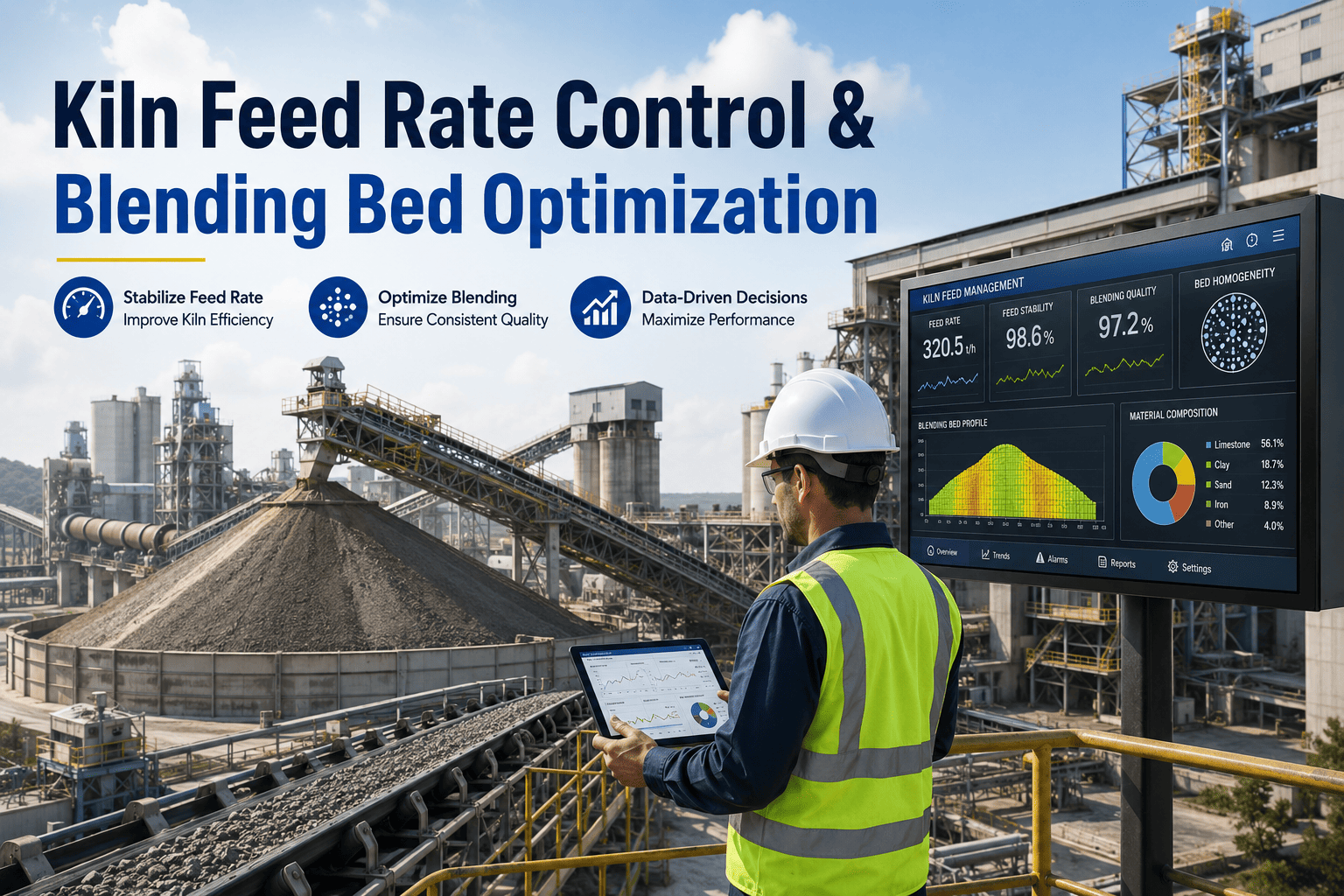
Correcting raw mix chemistry is rarely a single fix — it is a continuous loop between the quarry, the raw mill, and the quality lab, tightened over time rather than solved in one pass.
Frequent Chemistry Sampling
Raw meal is tested multiple times per shift rather than once per day, catching quarry material variability before it works its way into the kiln feed blend.
Automated Proportioning Feedback
Weigh feeders at the raw mill adjust blend ratios automatically against live chemistry results, rather than waiting for a manual lab report and operator correction later in the shift.
Quarry Blending Strategy
High-grade and lower-grade limestone are blended deliberately at the quarry stockpile stage so the raw mill is never fed a single, highly variable source of feed material.
Trend Monitoring Against Target Bands
LSF, SM, and AM are tracked as rolling trends rather than single-point readings, making slow drift visible well before it turns into a burnability problem on the kiln.
Why Burnability Directly Sets Your Fuel Bill
Burnability is the practical measure of how easily a raw mix converts to clinker at a given burning zone temperature, and it is controlled almost entirely by the three moduli working together rather than any one of them in isolation. A mix engineered for good burnability reaches acceptable free lime at a lower burning zone temperature and with a shorter residence time, which shows up directly as a lower specific fuel consumption per tonne of clinker. Plants that tighten raw mix control typically recover somewhere in the range of 5 to 10 kcal per kilogram of clinker, without any change to kiln hardware, simply by keeping LSF, SM, and AM inside their target bands consistently rather than letting them swing with whatever raw material happens to be feeding the mill that shift.
5-10 kcal/kg
Typical fuel savings from tighter burnability control
±1.2
Acceptable LSF standard deviation for stable operation
1.6
Alumina modulus giving lowest liquid-phase formation temperature
100%
Of raw mix quality decided before the kiln ever sees the material
See Where Your Raw Mix Chemistry Stands Today
A short review of your recent raw meal chemistry reports against target LSF, SM, and AM bands usually surfaces the fuel-saving gap within a single conversation.
Frequently Asked Questions
What is considered a good lime saturation factor for cement clinker?
Most plants target an LSF somewhere between 92 and 98 for a good balance of burnability and clinker strength. Pushing LSF above roughly 98 to 100 tends to make the mix progressively harder to burn and increases the tendency toward high free lime, while a mix well below 92 burns easily but can produce cement with reduced strength development. The right number ultimately depends on your specific raw materials and kiln configuration, which a
demo call can help confirm against your own chemistry data.
How does silica modulus affect fuel consumption in the kiln?
Silica modulus controls the ratio of solid to liquid phase material in the burning zone, and that ratio has a direct bearing on how much energy is needed to complete clinkerization. A silica modulus running high leaves too little liquid phase to bind clinker nodules, slowing the reaction and forcing higher burning zone temperatures to compensate, which shows up directly as higher specific fuel consumption. Keeping SM inside the 2.3 to 2.7 range generally keeps the liquid phase balance favorable for efficient burning.
Why does alumina modulus matter if it does not directly affect burnability as much as LSF or SM?
Alumina modulus governs the temperature at which liquid phase first begins forming in the kiln and the balance between aluminate and ferrite clinker phases, both of which influence setting time and clinker color even though AM has a smaller direct effect on overall burnability than LSF or SM. An AM around 1.6 typically produces the lowest liquid-phase formation temperature, which supports a more efficient and stable burning zone.
How often should raw mix chemistry be checked to catch drift early?
Most plants sample and test raw meal chemistry multiple times per shift, since raw material variability from the quarry can shift LSF, SM, or AM meaningfully within a single day. Real-time or near-real-time monitoring of these three ratios, tied back to automated proportioning at the raw mill, catches drift long before it reaches the kiln and turns into a burnability problem.
Can raw mix design alone fix a kiln that keeps forming rings or excessive coating?
In many cases, yes, particularly when the ring or coating problem traces back to a silica modulus running persistently low, which floods the burning zone with excess liquid phase. Correcting the mix proportions to bring SM back into the target band often resolves the issue without any change to kiln operating parameters. Persistent coating despite correct chemistry usually points to a separate mechanical or thermal issue, which
support can help diagnose alongside the mix data.
Your Kiln's Fuel Bill Starts at the Raw Mill
Every shift the raw mix drifts outside its target LSF, SM, and AM bands, the kiln quietly burns more fuel to compensate. Find out exactly how much is recoverable from your current chemistry.