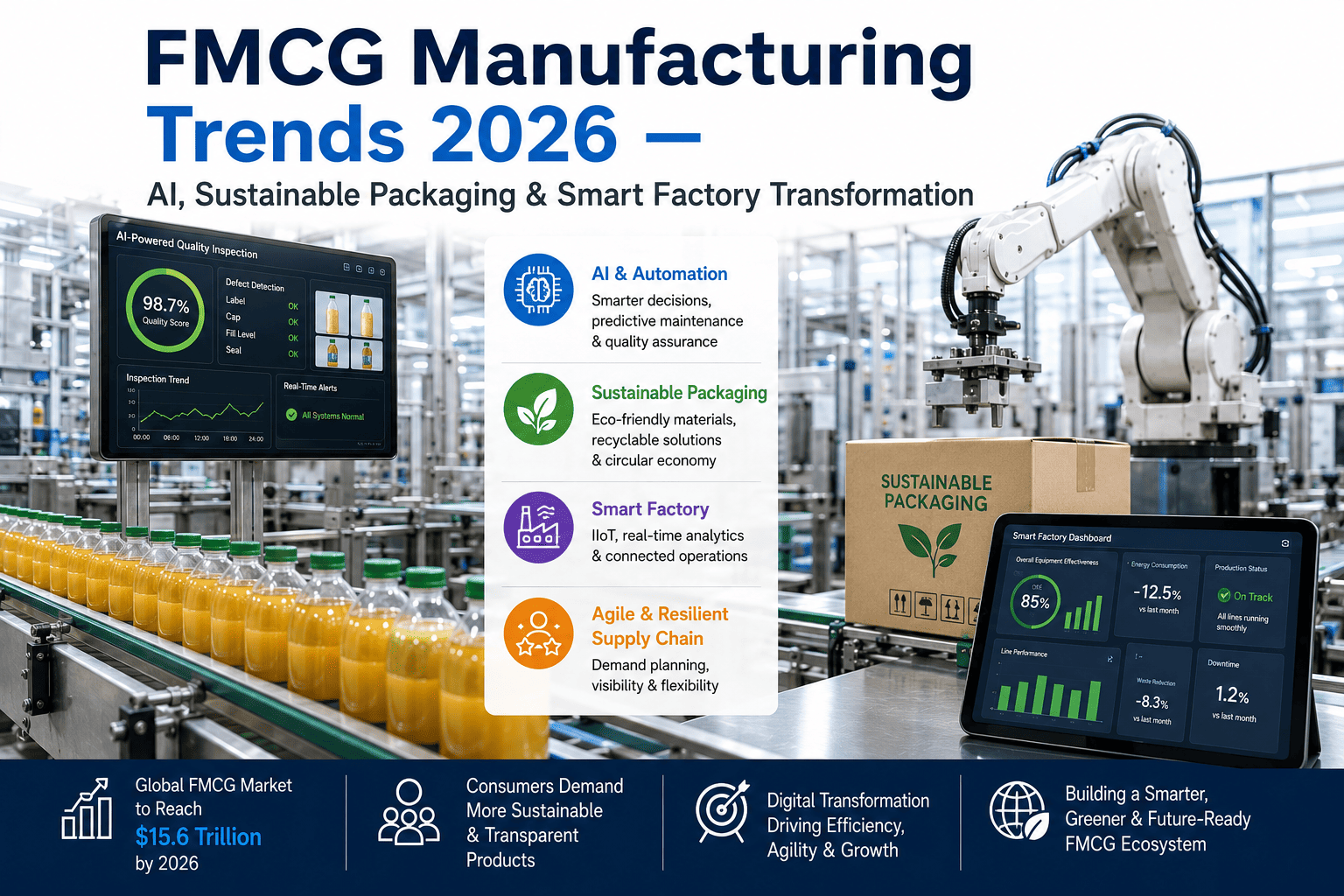
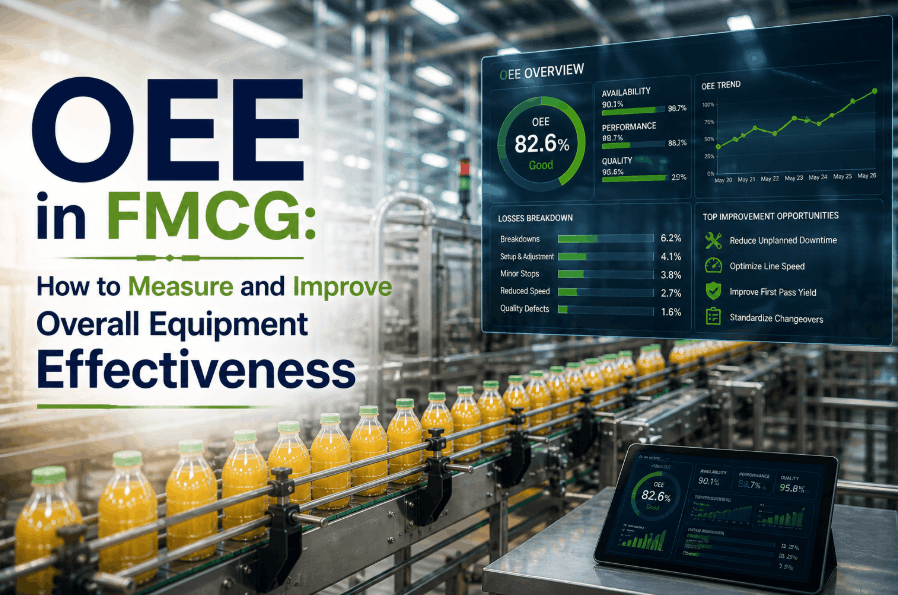
In the fast-moving consumer goods industry, the difference between a world-class plant and an average one is often measured in a single three-letter metric: OEE. Overall Equipment Effectiveness — the product of Availability, Performance, and Quality — is the most widely used benchmark for manufacturing productivity, and for good reason. A plant running at 65% OEE is losing 35% of its productive capacity to breakdowns, speed losses, and defects every single day. Yet the global average OEE across FMCG manufacturing sits stubbornly between 60% and 65%, with best-in-class plants achieving 85% and above. The gap between average and excellent is not a mystery — it is a data problem. FMCG plants that have closed this gap in recent years share one common factor: they deployed AI-driven analytics to identify and eliminate losses that traditional systems were simply too slow to catch. This article walks through the proven AI strategies that are moving FMCG OEE by 15 to 25 percentage points — and how iFactory's platform makes every one of them actionable.
AI-Driven OEE Improvement Strategies for FMCG Plants
Availability. Performance. Quality. Three levers — one AI platform to optimize all of them in real time.
Understanding the Three OEE Pillars — And Where AI Intervenes
OEE is not a single problem to fix — it is the product of three independent loss categories. AI addresses each with a different set of analytical capabilities. The power of iFactory is that it improves all three simultaneously, using shared plant data and a unified intelligence layer.
Start Measuring Real OEE — Not Estimated OEE
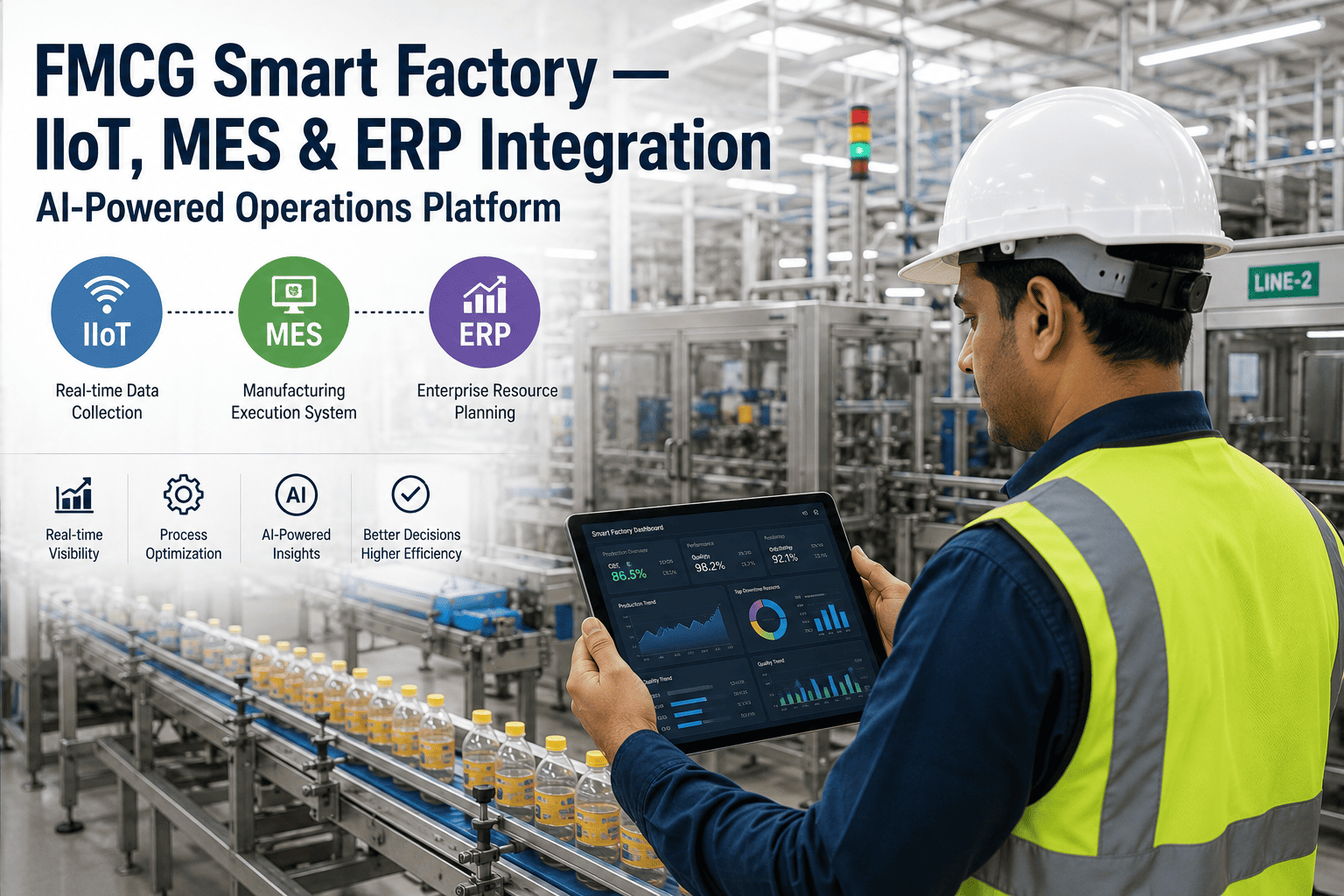
Most FMCG plants calculate OEE from manually entered production logs. iFactory connects directly to line PLCs, sensors, and vision systems to deliver automated, real-time OEE that reflects actual performance — not what operators remembered to record.
7 AI-Driven Strategies That Improve FMCG OEE
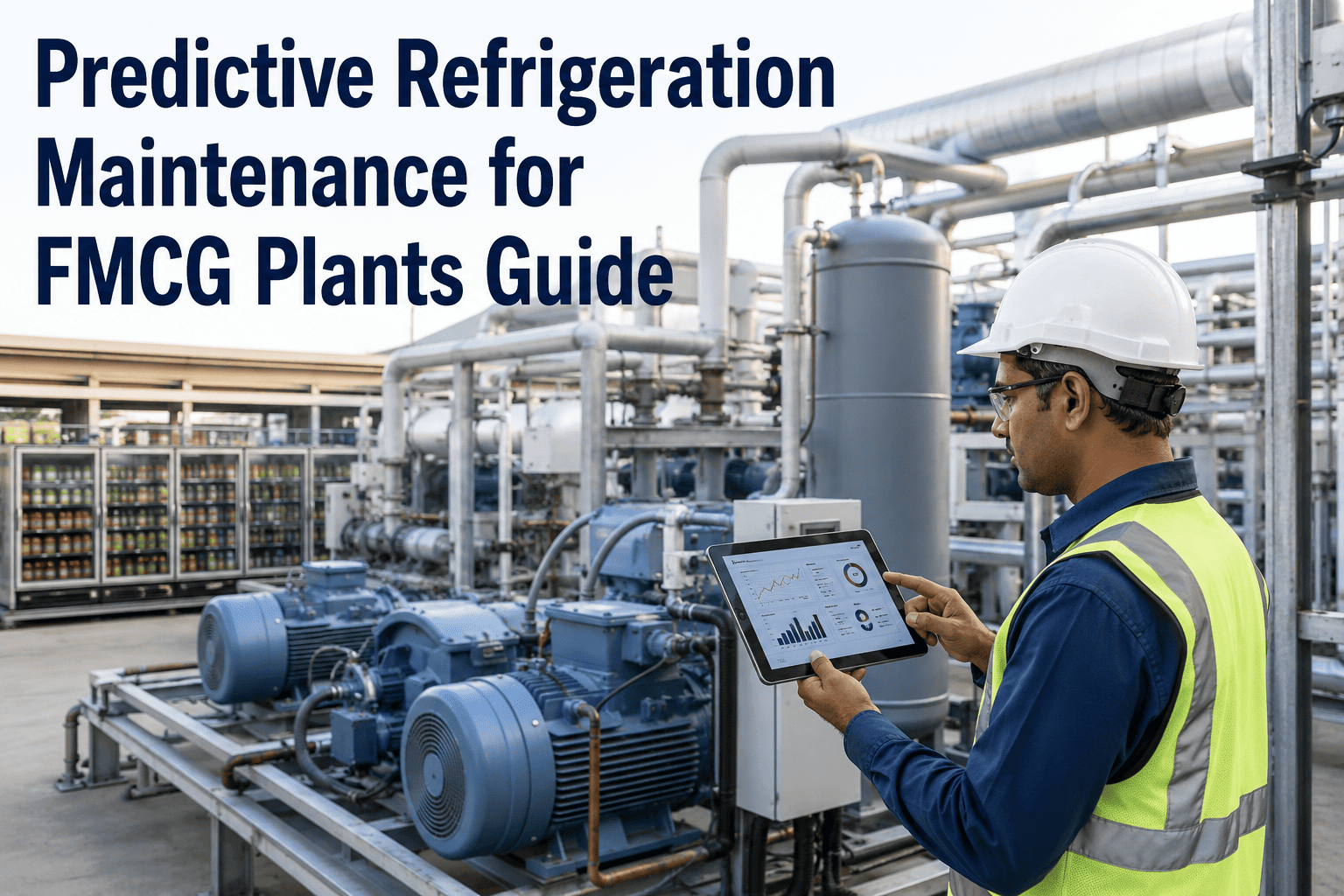
AI Predictive Maintenance to Eliminate Unplanned Stoppages
Unplanned breakdowns are the single largest source of availability loss in FMCG manufacturing. Filling lines, packaging machines, and high-speed conveyors running 20 hours a day accumulate bearing fatigue, seal wear, and drive degradation at rates that make weekly inspection schedules woefully inadequate. iFactory's AI connects to vibration sensors, temperature monitors, and motor current analyzers on every critical machine, continuously analyzing health data against equipment-specific failure signatures. When a developing fault is detected — typically 1 to 4 weeks before failure — iFactory generates a prioritized maintenance alert with the fault type, recommended action, and required parts, allowing maintenance teams to schedule the intervention during planned downtime rather than reacting to a breakdown mid-shift. Sign up with iFactory to start your predictive maintenance program on FMCG packaging lines.
AI-Guided Changeover Optimization for SKU-Heavy Product Lines
FMCG plants running hundreds of SKUs across shared production lines face changeover losses that can consume 15–25% of total available production time. AI changeover optimization analyzes historical changeover sequences, tooling times, and operator execution patterns to identify the fastest achievable changeover path for each product transition. iFactory's AI recommends optimal scheduling sequences that minimize total changeover time across the production plan, while digital work instructions displayed at the machine guide operators through standardized, mistake-proof changeover procedures. Continuous improvement algorithms identify which changeover steps account for the most variability, focusing improvement efforts where they have the greatest OEE impact.
Real-Time Micro-Stop Detection and Root Cause Classification
Micro-stops — stoppages lasting under 5 minutes — are the most underreported and underestimated performance loss in FMCG manufacturing. Because they are too brief to trigger formal downtime records, they are effectively invisible in traditional OEE reporting. Yet a packaging line experiencing 8 micro-stops per hour at 2 minutes each is losing over 13% of its production time to events that never appear in any report. iFactory's real-time machine monitoring captures every micro-stop automatically through PLC signal integration, timestamps each event, and uses AI pattern recognition to classify micro-stops by root cause — label feed issues, product jamming, reject surges, or sensor faults. This turns invisible losses into a prioritized improvement backlog. Book a demo to see micro-stop analytics on a live FMCG line.
AI Speed Loss Monitoring and Theoretical Rate Optimization
Running a filling line at 85% of its design speed because "it runs better that way" is a common FMCG performance loss that rarely appears in maintenance records. AI performance monitoring compares actual machine cycle rates against theoretical maximum rates continuously, flagging speed loss events and correlating them with upstream causes — product viscosity variation, filler head pressure fluctuations, or conveyor spacing inconsistencies. iFactory's AI builds a dynamic theoretical rate model that accounts for legitimate speed reductions (during ramp-up or product changeovers) while identifying unjustified speed losses that represent genuine OEE improvement opportunities. Sign up with iFactory to connect your line speed data and start recovering lost throughput.
AI Vision Inspection for Zero-Defect Quality Control
Traditional end-of-line sampling inspection catches quality defects after they have been produced — potentially allowing thousands of defective units to be packaged before the issue is identified. AI vision inspection systems deploy high-speed cameras at critical inspection points along the production line, with deep learning models trained to detect label misalignment, fill level deviations, seal integrity failures, and packaging damage at line speed — inspecting 100% of output rather than statistical samples. When defect rates exceed pre-set thresholds, iFactory automatically triggers a machine halt and notifies quality and maintenance teams with the defect classification, location, and photographic evidence. This shifts quality control from reactive sampling to proactive 100% inspection.
Statistical Process Control with AI Root Cause Analysis
SPC (Statistical Process Control) has been a quality management staple for decades — but traditional SPC requires trained engineers to interpret control charts and diagnose out-of-control conditions manually. iFactory's AI-enhanced SPC monitors all critical quality parameters in real time, automatically detects Western Electric rule violations, and uses multivariate correlation analysis to identify the upstream process variables most likely responsible for the quality deviation. Instead of "control chart shows out-of-control condition," plant quality teams receive "fill weight drifting high — correlated with pump pressure increase at Filler Head 3 over the last 20 minutes." This transforms SPC from a monitoring tool into a diagnostic engine. Book a demo to see AI-SPC in action on an FMCG production line.
AI Production Scheduling for Maximum OEE Across the Line
OEE is not just a machine-level metric — it is a system-level outcome shaped by production scheduling decisions. Running product sequences that create long changeovers, scheduling high-speed products immediately after maintenance windows, or batching small runs that generate excessive startup waste are all scheduling decisions that depress OEE before production even begins. iFactory's AI scheduling engine models the entire production system — machine capabilities, changeover matrices, material availability, and maintenance windows — to generate production sequences that maximize system-level OEE rather than just individual line efficiency. The result is a smarter production plan that makes the same assets run significantly better without any physical changes to the line. Sign up with iFactory and transform your production scheduling from calendar-based to AI-optimized.
What a 15-Point OEE Improvement Means in Real Revenue Terms
OEE improvement is not just an operational metric — it translates directly into production output and revenue without capital expenditure on new equipment.
See Your FMCG Plant's OEE Potential with iFactory AI
iFactory connects to your existing line PLCs and sensors in weeks — no rip-and-replace. Start measuring real OEE, identify your biggest losses, and act on AI-generated improvement recommendations from day one.