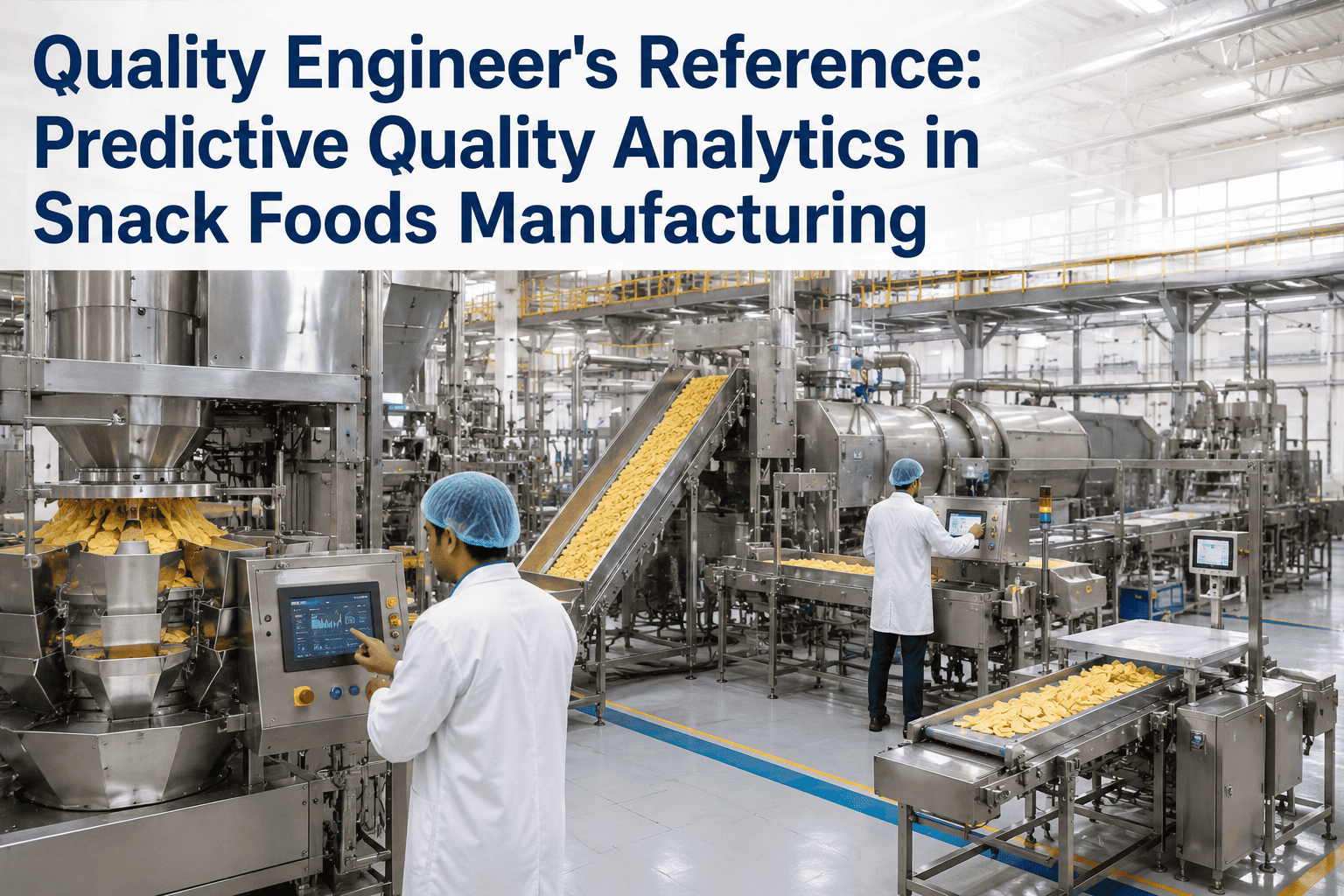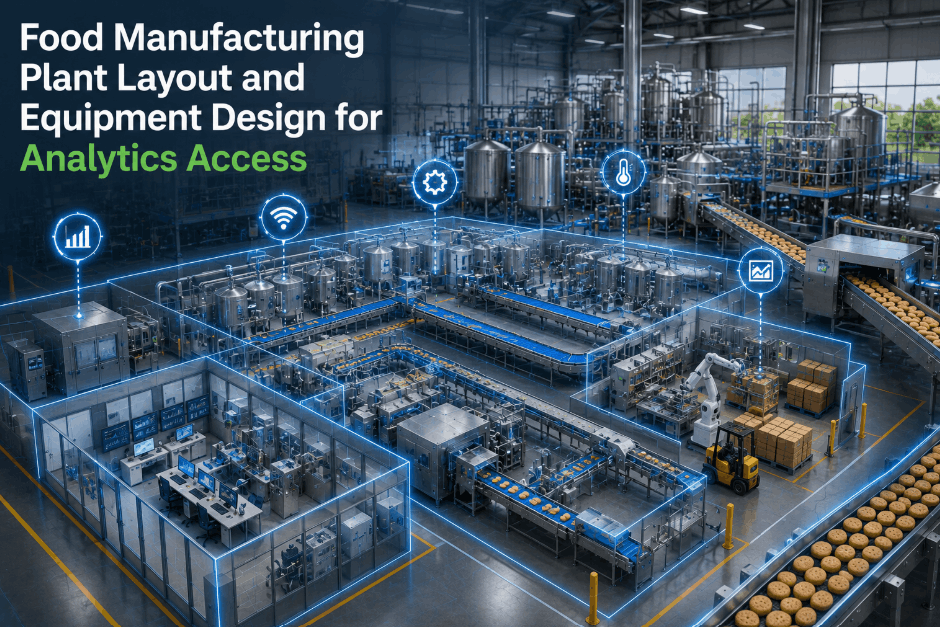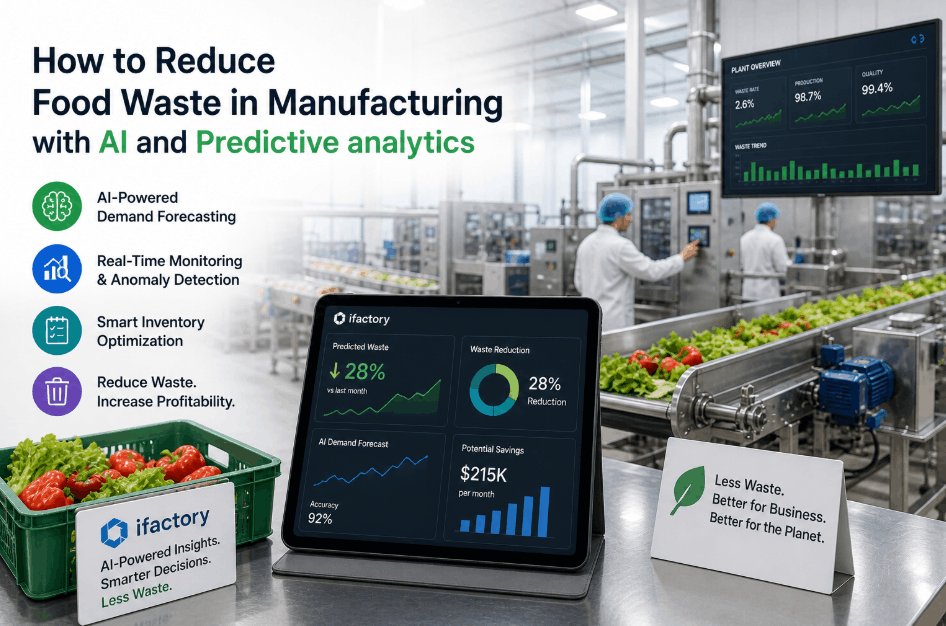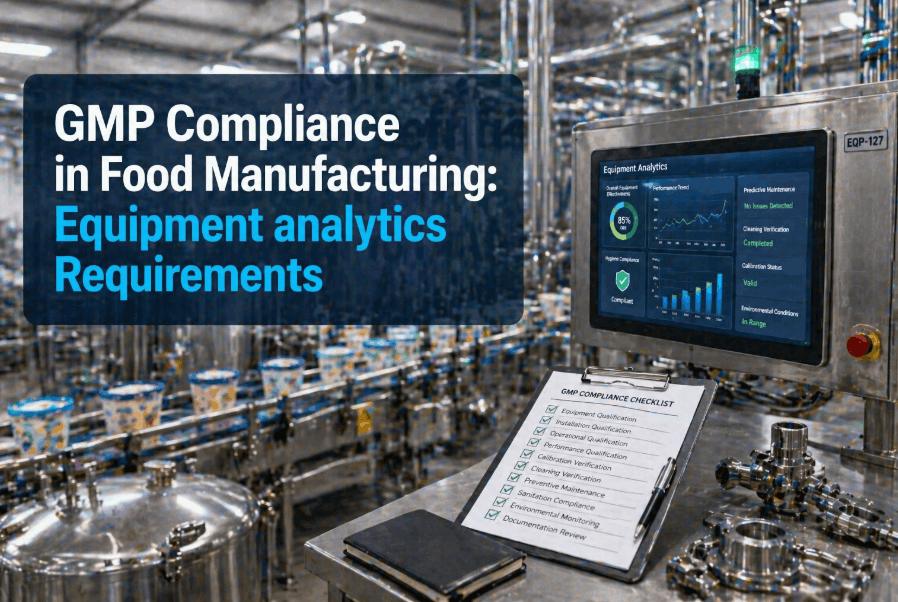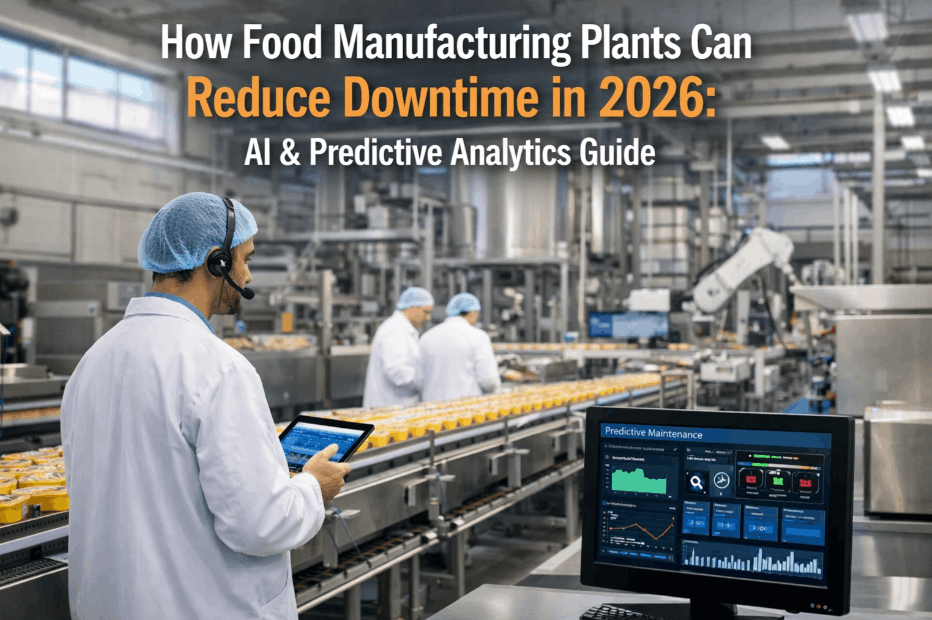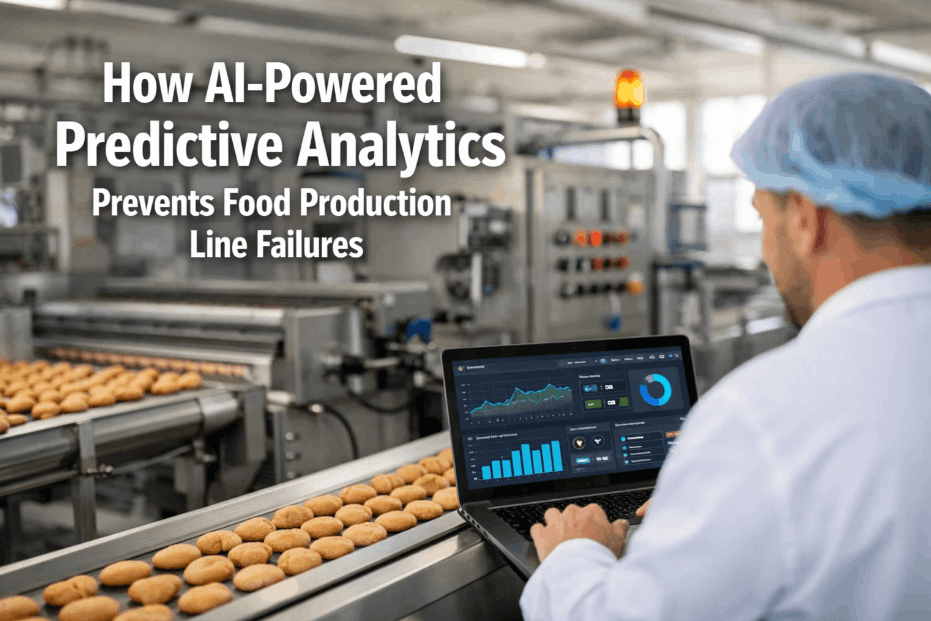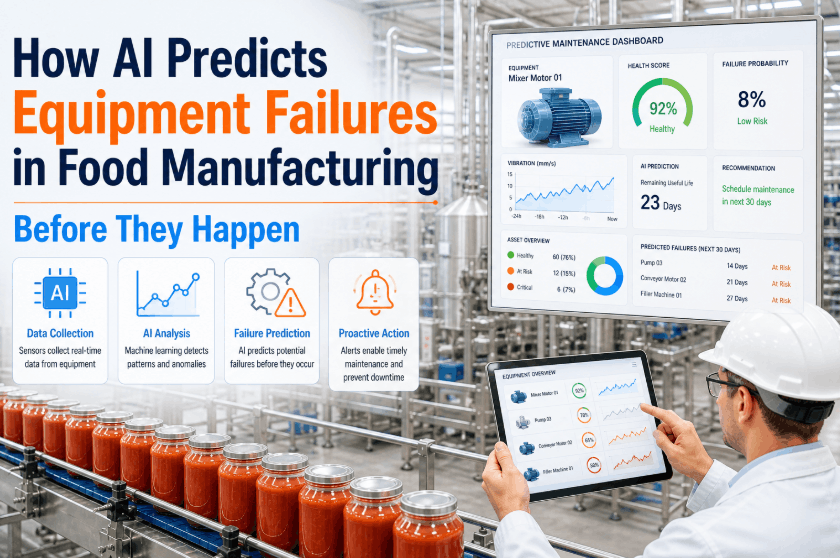
Unplanned equipment failures cost food manufacturers billions every year in lost production, wasted product, emergency repairs, and regulatory penalties — yet most facilities still rely on calendar-based maintenance schedules that have no ability to detect the early warning signs a machine sends before it breaks down. AI predicts equipment failures in food manufacturing by continuously analyzing sensor data, identifying anomaly patterns, and generating precise alerts days or weeks before a failure event occurs, giving operations teams the lead time they need to intervene during planned downtime rather than scramble during a production crisis. For food and beverage facilities ready to move from reactive firefighting to proactive reliability, Book a Demo to see how AI-driven predictive maintenance works in a live food processing environment.
Stop Equipment Failures Before They Stop Your Production Line
iFactory's AI-powered predictive analytics platform delivers real-time equipment health scoring, ML-driven failure prediction, and automated maintenance alerts — purpose-built for food and beverage manufacturing operations.
Why Traditional Maintenance Fails to Prevent Food Manufacturing Equipment Breakdowns
Scheduled preventive maintenance was designed for a simpler era of manufacturing — one where machines ran predictable cycles, component wear followed consistent timelines, and inspectors could reasonably assess equipment health through visual checks and operational logs. Modern food processing equipment operates in far more complex environments: continuous thermal cycling in pasteurization lines, aggressive chemical exposure in clean-in-place systems, variable load profiles driven by seasonal raw material changes, and multi-line interdependencies where a single conveyor bearing failure cascades into a full production stoppage. The failure modes that matter most — gasket degradation, pump cavitation, heat exchanger fouling, compressor refrigerant loss — develop on timelines that have nothing to do with any maintenance calendar, and the financial consequences of missing them compound far beyond the repair cost itself.
How AI Predicts Equipment Failures in Food Manufacturing: The Core Technology
Understanding how artificial intelligence generates failure predictions requires a clear picture of the data pipeline that powers it — from raw sensor signals at the equipment level through the machine learning models that transform those signals into actionable intelligence. AI failure prediction for food equipment is not a single algorithm; it is a layered system of data collection, signal processing, model inference, and alert generation that operates continuously and improves over time as it accumulates equipment-specific operational history. Food plant managers exploring predictive analytics can Book a Demo to walk through a real-time system architecture demonstration tailored to their specific processing equipment.
Continuous Multi-Parameter Sensor Data Collection
Vibration accelerometers, temperature probes, pressure transducers, current transformers, and flow meters generate the raw signal streams that feed AI models. Non-invasive sensor architectures allow installation without modifying existing PLCs or production equipment, making deployment practical even in high-sanitation food processing zones where invasive retrofitting is not an option.
Feature Extraction and Anomaly Detection Algorithms
Raw sensor data is processed through signal conditioning and feature extraction pipelines that transform time-domain signals into frequency-domain characteristics and statistical features that machine learning models use for health assessment — converting thousands of vibration data points per second into spectral signatures that indicate bearing race defects, pump cavitation, or shaft imbalance.
Regression and Classification Models for Failure Prediction
Supervised regression models trained on historical failure data generate remaining useful life estimates for monitored components, while anomaly detection models flag deviations from established healthy-operation baselines in real time. Ensemble model architectures combine multiple algorithm outputs to reduce false positive rates while maintaining high sensitivity to genuine fault development signatures.
Severity-Scored Maintenance Alerts and Work Order Integration
AI-generated alerts are scored by severity and urgency, giving maintenance teams a prioritized action queue rather than an undifferentiated alarm list. Integration with CMMS platforms automatically generates work orders with equipment health context, recommended interventions, and parts requirements — connecting predictive insights directly to maintenance execution workflows.
Machine Learning Training Data: What AI Models Learn From in Food Processing Environments
The predictive accuracy of any AI failure prediction system depends fundamentally on the quality and diversity of the training data used to build its underlying models. Models must learn normal operating signatures across the full range of conditions a facility experiences — different product formulations, seasonal raw material variations, shift changeovers, CIP cycle transitions, and startup and shutdown sequences — before they can reliably distinguish genuine fault development from routine operating variability. Food operations teams wanting to understand how model training maps to their specific production cycles can Book a Demo to review the baseline calibration process in detail.
Labeled Fault Signatures That Define What Failure Looks Like
Supervised learning models for equipment failure prediction are trained on labeled datasets that pair historical sensor recordings with known failure outcomes — teaching the model to recognize the specific vibration frequency shifts, thermal drift patterns, and electrical signature changes that preceded documented failure events. Failure libraries include bearing defect signatures, seal degradation patterns, impeller wear curves, and fouling progression trajectories specific to food-contact processing equipment.
Equipment-Specific Healthy-State Signatures Across All Operating Modes
Anomaly detection models require a well-characterized definition of normal operation before they can reliably flag deviations. For food processing equipment, this means capturing healthy-state signatures across the full production envelope: full-load steady state, ramp-up and ramp-down transients, product changeover transitions, CIP cycle thermal profiles, and low-throughput periods. Baselines established across this full operating range dramatically reduce false positive rates that erode maintenance team confidence in AI alert systems.
Production Variables That Affect Equipment Stress and Failure Risk
AI models that incorporate process context data — throughput rates, product viscosity, ambient temperature, raw material composition — generate more accurate failure predictions than models trained on equipment sensor data alone. Models that account for these process variables avoid false alerts triggered by predictable operational shifts rather than genuine fault development, which is critical for maintaining technician trust in the monitoring system.
Repair Records and Component Replacement Logs That Refine Predictions
Maintenance history integration allows AI models to correlate predicted fault signatures with actual maintenance findings — validating model accuracy against real-world outcomes and continuously refining failure prediction lead times. Facilities with well-documented CMMS histories provide a significant model training advantage, enabling faster calibration and higher prediction confidence from the earliest weeks of platform deployment.
Critical Equipment Categories Where AI Failure Prediction Delivers the Highest ROI in Food Manufacturing
Not every asset in a food processing facility carries equal consequence when it fails — effective AI deployment programs prioritize monitoring resources on the equipment categories where failure consequences are highest in terms of food safety exposure, regulatory risk, and production throughput impact. Facilities assessing their asset criticality can Book a Demo to walk through a priority mapping exercise based on their specific production lines.
| Equipment Category | Primary Failure Modes AI Detects | Detection Method | Failure Consequence | Prediction Lead Time |
|---|---|---|---|---|
| Pasteurizers & Heat Exchangers | Fouling, gasket degradation, flow diversion valve wear | Thermal drift + pressure differential analytics | Regulatory non-compliance, product condemnation | 1–3 weeks |
| Centrifugal Separators | Bowl imbalance, bearing race defects, drive train wear | High-frequency vibration spectral analysis | Catastrophic mechanical failure, product quality loss | 2–4 weeks |
| Refrigeration Compressors | Refrigerant system degradation, condenser fouling, valve wear | Electrical signature + thermal efficiency trending | Cold chain violation, finished goods loss | 2–6 weeks |
| Homogenizers | Valve seat wear, plunger seal degradation, pump cavitation | Pressure differential + vibration analysis | Product consistency failure, unplanned stoppage | 1–2 weeks |
| CIP Pumps & Valves | Flow rate decline, seal degradation, valve actuator wear | Flow analytics + cycle effectiveness scoring | Sanitation failure, FSMA non-compliance | 1–3 weeks |
| Spray Dryers & Evaporators | Nozzle wear, fouling progression, thermal efficiency decline | Outlet temp consistency + heat transfer coefficient | Product moisture deviation, energy waste | 1–4 weeks |
| Conveyor and Filling Lines | Drive motor bearing wear, belt tension loss, fill valve drift | Current signature + vibration monitoring | Throughput loss, fill weight compliance failure | 1–3 weeks |
Anomaly Detection vs. Regression Models: Choosing the Right AI Approach for Food Equipment Failure Prediction
Food manufacturing AI deployments benefit from understanding the distinction between the two primary machine learning approaches used in predictive maintenance — anomaly detection and regression-based remaining useful life estimation — because each addresses a different operational question and generates different types of actionable intelligence for maintenance teams. Best-in-class predictive analytics platforms deploy both approaches in parallel, using anomaly detection as an early warning system and regression models to convert those warnings into prioritized maintenance schedules with confidence-weighted intervention timelines. Operations leaders evaluating AI analytics vendors can Book a Demo to see how ensemble model architectures perform across different food processing equipment categories with live data.
Real-Time Equipment Health Scoring: Translating AI Predictions Into Maintenance Decisions
Raw AI model outputs — probability scores, anomaly indices, remaining useful life estimates — have limited operational value unless they are translated into structured decision support that food plant maintenance and operations teams can act on immediately. Effective manufacturing intelligence platforms convert model outputs into equipment health scores that give every monitored asset a continuously updated performance rating, trending toward or away from intervention thresholds in ways that maintenance planners can read at a glance without requiring data science expertise. An asset scoring 78 out of 100 but declining two points per day carries more urgency than an asset scoring 65 that has been stable for a month — and that trend intelligence is what transforms dashboards from status displays into genuine planning tools that food manufacturers can use to Book a Demo and validate against their own equipment profile in real time.
AI Failure Prediction and Food Safety Compliance: A Critical Connection
The relationship between equipment health and food safety compliance in processing facilities is direct and legally significant — pasteurizer performance deviations that AI monitoring would flag as developing faults two weeks before failure can, if undetected, produce regulatory non-compliance events that require FDA notification, product recall assessment, and documented corrective action programs. Smart factory analytics for food manufacturing creates a continuous compliance assurance layer that monitors the equipment underpinning critical control points in HACCP plans and generates the automated documentation that regulatory inspectors and third-party auditors require — and for facilities managing FSMA Preventive Controls obligations, teams can Book a Demo to see how iFactory maps automated records to their specific compliance framework.
Predictive Analytics ROI in Food Manufacturing: Quantifying the Financial Case
The return on investment calculation for AI failure prediction in food manufacturing covers multiple value streams that compound over time as model accuracy improves and coverage expands to additional asset categories. Understanding the full ROI picture requires accounting for both the direct cost avoidance delivered by preventing specific failure events and the systemic operational improvements that condition-based maintenance programs generate across the entire facility.
Each prevented unplanned line stoppage avoids production throughput loss, product in-process condemnation, and premium labor costs. For high-throughput food processing lines running at $15,000–$40,000 per hour of production value, even a single prevented stoppage per quarter typically covers annual platform costs.
Emergency parts procurement at premium pricing, after-hours technician call-out fees, and expedited shipping costs add 40–60% to repair costs compared to planned maintenance interventions. AI-driven advance warning converts emergency repairs into scheduled work orders with full lead time for parts procurement at standard pricing.
Condition-based maintenance programs that intervene precisely when equipment health data indicates the need extend component service life by 20–35% while simultaneously reducing the risk of running components beyond their safe operational window and causing secondary damage.
A single product recall event in food manufacturing carries average costs exceeding $10 million when accounting for product recovery, regulatory response, brand damage, and customer relationship impact. AI monitoring of pasteurizers, CIP systems, and cold chain equipment provides early warning that prevents the equipment failures most likely to create food safety exposure.
Deploying AI Failure Prediction in Food Processing Plants: A Practical Implementation Framework
The practical path from AI concept to operational predictive maintenance in a food processing facility follows a structured deployment sequence that minimizes disruption to ongoing production while generating measurable ROI from priority asset monitoring within the first quarter of deployment. Modern industrial IoT platforms for food manufacturing are designed for non-invasive deployment that installs sensor hardware during scheduled CIP and sanitation downtime windows — no PLC modification, no production interruption, and no specialized IT infrastructure required at initial launch.
Asset Criticality Mapping and Priority Sensor Deployment
Identify the highest-consequence equipment categories — pasteurizers, refrigeration compressors, primary separators — and deploy vibration, temperature, and process sensors on these assets during the first available maintenance or CIP window. Data begins streaming immediately; no production interruption required.
Baseline Modeling and Alert Threshold Calibration
AI models establish equipment-specific performance baselines across the full production cycle, including product changeovers, seasonal operating variations, and CIP transitions. Alert thresholds are calibrated to each asset's actual operating profile, eliminating false positives that undermine maintenance team confidence in new monitoring systems.
Model Refinement and Coverage Expansion
As the first predicted maintenance interventions are validated against actual equipment findings, model accuracy improves and monitoring coverage expands to secondary asset categories — homogenizers, evaporators, filling lines, and conveyor systems — building toward full-facility predictive maintenance capability within the first operating year.
Ready to Predict Equipment Failures Before They Shut Down Your Line?
iFactory's AI-powered manufacturing intelligence platform gives food processing facilities real-time equipment health scoring, ML-driven failure prediction, automated compliance documentation, and CMMS-integrated maintenance workflows — so your next equipment failure is already on the maintenance calendar before it becomes a production crisis.
Frequently Asked Questions: AI Equipment Failure Prediction in Food Manufacturing
How far in advance can AI predict equipment failures in food processing plants?
Bearing degradation in separators and compressors typically becomes detectable 2–6 weeks before failure, while heat exchanger fouling generates signatures 1–4 weeks in advance. Lead time depends on the rate of fault development and the specific failure mode involved.
What types of machine learning models are used for food equipment failure prediction?
Best-in-class platforms combine anomaly detection models (isolation forests, autoencoders) for early deviation detection with supervised regression models for remaining useful life estimation. Ensemble architectures reduce false positive rates while maintaining high fault detection sensitivity across diverse food processing equipment.
Does AI failure prediction work without historical failure data from our specific equipment?
Yes. Transfer learning allows AI models pre-trained on broad food processing equipment datasets to establish meaningful baselines even without extensive local failure history. Prediction accuracy improves continuously as local operating data and maintenance outcomes accumulate over time.
How does AI predictive maintenance support food safety and regulatory compliance?
AI monitoring detects pasteurizer drift, CIP cycle effectiveness decline, and refrigeration degradation before they trigger FDA notification or HACCP deviation obligations. Automated maintenance records provide continuous audit trail documentation for FDA PMO, FSMA, and third-party certification audits.
What is the typical ROI timeline for AI failure prediction in food manufacturing?
For high-throughput facilities, preventing a single unplanned line stoppage per quarter typically covers annual platform costs within the first year. Emergency maintenance cost reduction and extended component service life add compounding value in years two and three of deployment.
Start Predicting Failures — Not Reacting to Them
Join food and beverage manufacturers already using iFactory's AI platform to eliminate unplanned downtime, cut emergency maintenance costs, and build a proactive reliability program that compounds ROI year over year.