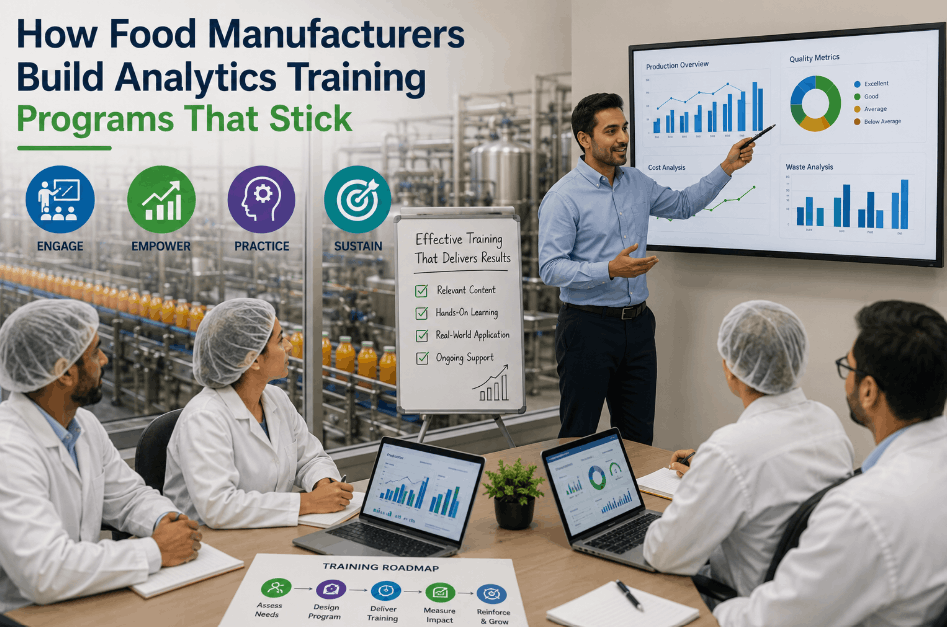
Analytics training programs in food manufacturing are no longer a back-burner HR initiative—they are a core operational requirement for facilities that depend on instrumentation, automated control systems, and real-time data to meet food safety, regulatory compliance, and production efficiency standards. Food plant analytics technicians who lack structured competency development expose facilities to process deviations, equipment failures, and compliance gaps that directly impact product quality and regulatory standing. For HR and analytics directors building or modernizing their training infrastructure, the difference between a program that sticks and one that fades within 90 days comes down to how competency frameworks, on-the-job training structures, and compliance tracking are engineered together. If your facility is still relying on informal mentorship and paper-based certification logs to track technician development, Book a Demo to see how AI-driven training analytics platforms are redefining workforce competency management across food manufacturing operations.
Why Most Food Plant Analytics Training Programs Fail to Produce Lasting Competency
The majority of analytics training programs in food manufacturing fail not because the content is poor but because the delivery architecture is broken. Training events are delivered as one-time classroom sessions disconnected from actual equipment, competency assessments are subjective sign-offs rather than validated performance observations, and compliance records exist in spreadsheets that no one audits until an incident forces a review. Food plant analytics technicians are expected to monitor process instrumentation, respond to alarm conditions, perform calibration procedures, and document compliance data—all tasks that require demonstrated hands-on competency, not just attendance certificates. Building a food plant analytics training program that produces durable skills requires a structured approach that addresses the root causes of training failure before a single session is scheduled. Facilities ready to benchmark their current program against proven frameworks can Book a Demo for a guided gap assessment.
No Defined Competency Framework
Without a structured analytics competency map that defines what technicians at each skill level must know and demonstrate, training programs have no measurable endpoint. Technicians receive inconsistent instruction, supervisors cannot assess readiness for unsupervised task performance, and HR has no data to link training investment to workforce capability outcomes.
Root cause: Undefined training outcomesOJT Without Structured Milestones
On-the-job training in food plant analytics environments is most effective when it is milestone-driven and documented. Unstructured OJT—where a new technician shadows a senior operator until someone decides they are ready—produces inconsistent competency levels, creates liability exposure during food safety audits, and gives HR directors no visibility into training progress or completion timelines.
Root cause: No OJT milestone documentationFood Safety Training Disconnected from Analytics Roles
HACCP, FSMA, and SQF food safety training requirements apply directly to analytics technicians who monitor CCP parameters, calibrate food contact instrumentation, and document deviation records. When food safety training exists in a separate compliance silo from analytics competency development, technicians receive incomplete role-specific training that creates audit exposure and operational risk.
Root cause: Siloed compliance trainingNo Equipment Certification Tracking
Food manufacturing analytics equipment—pH meters, dissolved oxygen probes, flow sensors, gas analyzers—requires technician certification for calibration and maintenance tasks. Without centralized equipment certification tracking, facilities operate with uncertified personnel performing calibration procedures, generating compliance documentation gaps that are difficult to close during regulatory inspections.
Root cause: Fragmented certification recordsBuilding an Analytics Competency Framework for Food Manufacturing Technicians
A functional analytics competency framework for food manufacturing defines the knowledge, skills, and demonstrated behaviors required at each stage of technician development—from entry-level instrument operators to senior process analytics specialists. The framework serves as the architectural foundation for every other element of the training program: OJT milestone sequences, equipment certification pathways, food safety training integration, and AI-driven competency tracking. Designing the framework correctly at the outset prevents the cascading misalignment that occurs when training content, assessment criteria, and job performance expectations point in different directions. HR and analytics directors who want a template competency framework calibrated to food plant analytics roles should Book a Demo to review the iFactory competency model applied in live food manufacturing environments.
Foundation — Instrument Awareness and Safety Compliance
Entry-level analytics technicians must demonstrate understanding of food plant instrumentation types, basic measurement principles, personal protective equipment requirements for analytics environments, and food safety documentation protocols before any unsupervised task assignment. Foundation competencies are assessed through structured knowledge checks and supervised task observation, not classroom attendance alone.
Competencies: Instrument identification · PPE compliance · GMP documentation basicsOperational — Calibration, Sampling, and Data Recording
Operational-level competency covers calibration procedure execution for process instrumentation, sample collection techniques for compliance testing programs, and accurate data recording in regulatory documentation systems. OJT milestones at this level must be signed off by a certified senior technician following observed performance, not self-reported completion.
Competencies: Calibration execution · Sample chain of custody · Data entry accuracyAdvanced — Process Analytics Interpretation and Alarm Response
Advanced analytics competency requires technicians to interpret process trend data, diagnose instrument faults, respond to alarm conditions within defined response protocols, and communicate process deviations to production supervisors in compliance with food safety deviation documentation requirements. This level is the threshold for unsupervised control room and field analytics operations.
Competencies: Trend analysis · Fault diagnosis · Deviation documentationSpecialist — Analytics Program Ownership and Continuous Improvement
Specialist-level analytics technicians own equipment performance metrics, lead calibration management programs, mentor junior technicians through structured OJT delivery, and contribute to analytics system improvement projects. Specialist competencies align with food safety coordinator responsibilities under FSMA and support internal auditor functions during HACCP verification activities.
Competencies: Program ownership · OJT facilitation · FSMA verification supportStructuring On-the-Job Training for Food Plant Analytics Technicians That Produces Verified Competency
On-the-job training remains the most effective development method for food plant analytics skills because instrumentation tasks are equipment-specific, environment-dependent, and impossible to fully replicate in a classroom setting. The critical distinction between OJT programs that build durable competency and those that simply fill time is whether task milestones are defined, observed, and documented with enough specificity to generate a defensible competency record during a regulatory audit or food safety inspection. The following four-phase OJT architecture is designed specifically for food manufacturing analytics training contexts, incorporating the equipment certification requirements, food safety compliance touchpoints, and AI-driven progress tracking capabilities that modern food plants require. Environmental and HR directors looking to deploy this OJT structure across their facilities can Book a Demo to see how structured milestone tracking integrates with existing HRIS and compliance platforms.
Phase 1 — Orientation and Equipment Familiarization
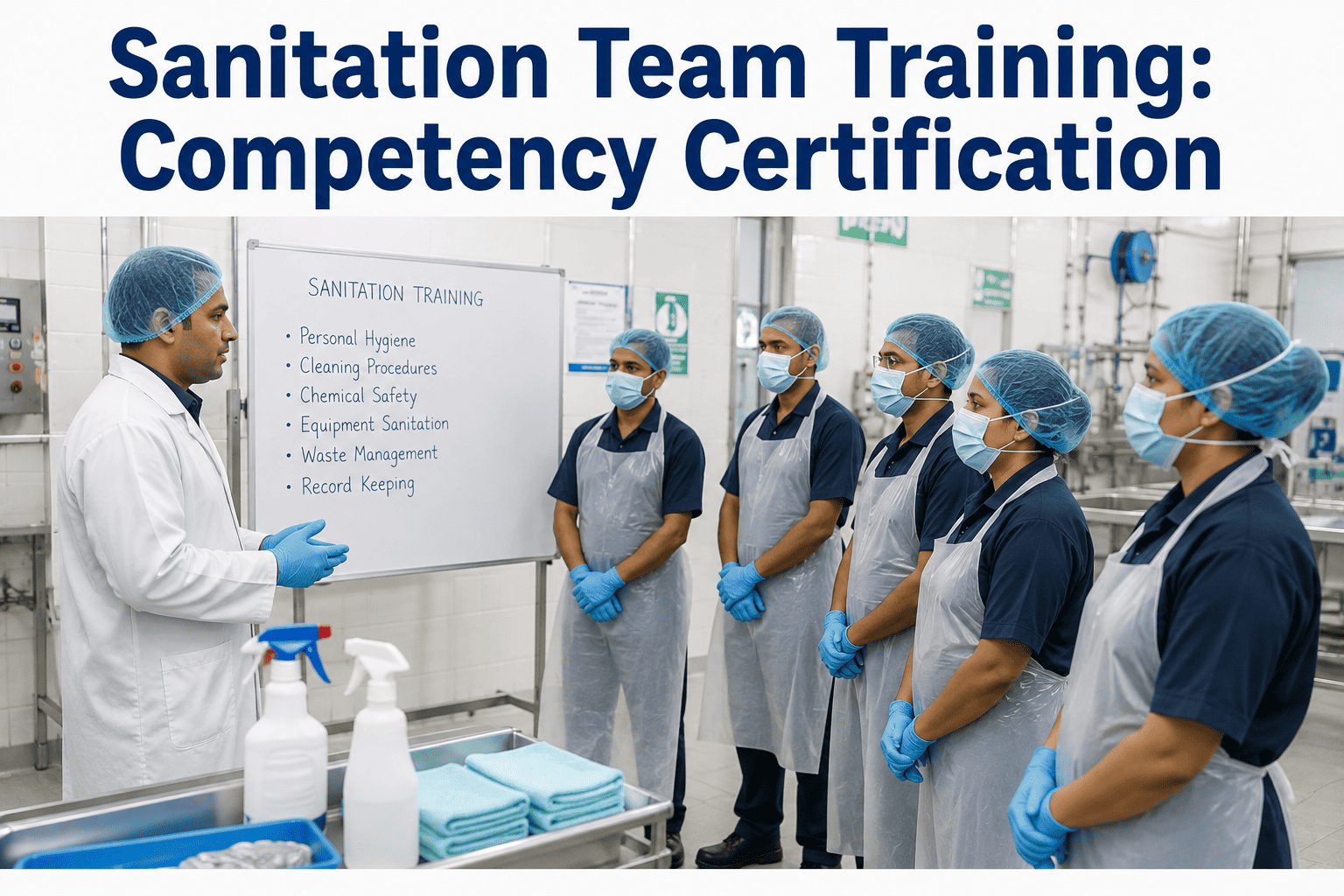
New analytics technicians complete a structured orientation covering the facility's instrumentation inventory, process analytics architecture, food safety documentation systems, and regulatory compliance obligations specific to their role. Equipment familiarization tasks are documented in a milestone checklist that establishes a baseline competency record before any operational task assignment begins. This phase typically spans two to four weeks depending on plant complexity and instrumentation diversity.
Phase 2 — Supervised Task Performance with Observation Checklists
During supervised task performance, technicians execute calibration procedures, sampling protocols, and data recording tasks while a certified senior technician completes a structured observation checklist for each task category. Observation checklists replace subjective sign-off with criterion-referenced assessment—each checklist item specifies exactly what the observer must see the trainee perform correctly before the milestone is marked complete. Digital observation records feed directly into the AI-driven training compliance dashboard for real-time progress visibility.
Phase 3 — Monitored Independent Performance and Competency Validation
After supervised task sign-off, technicians transition to monitored independent performance—executing tasks without direct observation but with senior technician availability for questions. Competency validation at the end of this phase includes a practical assessment covering the full task range, a food safety knowledge check aligned to HACCP and FSMA requirements for the role, and a review of documentation accuracy records from the monitored period. Validation records are retained as compliance evidence for regulatory inspections and third-party food safety audits.
Phase 4 — Certification and Continuous Development Planning
Technicians who complete competency validation receive equipment-specific certifications entered into the centralized certification tracking system with defined renewal intervals. Individual development plans generated at this stage map the pathway from current certification status to the next competency level, identifying specific training modules, equipment certifications, and OJT milestones required for advancement. AI-driven training analytics flag approaching certification renewal dates and skill gap alerts before they create compliance exposure.
Integrating Food Safety Training into Analytics Competency Development Programs
Food safety training for analytics technicians is not a separate compliance obligation to be managed outside the competency development program—it is an integrated component of every analytics role's training requirements. Technicians who monitor critical control point parameters, calibrate food contact instrumentation, collect samples for pathogen testing programs, or document process deviations are directly embedded in the food safety management system. Their competency development must reflect those responsibilities with role-specific HACCP training, FSMA Preventive Controls awareness, and practical documentation skills that support the facility's food safety plan. The table below maps the primary food safety training requirements that apply to analytics roles across different food manufacturing environments.
| Food Safety Training Requirement | Applicable Regulation | Analytics Role Relevance | Training Delivery Method | Certification Renewal Interval |
|---|---|---|---|---|
| HACCP Principles and CCP Monitoring | 21 CFR Part 120/123, FSMA | Technicians monitoring CCP instrumentation and recording CCP logs | Classroom + OJT observation | Annual refresher |
| FSMA Preventive Controls Awareness | 21 CFR Part 117 | All analytics technicians in human food manufacturing | PCQI-delivered training or accredited online | Every 3 years or role change |
| SQF Food Safety Fundamentals | SQF Edition 9 | SQF-certified facilities — all production and analytics staff | Internal SQF Practitioner delivery | Annual site-specific retraining |
| GMP and Personal Hygiene Compliance | 21 CFR Part 110/117 | All analytics technicians with food contact area access | Onboarding + annual refresher | Annual |
| Allergen Control Awareness | FSMA, FALCPA | Technicians sampling or monitoring in multi-allergen production environments | Role-specific allergen training module | Annual or product line change |
| Environmental Monitoring Program (EMP) Sampling | FSMA, GFSI standards | Technicians conducting swab sampling and pathogen indicator monitoring | Practical OJT with certified evaluator sign-off | Biennial or sampling method change |
Equipment Certification Tracking for Food Plant Analytics Technicians: Building a Defensible Compliance Record
Equipment certification management is one of the most operationally consequential and administratively underserved components of food plant analytics workforce development. When a regulatory inspector or third-party food safety auditor asks which technicians are certified to perform pH meter calibration, dissolved oxygen probe verification, or gas analyzer maintenance—and the answer is a spreadsheet that hasn't been updated since last quarter—the facility's compliance posture deteriorates instantly. AI-driven certification tracking platforms solve this problem by maintaining real-time certification status records, generating automated renewal alerts, and producing audit-ready certification reports on demand. Food plant HR directors who want to eliminate certification tracking gaps across their analytics workforce should Book a Demo to see how centralized certification management integrates with existing competency development systems.
Process Instrument Calibration Certification
Calibration certification covers pH, temperature, dissolved oxygen, conductivity, flow, and pressure instrumentation used in food processing analytics. Certification requires demonstrated competency in reference standard use, calibration record documentation, and out-of-tolerance response protocols that align with the facility's instrument calibration management program and applicable metrology standards.
Renewal: Annual or instrument changeCompliance Sampling and Chain of Custody Certification
Sampling certification validates technician competency in sample container selection, preservation method application, chain of custody documentation, hold time management, and laboratory submission protocols for regulatory compliance samples. Errors in sampling procedure invalidate test results and create compliance gaps that cannot be retroactively corrected, making certification tracking for this task category especially critical.
Renewal: Biennial or method changeCompliance Data Entry and Electronic Records Certification
Electronic records certification covers data entry accuracy standards, correction procedure compliance under 21 CFR Part 11 or equivalent, system access management, and record integrity verification protocols. As food manufacturing facilities migrate from paper-based analytics records to digital compliance platforms, electronic records competency becomes a regulatory requirement rather than a preferred qualification.
Renewal: System upgrade or role changeAI-Driven Training Tracking: How Technology Transforms Analytics Workforce Development in Food Manufacturing
The transition from spreadsheet-based training records to AI-driven analytics workforce development platforms is fundamentally changing how food manufacturing HR and analytics directors manage competency development at scale. Traditional training management relies on manual record updates, supervisor memory, and periodic audits to maintain visibility into technician competency status. AI-driven platforms replace this reactive model with continuous monitoring of competency records, certification renewal timelines, OJT milestone completion rates, and food safety training compliance across every analytics role in every facility—delivering the real-time workforce intelligence that training programs need to stay ahead of compliance obligations. Environmental and HR directors managing analytics training across multiple sites can Book a Demo to see how AI-driven training dashboards aggregate competency data across an entire food manufacturing organization.
Improvement in analytics training completion rates when AI-driven milestone tracking and automated reminder systems replace manual follow-up by supervisors and HR coordinators.
Reduction in expired equipment certifications when automated renewal alert systems replace calendar-based manual tracking across all analytics technician roles and equipment categories.
Reduction in training record compilation time for food safety audits and regulatory inspections when certification records, OJT documentation, and food safety training evidence are centralized in a single platform.
Improvement in the ability to identify skill gap contributors to process deviations and compliance incidents when AI platforms link competency records to event documentation in real time.
Analytics Workforce Skills Development Strategies That Reduce Turnover and Build Long-Term Capability
Skills development investment in food plant analytics roles pays dividends beyond compliance performance—it directly reduces turnover in a talent segment where replacement costs are high and institutional knowledge loss creates sustained operational risk. Analytics technicians who can see a defined competency pathway, receive structured development support, and earn recognized equipment certifications are measurably more likely to remain with the facility and take on expanded responsibilities. The following skills development strategies are drawn from food manufacturing facilities that have built analytics workforces capable of sustaining continuous improvement programs without dependence on external contractors for routine instrumentation and compliance tasks.
Structured Senior-to-Junior Mentorship Programs
Pairing entry-level analytics technicians with certified senior mentors under a structured mentorship framework—with defined meeting cadences, milestone review checkpoints, and documented knowledge transfer objectives—accelerates competency development timelines and creates a senior technician cohort that is actively invested in workforce quality outcomes. Mentorship programs reduce the time to operational independence for new technicians by an average of 30 to 40 percent compared to informal OJT arrangements.
Cross-Functional Analytics Cross-Training for Process Breadth
Analytics technicians who receive structured cross-training across multiple process areas—wastewater analytics, environmental monitoring, utility metering, and production process control—develop the systems-level understanding that makes them significantly more effective at diagnosing cross-system interactions and contributing to continuous improvement initiatives. Cross-training certification pathways also provide clear advancement motivation that reduces the talent retention risk common in single-specialty analytics roles.
Industry Certification Sponsorship and Tuition Support
Sponsoring analytics technicians for industry-recognized certifications—WEF Water Quality Analyst, ISA Certified Automation Professional at entry level, or NEHA Registered Environmental Health Specialist—creates a credentialed workforce whose capabilities are portable, verifiable, and aligned with the technical demands of modern food plant analytics programs. Tuition support programs tied to service commitments balance investment risk while signaling the organization's commitment to long-term technician development.
Food Manufacturing Analytics Training — Frequently Asked Questions
What competencies should a food plant analytics training program cover?
A complete food plant analytics training program should cover instrumentation operation and calibration, compliance sampling and chain of custody, data recording and electronic records management, food safety requirements specific to the analytics role (HACCP, FSMA, GMP), alarm response protocols, and equipment-specific certification tasks. Competencies should be organized into a tiered framework that defines clear advancement pathways from entry level to specialist.
How long does it take to build a structured analytics OJT program for a food manufacturing facility?
A baseline structured OJT program covering core analytics roles in a mid-size food plant can be designed and deployed in eight to twelve weeks when using a competency framework template and AI-driven milestone tracking platform. Facilities building from scratch without template frameworks typically require four to six months to develop observation checklists, certification criteria, and documentation systems to an audit-ready standard.
Are food plant analytics technicians required to have food safety training?
Yes. Analytics technicians who monitor CCPs, collect compliance samples, calibrate food contact instrumentation, or document process deviations have direct food safety responsibilities under FSMA Preventive Controls and HACCP regulations. Role-specific food safety training is a regulatory requirement, not an optional addition, and must be documented with evidence of completion and competency assessment in a format that supports regulatory inspection.
How does AI-driven training tracking improve analytics workforce compliance in food plants?
AI-driven training platforms provide real-time visibility into competency completion status, certification renewal timelines, and food safety training compliance across all analytics roles. Automated alerts notify supervisors and HR directors when certifications are approaching expiry, OJT milestones are overdue, or training completion rates fall below compliance thresholds—replacing the reactive discovery of gaps during audits with proactive management that prevents compliance exposure before it occurs.
Can a single training platform manage analytics competency development across multiple food manufacturing sites?
Yes. Multi-site AI training platforms support site-specific competency frameworks, equipment certification inventories, and food safety training requirements within a unified corporate dashboard. HR and analytics directors can monitor training compliance rates, certification status, and skill gap trends across all facilities simultaneously—enabling standardized training quality management without requiring identical program structures at every site.
What documentation is required to support analytics training during a food safety audit?
Food safety auditors reviewing analytics training records typically require training completion certificates with dates, OJT milestone sign-off records with evaluator signatures, equipment certification records with issue and expiry dates, food safety training completion evidence (HACCP, FSMA, GMP), and competency assessment results for role-critical tasks. All records should be retrievable by individual, role, equipment category, and date range to support efficient audit response.