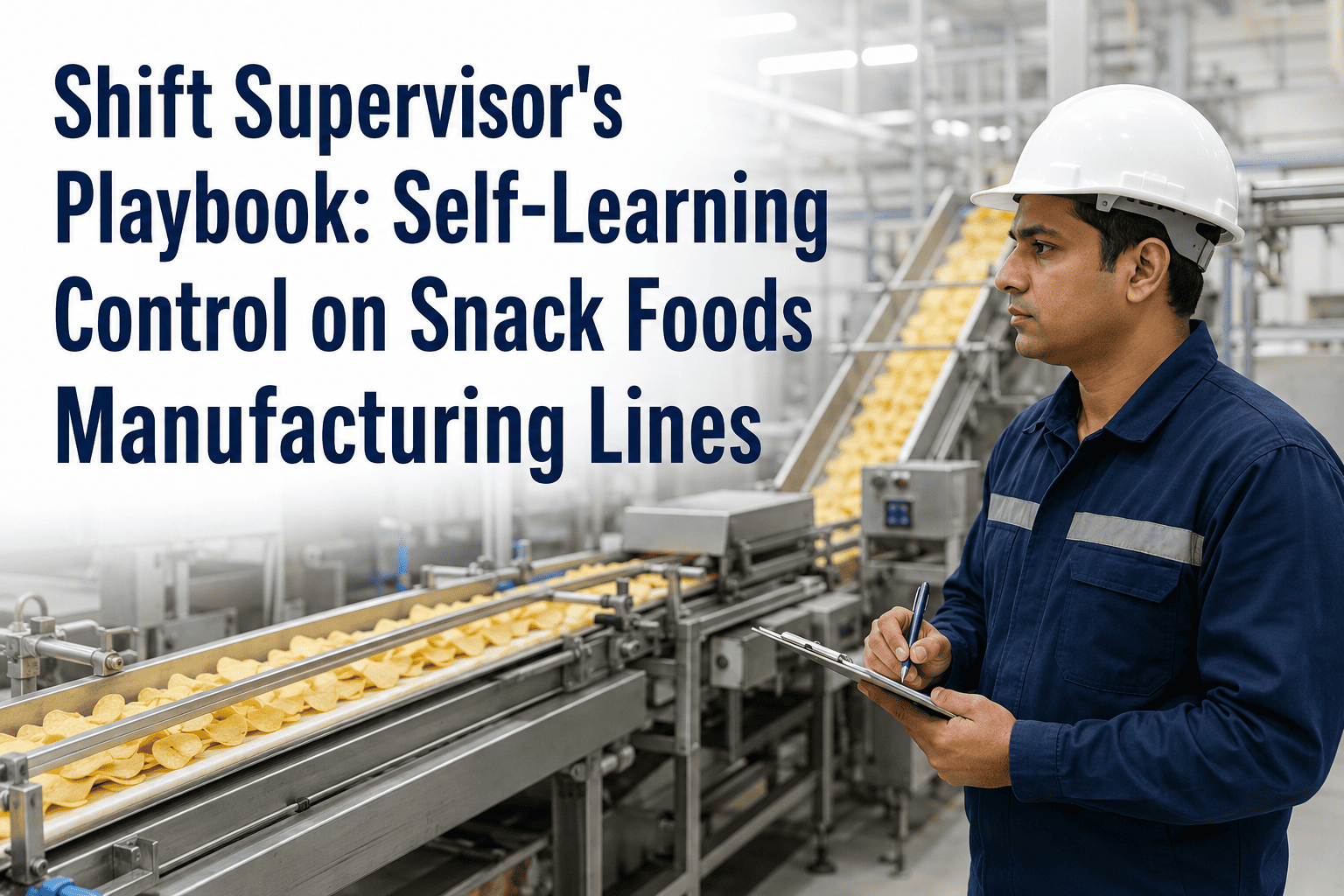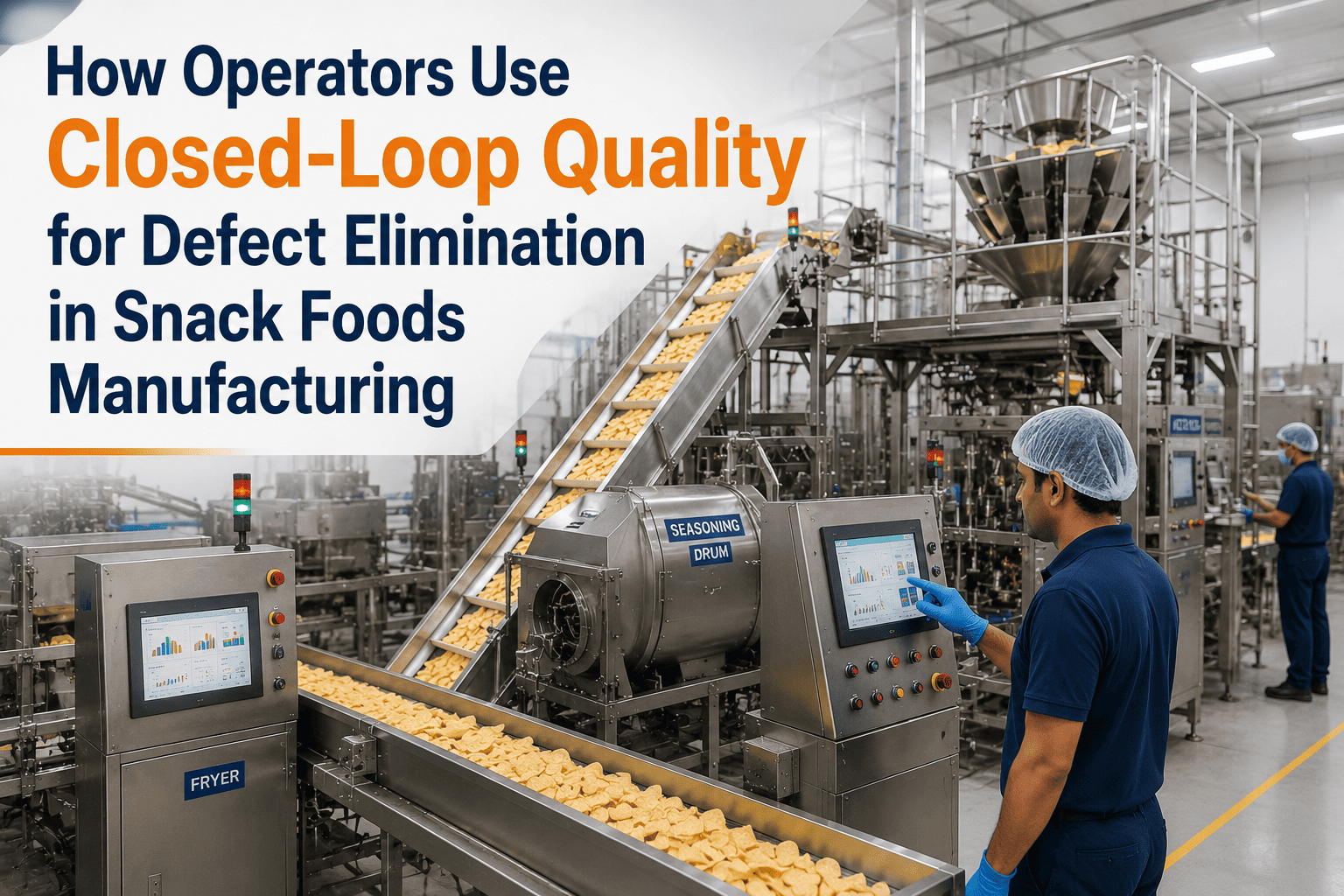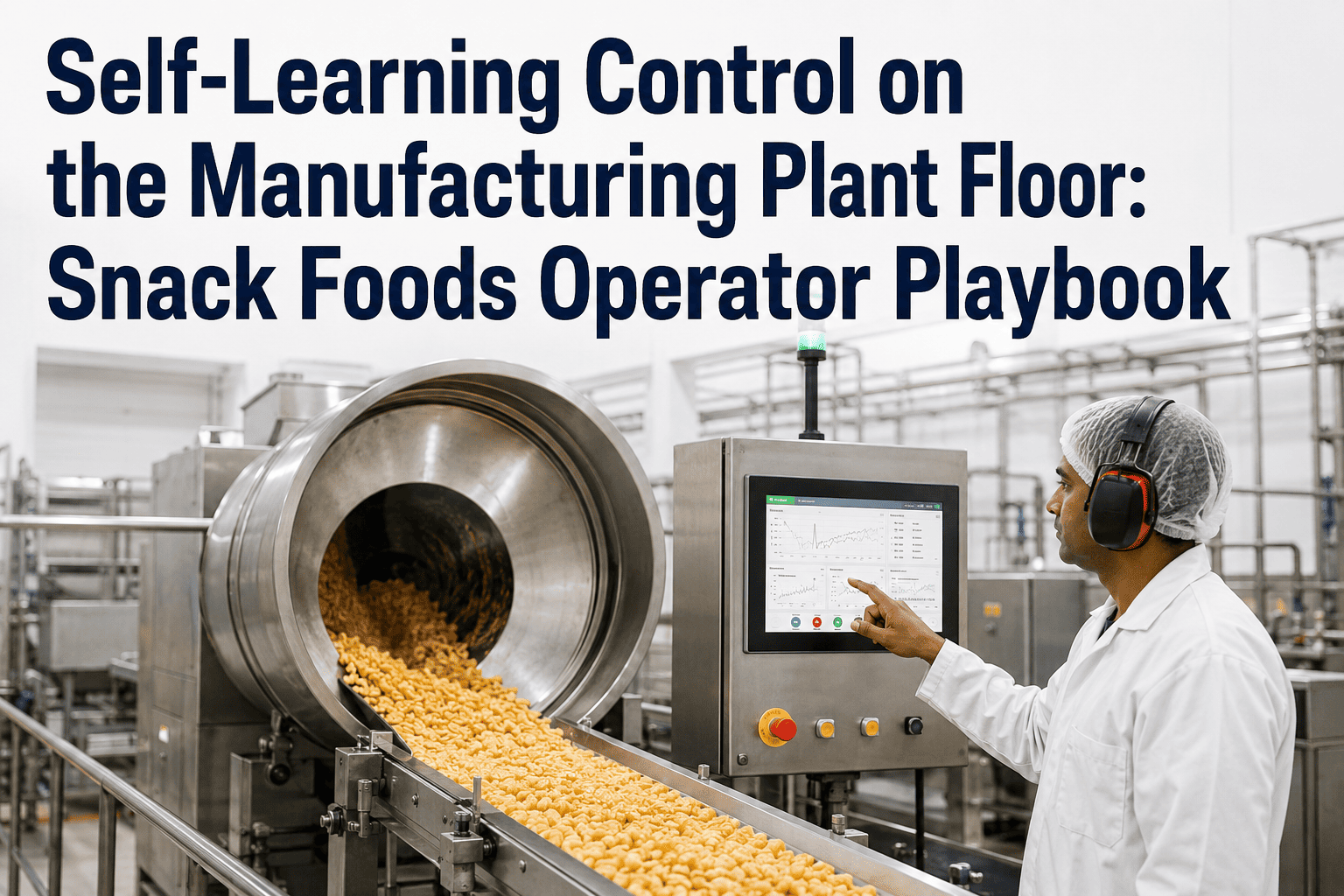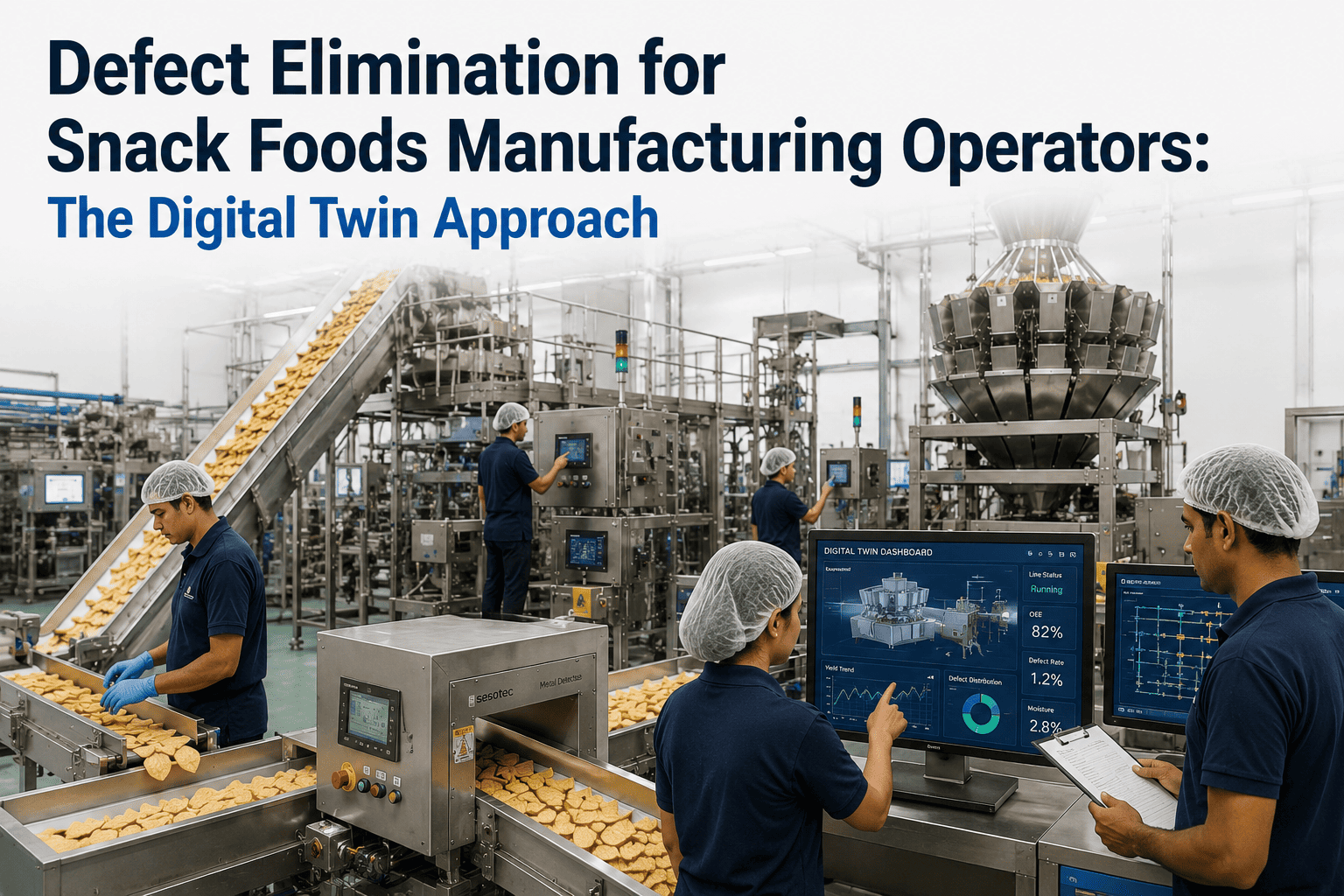
The line supervisor at a mid-sized snack foods plant glances at the overhead display — she sees the "Quality Yield" for Tortilla Line 3 has drifted from 92% to 84% over the last two hours. The last visual inspection check was 45 minutes ago, and the operator on that line is scrambling to clear a jam on the fryer. By the time she walks over and pulls a sample, another 600 bags of under-seasoned chips have made it past the checkweigher. That's $1,200 in raw material, packaging, and rework cost — in one hour, on one line, for one SKU. Multiply by three shifts, five lines, and seven SKUs. This is the cost of relying on human eyes for real-time quality decisions on a high-speed snack foods line. There is a better way to see what your line is actually doing.
Replace Operator-Guesswork with Real-Time AI Vision on Every Snack Foods Line
Catch seasoning drift, shape defects, and packaging flaws the second they happen — before they hit the case packer. No cloud, no latency, no new camera infrastructure.
Before AI Vision vs. After AI Vision on the Plant Floor
The difference between catching a defect at the seasoning drum versus catching it at the case packer is the difference between a $50 trim and a $5,000 rework. Here is what that contrast looks like in practice.
Without iFactory
- Operator pulls a sample every 30 minutes — 48 samples per shift, 144 per day, each a snapshot of an already-past moment.
- Seasoning drift on the tortilla line goes undetected for 20 minutes — 1,200 bags at $0.35 each in wasted seasoning and packaging.
- Broken chip fragments in the fryer exit stream cause a downstream packaging jam; the line stops for 18 minutes while the case packer is cleared.
- Quality supervisor spends 2 hours per shift walking lines, pulling samples, and updating paper logs instead of analyzing trends.
- Customer complaints about inconsistent product appearance trigger a 5,000-case recall investigation every 6 months.
With iFactory
- AI vision inspects every single chip at line speed (120 bags/min) — 100% sample rate, zero latency, zero operator intervention.
- Seasoning drift detected within 3 seconds of the first under-seasoned chip; line speed adjusts automatically to compensate.
- Broken chip fragments flagged in real time; a gentle air jet diverts them before they reach the packaging lane.
- Quality supervisor opens a dashboard at shift start and sees yield trends, defect Pareto, and OEE impact for all 5 lines.
- Customer complaints drop 80%; recall investigations become a quarterly review of archived vision data, not a panic.
The Hidden Cost of Manual Visual Inspection
Every minute a defect goes undetected on a snack foods line, the cost compounds. Here is what that looks like in real dollars across a typical 3-line plant running 20 hours per day.
Seasoning Drift on Tortilla Line
Operator checks every 30 min. In 20 min of undetected drift, 1,200 bags leave with 18% less seasoning. Rework requires re-seasoning at a downstream station.
Broken Chip Fragments Jamming Case Packer
Manual visual inspection misses small fragments. One jam stops the line for 18 min; the line runs at 120 bags/min.
Packaging Seal Defects on Potato Chip Bags
Operator inspects seals visually every 15 min. A 10-minute gap in detection means 1,200 bags with weak seals. These bags fail in transit.
Color Variation in Baked Snacks
Oven temperature drift causes 12% of product to exit over-baked. Manual sorting at the exit conveyor catches only 60% of defects.
Foreign Material on Packaging Film
Human inspectors miss 1 in 20 specks on the film roll. A single contaminated bag triggers a customer complaint and a 500-case hold.
From Sample-Based to Full-Stream Vision in 12 Weeks
iFactory is not a cloud-based camera system. It is an on-premise NVIDIA appliance that connects directly to your existing line cameras — or we install new ones — and delivers real-time defect detection with zero data leaving the plant network.
Connect Your Line Cameras
We tap into your existing IP cameras or install new industrial-grade units at key inspection points: seasoning drum exit, fryer exit, packaging lane, case packer infeed.
Train the AI on Your Product
Our team feeds 2,000 images of your actual product — good, marginal, and defective — into the model. The AI learns your specific color, shape, and texture tolerances in under 2 weeks.
Deploy On-Premise in 8 Weeks
The NVIDIA appliance sits in your plant network closet. No cloud connection required. The AI processes 120 frames per second with sub-100ms latency.
Operator Dashboard Goes Live
By week 12, your line supervisors see real-time defect heatmaps, yield trends, and automated alerts on a single screen. No more paper logs or walk-and-check.
What the AI Vision System Actually Sees
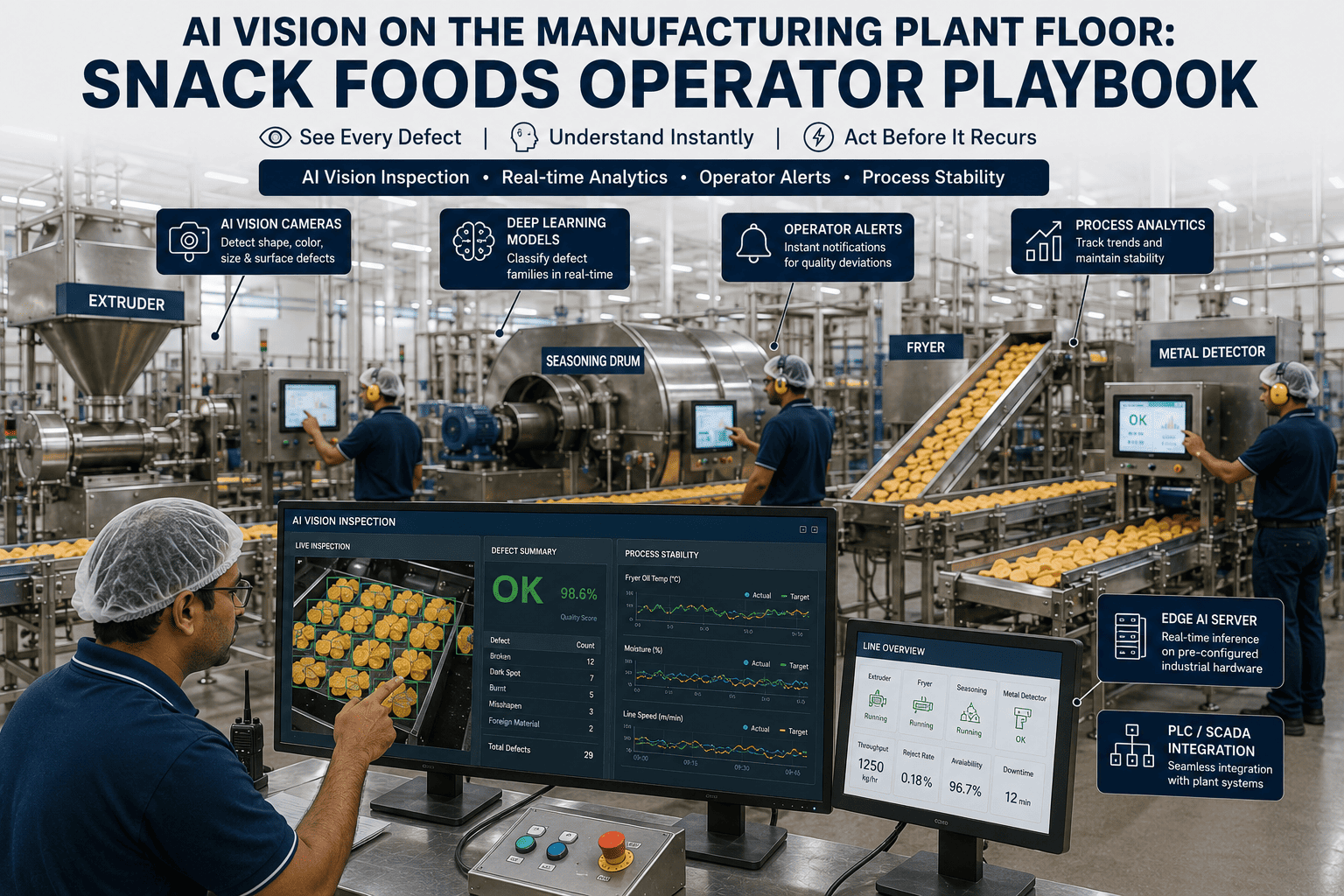
These are the four detection modes that matter most on a snack foods line. Each one runs simultaneously, on every bag, at line speed.
Seasoning Coverage & Distribution
Measures the density and uniformity of seasoning across the entire chip surface. Flags under-seasoned zones and over-seasoned clumps in real time. Adjusts drum speed automatically.
Shape & Size Grading
Detects broken chips, misshapen pieces, and fragments below your spec threshold. Diverts defects before they reach the packaging lane, preventing downstream jams.
Packaging Seal Integrity
Inspects every bag seal for gaps, wrinkles, and weak points. Flags bags with seal defects within 200ms of the seal bar release. Prevents leakers from reaching the case packer.
Color & Bake Uniformity
Measures the color profile of every chip exiting the oven. Detects over-baked, under-baked, and scorched product. Provides oven temperature feedback for closed-loop control.
Stop catching defects at the case packer. Start catching them at the drum. Book a 30-min walkthrough and we'll show you live footage of the system detecting seasoning drift in under 3 seconds.
Turnkey Deployment. No Cloud. No Data Egress.
iFactory is an end-to-end, on-premise solution. You hand over line access. We deliver a working pilot in 12 weeks. Here is exactly what is included.
On-Premise NVIDIA Appliance
Installed on your plant network. Zero cloud dependency. No data ever leaves the facility.
12-Week Pilot to Go-Live
We handle camera integration, AI model training, and dashboard setup. Your team spends 2 hours total on kickoff and training.
Full-Stream Inspection at Line Speed
Processes 120 frames per second with sub-100ms latency. Every bag inspected, every second of every shift.
Operator Dashboard & Alerts
Real-time yield, defect Pareto, and trend charts. Automated alerts for drift, jams, and quality excursions.
24x7 Managed Service
Our team monitors the appliance remotely. We handle model retraining, updates, and any hardware issues.
Pilot-to-ROI in One Quarter
Most plants see a 3% reduction in rework cost and a 92% recovery in first-pass yield within the first 90 days.
Questions Plant Operators Actually Ask
Stop catching defects at the case packer. Catch them at the drum.
See how iFactory's AI vision system can recover 92% of first-pass yield on your snack foods line in one quarter. No cloud. No data egress. Just results.