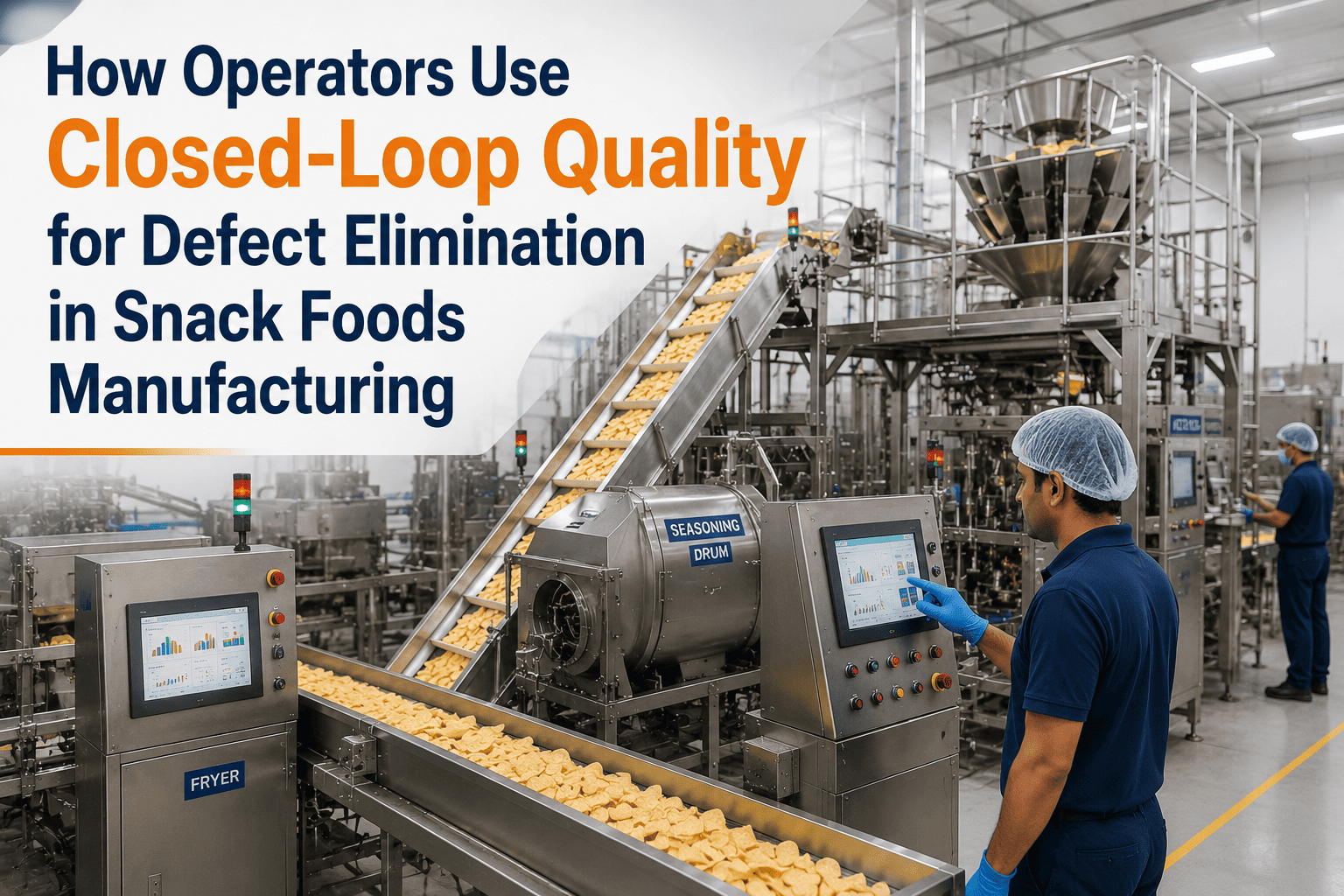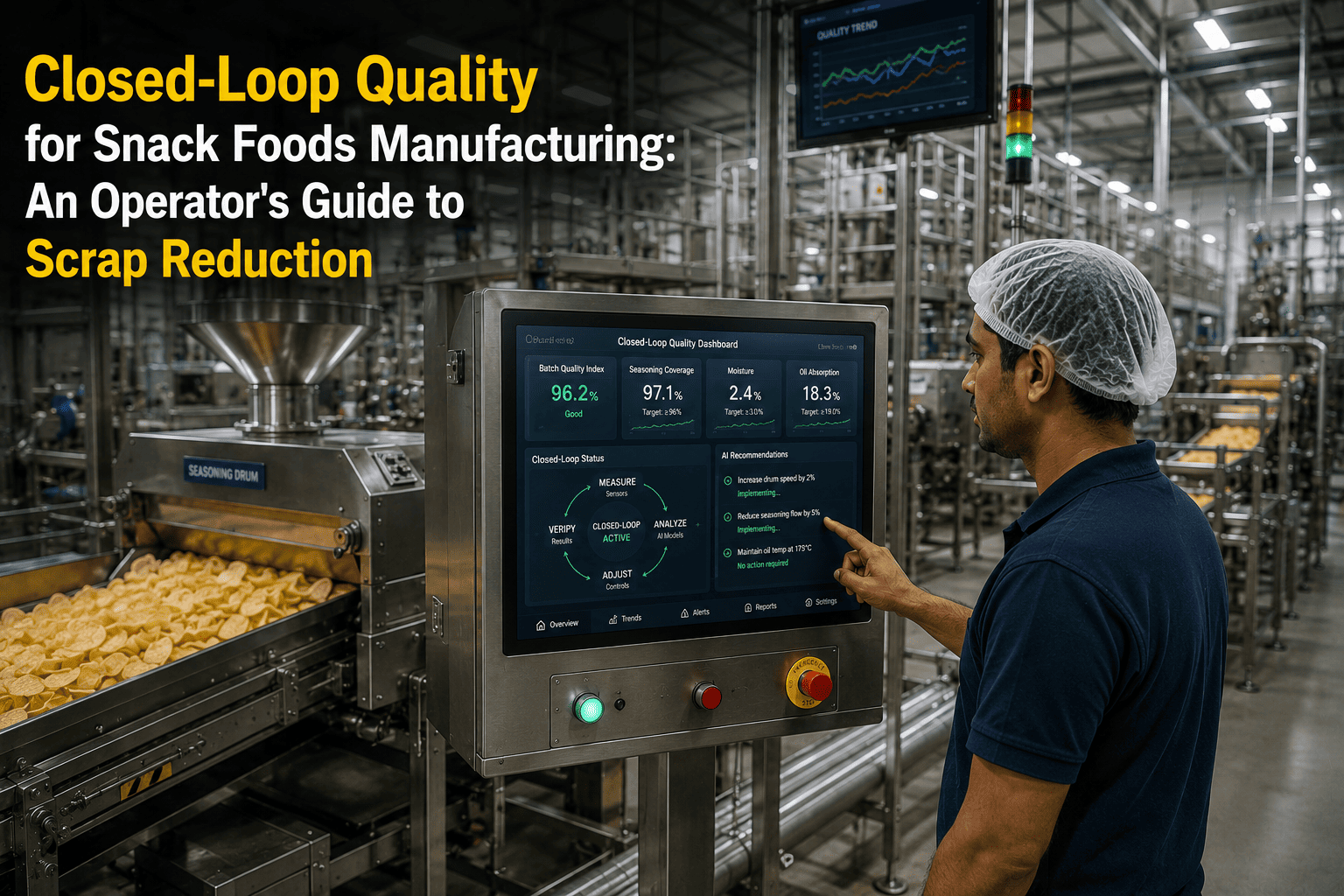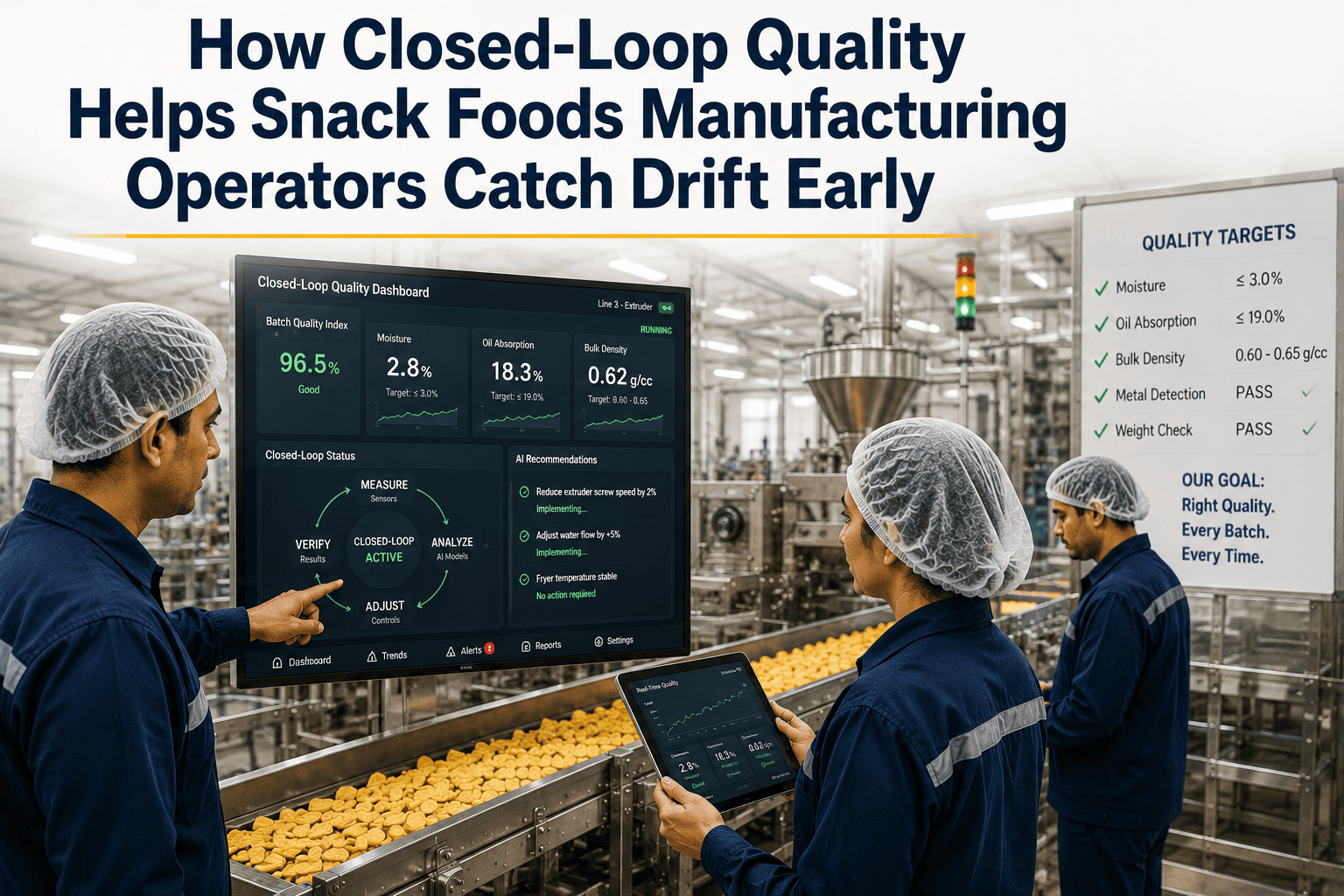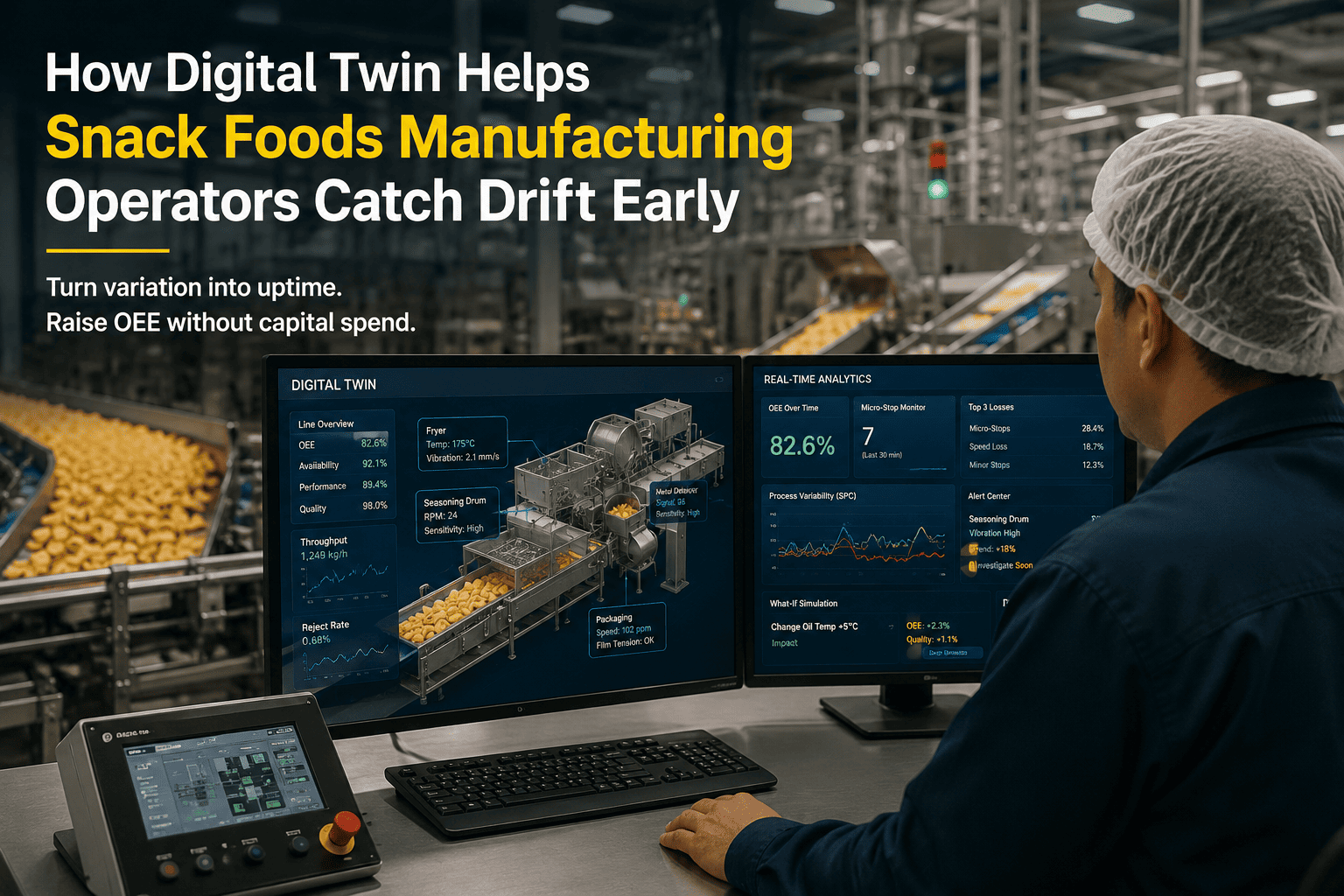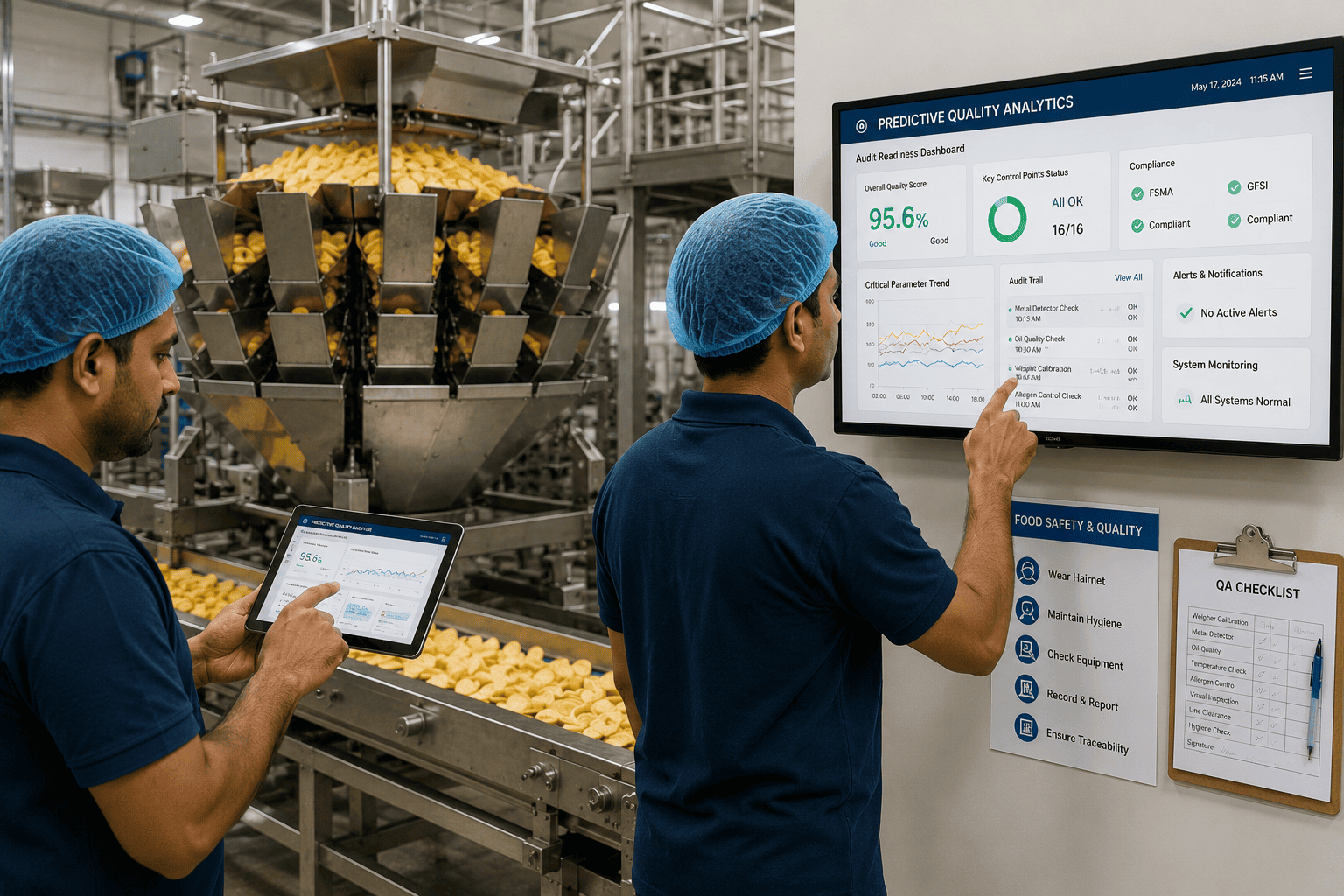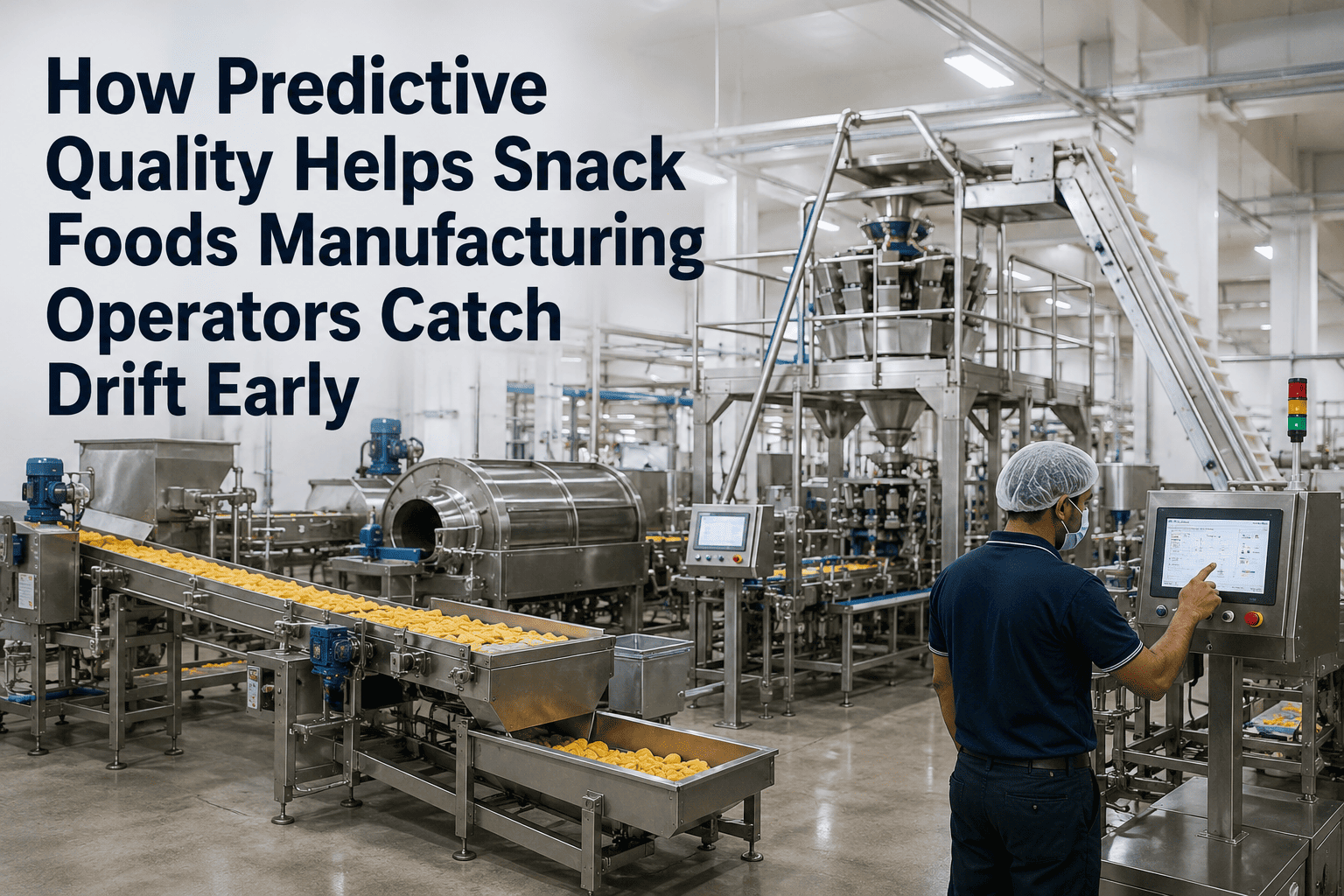
Line operators in snack foods face a silent productivity killer: gradual drift that creates scrap long before it shows up in final inspection. A multi-head weigher drifts 0.2% per hour. A seasoning applicator becomes uneven. An extruder temperature creeps up. None of these changes trigger visible alarms until hundreds of units are defective. Predictive quality analytics catches this drift 6-24 hours in advance — giving operators time to adjust before scrap happens. This changes the operator's role from firefighting problems to preventing them.
How Predictive Quality Helps Operators Catch Drift Early
Minimize start-up scrap on changeovers. Catch equipment drift before it becomes defects. Real-time operator alerts.
The Problem: Drift Happens Quietly
Snack production equipment drifts in ways operators cannot see in real time. A weigher head drifts 0.1-0.3% per shift. A filler becomes 2-3% inconsistent. Seasoning application loses uniformity. Metal detector sensitivity degrades. Each change is small — below manual detection threshold. But by the time an operator notices drift through sampling, 500-2,000 units of scrap have already shipped. See how predictive detection works on your equipment — Book Demo with Us.
0.1-0.2% drift per hour begins
AI identifies drift pattern 12-24 hours before operator samples
Adjustment before defects accumulate
Thousands of defective units already produced
Why Early Detection Changes Everything
What Predictive Quality Monitors on Your Lines
Every snack line has different equipment — weighers, fillers, extruders, metal detectors. Predictive quality adapts to monitor what matters on YOUR line. Contact Support to discuss your specific equipment setup.
Head-by-head weight variance tracking. Detects 0.1-0.2% drift before manual sampling catches it.
Temperature and flow rate monitoring. Catches consistency drift in portion control and fill volume.
Coverage uniformity and spray pattern analysis. Identifies uneven coating before visual inspection.
Sensitivity degradation tracking. Ensures detection thresholds stay effective throughout production runs.
Tracks start-up performance per changeover. Identifies which transitions generate highest scrap.
Line speed consistency and bottleneck detection. Flags slowdowns before throughput impact.
How It Works on Your Operator Dashboard
Every piece of equipment sends continuous data to the predictive system. Instead of searching for the pattern, AI finds it and tells you what to do. See the operator dashboard in action — Book Demo with Us.
Sensors on weighers, fillers, metal detectors, and line systems feed continuous data. No new equipment — connects to your existing PLC and SCADA.
Machine learning models analyze patterns and identify drift 12-24 hours before it becomes a defect. Predicts which adjustments are needed.
You get an alert on your production dashboard: "Weigher Head 3 drifting — adjustment recommended in next 4 hours." Clear, actionable signal.
You adjust the equipment during normal workflow. Drift is corrected before scrap accumulates. Quality stays consistent.
System confirms adjustment worked. If not, sends follow-up alert. You're always in control.
Real Operator Benefits
Less start-up waste, faster stabilization to target quality
Time to adjust before defects happen instead of reacting after
Fewer emergency stops and rework cycles
Clear, actionable signals — not overwhelming data dumps
Works with existing weighers, fillers, and metal detectors
Your decisions directly improve shift quality metrics
Frequently Asked Questions
See Predictive Quality on Your Production Line
Operators in snack foods are already using predictive quality to catch drift early and reduce scrap. See how it works on your specific equipment with a personalized demo.