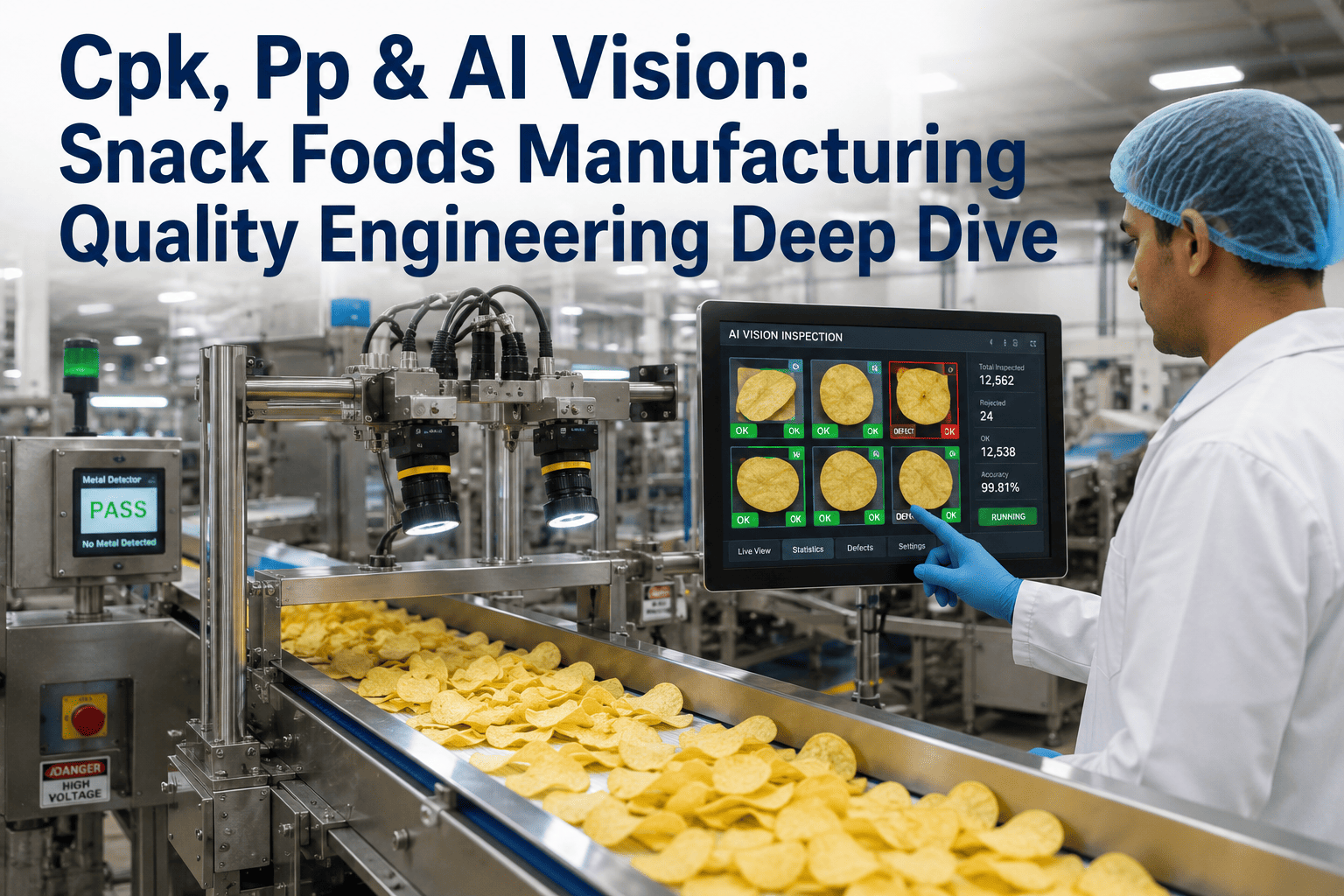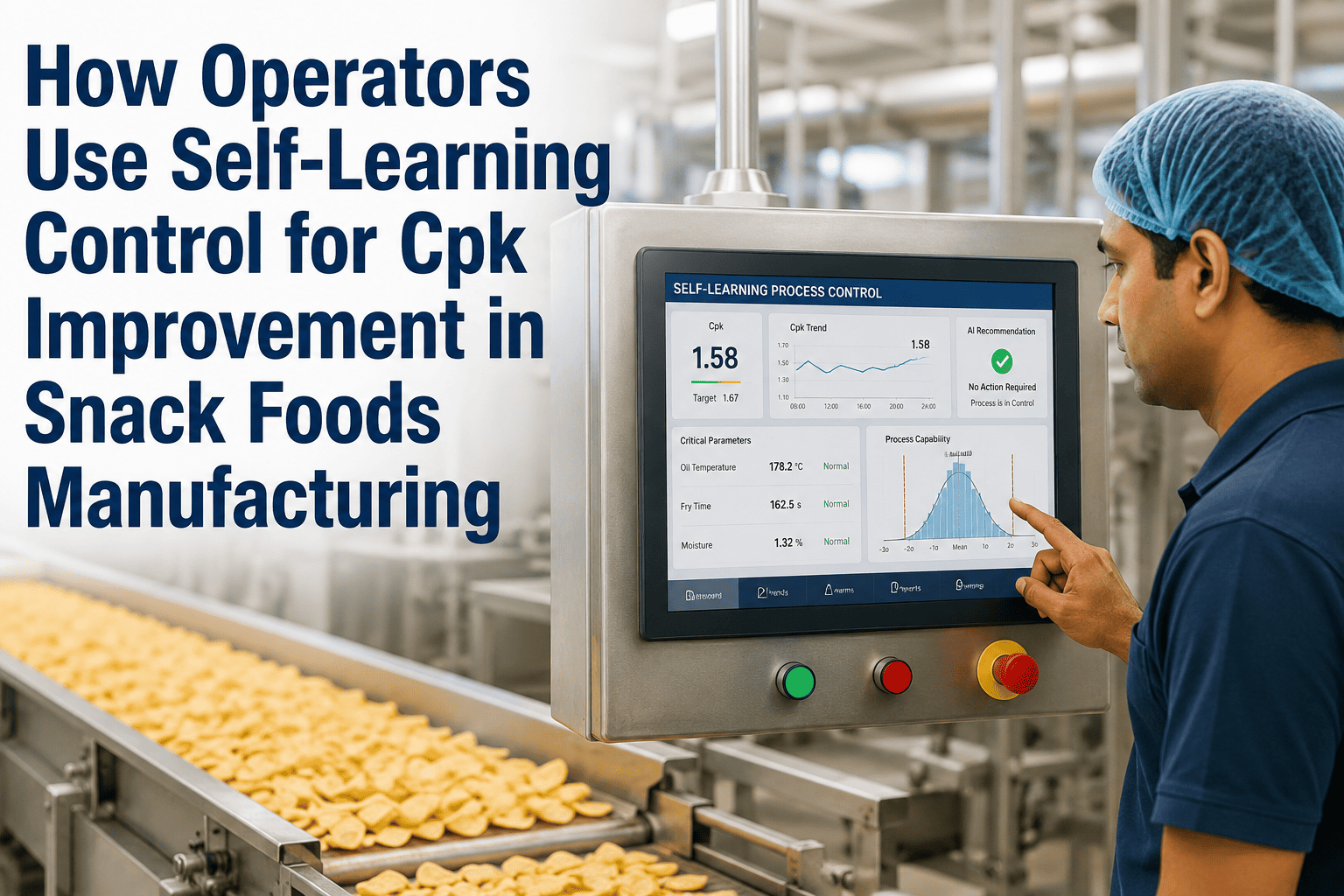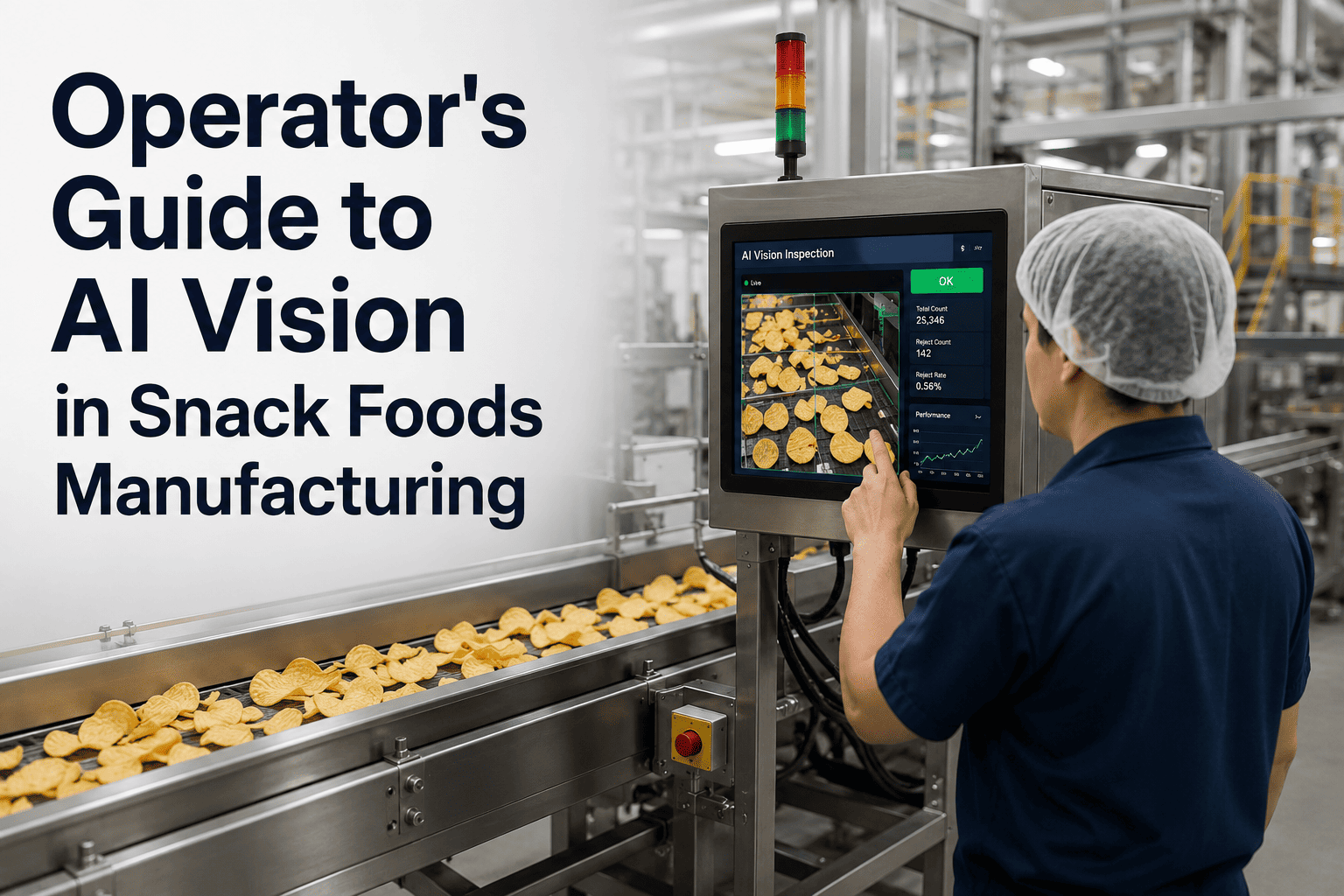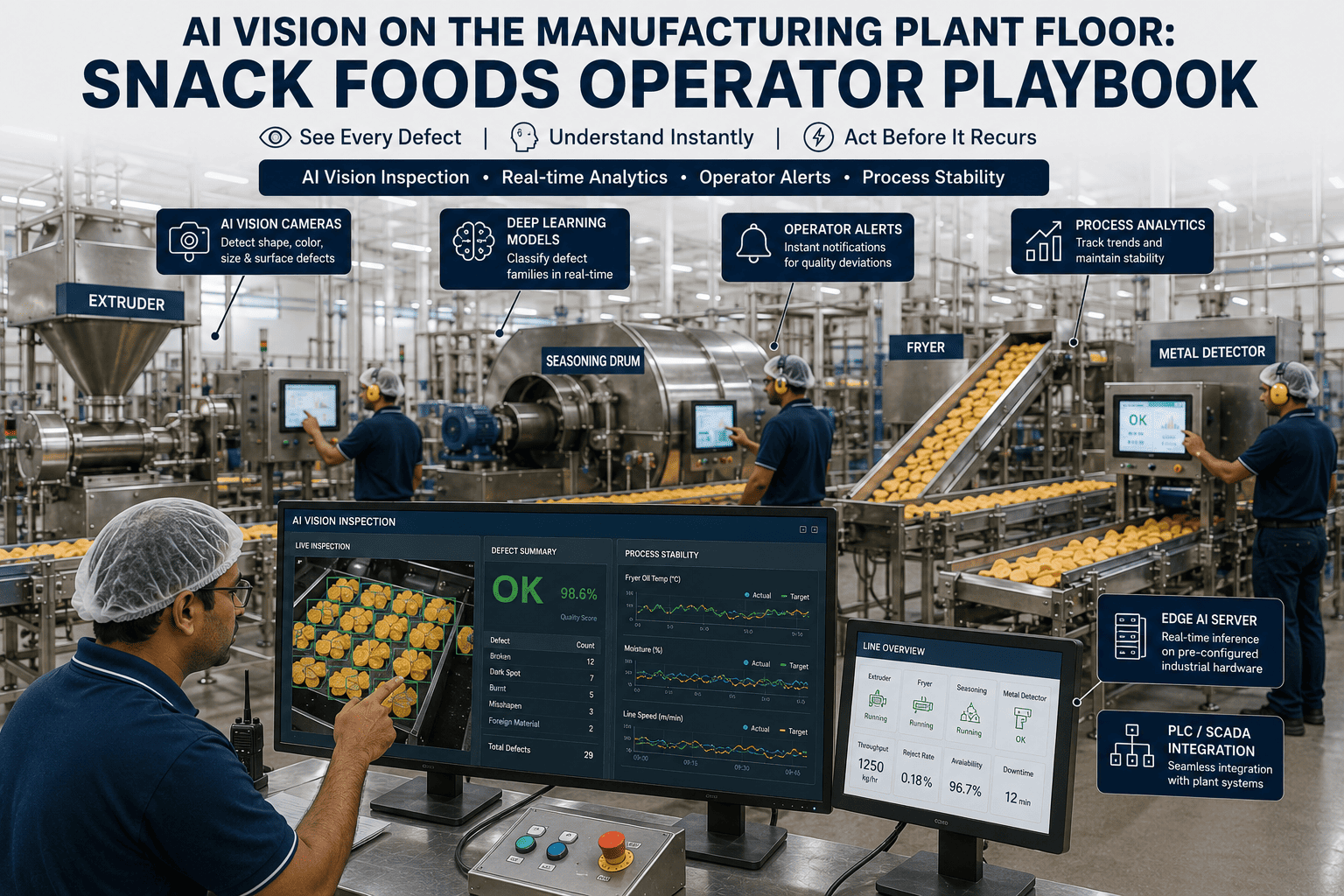
Snack foods manufacturing relies on visual consistency that humans cannot verify continuously. An extruder produces uneven pellets. A fryer creates color variation batch-to-batch. A coating drum applies coverage inconsistently. These defects are invisible to standard sensors — they only show up in final inspection after 1,000+ defective units are made. AI vision inspection watches every unit produced in real time, continuously comparing against your process baseline, and alerts operators the moment process drift exceeds statistical control limits. This shifts operators from reactive quality correction to proactive process management. To see AI vision inspection running on your snack line, schedule a live demo with our team.
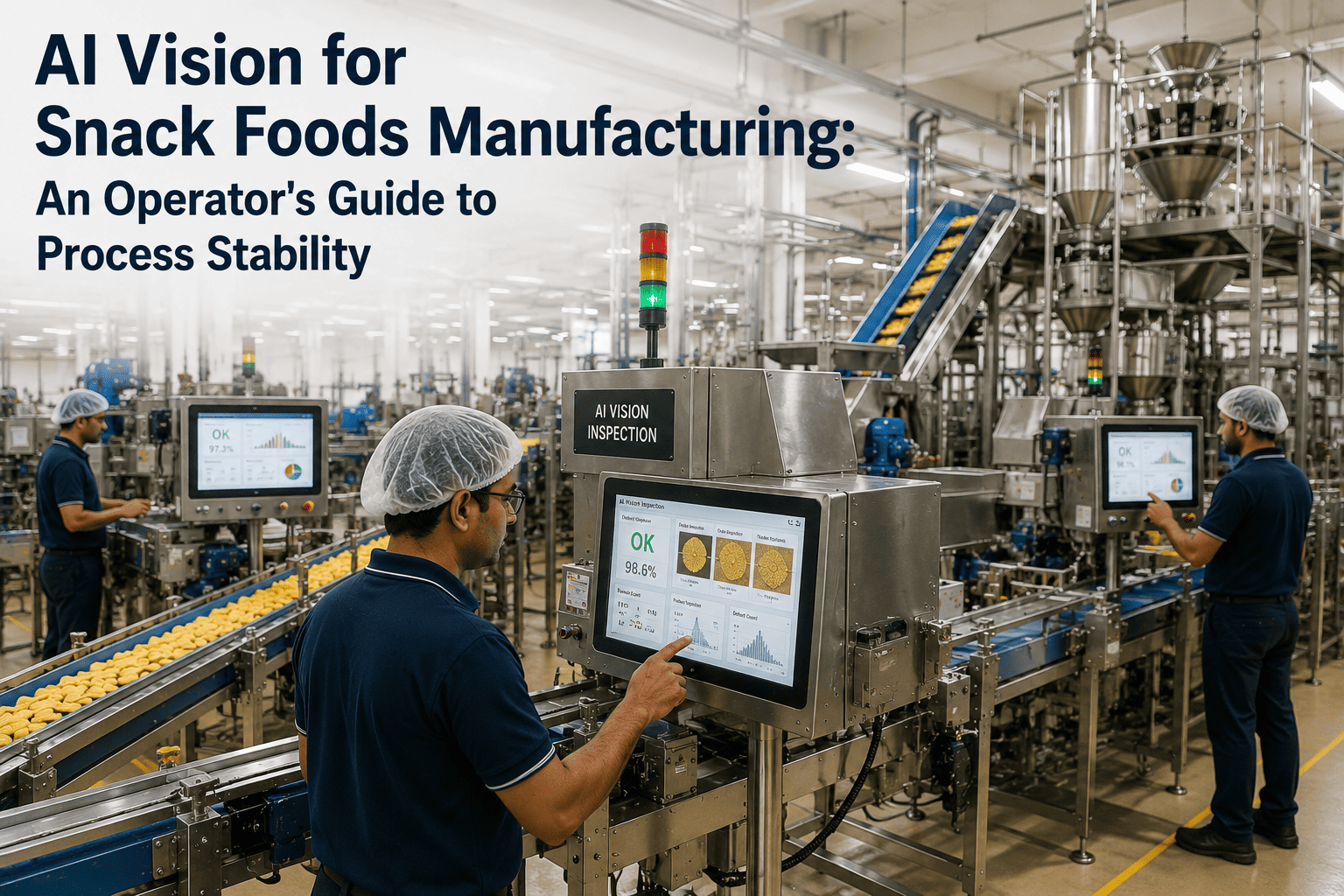
AI Vision for Snack Foods Manufacturing: An Operator's Guide to Process Stability
Real-time visual process monitoring · 100% unit inspection · Adaptive control limits · Operator alerts on deviation · Statistical process control powered by AI vision.
The Problem: Visual Defects Hide Until Too Late
Snack production defects are fundamentally visual. A chip is too pale (undercooked). A pellet is misshapen (extruder drift). Coating is uneven (drum slippage). A fry is darkly colored (oil temperature creeping up). None of these issues trigger sensor alarms. Your sensors show: "Temperature 185°C" (normal), "Throughput 500 units/min" (normal), "Moisture 2.3%" (normal). But visually, the product is degrading. Manual inspection every 30 minutes catches some problems, but by then 500-1,000 defective units have already shipped. AI vision changes this equation — watching every single unit and comparing its visual characteristics against your process baseline in real time.
Detects 2-3% color shift from baseline before human eye sees it. Flags fryer temperature creep, oil degradation, undercooked product.
Measures pellet diameter, chip thickness, fry length to 0.1mm precision. Catches extruder drift, cutter wear, mold degradation instantly.
Analyzes seasoning, oil, or batter coverage pixel-by-pixel. Detects uneven application, nozzle clogging, drum speed drift before batch leaves line.
Identifies cracks, breaks, foreign material, burn spots with 98%+ accuracy. Removes defective units before packaging.
Verifies correct product in correct package. Catches wrong-SKU placement, missing product, overfill/underfill at pack station.
Tracks visual metrics over 1,000+ units and predicts process drift before it exceeds statistical control limits. Alerts operator 50-100 units before full deviation.
How Your Role Changes With AI Vision
What AI Vision Monitors on Your Snack Lines
Pellet size consistency, shape uniformity, density variance. Detects screw wear, feed rate drift, temperature creep.
Color uniformity, darkening progression, moisture loss. Detects oil temperature creep, oil quality degradation, residence time drift.
Coverage uniformity, spray pattern consistency, adhesion quality. Detects nozzle clogging, drum speed drift, product flow interruption.
Product placement, package fill level, seal integrity, label accuracy. Detects wrong-SKU placement, overfill, underfill, missing product.
Foreign material detection, contaminant identification, defect sorting. Works alongside or replaces traditional metal detectors with enhanced speed.
Continuous visual metric trending. Predicts process drift 50-100 units before statistical deviation. Enables proactive adjustment.
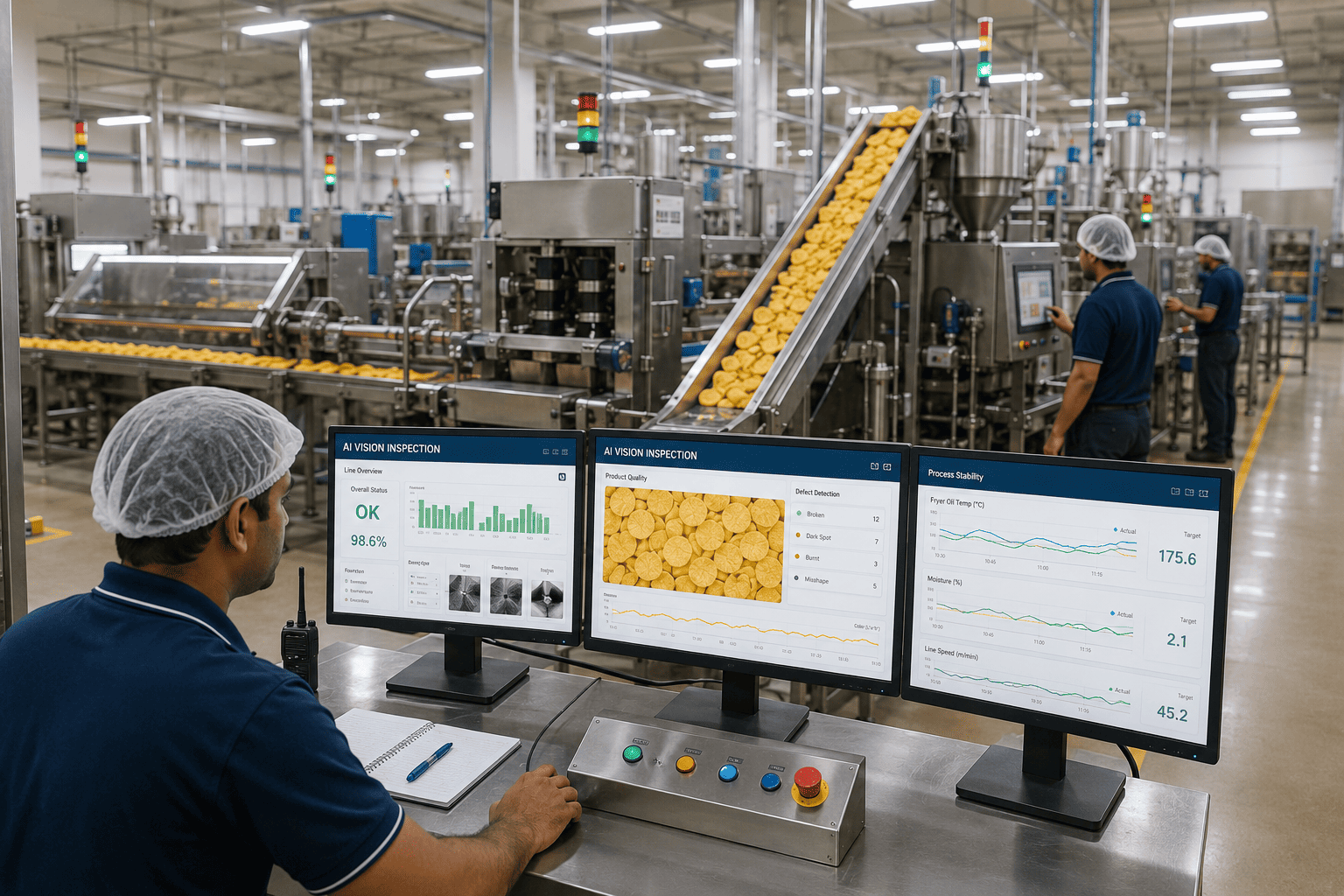
Real-Time Operator Dashboard: What You See
Sees every unit in real time. Analyzes color, shape, coating, defects, package integrity.
Compares each unit's visual metrics against your process baseline. Flags deviations instantly.
Your dashboard shows: "Color trending darker — fryer temp check recommended" or "Pellet size variance high — extruder calibration."
Verify alert, adjust process (temperature, speed, feed rate), system confirms stability restored.
Drift corrected before statistical control is lost. No defective batches. Process stays stable.
What AI Vision Delivers to Your Line
100% inspection catches defects manual sampling misses
Alerts within seconds of deviation vs 30+ min manual sampling
Faster response keeps process within statistical control
Integrates with existing lines via camera installation only
Prevented defects before they ship = direct cost reduction
Dashboard shows your shift's process stability metrics
Frequently Asked Questions
See AI Vision Inspection on Your Production Line
Snack foods operators are already using AI vision to stabilize processes and prevent defects. See how it works with a live demo on your specific equipment.