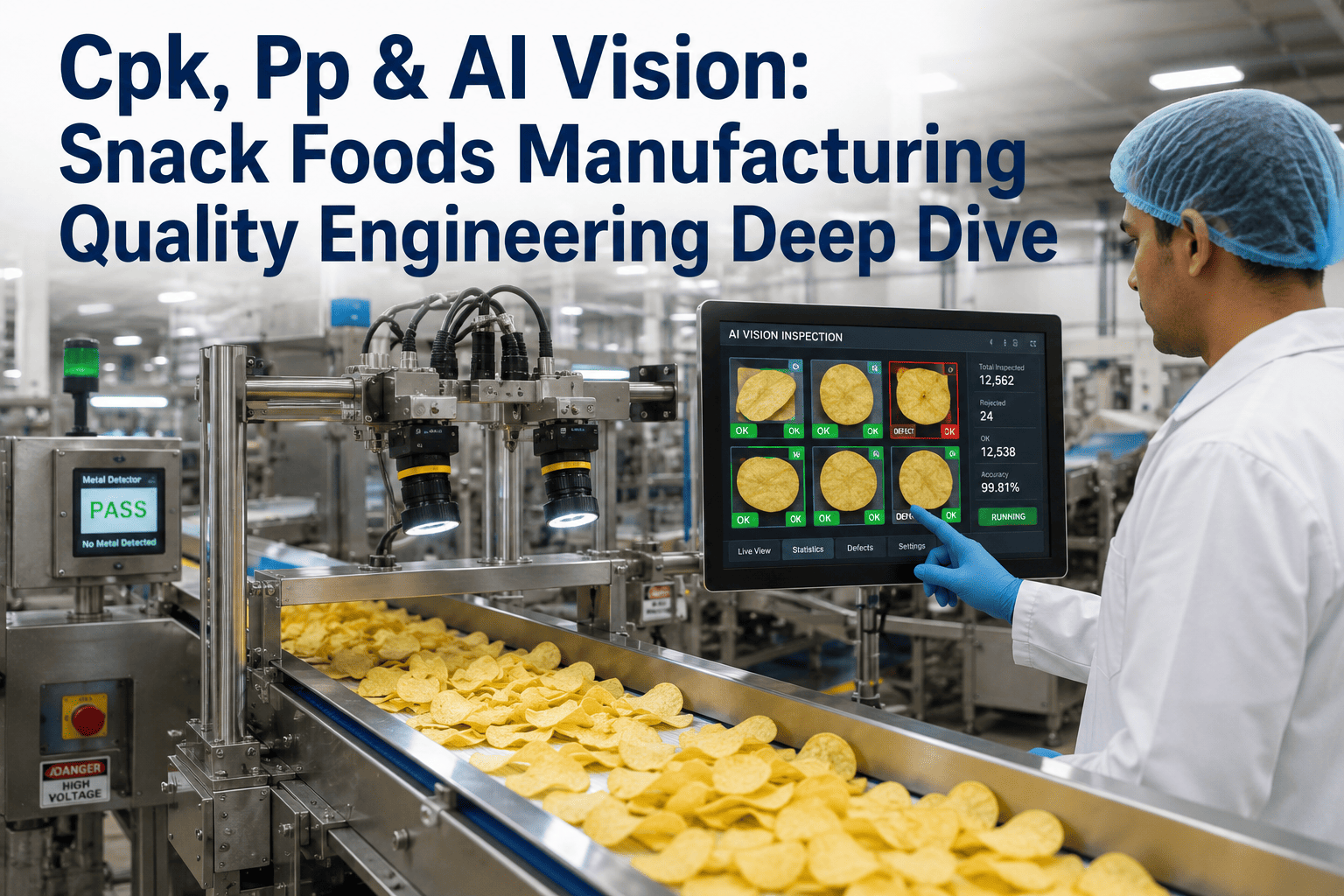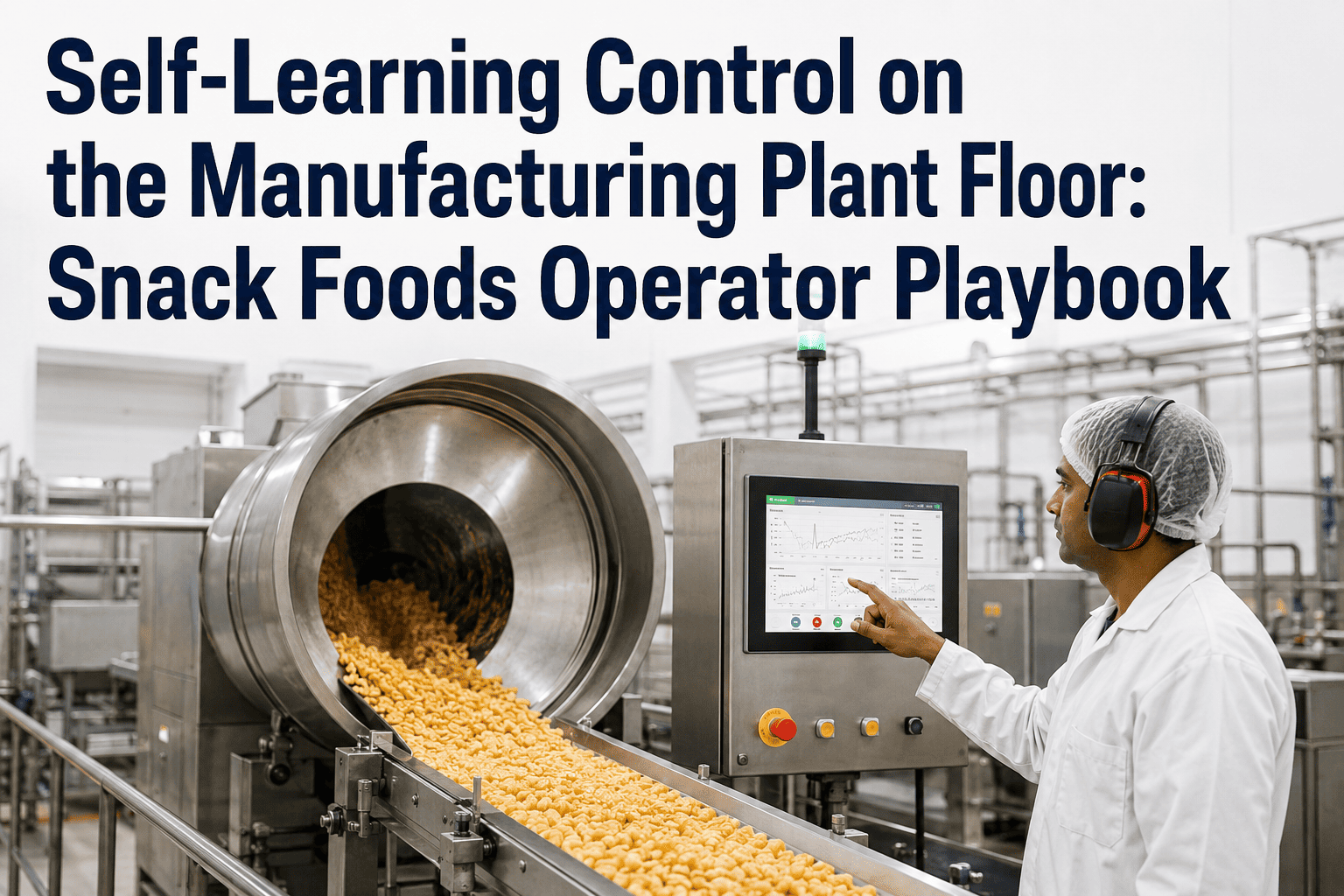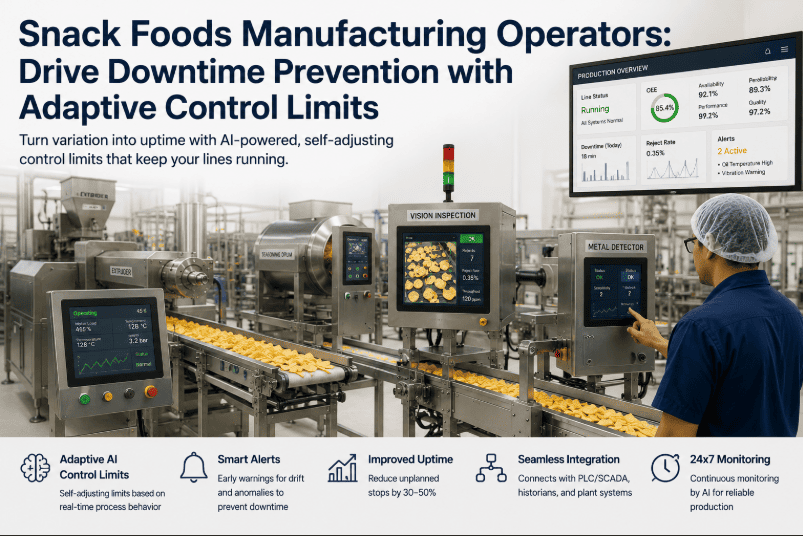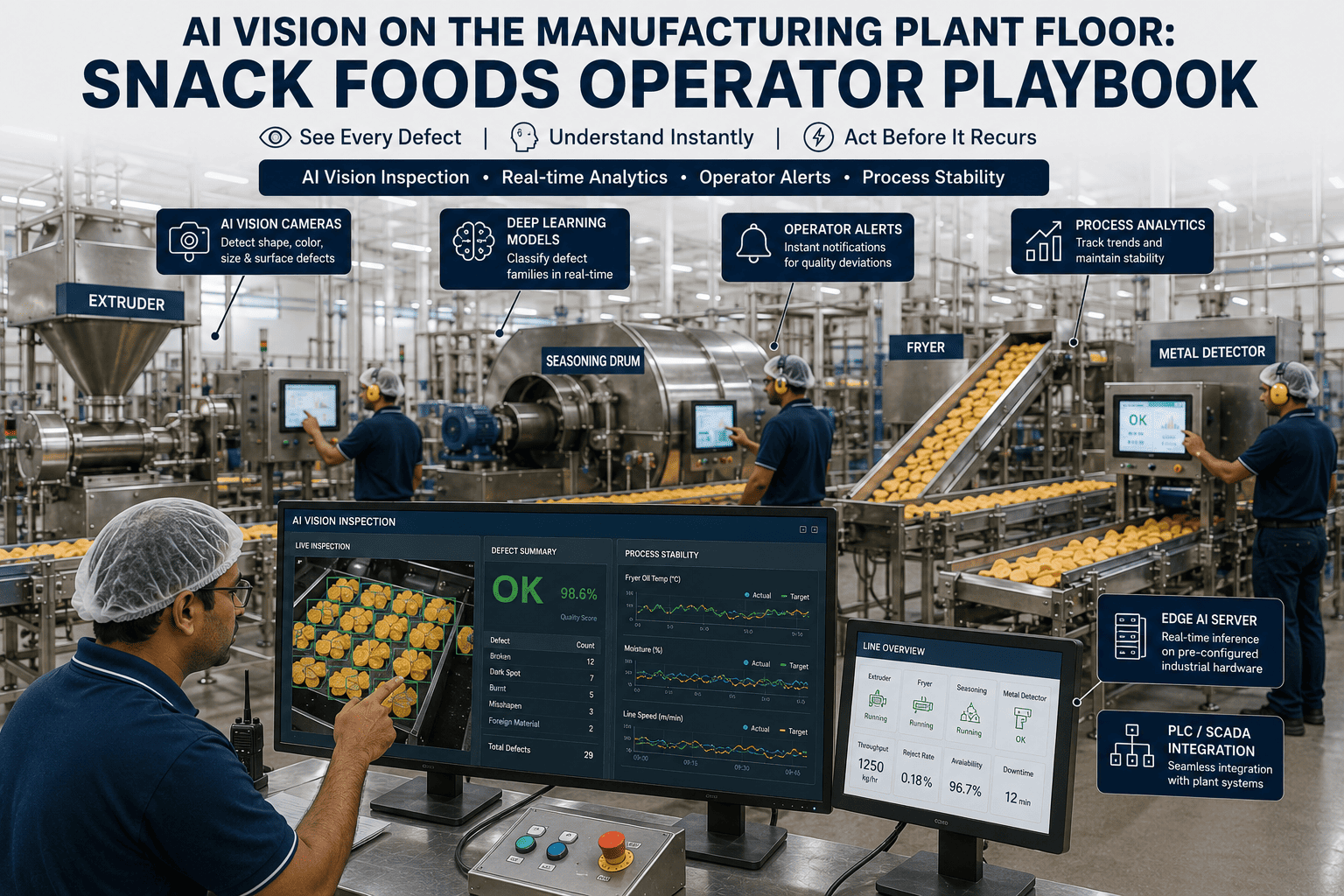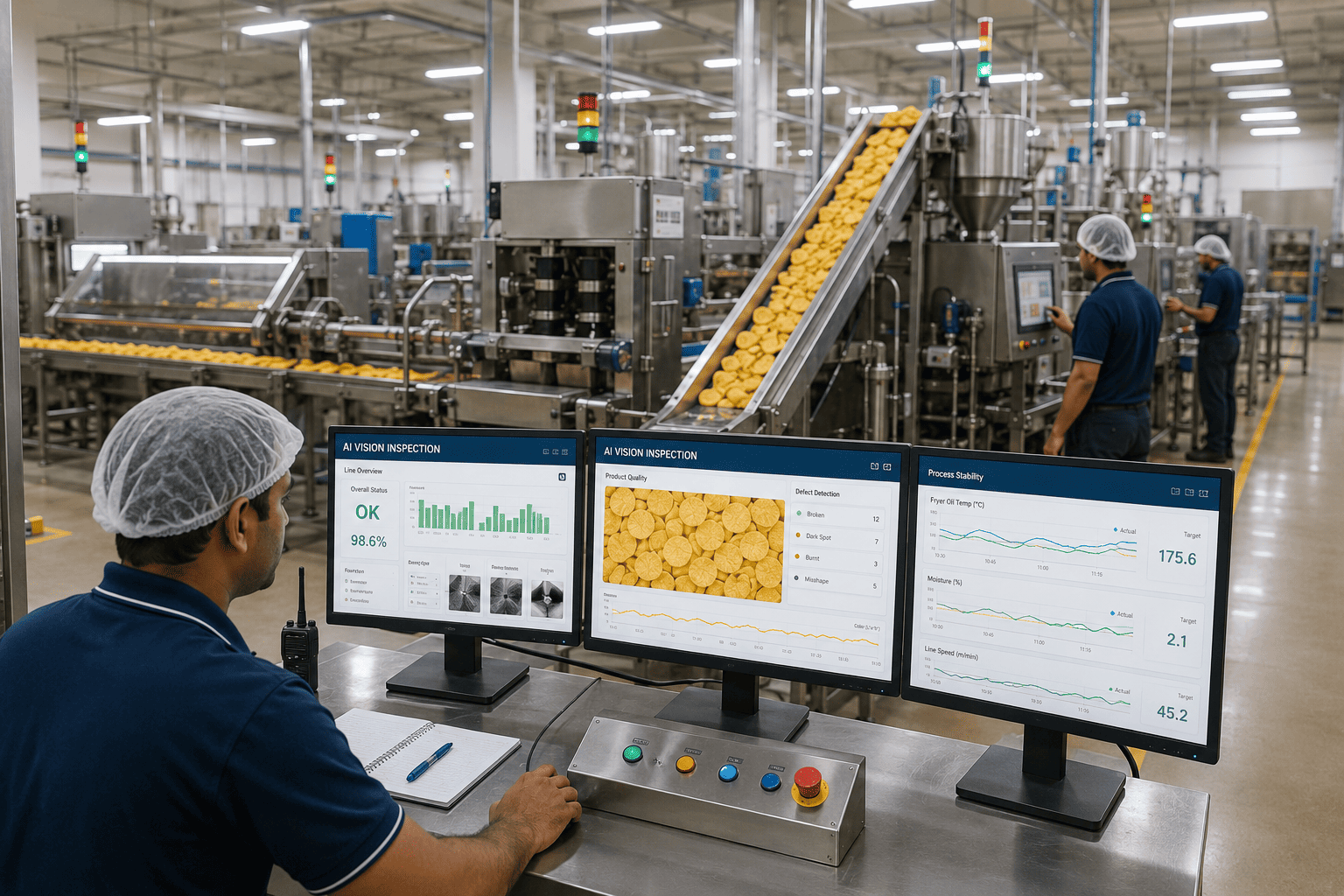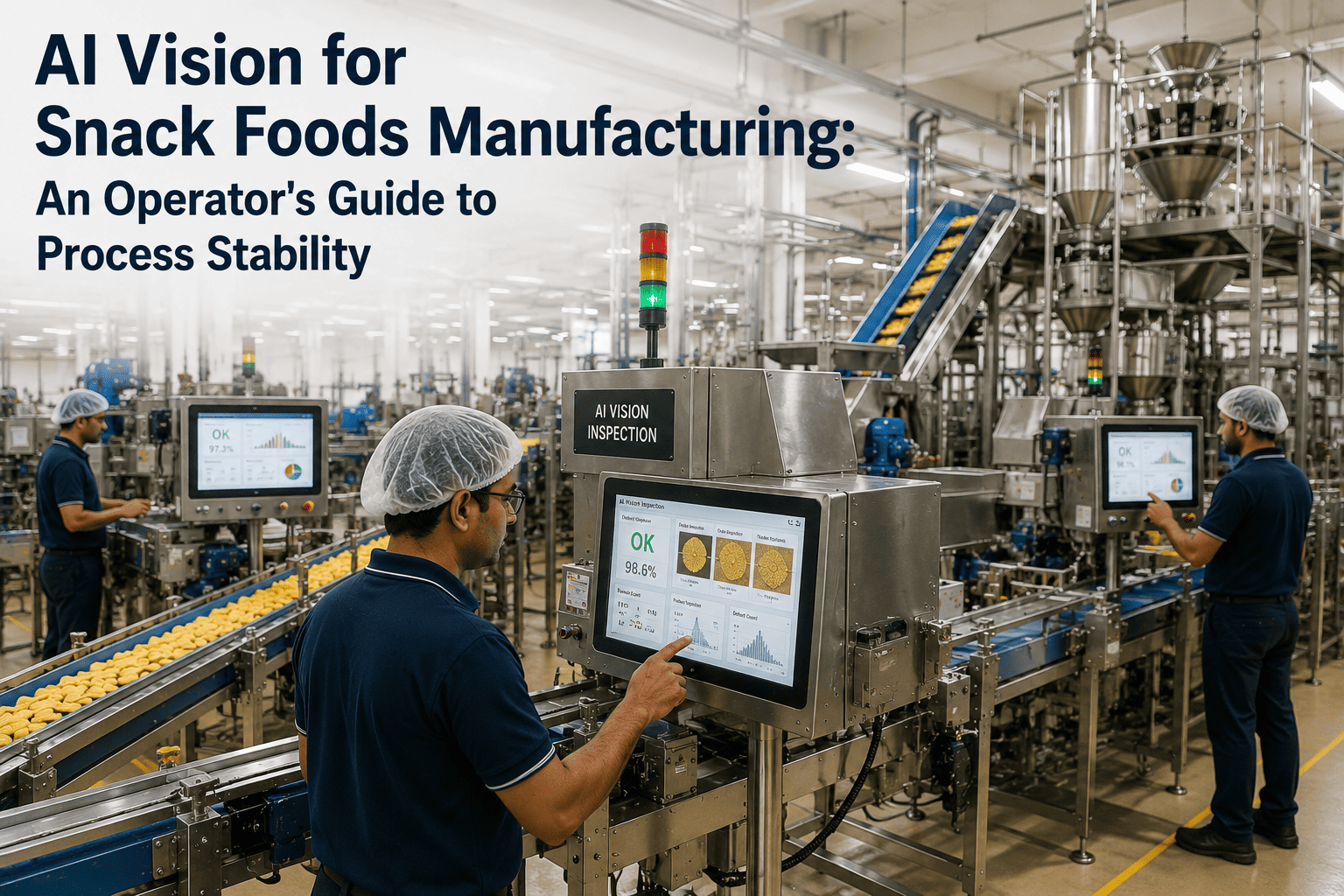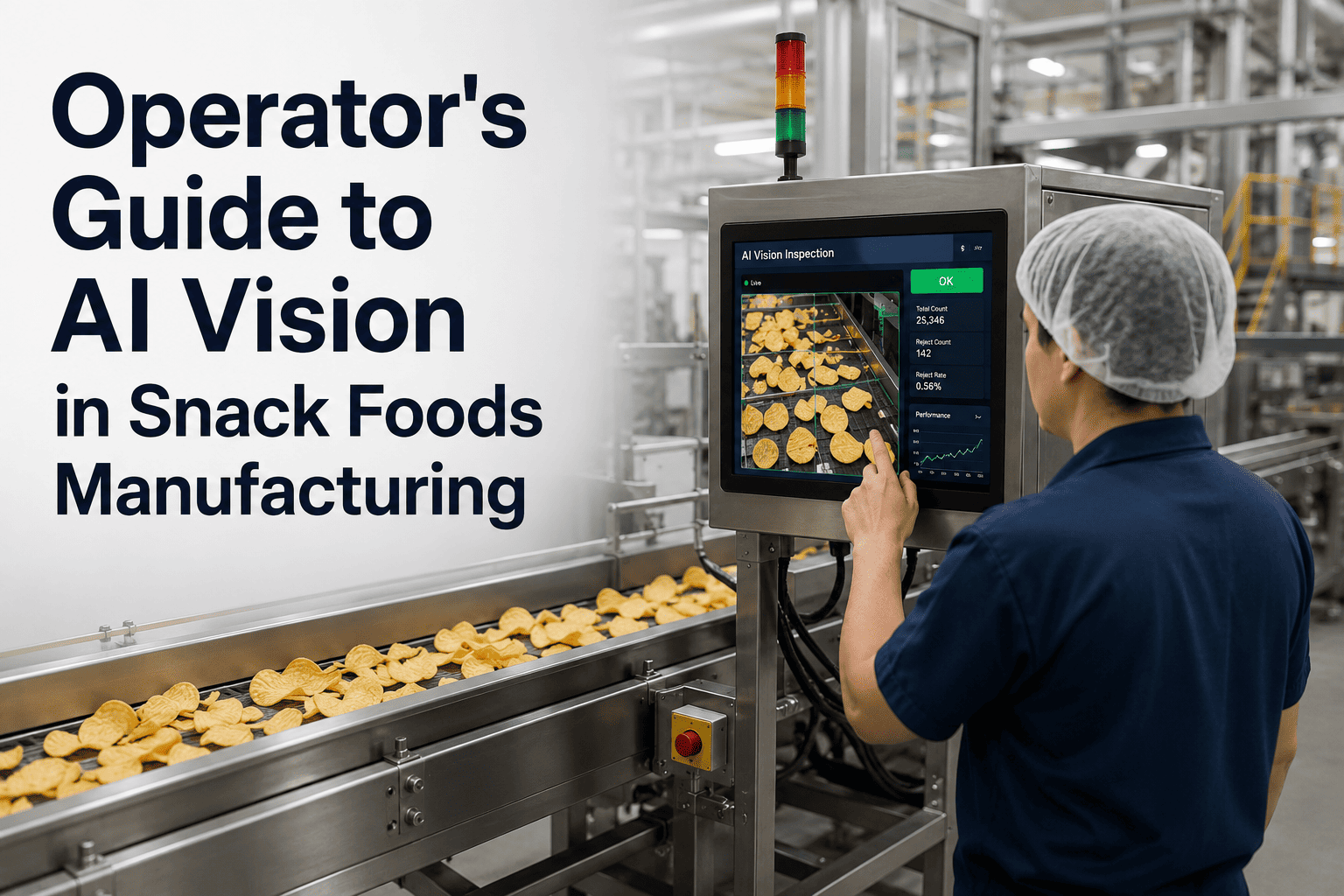
The operator leans over the control panel on line 3, watching the real-time feed from the inspection camera at the seasoning drum exit. A batch of sour cream & onion chips is running, and the vision system flags a chip with a dark spot — oil burn, likely. The operator taps to reject it. Two minutes later, the system flags a cluster of chips with uneven seasoning coverage. The operator pulls a sample, checks the seasoning flow meter, and adjusts the drum speed by 2 RPM. In a single shift, that operator handles a dozen such events — defects, color drift, package seal issues, missing labels. Each one costs money. Each one could have been a customer complaint. The question isn't whether you have vision systems. It's whether they're working for you, or just adding noise.
One Platform for Every Visual Defect on Your Snack Lines
Replace point-solution cameras with a single AI-native vision platform that detects color drift, foreign material, seal defects, and packaging errors — all on one NVIDIA appliance, no cloud dependency.
Snack food manufacturers have been early adopters of machine vision, but the reality on most plant floors is a patchwork of dedicated cameras — one for color, another for seal integrity, a third for label placement, a fourth for foreign object detection. Each has its own software, its own alerting rules, its own false-positive rate. Operators spend more time managing the vision systems than acting on their output. iFactory consolidates every visual inspection need into a single AI platform that runs on an NVIDIA appliance inside your plant network. It ingests feeds from existing cameras or new IP cameras, trains models on your product mix, and serves a unified dashboard that an operator can manage from one screen. No cloud data egress. No per-camera software licenses. No integration projects that last longer than a quarter.
Six Inspection Categories, One Platform
iFactory's vision models cover the full range of visual defects across snack food lines — from raw ingredient inspection through finished case packing. Each capability is a pre-trained model that adapts to your specific product geometry, color palette, and packaging in under two weeks.
Color & Doneness
Detect oil burns, under-cook streaks, and color drift batch-to-batch. Models track L*a*b* values per chip or pellet and flag outliers in real time. Operators see a heatmap of color deviation across the belt.
Foreign Material
Identify plastic fragments, metal shards, burnt bits, and discolored pieces down to 2mm. Models run at full belt speed — no throughput reduction. Alerts include a cropped image of the contaminant for traceability.
Seal & Closure
Inspect fin seals, crimp seals, and zipper closures for gaps, wrinkles, or pinholes. Models detect seal defects that are invisible to human inspectors — less than 1mm wide — and log them by lane and timestamp.
Fill Level & Weight
Monitor headspace and fill height in bags, cans, and trays. Models correlate visual fill level with checkweigher data to catch underfills before they reach the case packer. Alerts include estimated weight deviation.
Label Position & Content
Verify label placement, skew, and overlap on bags and cartons. OCR models read lot codes, expiration dates, and barcodes — flagging misprints, missing codes, or rotated labels. Integration with MES for lot traceability.
Case Packing & Palletizing
Inspect case seal quality, case count (missing bags), and pallet layer alignment. Models detect crushed cases, open flaps, and mis-stacked layers before the pallet reaches stretch wrap.
From Camera Feed to Operator Action in Four Steps
iFactory plugs into your existing camera infrastructure or adds new IP cameras. The platform handles model training, inference, and alerting — no data science team required.
Connect Cameras
Point iFactory at any RTSP, USB, or GigE camera — or use our recommended industrial IP cameras. The platform auto-discovers feeds and maps them to line segments.
Train on Your Product
Upload 200–500 images of good and defective product per SKU. iFactory trains a custom vision model in under 48 hours. No labeling required — the platform uses semi-supervised learning.
Deploy to Edge
The model runs on the NVIDIA appliance at the line. Inference takes under 50 milliseconds per frame. Alerts appear on the operator dashboard within 100ms of defect detection.
Act & Improve
Operators review alerts, confirm or reject detections, and log corrective actions. The model retrains nightly on new images, reducing false positives by 5–10% per week.
What Happens When Vision Systems Miss
Even a 0.5% defect escape rate on a high-speed snack line creates measurable financial and reputational damage. Here's what three common blind spots cost in practice.
Burn Defects Reach Retail
A single consumer complaint about burnt chips triggers a retailer chargeback of $500–$2,000 per incident. If the pattern repeats across multiple stores, the retailer may delist the SKU for 90 days — costing $50,000–$200,000 in lost shelf space.
Foreign Material Recall
A plastic fragment found in a bag of tortilla chips triggers a Class II recall. Average recall cost in snack foods: $10 million in direct costs plus brand damage that depresses sales for 6–12 months.
Seal Leaks in Transit
One bag with a pinhole seal leaks oil onto other bags in the case. The retailer rejects the entire pallet. Cost: $3,000–$8,000 per pallet including freight, disposal, and restocking fees.
Measured Impact in the First Quarter
iFactory's vision platform delivers quantifiable improvements across the four metrics that matter most to snack food operations. These are typical results from the first 90 days of deployment.
Your operators already know where the defects are. iFactory gives them the tools to catch every one, every time. Book a 30-min walkthrough and see it live on a snack line.
Questions Operations Leaders Ask About AI Vision
Stop Managing Vision Systems. Start Managing Quality.
iFactory consolidates every visual inspection need into one AI platform — on-premise, turnkey, and pilot-ready in 6–12 weeks. Your operators will thank you. Your customers will too.