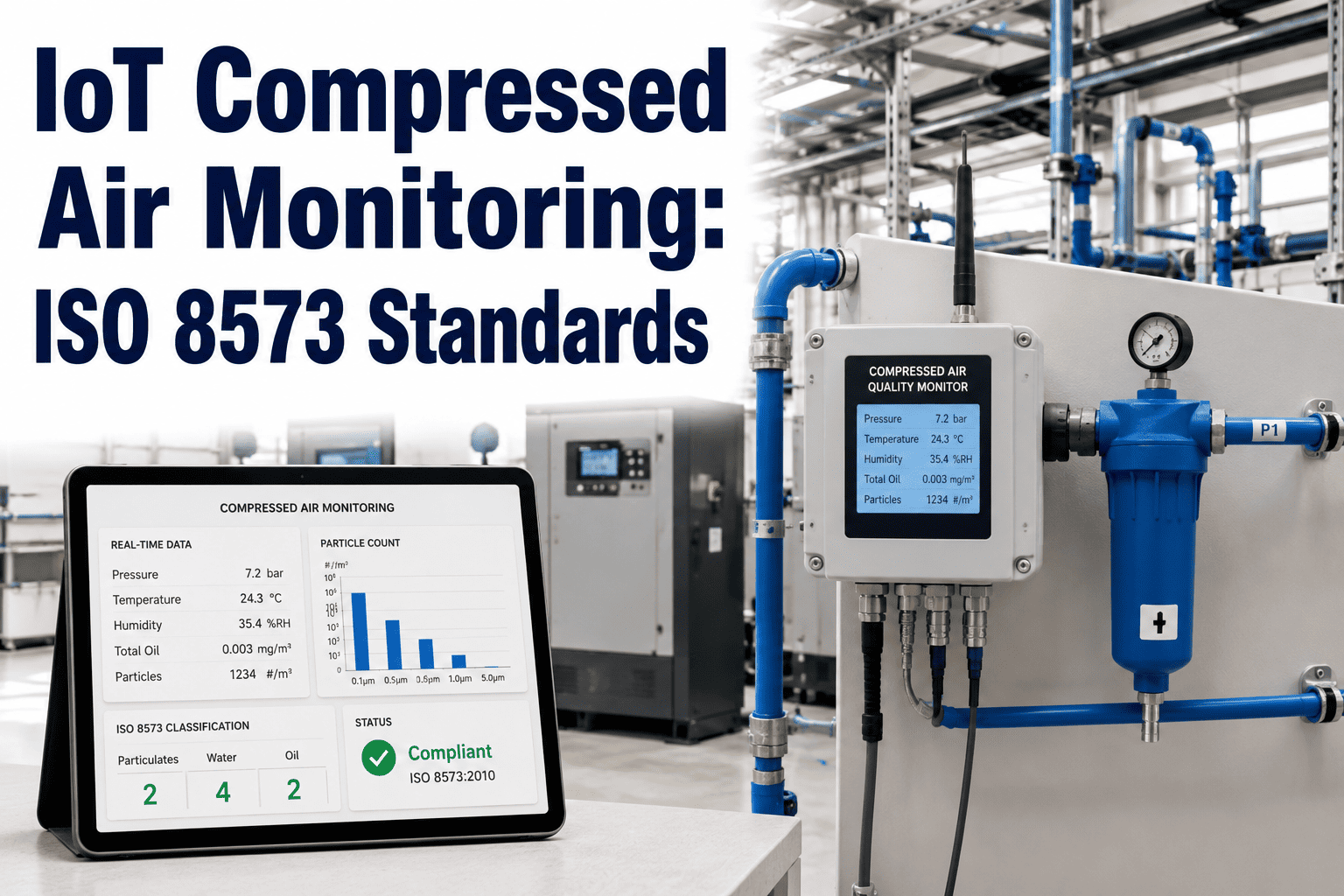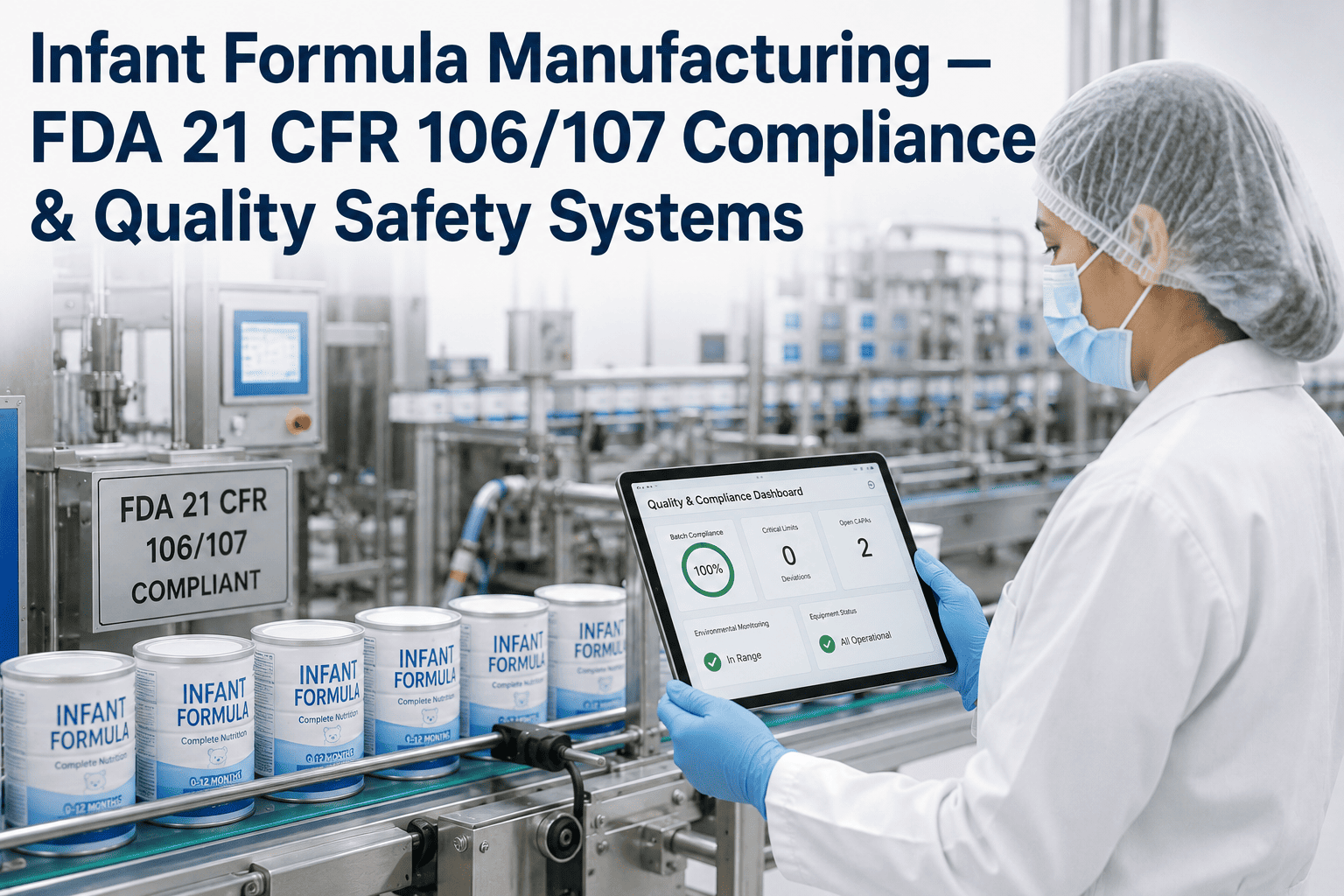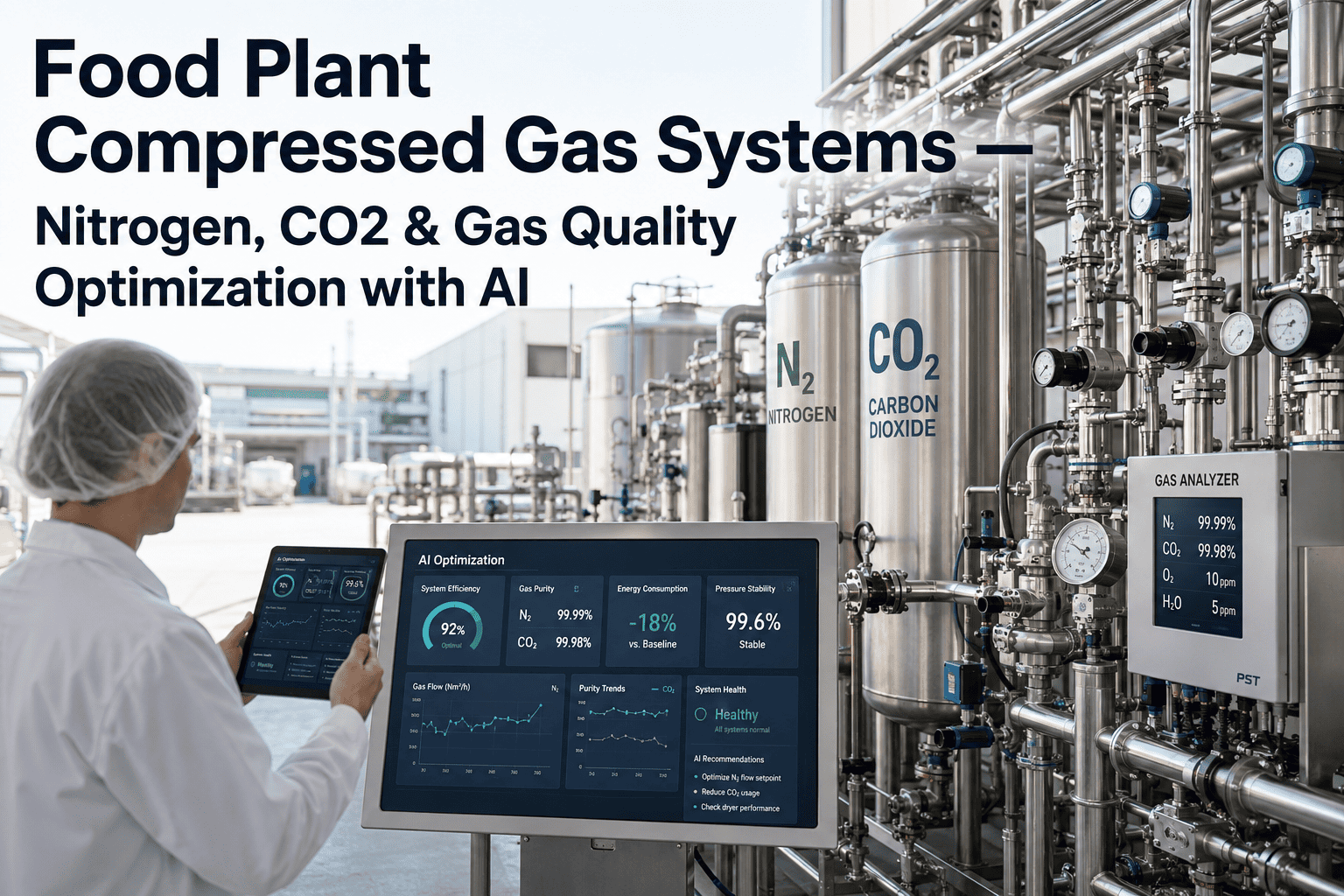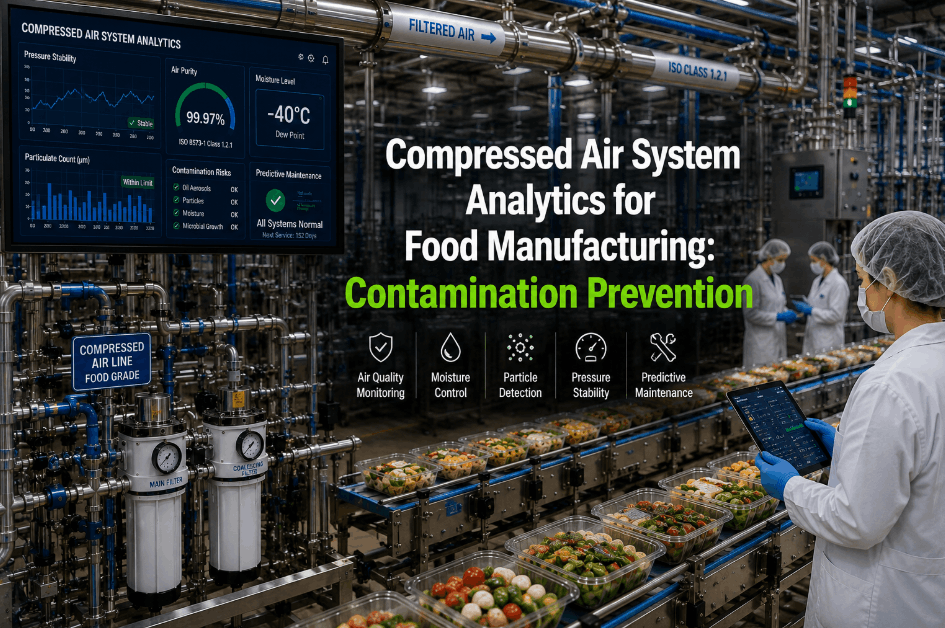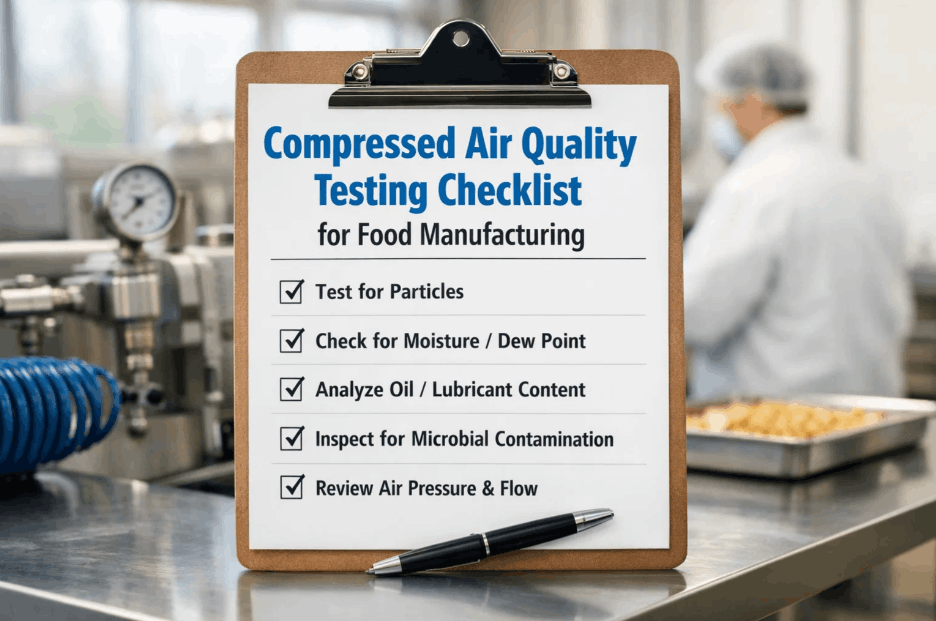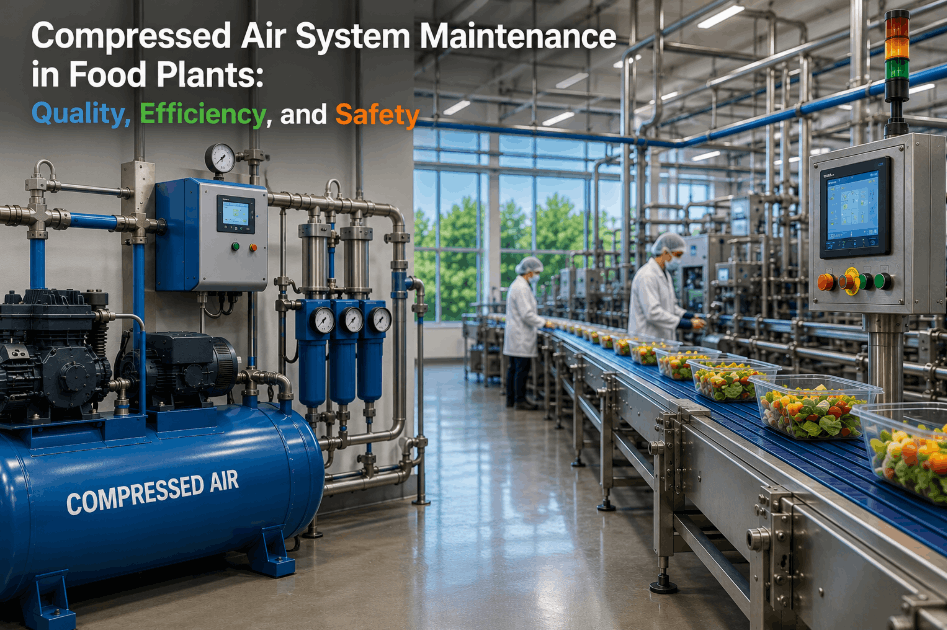
Maintaining high-performance compressed air systems in food manufacturing plants is a critical balance of air quality, energy efficiency, and operational safety. In modern food processing, compressed air is often considered the fourth utility, coming into direct or indirect contact with product surfaces, which makes food-grade compressed air a vital component of food safety management. Facilities engineers who prioritize systematic maintenance and ISO 8573 compliance gain a significant competitive edge: lower energy consumption, reduced risk of contamination, and a proactive maintenance model that prevents unplanned downtime. For plants still operating with outdated filtration or reactive service schedules, the risk of product spoilage and excessive energy waste is a constant threat. If your facility is evaluating its next step toward optimizing pneumatic infrastructure, book a compressed air system audit to see how a purpose-built industrial analytics platform can safeguard your production environment from the compressor house to the packaging line.
Is Your Compressed Air System Ready for the Future of Food Safety?
Deploy AI-driven leak detection, pressure drop monitoring, and filter life prediction. Seamlessly integrated with your energy management dashboards.
The Strategic Value of Data-Driven Compressed Air Logistics
Compressed air handling is more than a utility problem; it is an energy management and food safety problem. A single malfunctioning dryer or an oil-carryover event can lead to a contamination breakout that halts production for weeks, while unpredicted compressor failure is a direct threat to throughput. Compressed air analytics replaces fixed-interval maintenance with condition-based deployment. By integrating thermal imaging and dew point monitoring with AI, iFactory monitors the health of every compressor, dryer, and filter in the fleet. This allows operators to run systems closer to their true mechanical limit without risking a breach in air quality. Furthermore, the platform optimizes the air demand cycle—calculating the ideal compressor sequencing to ensure the lowest possible energy cost per CFM. Organizations that schedule a technical demo can see how iFactory's thermal decay models have helped mills recover significant energy loss, significantly reducing utility consumption and increasing asset life.
Dew Point Stability AI
Digital twin modeling for refrigerated and desiccant dryers. AI correlates ambient humidity with plant demand to predict dryer failure before moisture enters the food-zone piping.
Acoustic Leak Detection
Continuous tracking of hot-spot leaks in the distribution manifold. AI models isolate leak signatures from background noise, quantifying the financial loss in real-time.
Differential Pressure AI
Vibration and pressure sensors monitor filter health. Detect early-stage clogging or bypass failure caused by excessive particulate or oil-aerosol accumulation.
Oil-Free Health Monitoring
Vision AI and thermal sensors identify excessive oil carryover or seal degradation. Automate the maintenance schedule to prevent product contamination and splashing.
Compressor Thermal AI
Monitor discharge temperatures on air compressors. Prevent thermal shutdown by ensuring cooling systems and lubricant life are within safe operational limits.
Pneumatic Demand GPS
Real-time mapping of air demand across the plant floor. Minimize dead-time at the receiver tanks and optimize the buffer between air generation and end-use.
"Before iFactory, our compressed air maintenance was largely guesswork—we were replacing filters early just to stay safe. By implementing their thermal erosion AI and acoustic leak tracking, we've increased our asset life by 18% and, more importantly, removed the manual risk of inspections in high-noise areas. The platform has become our single point of truth for compressed air safety and efficiency."
Solving the Blind Spots in High-Demand Air Logistics
Compressed air handling is notoriously difficult to digitize because traditional sensors often fail in the harsh, humid environments of a high-tonnage food plant. iFactory solves this through non-contact sensing and physics-informed AI. We don't just monitor the compressor; we model the system's thermal and mechanical state using remote sensors and digital twins. If you are struggling with air quality or energy waste, you can book a site-specific assessment to see our specialized hardware and software in action.
Problem 1 — The Air Contamination Risk
Standard sensors often trigger false alarms due to transient pressure spikes or environmental noise. iFactory's AI filters this noise, identifying the specific digital signatures of moisture or oil carryover. By correlating these signatures with machine history, the platform provides a 48-hour warning of a potential air quality breach.
Problem 2 — Unpredictable System Shutdowns
Air compressors in food plants face extreme duty cycles and airborne dust. Traditional visual inspection cannot see internal component fatigue. iFactory's system tracks every hour of motor travel under load, calculating cumulative stress cycles and predicting the optimal replacement window.
Problem 3 — Logistics Bottlenecks & Energy Loss
When compressors run in idle mode, they lose significant energy. iFactory's logistics dashboard visualizes the entire fleet, predicting when the next production shift will demand peak air and ensuring the right sequencing is in position at the right time.
Increase asset life by 15-20% through precise stress tracking and optimized sequencing cycles.
Achieve 100% predictive reliability for food-grade air, eliminating unplanned quality-related downtime.
Recover 10-15% of air-related energy consumption by minimizing leaks and optimizing distribution pressure.
Reduce maintenance labor costs by 22% through early bearing failure detection and automated diagnostic alerts.
The ROI of Intelligence: KPI Gains from iFactory Air AI
Optimizing compressed air handling is a direct booster for your facility's bottom line. The benchmark chart below shows the average gains achieved by industrial food manufacturers within 12 months of adopting iFactory's logistics intelligence platform. These are the results of physics-based AI. Operations managers who book a demo today are securing these stability gains for the next production cycle.
Manual Handling vs. iFactory Intelligent Air Logistics
The transition from manual utility management to a digital air twin is the hallmark of a world-class food facility. The table below outlines the operational shifts that occur when iFactory's compressed air suite is deployed. To calculate your specific ROI on air analytics, book a system audit.
| Air System Metric | Reactive Approach (Manual) | iFactory Intelligent Suite | Operational Gain |
|---|---|---|---|
| Asset Life Tracking | Manual hour-counts on paper | Digital Component Twin AI | +18% System life extension |
| Compressor Fatigue | Periodic visual check | Cumulative Stress Modeling | Zero unpredicted system failures |
| Dryer Shell Health | Periodic thermal scans | Continuous Dew-Point AI | 100% moisture prevention record |
| Air Transit Time | Operator-dependent | Autonomous Demand Mapping | -12% Energy loss in transit |
| Filter Performance | Post-failure report | Predictive Differential Monitoring | Eliminates pressure-drop risk |
| System Purging | Time-based drains | Condensate Load Analytics AI | -15% Air loss during purging |
Stop Wasting Energy. Start Protecting Your Product.
iFactory's compressed air handling analytics is the only purpose-built platform designed to survive and thrive in the high-tonnage environments of the modern food plant.
Frequently Asked Questions: Compressed Air & System Analytics
How does the platform predict filter life without physical measurements?
We use a Physics-Informed Digital Twin. By tracking every hour of operation, pressure differentials, and the specific load on the compressor, iFactory's AI models the cumulative buildup on the filter media. This ensures the predictive model remains accurate to within 5% of actual pressure drop thresholds.
Can iFactory detect internal fatigue in air compressor motors?
While we don't see inside the motor, we track the Running Stress Spectrum. By integrating with the compressor's PLC and electrical sensors, we record exactly how much torque was applied at what speed and in what ambient temperature. Our AI identifies the onset of internal mechanical fatigue before it becomes visible to technicians.
How does "Air Logistics" reduce moisture in production lines?
Moisture accumulation is a function of cooling and pressure cycles. iFactory's logistics module acts as a "Pneumatic Traffic Control." It synchronizes the air generation cycle with the production demand window, ensuring that air receivers don't over-pressurize. By optimizing the transit time, we can maintain stable dew points across the facility.
Is the hardware rugged enough for 24/7 exposure to humid factory environments?
Yes. iFactory utilizes industrial-grade enclosures and moisture-resistant sensor housings specifically designed for food processing environments. Our wireless monitoring tags are rated for high-vibration and humid areas, ensuring 100% data availability even during sanitation cycles.
Does the platform integrate with our existing air tracking systems?
Absolutely. iFactory is platform-agnostic. We can pull data from your existing flow meters, compressor PLCs (Atlas Copco, Ingersoll Rand, etc.), and Level-2 automation systems to provide a unified analytical layer without needing to replace your foundational hardware.
How does AI-driven pressure monitoring improve facility safety?
Compressed air systems operate under high pressure that can cause components to fail violently. iFactory monitors the pressure delta and response time of safety valves. If it detects a slow response or pressure accumulation, it triggers a mandatory maintenance check before a safety-critical event can occur.
Can the platform detect oil carryover in food-grade systems?
Yes. Using high-sensitivity aerosol sensors at the main distribution point, the platform automatically measures the oil content in the air stream. If the oil concentration exceeds the ISO 8573 safety threshold, a work order is automatically generated and an alert is sent to prevent product contamination.
What is the typical ROI for an air system and system analytics deployment?
Most facilities see a full ROI within 6-12 months. This is driven by three primary factors: a 15% reduction in energy waste, a 20% reduction in unplanned system maintenance, and energy savings from improved air quality stability. Request an ROI calculation for your facility here.
Schedule Your Compressed Air Audit Today
Join leading food manufacturers who have recovered thousands in energy waste while securing their food safety compliance through iFactory's intelligent air analytics.