A batch is either right or it isn't — and in food and beverage, you usually find out at the end, after the ingredients, energy, and line time are already spent. A fermentation that drifted, a beverage batch that went off-recipe by a fraction, a mix that never fully homogenized: each becomes a failed batch, a deviation investigation, and a release delayed while someone reconciles paper records by hand. AI-powered batch quality control flips the sequence. By monitoring every batch against the "golden batch" in real time, it catches a deviation while the batch can still be corrected, then assembles the release record automatically. One beverage manufacturer using real-time sensor data and automated COA processing cut batch failures 25% and lifted production efficiency 15%. This guide explains how modern batch quality control software works for food and beverage, the golden-batch method, review-by-exception release, and how iFactory replaces legacy SAP MII with on-premise AI — built for HACCP, FSMA, SQF, and BRCGS.
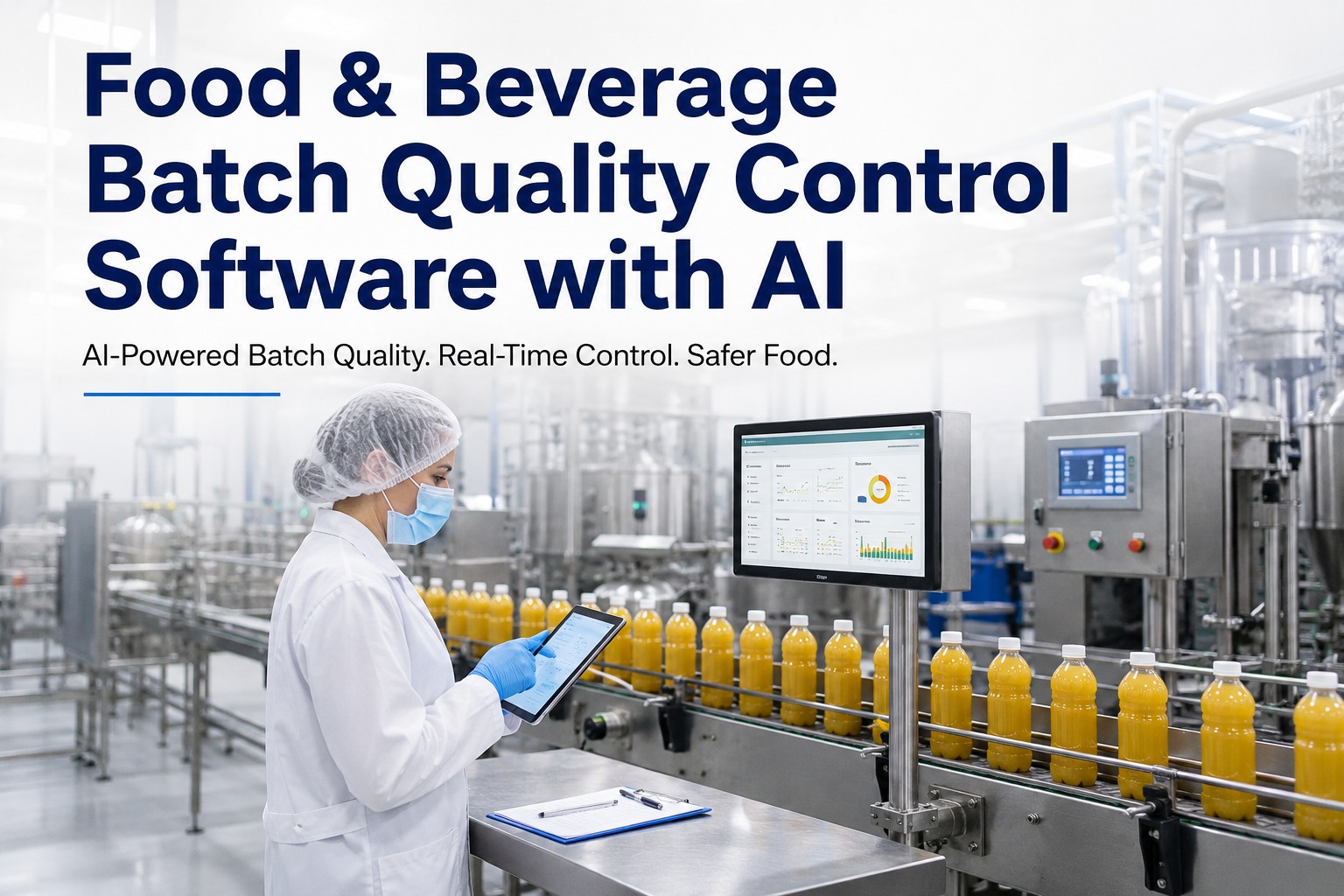
Food & Beverage Batch Quality Control Software with AI
Monitor every batch against the golden batch in real time, catch deviations mid-process, and release by exception — with automated batch records, full genealogy, and AI that predicts a failing batch before it fails. On-premise so recipes and quality data stay in the plant. A modern SAP MII alternative for HACCP, FSMA, SQF, and BRCGS, live in 6–12 weeks.
Where Batch Quality Goes Wrong — The Old Way
Traditional batch control is reactive. Operators follow the recipe, take periodic samples, and the lab confirms whether the batch passed — usually after it's finished. By then a drifted fermentation or an under-mixed blend is already scrap, and the paperwork to release the good batches is a manual reconciliation across logs, COAs, and forms. The FDA's PAT initiative named the fix years ago: monitor process variables in real time so operators know a process is going out of control while they can still correct it. AI is what finally makes that practical at production scale.
The Golden Batch — Your Best Run, Made Repeatable
The heart of AI batch quality is the "golden batch": the parameter fingerprint of your best historical run — every temperature curve, density change, mix time, and addition sequence that produced perfect product. The software continuously compares the live batch to that fingerprint, flagging divergence the moment it appears rather than at the lab result. It's how batch control shifts from reactive to proactive — the system sees what's coming and adjusts in real time.
Want to see your own best run turned into a golden-batch model? Book a 30-minute demo and iFactory will build a golden-batch fingerprint from your historical data and show live divergence detection on your process. Sessions available this week.
Review by Exception — Release Batches in Minutes
The slowest part of batch quality is often the release, not the production. Traditional batch record review means a QA reviewer reading every page of every record looking for the one parameter that went out of range. Review by exception inverts it: the system has already checked every parameter against spec continuously, so the reviewer sees only the batches — and the specific deviations — that need a human decision. Everything in-spec is auto-cleared with a complete electronic record behind it.
Reviewer reads every record to find the one deviation. Hours per release, error-prone.
System auto-clears in-spec batches; reviewer sees only the flagged exception. Minutes per release.
Curious how much QA release time you could recover? Ask iFactory Support for a review-by-exception walkthrough on your batch-record format, with an estimate of release-time savings — typically a response within 3 business days, no obligation.
What AI Batch Quality Control Software Includes
Golden-batch modeling
Builds a parameter fingerprint from your best runs and compares every live batch against it in real time.
In-line process sensing
Density, temperature, pH, and homogeneity tracked live — catching inhomogeneity and recipe drift mid-batch.
Predictive batch alerts
AI forecasts a failing batch before it fails, so operators correct the process rather than scrap the result.
Automated batch records
The electronic batch record assembles as the batch runs — no manual reconciliation at release.
Full genealogy
Ingredient-to-finished-goods traceability for surgical recalls and FSMA 204 records within 24 hours.
COA automation
Certificates of analysis processed automatically and matched to batch genealogy — no manual data entry.
Not sure which of your batch processes would benefit most — fermentation, blending, or beverage mixing? Book a 30-minute demo and iFactory will show golden-batch modeling on your highest-value process, with a sized projection of recoverable batches built during the session. Sessions available this week.
Built for Food & Beverage Compliance
Batch records are the backbone of food safety audits, and assembling them by hand is where audit time goes. iFactory generates audit-ready electronic batch records continuously, so HACCP, FSMA, SQF, BRCGS, and FSSC 22000 evidence is a byproduct of normal operation rather than a separate scramble. With FSMA 204 traceability enforcement locked for July 2028, full ingredient genealogy isn't optional much longer.
Replacing SAP MII — On-Premise or Cloud
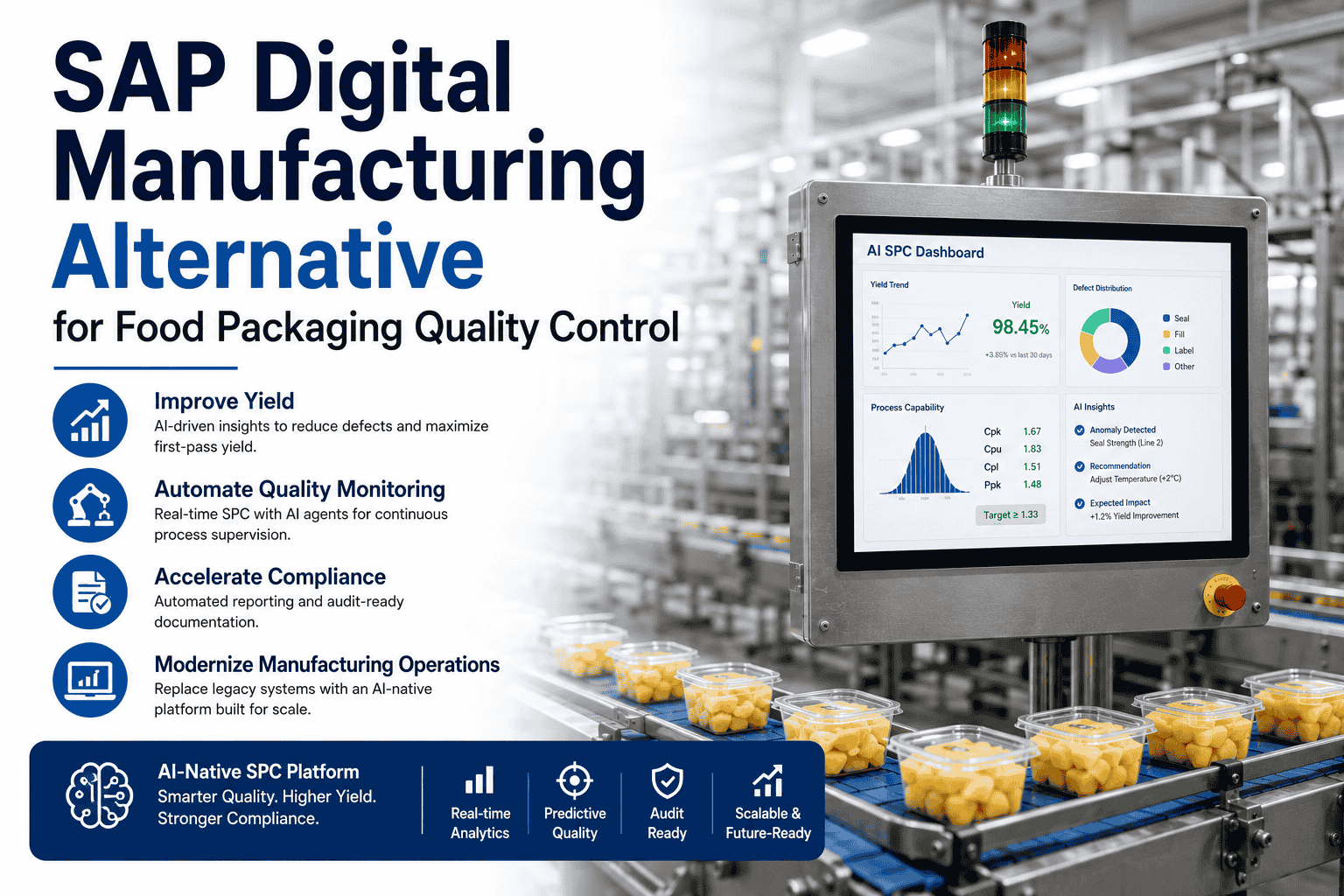
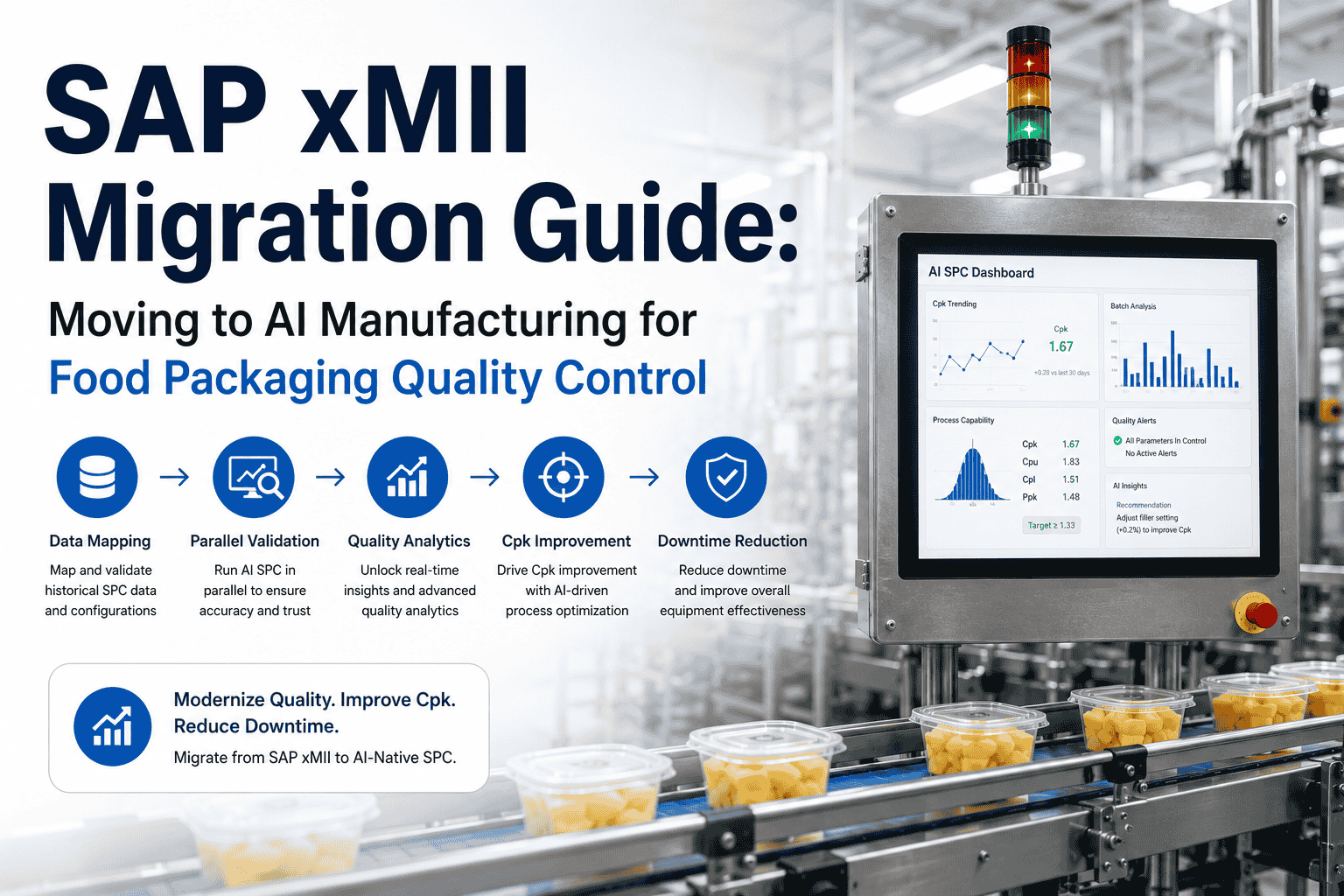
Many food and beverage plants run batch quality through SAP MII, which was built to move and display data, not to model golden batches or predict failures. iFactory connects to the same PLCs, DCS, and in-line sensors directly, adds the AI batch-intelligence layer SAP never had, and syncs results back to SAP or MES — so you modernize the batch-quality layer without an enterprise-wide rip-and-replace. On-premise is the default for food, keeping recipes and quality data in the plant.
iFactory On-Premise Appliance The food default — recipes stay in the plant
- Pre-configured NVIDIA AI server — racked, loaded, ready.
- Real-time edge batch monitoring — keeps pace with the process.
- Air-gap capable — recipe and batch data never leave.
- Runs through WAN outages — batch records never break.
iFactory Cloud For multi-plant and co-packer networks
- Fully managed — no on-site hardware to maintain.
- Same batch engine — golden batch, prediction, e-records.
- Cross-plant benchmarking — compare batch yield site to site.
- Fastest start — first plant live in 2–4 weeks.
You shouldn't learn a batch failed after it's already scrap.
AI batch quality control compares every run to your golden batch in real time, predicts a failure before it happens, and assembles the release record automatically — so you correct mid-batch and release by exception. iFactory delivers it on a pre-configured on-premise appliance replacing SAP MII, built for HACCP, FSMA, SQF, and BRCGS. Live in 6–12 weeks, ROI proven on one process first.
Frequently Asked Questions
What is a "golden batch" and why does it matter?
A golden batch is the parameter fingerprint of your best historical run — the exact temperature curves, density changes, mix times, and addition sequences that produced perfect product. AI batch software compares every live batch to that fingerprint continuously, flagging divergence the moment it appears instead of at the final lab result. It's what lets operators correct a drifting batch mid-process rather than discovering the failure at the end.
How does AI reduce batch failures?
By monitoring process variables in real time and comparing them to the golden batch, the system catches deviations — a drifting fermentation, an under-mixed blend, an off-recipe density — while the batch can still be corrected. One beverage manufacturer using real-time sensor data and automated COA processing cut batch failures 25% and raised production efficiency 15%. The FDA's PAT framework is built on exactly this real-time-monitoring principle.
What is review by exception?
Instead of a reviewer reading every batch record to find the one out-of-range parameter, the system checks every parameter against spec continuously and surfaces only the batches — and specific deviations — that need a human decision. In-spec batches are auto-cleared with a complete electronic record behind them, cutting release from hours to minutes.
Does it help with FSMA 204 and recalls?
Yes. Full ingredient-to-finished-goods genealogy enables surgical recalls — isolating exactly the affected lots instead of over-recalling — and AI-integrated traceability delivers 40–60% deeper traceability than manual batch records. FSMA 204 requires traceability records within 24 hours of an FDA request, with enforcement locked for July 2028; iFactory generates those records as a byproduct of normal operation.
Is this a replacement for SAP MII?
It replaces the batch-quality and intelligence layer while connecting directly to your existing equipment. SAP MII moves and displays data; iFactory connects to the same PLCs, DCS, and in-line sensors, adds golden-batch modeling and prediction SAP never had, and syncs results back to SAP or MES — no enterprise-wide rip-and-replace. A demo is the fastest way to see the integration; schedule one here.
How do I book a demo or get a batch assessment?
Two routes. For a live walkthrough on your own process data, schedule a 30-minute demo — it covers golden-batch modeling, real-time divergence detection, review by exception, and a sized projection of recoverable batches. For a written assessment, contact iFactory Support with your process types and batch-failure rate and expect a response within about 3 business days. No obligation either way.
Make every batch as good as your best one.
The 2026 batch-quality baseline is AI-native, on-premise: golden-batch comparison in real time, predictive failure alerts, automated batch records, and review-by-exception release — replacing SAP MII without touching your process equipment. Live in 6–12 weeks, ROI proven on one process first. The next step is a 30-minute demo against your own batch data. Sessions available this week.