Brownfield food plants — facilities built 20-40 years ago with legacy systems, disconnected data, and manual workflows — face a perpetual modernization dilemma. New automation technologies arrive constantly: AI vision, IoT sensors, robotics, automation platforms. The question that stops most facility leaders is: where do we start? The answer is almost never "add humanoid robots to our fragmented legacy stack." That is a complexity multiplier on top of complexity. The facilities solving problems fastest are deploying in order: CMMS modernization, IoT sensor networks, AI vision inspection, compliance automation via integrated platforms like iFactory. Only after those systems are live and generating clean data do they evaluate specialized systems like humanoid robots for narrow use cases. This guide outlines the realistic brownfield automation roadmap — what works in practice, what's premature, and why humanoid integration is a future-state architecture, not a day-one priority. See the proven brownfield automation sequence for food plants.
Humanoid Robots & Brownfield Food Plants: The Integration Reality
Why adding humanoids to legacy systems is backwards. The proven automation sequence. When humanoids become viable. What to build first.
Why Brownfield Plants Add Humanoids Too Early (And What Happens)
Legacy food plants typically have three separate system silos: ERP (financial, order) running on 15-year-old server, MES (production scheduling) as a spreadsheet or fragmented application, CMMS (maintenance) as paper logs or legacy database nobody trusts. Data does not flow between them. Adding a humanoid robot — which generates continuous sensor data, motion logs, task completion records — into this environment creates a fourth silo and amplifies the core problem: data fragmentation.
Humanoid telemetry lives in robotics manufacturer's cloud or local edge system. ERP, MES, CMMS remain disconnected. You've created a 5th data silo without solving the core fragmentation.
Connecting humanoid data to legacy systems requires custom middleware, ETL pipelines, API development. Cost explodes. Timeline extends 12-18 months. ROI disappears.
SQF/FSSC 22000 require unified audit trails. Humanoid data + legacy CMMS + spreadsheet records = compliance nightmare. Auditors flag data integrity issues.
Adding humanoids to systems operators barely trust means training burden on top of training burden. Adoption fails. Robot sits idle.
The Proven Brownfield Automation Sequence
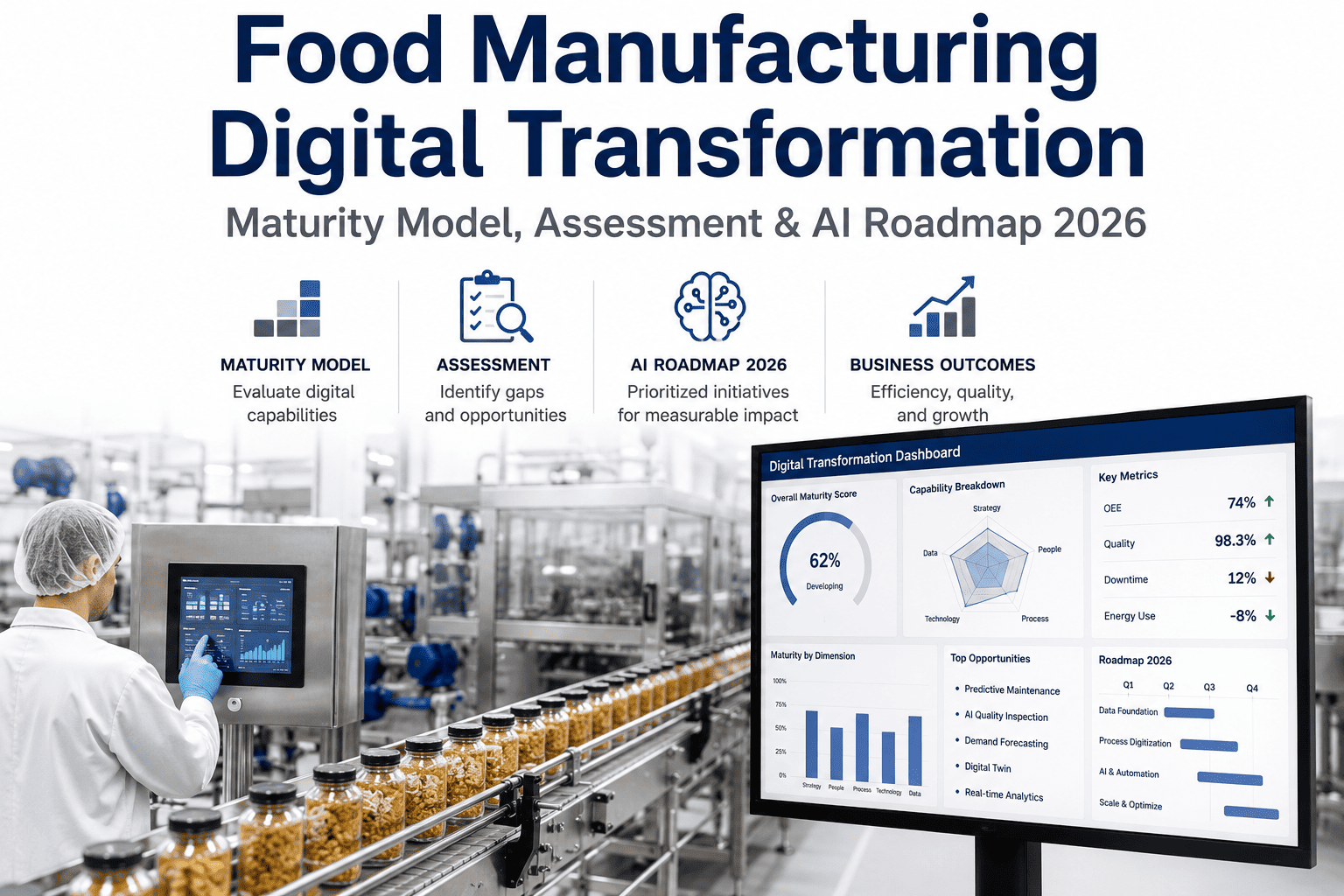
This is the order that works. Facilities deploying in this sequence achieve 18-30% maintenance cost reduction within 18 months and are positioned to integrate specialized systems later. Get the detailed deployment roadmap for your facility.
Goal: Single source of truth for maintenance, asset data, and equipment history. Deploy temperature, pressure, vibration sensors across critical equipment. All data flows to unified CMMS platform (iFactory, Maximo, Archibus). Legacy paper logs and spreadsheets sunsetted. Result: Clean maintenance data, equipment baseline established, predictive model training begins.
Goal: Defect detection at production speed. Deploy stationary AI vision cameras at bottling, packaging, or processing checkpoints. Vision data flows to CMMS and compliance system. Defect rules configured per product. QA labor reduction begins immediately (40-55% documented). Compliance records auto-generated. Result: Production quality data in unified system, labor savings fund next phase.
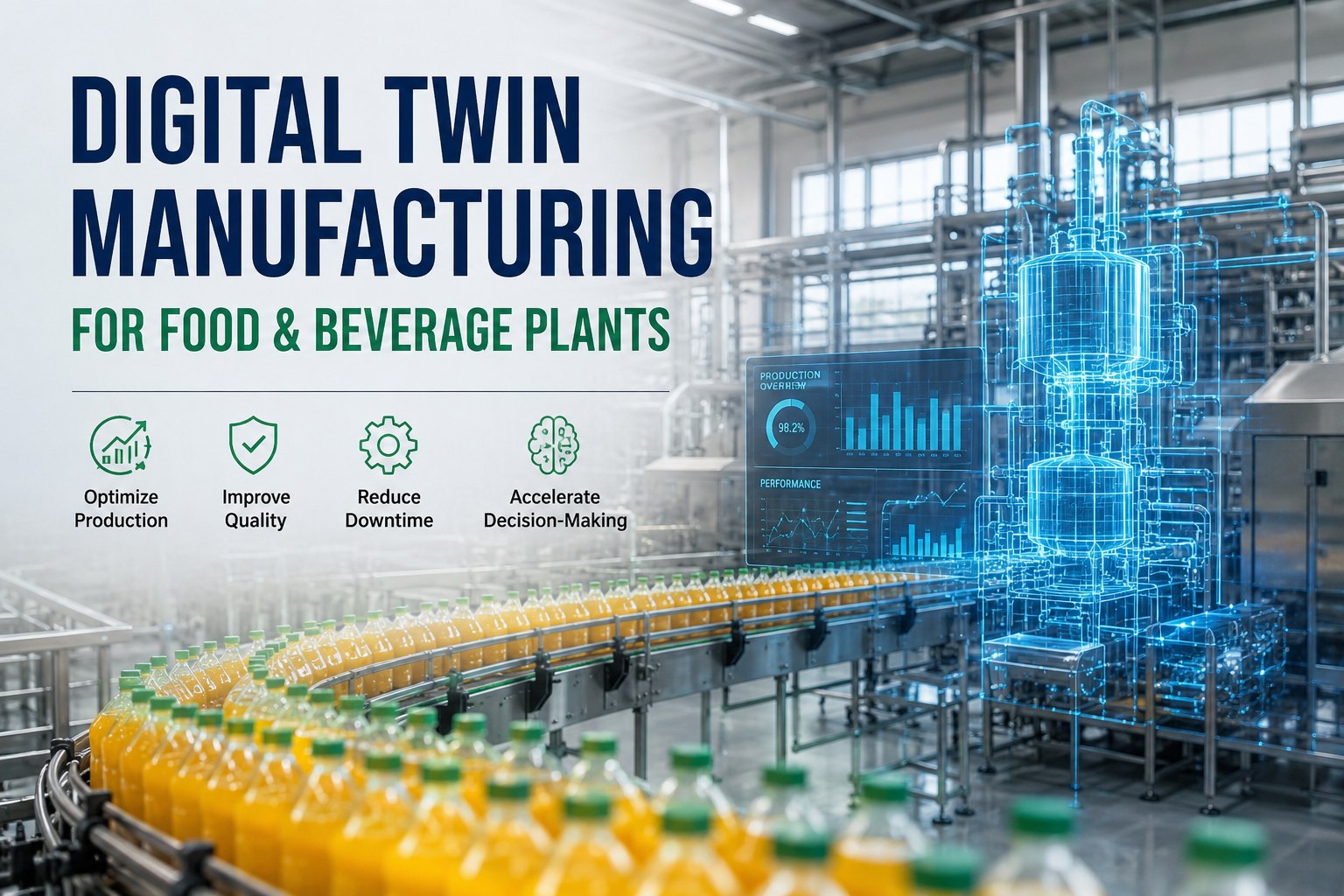
Goal: AI deterioration models live on accumulated sensor data. IoT feeds trigger maintenance alerts 1-2 weeks before failure. Work orders auto-generated and routed to technicians. Emergency maintenance drops 60-75%. Planned maintenance costs 3-5x less than emergency rates. Capital project cost variance falls from 22% to 6% because condition data is current. Result: Maintenance cost reduction compounds. ROI document ready for finance review.
Goal: Production scheduling connects to real-time equipment condition and maintenance status. Scheduling algorithm factors equipment reliability and maintenance windows. Capital improvement planning informed by live asset data. Compliance documentation auto-assembled per SQF/FSSC 22000. Result: Plant operates on unified data model. All systems speak same language. Integration burden next-to-zero.
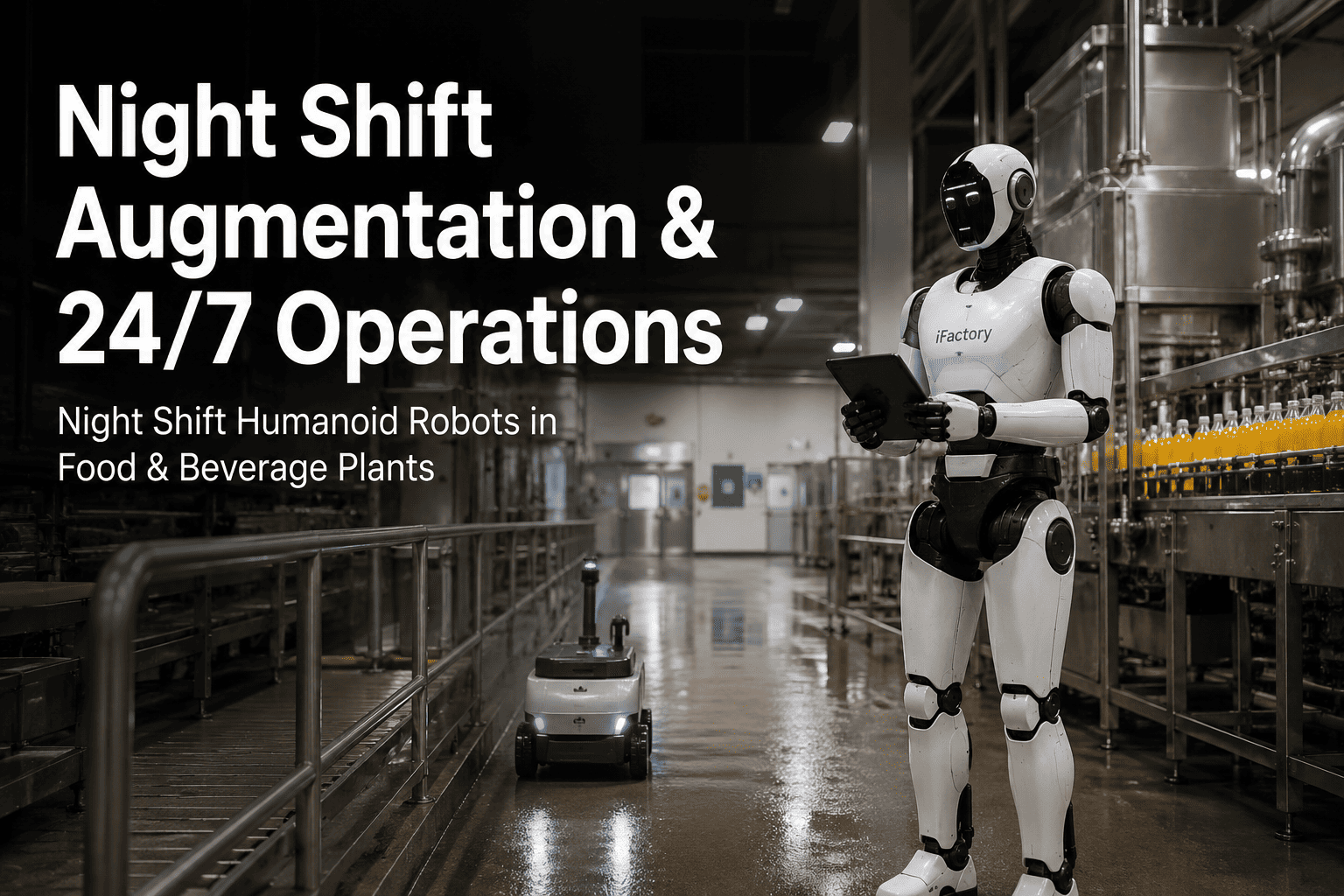
At this point: Clean data architecture exists. Operators are trained. Systems are trusted. Integration is solved. NOW, humanoid robots or other specialized systems can be evaluated for narrow tasks: perimeter patrols, hazardous zone monitoring, maintenance area inspection. Humanoid data integrates into unified system as a new data source, not a new silo. Cost justified against documented savings already achieved.
Why Humanoid Integration Works Better AFTER Phase 4
By the time a brownfield plant completes Phase 4, the foundational problems are solved. At that point, humanoid integration becomes simple architecture instead of complex nightmare.
Real Brownfield Deployment Timeline & Outcomes
Data from 100+ food manufacturing facilities that followed the proven sequence.
Frequently Asked Questions
Don't Chase Humanoids. Build the Foundation First.
CMMS + IoT + AI Vision + MES integration. 100+ facilities. 18-30% cost reduction. Humanoids become viable later when data foundation is solid.