iFactory CMMS solves the core problems in food & beverage plants: HACCP automation, CIP tracking, allergen control, predictive maintenance, and audit readiness. The question about humanoid robots is not whether they can supplement iFactory — they can, technically. The question is whether they should, and where. This guide separates realistic humanoid + iFactory integration scenarios from theoretical ones. Where humanoids add documented value. Where they create unnecessary complexity. How to sequence deployment so robots augment iFactory rather than duplicate its capabilities.
iFactory + Humanoid Robots: Integration Reality for Food Plants
Where humanoids add real value to iFactory CMMS. Which tasks should stay with iFactory. Integration architecture that doesn't create silos.
What iFactory Already Does for Food Plants
iFactory solves the core problems in food & beverage manufacturing. Understanding what iFactory delivers is essential context for evaluating where humanoids might fit.
Auto CCP monitoring from sensors. Real-time deviation alerts. Immutable records. Zero manual data entry.
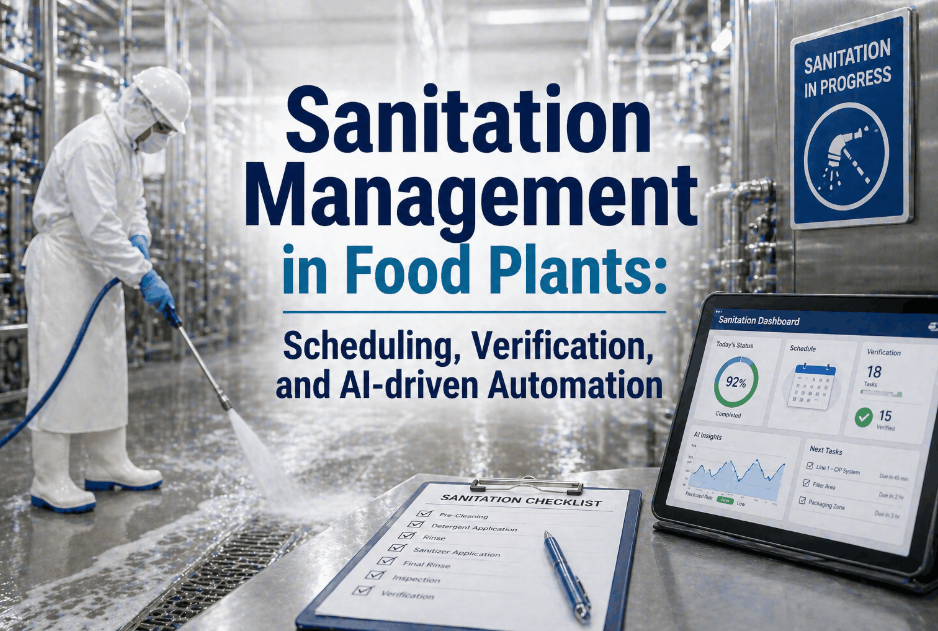
Schedule, monitor, verify. Chemical concentration, temperature, contact time. Auto-triggers re-wash on failure.
Mandatory changeover checklists. Photo evidence. Cross-contact prevention documentation. 9 major allergens tracked.
AI on mixers, fillers, pasteurizers, freezers. 48hr+ failure prediction. Auto work orders with parts list.
End-to-end lot tracking. KDE capture at every Critical Tracking Event. One-click trace reports for recalls.
FDA, SQF, BRC, FSSC 22000 compliant. ALCOA+ records. E-signatures. 21 CFR Part 11 ready. 2-day audit prep.
Where Humanoid Robots Could Fit in iFactory Ecosystem
Realistically, humanoid robots can serve narrow purposes where they add value iFactory cannot deliver alone. The critical requirement: humanoid data must flow into iFactory, not create a parallel system. See how humanoid data integration architecture works with iFactory.
Where humanoids can help: Confined-space galleries, ammonia plants, elevated tanks, high-pressure CIP areas. Reduce human exposure to documented safety risks. iFactory integration: Inspection findings logged to iFactory EHS module. Photos, timestamps, corrective actions tracked in unified CMMS. Reality: Documented pilots exist. No production F&B deployments yet. Cost remains prohibitive for most facilities.
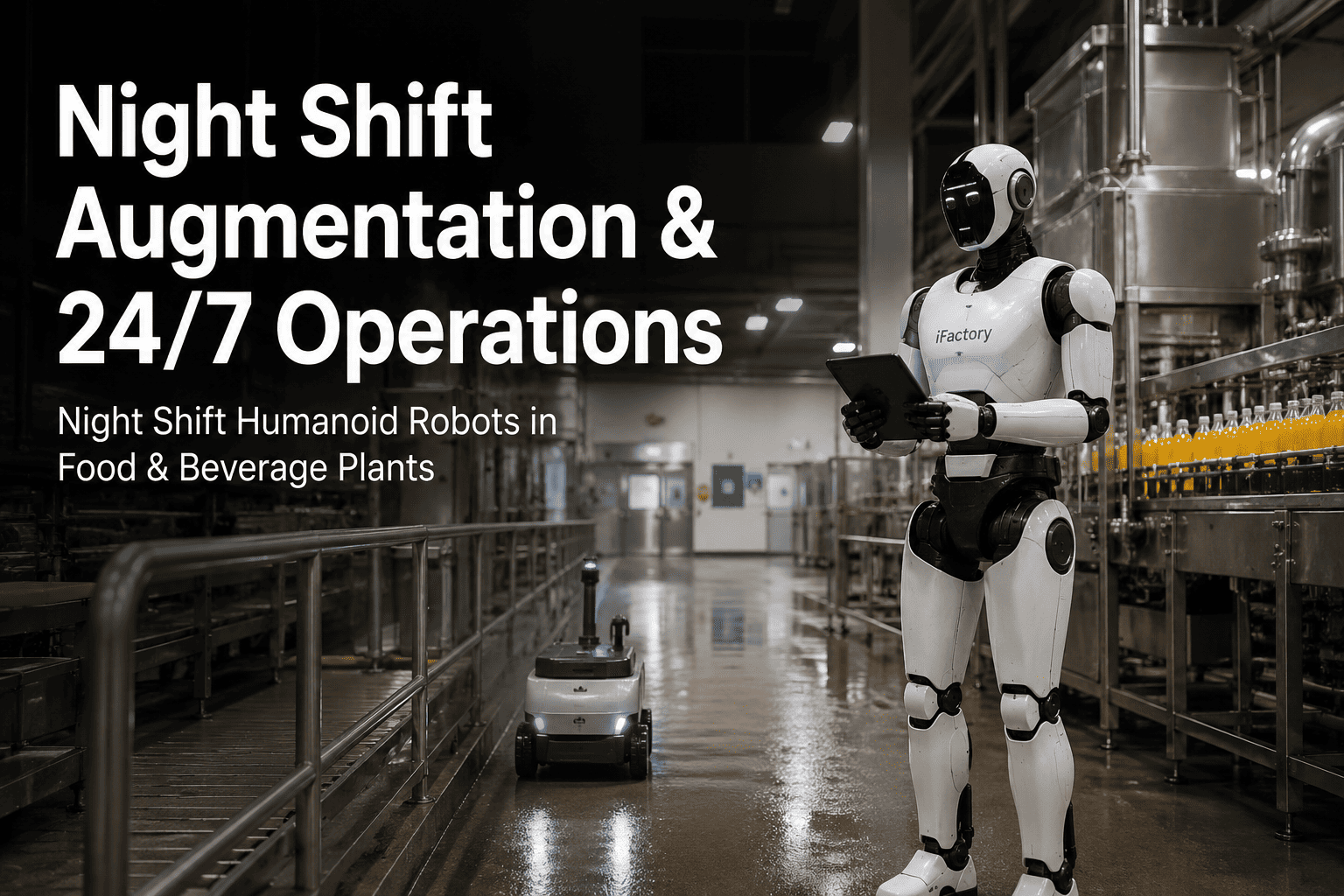
Where humanoids can help: 24/7 operations need night shift support. A robot could patrol lines, verify CIP completion, check HACCP alert status. iFactory integration: Robot observes iFactory dashboard, alerts operators to deviations, logs night shift activities. Reality: Theoretical. Actual night shift needs are typically managed better with iFactory mobile app + staff training than autonomous robots.
Where humanoids can help: Walk-in coolers, blast freezers, spiral freezer cells. Robot records temperature readings from multiple zones. iFactory integration: Readings flow to iFactory cold chain monitoring. Deviations trigger alerts same as fixed sensors. Reality: iFactory already handles this with fixed sensors. Adding humanoids adds cost without improving outcomes. Skip this use case.
Where humanoids can help: Non-food areas. Visual inspection of vibration, rust, fluid leaks on motors and gearboxes. iFactory integration: Robot inspection findings → iFactory predictive maintenance module. Visual evidence captured. Reality: Emerging capability. Accuracy questions remain. Only viable after iFactory predictive system is fully live.
What Humanoids Should NOT Try to Do in iFactory Plants
Clear misalignments where humanoid robots create problems instead of solving them:
iFactory already tracks chemical concentration, temperature, contact time automatically from sensors. Adding a robot to "verify" CIP is redundant. CIP failures should trigger in iFactory, not wait for a robot observation.
Allergens require chemical analysis, not vision or physical inspection. A robot cannot detect residual peanut protein on a surface. Only chemical swab testing works. iFactory handles allergen documentation; robots add no value here.
iFactory reads sensor data in real-time from thermometers, metal detectors, and X-ray systems. A robot cannot improve on continuous automated monitoring. This is pure overkill and adds contamination risk.
iFactory eliminates manual data entry via sensors and automation. Adding a robot to "enter data" defeats the purpose. If data still needs manual entry, the problem is iFactory setup, not a robot solution.
Realistic Humanoid + iFactory Deployment Timeline
If you're considering humanoid robots alongside iFactory, this is the sequence that makes sense:
HACCP, CIP, allergen control, predictive maintenance all live. 1-2 week deployment. Pre-built food templates. Core automation active.
Tune predictive models. Refine CIP schedules. Integrate with existing systems. Achieve documented outcomes: -50% downtime, zero audit findings.
ONLY after iFactory is optimized. Look at actual gaps. Do you need EHS patrols? Night shift support? Evaluate carefully. Cost-benefit analysis required.
Only if iFactory is solid and clear humanoid value exists. Integration architecture: humanoid telemetry → iFactory API. Unified system, no silos.
Frequently Asked Questions
Start with iFactory. Add Humanoids When They Matter.
50% downtime reduction, zero audit findings, full compliance automation. Then evaluate where robots add value beyond CMMS capabilities.