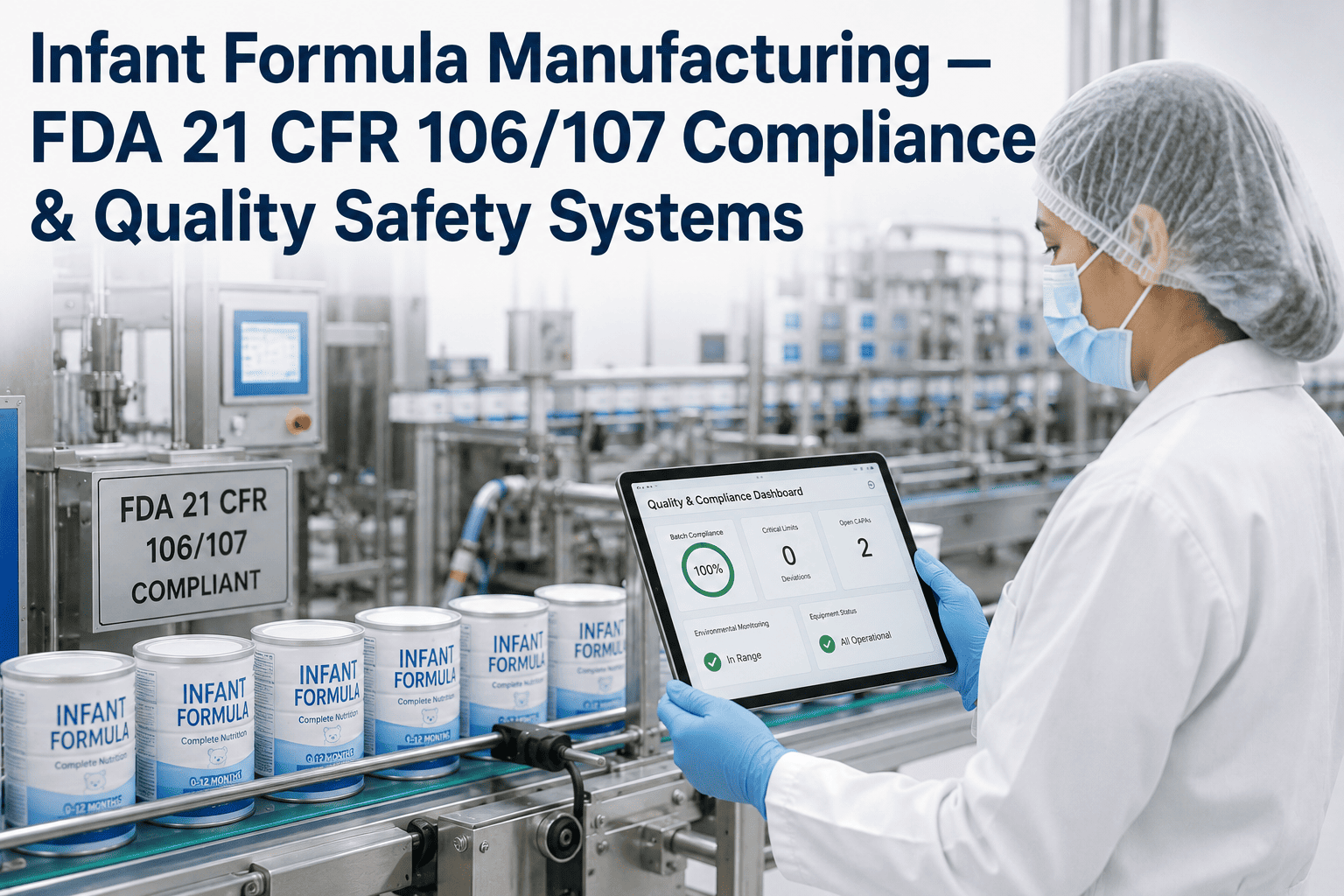
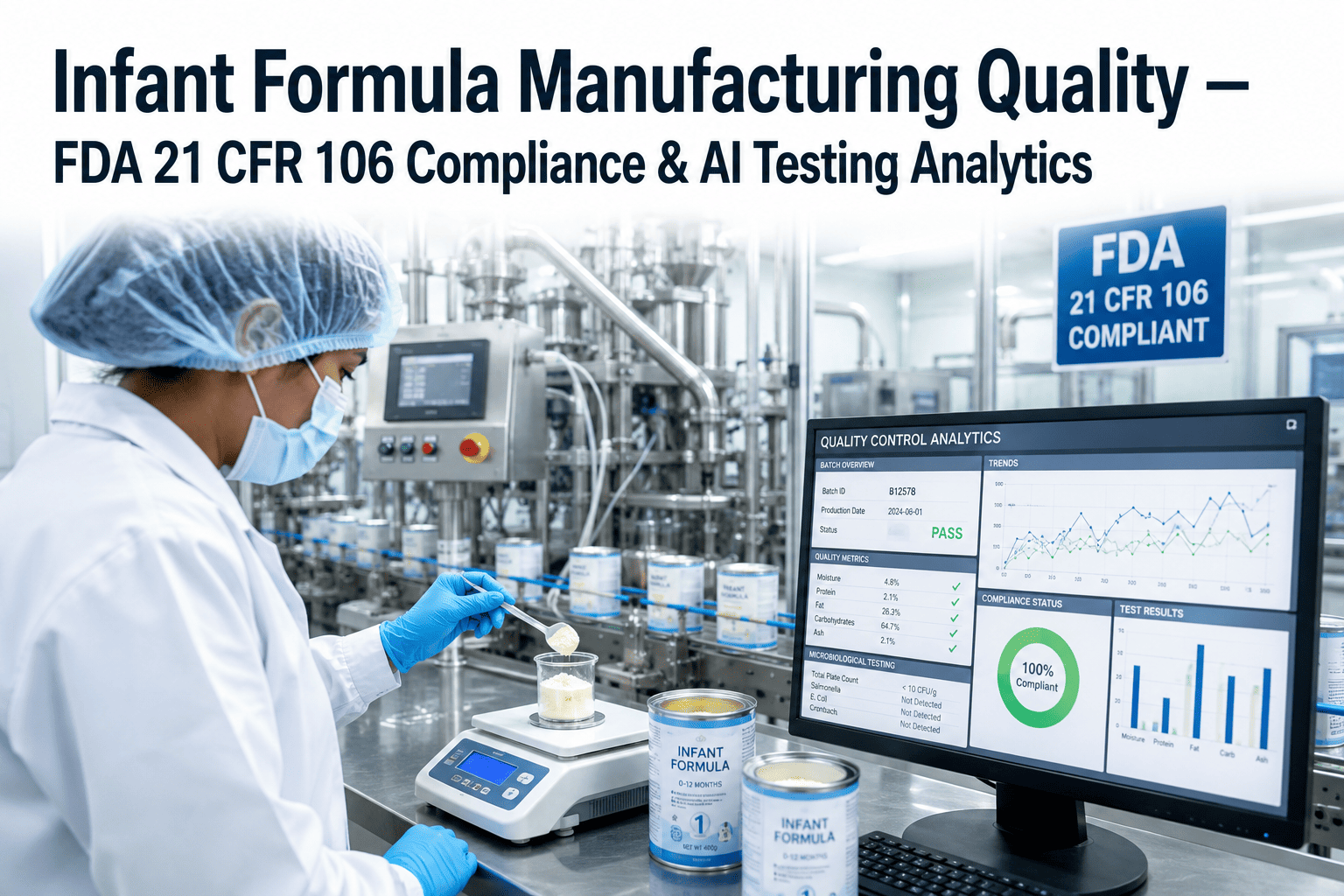
Infant formula carries a regulatory burden that no other category in food manufacturing faces, because the product is often an infant's sole source of nutrition and the FDA treats it accordingly under 21 CFR Parts 106 and 107. A single missed microbiological test, an undocumented nutrient verification step, or a batch record with a gap in it can halt a release, trigger a recall, or draw an FDA warning letter. Book a demo to see how AI-driven documentation keeps every batch audit-ready from the first ingredient scan to final release.
Infant Formula Manufacturing · Compliance
Audit-Ready Batch Records Are Not Optional in Infant Formula. Build Them In, Not After.
AI-powered nutrient verification, microbiological testing automation, and batch release documentation built around 21 CFR 106 and 107 — so audit readiness is a byproduct of daily operations, not a scramble before an FDA visit.
The Regulatory Baseline
What 21 CFR 106 and 107 Actually Require of a Manufacturing Line
These two regulations govern nearly every aspect of how infant formula is made, tested, and released, and compliance officers are the ones held accountable when documentation cannot answer an inspector's question on the spot.
21 CFR Part 106 — Quality Control
Requires quality control procedures covering nutrient content, microbiological testing, and manufacturing controls at each production stage, along with a documented quality factor testing program for every batch before release.
21 CFR Part 107 — Labeling and Nutrient Requirements
Sets minimum and maximum nutrient levels that finished product must meet, and requires manufacturers to demonstrate through testing that each batch stays within those levels through the end of shelf life.
Current Good Manufacturing Practice Requirements
Layers standard food CGMP requirements on top of the formula-specific rules, covering facility controls, personnel practices, and equipment sanitation documented at a level most other food categories are not required to reach.
Where Compliance Breaks Down
Four Points Where Manual Documentation Creates Regulatory Exposure
1
Nutrient Verification TimingA batch tested for nutrient content after packaging leaves no window to correct a deficiency, and paper-based scheduling makes it easy to miss a required verification point.
2
Microbiological Testing GapsManual sample tracking across multiple pathogens and testing intervals creates room for a missed sample or a delayed result to go unnoticed until a release deadline is already at risk.
3
Incomplete Batch RecordsA batch record with a missing signature, an unrecorded deviation, or an unclear correction is one of the most common findings in FDA infant formula inspections.
4
Slow Retrieval During an AuditWhen records live across separate paper logs and spreadsheets, pulling a complete batch history for an inspector can take hours instead of minutes, and that delay itself raises concern.
iFactory Builds Your Batch Record as Production Happens, Not After
Nutrient verification tracking, automated microbiological testing schedules, and complete batch release documentation aligned to 21 CFR 106 and 107, retrievable in minutes during an inspection.
Audit Preparedness Checklist
Seven Things an FDA Inspector Will Expect to See Without Delay
✓
Complete batch record for any lot, retrievable within minutes of the request
✓
Nutrient testing results tied to the specific batch and production date
✓
Microbiological test results for every required pathogen and sampling point
✓
Documented deviation reports with correction and verification steps attached
✓
Equipment sanitation and calibration logs current and complete
✓
A clear chain of custody for every ingredient lot used in a given batch
✓
Batch release approval signed off with the underlying test data attached, not referenced separately
Our team spent the days before a scheduled FDA inspection pulling batch records from three different systems, cross-checking dates by hand to make sure nothing was missing before the inspector arrived. It worked, but it took two people three full days, and one gap in a microbiological log from a weekend shift nearly turned into a bigger problem than it should have been. Since we moved to a system that ties nutrient testing, microbiological results, and batch release into one continuous record, our last inspection prep took an afternoon instead of three days, and every record the inspector asked for was already complete and attached to the batch.
— Compliance Officer, Infant Formula Manufacturer
Frequently Asked Questions
What Compliance Officers Ask About AI-Driven Infant Formula Documentation
Does this replace our existing quality management system?
It typically integrates with an existing quality management system rather than replacing it outright, pulling nutrient testing, microbiological results, and production data into one continuous batch record instead of leaving those pieces in separate logs. Your underlying QMS procedures and approval workflows stay in place, with the documentation layer becoming more complete and easier to retrieve.
Can this help track the nutrient testing schedule required under 21 CFR 107?
Yes. Nutrient testing intervals and quality factor requirements can be scheduled and tracked automatically against each batch, with alerts generated if a required test window is approaching or has been missed. That reduces the risk of a batch reaching release without a completed verification step already documented and attached.
How does this handle microbiological testing for multiple required pathogens?
Each required pathogen and sampling point is tracked against its own testing schedule tied to the batch, so a sample that has not yet returned a result is visible before a release decision gets made rather than discovered afterward. Lab result data can typically be pulled in automatically once your laboratory information system provides it.
Contact support to review compatibility with your current lab systems.
Is this appropriate for a facility that has received a prior FDA warning letter?
Facilities working through corrective actions after a warning letter often benefit the most from continuous, auditable documentation, since it directly addresses the recordkeeping and verification gaps that warning letters most commonly cite. Implementation in that situation is usually scoped closely with your regulatory and quality leadership to align with your specific corrective action plan.
Book a demo to discuss your specific compliance situation.
How long does it take to get a facility to full documentation coverage?
Most facilities prioritize the highest-risk documentation gaps first, such as microbiological testing tracking and batch release sign-off, before expanding to full production-line coverage. A phased rollout over a few months is typical, though the exact pace depends on how many production lines and testing points a facility runs.
An Inspector Should Never Wait While Your Team Searches for a Record.
Nutrient verification tracking, microbiological testing automation, and complete batch release documentation aligned to 21 CFR 106 and 107 — configured with your compliance and quality team before go-live.