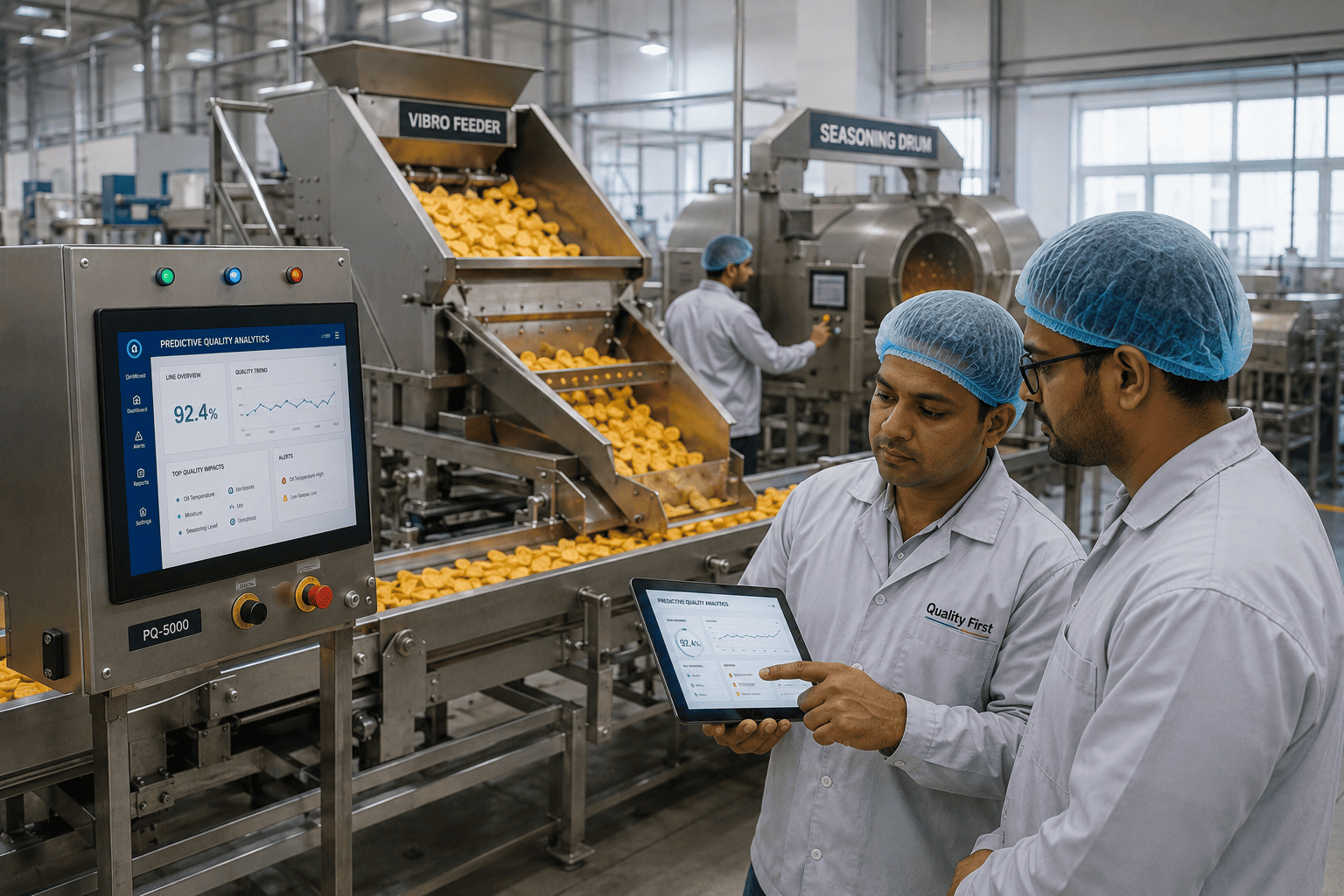
The third-shift fryer operator at a regional snack-food plant watches the oil-temperature trend on his legacy SPC chart drift three degrees over thirty minutes. He flags it in the shift log. By the time the morning production manager reviews the data, 14,000 bags of kettle chips have already been packaged with a texture profile that fails consumer-panel thresholds. The batch is quarantined, tested, and ultimately reworked into lower-margin product — a $47,000 quality event triggered by a drift that an automated system could have caught and corrected in under three minutes. Across the plant, six other process lines run without real-time statistical process control, each one a similar quality incident waiting to happen.
Stop reacting to quality drift. Let AI-driven SPC catch every out-of-control signal — in real time, on every line.
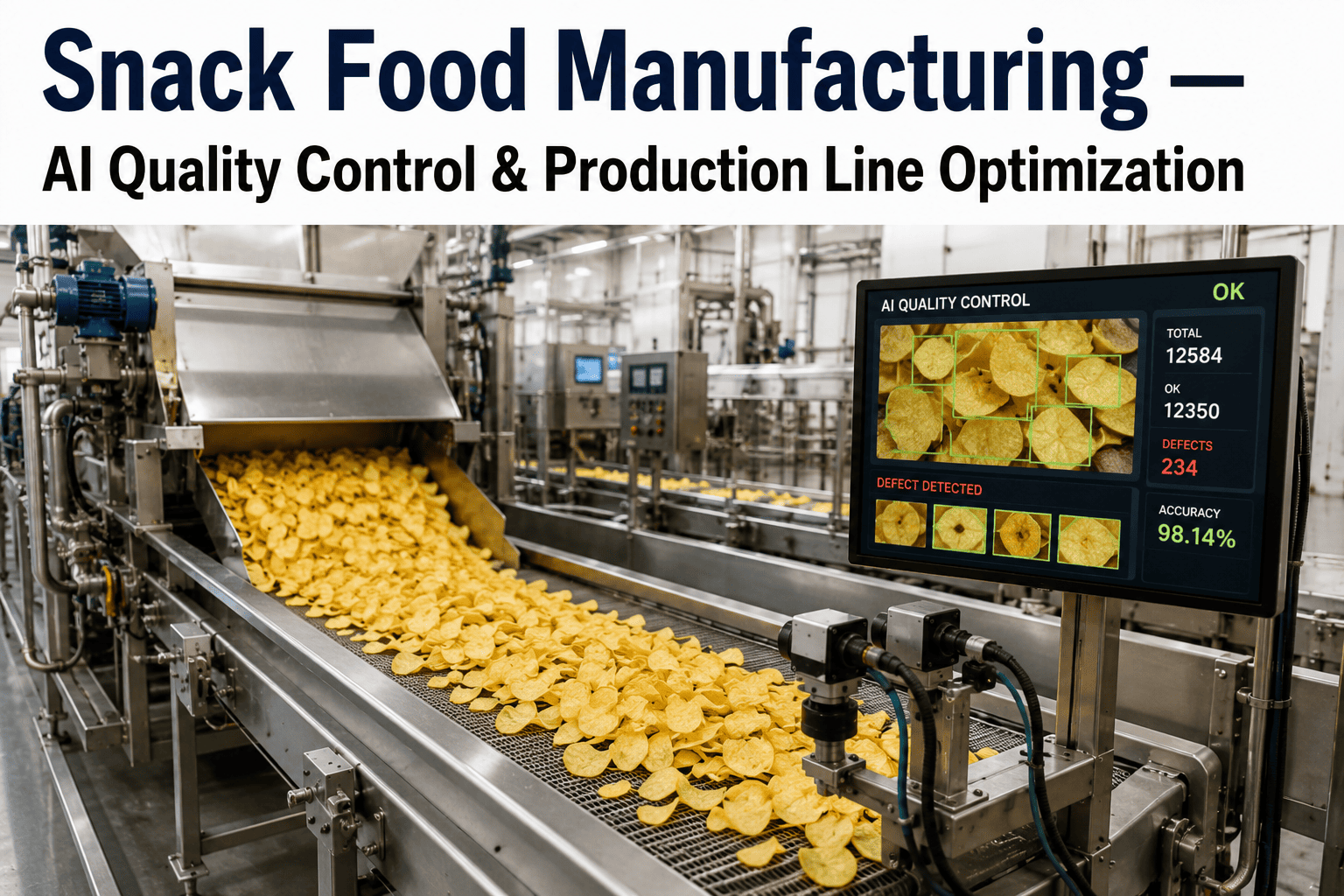
iFactory ingests your fryer, oven, seasoning, and packaging data, applies multivariate SPC with machine-learning detection limits, and alerts your team within seconds of a process shift. No more batch quarantines. No more 47,000-dollar rework events.
AI-native SPC that covers every critical process in your snack-foods plant
iFactory is not a bolt-on analytics dashboard. It is an on-premise, turnkey manufacturing intelligence platform that sits on your plant network, ingests data from fryers, ovens, seasoning drums, packaging lines, and CIP skids, and runs multivariate statistical process control with machine-learning detection limits. The platform replaces the manual charting and delayed analysis that cost snack-food manufacturers millions each year in rework, scrap, and rejected product. Every control limit, every trend rule, every out-of-control signal is computed in real time on an NVIDIA appliance — no cloud dependency, no data leaving your facility, no IT project lasting longer than 12 weeks.
Six core capabilities that turn raw process data into real-time quality control
Each capability is a standalone module that works on any snack-foods line — kettle chips, extruded snacks, baked crackers, or coated nuts. Together they form a complete SPC system that covers every critical-to-quality parameter from incoming oil temperature to final bag seal integrity.
Multivariate SPC with AI detection limits
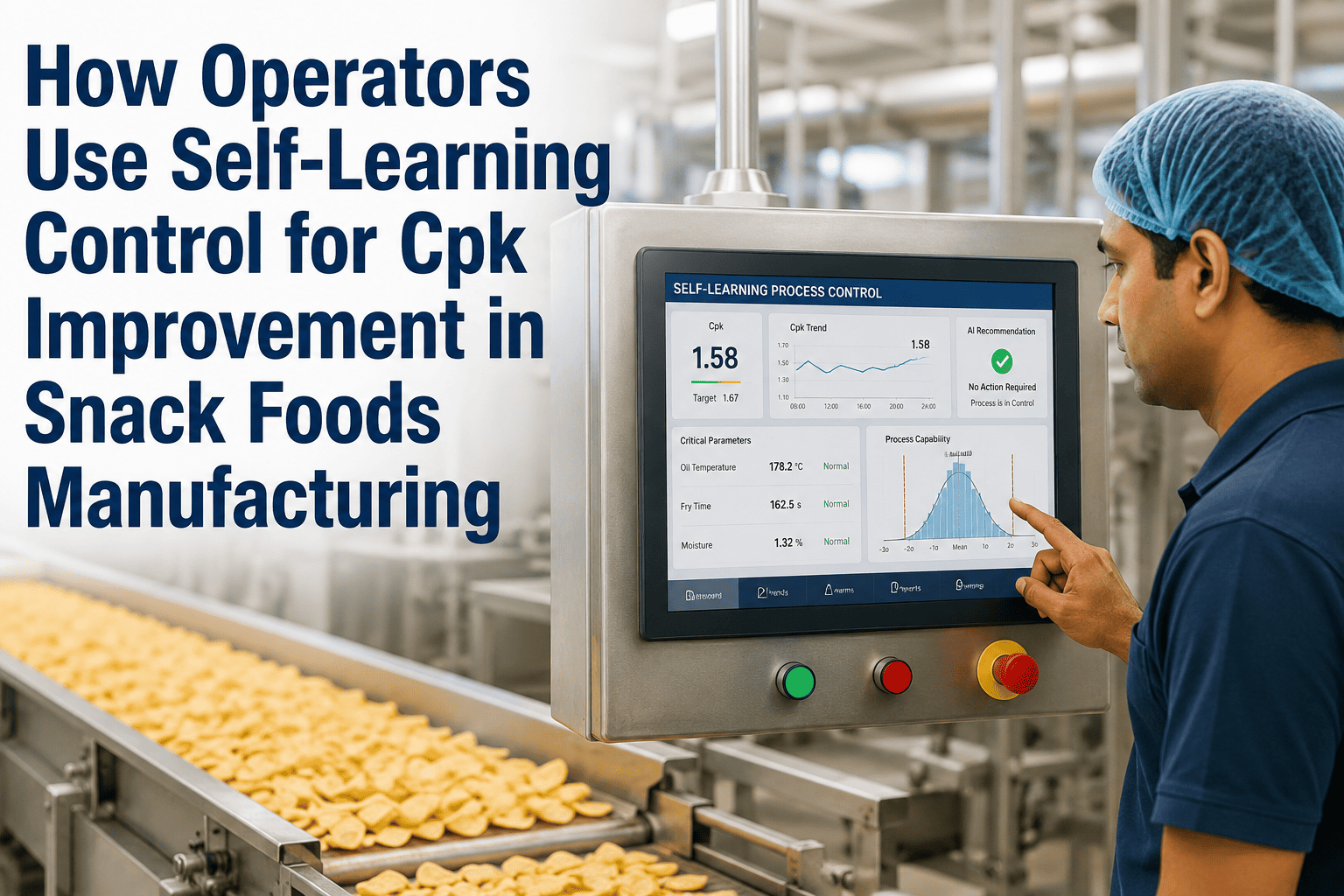
Monitors oil temperature, belt speed, humidity, seasoning application rate, and packaging atmosphere simultaneously. Detection limits are computed by a machine-learning model trained on your plant's historical data — not textbook sigma values. The system flags shifts, trends, and cycles that a human operator would miss until the product is already out of spec.
Real-time operator alerts with corrective guidance
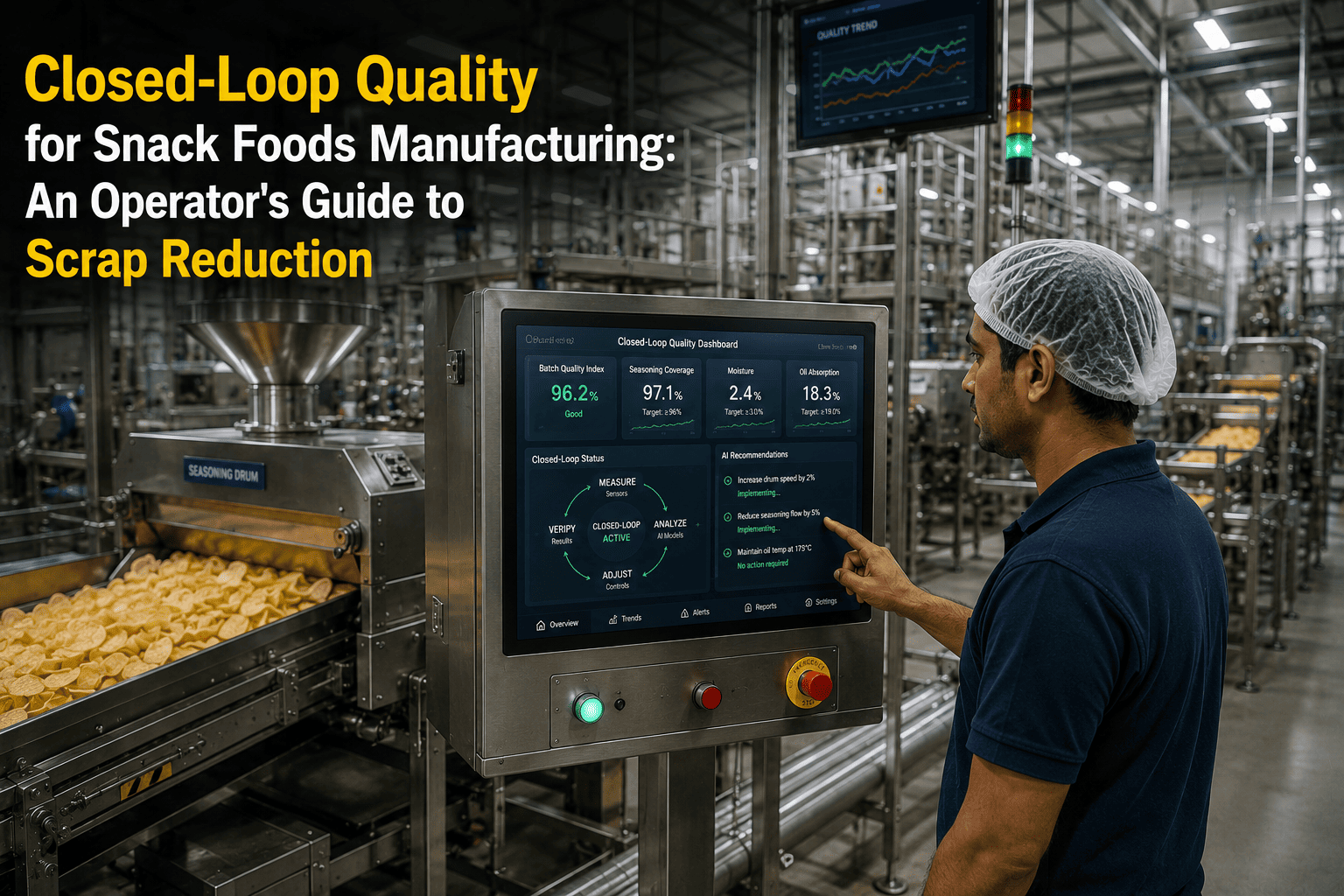
When an out-of-control signal is detected, the platform sends an alert to the shift operator's handheld device, the line-side HMI, and the production manager's mobile phone. The alert includes the parameter that drifted, the current value, the target range, and a recommended corrective action — tighten the oil-feed valve, adjust the oven damper, or increase the seasoning drum speed.
Lot-level traceability with automatic event logging
Every SPC event is automatically logged to the batch record with a timestamp, operator acknowledgment, and corrective action taken. The system creates a searchable archive that satisfies FSMA 204 traceability requirements and supports customer audit requests for specific lot numbers without manual data retrieval.
Predictive drift detection before product impact
The platform's machine-learning model analyzes rate-of-change in process parameters and predicts when a parameter will breach its control limit. Operators receive a predictive alert 15 to 30 minutes before the drift would affect product quality, giving them time to make a preventive adjustment rather than a corrective one.
Automated OEE and quality dashboards
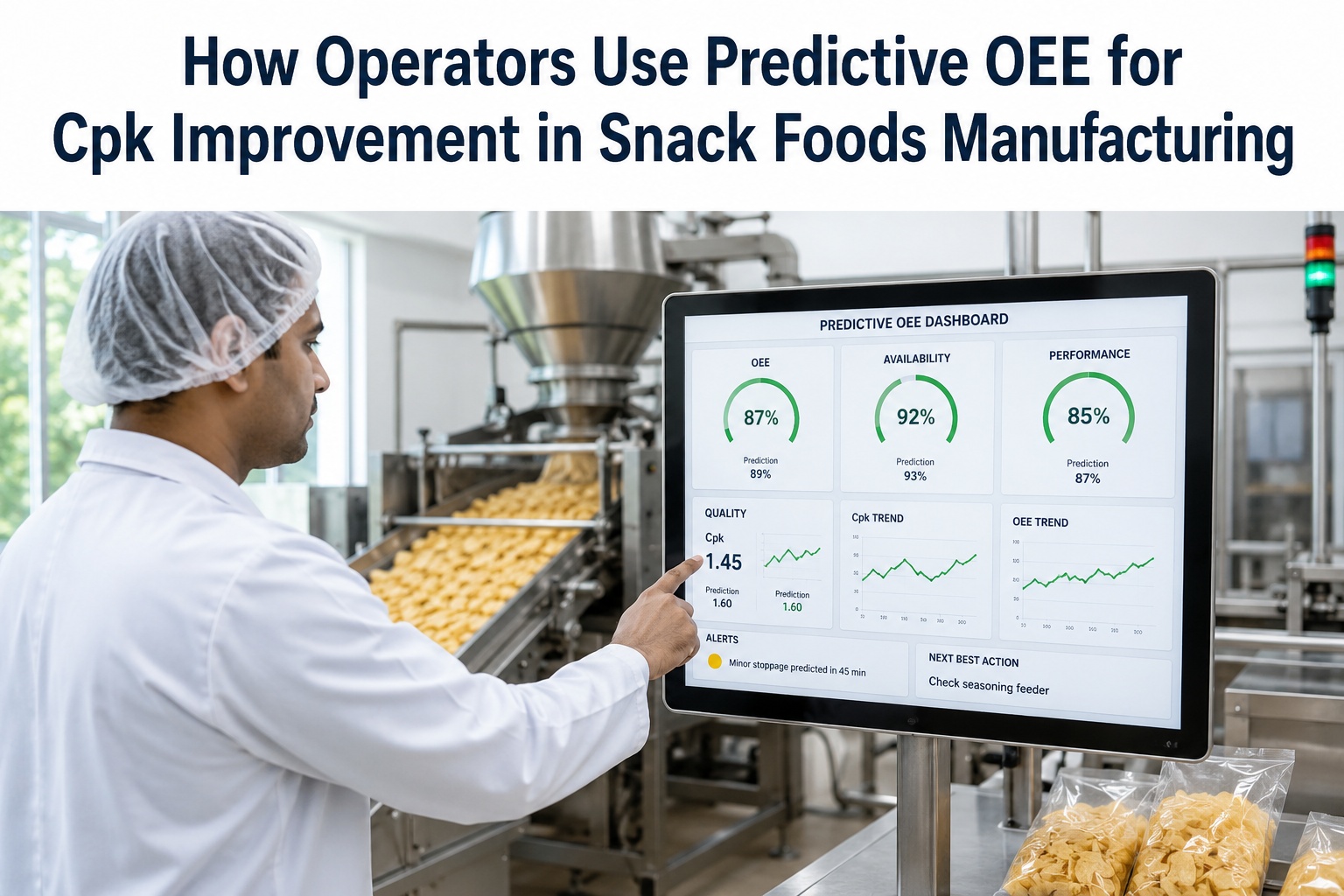
iFactory generates daily, weekly, and monthly reports that combine SPC data with OEE metrics — availability, performance, and quality. Quality losses are automatically attributed to the specific parameter drift that caused them, eliminating the manual root-cause analysis that currently consumes two hours of every production supervisor's day.
Direct data ingestion from any line-side sensor or PLC
The platform connects directly to your existing temperature probes, flow meters, weigh belts, vision inspection systems, and packaging seal testers. No middleware, no custom API development, no data staging. iFactory's edge appliance reads the data at the source and runs SPC computations locally.
From sensor data to operator action in four steps
iFactory's AI SPC system is designed to be operational within six to twelve weeks of data-source access. The platform requires no changes to your existing control systems and no additional instrumentation on your lines.
Connect
iFactory's edge appliance connects to your plant network and begins reading data from your fryer, oven, seasoning, and packaging PLCs and sensors. No data leaves your facility.
Learn
The platform's machine-learning model ingests 30 to 90 days of historical process data to establish baseline control limits, trend rules, and prediction thresholds specific to each line and product SKU.
Monitor
Every 200 milliseconds, the platform evaluates all monitored parameters against the learned control limits. Out-of-control signals are detected and classified as shifts, trends, cycles, or single-point violations.
Act
Alerts are sent to operators, supervisors, and quality managers with specific corrective guidance. The event is logged to the batch record. Predictive alerts give the operator time to adjust before product is affected.
Three quality events that cost snack-food manufacturers millions every year
Manual SPC — charting by hand, reviewing shift logs, waiting for lab results — introduces a detection delay that turns small process drifts into large quality events. Here are three common scenarios and their real cost impact.
Oil temperature drift in kettle-chip fryers
A three-degree drift over 45 minutes changes the moisture content and texture of every chip produced. With a 3,000-bag-per-hour line, a 45-minute drift produces 2,250 bags of off-spec product. Rework cost per incident: $19,000 to $34,000 depending on labor and oil recovery.
Seasoning application variability on extruded snacks
Seasoning drum speed drifts by 4% over a two-hour shift, causing a 12% variation in seasoning weight per bag. The entire shift's production — 12,000 bags — is quarantined for weight-check. Scrap and rework cost per incident: $28,000 to $52,000.
Oven zone temperature cycling in baked crackers
A worn thermocouple causes a 5-degree temperature cycle in the third oven zone, producing uneven bake on 8,000 crackers per hour. The cycle is invisible on manual charts but detected by iFactory's multivariate model. Quality losses per eight-hour shift: $12,000 to $18,000 in downgraded product.
What AI-driven SPC delivers in the first quarter
Pilot deployments across snack-foods plants show consistent returns within the first 90 days of operation. The platform pays for itself before the second quarter begins.
Your plant's SPC data is already flowing through your PLCs and sensors. iFactory can read it, analyze it, and alert your team within six to twelve weeks. Book a 30-min walkthrough and we'll show you live on your data.
Questions snack-foods operations leaders ask about AI-driven SPC
Your SPC data is already flowing. iFactory can turn it into real-time quality control in six to twelve weeks.
See the platform running on a live snack-foods line. Book a 30-minute demo and we'll show you how AI-driven SPC catches every out-of-control signal before it costs you a batch.