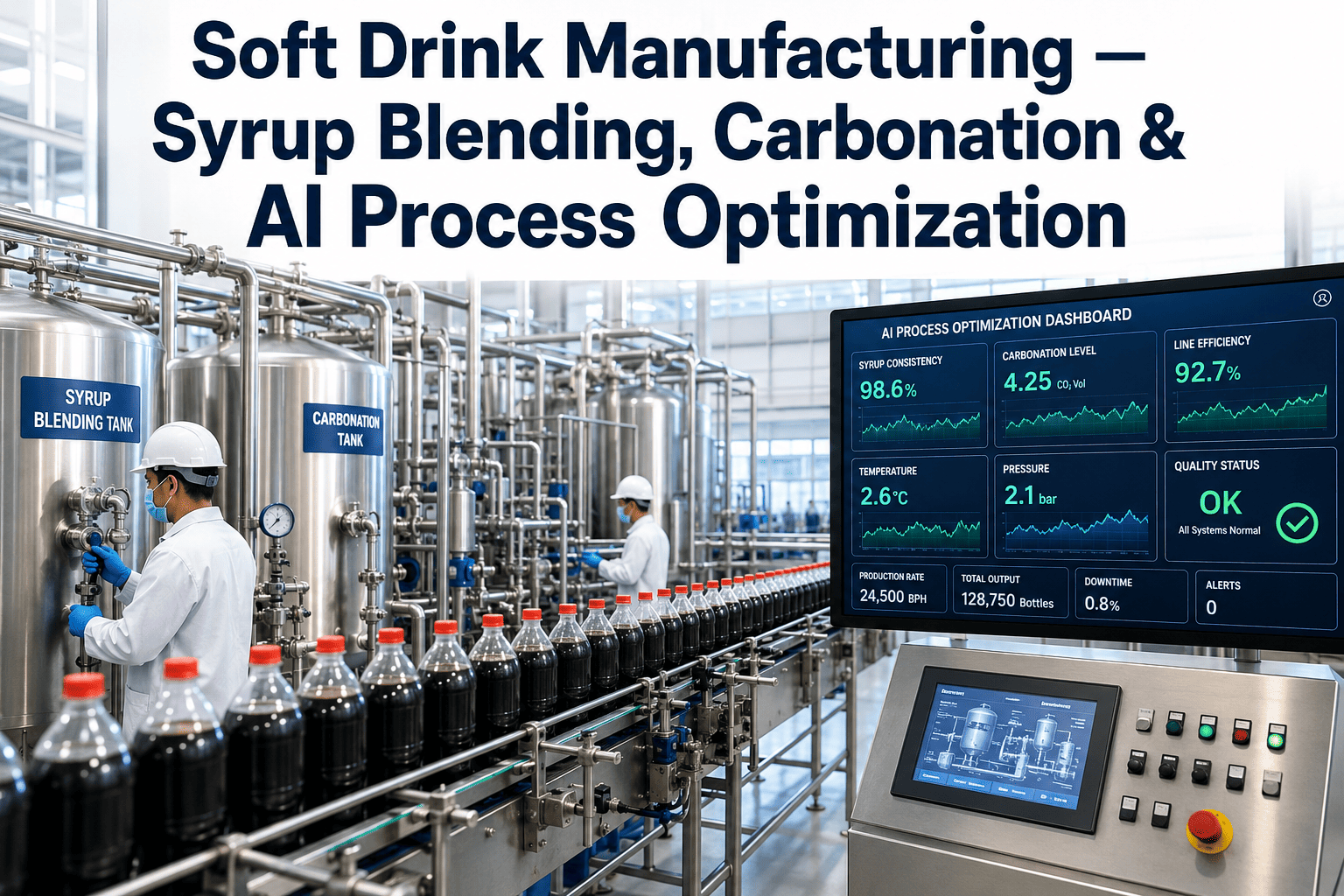
The production of carbonated soft drinks (CSD) represents one of the most technically demanding processes in modern beverage manufacturing. Achieving consistent product quality requires precise control over syrup blending ratios, carbonation volume (GV), water treatment chemistry, and real-time line adjustments. Process engineers face relentless pressure to minimize waste, reduce changeover times, and ensure every bottle or can meets stringent taste and mouthfeel standards. Traditional manual sampling and reactive adjustments introduce variability that erodes profitability and brand integrity. Artificial intelligence and machine learning now offer a paradigm shift: predictive models that anticipate deviations before they occur, closed-loop control systems that maintain target parameters within microns, and analytics that uncover hidden inefficiencies across the entire production line. This comprehensive guide delves into the technical specifics of AI-driven optimization for CSD manufacturing, covering syrup brix accuracy, carbonation stabilization, water quality management, and holistic line performance. For a tailored demonstration of how these technologies can transform your facility, Book a Demo with our team.
Transform Your CSD Line with AI Precision
Achieve 99.9% syrup accuracy and zero carbonation drift. See how in a live demo.
Critical CSD Quality Metrics at a Glance
The Science of Syrup Blending: Brix, Ratio, and AI Precision
Syrup blending is the foundation of CSD quality. The brix value—a measure of dissolved sugar solids—must be maintained within a narrow window to ensure consistent sweetness and mouthfeel. Traditional methods rely on in-line refractometers and periodic lab samples, but these are prone to drift due to temperature fluctuations, pump wear, and ingredient variability. AI models ingest historical brix data, temperature profiles, flow rates, and ingredient batch records to predict optimal blending parameters in real time. By continuously adjusting the ratio of syrup to treated water, these systems reduce brix variance by up to 70% and eliminate the need for manual recalibration during production runs. The result is a product that tastes identical from the first bottle to the last, every shift.
Carbonation Control: Achieving Consistent GV Across All Lines
Real-Time GV Monitoring
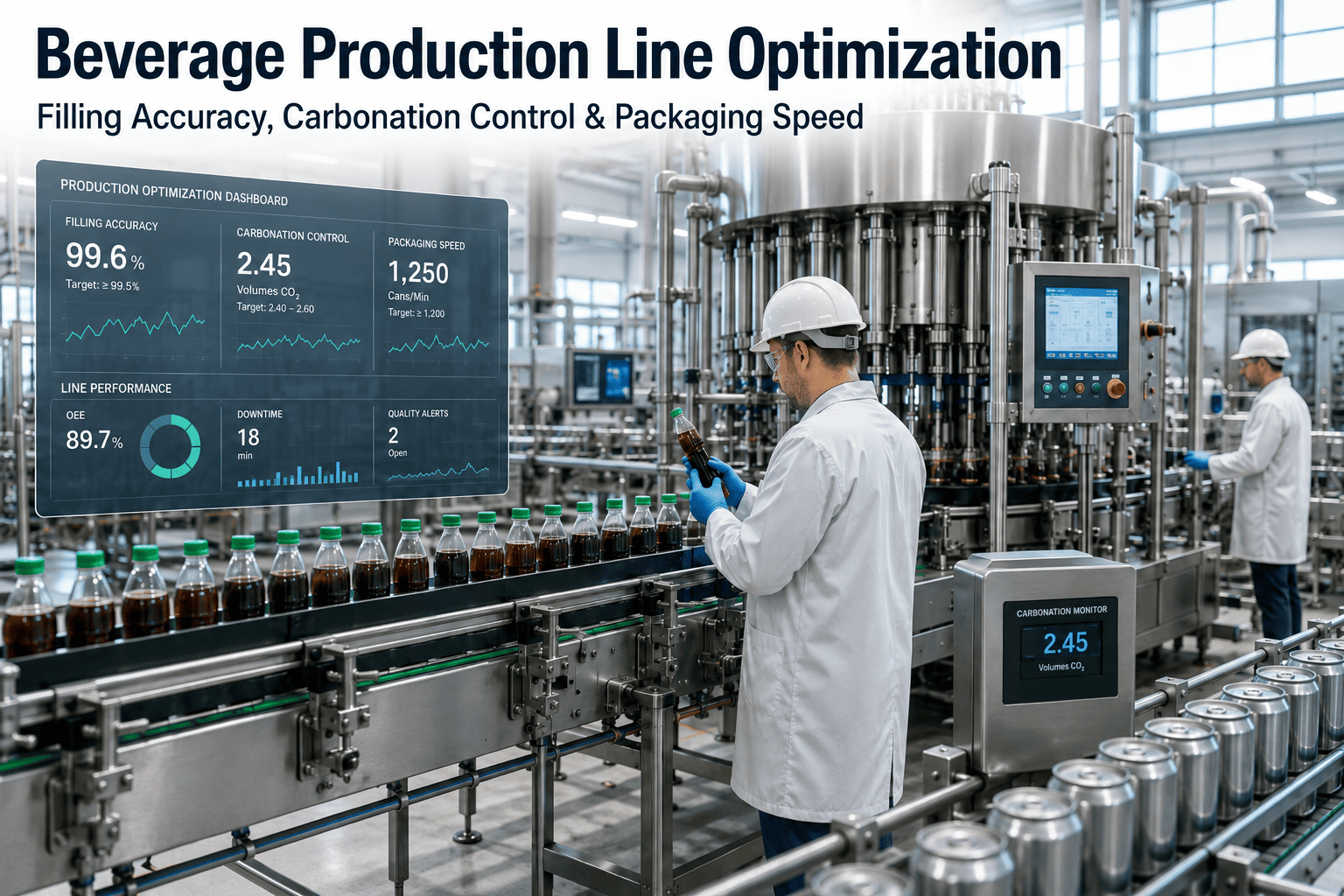
Gas volume (GV) is the measure of carbon dioxide dissolved in the beverage. AI-driven sensors coupled with predictive algorithms maintain GV within ±0.05 of the target, even during line speed changes or upstream pressure variations. This eliminates the common problem of over-carbonation (causing excessive fobbing) or under-carbonation (leading to a flat taste).
Closed-Loop Carbonation Adjustment
Machine learning models analyze carbonation tank pressure, temperature, and flow dynamics to adjust the CO2 injection rate in milliseconds. This closed-loop system reduces CO2 consumption by 12–15% while ensuring every container meets specification, directly impacting both quality and operational cost.
Step-by-Step AI Integration for CSD Lines
Data Collection & Sensor Fusion
Install IoT sensors on syrup blending tanks, carbonation vessels, and water treatment units. Aggregate data into a unified time-series database.
Baseline Model Training
Train ML models on historical production data to learn normal operating ranges and deviation patterns. Validate against lab results.
Real-Time Anomaly Detection
Deploy models to flag brix, GV, or pH deviations in real time. Alerts are sent to process engineers before product is affected.
Closed-Loop Control Implementation
Connect model outputs to PLCs for automatic adjustment of pumps, valves, and CO2 injectors. Achieve 24/7 autonomous optimization.
Comparative Analysis: Traditional vs AI-Driven CSD Production
| Parameter | Traditional Approach | AI-Driven Approach |
|---|---|---|
| Syrup Brix Accuracy | ±0.5°Bx | ±0.1°Bx |
| Carbonation GV Tolerance | ±0.15 GV | ±0.03 GV |
| Water Quality Monitoring | Hourly manual checks | Continuous real-time analysis |
| Changeover Time | 45 minutes | 12 minutes |
| Product Waste per Shift | 2.5% | 0.4% |
Stop Chasing Deviations — Predict Them
Our AI platform anticipates syrup and carbonation drift before it happens. Book a demo to see real results.
AI Impact on Key CSD KPIs
Syrup Accuracy Improvement: 70%
Carbonation Consistency Increase: 80%
Water Quality Compliance Boost: 60%
Water Treatment Optimization: The Hidden Variable in CSD Quality
Water constitutes over 90% of a carbonated soft drink, making its purity and chemical profile paramount. AI models monitor conductivity, pH, alkalinity, and turbidity in real time, adjusting dechlorination and remineralization processes automatically. By correlating water quality parameters with downstream brix and GV measurements, the system can preemptively compensate for upstream fluctuations. This holistic approach reduces the incidence of off-flavor batches by 50% and extends the lifespan of reverse osmosis membranes by 25% through optimized cleaning cycles.
Advanced Analytics for Line Efficiency
Overall Equipment Effectiveness (OEE)
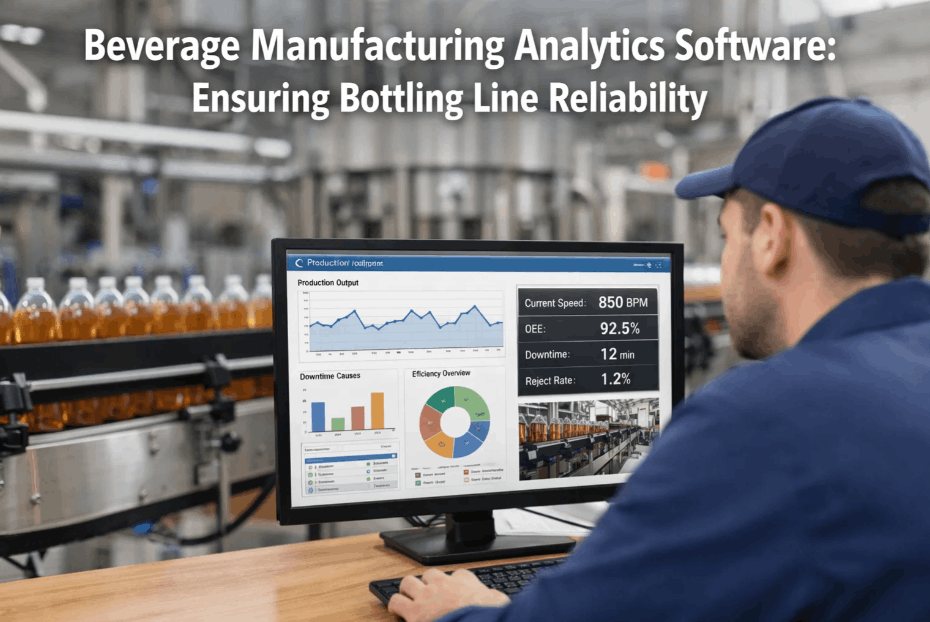
AI calculates OEE in real time, factoring in availability, performance, and quality. Alerts highlight underperforming stations, enabling targeted maintenance.
Changeover Optimization
Machine learning models sequence product changeovers to minimize cleaning and flushing time. Typical reduction: 30%.
Predictive Maintenance for Fillers
Vibration and pressure sensors feed into models that predict filler valve wear 48 hours in advance, preventing unscheduled downtime.
Syrup Room Automation: From Batching to Blending
The syrup room is the heart of CSD production. AI-driven batch management systems calculate exact ingredient quantities based on real-time inventory levels and desired brix. Automated blending skids adjust flow rates dynamically to match line demand, eliminating the need for intermediate holding tanks. This just-in-time approach reduces syrup waste by 40% and cuts cleaning cycles between batches by 50%. For facilities producing multiple SKUs, the AI system recommends optimal batch sequences to minimize changeover downtime.
Top 5 Challenges in CSD Manufacturing and AI Solutions
| Challenge | AI Solution |
|---|---|
| Syrup brix drift | Real-time predictive adjustment |
| Carbonation inconsistency | Closed-loop GV control |
| Water quality fluctuations | Multivariate anomaly detection |
| Long changeover times | ML-optimized sequencing |
| High product waste | Predictive quality assurance |
Frequently Asked Questions
How does AI improve syrup blending accuracy in CSD production?
AI models analyze historical brix data, temperature profiles, flow rates, and ingredient variability to predict optimal blending parameters in real time. By continuously adjusting the syrup-to-water ratio, these systems maintain brix within ±0.1°Bx, reducing variance by up to 70%. This eliminates manual recalibration and ensures consistent sweetness across all production shifts. For a deeper dive into implementation, contact our support team.
What is carbonation GV control and why is it critical?
Gas volume (GV) measures the amount of dissolved CO2 in the beverage. Consistent GV is essential for mouthfeel, shelf life, and brand identity. AI-driven GV control uses sensors and predictive algorithms to adjust CO2 injection in milliseconds, maintaining GV within ±0.03 of target. This reduces CO2 waste by 12–15% and prevents quality issues like fobbing or flat taste. Book a Demo to see it in action.
Can AI integrate with existing CSD line PLCs?
Yes, modern AI platforms are designed to interface with standard industrial PLCs via OPC-UA or MQTT protocols. The AI model outputs are converted into control signals that adjust pumps, valves, and injectors without replacing existing hardware. This enables retrofitting of legacy lines with minimal capital expenditure. For integration specifications, reach out to our engineering team.
How does water treatment AI reduce off-flavor incidents?
AI monitors conductivity, pH, alkalinity, and turbidity in real time, correlating them with downstream brix and GV data. When a deviation is detected, the system adjusts dechlorination and remineralization processes automatically. This proactive approach reduces off-flavor batches by 50% and extends membrane life by 25%. Schedule a demo to learn more.
What ROI can a CSD plant expect from AI implementation?
Typical ROI includes a 70% reduction in brix variance, 80% improvement in carbonation consistency, 40% reduction in syrup waste, and 30% faster changeovers. Combined, these savings often yield payback within 6–12 months. For a customized ROI calculation based on your line data, book a consultation.
Ready to Perfect Every Drop?
Unlock the full potential of your CSD line with AI-driven precision. Our experts are ready to show you how.