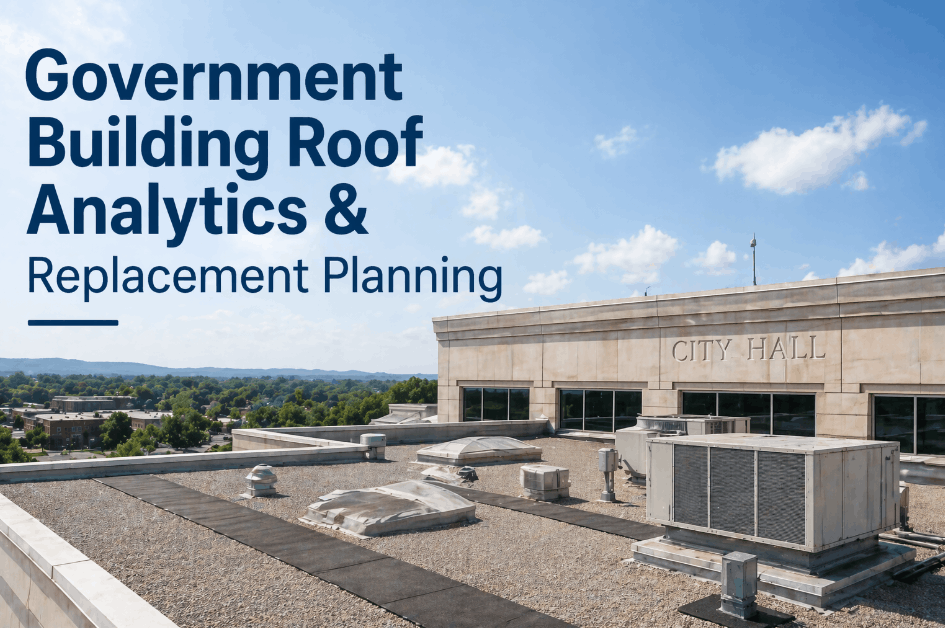
Courthouse analytics and municipal office building management have entered a transformative era. Government facilities — from federal courthouses to city hall complexes — are under increasing pressure to reduce operational costs, strengthen security compliance, and deliver seamless public services. A data-driven approach to courthouse facility management is no longer optional; it is the operational backbone of a well-governed public institution. This guide explores how government office building analytics can centralize asset data, optimize courthouse technology systems, and future-proof municipal operations for decades to come.
Is Your Government Facility Data Working for You?
Unify courthouse security systems, courtroom technology, and public area analytics into a single intelligent platform built for government-scale operations.
Why Courthouse Analytics Is Redefining Government Office Building Operations
Municipal office buildings and courthouses are among the most operationally complex government assets in any jurisdiction. They serve diverse populations — attorneys, defendants, civil servants, and the general public — across high-security courtrooms, administrative wings, holding areas, and open public lobbies. Traditional paper-based maintenance schedules and siloed security logs are wholly inadequate for this complexity. Modern courthouse building analytics platforms aggregate data from access control systems, HVAC sensors, energy meters, courtroom AV equipment, and visitor management systems into a unified intelligence dashboard. When agencies book a demo, they consistently discover data blind spots that are costing their facilities thousands of dollars in avoidable energy waste and reactive maintenance spending.
The shift toward proactive government building operations begins with visibility. By deploying IoT-connected sensors across all building systems, facility managers gain real-time insight into equipment health, occupancy patterns, and environmental conditions. This data layer converts reactive maintenance workflows into a predictive model — one that flags a failing HVAC compressor before a summer heatwave disrupts an entire week of court proceedings.
Security Systems Analytics
Integrate access control logs, surveillance feeds, and perimeter sensors into a single security intelligence layer. Detect anomalies, audit entry events, and maintain a legally defensible audit trail for all courthouse access points.
Courtroom Technology Management
Monitor AV systems, digital evidence display units, recording equipment, and videoconferencing infrastructure. Prevent technology failures that delay proceedings and generate costly downtime for the judiciary.
Public Area Optimization
Use occupancy analytics and foot-traffic heatmaps to optimize staffing, manage queuing at security checkpoints, and ensure HVAC and lighting systems respond intelligently to real-time visitor loads.
Specialized Equipment Tracking
From elevator certification systems and emergency generators to evidence storage climate controls, specialized courthouse equipment requires dedicated lifecycle tracking and compliance documentation.
Building a Unified Analytics Architecture for Municipal Office Buildings
A high-performance municipal building analytics platform must address three foundational requirements: real-time data aggregation, predictive modeling, and regulatory compliance reporting. For government office analytics, this means the system must simultaneously track building system health, maintain audit-ready records for inspector general reviews, and deliver actionable work orders to facilities staff without manual intervention. Agencies that have already booked a demo report that connecting previously isolated building management systems (BMS) to a unified analytics layer is the single highest-ROI step in their digital transformation journey.
| Analytics Module | Primary Function | Courthouse Application | Operational Benefit | Priority Level |
|---|---|---|---|---|
| Security Intelligence | Access & perimeter monitoring | Courtroom entry control | Real-time threat detection | Critical |
| Energy Analytics | Consumption optimization | HVAC & lighting efficiency | Up to 35% energy savings | Critical |
| Equipment Health AI | Predictive maintenance | Courtroom AV & elevators | Zero unplanned downtime | High |
| Occupancy Analytics | Space utilization tracking | Public lobbies & hearing rooms | Optimized staff allocation | High |
| Compliance Reporting | Automated audit trails | Evidence room compliance | Instant regulatory filings | Standard |
Five-Phase Approach to Courthouse Facility Management Transformation
Deploying courthouse facility management analytics is a structured process that moves from asset digitization to full predictive intelligence. The most successful municipal agencies follow a phased approach that minimizes operational disruption while building toward a fully autonomous building management ecosystem. Each phase is designed to deliver measurable ROI before the next begins — ensuring political and administrative buy-in at every stage of the project. Facility directors who book a demo early in their planning cycle consistently achieve faster implementation timelines and stronger first-year performance metrics.
Asset Inventory & Digitization
Create a comprehensive digital registry of all courthouse and municipal office building assets — from structural systems and mechanical equipment to courtroom technology and security infrastructure. This digital baseline is the foundation of every analytics function that follows.
Sensor Integration & Data Collection
Deploy IoT sensors across HVAC, electrical, security, and environmental systems. Integrate with existing building management systems (BMS), access control platforms, and energy meters to create a continuous real-time data stream from every building system.
Analytics Platform Deployment
Connect all data streams to the central analytics platform. Configure dashboards for facility managers, security administrators, and IT staff. Establish baseline performance benchmarks for all monitored systems across the government office facility.
Predictive Maintenance Activation
Enable AI-driven predictive maintenance workflows that automatically generate work orders when sensor data indicates early-stage equipment degradation. Prioritize maintenance actions by criticality — ensuring that courtroom systems and security infrastructure receive priority scheduling.
Compliance & Lifecycle Optimization
Leverage historical data to generate compliance reports, capital replacement forecasts, and long-term lifecycle cost models. Move from a reactive "fix-on-failure" posture to a proactive strategy that extends asset life and controls long-term CapEx across the entire municipal building portfolio.
Top Operational Gaps in Government Office Building Analytics
Most agencies pursuing municipal office operations improvements encounter a predictable set of integration challenges. Understanding these gaps before project launch dramatically improves implementation success rates and helps leadership teams allocate budget more effectively across a complex courthouse management transformation initiative.
Access control, surveillance, and visitor management systems rarely share data. This prevents comprehensive threat correlation and leaves security staff without a unified situational picture during incidents.
AV systems, recording equipment, and digital evidence displays are typically excluded from facility management platforms, creating unmonitored failure points that can delay proceedings without warning.
Generating inspection reports, elevator certifications, and fire suppression system logs manually consumes enormous staff hours and introduces documentation errors that create regulatory exposure.
Without occupancy-linked automation, courthouse HVAC and lighting systems often operate at full capacity during nights and weekends, generating millions in avoidable utility costs across a multi-building portfolio.
Reactive maintenance schedules lead to emergency equipment failures during active court sessions — a scenario with significant legal, operational, and reputational consequences for municipal administrations.
Asset data spread across spreadsheets, legacy CMMS platforms, and paper records makes it impossible to perform accurate lifecycle cost modeling or prioritize capital replacement budgets with confidence.
Addressing these gaps requires more than software — it requires a purpose-built platform designed specifically for the compliance, security, and operational complexity of public sector buildings. Agencies frequently book a demo to benchmark their current gaps against a proven government-scale analytics architecture.
Courthouse Security Systems Analytics: From Reactive to Intelligent
Security is the defining operational challenge of every courthouse building. Physical security systems — metal detectors, X-ray machines, CCTV networks, duress alarms, and electronic access control — generate enormous volumes of data that remain largely unanalyzed in most jurisdictions. Modern courthouse analytics platforms change this by applying machine learning to security event data, identifying behavioral anomalies, and correlating access logs with courtroom schedules to flag unauthorized entry attempts before they escalate. The result is a proactive security posture that reduces incident response times, strengthens audit documentation, and provides leadership with a defensible record of due diligence.
For evidence rooms and judicial chambers — two of the highest-security zones in any courthouse facility — analytics platforms provide environmental monitoring (temperature, humidity, motion detection) and create immutable digital logs of every entry event. This level of documentation is increasingly required by court administrators and inspector general offices as part of ongoing evidence integrity audits.
Key Security Analytics Capabilities for Government Office Buildings
Instant alerts for unauthorized access attempts, tailgating events, and after-hours entry across all secured zones in the courthouse facility.
Occupancy heatmaps and queue analytics for public lobbies and security checkpoints, enabling staffing optimization during peak court calendar periods.
Automated environmental logging and chain-of-custody documentation for evidence storage areas, with instant report generation for regulatory submissions.
AI-driven correlation of security events across time and location to identify systemic vulnerabilities before they result in serious security breaches.
Energy Optimization Strategies for Municipal Office Building Management
Energy costs represent one of the largest controllable operating expenses in any municipal building management portfolio. A mid-sized courthouse complex can consume $500,000 or more in annual energy costs — with a significant portion attributable to systems operating at full capacity in unoccupied spaces. Government office building analytics platforms address this directly through occupancy-linked automation, demand response integration, and granular sub-metering that identifies energy waste at the circuit level. When facility teams book a demo, energy savings projections consistently rank among the top three return drivers for analytics platform investment decisions.
Beyond direct cost reduction, energy analytics supports sustainability reporting requirements increasingly mandated for public sector facilities under state and federal environmental compliance frameworks. Automated energy dashboards eliminate the manual data collection burden and ensure that government agencies can demonstrate measurable progress toward building decarbonization targets with audit-ready documentation.
Modernize Your Courthouse & Municipal Office Building Operations Today
Deploy a unified analytics platform that integrates security systems, courtroom technology, energy management, and asset lifecycle intelligence — built specifically for government-scale facility operations.
Courthouse & Municipal Office Analytics — Common Questions Answered
What types of systems can a courthouse analytics platform integrate with?
A purpose-built courthouse facility management platform integrates with access control systems, CCTV networks, building management systems (BMS), courtroom AV equipment, HVAC and energy meters, visitor management software, and evidence room environmental sensors. Vendor-neutral API architecture ensures compatibility with both legacy and modern equipment.
How does analytics help with courtroom technology management?
The platform continuously monitors courtroom AV systems, recording equipment, videoconferencing units, and digital evidence displays. Predictive health alerts notify IT and facilities staff of potential failures before they disrupt scheduled proceedings, dramatically reducing the risk of costly technology-related delays.
Can the platform generate compliance reports for government inspections?
Yes. The analytics platform automatically generates audit-ready reports for elevator certifications, fire suppression system inspections, HVAC maintenance records, and evidence room environmental logs. All data is stored in encrypted, sovereign government cloud environments with immutable audit trails that satisfy federal and state compliance requirements.
What is the typical ROI timeline for a municipal office building analytics deployment?
Most agencies achieve measurable ROI within the first year through energy savings, reduced reactive maintenance costs, and elimination of manual reporting labor. By year two, predictive maintenance prevents major equipment failures that would otherwise generate emergency repair costs and operational disruptions. Book a demo to review our ROI calculator customized for government office portfolios.
How does the platform handle data security for sensitive courthouse information?
All data is processed and stored in FedRAMP-compliant government cloud environments with AES-256 encryption at rest and in transit. Role-based access controls ensure that security data, judicial records systems, and evidence room logs are accessible only to authorized personnel. Every user action generates an immutable log for accountability and forensic review.
Can the platform scale across multiple courthouse and municipal office buildings?
Absolutely. The platform is architected for multi-building, multi-jurisdiction deployments. Facility managers can view aggregated performance metrics across an entire government office portfolio or drill down to individual building systems. Centralized administration reduces IT overhead while local dashboards empower building-level facility staff.