Government Building Maintenance Management: Complete CMMS Guide
By oxmaint on March 5, 2026
Government buildings across the United States are aging fast. Federal facility repair backlogs have more than doubled to over $370 billion between 2017 and 2024, and municipal agencies face the same crunch at local level. Courthouses, fire stations, public libraries, city halls, and transit hubs—all serving millions of citizens daily—are managed with paper work orders, disconnected spreadsheets, and reactive repair cycles that inflate costs by up to 10x compared to scheduled maintenance. A Computerized Maintenance Management System (CMMS) changes this equation entirely, giving government facility teams a centralized digital platform to plan preventive maintenance, track every asset, document complianceand control budgets in real time. Schedule a free walkthrough of CMMS for government facilities to see how it works for your agency.
Why Government Facilities Need Dedicated Maintenance Software
Public sector buildings operate under pressures that private facilities rarely face—strict regulatory oversight, public accountability for every dollar spent, aging infrastructure with limited capital budgets, and diverse building portfolios spanning dozens of facility types. Traditional maintenance management methods simply cannot keep up with these demands.
The Scale of the Problem
$370B+
Federal Deferred Maintenance
Building repair backlogs more than doubled from FY2017 to FY2024, prompting GAO to add building condition to its High-Risk List in 2025
49 Years
Average Federal Building Age
With 277,000+ buildings costing over $10.3 billion annually to operate, aging infrastructure demands smarter maintenance strategies
3–10x
Emergency vs. Preventive Cost
Deferred maintenance that escalates to emergency repairs can cost three to ten times more than timely scheduled maintenance
Your agency doesn't have to be part of this statistic. Government teams are adopting CMMS platforms to slash emergency repair costs, automate compliance tracking, and extend building lifespans—all within existing budgets.
How CMMS Software Solves Public Facility Maintenance Challenges
A CMMS brings every maintenance function—work orders, preventive schedules, asset tracking, inventory, compliance, and reporting—into one accessible platform. For government agencies juggling multiple buildings, departments, and regulatory requirements, this centralization eliminates the gaps where costly failures hide.
Digital Work Order Management
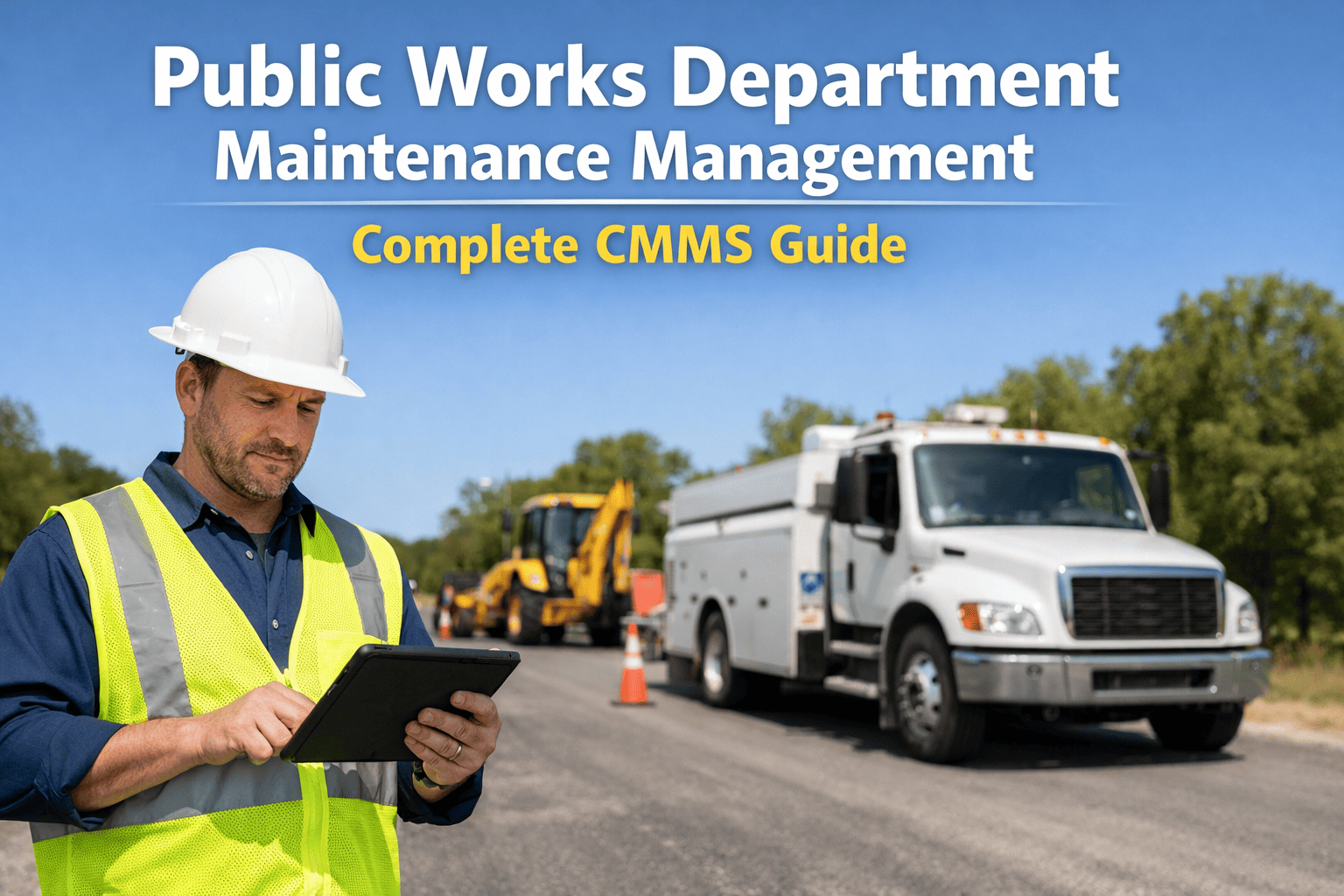
Replace lost paper requests and email chains with a digital system where staff submit requests, technicians receive mobile assignments, and managers track progress from submission to sign-off. Every work order is timestamped, categorized, and archived automatically.
Automated Preventive Scheduling
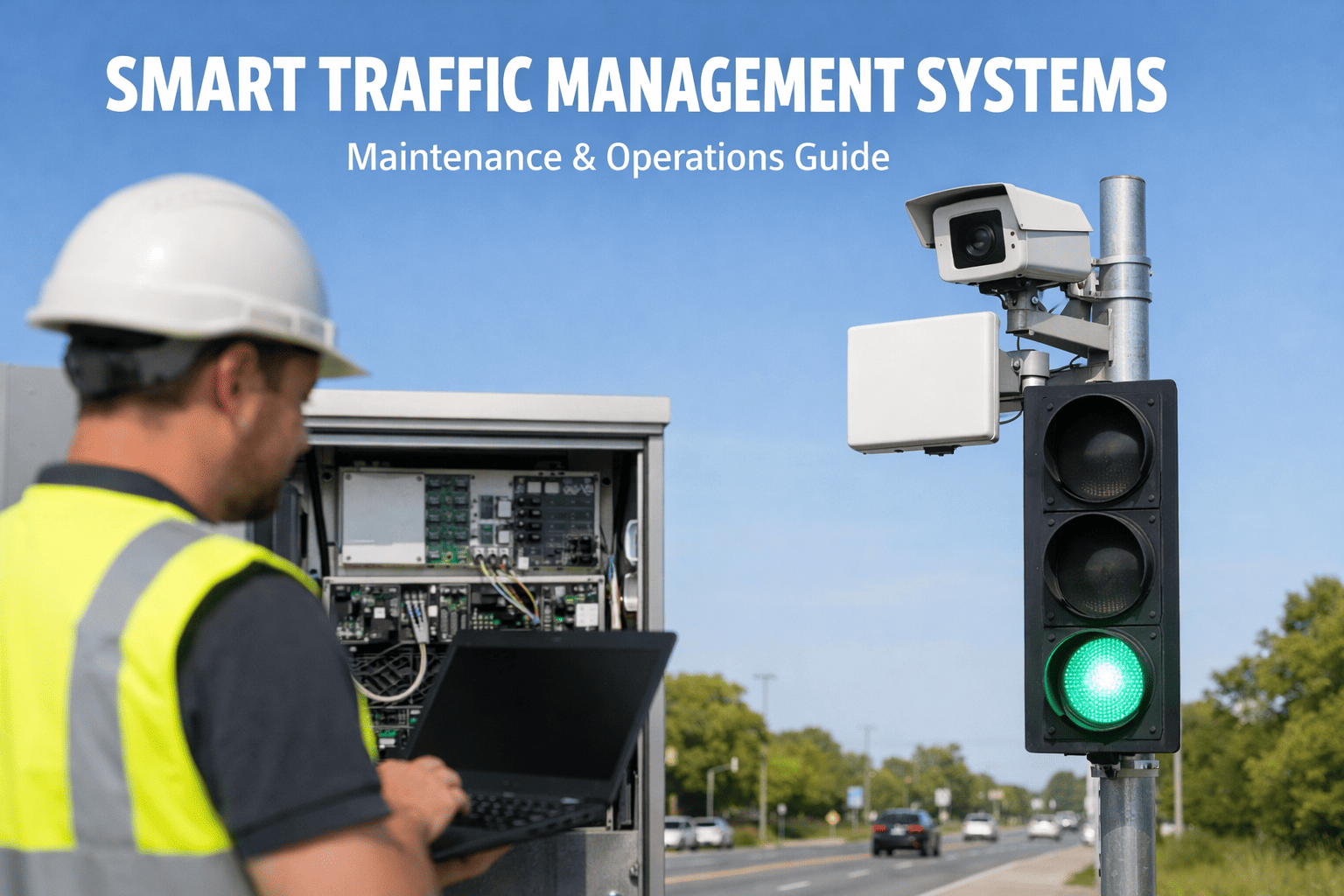
Set calendar-based and usage-based triggers for HVAC servicing, fire alarm testing, elevator inspections, roof checks, and plumbing maintenance. The system generates work orders automatically—ensuring nothing is forgotten even across hundreds of assets.
Complete Asset Lifecycle Records
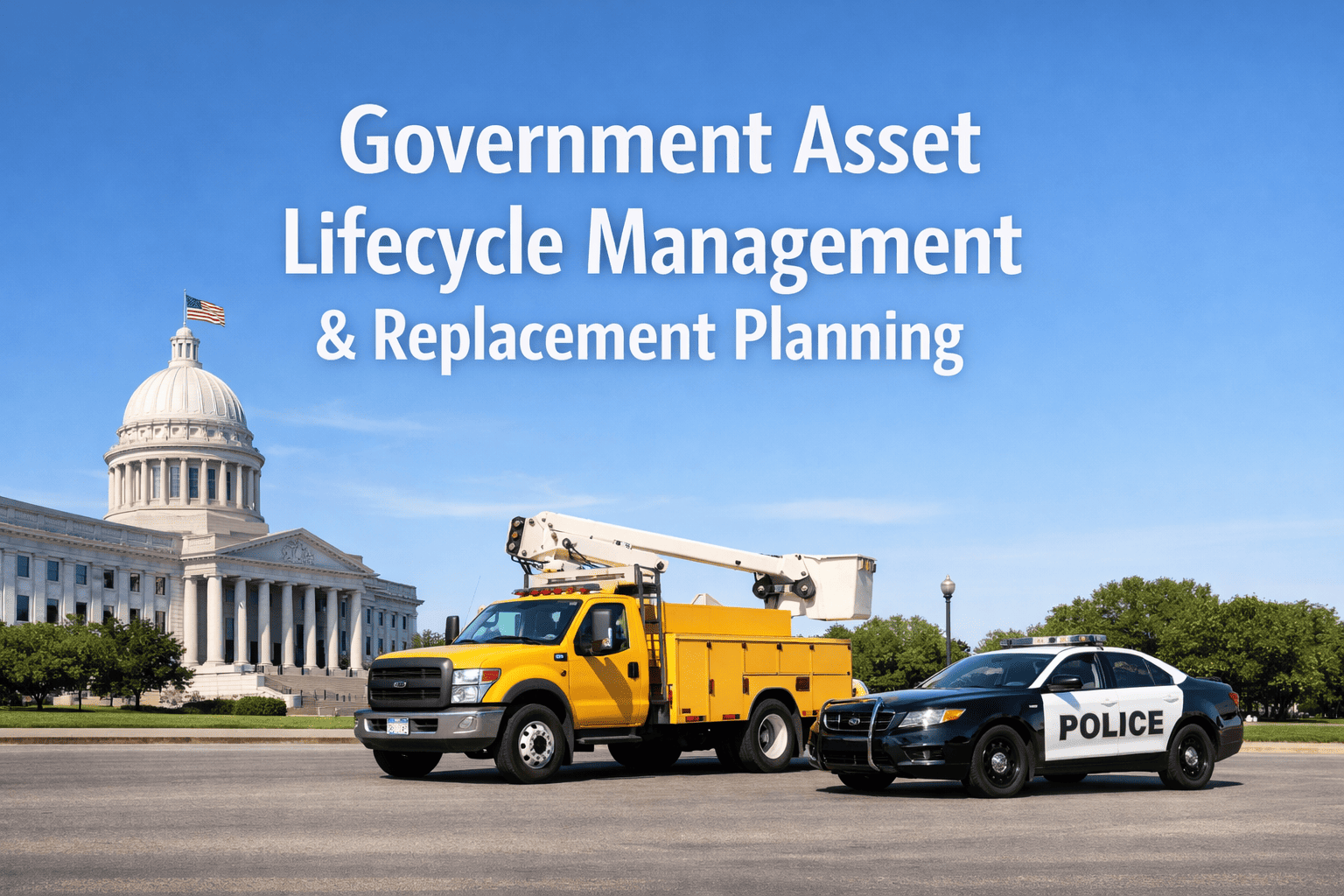
Track installation dates, warranty details, repair histories, maintenance costs, and replacement forecasts for every piece of equipment in every building. Make data-driven decisions about repair-or-replace choices instead of guessing.
Audit-Ready Compliance Tracking
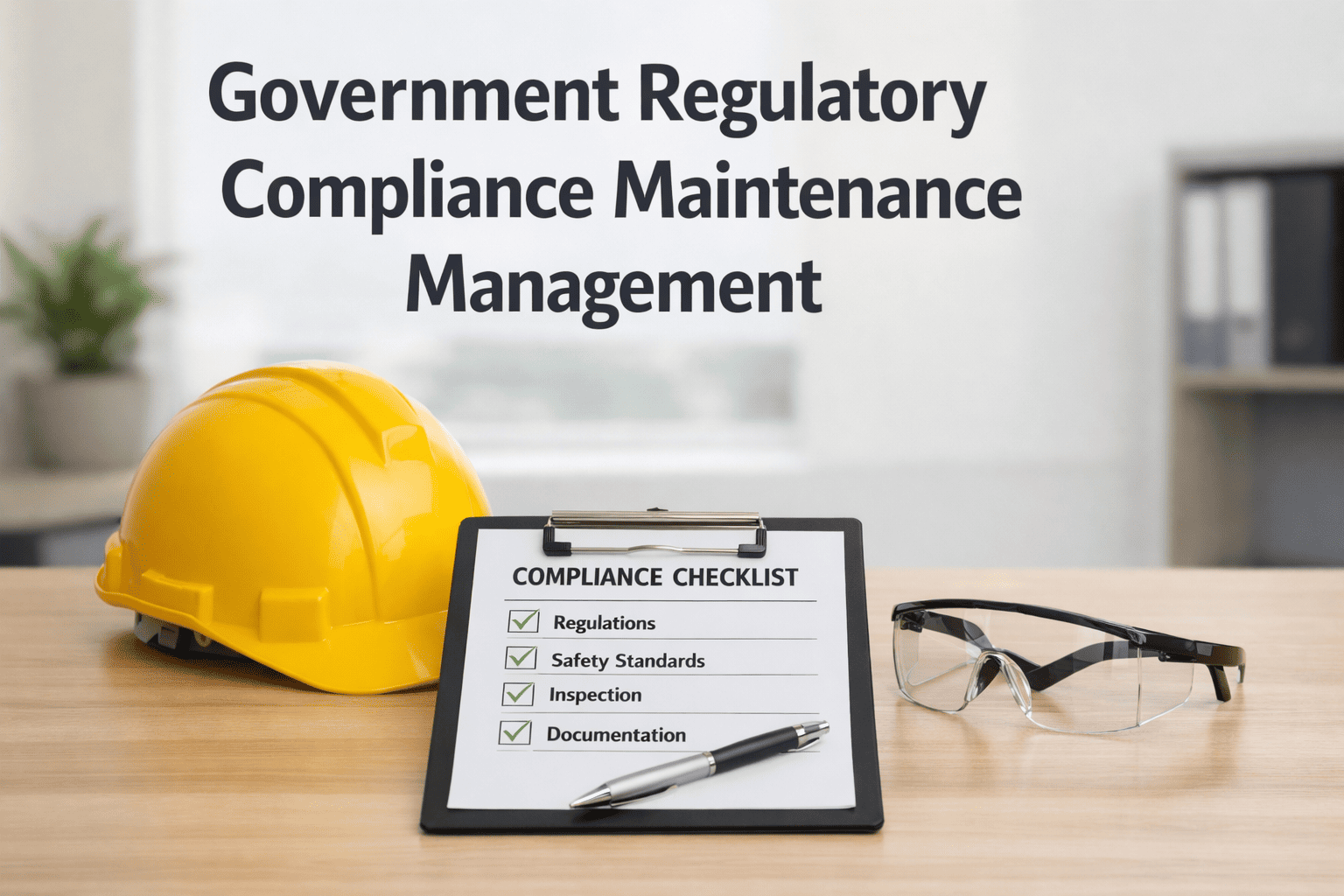
Store inspection records, safety certifications, and regulatory documents in a centralized repository. Generate compliance reports for OSHA, NFPA fire codes, ADA accessibility, and EPA environmental audits instantly—no weeks of digging through filing cabinets. Start centralizing your compliance records in one audit-ready platform.
Budget Transparency and Cost Control
Track labor, materials, and contractor costs against departmental budgets in real time. Produce transparent reports for budget hearings, capital improvement requests, and public accountability—backed by actual maintenance data, not estimates.
Parts Inventory and Procurement
Monitor spare parts across facilities, set automatic reorder points, and eliminate technician downtime caused by stockouts. Reduce carrying costs while ensuring critical parts are always available when needed.
Critical Building Systems Managed Through CMMS
Government buildings contain complex, interdependent systems—from HVAC and electrical to fire suppression and elevators—each with specific maintenance intervals and compliance requirements. A CMMS tracks every system under a unified schedule so no inspection or service task slips through the cracks.
StandardsIBC, local building codes, historic preservation guidelines (where applicable)
Managing all these systems manually? A CMMS automates inspection schedules, sends alerts before deadlines, and stores every record in one audit-ready system. See how it works for government buildings.
Paper-Based Maintenance vs. CMMS: What Changes for Government Teams
The difference between manual facility management and a digital CMMS is not incremental—it is transformational. Government agencies that make the switch gain visibility, accountability, and cost savings that compound year over year.
What Happens When You Switch to CMMS
Without CMMS
Work orders lost in emails, phone calls, or paper stacks
No visibility into technician workload or task completion
Compliance records scattered across filing cabinets and hard drives
Reactive repairs consume 40–60% of maintenance budget
Budget proposals rely on guesswork rather than historical data
60%
of maintenance work is unplanned
With CMMS
Every request tracked digitally from submission to sign-off
Real-time dashboards show team performance and backlog status
Preventive schedules cut emergency breakdowns by up to 50%
Data-backed budget proposals with cost history and forecasts
80%+
of maintenance planned proactively
CMMS Applications Across Government Facility Types
No two government buildings are alike. Courthouses prioritize security system uptime. Fire stations need 24/7 generator reliability. Libraries focus on comfortable public environments. A well-configured CMMS adapts to each facility's unique maintenance priorities while maintaining consistent workflows across the portfolio.
Courthouses and Judicial Buildings
Security systems, elevators, HVAC, and emergency power must operate without interruption to support scheduled proceedings. CMMS ensures critical systems receive priority service, ADA compliance is documented, and security-related maintenance follows strict protocols.
Fire Stations and Public Safety
Generator testing, vehicle bay systems, communication equipment, and HVAC require 24/7 readiness. CMMS automates recurring checks and ensures no safety-critical maintenance window is missed—critical for emergency response capability.
City Halls and Administrative Offices
Office systems, lighting, parking structures, and plumbing support daily citizen-facing services. CMMS tracks energy efficiency improvements, schedules routine maintenance during off-hours, and provides cost transparency for public reporting.
Libraries and Community Centers
Indoor air quality, HVAC reliability, restroom upkeep, and AV system maintenance create comfortable public environments. Seasonal event scheduling integrates with maintenance calendars to prevent conflicts between facility use and servicing.
Water and Wastewater Plants
Pumps, treatment systems, SCADA equipment, and chemical storage require strict environmental compliance. CMMS tracks EPA-regulated maintenance, logs equipment hours for predictive replacement, and maintains complete audit trails.
Parks and Recreation Facilities
Playground safety inspections, field lighting, restroom maintenance, trail upkeep, and seasonal landscaping follow different cycles than indoor facilities. CMMS manages weather-dependent and seasonal schedules alongside standard preventive tasks. See how one platform handles maintenance across all your facility types.
Measurable Outcomes: What CMMS Delivers for Government Operations
Investing in maintenance software is not just about efficiency—it directly impacts taxpayer dollars, public safety, and regulatory standing. Government agencies that implement CMMS consistently report significant improvements across multiple performance indicators.
Proven Government CMMS Results
60%
Fewer emergency work orders with preventive scheduling
70%
Faster work order completion with digital tracking
50%
Reduction in compliance audit prep time
40%
Longer asset lifespan through proactive care
See what these numbers could mean for your agency. Create your free account and our team will help model potential savings for your specific government facility portfolio.
Government buildings must satisfy overlapping federal, state, and local regulations. Failure to document compliance can result in fines, liability exposure, and loss of public trust. A CMMS creates an always-current compliance engine that records every inspection, stores every certificate, and generates audit reports on demand.
Compliance Requirements Managed by CMMS
Regulation
Systems Covered
How CMMS Helps
OSHA Workplace Safety
All equipment, electrical, hazardous areas
Automates safety inspections, tracks incidents, stores training records
NFPA Fire Codes
Sprinklers, alarms, suppression, egress paths
Scheduled testing reminders, deficiency tracking, inspection history
Efficiency tracking, upgrade scheduling, energy audit documentation
Historic Preservation
Building materials, structural modifications
Material restriction compliance, approved methods documentation
Step-by-Step: Deploying CMMS in a Government Agency
A phased CMMS rollout ensures smooth adoption without disrupting active building operations. Most government agencies achieve full deployment within 8–12 weeks, with quick wins visible in the first month.
1
Facility Audit and Needs Assessment
Week 1–3
Inventory all building assets and systems. Document current maintenance workflows, pain points, and compliance gaps. Define user roles across departments and facilities.
2
Data Migration and System Setup
Week 4–6
Import asset records, maintenance histories, and vendor contacts. Configure preventive maintenance calendars, notification rules, and approval workflows for each facility type.
3
Team Training and Pilot Launch
Week 7–9
Train technicians on mobile work orders, supervisors on dashboard analytics, and department staff on the request portal. Pilot at one to two buildings to validate workflows before broader deployment.
4
Full Rollout and Continuous Improvement
Week 10+
Expand to all government facilities. Activate KPI dashboards, cost reporting, and compliance alerts. Continuously refine schedules and workflows using the data your CMMS captures.
Get a deployment plan built for your agency. Our team will map the implementation to your facility portfolio, compliance needs, and existing IT systems.
When a courthouse elevator fails, a fire station generator doesn't start, or a library's HVAC breaks down in summer—these aren't just maintenance problems. They're failures of public service. A CMMS ensures these critical systems are maintained proactively so they're ready when citizens need them.
— Municipal Facility Management Director
Modernize Maintenance Across Your Government Buildings
Your public facilities deserve maintenance management that matches the standards you hold. Replace paper trails and reactive repairs with a CMMS that automates preventive schedules, keeps compliance records audit-ready, tracks every dollar spent, and gives your team the visibility to protect building systems before failures happen. Start managing government facilities with data—not guesswork.
How quickly can a government agency implement CMMS software?
Most agencies achieve full deployment within 8–12 weeks using a phased approach. A pilot at one or two facilities during weeks 7–9 validates workflows before expanding agency-wide. Quick wins from digital work orders and automated scheduling are often visible within the first 30 days. Get a custom deployment timeline for your agency's facilities.
Can one CMMS platform manage different types of government buildings?
Absolutely. Modern CMMS platforms support multi-facility management with different maintenance schedules, asset inventories, and compliance requirements for each building—whether it is a courthouse, fire station, library, or water treatment plant. Everything feeds into unified reporting dashboards for agency-wide visibility.
What compliance standards can a CMMS help government facilities meet?
CMMS automates tracking and documentation for OSHA workplace safety, NFPA fire codes, ADA accessibility, EPA environmental regulations, state energy codes, and local building standards. Every inspection, test, and certification is recorded with timestamps and responsible parties, making your facility permanently audit-ready. Explore how automated compliance tracking keeps your agency inspection-ready.
How does CMMS help reduce the deferred maintenance backlog?
CMMS shifts maintenance from reactive to preventive by automating scheduled tasks before equipment degrades. It also provides data on asset condition and cost trends, helping agencies prioritize the highest-impact maintenance projects within limited budgets—reducing the backlog systematically rather than letting it compound.
Does CMMS integrate with existing government IT systems?
Yes. CMMS platforms integrate with ERP and financial software, building automation systems, GIS mapping tools, HR/payroll systems, and document management platforms through standard APIs. This ensures data flows between systems without manual duplication. Review CMMS integration options for your agency's existing IT infrastructure.