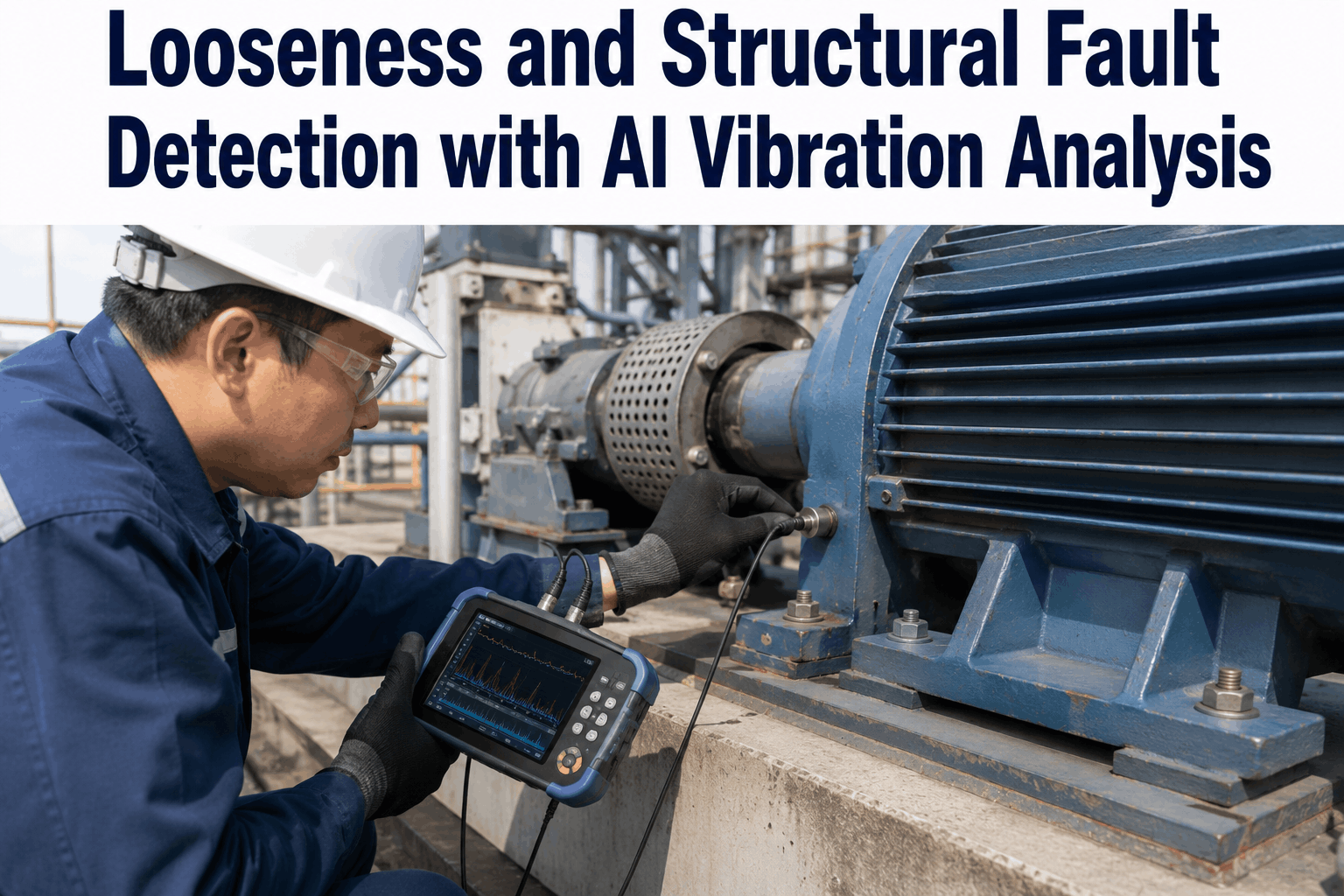
Mechanical looseness is one of the most mismanaged fault conditions in rotating equipment maintenance because it looks like many other faults in a simple vibration spectrum and because it is self-reinforcing — looseness that is not caught and corrected progressively worsens its own foundation and structural integrity until the machine reaches a state where tightening bolts no longer restores acceptable vibration levels. AI vibration analysis detects the characteristic sub-harmonic and multiple-harmonic signature patterns that distinguish looseness from imbalance and misalignment, classifies the looseness type as structural, mechanical, or bearing clearance, and trends the progression of each fault type over time before the damage becomes irreversible. Talk to an Expert to see how iFactory deploys AI looseness and structural fault detection across your rotating equipment fleet.
Of rotating equipment vibration alarms are caused by mechanical looseness — the third most common vibration fault after imbalance and misalignment, and the most likely to be misdiagnosed as a different condition
Average lead time between AI-detected looseness onset and the point where structural damage begins to accumulate — the window in which tightening and re-grouting produce a durable correction
Increase in bearing replacement cost when looseness-induced wear is allowed to progress to bearing clearance fault stage before the structural looseness is corrected — the root cause multiplies repair cost
Of structural looseness faults correctly classified by AI to the specific looseness type — foundation, bearing clearance, or rotating looseness — enabling targeted corrective action from the first detection
Detect Looseness Before It Becomes a Structural Damage Event
iFactory's AI vibration platform identifies sub-harmonic and multiple-harmonic looseness signatures, classifies fault type, and trends severity over time — giving maintenance teams the lead time to correct looseness before it damages foundations, housings, and bearings.
Why Looseness Faults Are the Most Frequently Misdiagnosed Vibration Condition
Mechanical looseness generates vibration energy at 1X and multiple harmonics of running speed — 2X, 3X, 4X and beyond — which is a pattern that also appears in misalignment, gear mesh faults, and blade pass frequency responses. The diagnostic difference between looseness and these other conditions lies in the presence of sub-harmonic components — at 0.5X, 1.5X, 2.5X — and in the non-linear behaviour of the overall vibration amplitude as the machine passes through resonant conditions. A vibration analyst reviewing a single spectrum measurement can easily misclassify looseness as misalignment and direct a shaft alignment job that temporarily reduces some of the harmonic content without addressing the structural condition generating it. Teams that Book a Demo with iFactory see how AI pattern recognition combines sub-harmonic content, harmonic series amplitude ratios, and non-linear response indicators to produce looseness classifications that standalone spectral analysis routinely misses, reducing misdiagnosis rates by more than 60 percent compared to threshold-based vibration monitoring.
Sub-Harmonic and Multiple-Harmonic Pattern Detection
AI identifies the characteristic 0.5X sub-harmonic and extended harmonic series that distinguish mechanical looseness from imbalance and misalignment in the vibration frequency spectrum.
Foundation Looseness Classification
Foundation bolt looseness and grout degradation produce specific amplitude and phase instability patterns that AI detects before visible cracking or bolt pull-out occurs.
Bearing Housing Clearance Detection
Bearing housing clearance looseness generates a non-linear vibration response that AI identifies from the harmonic amplitude ratio and the characteristic impact modulation it produces.
Rotating Looseness Identification
Rotating looseness — loose impellers, coupling hubs, and sheaves — produces a phase-unstable 1X signature with truncated waveform that AI pattern matching classifies from spectral and time-domain features simultaneously.
Structural Resonance Interaction Detection
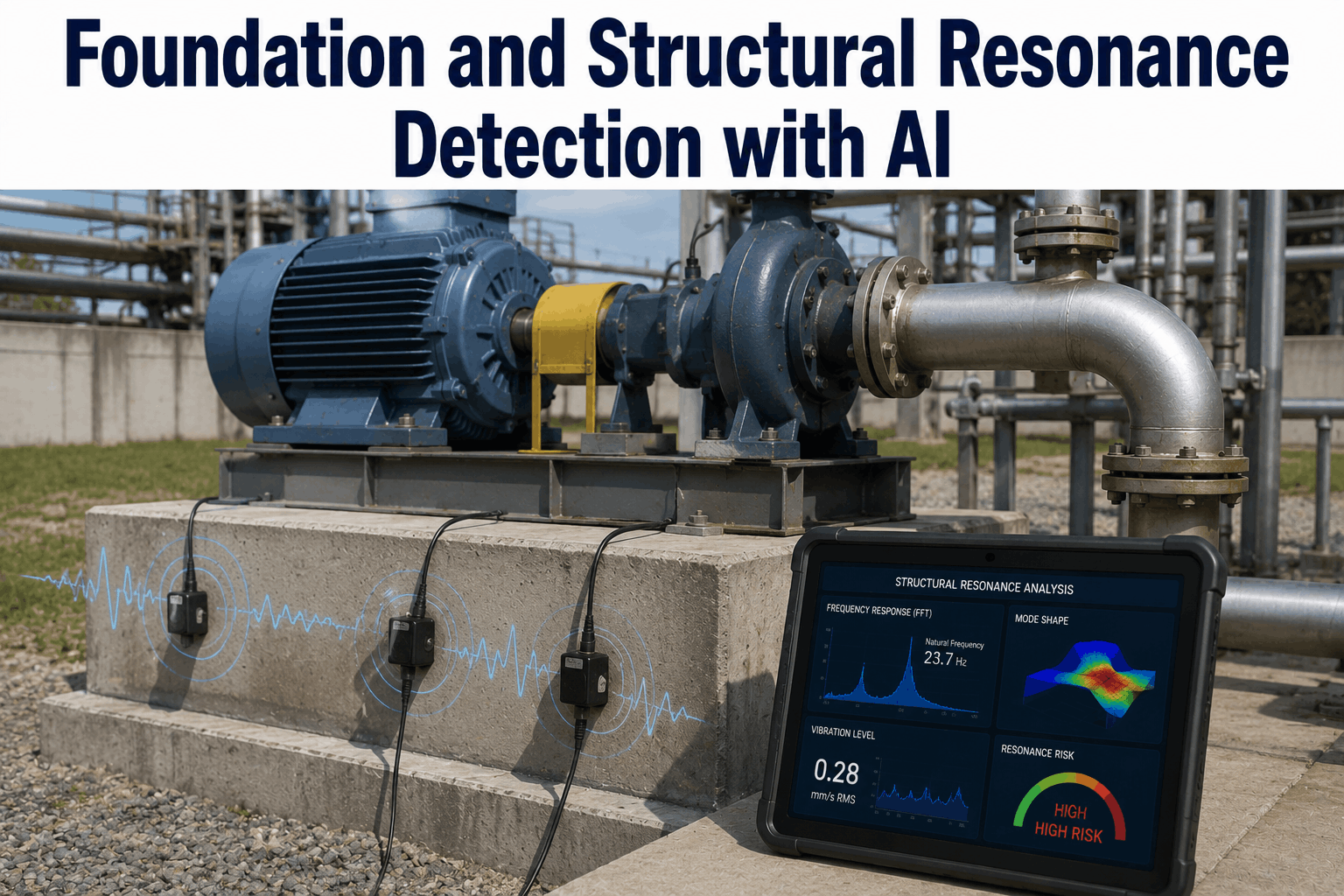
Looseness that interacts with structural resonance frequencies produces amplitude amplification at specific operating speeds that AI identifies as a combined looseness-resonance condition requiring structural modification alongside mechanical correction.
Severity Trending and Structural Damage Projection
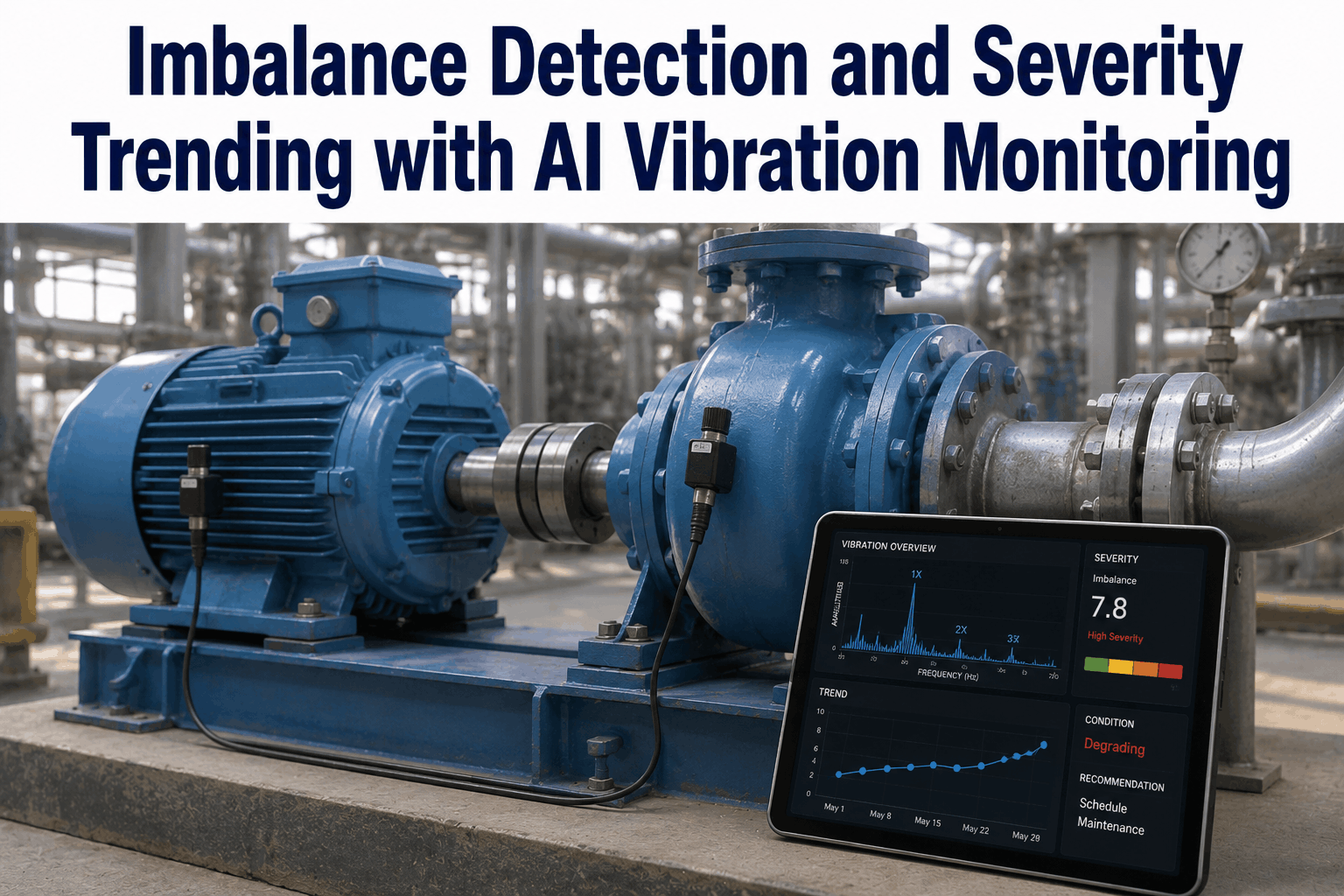
Looseness severity trends project the estimated time to reach structural damage thresholds, giving maintenance engineers the lead time to schedule corrective work before irreversible damage accumulates.
Six AI Capabilities That Transform Looseness and Structural Fault Management
01
Sub-Harmonic Signature Extraction and Classification
Core Detection Capability
The most reliable diagnostic indicator of mechanical looseness in a vibration spectrum is the presence of sub-harmonic components — vibration energy at fractional multiples of running speed (0.5X, 1.5X, 2.5X) — that do not appear in normal operating vibration and are absent from imbalance and misalignment signatures. AI extraction algorithms process the vibration spectrum to identify sub-harmonic energy above the statistical noise floor and calculate the ratio of sub-harmonic to fundamental amplitude, which correlates with looseness severity. A sub-harmonic ratio below 0.05 typically indicates normal variation. A ratio above 0.15 indicates progressive looseness. A ratio above 0.30 indicates severe looseness with likely structural damage occurring on each revolution.
Manual sub-harmonic detection: 44%
AI sub-harmonic extraction: 93%
02
Foundation Looseness vs Bearing Clearance Discrimination
Fault Type Classification
Foundation looseness and bearing housing clearance looseness both produce sub-harmonic signatures but require fundamentally different corrective actions — foundation looseness is addressed by re-grouting, anchor bolt replacement, and baseplate repair, while bearing housing clearance is addressed by bearing seat remetalling, housing replacement, or bearing fit restoration. AI discrimination between these fault types uses the directional amplitude ratio (vertical-to-horizontal), the phase stability across measurement intervals, and the frequency at which sub-harmonic content appears relative to the bearing natural frequency — three features that together classify the looseness origin with approximately 78 percent accuracy before physical inspection confirms the finding.
Classification without AI: 38% accuracy
AI fault type accuracy: 78%
03
Rotating Looseness Detection From Phase Instability
Rotating Component Fault
A loose rotating component — impeller, coupling hub, sheave, or flywheel — generates a distinctive vibration pattern characterised by an unstable phase angle at 1X running speed that shifts between successive measurement cycles rather than remaining stationary. This phase instability is caused by the loose component shifting its angular position relative to the shaft between stops, producing a different effective mass imbalance on each revolution. AI detection of phase instability from consecutive measurement samples identifies rotating looseness conditions that would appear as random amplitude variation in a threshold-based system — and which are frequently misinterpreted as instrumentation noise until the amplitude variation grows large enough to cause structural vibration.
Phase instability detection (threshold): 21%
AI phase instability detection: 88%
04
Structural Resonance Interaction Identification
Resonance Analysis
When a looseness fault interacts with a structural resonance frequency — the natural frequency of the baseplate, the support frame, or the piping connected to the machine — the vibration amplitude is amplified at the specific operating speed where the excitation frequency coincides with the resonance. This combined looseness-resonance condition is particularly dangerous because the amplitude amplification can increase bearing loads to destructive levels at a speed the machine passes through on every start and stop cycle. AI identification of the resonance interaction pattern enables structural modification — adding stiffness, changing support configuration, or installing tuned vibration absorbers — to detune the resonance rather than simply correcting the looseness.
Resonance-looseness misdiagnosis: 67%
AI combined fault identification: 84%
05
Progressive Looseness Severity Trending
Degradation Trajectory
Looseness is self-reinforcing: a loose foundation bolt allows micro-movement that gradually erodes the grout contact area, increasing the amplitude of each impact cycle, which accelerates further erosion. AI severity trending tracks the rate at which sub-harmonic amplitude is increasing over time and projects when the looseness will reach a structural damage threshold — distinguishing stable low-severity looseness that can be monitored and corrected at the next convenience shutdown from rapidly progressive looseness that requires a planned correction within weeks to prevent foundation damage that re-grouting alone cannot restore.
Undetected progression to damage: 8 weeks avg
AI early detection window: 5–7 weeks prior
06
Post-Correction Verification and Recurrence Detection
Outcome Validation
After foundation re-grouting, bolt replacement, or bearing housing restoration, AI post-correction verification confirms that sub-harmonic content has returned to the baseline normal range and that the phase stability characteristic of tight mechanical connections is restored. Over multiple correction cycles, the recurrence pattern reveals whether looseness is re-emerging at the same location due to a systematic root cause — dynamic loading that exceeds the foundation design capacity, thermal cycling that repeatedly breaks grout contact, or bolt material that does not maintain preload under operating temperature — enabling engineering modifications rather than repeated maintenance corrections.
Recurrence within 12 months (no AI): 52%
Recurrence with root cause action: 11%
Looseness Fault Type Classification: AI Detection Reference
Scroll for more
| Looseness Type | Primary Signature | AI Discriminator | Corrective Action | Structural Risk |
|---|---|---|---|---|
| Foundation Looseness | Sub-harmonics + high vertical | Vertical/horizontal ratio | Re-grout, anchor bolt replace | Progressive cracking |
| Bearing Housing Clearance | Sub-harmonics + impact mod | Bearing natural freq proximity | Housing bore restoration | Bearing accelerated wear |
| Rotating Looseness | Phase-unstable 1X | Phase shift between cycles | Component re-fit or key | Secondary imbalance, fatigue |
| Resonance Interaction | Speed-specific amplification | Amplitude peak at critical speed | Structural stiffening or absorber | Rapid bearing/structure damage |
| Piping-Induced Looseness | Intermittent sub-harmonics | Correlation with flow events | Pipe support modification | Fatigue crack initiation |
How iFactory Connects Looseness Detection to Structural Maintenance Planning
Looseness detection without structural context produces maintenance work orders that correct the symptom without addressing the underlying structural condition. iFactory connects AI looseness detection to the machine's full maintenance history — prior foundation work, bearing replacements, alignment records, and previous looseness events — so the corrective action recommendation accounts for whether this is a first-occurrence or recurring condition and what prior interventions have failed to achieve lasting correction. When AI detects a recurring looseness pattern at the same foundation location across three maintenance cycles, iFactory flags the case for engineering review rather than generating another re-grouting work order. Teams can Talk to an Expert about connecting iFactory's looseness trending to your structural maintenance planning workflow.
Sub-Harmonic Signature Tracking
iFactory tracks sub-harmonic amplitude and ratio per asset continuously, detecting looseness onset before the structural damage accumulation phase begins.
Fault Type Classification Engine
Phase, directional ratio, and frequency pattern analysis classify looseness to foundation, bearing clearance, or rotating component fault type automatically.
Severity Rate Projection
Progressive looseness rate-of-change projects estimated time to structural damage threshold, prioritising correction urgency by actual degradation velocity.
Recurrence Pattern Analysis
Multi-cycle looseness history identifies recurring fault locations and directs recurring cases to engineering review rather than repeated maintenance correction.
Deploying AI Looseness Detection: Six Steps
01
Identify Looseness-Susceptible Machine Population
Prioritise machines with a history of looseness faults, high foundation loading, thermal cycling exposure, or dynamic loading that exceeds original foundation design specifications.
02
Configure Multi-Directional Sensor Coverage
Ensure horizontal, vertical, and axial vibration sensors are installed at each bearing plane to enable directional ratio analysis required for foundation versus housing clearance classification.
03
Establish Sub-Harmonic Baseline per Asset
Allow iFactory to collect 30 days of baseline sub-harmonic measurements per asset before activating looseness trending alerts, ensuring normal variation is excluded from the detection model.
04
Configure Looseness Type Alert Routing
Route foundation looseness alerts to civil maintenance, bearing clearance alerts to mechanical maintenance, and rotating looseness alerts to the operations team responsible for component fits.
05
Document Structural Maintenance History in iFactory
Load prior foundation work, re-grouting records, and bearing housing repairs into iFactory so recurrence pattern analysis has the historical context to identify systematic root causes.
06
Run Post-Correction Verification and Flag Recurrences
Verify sub-harmonic return to baseline after each corrective action and flag assets with three or more looseness events at the same location for engineering root cause investigation.
Frequently Asked Questions
What vibration signature distinguishes mechanical looseness from misalignment?
Misalignment produces a dominant 2X component with elevated axial vibration in a specific phase pattern. Mechanical looseness produces sub-harmonic content at 0.5X and 1.5X alongside multiple harmonics, with the sub-harmonic components being largely absent from pure misalignment signatures.
Can AI detect looseness in machines running at variable speed?
Yes. iFactory normalises vibration measurements to running speed before sub-harmonic extraction, enabling looseness detection across variable-speed drives by tracking fractional harmonic content relative to the instantaneous operating speed.
What is the difference between structural looseness and rotating looseness?
Structural looseness involves movement between stationary components — foundation, housing, baseplate — and produces a consistent sub-harmonic signature with directional amplitude asymmetry. Rotating looseness involves movement between rotating components and produces a phase-unstable 1X signature that shifts between measurement cycles.
How does looseness interact with structural resonance and why does it matter?
Looseness generates vibration energy at multiple harmonics and sub-harmonics of running speed. When any of these components coincides with a structural resonance frequency, the amplitude is amplified to destructive levels. AI identifies this interaction pattern, enabling structural modification to detune the resonance rather than only correcting the looseness.
How does iFactory connect looseness detection to maintenance scheduling?
When AI detects looseness with a projected time-to-structural-damage, iFactory creates a planned corrective work order, routes it to the appropriate maintenance team by fault type, and schedules the intervention within the estimated lead time window.
Looseness That Corrects Itself Does Not Exist. AI Detection Finds It Before Your Foundation Does.
iFactory's AI vibration platform identifies sub-harmonic looseness signatures, classifies the structural fault type, trends severity, and connects detection to planned corrective action — before the self-reinforcing nature of looseness turns a bolt-tightening job into a foundation replacement.