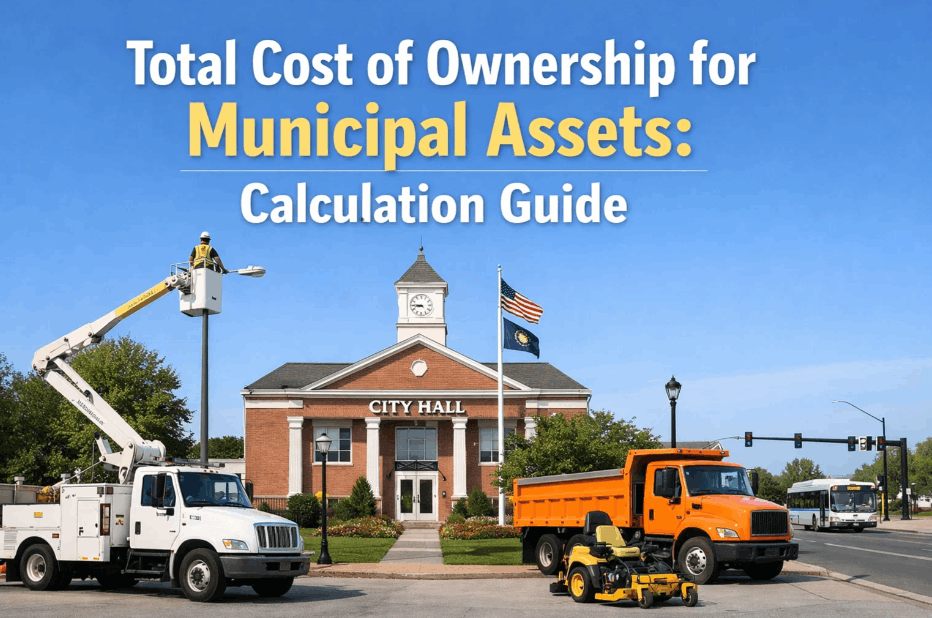
Starting a government asset management program is a critical municipal decision. It establishes a structured approach for tracking, maintaining, and managing public assets throughout their lifecycle. Public infrastructure such as roads, bridges, utilities, buildings, and vehicles represents a significant taxpayer-funded investment that requires organized oversight. By implementing systematic asset tracking and maintenance planning, municipalities can extend asset lifespan, reduce repair costs, improve service reliability, and demonstrate responsible stewardship of public funds through greater fiscal accountability.
iFactory provides a fully guided implementation path for municipalities starting asset management. From inventory to compliance reporting — all in one platform.
Why Municipalities Must Prioritize Asset Management Implementation
The infrastructure funding gap requires municipalities to move beyond deferred maintenance backlogs. Modern grant programs now require structured asset management records before funding is approved for civic projects. Book a Demo to explore how to unify your maintenance and capital budgets.
Step 1: Define Program Scope and Organizational Commitment
Asset management is a culture change requiring buy-in from the city manager and department heads. Establishing a clear program scope and executive championship is the first step toward long-term operational success. Book a Demo to review our guided implementation roadmap.
Step 2: Conduct a Complete Asset Inventory
You cannot manage what you have not counted. Building a comprehensive digital asset inventory is the empirical foundation of every municipal program, providing coordinates, age, and replacement values. Book a Demo to see our mobile field inventory collection tools.
Key Attributes to Capture for Every Asset
| Attribute Category | Required Data Fields | Why It Matters |
|---|---|---|
| Location & Identity | GPS coordinates, asset ID, address, jurisdiction, GIS layer | Enables spatial analysis and crew dispatch routing |
| Physical Characteristics | Material, dimensions, capacity, manufacturer, model number | Required for accurate replacement cost estimation |
| Age & History | Installation date, last rehabilitation date, maintenance history | Feeds deterioration modeling and remaining useful life forecasts |
| Financial Data | Original cost, current replacement value, depreciation schedule | Supports capital improvement planning and GASB 34 compliance |
| Condition Grade | Standardized condition index (0–100), inspector ID, inspection date | Drives risk-based maintenance prioritization decisions |
Step 3: Perform Condition Assessments Across Your Asset Portfolio
Once inventoried, every asset requires a baseline condition assessment to evaluate its current physical state. Standardized rating scales transform static records into powerful decision-support tools for your maintenance crews. Book a Demo to automate your inspection workflows.
Agencies that complete condition assessments before selecting asset management software report 40% faster system implementation. Knowing the depth of your data needs before procurement prevents costly customization projects and avoids selecting a platform that cannot support your inspection workflows.
Step 4: Conduct Risk Analysis and Maintenance Prioritization
Risk analysis quantifies the likelihood and consequence of asset failure across your network. This data-driven approach allows public works directors to justify budgets by prioritizing high-risk infrastructure first. Book a Demo to explore AI-driven risk scoring.
The Four-Quadrant Risk Matrix for Government Assets
Step 5: Select the Right Asset Management System for Your Municipality
Purchasing the right platform is critical for achieving a split ROI. Municipalities should prioritize mobile field readiness, GIS integration, and automated regulatory reporting to ensure long-term program sustainability. Book a Demo to see our award-winning government interface.
Step 6: Develop Your Asset Management Plan (AMP)
An Asset Management Plan (AMP) is a multi-year capital roadmap required by most state and federal utility regulators. It formally documents your inventory and condition distribution to secure infrastructure funding. Book a Demo to generate your AMP summary automatically.
Step 7: Train Field Staff and Drive Platform Adoption
Technology succeeds only when field adoption is high. Investing in role-specific training ensures that inspectors and dispatchers shift from paper logs to a unified digital source of truth. Book a Demo to explore our field adoption training modules.
Common Mistakes to Avoid When Starting a Government Asset Management Program
Municipalities encounter predictable obstacles during their first implementation programs. Avoiding these patterns ensures a successful launch and measurable ROI for the agency. Book a Demo to review our zero-defect rollout framework.
iFactory's AI-driven platform guides municipalities through every phase of asset management implementation — from field inventory collection and condition assessment to regulatory reporting and predictive maintenance scheduling. Agencies running iFactory achieve 100% SLA compliance, 28% lower workforce costs, and full ROI within 12 months of launch.