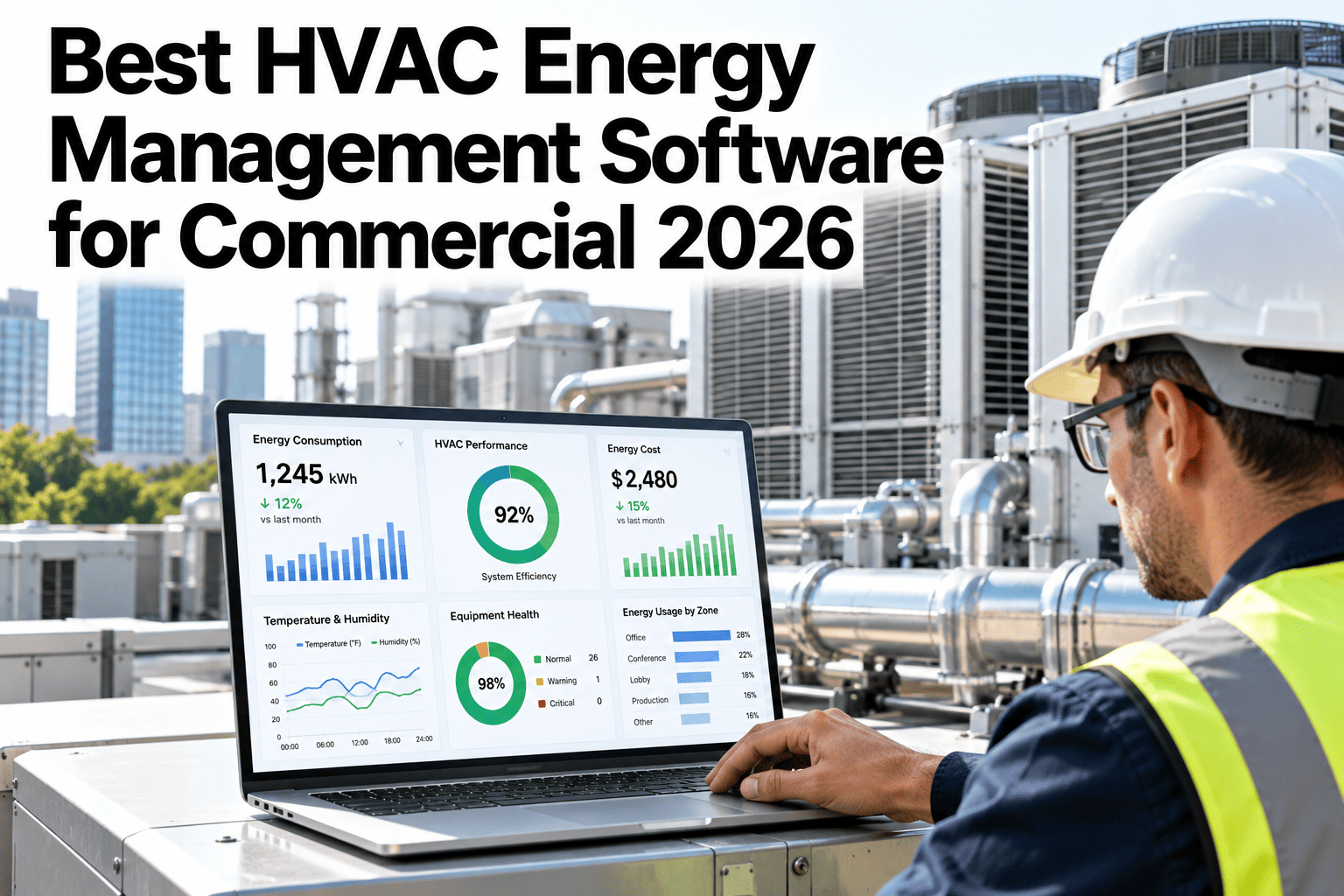
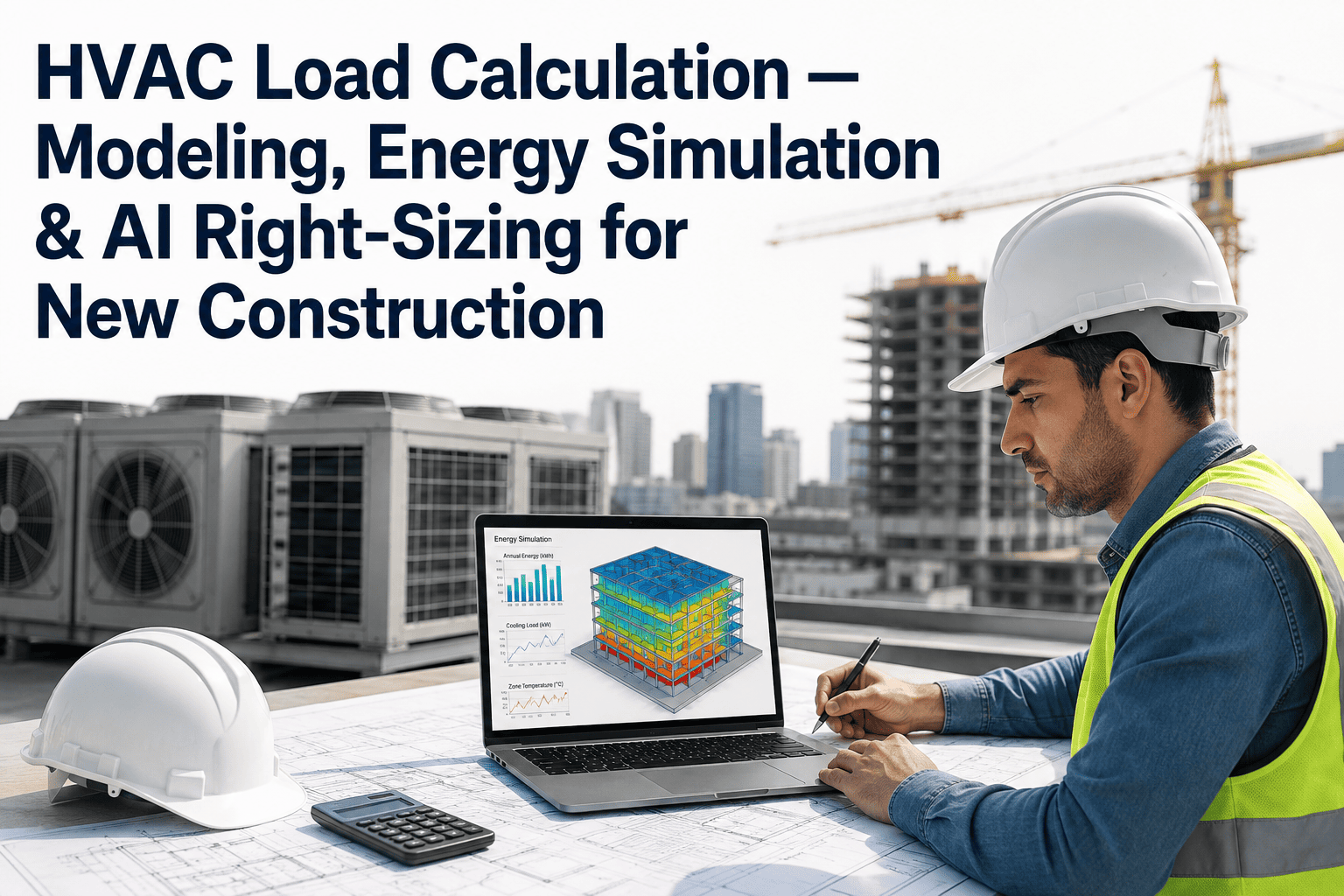
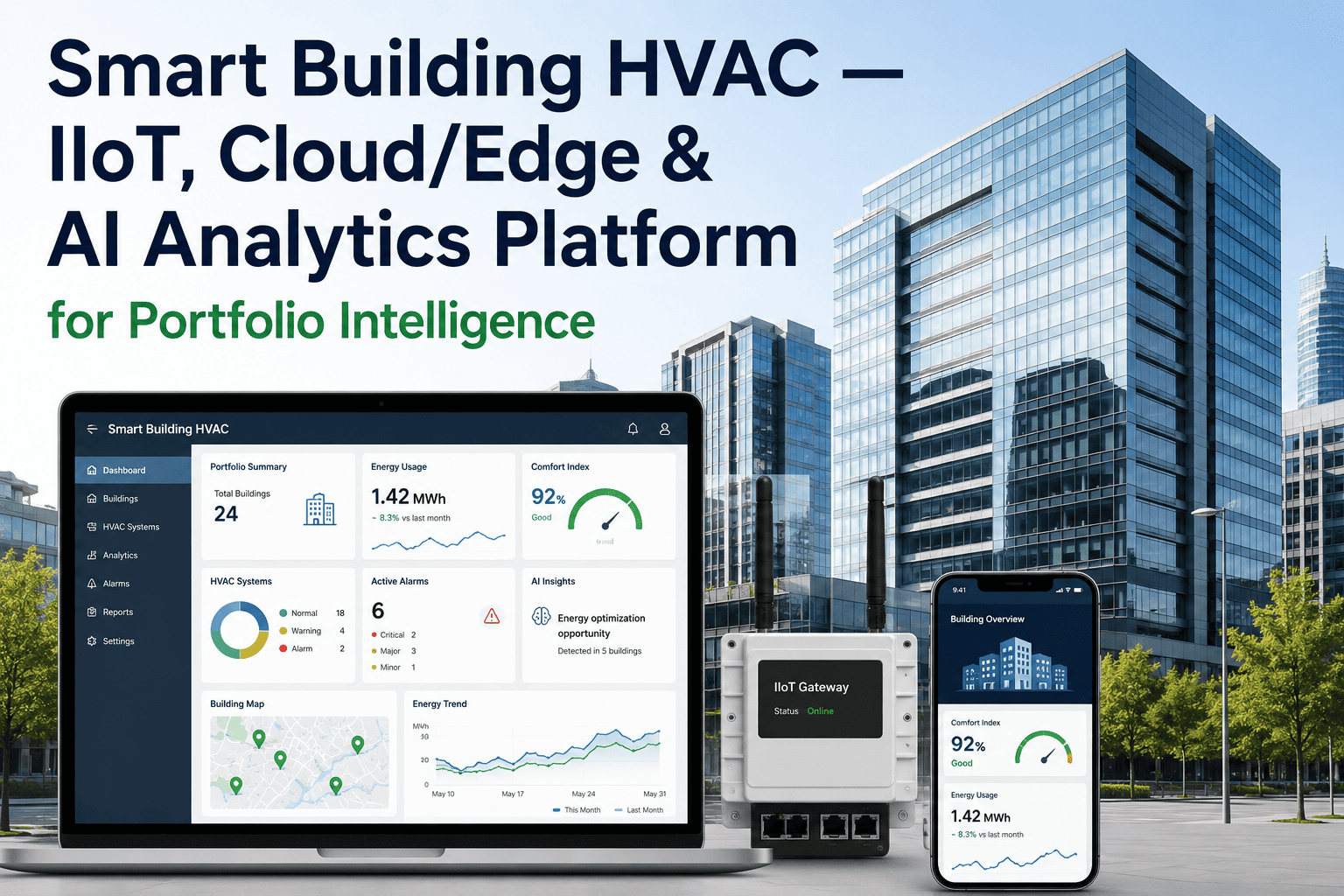
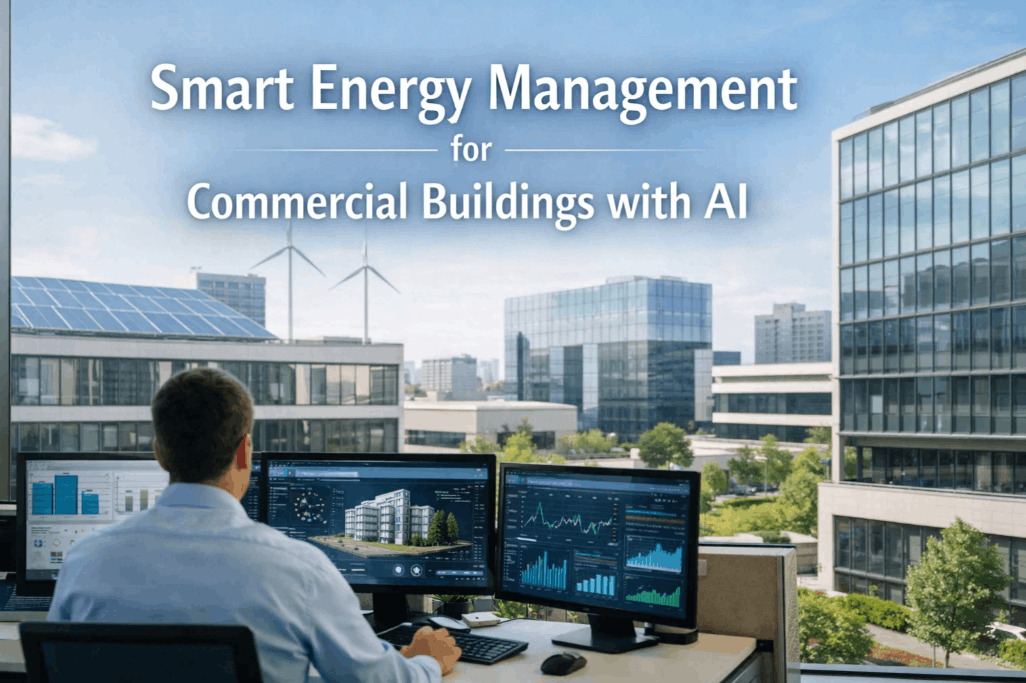
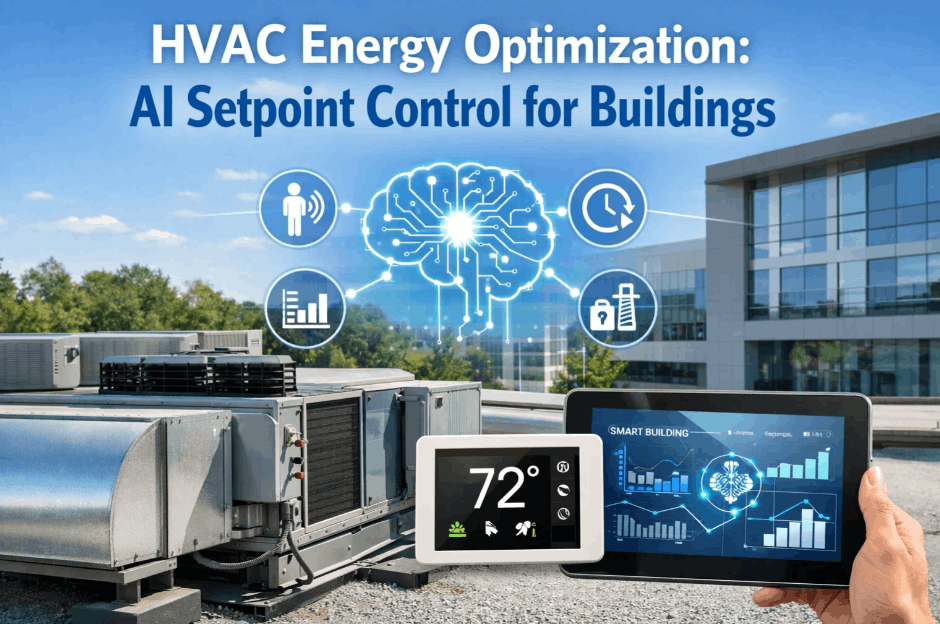
HVAC systems devour 40% of commercial building energy — more than lighting, plug loads, and elevators combined. Yet most buildings operate HVAC on fixed schedules and static setpoints designed for worst-case conditions that occur less than 5% of the year. The result: millions of dollars wasted heating empty conference rooms, cooling vacant floors after hours, and running chillers at full capacity on mild spring days when half-speed would suffice. In 2026, AI-powered HVAC optimization is delivering what building engineers have chased for decades — dynamic, real-time energy management that cuts consumption by 20–35% without sacrificing occupant comfort or requiring equipment replacement. iFactory's AI platform brings this intelligence to your building portfolio. Book a free consultation to see exactly how much energy your HVAC systems are wasting — and how AI recovers it.
HVAC Energy Optimization with AI
Reducing Building Energy Costs by 20–35%
What if your HVAC system knew exactly how many people were in each zone, what the weather would do in the next 4 hours, which equipment was degrading efficiency, and could adjust every setpoint, fan speed, and chiller stage in real time to deliver perfect comfort at minimum energy? That is no longer a concept — it is what AI HVAC optimization delivers today, across thousands of buildings worldwide.
Of building energy consumed by HVAC systems
Energy reduction achieved with AI optimization
Typical payback period for AI HVAC optimization
Where Your HVAC Energy Budget Disappears
Most facility managers know HVAC wastes energy. Few know exactly where — because traditional BAS systems were designed for control, not intelligence.
Overcooling and Overheating
Fixed setpoints designed for peak occupancy run at full intensity even when floors are half-empty. Buildings cool to 72°F at 6 AM for workers arriving at 9 AM. Conference rooms run at full cooling capacity for one-person meetings.
Simultaneous Heating and Cooling
In multi-zone buildings, one zone calls for heating while an adjacent zone calls for cooling — the system fighting itself. Reheat coils in VAV systems consume enormous energy reheating air that was just cooled at the central AHU.
After-Hours and Weekend Operation
HVAC systems operating at near-full capacity during unoccupied hours because override schedules were never turned off, cleaning crews triggered occupancy sensors, or BAS schedules were set conservatively years ago and never updated.
Equipment Degradation Hiding in Plain Sight
A chiller running 15% below its design COP looks normal on the BAS — it is still cooling the building. But that hidden inefficiency costs thousands per month. Dirty coils, slipping belts, and refrigerant charge issues silently inflate energy bills.
The AI HVAC Optimization Engine — Layer by Layer
AI optimization does not replace your BAS — it sits on top, adding an intelligence layer that makes your existing equipment smarter.
Data Collection Layer
IoT sensors and BAS integration feed real-time data: zone temperatures, humidity, CO2 levels (occupancy proxy), outdoor weather, equipment run status, energy meter readings, and occupancy schedules. Cloud-connected weather APIs provide 4-hour-ahead forecasts. Calendar integrations show meeting room bookings. All data streams merge into a unified building digital model.
Predictive Modeling Layer
Machine learning models predict thermal load for each zone 1–4 hours ahead based on weather forecasts, occupancy patterns, building thermal mass, solar gain calculations, and internal heat loads. The AI learns your building's unique thermal behavior — how quickly it heats up in morning sun, how long residual cooling lasts after shutdown, which zones respond fastest to setpoint changes.
Optimization Engine
Every 5–15 minutes, the optimization engine recalculates optimal setpoints, fan speeds, chiller staging, economizer positions, and VAV damper settings to deliver required comfort at minimum energy. It pre-cools buildings using cheap nighttime electricity, coasts through mild afternoon hours, and ramps down ahead of building unoccupancy rather than running full until the last person leaves.
Equipment Health Intelligence
AI continuously monitors equipment performance against design specifications — detecting COP degradation in chillers, approach temperature drift in cooling towers, airflow reductions from dirty filters, and refrigerant charge issues. CMMS work orders are auto-generated when efficiency drops below threshold — fixing problems that waste energy long before they cause equipment failure.
Continuous Learning and M&V
The AI improves every week as it accumulates more data about your building. Measurement and Verification (M&V) runs continuously — comparing actual energy consumption against a weather-normalized baseline to quantify real savings. Monthly reports show exactly how many kWh, therms, and dollars the AI saved — verified against utility meter data, not estimates.
What AI HVAC Optimization Actually Delivers
| Metric | Before AI | After AI | Impact |
|---|---|---|---|
| HVAC Energy Use | Baseline | 20–35% lower | $2–8/sqft saved |
| Peak Demand | Baseline | 15–25% lower | Demand charge savings |
| Comfort Complaints | 10–20/month | 0–3/month | 85% fewer |
| Equipment Life | 12–15 years | 18–22 years | 40% longer |
| Carbon Emissions | Baseline | 20–35% lower | ESG impact |
| Payback Period | N/A | 8–18 months | Fast ROI |
Saved for every $1 invested in AI HVAC optimization — within the first year— ASHRAE Journal Study
Average energy reduction across 1,200+ commercial buildings using AI optimization— DOE Building Technologies Report
Equipment replacements required — AI optimizes your existing HVAC assets— Software-only deployment
Our engineers will analyze your utility data and building profile to model projected savings — free, no commitment.
The 8 AI Strategies That Drive 20–35% Energy Reduction
Each strategy targets a specific waste pattern. Combined, they deliver compounding savings far beyond what any single measure achieves.
Predictive Pre-Conditioning
AI pre-cools or pre-heats the building using cheap off-peak energy, leveraging thermal mass to coast through expensive peak hours. Reduces peak demand charges by 15–25%.
Occupancy-Based Setback
Real-time occupancy data from CO2 sensors, badge systems, or Wi-Fi counts adjusts conditioning zone-by-zone. Empty floors go to setback within minutes — not hours.
Optimal Start/Stop
AI calculates exactly when to start HVAC to reach target temperature by occupied time — no more running systems 2 hours early "just in case." Saves 30–60 minutes of runtime daily.
Chiller Plant Optimization
AI sequences chillers, adjusts condenser water temperature, and optimizes tower fan speeds to operate the plant at minimum kW/ton rather than relying on fixed staging rules.
Economizer Maximization
AI monitors enthalpy (not just dry-bulb temperature) to maximize free cooling hours. Most buildings leave 200–500 hours of free cooling on the table annually through incorrect economizer control.
Static Pressure Reset
AI resets duct static pressure based on actual zone demand rather than fixed setpoints — reducing fan energy by 20–40%. Fans follow the cube law: 20% speed reduction = 49% energy reduction.
Supply Air Temperature Reset
Raises supply air temperature when cooling loads are low, reducing simultaneous heating and cooling. AI continuously finds the optimal SAT that satisfies all zones at minimum total energy.
Demand Response Integration
AI automatically participates in utility demand response programs — pre-conditioning before events, reducing load during peaks, and recovering afterward — earning incentive payments while reducing bills.
AI HVAC Optimization by Facility Segment
Commercial Offices
25–35% savings typicalHigh occupancy variability makes offices ideal for AI optimization. Meeting rooms, open floors, and executive suites have dramatically different usage patterns that fixed schedules cannot address. AI delivers comfort where people are and setback where they are not — saving $2–5/sqft annually.
Healthcare Facilities
15–25% savings typicalStrict temperature and humidity requirements in ORs, pharmacies, and patient rooms limit setback opportunities. AI savings come from chiller plant optimization, AHU scheduling around surgical calendars, and eliminating reheat waste — all without compromising clinical environmental standards.
K-12 Schools and Universities
25–40% savings typicalPredictable schedules (classes, breaks, summer shutdown) combined with aging HVAC systems create massive optimization opportunities. AI aligns conditioning precisely with class schedules, eliminates weekend and holiday waste, and identifies the worst-performing RTUs for targeted replacement.
Retail and Hospitality
20–30% savings typicalExtended operating hours and high ventilation loads make retail and hotels energy-intensive. AI optimizes based on foot traffic patterns, reduces conditioning in back-of-house areas, and coordinates kitchen exhaust with makeup air to prevent negative pressure energy waste.
Managing multiple building types? Book a free consultation for portfolio-wide optimization analysis.
AI HVAC Optimization — Frequently Asked Questions
Does AI optimization require replacing our existing HVAC equipment?
No. AI optimization is a software layer that sits on top of your existing BAS and equipment. It sends optimized setpoints and commands to your current controllers — no equipment replacement, no rewiring, no construction. Most deployments are fully operational in 4–8 weeks with zero disruption to building operations. See a live deployment walkthrough.
Will AI optimization affect occupant comfort?
Comfort improves, not declines. AI eliminates the temperature swings, hot spots, and cold complaints caused by fixed-schedule operation. By predicting thermal loads and adjusting proactively, the system maintains tighter comfort bands than reactive BAS control. Buildings typically see 85% fewer comfort complaints after AI deployment.
How are energy savings measured and verified?
The platform uses IPMVP (International Performance Measurement and Verification Protocol) methodology — comparing actual energy consumption against a weather-normalized baseline model. Savings are verified against utility meter data monthly, not estimated from engineering calculations. You see exactly how many kWh and dollars the AI saved in every reporting period.
What BAS systems does AI optimization integrate with?
The platform integrates with all major BAS systems including Tridium Niagara, Johnson Controls Metasys, Honeywell EBI, Siemens Desigo, Schneider EcoStruxure, and Delta Controls via BACnet, Modbus, and API connections. Legacy systems without network connectivity can be integrated through IoT gateway devices that overlay intelligent control.
What ROI can we expect?
Most buildings see full ROI within 8–18 months. A 200,000 sqft commercial office building typically saves $80,000–$200,000 annually in energy costs. Savings scale linearly across portfolios — a 20-building portfolio can save $2–5 million per year. Additional value comes from reduced maintenance costs (40% longer equipment life), demand charge reduction, and ESG reporting improvements. Get a custom ROI projection.
How quickly can we deploy across multiple buildings?
First building: 4–8 weeks for full deployment including BAS integration, sensor deployment, AI model training, and M&V baseline establishment. Subsequent buildings in the same portfolio deploy in 2–4 weeks each as the platform scales with standardized integration templates. A 50-building portfolio can be fully deployed in 6–9 months.
Ready to Cut Your HVAC Energy Costs by 20–35%?
Every month without AI optimization is money your HVAC system is quietly wasting. Join thousands of building owners who have saved millions in energy costs, eliminated comfort complaints, and extended equipment life — all without replacing a single piece of equipment. See your building's savings potential in a free 30-minute analysis.