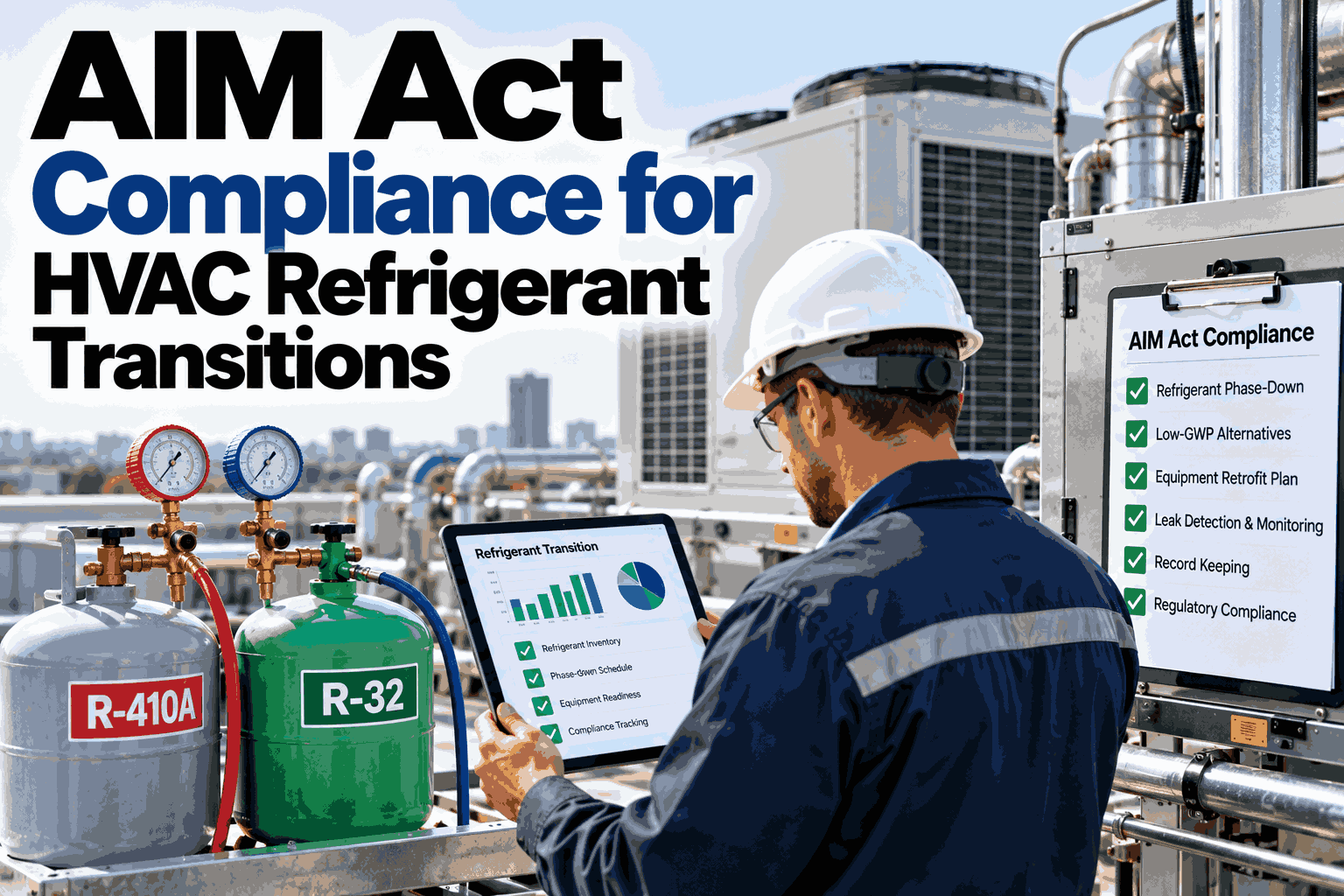
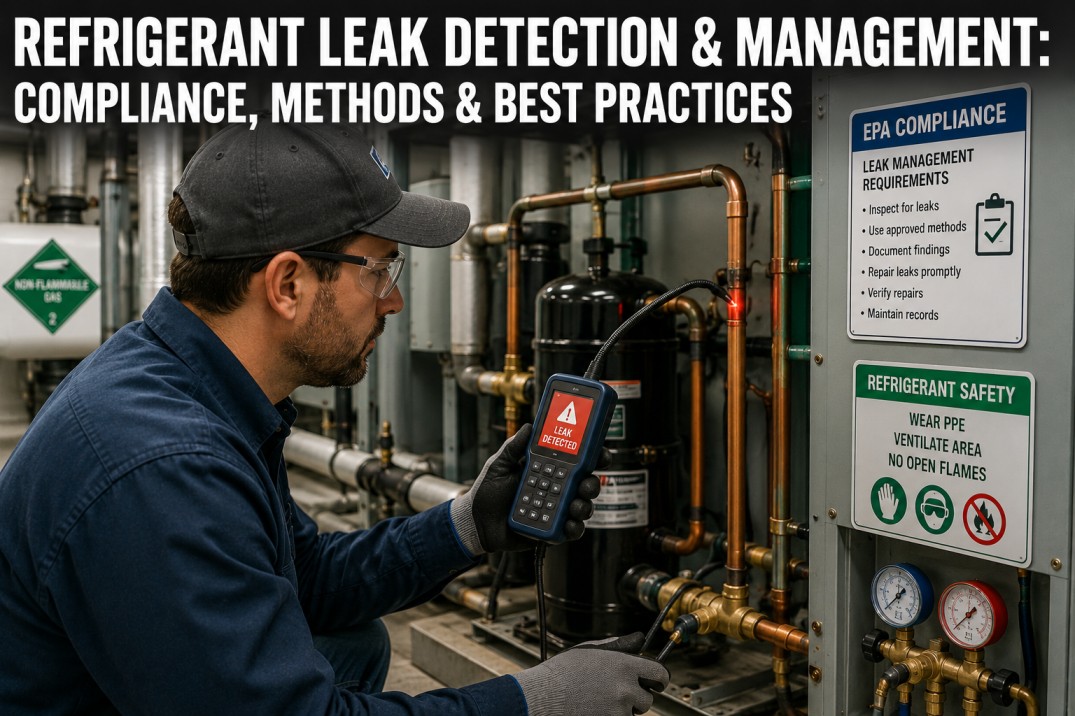
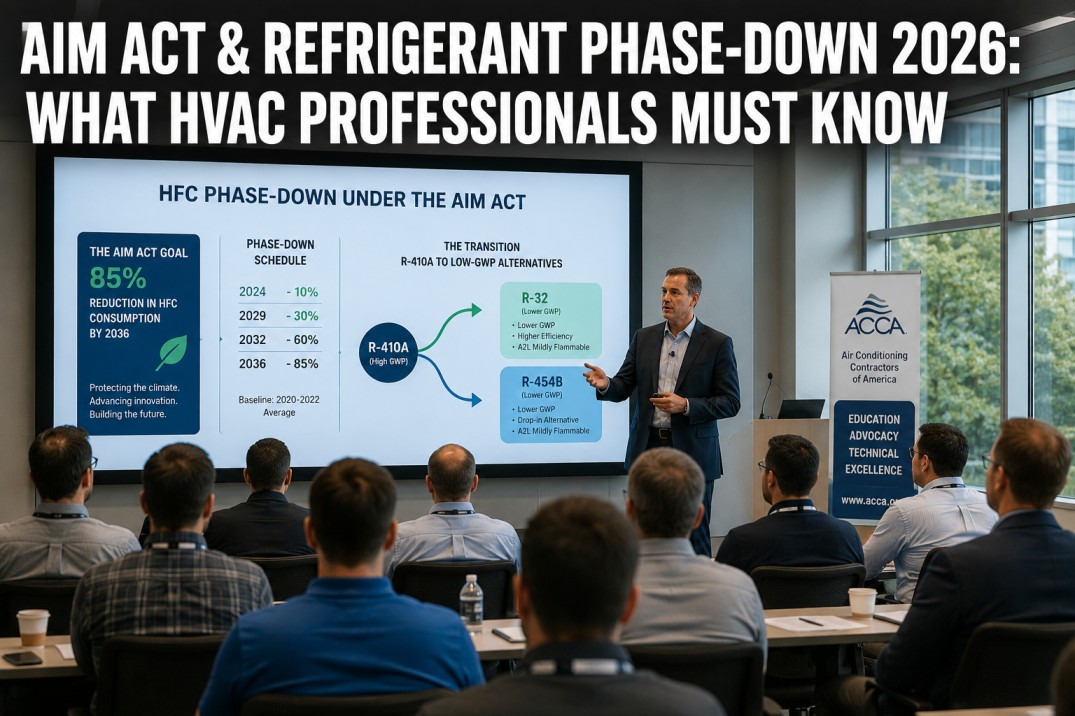
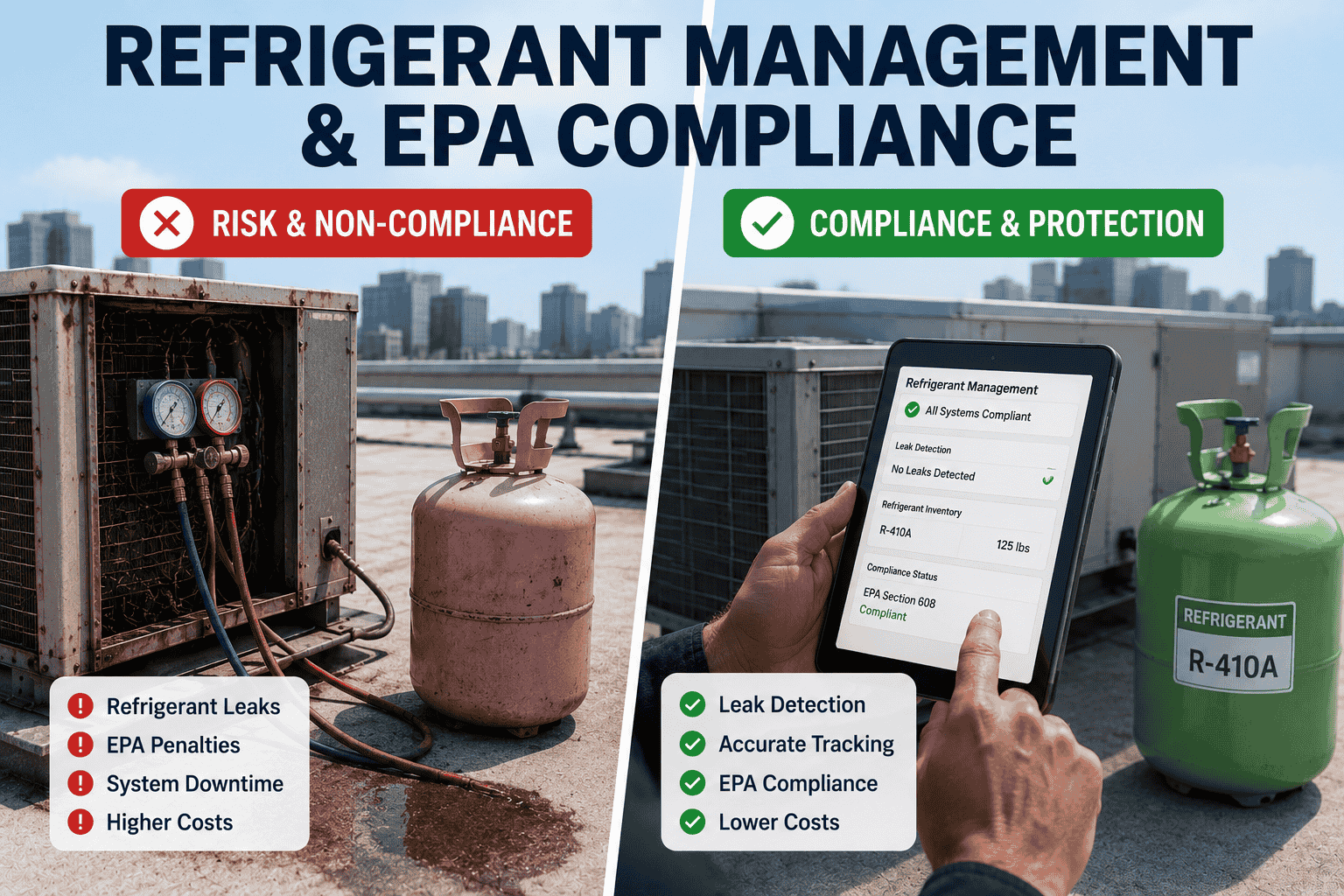
The EPA's American Innovation and Manufacturing (AIM) Act is the most significant overhaul of U.S. refrigerant regulation in a generation — phasing down hydrofluorocarbons (HFCs) by 85% by 2036, tightening leak repair requirements, and creating new recordkeeping obligations that facilities teams and HVAC contractors must satisfy or face civil penalties of up to $44,539 per day per violation. For commercial and industrial facilities operating equipment charged with R-410A, R-134a, R-22, and other regulated refrigerants, the AIM Act demands a structured refrigerant management programme — not a spreadsheet updated after the fact. iFactory's compliance module tracks refrigerant inventory, logs additions and recoveries, monitors leak rates, schedules mandatory repair timelines, and generates the EPA-compliant records that inspectors require. Book a free compliance demo and see how iFactory closes the gap between your current records and full AIM Act compliance.
EPA AIM Act Compliance
for HVAC Operations:
Refrigerant Management
and Leak Repair
Penalties up to $44,539 per day. HFCs phased down 85% by 2036. Mandatory leak repair timelines. New recordkeeping requirements. Is your refrigerant management programme ready?
What the AIM Act Actually Requires from HVAC Operators
The AIM Act affects anyone who owns, operates, or services HVAC and refrigeration equipment containing regulated HFC refrigerants. These are the core obligations.
Leak Inspection & Repair Requirements
Equipment containing 50 or more pounds of refrigerant that leaks at or above the applicable leak rate must be repaired within defined timeframes. For comfort cooling equipment: 30 calendar days from leak detection. For commercial refrigeration and industrial process refrigeration: 120 days (with possible extension to 180 days with documentation).
Mandatory Refrigerant Records
Owners and operators of equipment containing 50+ lbs of HFC refrigerant must maintain records that include: the date and quantity of refrigerant added or removed, the technician name and certification number, the leak rate calculation, any leak inspections performed, and the dates and outcomes of all repairs. Records must be retained for at least 3 years and made available to EPA inspectors on request.
HFC Allowance Phase-Down
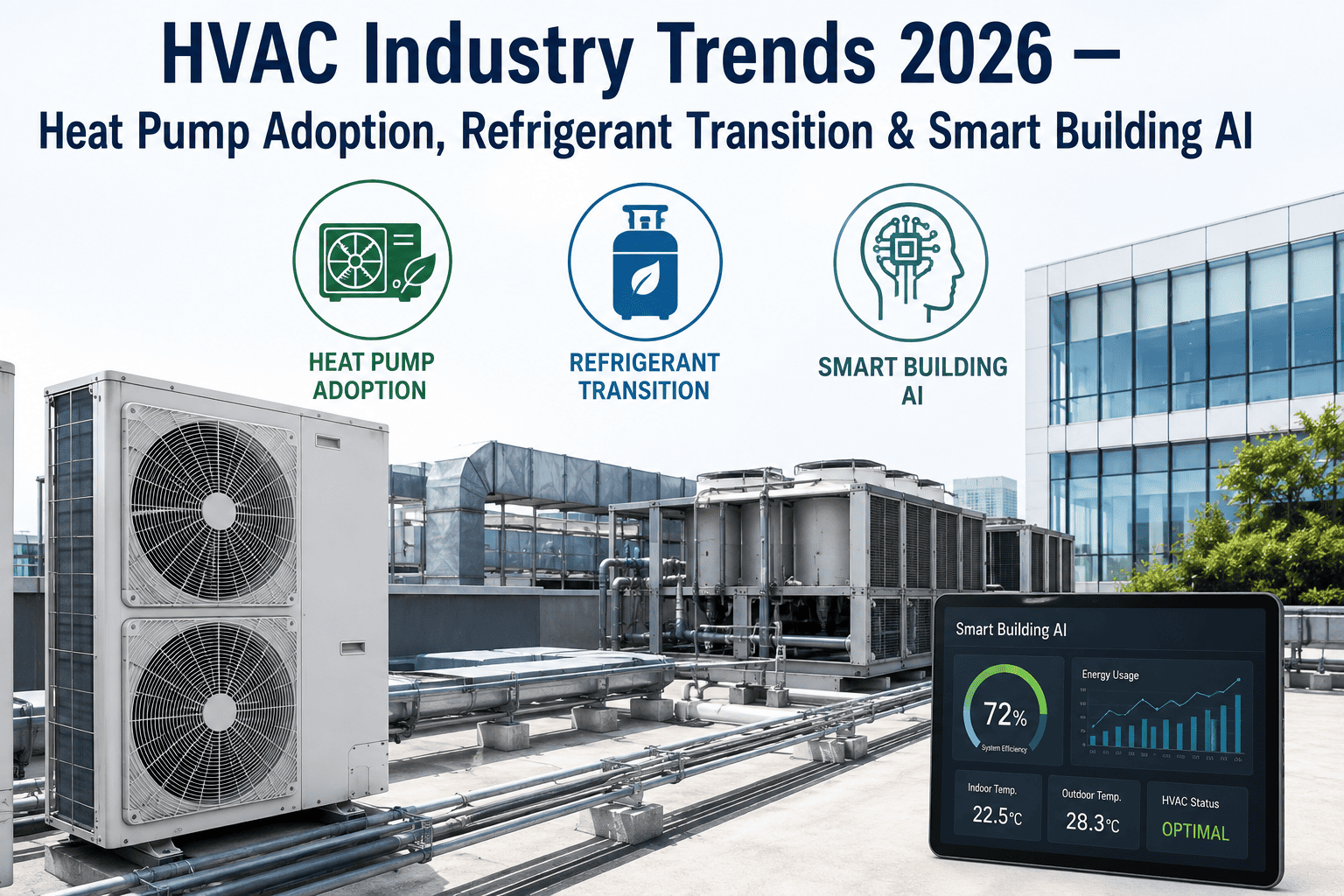
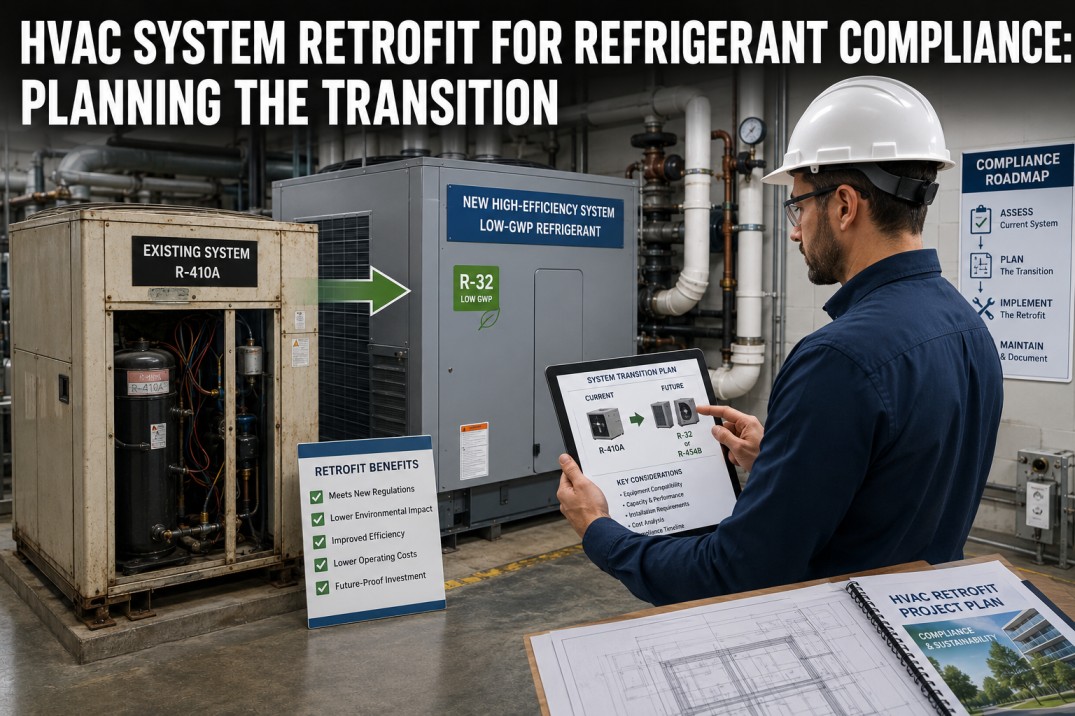
The AIM Act mandates an 85% reduction in HFC production and consumption (measured in CO₂ equivalent) by 2036. This is achieved through a declining allowance system for HFC producers and importers — not a direct ban on use — but it means refrigerant prices for high-GWP HFCs (R-410A, R-134a) will rise substantially as supply is restricted. Facilities with long equipment lifecycles should assess their exposure to high-GWP refrigerants and develop transition plans for lower-GWP alternatives (R-32, R-454B, R-466A).
Technology Restrictions & Low-GWP Standards
Section 103 of the AIM Act authorises EPA to restrict use of HFCs in specific sectors and applications and to set technology standards for new equipment. EPA has issued rules restricting high-GWP HFCs in new residential and light commercial air conditioning (effective January 1, 2025 for new equipment manufacture), commercial refrigeration, and aerosols. Existing equipment is not immediately affected — but replacement equipment must meet the new refrigerant standards. See how iFactory tracks your refrigerant transition →
Understanding Leak Rate Calculations — And When You Trigger Reporting
Leak rate determines your compliance obligations. Here is exactly how EPA calculates it and what thresholds trigger mandatory action.
Leak rate = (22 ÷ 200) × (365 ÷ 180) × 100% = 22.3% annual leak rate
This exceeds the 10% threshold → mandatory inspection and repair obligations apply.
How iFactory Manages AIM Act Compliance Across Your HVAC Portfolio
Every compliance obligation mapped to a system workflow — from the moment refrigerant is added to the moment the EPA inspection report is generated.
Refrigerant Log & Inventory Tracking
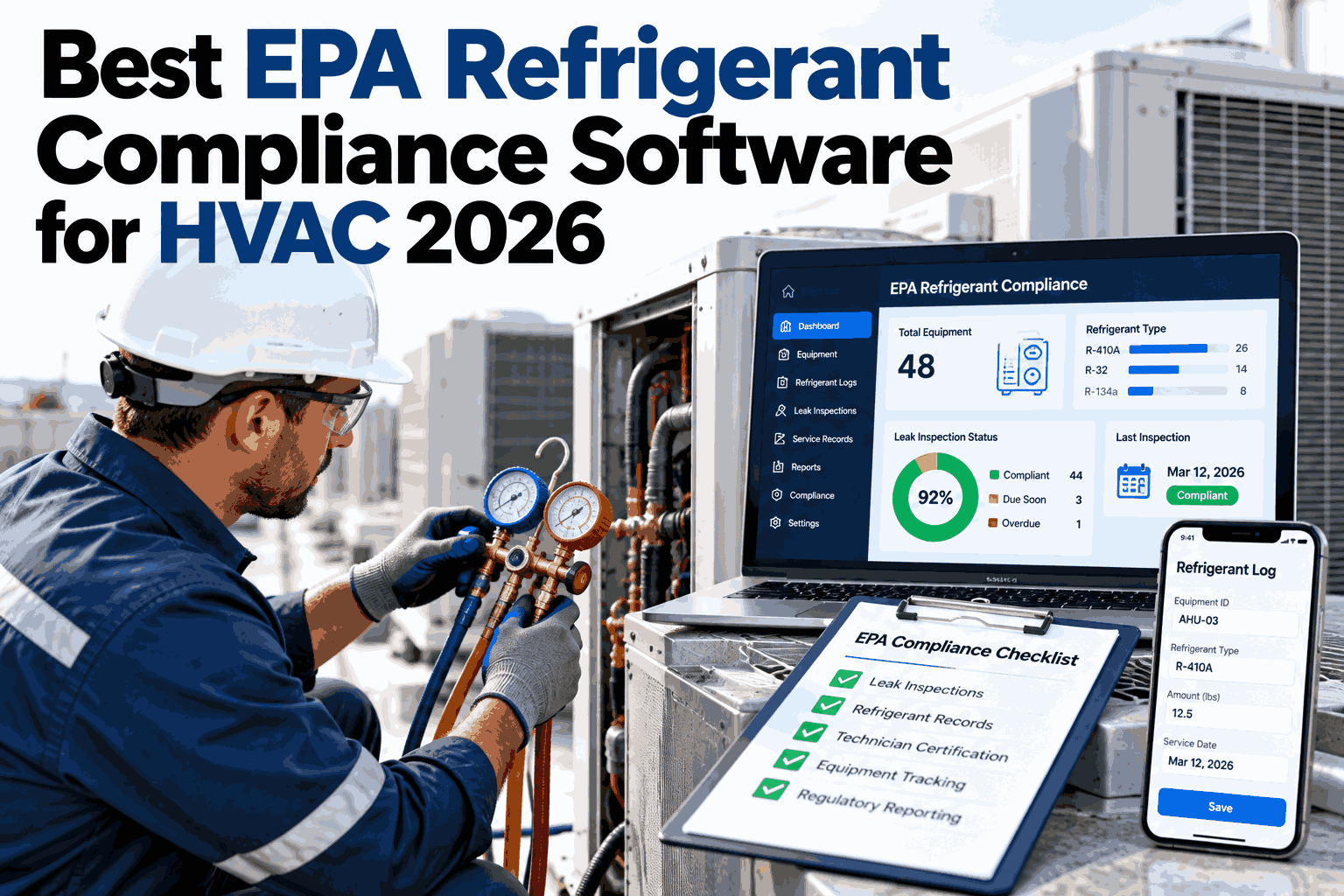
Every refrigerant addition, recovery, and transfer logged against the specific equipment unit with date, quantity, type, technician EPA certification number, and reason. iFactory maintains a running inventory balance per asset and flags discrepancies between logged additions and expected charge loss. All entries are immutable — timestamped records that satisfy EPA recordkeeping requirements for 3+ years.
See refrigerant logging live →Leak Inspection Scheduling
iFactory automatically schedules mandatory quarterly or annual leak inspections based on equipment type, charge size, and last recorded leak rate. Inspection work orders are generated 14 days in advance with the required inspection checklist, detection method, and documentation requirements pre-populated. Overdue inspections escalate automatically to the compliance officer.
Automatic Leak Rate Calculation
As technicians log refrigerant additions in iFactory, the platform recalculates the annualised leak rate in real time. When a unit's calculated rate crosses the 10% threshold, iFactory triggers a compliance alert — showing which threshold applies (comfort cooling, commercial refrigeration, or industrial), the repair deadline countdown, and the required next steps. No manual calculations. No missed triggers.
See leak rate dashboard →Repair Timeline Management
When a leak is detected, iFactory opens a compliance case linked to the asset — recording the detection date, detected amount, leak location, and responsible technician. The system calculates the repair deadline (30, 120, or 180 days depending on equipment type) and displays a live countdown. If the deadline is approaching without a repair completion record, escalation alerts fire to the facilities manager and compliance officer — with the EPA requirement citation included in the alert.
See repair workflow →EPA-Ready Compliance Reports
Generate complete AIM Act compliance reports at any time — for internal audit, pre-inspection readiness review, or EPA submission. Reports include: full refrigerant log per unit, annualised leak rates, inspection dates and outcomes, repair completion records, technician certification verification, and a compliance status summary across the entire HVAC portfolio. PDF output formatted to EPA recordkeeping requirements.
Technician Certification Verification
The AIM Act requires that only EPA Section 608-certified technicians handle regulated refrigerants. iFactory stores technician certification numbers and expiry dates, verifies certification validity when a refrigerant log entry is created, and prevents work orders from being closed by uncertified technicians. Certification expiry alerts fire 60 days before renewal deadlines.
See certification managementCommon HFC Refrigerants — Compliance Status and Transition Paths
Know which refrigerants in your HVAC portfolio are affected by AIM Act restrictions and what the transition timeline looks like for each.
| Refrigerant | GWP | Common Applications | AIM Act Status | New Equipment (from Jan 2025) | Recommended Transition |
|---|---|---|---|---|---|
| R-410A | 2,088 | Residential & commercial split systems, RTUs | Restricted | Banned for new residential/light commercial manufacture | R-454B (Opteon XL41), R-32 |
| R-22 | 1,810 | Legacy systems, older commercial HVAC | Production Ended | Not applicable — no new equipment | R-407C for retrofit, full replacement preferred |
| R-134a | 1,430 | Chillers, automotive A/C, retail display cases | Restricted | Restricted in new chillers and refrigeration | R-1234yf, R-513A (Opteon XP10) |
| R-407C | 1,774 | Commercial HVAC, retrofit R-22 replacement | Monitor | Not yet restricted — monitor allowance schedule | R-454B for longer-term planning |
| R-32 | 675 | New split systems, mini-splits, VRF | Compliant | Permitted — lower GWP alternative | No transition required currently |
| R-454B | 467 | New residential, commercial A/C replacing R-410A | Compliant | Primary R-410A replacement for new equipment | Target for all new HVAC equipment purchases |
| R-466A | 733 | Drop-in alternative for R-410A systems | Compliant | A2L classified — check equipment compatibility | Retrofit option where applicable |
AIM Act Compliance Readiness — 12-Point Self-Assessment
Run through this checklist. Every "No" or "Partial" is a compliance gap that needs addressing before your next EPA inspection.
Frequently Asked Questions — AIM Act HVAC Compliance
Does the AIM Act apply to equipment charged with R-22?
R-22 production for new equipment ended under the Montreal Protocol, not the AIM Act — but existing R-22 systems are still covered by EPA Section 608 leak repair requirements, which predate the AIM Act and remain in effect. If you own or operate equipment containing 50+ lbs of R-22, you must comply with Section 608 leak inspection and repair obligations. The AIM Act adds additional requirements for HFCs. For practical compliance purposes, treat all refrigerant-containing equipment of ≥50 lbs as subject to full leak management obligations regardless of refrigerant type.
What counts as "detection" for starting the repair clock?
The repair deadline begins when the leak is detected — which the EPA defines as any observation indicating refrigerant loss: a technician's visual inspection finding, a leak detector alarm, refrigerant gauge readings indicating loss, or calculation from refrigerant additions exceeding expected system tolerance. The detection date must be documented. If you add refrigerant during a service visit without documenting a leak investigation, EPA may treat the addition date as the detection date. This is why iFactory's refrigerant log requires a reason code for every addition — establishing whether the addition was scheduled PM, a detected leak response, or a system startup charge.
Can we get an extension on the 30-day repair deadline?
Extensions for comfort cooling equipment are very limited. For industrial process refrigeration and commercial refrigeration equipment, the AIM Act allows an extension from 120 to 180 days if: the equipment is a critical industrial process and a 120-day shutdown would cause significant operational disruption, and the facility has submitted a written retrofit or retirement plan to the EPA. No formal extension process exists for comfort cooling — the 30-day deadline is strict. For equipment where repair within 30 days is not feasible, the retrofit or retirement option must be documented with a signed decision to terminate use of the equipment by a specific date. Discuss extension documentation in a demo
What are the penalties for non-compliance with the AIM Act?
Civil penalties under the AIM Act can reach $44,539 per day per violation — the same enforcement mechanism as Clean Air Act violations, which the AIM Act amends. Violations include: failure to repair a detected leak within the required timeframe, failure to maintain required records, failure to conduct required inspections, use of uncertified technicians for refrigerant handling, and failure to recover refrigerant before component disposal. Criminal penalties are also possible for knowing violations. EPA conducts targeted inspections of large commercial and industrial HVAC operators and has increased enforcement resources under the AIM Act. The cost of a single enforcement action typically far exceeds the cost of implementing a proper compliance system. See how iFactory prevents violations
How does the AIM Act affect our capital planning for HVAC equipment?
The AIM Act's phase-down schedule will significantly affect the cost and availability of R-410A and other high-GWP refrigerants over the next decade. Prices for R-410A have already risen 40–60% since 2022 as allowances have tightened. For capital planning purposes: equipment with R-410A or R-22 that will require major refrigerant-side repairs in the next 3–5 years should be evaluated for replacement rather than repair, since replacement refrigerant costs will continue to rise. New equipment purchases from 2025 onward should specify low-GWP alternatives (R-454B, R-32). iFactory's asset lifecycle module can model refrigerant cost exposure per asset to inform replacement scheduling decisions.
Do we need to report leak rates to EPA annually?
The AIM Act itself does not mandate annual leak rate reporting to EPA — but it does require that records demonstrating compliance be maintained and available for inspection. Some states (California, Colorado, Washington) have additional refrigerant reporting requirements through state environmental agencies that include annual submission. EPA is expected to introduce additional reporting requirements as the phase-down programme matures. In practice, maintaining the records that would constitute an annual report (even if not currently required to submit it) is the safest compliance posture. See iFactory reporting capabilities
Stop Managing AIM Act Compliance
in a Spreadsheet.
Every refrigerant log entry, every leak rate calculation, every inspection record, every repair deadline — managed automatically in iFactory. When an EPA inspector arrives, your compliance file is already complete.